Events & Promotions
| Last visit was: 02 Sep 2026, 11:58 |
It is currently 02 Sep 2026, 11:58 |
|
|

GMAT Club Daily Prep
Thank you for using the timer - this advanced tool can estimate your performance and suggest more practice questions. We have subscribed you to Daily Prep Questions via email.
Customized
for You
Track
Your Progress
Practice
Pays
Not interested in getting valuable practice questions and articles delivered to your email? No problem, unsubscribe here.
 Sep 02
01:00 PM PDT
-02:00 PM PDT
Inquire for a free profile evaluation and guarantee statement for possible admits and scholarships! Sep 03
10:00 AM PDT
-11:00 AM PDT
Looking to secure a coveted spot at a top business school? Our team of seasoned MBA admissions consultants, including top B schools alumni and industry leaders, is here to help turn your dreams into reality. Let’s kick-start your journey to success! Sep 03
11:00 AM PDT
-12:00 PM PDT
We go inside the MIT Sloan School of Management with Donna Levinson, Assistant Dean of Admissions at MIT Sloan, for a detailed conversation on Sloan’s MBA experience, curriculum, global community, application process, and admissions philosophy. Sep 03
09:00 PM IST
-10:00 AM IST
Join our free webinar on building a stronger Round 2 MBA application for INSEAD, LBS, Kellogg, HEC & other T20 B-schools after missing Round 1. Learn what actually changes in Round 2 and rebuild your candidacy. Sep 04
12:00 PM EDT
-01:00 PM EDT
The old MBA recruiting playbook is dead. Here’s how top admits are getting ahead this summer.- Sep 07
12:01 AM PDT
-11:59 PM PDT
On the 7th, GMAT Club Tests will be Free! Including all the Quizzes, Questions, and Tests. 12 AM - 11:59 PM PDT - Sep 09
07:00 AM PDT
-10:00 AM PDT
Meet AdComs and explore top Master’s programs - MiM, MiF, MSc, MSBA and more. - Application Fee Waivers - Free 1-Week of GMAT Club Tests: - Master's Application Toolkit - Grand Prize Giveaway

 09 Apr 2026, 05:43
Kudos
Bookmarks
Hey GMAT Club,
I'm Jatin Bhandari, founder of PythaGURUS and a Darden alum. Over the last 18+ years, I've worked 1-on-1 with 1,500+ applicants, helping them crack programs like Stanford GSB, Wharton, Kellogg, Booth, Columbia, INSEAD, LBS, Darden, ISB, and IIM A/B/C Executive Programs, with over ₹200 Crores in scholarships secured along the way.
I'm starting this thread to share real, detailed success stories and strategy breakdowns from actual admits. Not generic advice, but the thinking behind what worked and why.
Here's what you'll find in this thread over time:
Case studies of applicants who got into top programs across the US, UK, Europe, and Asia, their profiles, what we changed, and what made the difference.
Breakdowns where I walk through real application strategies along with video stories.
Lessons on storytelling, career goal framing, and positioning, the stuff that separates a ding from an admit-with-scholarship.
Who is this for?
If you're a working professional (especially from an Indian-origin background) targeting top global MBAs or Masters programs, and you're trying to figure out how to stand out in the most over-represented applicant pools, this thread is for you.
I'll be updating this thread regularly. Feel free to bookmark it, ask questions, or DM me.
Let's get into it. First case study dropping soon.
Jatin https://pythagurus.in
[email protected]
I'm Jatin Bhandari, founder of PythaGURUS and a Darden alum. Over the last 18+ years, I've worked 1-on-1 with 1,500+ applicants, helping them crack programs like Stanford GSB, Wharton, Kellogg, Booth, Columbia, INSEAD, LBS, Darden, ISB, and IIM A/B/C Executive Programs, with over ₹200 Crores in scholarships secured along the way.
I'm starting this thread to share real, detailed success stories and strategy breakdowns from actual admits. Not generic advice, but the thinking behind what worked and why.
Here's what you'll find in this thread over time:
Case studies of applicants who got into top programs across the US, UK, Europe, and Asia, their profiles, what we changed, and what made the difference.
Breakdowns where I walk through real application strategies along with video stories.
Lessons on storytelling, career goal framing, and positioning, the stuff that separates a ding from an admit-with-scholarship.
Who is this for?
If you're a working professional (especially from an Indian-origin background) targeting top global MBAs or Masters programs, and you're trying to figure out how to stand out in the most over-represented applicant pools, this thread is for you.
I'll be updating this thread regularly. Feel free to bookmark it, ask questions, or DM me.
Let's get into it. First case study dropping soon.
Jatin https://pythagurus.in
[email protected]
Updated on: 13 Apr 2026, 06:51
Originally posted by JatinBhandari1 on 10 Apr 2026, 07:49.
Last edited by JatinBhandari1 on 13 Apr 2026, 06:51, edited 4 times in total.
Last edited by JatinBhandari1 on 13 Apr 2026, 06:51, edited 4 times in total.
Kudos
Bookmarks
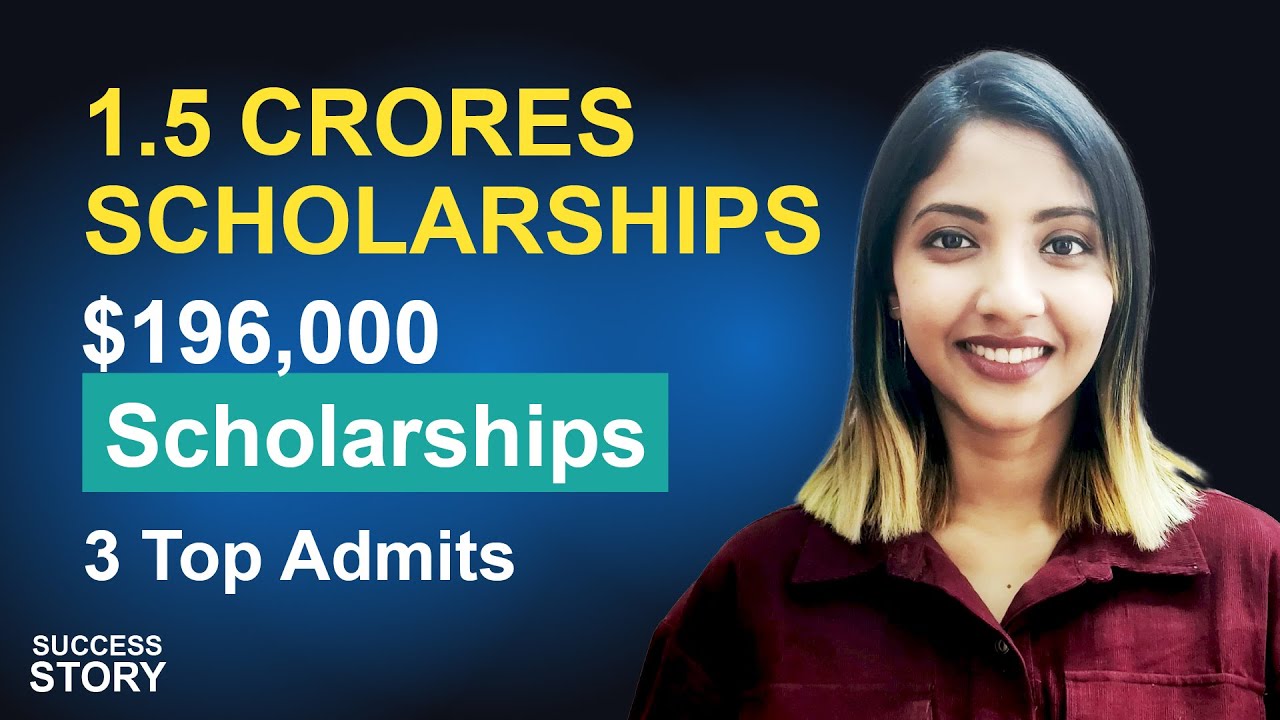
3 Years at a Small Agency, Zero Big Logos, and ₹1.35 Crores in MBA Scholarships
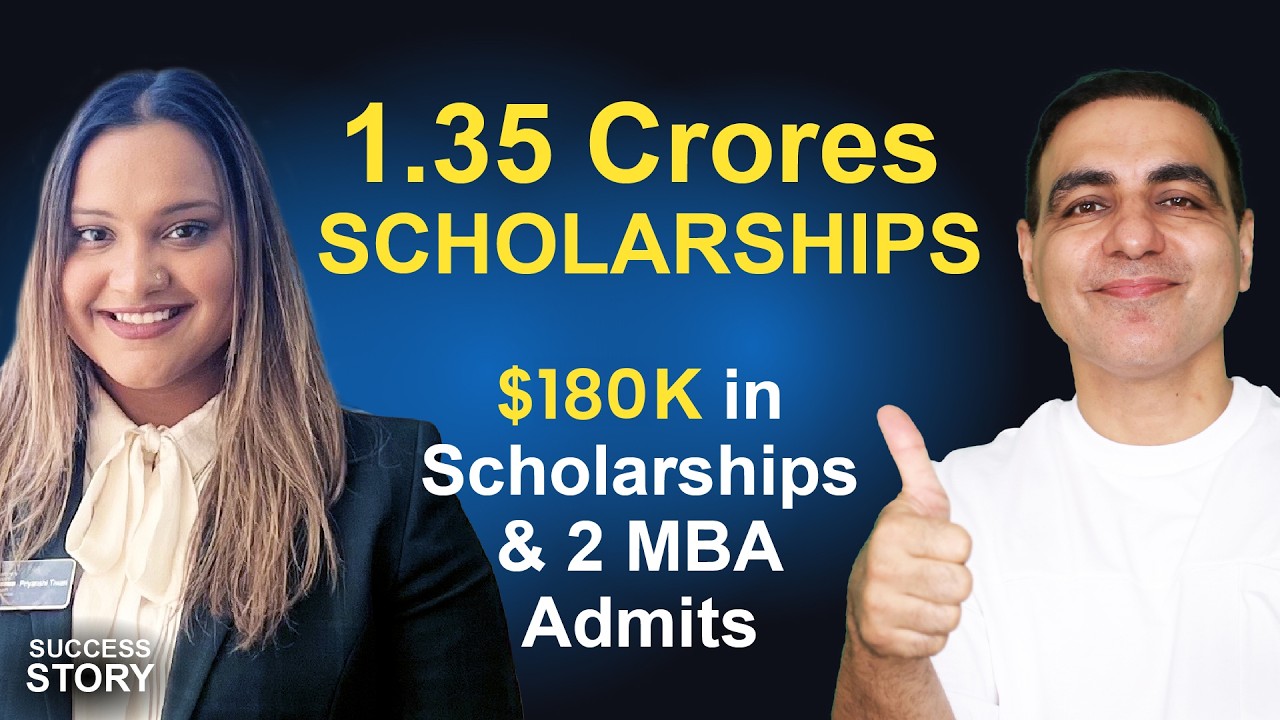
Before we dive into the case study, here is a quick video from Priyanshi
In the last 18 years, I've worked with over 1,500 applicants. And a lot of them come from non-conventional backgrounds. People who don't have the big company names, who don't have five or six years of experience, who think their profile is weak because it doesn't look like everybody else's. Priyanshi was one of those people. When she came to us, she had about 2 years of work experience at a small agency that nobody in the admissions world would recognize. No Fortune 500 name. No structured corporate career. And she was convinced this was a problem.
But here's the thing. It wasn't a problem. It was actually her biggest asset. We just had to show the schools why.
When Priyanshi first came to us, her goals were all over the place. She wanted to work at Google, Coca-Cola, McDonald's, and was even thinking about a dual doctoral degree in Marketing and Psychology. Now, I've seen this before. A lot of candidates come in with goals that sound ambitious but don't connect to their actual background. And the issue is that admissions committees will see right through it. If you're coming from a small agency with 2 years of experience, and you write in your application that you want to join Coca-Cola's marketing leadership or McDonald's strategy team, the school is going to have serious reservations. They're going to ask: what in your background makes us believe you can actually crack these organizations?
So I told her, these goals are not going to work. Not because they're bad goals, but because they don't fit your profile. What does fit your profile is management consulting. Think about it. At her agency, she'd been working directly with clients, putting together proposals, making strategic calls without a big team behind her. That's consulting work. She'd been doing it every day without calling it that. MBB firms want people who can walk into a messy client situation and structure it into something actionable. Priyanshi had been doing exactly that. So we built her career goals around consulting, and suddenly her entire background made sense as a story.
But the goals were only one piece of the puzzle. The bigger challenge was this: she had about 2 years of experience when we started, and roughly 3 years by the time she'd be joining the program. Most admits at her target schools carry five to six. No recognizable company name. A small-agency background that, if you position it badly, looks like she couldn't get a corporate job rather than that she chose a place where she could own things from day one.
Admissions committees at T25 schools see hundreds of applications every round from people with conventional backgrounds, the big-four consulting stints, the structured rotational programs, the safe corporate paths. When you come from a non-traditional background, you don't need to apologize for it. You need to make the committee see why your background gives you something those conventional candidates don't have. That's the shift. And that's where most applications either break through or just blend in with everyone else.
Once the consulting goal was locked in, everything else fell into place. We built one focused story: a sharp professional who'd worked in a small, client-facing environment, moving into management consulting where that direct client experience and comfort with ambiguity would set her apart from every candidate who'd spent their career inside a big, structured organization. We didn't hide her small-agency background. We put it front and center. She hadn't just "worked at" a company. She'd managed client relationships herself, put together deliverables without templates, and owned revenue outcomes that most people at big firms don't touch until year four or five.
The school selection was very deliberate. Georgetown McDonough, where 30% of the class goes into consulting and the program genuinely values people who bring real client-facing experience, not just polished corporate resumes. Emory Goizueta, where the class size is small, around 165 students, so the admissions committee can actually invest in non-traditional profiles because every student gets strong career support and direct access to recruiting. Both schools also have scholarship money that goes to differentiated profiles, not just high test scores and big logos.
I also want to add something here because this is a lesson for every applicant who doesn't have a brand-name employer on their resume. The instinct is always to downplay your company and talk about your functional skills instead. We did the exact opposite with Priyanshi. We led with the fact that she'd worked in a small, unstructured environment. Because at schools like Georgetown and Emory, that tells them you have initiative, you can own client relationships, you have an enterprising mindset. Those are qualities they actively look for but rarely see in applicants coming from big structured companies. So if you're applying from a small company or a small agency, don't hide it. Show them that you delivered results without any big brand doing the work for you.
The essays followed the same logic. Instead of writing about what she didn't have, we wrote about what she'd actually done. The client work she'd owned end-to-end. The proposals she'd built without a senior partner checking every slide. The way she'd learned to win business when there's no brand name opening doors for you. These aren't small-agency stories. These are leadership stories. That's how we wrote them, and that's how the committees read them.
If you look at PythaGURUS reviews( or Jatin Bhandari Reviews) from candidates who've been through this process, you'll see a pattern: the work is never about fixing what's wrong with your profile. It's about finding the angle that makes what you already have land differently with the committee( Unless it is a Low GPA or a serious work experience Gap)
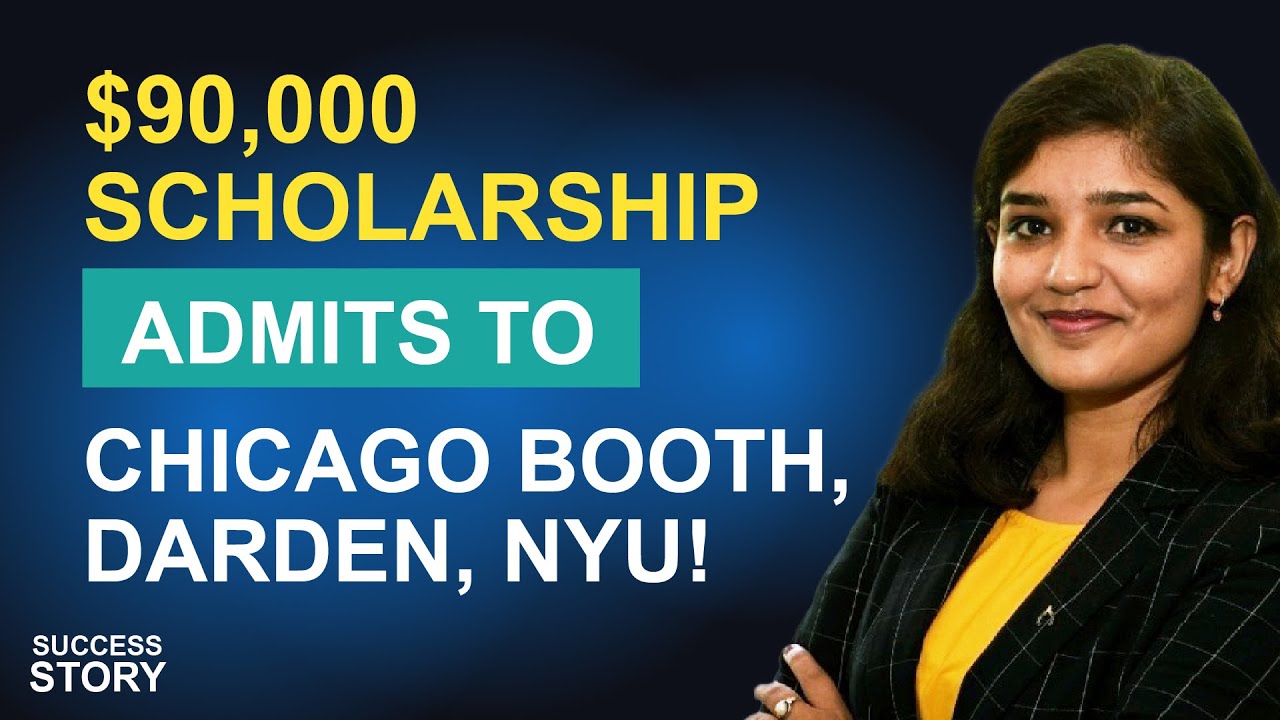
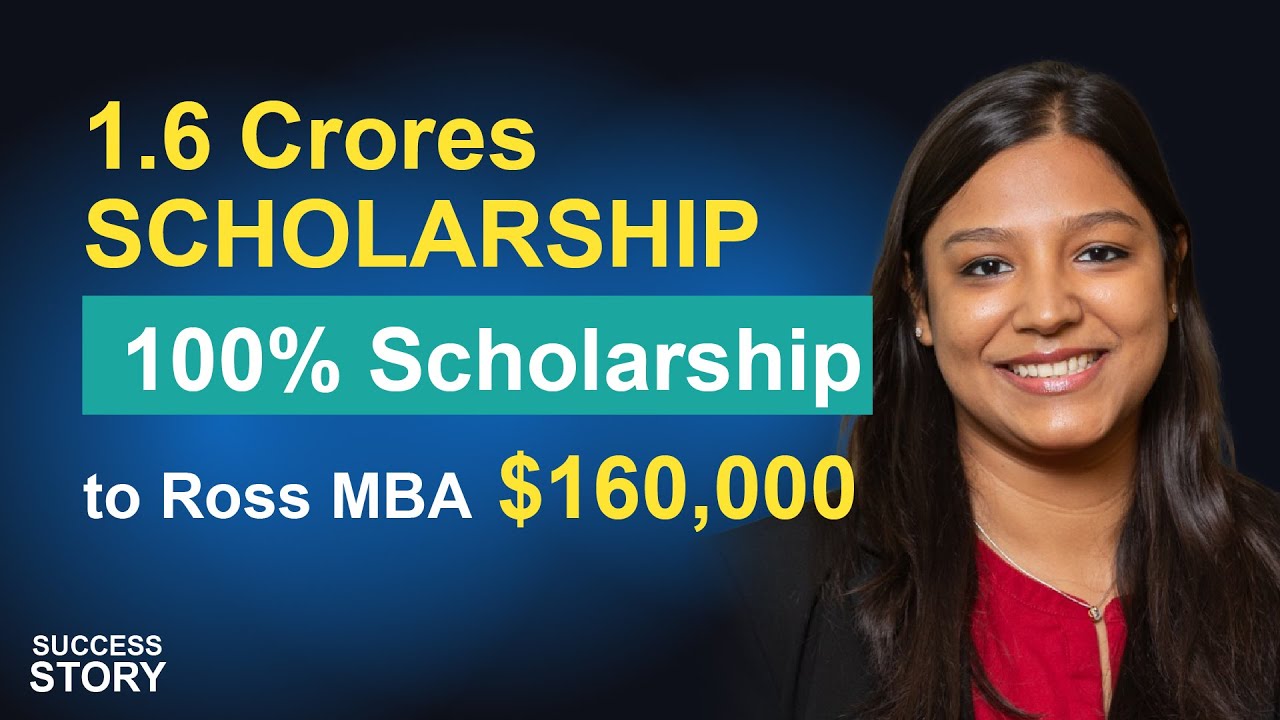
Priyanshi got into two US top 25 programs with $90,000 scholarships at each school. That's ₹1.35 crores total. And she was the only person in her admitted class with just 3 years of experience. Not the weakest profile in the room. The most different one.
Here's something worth thinking about if you're applying with less experience or a non-traditional background. Schools like Georgetown and Emory don't give $90,000 scholarships to candidates they feel sorry for. They give that money to people they believe will bring something to the class that nobody else can. The scholarship wasn't in spite of her background. It was because of it.
If you're sitting on a profile that doesn't look like the "typical" MBA candidate, that might be exactly what makes it work.
Happy to answer questions about similar profiles.
Jatin [email protected]
https://pythagurus.in
Before we dive into the case study, here is a quick video from Priyanshi
In the last 18 years, I've worked with over 1,500 applicants. And a lot of them come from non-conventional backgrounds. People who don't have the big company names, who don't have five or six years of experience, who think their profile is weak because it doesn't look like everybody else's. Priyanshi was one of those people. When she came to us, she had about 2 years of work experience at a small agency that nobody in the admissions world would recognize. No Fortune 500 name. No structured corporate career. And she was convinced this was a problem.
But here's the thing. It wasn't a problem. It was actually her biggest asset. We just had to show the schools why.
When Priyanshi first came to us, her goals were all over the place. She wanted to work at Google, Coca-Cola, McDonald's, and was even thinking about a dual doctoral degree in Marketing and Psychology. Now, I've seen this before. A lot of candidates come in with goals that sound ambitious but don't connect to their actual background. And the issue is that admissions committees will see right through it. If you're coming from a small agency with 2 years of experience, and you write in your application that you want to join Coca-Cola's marketing leadership or McDonald's strategy team, the school is going to have serious reservations. They're going to ask: what in your background makes us believe you can actually crack these organizations?
So I told her, these goals are not going to work. Not because they're bad goals, but because they don't fit your profile. What does fit your profile is management consulting. Think about it. At her agency, she'd been working directly with clients, putting together proposals, making strategic calls without a big team behind her. That's consulting work. She'd been doing it every day without calling it that. MBB firms want people who can walk into a messy client situation and structure it into something actionable. Priyanshi had been doing exactly that. So we built her career goals around consulting, and suddenly her entire background made sense as a story.
But the goals were only one piece of the puzzle. The bigger challenge was this: she had about 2 years of experience when we started, and roughly 3 years by the time she'd be joining the program. Most admits at her target schools carry five to six. No recognizable company name. A small-agency background that, if you position it badly, looks like she couldn't get a corporate job rather than that she chose a place where she could own things from day one.
Admissions committees at T25 schools see hundreds of applications every round from people with conventional backgrounds, the big-four consulting stints, the structured rotational programs, the safe corporate paths. When you come from a non-traditional background, you don't need to apologize for it. You need to make the committee see why your background gives you something those conventional candidates don't have. That's the shift. And that's where most applications either break through or just blend in with everyone else.
Once the consulting goal was locked in, everything else fell into place. We built one focused story: a sharp professional who'd worked in a small, client-facing environment, moving into management consulting where that direct client experience and comfort with ambiguity would set her apart from every candidate who'd spent their career inside a big, structured organization. We didn't hide her small-agency background. We put it front and center. She hadn't just "worked at" a company. She'd managed client relationships herself, put together deliverables without templates, and owned revenue outcomes that most people at big firms don't touch until year four or five.
The school selection was very deliberate. Georgetown McDonough, where 30% of the class goes into consulting and the program genuinely values people who bring real client-facing experience, not just polished corporate resumes. Emory Goizueta, where the class size is small, around 165 students, so the admissions committee can actually invest in non-traditional profiles because every student gets strong career support and direct access to recruiting. Both schools also have scholarship money that goes to differentiated profiles, not just high test scores and big logos.
I also want to add something here because this is a lesson for every applicant who doesn't have a brand-name employer on their resume. The instinct is always to downplay your company and talk about your functional skills instead. We did the exact opposite with Priyanshi. We led with the fact that she'd worked in a small, unstructured environment. Because at schools like Georgetown and Emory, that tells them you have initiative, you can own client relationships, you have an enterprising mindset. Those are qualities they actively look for but rarely see in applicants coming from big structured companies. So if you're applying from a small company or a small agency, don't hide it. Show them that you delivered results without any big brand doing the work for you.
The essays followed the same logic. Instead of writing about what she didn't have, we wrote about what she'd actually done. The client work she'd owned end-to-end. The proposals she'd built without a senior partner checking every slide. The way she'd learned to win business when there's no brand name opening doors for you. These aren't small-agency stories. These are leadership stories. That's how we wrote them, and that's how the committees read them.
If you look at PythaGURUS reviews( or Jatin Bhandari Reviews) from candidates who've been through this process, you'll see a pattern: the work is never about fixing what's wrong with your profile. It's about finding the angle that makes what you already have land differently with the committee( Unless it is a Low GPA or a serious work experience Gap)
Priyanshi got into two US top 25 programs with $90,000 scholarships at each school. That's ₹1.35 crores total. And she was the only person in her admitted class with just 3 years of experience. Not the weakest profile in the room. The most different one.
Here's something worth thinking about if you're applying with less experience or a non-traditional background. Schools like Georgetown and Emory don't give $90,000 scholarships to candidates they feel sorry for. They give that money to people they believe will bring something to the class that nobody else can. The scholarship wasn't in spite of her background. It was because of it.
If you're sitting on a profile that doesn't look like the "typical" MBA candidate, that might be exactly what makes it work.
Happy to answer questions about similar profiles.
Jatin [email protected]
https://pythagurus.in
13 Apr 2026, 02:35
Kudos
Bookmarks
7 Admits, ₹4.6 Crores in Scholarships: How Alisha’s Tech Profile Became the Application That Top MBA Programs Couldn’t Ignore
The Email That Started My Day Right
“Hi Jatin, I wanted to share some good news with you! I’ve gotten admits from 7 out of the 10 schools I had applied to in Round 1. Thanks to you I’m ending this year on a much better note than I could’ve imagined. So thank you for all the times you were straightforward with me even if it meant being harsh at times, for hearing me out (and all my incessant feedbacks), for motivating me, and for making me work so hard that by the end of the process I was prepared for anything directed my way. I hope I’ve made you proud.”
She did.
Scholarships and Admits: 7 Out of 10 in Round 1
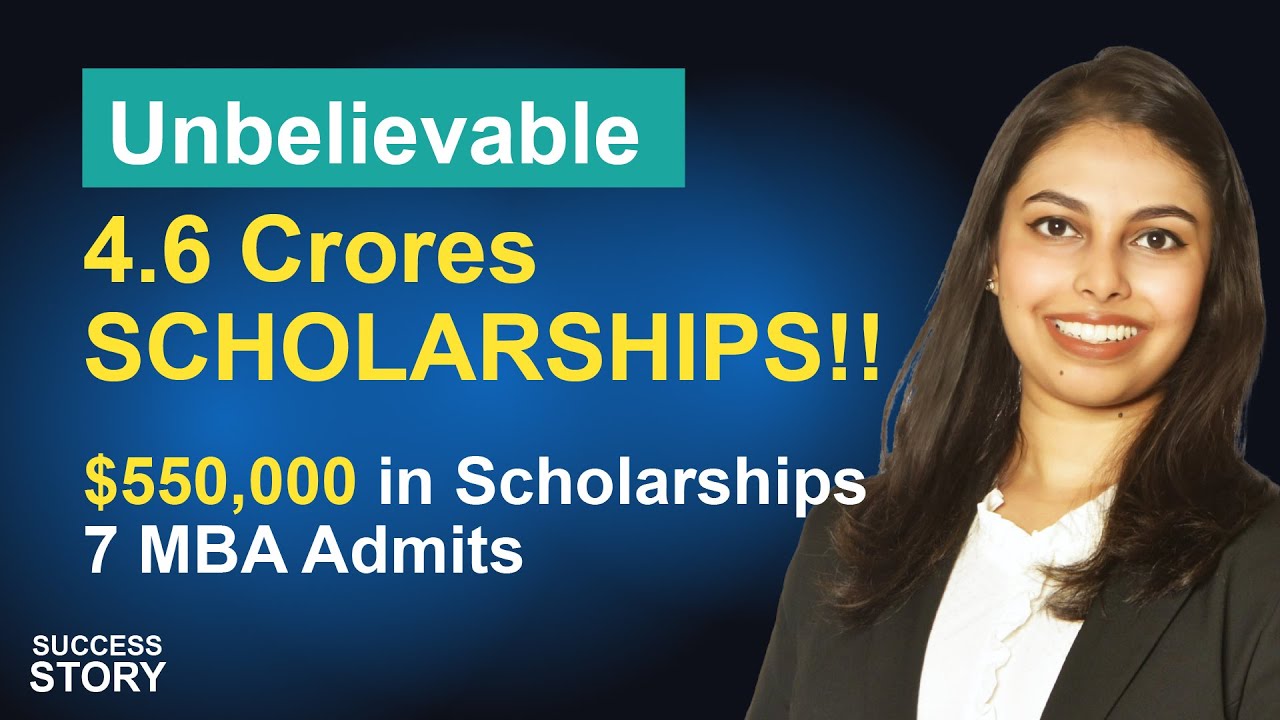
I’ve seen a lot of strong outcomes in 19 years of doing this. Alisha’s is one of the best. Seven admits from ten applications, all in Round 1, with ₹4.6 Crores in combined scholarships.
• ISB Hyderabad
– MBA Admit
• UCLA Anderson
– MBA Admit
• University of Washington Foster
– Forte Fellowship
– USD $74,000 (₹61.4 Lakhs)
• UT Austin McCombs
– Scholarship
– USD $60,000 (₹49.8 Lakhs)
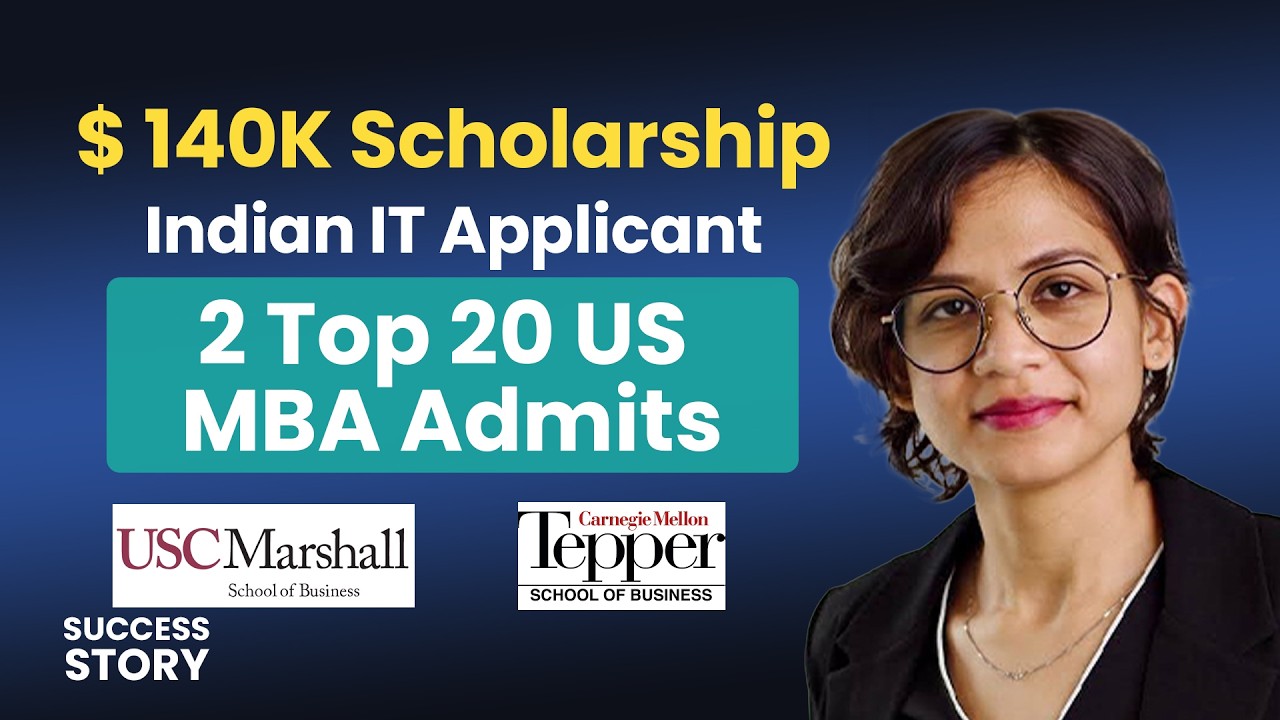
• USC Marshall
– Forte Fellowship
– USD $50,000 (₹41.5 Lakhs)
• Georgia Tech Scheller
– Full Tuition Waiver (Scholarship + RA)
• Indiana Kelley
– Full Tuition Waiver (Forte Fellowship)
Total Scholarships: ₹4.6 Crores
Before we dive into the case study, here's a video from Alisha
The Starting Point: Strong Work, Wrong Language
When Alisha came to me, she was a Senior Software Developer at a global networking company. She’d worked on high-stakes projects for major financial institutions, government agencies, and telecom companies. She’d led international teams, filed a utility patent, and her work had driven tens of millions of dollars in client revenue. But her resume read like a technical spec sheet, and her understanding of post-MBA career paths was surface-level at best.
This is the pattern I see constantly with Indian tech professionals applying to business school. They think the hard part is getting the resume right or writing a good essay. It’s not. The hard part is building such a deep understanding of where you’re headed that every part of your application, your resume, your essays, your interviews, your networking calls, all of it starts coming from the same place of genuine conviction. That’s where the real work with Alisha began.
Going Deep: Management Consulting Mastery and Product Management Mastery
Alisha was targeting both management consulting and product management post-MBA. When she first told me this, her understanding of both paths was what I’d call preliminary. She knew she wanted consulting or PM. She couldn’t tell me what an Engagement Manager does at McKinsey versus a Principal at BCG. She couldn’t articulate what a Product Manager at Google actually owns on a daily basis versus what an engineer does. And that’s a problem, because admissions committees can smell hollow goals from the first paragraph.
So before we touched a single essay, I put her through our Management Consulting Mastery and Product Management Mastery modules. These aren’t generic career guides you can Google. They’re built specifically for MBA applications. They cover the full career ecosystem: what consultants and PMs actually do, how the career progression works, which firms and companies hire for these roles, how a tech background specifically connects to each path, and most importantly, what skill gaps an MBA needs to fill.
Here’s why this matters. After completing those modules, Alisha didn’t sound like someone who wanted a trendy post-MBA job title. She sounded like someone who genuinely understood the consulting and PM worlds. She could explain why her experience solving complex technical problems for high-stakes clients mapped directly to what MBB firms look for. She could articulate why her user-facing project work, where she’d collaborated with stakeholders to tailor platforms to their operational needs, was exactly the kind of customer-centric thinking that PM roles demand.
The whole idea is this: you could have woken Alisha up at 3 AM and asked her why she wanted to pursue consulting, why she needed an MBA for it, and why this specific school was the right place, and she would’ve given you a sharp, organic answer without reaching for a memorized essay paragraph. That level of conviction is what seven admissions committees responded to. Not perfect prose. Genuine understanding.
From Understanding to Application: Tying It All Together
Once that foundation was in place, everything else moved faster. Her resume was reframed to lead with business outcomes instead of technical outputs, because now she understood what admissions committees were actually looking for. Her essays connected her past work to her consulting and PM goals with a specificity that only comes from real understanding, not from reading a school’s website and parroting it back.
And when it came to networking with alumni at her target schools, she wasn’t asking surface-level questions like “tell me about the culture.” She was asking about specific courses, consulting recruiting pipelines, PM club activities, and how the school’s resources mapped to her identified handicaps. Those conversations gave her essays a depth that you can’t fake, and they made her interview answers feel like they came from someone who had already started thinking like an MBA student.
That’s the difference between applying to 10 schools and getting into 2, versus applying to 10 and converting 7.
Lessons from Alisha’s Success
1. Understand Your Career Path Before You Write a Single Essay. If you can’t explain what a management consultant or product manager actually does on a daily basis, your goals will sound hollow to any admissions committee. Build genuine understanding first. The essays will follow.
2. Reframe Your Resume in Business Language. If an admissions reader without a tech background can’t understand your impact, your resume isn’t ready. Lead with teams, clients, and business outcomes, not protocols and system metrics.
3. Organic Conviction Beats Polished Writing. Admissions committees and interviewers can tell the difference between someone who memorized their essay answers and someone who genuinely understands their goals. The depth of your preparation shows in ways you can’t control, in follow-up questions, in networking calls, in how you react when an interviewer pushes back.
4. Volume Works If the Foundation Is There. Alisha applied to 10 schools in Round 1 and converted 7. That hit rate only happens when your understanding of your goals, your career path, and your school fit is so strong that it translates across multiple applications without dilution.
Alisha’s 7 admits and ₹4.6 Crores in scholarships from UCLA Anderson, ISB, Foster, McCombs, Marshall, Scheller, and Kelley didn’t come from a resume rewrite or a set of well-edited essays. They came from building a genuine, organic understanding of where she was headed and why an MBA was the right path to get there. The Consulting Mastery and Product Management Mastery training gave her a depth of conviction that showed in every essay, every networking call, and every interview. That’s what admissions committees are really evaluating, not your language, but whether you actually believe what you’re writing.
Read more PythaGURUS reviews and Jatin Bhandari reviews from candidates who’ve been through this process on our WEBSITE
Happy to answer questions about similar profiles.
Jatin
[email protected]
https://pythagurus.in
The Email That Started My Day Right
“Hi Jatin, I wanted to share some good news with you! I’ve gotten admits from 7 out of the 10 schools I had applied to in Round 1. Thanks to you I’m ending this year on a much better note than I could’ve imagined. So thank you for all the times you were straightforward with me even if it meant being harsh at times, for hearing me out (and all my incessant feedbacks), for motivating me, and for making me work so hard that by the end of the process I was prepared for anything directed my way. I hope I’ve made you proud.”
She did.
Scholarships and Admits: 7 Out of 10 in Round 1
I’ve seen a lot of strong outcomes in 19 years of doing this. Alisha’s is one of the best. Seven admits from ten applications, all in Round 1, with ₹4.6 Crores in combined scholarships.
• ISB Hyderabad
– MBA Admit
• UCLA Anderson
– MBA Admit
• University of Washington Foster
– Forte Fellowship
– USD $74,000 (₹61.4 Lakhs)
• UT Austin McCombs
– Scholarship
– USD $60,000 (₹49.8 Lakhs)
• USC Marshall
– Forte Fellowship
– USD $50,000 (₹41.5 Lakhs)
• Georgia Tech Scheller
– Full Tuition Waiver (Scholarship + RA)
• Indiana Kelley
– Full Tuition Waiver (Forte Fellowship)
Total Scholarships: ₹4.6 Crores
Before we dive into the case study, here's a video from Alisha
The Starting Point: Strong Work, Wrong Language
When Alisha came to me, she was a Senior Software Developer at a global networking company. She’d worked on high-stakes projects for major financial institutions, government agencies, and telecom companies. She’d led international teams, filed a utility patent, and her work had driven tens of millions of dollars in client revenue. But her resume read like a technical spec sheet, and her understanding of post-MBA career paths was surface-level at best.
This is the pattern I see constantly with Indian tech professionals applying to business school. They think the hard part is getting the resume right or writing a good essay. It’s not. The hard part is building such a deep understanding of where you’re headed that every part of your application, your resume, your essays, your interviews, your networking calls, all of it starts coming from the same place of genuine conviction. That’s where the real work with Alisha began.
Going Deep: Management Consulting Mastery and Product Management Mastery
Alisha was targeting both management consulting and product management post-MBA. When she first told me this, her understanding of both paths was what I’d call preliminary. She knew she wanted consulting or PM. She couldn’t tell me what an Engagement Manager does at McKinsey versus a Principal at BCG. She couldn’t articulate what a Product Manager at Google actually owns on a daily basis versus what an engineer does. And that’s a problem, because admissions committees can smell hollow goals from the first paragraph.
So before we touched a single essay, I put her through our Management Consulting Mastery and Product Management Mastery modules. These aren’t generic career guides you can Google. They’re built specifically for MBA applications. They cover the full career ecosystem: what consultants and PMs actually do, how the career progression works, which firms and companies hire for these roles, how a tech background specifically connects to each path, and most importantly, what skill gaps an MBA needs to fill.
Here’s why this matters. After completing those modules, Alisha didn’t sound like someone who wanted a trendy post-MBA job title. She sounded like someone who genuinely understood the consulting and PM worlds. She could explain why her experience solving complex technical problems for high-stakes clients mapped directly to what MBB firms look for. She could articulate why her user-facing project work, where she’d collaborated with stakeholders to tailor platforms to their operational needs, was exactly the kind of customer-centric thinking that PM roles demand.
The whole idea is this: you could have woken Alisha up at 3 AM and asked her why she wanted to pursue consulting, why she needed an MBA for it, and why this specific school was the right place, and she would’ve given you a sharp, organic answer without reaching for a memorized essay paragraph. That level of conviction is what seven admissions committees responded to. Not perfect prose. Genuine understanding.
From Understanding to Application: Tying It All Together
Once that foundation was in place, everything else moved faster. Her resume was reframed to lead with business outcomes instead of technical outputs, because now she understood what admissions committees were actually looking for. Her essays connected her past work to her consulting and PM goals with a specificity that only comes from real understanding, not from reading a school’s website and parroting it back.
And when it came to networking with alumni at her target schools, she wasn’t asking surface-level questions like “tell me about the culture.” She was asking about specific courses, consulting recruiting pipelines, PM club activities, and how the school’s resources mapped to her identified handicaps. Those conversations gave her essays a depth that you can’t fake, and they made her interview answers feel like they came from someone who had already started thinking like an MBA student.
That’s the difference between applying to 10 schools and getting into 2, versus applying to 10 and converting 7.
Lessons from Alisha’s Success
1. Understand Your Career Path Before You Write a Single Essay. If you can’t explain what a management consultant or product manager actually does on a daily basis, your goals will sound hollow to any admissions committee. Build genuine understanding first. The essays will follow.
2. Reframe Your Resume in Business Language. If an admissions reader without a tech background can’t understand your impact, your resume isn’t ready. Lead with teams, clients, and business outcomes, not protocols and system metrics.
3. Organic Conviction Beats Polished Writing. Admissions committees and interviewers can tell the difference between someone who memorized their essay answers and someone who genuinely understands their goals. The depth of your preparation shows in ways you can’t control, in follow-up questions, in networking calls, in how you react when an interviewer pushes back.
4. Volume Works If the Foundation Is There. Alisha applied to 10 schools in Round 1 and converted 7. That hit rate only happens when your understanding of your goals, your career path, and your school fit is so strong that it translates across multiple applications without dilution.
Alisha’s 7 admits and ₹4.6 Crores in scholarships from UCLA Anderson, ISB, Foster, McCombs, Marshall, Scheller, and Kelley didn’t come from a resume rewrite or a set of well-edited essays. They came from building a genuine, organic understanding of where she was headed and why an MBA was the right path to get there. The Consulting Mastery and Product Management Mastery training gave her a depth of conviction that showed in every essay, every networking call, and every interview. That’s what admissions committees are really evaluating, not your language, but whether you actually believe what you’re writing.
Read more PythaGURUS reviews and Jatin Bhandari reviews from candidates who’ve been through this process on our WEBSITE
Happy to answer questions about similar profiles.
Jatin
[email protected]
https://pythagurus.in
16 Apr 2026, 02:50
Kudos
Bookmarks
From 3 Rejections to Yale SOM and Tuck: How Rahul Nair’s Re-Application Strategy Landed Him Two Ivy League MBA Admits
“This Time, My Applications Were Truly Mine”
“This time, my applications were truly mine, not a fabricated version of what someone thought an ideal candidate should look like.”
Admits: Two Ivy League Programs
Rahul’s results are the strongest possible answer to a year of rejections. Two Ivy League admits, earned the right way.
• Yale School of Management
– MBA Admit
• Tuck School of Business (Dartmouth College)
– MBA Admit
Before we dive into the casestudy, here's a video from Rahul
What Went Wrong the First Time
Rahul had applied to three schools the previous year with another consultant. He was rejected from all three. When he came to me, I could see why.
The problem wasn’t Rahul’s profile. He had a technical background in the metro rail industry, with real project leadership and operational impact. The problem was how the previous applications had been built. The goals were generic. The essays didn’t sound like him. And by Rahul’s own account, he’d been asked to create narratives that weren’t authentic to who he was.
I see this often with re-applicants. The first consultant treats admissions as a language exercise, polishing essays until they sound impressive but hollow. The candidate walks into an interview unable to defend their own story because it isn’t really their story. Admissions committees can tell. That’s what leads to rejections even when the profile is strong.
“In my first one-on-one with Jatin, he asked if I was ready to accept real, honest feedback,” Rahul said. “It wasn’t about painting rainbows. It was about facing the truth and rewriting my story from the ground up.”
Rebuilding the Goals: Metro Rail to Strategy Consulting to Impact Investing
Rahul’s initial goals from the previous cycle had been about transitioning into innovation and product management. Reasonable, but they lacked the specificity and career logic that schools like Yale and Tuck evaluate at a deep level.
We rebuilt his goals entirely. Short-term: strategy consulting at an MBB firm, where his background in the metro rail industry would give him a unique lens on infrastructure, operations, and large-scale project challenges. Long-term: impact investing, specifically backing businesses in EdTech and sustainability that create measurable societal change.
This wasn’t a goal we invented for him. It came from weeks of digging into what Rahul actually cared about, what patterns showed up across his career, and where his skills could create the most differentiated value. The consulting short-term goal connected to his analytical and project leadership strengths. The impact investing long-term goal connected to a personal conviction about using business to drive social outcomes. The narrative had a spine.
And here’s the part that mattered most. By the time we finished, Rahul didn’t need to memorise his goals. He believed in them. That organic conviction is what Yale and Tuck heard in his interviews.
The Alumni Networking Challenge: From Website Research to Real Conversations
In his first application cycle, Rahul had treated networking as optional. He thought school websites had all the answers. That’s a mistake I see constantly with Indian applicants, because we’re not trained to network. We’re trained to take exams, study in isolation, and compete on marks. Reaching out to a stranger sitting in New York or London and having a 40-minute conversation? That terrifies most Indian applicants. And because it terrifies them, they skip it.
We put Rahul through our Alumni Networking Challenge before he wrote a single essay. The training is structured and progressive. The first 3 to 4 calls are always awkward, that’s normal. But as Rahul kept going, something shifted. He stopped dreading the conversations and started looking forward to them. By the time he’d worked through the full training, he sounded like someone who belonged in a top MBA program.
The training taught Rahul how to build a 40-second elevator pitch (not the interview version, the networking version, where the alumni isn’t there to listen to you, they’re there to answer your questions). It taught him how to turn his identified handicaps, the specific skill gaps his MBA would fill, into sharp questions that produced real insights. Not generic questions like “tell me about the culture.” Specific questions tied to his consulting goals: how does the school’s curriculum build structured problem-solving skills, what does the internship recruiting process look like for career switchers, how did alumni from non-traditional backgrounds position themselves for MBB.
By the time Rahul was done, his “Why Yale” and “Why Tuck” essays were built on real conversations with real alumni, not bullet points from a website. And when his interviewers asked “Why this school?” he didn’t give rehearsed answers. He referenced specific people, specific insights, specific moments from his networking calls that had shaped his thinking.
“The interview wasn’t about proving myself,” Rahul said. “It was about having a genuine conversation. That shift in mindset made all the difference.”
That shift didn’t happen because Rahul is naturally outgoing. It happened because the Alumni Networking Challenge trained him, call by call, to move from being an introvert who solved problems in isolation to being someone who could connect with strangers across the world and have meaningful, productive conversations. That skill didn’t just get him into Yale and Tuck. It’s a skill he’ll use for the rest of his career. Read more success stories of similar profiles.
Lessons from Rahul’s Success
1. Rejections Are a Positioning Problem, Not a Profile Problem. Rahul’s profile didn’t change between his first and second application cycle. His positioning did. If you’ve been rejected, don’t assume your profile is weak. Ask whether your goals, essays, and narrative actually represented you authentically.
2. Fabricated Narratives Get Caught. Authentic Ones Don’t. If your essays don’t sound like you, you won’t be able to defend them in an interview. Admissions committees are trained to spot the gap between a polished essay and a candidate who can’t back it up in person. Build a story you actually believe in.
3. Re-Applicants Can Aim Higher, Not Lower. Rahul went from three rejections at other programs to two Ivy League admits at Yale and Tuck. Re-applying doesn’t mean settling. With the right strategy, it means upgrading.
4. Organic Conviction Shows Up in Interviews. You can’t fake belief in your own goals during a 45-minute conversation. If you genuinely understand why you want consulting, why you need an MBA, and why this specific school, the interview becomes a conversation. If you’re reciting memorised answers, the interviewer knows.
Rahul Nair’s admits at Yale School of Management and Tuck came one year after three straight rejections. The profile didn’t change. The strategy did. Goals rebuilt from the ground up around consulting and impact investing. Essays that were genuinely his, not fabricated narratives from a consultant’s template. Networking that shaped his school selection instead of just checking a box. And interviews where he spoke from conviction, not from a script. That’s what a re-application looks like when it’s done right.
Watch more PythaGURUS reviews and Jatin Bhandari reviews from candidates who’ve been through this process.
Happy to answer questions about similar profiles.
Jatin
[email protected]
https://pythagurus.in
“This Time, My Applications Were Truly Mine”
“This time, my applications were truly mine, not a fabricated version of what someone thought an ideal candidate should look like.”
Admits: Two Ivy League Programs
Rahul’s results are the strongest possible answer to a year of rejections. Two Ivy League admits, earned the right way.
• Yale School of Management
– MBA Admit
• Tuck School of Business (Dartmouth College)
– MBA Admit
Before we dive into the casestudy, here's a video from Rahul
What Went Wrong the First Time
Rahul had applied to three schools the previous year with another consultant. He was rejected from all three. When he came to me, I could see why.
The problem wasn’t Rahul’s profile. He had a technical background in the metro rail industry, with real project leadership and operational impact. The problem was how the previous applications had been built. The goals were generic. The essays didn’t sound like him. And by Rahul’s own account, he’d been asked to create narratives that weren’t authentic to who he was.
I see this often with re-applicants. The first consultant treats admissions as a language exercise, polishing essays until they sound impressive but hollow. The candidate walks into an interview unable to defend their own story because it isn’t really their story. Admissions committees can tell. That’s what leads to rejections even when the profile is strong.
“In my first one-on-one with Jatin, he asked if I was ready to accept real, honest feedback,” Rahul said. “It wasn’t about painting rainbows. It was about facing the truth and rewriting my story from the ground up.”
Rebuilding the Goals: Metro Rail to Strategy Consulting to Impact Investing
Rahul’s initial goals from the previous cycle had been about transitioning into innovation and product management. Reasonable, but they lacked the specificity and career logic that schools like Yale and Tuck evaluate at a deep level.
We rebuilt his goals entirely. Short-term: strategy consulting at an MBB firm, where his background in the metro rail industry would give him a unique lens on infrastructure, operations, and large-scale project challenges. Long-term: impact investing, specifically backing businesses in EdTech and sustainability that create measurable societal change.
This wasn’t a goal we invented for him. It came from weeks of digging into what Rahul actually cared about, what patterns showed up across his career, and where his skills could create the most differentiated value. The consulting short-term goal connected to his analytical and project leadership strengths. The impact investing long-term goal connected to a personal conviction about using business to drive social outcomes. The narrative had a spine.
And here’s the part that mattered most. By the time we finished, Rahul didn’t need to memorise his goals. He believed in them. That organic conviction is what Yale and Tuck heard in his interviews.
The Alumni Networking Challenge: From Website Research to Real Conversations
In his first application cycle, Rahul had treated networking as optional. He thought school websites had all the answers. That’s a mistake I see constantly with Indian applicants, because we’re not trained to network. We’re trained to take exams, study in isolation, and compete on marks. Reaching out to a stranger sitting in New York or London and having a 40-minute conversation? That terrifies most Indian applicants. And because it terrifies them, they skip it.
We put Rahul through our Alumni Networking Challenge before he wrote a single essay. The training is structured and progressive. The first 3 to 4 calls are always awkward, that’s normal. But as Rahul kept going, something shifted. He stopped dreading the conversations and started looking forward to them. By the time he’d worked through the full training, he sounded like someone who belonged in a top MBA program.
The training taught Rahul how to build a 40-second elevator pitch (not the interview version, the networking version, where the alumni isn’t there to listen to you, they’re there to answer your questions). It taught him how to turn his identified handicaps, the specific skill gaps his MBA would fill, into sharp questions that produced real insights. Not generic questions like “tell me about the culture.” Specific questions tied to his consulting goals: how does the school’s curriculum build structured problem-solving skills, what does the internship recruiting process look like for career switchers, how did alumni from non-traditional backgrounds position themselves for MBB.
By the time Rahul was done, his “Why Yale” and “Why Tuck” essays were built on real conversations with real alumni, not bullet points from a website. And when his interviewers asked “Why this school?” he didn’t give rehearsed answers. He referenced specific people, specific insights, specific moments from his networking calls that had shaped his thinking.
“The interview wasn’t about proving myself,” Rahul said. “It was about having a genuine conversation. That shift in mindset made all the difference.”
That shift didn’t happen because Rahul is naturally outgoing. It happened because the Alumni Networking Challenge trained him, call by call, to move from being an introvert who solved problems in isolation to being someone who could connect with strangers across the world and have meaningful, productive conversations. That skill didn’t just get him into Yale and Tuck. It’s a skill he’ll use for the rest of his career. Read more success stories of similar profiles.
Lessons from Rahul’s Success
1. Rejections Are a Positioning Problem, Not a Profile Problem. Rahul’s profile didn’t change between his first and second application cycle. His positioning did. If you’ve been rejected, don’t assume your profile is weak. Ask whether your goals, essays, and narrative actually represented you authentically.
2. Fabricated Narratives Get Caught. Authentic Ones Don’t. If your essays don’t sound like you, you won’t be able to defend them in an interview. Admissions committees are trained to spot the gap between a polished essay and a candidate who can’t back it up in person. Build a story you actually believe in.
3. Re-Applicants Can Aim Higher, Not Lower. Rahul went from three rejections at other programs to two Ivy League admits at Yale and Tuck. Re-applying doesn’t mean settling. With the right strategy, it means upgrading.
4. Organic Conviction Shows Up in Interviews. You can’t fake belief in your own goals during a 45-minute conversation. If you genuinely understand why you want consulting, why you need an MBA, and why this specific school, the interview becomes a conversation. If you’re reciting memorised answers, the interviewer knows.
Rahul Nair’s admits at Yale School of Management and Tuck came one year after three straight rejections. The profile didn’t change. The strategy did. Goals rebuilt from the ground up around consulting and impact investing. Essays that were genuinely his, not fabricated narratives from a consultant’s template. Networking that shaped his school selection instead of just checking a box. And interviews where he spoke from conviction, not from a script. That’s what a re-application looks like when it’s done right.
Watch more PythaGURUS reviews and Jatin Bhandari reviews from candidates who’ve been through this process.
Happy to answer questions about similar profiles.
Jatin
[email protected]
https://pythagurus.in