Events & Promotions
|
|

GMAT Club Daily Prep
Thank you for using the timer - this advanced tool can estimate your performance and suggest more practice questions. We have subscribed you to Daily Prep Questions via email.
Customized
for You
Track
Your Progress
Practice
Pays
Not interested in getting valuable practice questions and articles delivered to your email? No problem, unsubscribe here.
 Sep 13
12:30 AM EDT
-01:30 AM EDT
Struggling to find the right strategies to score a 99 %ile on GMAT Focus? Riya (GMAT 715) boosted her score by 100-points in just 15 days! Discover how the right mentorship, tailored strategies, and an unwavering mindset can transform your GMAT prep. Sep 13
01:30 AM EDT
-02:30 AM EDT
At one point, she believed GMAT wasn’t for her. After scoring 595, self-doubt crept in and she questioned her potential. But instead of quitting, she made the right strategic changes. The result? A remarkable comeback to 695. Check out how Saakshi did it. Sep 15
07:00 PM EDT
-09:00 PM EST
Elite scores are possible when you enroll in a powerful GMAT course, taught live online + 6 months access to TTP OnDemand video courses included! Class starts Tues/Thurs Sept. 15, 2026 - Nov. 15, 2027, 7:00pm-9:00pm EST Sep 18
08:00 PM PDT
-09:00 PM PDT
Video explanations + diagnosis of 10 weakest areas + 150+ short videos + study plan! Sep 21
07:00 PM EDT
-10:00 PM EDT
Boost your GMAT score in less than one month in a live online class + 6 months access to TTP OnDemand video courses included! Class starts Mon, Tues, Wed, Thur, Fri Sept. 21, 2026 - Oct. 9, 2027, 7:00pm-10:00pm EST


 27 Jul 2020, 01:51
Kudos
Bookmarks


D
Be sure to select an answer first to save it in the Error Log before revealing the correct answer (OA)!
Difficulty:
 85%
(hard)
85%
(hard)
Question Stats:
52% (02:53) correct 48%
(02:51)
wrong
based on 73
sessions
48%
(02:51)
wrong
based on 73
sessions
History
Date
Time
Result
Not Attempted Yet
[GMAT math practice question]
\(△ABC\) and \(△CDE\) are equilateral triangles, as the figure shows. What is the measure of the \(∠x\)?
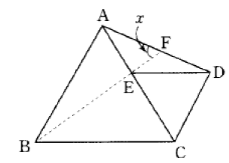
7.27PS.png [ 9.36 KiB | Viewed 7056 times ]
A. \(45°\)
B. \(50°\)
C. \(55°\)
D. \(60°\)
E. \(65°\)
\(△ABC\) and \(△CDE\) are equilateral triangles, as the figure shows. What is the measure of the \(∠x\)?
Attachment:
7.27PS.png [ 9.36 KiB | Viewed 7056 times ]
A. \(45°\)
B. \(50°\)
C. \(55°\)
D. \(60°\)
E. \(65°\)

yashikaaggarwal
Senior Moderator - Masters Forum
Joined: 19 Jan 2020
Last visit: 10 Aug 2026
Posts: 3,095
Given Kudos: 1,510
Location: India
Schools: Cranfield (A) Warwick MiM "23 (M)
GPA: 4
WE:Analyst (Internet and New Media)
27 Jul 2020, 03:05
Kudos
Bookmarks
MathRevolution I think we do need another constraint to prove BE bisects angle B.
Proving all triangles congruent is a long process, and do require a lot of time if one go by logic. Can you check that. Regards
Posted from my mobile device
Proving all triangles congruent is a long process, and do require a lot of time if one go by logic. Can you check that. Regards
Posted from my mobile device
yashikaaggarwal
Senior Moderator - Masters Forum
Joined: 19 Jan 2020
Last visit: 10 Aug 2026
Posts: 3,095
Given Kudos: 1,510
Location: India
Schools: Cranfield (A) Warwick MiM "23 (M)
GPA: 4
WE:Analyst (Internet and New Media)
27 Jul 2020, 04:24
Kudos
Bookmarks
Angle DEC = 60
Angle DEA = 120 (180-DEC = supplementary angle)
Also CEF = 60+Y = Angle EBC + Angle ECB
60+Y = 60+EBC
EBC = Y
Hence we can say,
ED is parallel to BC (alternate angles)
Extend ED till it cut AB at H
Such that angle HEA = angle CED = 60° (opposite angle)
Now. AHE is an equilateral triangle too.
AE = ED
In triangle AED
Angle AED + EAD + EDA = 180
120 + 2EAD = 180
2EAD = 60
EAD = 30°
Draw an altitude EG such that it meet AD at G and
Extend EG such that it meet BC at I.
Now HBEI is a parallelogram, whose opposite angles are equal.
Also parallelogram diagonals bisect angle hence Angle HBE = angle IBE = 30° = Angle DEF = FEG.
In triangle FGE, angle EGF = 90° , angle GEF = 30° and
Remaining angle X = angle EFG = 180-90-30 = 60° .
Answer is D
Posted from my mobile device
Angle DEA = 120 (180-DEC = supplementary angle)
Also CEF = 60+Y = Angle EBC + Angle ECB
60+Y = 60+EBC
EBC = Y
Hence we can say,
ED is parallel to BC (alternate angles)
Extend ED till it cut AB at H
Such that angle HEA = angle CED = 60° (opposite angle)
Now. AHE is an equilateral triangle too.
AE = ED
In triangle AED
Angle AED + EAD + EDA = 180
120 + 2EAD = 180
2EAD = 60
EAD = 30°
Draw an altitude EG such that it meet AD at G and
Extend EG such that it meet BC at I.
Now HBEI is a parallelogram, whose opposite angles are equal.
Also parallelogram diagonals bisect angle hence Angle HBE = angle IBE = 30° = Angle DEF = FEG.
In triangle FGE, angle EGF = 90° , angle GEF = 30° and
Remaining angle X = angle EFG = 180-90-30 = 60° .
Answer is D
Posted from my mobile device
Attachments
IMG_20200727_165231.jpg [ 1.45 MiB | Viewed 6698 times ]