Events & Promotions
|
|

GMAT Club Daily Prep
Thank you for using the timer - this advanced tool can estimate your performance and suggest more practice questions. We have subscribed you to Daily Prep Questions via email.
Customized
for You
Track
Your Progress
Practice
Pays
Not interested in getting valuable practice questions and articles delivered to your email? No problem, unsubscribe here.
 Aug 27
10:00 AM EDT
-11:00 AM EDT
We’ve worked incredibly hard to build TTP into the best test prep experience possible, and it would mean a lot to us to win Newsweek’s 2026 Readers’ Choice Award for Best Test Prep. If TTP has helped you, we’d be incredibly grateful for your vote. Sep 04
10:00 AM PDT
-11:00 AM PDT
What does test anxiety really look like on the GMAT? For many test takers, it does not look like a panic attack. Instead, it shows up as brain fog, rereading, negative comparisons, mental noise.... Sep 06
09:30 AM EDT
-12:30 PM EST
Top scores are possible when you enroll in a powerful EA course, taught live online + 6 months access to TTP OnDemand video courses included! Perfect class schedule and easy course access for working professionals. Class starts Sundays Sept. 6, 2026.- Sep 07
12:01 AM PDT
-11:59 PM PDT
On the 7th, GMAT Club Tests will be Free! Including all the Quizzes, Questions, and Tests. 12 AM - 11:59 PM PDT - Sep 09
07:00 AM PDT
-10:00 AM PDT
Meet AdComs and explore top Master’s programs - MiM, MiF, MSc, MSBA and more. - Application Fee Waivers - Free 1-Week of GMAT Club Tests: - Master's Application Toolkit - Grand Prize Giveaway  Sep 15
07:00 PM EDT
-09:00 PM EST
Elite scores are possible when you enroll in a powerful GMAT course, taught live online + 6 months access to TTP OnDemand video courses included! Class starts Tues/Thurs Sept. 15, 2026 - Nov. 15, 2027, 7:00pm-9:00pm EST Sep 21
08:00 PM EDT
-10:00 PM EDT
Boost your GMAT score in less than one month in a live online class + 6 months access to TTP OnDemand video courses included! Class starts Mon, Tues, Wed, Thur, Fri Sept. 21, 2026 - Oct. 9, 2027, 7:00pm-10:00pm EST



 31 Jan 2026, 00:15
Kudos
Bookmarks
I'm Hitesh – currently working as a Senior Associate. Been in tech for about 7.5 years now. Decided around August 2025 that MBA was the move, and here we are six months later.
Here in this debrief I have tried to break down my journey from a 615-625 to 675 in hope to help some of you 😊
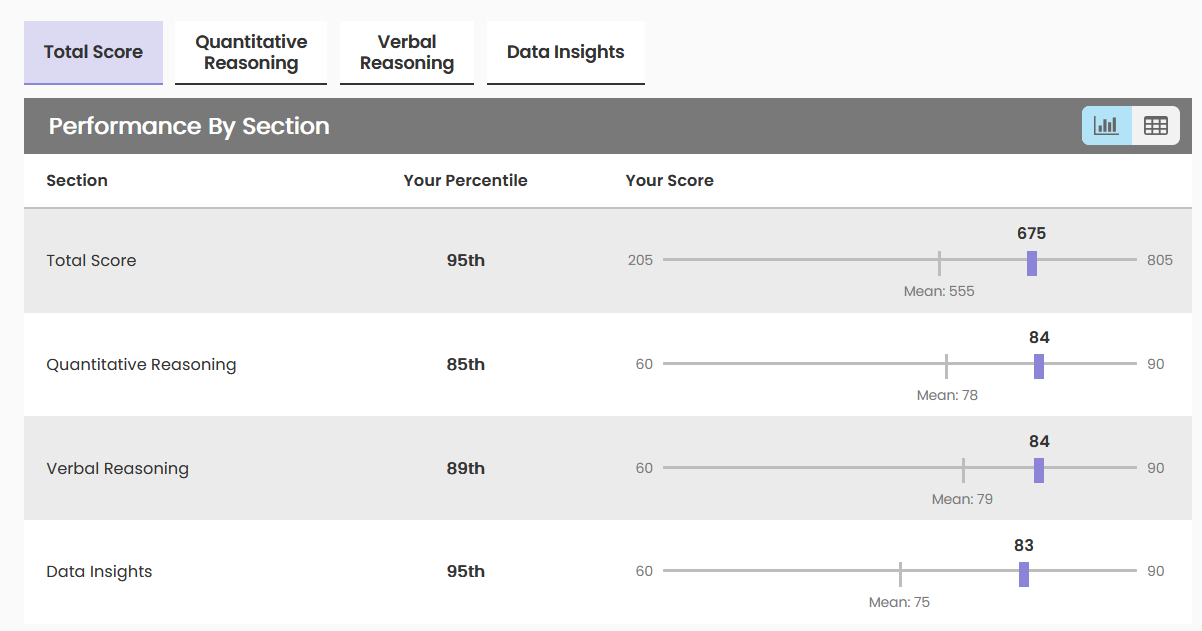
I'm going to be honest about my biggest mistake upfront: I'm a core believer in self-learning. That's how I've built my career in tech – pick up resources, grind through them, figure things out. So naturally, I tried the same approach with GMAT.
Long story short on my first two attempts: I took the self-study route, gave 25-30 mocks, scored 615 in November. Changed my strategy, took attempt two in December – test center issues, panic, scored 625. Two months of grinding and basically stuck in the same place.
That's when I found e-GMAT. I clicked on a free consultation link, spoke with Amruth, and he mentioned the Last Mile Program.
The 21-Day Transformation
Keep in mind – this was Christmas Eve, and my next exam was scheduled for just 21 days later after I enrolled with e-GMAT. I was skeptical, but I was also desperate.
On December 26th, I was assigned my mentor. LMP plan wasn't about practicing MORE – it was about actually understanding what I was doing wrong and fixing it.
The first thing my mentor did surprised me: instead of having me solve more questions, she assigned me portion of courses to complete. At that point, I thought, "Courses? With 21 days left? This doesn't make sense." But I'd already tried my way twice. Time to trust the process.
The Pre-Thinking Revolution
In the Critical Reasoning course, I learned about pre-thinking. Now, I'd read about pre-thinking on GMAT Club posts before. I'd seen e-GMAT mention it multiple times. But honestly? I always thought it wasn't for me. I'd tried it a few times, couldn't make it work, and moved on.
What the course did differently was force me to actually learn the process step by step. The concept is simple but powerful: after reading a CR question, you pause for 5-10 seconds before even looking at the options. You think about what the question is asking. You identify what the passage is actually telling you. You form an expectation of what a correct answer should do.
When I started applying this pause – not just in CR, but across RC, DI, even Quant – my accuracy improved immediately. I stopped falling into traps because I could actually see them. Those attractive wrong answers that used to fool me? They became obvious once I knew what I was looking for before reading the choices.
The thing about pre-thinking is that it feels slower at first. You're adding 5-10 seconds per question. But here's what actually happens: you stop spending 30-60 seconds debating between two wrong answers. The net effect is you're actually faster AND more accurate.
 Cementing Quizzes
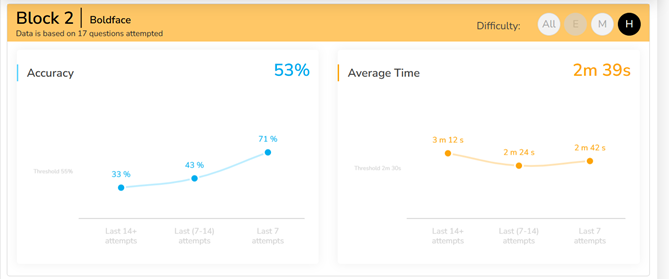
Given the limited time in hand, we started to take cementing quizzes on the scholaranium on e-GMAT to identify my weak areas. These are basically timed quizzes focused on specific question types for medium and hard difficulty level– and they exposed something important: my time pressure problem wasn't about speed. It was about not having a reliable process.
See, when I used free resources, I'd solve questions with the timer off. Two to two-and-a-half minutes per question, no stress. But GMAT doesn't work that way. The cementing quizzes replicated that pressure, and suddenly I could see exactly where my approach was breaking down.
There was one particularly humbling experience. Two-Part Analysis was supposed to be my easiest DI question type. I'd done CAT before, scored 94th percentile. TPA should've been a cakewalk. First cementing quiz: 80%. Not bad. Tried to get to 80% again on the next one. Dropped to 40%.
I couldn't accept it. How could TPA go so wrong? I gave five more cementing quizzes.
That frustration actually led to another breakthrough. When I finally went back to the course material instead of just hammering more practice, I realized I was missing a systematic approach for harder TPAs. The easy ones were fine, but the hard ones required a different strategy.
Data Insights: The "Owning the Data Set" Approach
From 78 (1st attempt) to 73 (2nd attempt) to finally 83 – that jump came from one key change: writing things down.
In the e-GMAT courses, they emphasized something called "owning the data set." The idea is simple: before you start solving, you note down the constraints. For Data Sufficiency, I'd write out what information I have and what I need. For Multi-Source Reasoning, I'd jot down the key constraints from each source before looking at questions.
Here's why this mattered for me: I have a decent working memory. I could usually hold four out of five constraints in my head. But GMAT DS and MSR questions are designed to catch exactly that – the one constraint you forgot. I'd get questions wrong not because I didn't understand them, but because I missed one piece of information.
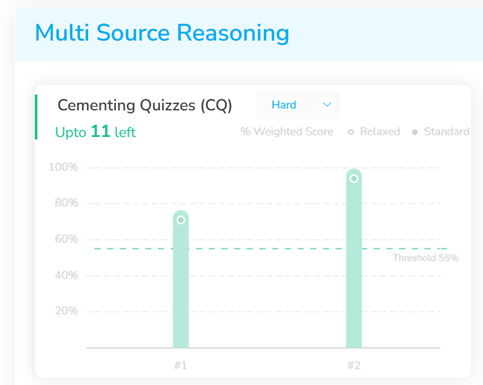 Once I started writing constraints down physically, those "careless" mistakes dropped dramatically. Yes, it takes 10-15 seconds extra per question. But it saves you from spending 2 minutes on a question only to get it wrong because you forgot a constraint.
Test Day: Putting It All Together
Walking into that test center for the third time, I'd accepted something important: if this doesn't work out, I'll prep more and try again in March. That acceptance lowered my stress significantly.
My section order was Verbal → DI → Quant. For DI, I applied everything: constraint writing for DS and MSR, skip strategy for the monster questions, and systematic approaches for TPA and Graphic Interpretation. For Verbal, followed the process on every single question.
Quant was supposed to be my slam dunk. I was hitting Q89 in sectionals, even Q90 in some GMAT Club practice sets. Then exam day came, and the first question was a word problem.
I hate word problems.
I spent 5 minutes on that first question. Five minutes! That completely threw my confidence. Even though I finished all 21 questions with 8 minutes to review, I was second-guessing myself the whole time. I changed three answers during review – all three from incorrect to correct, thankfully. Final score: Q84.
Not my best, but I'll take it. The lesson? Even your strongest section can surprise you. Have a backup plan.
When 675 flashed on the screen, I was honestly relieved. My target was 665 – anything above that was bonus.
All the best everyone!

GMAT-Club-Forum-zs7q2bfw.png [ 66.71 KiB | Viewed 554 times ]

GMAT-Club-Forum-l9vnl8zu.png [ 38.36 KiB | Viewed 547 times ]

GMAT-Club-Forum-vjl7vz0i.png [ 36.44 KiB | Viewed 542 times ]
Here in this debrief I have tried to break down my journey from a 615-625 to 675 in hope to help some of you 😊
I'm going to be honest about my biggest mistake upfront: I'm a core believer in self-learning. That's how I've built my career in tech – pick up resources, grind through them, figure things out. So naturally, I tried the same approach with GMAT.
Long story short on my first two attempts: I took the self-study route, gave 25-30 mocks, scored 615 in November. Changed my strategy, took attempt two in December – test center issues, panic, scored 625. Two months of grinding and basically stuck in the same place.
That's when I found e-GMAT. I clicked on a free consultation link, spoke with Amruth, and he mentioned the Last Mile Program.
The 21-Day Transformation
Keep in mind – this was Christmas Eve, and my next exam was scheduled for just 21 days later after I enrolled with e-GMAT. I was skeptical, but I was also desperate.
On December 26th, I was assigned my mentor. LMP plan wasn't about practicing MORE – it was about actually understanding what I was doing wrong and fixing it.
The first thing my mentor did surprised me: instead of having me solve more questions, she assigned me portion of courses to complete. At that point, I thought, "Courses? With 21 days left? This doesn't make sense." But I'd already tried my way twice. Time to trust the process.
The Pre-Thinking Revolution
In the Critical Reasoning course, I learned about pre-thinking. Now, I'd read about pre-thinking on GMAT Club posts before. I'd seen e-GMAT mention it multiple times. But honestly? I always thought it wasn't for me. I'd tried it a few times, couldn't make it work, and moved on.
What the course did differently was force me to actually learn the process step by step. The concept is simple but powerful: after reading a CR question, you pause for 5-10 seconds before even looking at the options. You think about what the question is asking. You identify what the passage is actually telling you. You form an expectation of what a correct answer should do.
When I started applying this pause – not just in CR, but across RC, DI, even Quant – my accuracy improved immediately. I stopped falling into traps because I could actually see them. Those attractive wrong answers that used to fool me? They became obvious once I knew what I was looking for before reading the choices.
The thing about pre-thinking is that it feels slower at first. You're adding 5-10 seconds per question. But here's what actually happens: you stop spending 30-60 seconds debating between two wrong answers. The net effect is you're actually faster AND more accurate.
Given the limited time in hand, we started to take cementing quizzes on the scholaranium on e-GMAT to identify my weak areas. These are basically timed quizzes focused on specific question types for medium and hard difficulty level– and they exposed something important: my time pressure problem wasn't about speed. It was about not having a reliable process.
See, when I used free resources, I'd solve questions with the timer off. Two to two-and-a-half minutes per question, no stress. But GMAT doesn't work that way. The cementing quizzes replicated that pressure, and suddenly I could see exactly where my approach was breaking down.
There was one particularly humbling experience. Two-Part Analysis was supposed to be my easiest DI question type. I'd done CAT before, scored 94th percentile. TPA should've been a cakewalk. First cementing quiz: 80%. Not bad. Tried to get to 80% again on the next one. Dropped to 40%.
I couldn't accept it. How could TPA go so wrong? I gave five more cementing quizzes.
That frustration actually led to another breakthrough. When I finally went back to the course material instead of just hammering more practice, I realized I was missing a systematic approach for harder TPAs. The easy ones were fine, but the hard ones required a different strategy.
Data Insights: The "Owning the Data Set" Approach
From 78 (1st attempt) to 73 (2nd attempt) to finally 83 – that jump came from one key change: writing things down.
In the e-GMAT courses, they emphasized something called "owning the data set." The idea is simple: before you start solving, you note down the constraints. For Data Sufficiency, I'd write out what information I have and what I need. For Multi-Source Reasoning, I'd jot down the key constraints from each source before looking at questions.
Here's why this mattered for me: I have a decent working memory. I could usually hold four out of five constraints in my head. But GMAT DS and MSR questions are designed to catch exactly that – the one constraint you forgot. I'd get questions wrong not because I didn't understand them, but because I missed one piece of information.
Test Day: Putting It All Together
Walking into that test center for the third time, I'd accepted something important: if this doesn't work out, I'll prep more and try again in March. That acceptance lowered my stress significantly.
My section order was Verbal → DI → Quant. For DI, I applied everything: constraint writing for DS and MSR, skip strategy for the monster questions, and systematic approaches for TPA and Graphic Interpretation. For Verbal, followed the process on every single question.
Quant was supposed to be my slam dunk. I was hitting Q89 in sectionals, even Q90 in some GMAT Club practice sets. Then exam day came, and the first question was a word problem.
I hate word problems.
I spent 5 minutes on that first question. Five minutes! That completely threw my confidence. Even though I finished all 21 questions with 8 minutes to review, I was second-guessing myself the whole time. I changed three answers during review – all three from incorrect to correct, thankfully. Final score: Q84.
Not my best, but I'll take it. The lesson? Even your strongest section can surprise you. Have a backup plan.
When 675 flashed on the screen, I was honestly relieved. My target was 665 – anything above that was bonus.
All the best everyone!
Attachment:
GMAT-Club-Forum-zs7q2bfw.png [ 66.71 KiB | Viewed 554 times ]
Attachment:
GMAT-Club-Forum-l9vnl8zu.png [ 38.36 KiB | Viewed 547 times ]
Attachment:
GMAT-Club-Forum-vjl7vz0i.png [ 36.44 KiB | Viewed 542 times ]

 07 Feb 2026, 01:27
Kudos
Bookmarks
Thanks a lot for sharing your experience. If you do not mind, can you share your detailed scorecard for every section so that as an aspirant I can understand that how many questions I have to make correct for having such great score in verbal or DI and for how many mistakes in quant the score can come down to your level.
hiteshj