Events & Promotions
|
|

GMAT Club Daily Prep
Thank you for using the timer - this advanced tool can estimate your performance and suggest more practice questions. We have subscribed you to Daily Prep Questions via email.
Customized
for You
Track
Your Progress
Practice
Pays
Not interested in getting valuable practice questions and articles delivered to your email? No problem, unsubscribe here.
 Sep 07
12:01 AM PDT
-11:59 PM PDT
On the 7th, GMAT Club Tests will be Free! Including all the Quizzes, Questions, and Tests. 12 AM - 11:59 PM PDT- Sep 09
07:00 AM PDT
-10:00 AM PDT
Meet AdComs and explore top Master’s programs - MiM, MiF, MSc, MSBA and more. - Application Fee Waivers - Free 1-Week of GMAT Club Tests: - Master's Application Toolkit - Grand Prize Giveaway

NateFromHBS

 25 Jun 2017, 08:54
Kudos
Bookmarks

In 2007, Harvard Business School (HBS) and Harvard Kennedy School (HKS) created two joint degree programs in business and government: the Master in Business Administration/Master in Public Policy (MBA/MPP) and the Master in Business Administration/Master in Public Administration-International Development (MBA/MPA-ID). The first cohort accepted to these joint degree programs matriculated in fall 2008.
By participating in the HBS/HKS joint degree programs, structured to be completed in three years, candidates will have demonstrated exceptional aptitude in the complementary areas of policy expertise and cross-disciplinary management. Graduates will be prepared for complex issues that call for the collaboration of the public, nonprofit, and private sectors—and for leadership effective in each.
Watch this webinar (2015 Version, 2013 Version) to learn more about the joint degree program.
Curriculum Overview
The MBA/MPP and MBA/MPA-ID are three-year programs that combine the core curricula of the HBS MBA and HKS degrees with a wide range of elective options from both schools. The two joint degree programs are structurally similar and differ largely in the HKS courses required and in the elective options in the final year.
The curriculum includes three courses that are exclusive for students in these two programs: the HBS/HKS Joint Degree Seminar (first two years), the Business-Government Integrative Course (fall, third year), and the Capstone Exercise (spring, third year).
Participants generally complement their required and elective studies with two summer internships: either a policy, international development or social enterprise internship in the first summer, and a business-related internship in the second summer.
A typical candidate will follow the sample schedule outlined below.
MBA/MPP Curriculum
YEAR 1 at Harvard Kennedy School
Fall Term
- Markets and Market Failure
- Quantitative Analysis & Empirical Methods
- Negotiations and Leadership
- The Strategic Management of Public Organizations
- One HKS Elective Course
- Joint Degree Program Seminar taught by HBS faculty
- Economic Analysis of Public Policy
- Empirical Methods II
- Mobilizing for Political Action
- The Responsibilities of Public Action
- Spring Exercise
- Joint Degree Program Seminar taught by HBS faculty
- Policy-related or international development-related summer internship (recommended)
YEAR 2 at Harvard Business School
Fall Term
- Financial Reporting and Control
- Finance I
- Marketing
- Technology and Operations Management
- Leadership & Organizational Behavior
- FIELD (Field Immersion Experience for Leadership Development)
- Joint Degree Program Seminar taught by HKS faculty
- Business, Government, and the International Economy
- Finance II
- Strategy
- Leadership and Corporate Accountability
- The Entrepreneurial Manager
- FIELD (Field Immersion Experience for Leadership Development)
- Joint Degree Program Seminar taught by HKS faculty
- Business-related summer internship (recommended)
YEAR 3 at Harvard Kennedy School and Harvard Business School
Fall Term
- 3 Elective Courses
- Business-Government Integrative Course
- Policy Analysis Exercise (PAE) Seminar and Exercise
- 4 Elective Courses (two of which must be at HBS)
- Policy Analysis Exercise (PAE) Execution
Click here to see the curriculum of the smaller, more rigorous MBA/MPA-ID
Admission
Students interested in the MBA/MPP or MBA/MPA-ID joint degree programs apply to HBS and HKS separately and are selected independently within the same application cycle of a given year. When applying, students must identify their interest in the joint degree program in each school's application and submit a joint degree program application essay to both schools.
While each school will maintain its separate admissions application timetables, all applicants interested in a joint degree program are required to apply to HBS in the first or second round of admissions and apply to HKS by the December deadline.
Tuition and Financial Aid
In Year 1, a student pays full HKS tuition and fees. The student applies to the HKS Financial Aid Office for financial aid and follows standard HKS financial aid policies and procedures.
In Year 2, a student pays full HBS tuition and fees. The student applies to the HBS Financial Aid Office for financial aid and follows standard HBS financial aid policies and procedures.
In Year 3, in the fall term, a student pays one term of tuition and fees at HBS, and applies for financial aid from HBS. In the spring term, a student pays one term of tuition and fees at HKS, and applies for financial aid from HKS.
Students in the joint degree program will be limited to a total of three years of financial aid from HBS and HKS toward the MBA/MPP or MBA/MPA-ID degrees.
See the MBA student budget for the Class of 2018 and the HKS student budget (domestic and international) for 2016-17.
FAQ
What is the mission of the program?
To develop leaders, skilled in management and the shaping of innovative public policy, who will assume positions of influence spanning business, government, and nonprofit organizations, through which they will contribute significantly to the well-being of society.
Why should I consider the program?
Graduates of the joint degree programs will be prepared to address some of the world's most pressing issues—issues that call for collaboration of the public and private sectors and require leaders who can effectively operate in both. If you have a career vision that spans the public and private sectors and want to have a greater impact on the world, you should consider the HBS/HKS joint degree programs.
In addition, many students who have graduated from the joint degree program have highlighted the benefits of having a tight-knit group of students who have shared interests and experiences and both schools. This experience is reinforced by joint degree seminar classes, social events and attendance at speaker events with influential cross-sector leaders.
What are the typical backgrounds of students?
Students enrolled in the HBS/HKS joint degree programs represent a diverse range of demographic, professional, and academic backgrounds. That diversity is one of the key strengths of the joint degree programs. We are looking for exceptional people who can meet the challenges of two highly competitive schools, operate effectively in both the public and private sectors, and provide the leadership skills needed to bridge those different worlds.
How do I apply?
Applicants interested in the joint degree programs will apply to HBS and HKS separately but in the same admissions cycle for a given year. Applicants will be evaluated independently, but they must identify their interest in the joint degree program in each school's application and submit a joint degree program essay to both schools. While each school will maintain its own separate admissions application timetables, all applicants who are interested in a joint degree program will be required to apply to HBS in the first or second round of admissions and apply to HKS by the December deadline.
Can I change my mind about participating in the joint degree program after I start?
No. The joint degree programs have been designed to provide students with a unique opportunity to earn two valuable degrees in only three years as a cohort. Upon entering a joint degree program, a student is expected to meet the requirements at both schools in order to graduate from Harvard.
Other useful links
Archived 'Calling All HBS Applicants' Topic
Hi there,
You've reached an old 'Calling All HBS Applicants' discussion which is now
outdated and has been archived. No more replies are possible here.
Looking for the latest discussion? Check out this up-to-date Calling All HBS Applicants
Discussion
for the most recent conversations on this topic.
Interested in more from this school? Visit our dedicated
HBS Forum
to dive into all things related to HBS's MBA program.
Thank you for understanding, and happy exploring!
NateFromHBS
11 Aug 2017, 20:13
Kudos
Bookmarks
How many people apply to the HBS/HKS Joint Program?
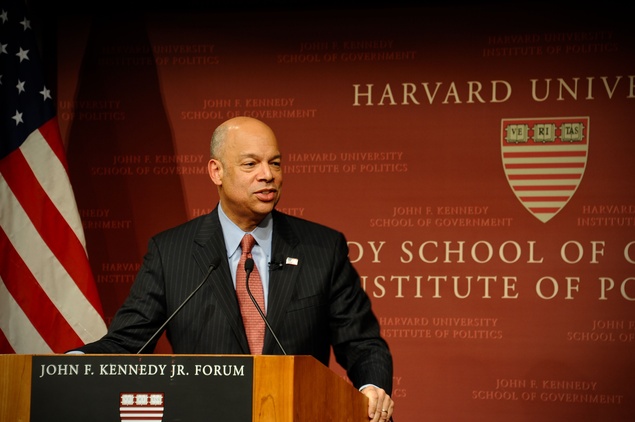
I had gotten a number of questions about the size of the applicant pool for the joint degree program between Harvard Business School and Harvard Kennedy School
It's hard enough getting into one graduation school, let alone two programs at Harvard! Some people may be intimidated by how many people apply to the joint degree program, which routinely comes with prestigious fellowship funding from both PE Juggernaut David Rubenstein and CEO/Philanthropist Bill George. The schools themselves are pretty tight-lipped about application numbers, but we can back into it with a little math.
- If there are about 25-30 Jointees a year, and the yield for the joint program is about 80% then we have 30-38 admitted students per year. (Note: those who don't enroll in the joint degree program almost always enroll in HBS alone. Some choose GSB instead. Everyone else stays in the workforce.)
- If HKS admits about half of the prospective Jointees that get into HBS, then there are about 60-75 students admitted to HBS each year expressing interest in the joint program. (Note: a lot of the MBA-minded applicants take the HKS application for granted, which they shouldn't since HKS is more selective than most elite MBA programs.)
- If the admissions rate for prospective Jointees is the same as the general HBS applicant pool (11%), then the joint degree program has 545-680 applicants a year.


 10 Sep 2017, 08:17
Kudos
Bookmarks
What happens in the scenario that for independent application to HKS and HBS, with intent of enrolling for the joint degree-
Case 1) the candidate is rejected by HBS, accepted by HKS
Case 2) the candidate is rejected by HKS and accepted by HBS.
Case 1) the candidate is rejected by HBS, accepted by HKS
Case 2) the candidate is rejected by HKS and accepted by HBS.







