Events & Promotions
| Last visit was: 23 Apr 2026, 12:37 |
It is currently 23 Apr 2026, 12:37 |
|
|
Customized
for You
Track
Your Progress
Practice
Pays
10:00 AM EDT
-11:00 AM EDT
11:00 AM EDT
-12:00 PM EDT
08:00 AM PDT
-11:00 AM PDT
| FROM Magoosh Blog: 3-Month Study Schedule for the GMAT |
|
[img]https://magoosh.com/gmat/files/2020/01/image-gmat-header-3monthStudySchedule.jpg[/img] If you’re starting your GMAT preparation more or less from scratch, and have three months to prepare, this GMAT study guide will help you get organized. The Magoosh 3-month study plan covers the full range of Magoosh lessons on all topics, from the format of the GMAT to advanced concepts. Your GMAT score is one of the most important factors in MBA admissions. Be sure to give yourself sufficient time to study. You should dedicate 1.5–2.5 hours a day, 5-6 days a week to study over the next three months. Not feeling like 3 months is the right fit for your timeline? Check out Magoosh’s [url=https://gmat.magoosh.com/study-plans?utm_source=google&utm_medium=cpc&utm_campaign=brand_gmat_us&utm_term=gmat_em&gad_source=1&gclid=Cj0KCQjwxeyxBhC7ARIsAC7dS39QIJGhy2eT71xiOy7L4E3zH6lPnLaxjiMLohoDVuvLPA-9DDDx8yUaAvdQEALw_wcB]other GMAT study schedule options[/url]. This plan contains a tremendous amount of instructional material and hundreds of high quality practice questions! As you follow the schedule, you will be working through a large portion of the questions available to you in the Magoosh product. However, this schedule is not designed for you to complete all the questions in the Magoosh GMAT pool. Here’s why: [list] [*]The schedule already includes enough practice questions for you to be adequately prepared for anything that the GMAT might throw at you on test day. [*]There is a finite number of questions available in the product, and we want to be sure that there are enough “new” questions available for full-length practice tests. [/*] [/list] But what if you want to do more practice in Magoosh than is assigned each week? That’s definitely doable! Just be aware that the fewer “new” questions remaining in the Magoosh pool, the higher the chance of getting a repeat question on a practice test. And if you exhaust the entire Magoosh pool, then only repeat questions will be available even in Custom Practice. The upside though is that working through questions more than once is a highly effective study strategy. If you follow this schedule to the letter, after you reach the end of 3-months, you will have the option to continue working through the remaining Magoosh questions. If you’re really keen to do extra work, but don’t want to exhaust Magoosh practice questions before you reach the end of the schedule, we recommend using the O.G. question bank for practice beyond each week’s assignments. Table of Contents [list] [*][url=https://magoosh.com/gmat/#howtouse]How to Use This 3 Month GMAT Study Plan[/url][/*] [*][url=https://magoosh.com/gmat/#essentialmaterials]Essential Study Materials[/url][/*] [*][url=https://magoosh.com/gmat/#abbreviations]Abbreviations[/url][/*] [*][url=https://magoosh.com/gmat/#schedule]The 3-Month GMAT Study Schedule[/url][/*] [/list] Getting Started [url=https://gmat.magoosh.com/?utm_source=gmatblog&utm_medium=blog&utm_campaign=gmathome&utm_term=inline&utm_content=6-month-gmat-study-schedule]A Premium subscription to Magoosh[/url][/b] [url=https://magoosh.com/gmat/about/gmat-101/]Magoosh’s Complete GMAT Guide[/url]: This comprehensive web-based guide gives you a quick and useful overview. You’ll see how the GMAT is designed and scored, what skills it tests, how to find and use the best GMAT prep, and how to study for each test section. GMAC’s GMAT Official Guide (OG)–The newest edition of the e-book and online question bank is here: [url=https://www.mba.com/exam-prep/gmat-official-guide-2023-2024-ebook-and-online-question-bank]OG 2023-2024[/url]. If you are going to buy a new guide, get that one. Want a paper copy? Check out [url=https://www.amazon.com/GMAT-Official-Guide-2024-2025-Question-dp-1394260024/dp/1394260024/ref=dp_ob_title_bk]this link[/url]. [b]Word to the wise: Don’t write in the official guide or any prep books[/b]. Do all your work on separate paper or on a computer. You will want to keep the books clean, so that later, if you need to look at a problem again, it is still fresh and unmarked. The [url=https://www.mba.com/exam-prep/gmat-official-guide-verbal-review-2023-2024-ebook-and-online-question-bank#:~:text=The%20GMAT%E2%84%A2%20Official%20Guide,main%20Official%20Guide%202023-2024.]OG Verbal Review 2023-2024[/url], the [url=https://www.mba.com/exam-prep/gmat-official-guide-quantitative-review-2023-2024-ebook-and-online-question-bank]OG Quantitative Review 2023-2024[/url], and the [url=https://www.mba.com/exam-prep/gmat-official-guide-data-insights-review-2023-2024-ebook-and-online-question-bank]OG Data Insights Review 2023-2024[/url]. These links will take you to the e-book and online question banks available from the [url=https://www.mba.com/gmat-exam-prep?nav=home]Exam Prep[/url] section of mba.com. You cannot go wrong if you use materials produced by the folks who write the exam. [url=https://www.mba.com/exam-prep/gmat-official-practice-exams-3-to-6]GMAT’s additional official practice exams[/url], which are now entirely digital. The [url=https://gmat.magoosh.com/flashcards/math/?utm_source=gmatblog&utm_medium=blog&utm_campaign=gmatflashcards&utm_term=inline&utm_content=6-month-gmat-study-schedule]Magoosh GMAT Math Flashcards[/url]. If you happen to see a deck for plane geometry concepts, remember to skip those since those concepts are no longer tested on the GMAT. If you’ve exhausted the OG and Magoosh materials, another credible option is [url=https://www.amazon.com/GMAT-Manhattan-Prep-Strategy-Guides/dp/1506219705/ref=asc_df_1506219705/?tag=hyprod-20&linkCode=df0&hvadid=693502746917&hvpos=&hvnetw=g&hvrand=17938360457870392718&hvpone=&hvptwo=&hvqmt=&hvdev=c&hvdvcmdl=&hvlocint=&hvlocphy=9032089&hvtargid=pla-814124775803&psc=1&mcid=30af775afd2a38ee8289698e6e6cf8ed&gad_source=1&gclid=Cj0KCQjw6PGxBhCVARIsAIumnWYpk2UVZC38XfDb7Z9WoXQT2u3YBXtfj6_6Ub7HJvAB9Ion5f-hkKEaAux8EALw_wcB]Manhattan’s All the GMAT book set[/url]. It is an excellent prep source. (Don’t write in these books either!) [url=https://magoosh.com/gmat/gmat-error-log/]An Error Log[/url]. Not sure what’s up with an error log. The link at the beginning of this sentence will walk you through the benefits and provide you with access to a [url=https://docs.google.com/spreadsheets/d/1cHwHm937wG0RcZV6BgHW0CmCco42WnF_WLPnD79OHIA/copy]Free template[/url]. [b]Note:[/b] The GMAT underwent major changes in 2023. So, you might be wondering what to do if you have prep materials that were produced for older versions of the GMAT. Good news! You can absolutely keep and use those older materials; however, there are a few topics and subject areas that you should skip if you do choose to use older materials. Here’s what you should leave out: [list] [*]Lessons/practice for Sentence Corrections [*]Lessons/practice for the Analytical Writing Assessment (AWA) [*]Lessons/practice for quantitative questions that test plane geometry concepts [*]Lessons/practice that use the Data Sufficiency (DS) question type to test purely algebraic or numeric property concepts. DS questions now all either test verbal reasoning skills or math in a real-world context (aka) word problems based on realistic scenarios. [/*] [/list] Optional Materials [url=https://gmat.magoosh.com/prep-app/?utm_source=gmatblog&utm_medium=blog&utm_campaign=gmatapp&utm_term=inline&utm_content=6-month-gmat-study-schedule]The Magoosh mobile app for your iPhone or Android[/url] The two online forums: [url=http://gmatclub.com/]GMAT Club[/url] [url=http://beatthegmat.com/]Beat the GMAT[/url] These are great places to ask questions about anything GMAT related, or simply to check out the discussions and see how others are preparing. Outside reading material: You may already have a habit of reading. But if you do not, it would be good to make it a regular practice. While you don’t need to be an expert in all world affairs, it’s important for the GMAT to have a general sense of the business world. [b]If you are a non-native English speaker, it is absolutely crucial that you develop a habit of reading[/b]. For a non-native speaker struggling with the Verbal section, we strongly recommend reading for at least an hour a day every day, an hour over and above any GMAT-specific preparation. Read the Wall Street Journal and/or the business section of respected newspapers such as the New York Times and the Washington Post. Force yourself to read articles discussing topics with which you are unfamiliar. Read periodicals, such as the Economist and Bloomberg Businessweek; the Economist is a particularly sophisticated source and it would be good to read this at least a few times a week. These business sources are often also a good place to practice reading graphs. Of course, if you already are in the habit of doing challenging reading on your own, then by all means, continue reading what you want. [url=https://gmat.magoosh.com/?utm_source=gmatblog&utm_medium=blog&utm_campaign=gmathome&utm_term=image&utm_content=score]sign up here for a free trial[/url]! Week One Day 1: Diagnostic Test and Review [list] [*]Take Magoosh’s [url=https://gmat.magoosh.com/practice_tests/free]Free GMAT Diagnostic.[/url] When you are done, note your score, then check your answers. [*]If you haven’t done so already,[url=https://docs.google.com/spreadsheets/d/1cHwHm937wG0RcZV6BgHW0CmCco42WnF_WLPnD79OHIA/copy] build your error log[/url] and add questions from the diagnostic you just took. You’ll be using your error log throughout this study plan. Today, you are going to do your first in-depth review. For each question you entered into your log do the following: [list] [*]Try to determine and make note of why you missed the question [*]Read any related text explanations and watch any related video explanations [*]Watch any recommended lesson videos (don’t worry about watching them out of order. You’ll likely be watching the videos a few times, especially those that relate to your weaker areas.) [*]Be aware of any trends that help you identify your strengths and weaknesses. [/*] [/list] [/*] [/list] [/*] [/list] Day 2: GMAT Basics Go to [url=https://www.mba.com/exams/gmat/about-the-gmat-exam/gmat-exam-structure]the test-maker’s website[/url], and read all about the GMAT. Click on each of the Quick Links on the sidebar of that page to explore the exam structure, content, and to check out a few sample questions. [b]In Magoosh, watch the following videos:[/b] GMAT Focus Introduction: all seven videos in this section [url=https://gmat.magoosh.com/lessons/6816-gmat-focus-intro-quantitative-section]GMAT Focus Intro: Quantitative Section[/url] [url=https://gmat.magoosh.com/lessons/6817-gmat-focus-intro-verbal-section]GMAT Focus Intro: Verbal Section[/url] [url=https://gmat.magoosh.com/lessons/6818-gmat-focus-intro-data-insights-section]GMAT Focus Intro: Data Insights Section[/url] [url=https://gmat.magoosh.com/lessons/6819-computer-adaptive-testing]Computer Adaptive Testing[/url] [url=https://gmat.magoosh.com/lessons/6820-gmat-focus-scores]GMAT Focus Scores[/url] [url=https://gmat.magoosh.com/lessons/6821-pacing-skipping-and-guessing]Pacing, Skipping, and Guessing[/url] [url=https://gmat.magoosh.com/lessons/6815-gmat-focus-intro-test-day]GMAT Focus Intro: Test Day[/url] Day 3: Quantitative Reasoning Basics [b]NOTE[/b]: Some of the information in Magoosh videos may be super easy or very challenging, brand new information. Some folks will find the verbal information obvious and the math hard-going; other folks will have the reverse experience. If the material is relatively easy for you, feel free to click to the end and simply read the summary. If the material is new to you, take notes on what you are learning, and if possible, watch that video a second time. [b]Watch the following videos:[/b] In Quantitative Reasoning (QR), watch the following General Math Strategies videos and complete any associated practice quizzes: [url=https://gmat.magoosh.com/lessons/6623-intro-to-gmat-math]Intro to GMAT Math[/url] [url=https://gmat.magoosh.com/lessons/6624-mental-math-gmat-estimation]Mental Math: GMAT Estimation[/url] [url=https://gmat.magoosh.com/lessons/6624-mental-math-gmat-estimation/quiz]Quiz: Mental Math Estimation[/url] [b]Error Log Review of the above Quiz[/b] [url=https://gmat.magoosh.com/lessons/6625-mental-math-dividing-by-5]Mental Math: Dividing by 5[/url] [url=https://gmat.magoosh.com/lessons/6626-mental-math-doubling-and-halving]Mental Math: Doubling and Halving[/url] [url=https://gmat.magoosh.com/lessons/6627-mental-math-squaring-shortcuts]Mental Math: Squaring Shortcuts [/url] [url=https://gmat.magoosh.com/lessons/6628-number-sense]Number Sense[/url] [url=https://gmat.magoosh.com/lessons/6628-number-sense/quiz]Quiz: Number Sense[/url] [b]Error Log Review of the above Quiz[/b] [url=https://gmat.magoosh.com/lessons/6629-the-use-and-abuse-of-formulas]The use and Abuse of Formulas[/url] [b]Note:[/b] Whenever a video contains sample questions, make sure to pause and complete the questions thoroughly as the videos instruct. [b]NOTE II:[/b] After most Magoosh questions is a text and/or video explanation. If you got the question right, just skim the text summary of the video to verify you understand it. If you got the question wrong, watch the video explanation right away. If you don’t understand a question after reviewing the text and video explanations, email us at Magoosh.com. Due to a high volume of questions, please allow up to 48-hours for a response. Getting questions wrong at the beginning may be frustrating, but remember that you are playing a “longer game”: the point is not instant success at the beginning, but building deeper understanding overtime. Remember to add all incorrect questions to your error log! Day 4: Quantitative Reasoning In QR, watch the following videos under Arithmetic and Fractions and complete any associated practice quizzes: [url=https://gmat.magoosh.com/lessons/6631-properties-of-real-numbers]Properties of Real Numbers[/url] [url=https://gmat.magoosh.com/lessons/6632-positive-and-negative-numbers-i]Positive and Negative Numbers[/url] [url=https://gmat.magoosh.com/lessons/6632-positive-and-negative-numbers-i/quiz]Quiz: Positive and Negative Numbers[/url] [b]Error Log Review of the above Quiz[/b] [url=https://gmat.magoosh.com/lessons/6633-mental-math-addition-and-subtraction]Mental Math: Addition and Subtraction [/url] [url=https://gmat.magoosh.com/lessons/6634-positive-and-negative-numbers-ii]Positive and Negative Numbers II[/url] [url=https://gmat.magoosh.com/lessons/6635-order-of-operations]Order of Operations[/url] [url=https://gmat.magoosh.com/lessons/6635-order-of-operations/quiz]Quiz: Order of Operations [/url] [b]Error Log Review of the above Quiz[/b] Day 5: Verbal Reasoning In VR, watch the following four videos under Critical Reasoning: [url=https://gmat.magoosh.com/lessons/6675-intro-to-critical-reasoning]Intro to Critical Reasoning [/url] [url=https://gmat.magoosh.com/lessons/6676-dissecting-an-argument]Dissecting an Argument [/url] [url=https://gmat.magoosh.com/lessons/6677-common-argument-types]Common Argument Types [/url] [url=https://gmat.magoosh.com/lessons/6678-general-cr-strategy]General CR Strategy[/url] [b]Magoosh Custom Practice:[/b] [list] [*]5 VR Critical Reasoning questions [/*] [/list] Day 6: Review [b]Review[/b] If you have not done so as you worked through the questions, be sure you review all the practice questions you’ve attempted this week. Remember to add any that you missed to your error log, and be sure that for each question you do the following: [list] [*]Try to determine and make note of why you missed the question [*]Read any related text explanations and watch any related video explanations [*]Watch any recommended lesson videos (don’t worry about watching them out of order. You’ll likely be watching the videos a few times, especially those that relate to your weaker areas.) [*]Be aware of any trends that help you identify your strengths and weaknesses. [/*] [/list] [b]In [url=https://gmat.magoosh.com/flashcards/math/?utm_source=gmatblog&utm_medium=blog&utm_campaign=gmatflashcards&utm_term=inline&utm_content=6-month-gmat-study-schedule]Magoosh GMAT Math Flashcards[/url]:[/b] Review the cards in the Algebra deck. Spend about 5-10 minutes a day each day with these cards. 3 month GMAT Study Plan: Week Two Week Two Day 1: Quantitative Reasoning In QR, watch the following videos under Arithmetic and Fractions and complete any associated practice quizzes: [url=https://gmat.magoosh.com/lessons/6636-intro-to-decimals]Intro to Decimals[/url] [url=https://gmat.magoosh.com/lessons/6636-intro-to-decimals/quiz]Quiz: Intro to Decimals[/url] [b]Error Log Review of the above Quiz[/b] [url=https://gmat.magoosh.com/lessons/6637-multiples-of-10]Multiples of 10[/url] [url=https://gmat.magoosh.com/lessons/6638-more-on-scientific-notation]More on Scientific Notation [/url] [url=https://gmat.magoosh.com/lessons/6638-more-on-scientific-notation/quiz]Quiz: More on Scientific Notation[/url] [b]Error Log Review of the above Quiz[/b] Day 2: Verbal Reasoning In Verbal Reasoning (VR), watch the following videos under Reading Comprehension: [url=https://gmat.magoosh.com/lessons/6659-intro-to-reading-comprehension]Intro to Reading Comprehension [/url] [url=https://gmat.magoosh.com/lessons/6660-approaching-the-passage]Approaching the Passage[/url] [url=https://gmat.magoosh.com/lessons/6661-understanding-structure]Understanding Structure[/url] [url=https://gmat.magoosh.com/lessons/6662-dissecting-the-passage]Dissecting the Passage[/url] [url=https://gmat.magoosh.com/lessons/6663-approaching-the-question]Approaching the Questions[/url] [url=https://gmat.magoosh.com/lessons/6664-answer-choice-traps]Answer Choice Traps[/url] [b]Magoosh Custom Practice: [/b] [list] [*]3 VR reading comprehension passages and associated questions [/*] [/list] Day 3: Quantitative Reasoning In QR, watch the following nine videos under Arithmetic and Fractions and complete the associated quizzes: [url=https://gmat.magoosh.com/lessons/6639-intro-to-fractions]Intro to Fractions[/url] [url=https://gmat.magoosh.com/lessons/6640-conversions-with-fractions-and-decimals]Conversions with Fractions and Decimals[/url] [url=https://gmat.magoosh.com/lessons/6641-fraction-properties-i]Fraction Properties I[/url] [url=https://gmat.magoosh.com/lessons/6641-fraction-properties-i/quiz]Quiz: Fraction Properties I[/url] [b]Error Log Review of the above Quiz[/b] [url=https://gmat.magoosh.com/lessons/6642-comparing-fractions-i]Comparing Fractions I[/url] [url=https://gmat.magoosh.com/lessons/6644-operations-with-fractions]Operations with Fractions[/url] [url=https://gmat.magoosh.com/lessons/6645-fraction-properties-ii]Fraction Properties II[/url] [url=https://gmat.magoosh.com/lessons/6645-fraction-properties-ii/quiz]Quiz: Fraction Properties II[/url] [b]Error Log Review of the above Quiz[/b] Day 4: Quantitative Reasoning In QR, watch the following videos under Arithmetic and Fractions and complete the associated quizzes: [url=https://gmat.magoosh.com/lessons/6648-word-problems-with-fractions]Word Problems with Fractions [/url] [url=https://gmat.magoosh.com/lesson_groups/781-arithmetic-and-fractions]Quiz: Arithmetic and Fractions[/url] [b]Error Log Review of the above Quiz[/b] [url=https://gmat.magoosh.com/lessons/6650-working-with-percents]Working with Percents[/url] [url=https://gmat.magoosh.com/lessons/6650-working-with-percents/quiz]Quiz: Working with Percents[/url] [b]Error Log Review of the above Quiz[/b] [url=https://gmat.magoosh.com/lessons/6652-percent-increases-and-decreases]Percent Increases and Decreases[/url] [url=https://gmat.magoosh.com/lessons/6652-percent-increases-and-decreases/quiz]Quiz: Percent Increases and Decreases[/url] [b]Error Log Review of the above Quiz[/b] Day 5: Verbal Reasoning In VR, watch the following videos under Critical Reasoning: [url=https://gmat.magoosh.com/lessons/6679-weakening-the-argument]Weakening the Argument[/url] [url=https://gmat.magoosh.com/lessons/6680-strengthening-the-argument]Strengthening the Argument[/url] [url=https://gmat.magoosh.com/lessons/6681-assumption-questions]Assumption Questions[/url] [url=https://gmat.magoosh.com/lessons/6682-trap-answers]Trap Answers[/url] [url=https://gmat.magoosh.com/lessons/6683-conclusion-and-inference]Conclusion and Inference[/url] Day 6: Mixed Practice & Review [b]Let’s talk about using the GMAT’s OG Online Question Bank for practice [/b] If you’ve purchased access to the OG’s online question bank, you’ll also be able to set up custom practice sessions. Although, in its current form, you don’t have a ton of options; you can choose the question/section type and level of difficulty etc… This is what you’ll see: [img]https://magoosh.com/gmat/files/2012/02/Screenshot-2024-05-30-225019.png[/img] Feel free to set up these practice sessions in whatever way is most appropriate for your prep. However, we recommend using OG practice to expose you to a random mix of topics within the different test sections. Doing so is based on the philosophy that you want your practice to prepare you for the random mix of topics that you will experience on test day–you want to get used to that! By the way, purchasing a paper copy of the OG will still grant you access to the online question bank. [b]OG Mixed Practice:[/b] [list] [*]5 QR questions [*]5 VR questions [*]10 DI questions [/*] [/list] [b]NOTE:[/b] As soon as you do a batch of OG questions, correct them right away and review any available explanations. If you got the question right, you need only skim the explanation to verify that you got it right for the right reason. If you got the question wrong, read the explanation and take notes in your error log on what concepts or what aspect of the question you need to understand better. [b]Review:[/b] If you have not done so as you worked through the questions, be sure you review all the practice questions you’ve attempted this week. Remember to add any that you missed to your error log. Be sure to note why you missed the question: misread it, careless error, didn’t know the content, etc… [b]In [url=https://gmat.magoosh.com/flashcards/math/?utm_source=gmatblog&utm_medium=blog&utm_campaign=gmatflashcards&utm_term=inline&utm_content=6-month-gmat-study-schedule]Magoosh GMAT Math Flashcards[/url]:[/b] Review the cards in the Fraction, Ratios, and Percents deck. Spend about 5-10 minutes a day each day with the cards from this deck and the previous deck (Algebra). [b]As a reminder, be sure to incorporate Outside Reading:[/b] Do half an hour of sophisticated reading of your own choosing each day. Keep in mind the recommendations made above. If you are a non-native English speaker who is considerably weaker in Verbal, we strongly suggest reading for an hour each day. 3 month GMAT Study Plan: Week Three Week Three Day 1: Data Insights (DI) In DI, watch the following videos under Integrated Reasoning: [url=https://gmat.magoosh.com/lessons/6605-general-ir-strategies]General IR Strategies[/url] [url=https://gmat.magoosh.com/lessons/6604-the-ir-calculator]The IR Calculator[/url] [url=https://gmat.magoosh.com/lessons/6606-multi-source-reasoning]Multi-Source Reasoning[/url] [url=https://gmat.magoosh.com/lessons/6607-bradley-metalworks-1-practice]Bradley Metal Works 1[/url] [url=https://gmat.magoosh.com/lessons/6608-bradley-metalworks-2-practice]Bradley Metal Works 2[/url] [url=https://gmat.magoosh.com/lessons/6609-table-analysis]Table Analysis[/url] [url=https://gmat.magoosh.com/lessons/6610-high-school-exams-practice]High School Exams (Practice)[/url] [b]Note: [/b]Prior to November 2023, there was no Data Insights section. There was an Integrated Reasoning section that was scored separately from the Quantitative and Verbal sections. So, when you see Integrated Reasoning in this schedule, it is to refer to the old IR question types. All those old Integrated Reasoning questions have been combined with Data Sufficiency questions (which used to be in the Quant section) to form the Data Insights Section. The Data Insight section is on equal footing with Quant and Verbal and counts for ⅓ of your total GMAT score. Day 2: Quantitative Reasoning In QR, watch the following following videos under Arithmetic and Fractions and Percents and Ratios: [url=https://gmat.magoosh.com/lessons/6653-sequential-percent-changes]Sequential Percent Changes [/url] [url=https://gmat.magoosh.com/lessons/6654-simple-and-compound-interest]Simple and Compound Interest [/url] [url=https://gmat.magoosh.com/lessons/6655-intro-to-ratios]Intro to Ratios[/url] [url=https://gmat.magoosh.com/lessons/6656-combining-ratios]Combining Ratios[/url] [url=https://gmat.magoosh.com/lessons/6657-ratios-and-rates]Ratios and Rates[/url] [url=https://gmat.magoosh.com/lessons/6657-ratios-and-rates/quiz]Quiz: Ratios and Rates[/url] [b]Error Log Review of the above Quiz[/b] [url=https://gmat.magoosh.com/lessons/6658-ratios-and-percents]Ratios and Percents[/url] [url=https://gmat.magoosh.com/lesson_groups/782-percents-and-ratios]Quiz: Ratios and Percents[/url] [b]Error Log Review of the above Quiz[/b] Day 3: Quantitative Reasoning In QR, watch the following videos under Integer Properties and complete the associated practice quizzes: [url=https://gmat.magoosh.com/lessons/6727-divisibility]Divisibility[/url] [url=https://gmat.magoosh.com/lessons/6728-divisibility-rules]Divisibility Rules[/url] [url=https://gmat.magoosh.com/lessons/6728-divisibility-rules/quiz]Quiz: Divisibility Rules[/url] [b]Error Log Review of the above Quiz[/b] [url=https://gmat.magoosh.com/lessons/6729-multiples]Multiples[/url] [url=https://gmat.magoosh.com/lessons/6730-prime-numbers]Prime Numbers[/url] [url=https://gmat.magoosh.com/lessons/6731-prime-factorization]Prime Factorization[/url] [url=https://gmat.magoosh.com/lessons/6731-prime-factorization/quiz]Quiz: Prime Factorization[/url] [b]Error Log Review of the above Quiz[/b] Day 4: Quantitative Reasoning In QR, watch the following videos under Integer Properties and complete the associated practice quizzes: [url=https://gmat.magoosh.com/lessons/6732-counting-factors-of-large-numbers]Counting Factors of Large Numbers[/url] [url=https://gmat.magoosh.com/lessons/6733-squares-of-integers]Squares of Integers[/url] [url=https://gmat.magoosh.com/lessons/6733-squares-of-integers/quiz]Quiz: Squares of Integers[/url] [b]Error Log Review of the above Quiz[/b] [url=https://gmat.magoosh.com/lessons/6734-greatest-common-factor]Greatest Common Factor[/url] [url=https://gmat.magoosh.com/lessons/6776-least-common-multiple]Least Common Multiple[/url] [url=https://gmat.magoosh.com/lessons/6777-gcd-lcm-formula]GCD LCM Formula[/url] [url=https://gmat.magoosh.com/lessons/6778-even-and-odd-integers]Even and Odd Integers[/url] [url=https://gmat.magoosh.com/lessons/6779-testing-cases]Testing Cases[/url] [url=https://gmat.magoosh.com/lessons/6779-testing-cases/quiz]Quiz: Testing Cases[/url] [b]Error Log Review of the above Quiz[/b] Day 5: Verbal Reasoning In VR, watch the following videos under Reading Comprehension: [url=https://gmat.magoosh.com/lessons/6665-primary-purpose]Primary Purpose [/url] [url=https://gmat.magoosh.com/lessons/6666-detail-questions]Detail Questions[/url] [url=https://gmat.magoosh.com/lessons/6667-inference-questions]Inference Questions[/url] [url=https://gmat.magoosh.com/lessons/6668-miscellaneous-rc-tips]Miscellaneous RC Tips[/url] [url=https://gmat.magoosh.com/lessons/6669-rc-example-passage-1-path-dependence]RC Example, Passage 1, Path Dependence[/url] [url=https://gmat.magoosh.com/lessons/6670-rc-example-passage-1-question-1]RC Example, Passage 1, Q1[/url] [url=https://gmat.magoosh.com/lessons/6671-rc-example-passage-1-question-2]RC Example, Passage 1, Q2[/url] [url=https://gmat.magoosh.com/lessons/6672-rc-example-passage-2-office-organization]RC Example, Passage 2, Office Organization[/url] [url=https://gmat.magoosh.com/lessons/6673-rc-example-passage-2-question-1]RC Example, Passage 2, Q1[/url] [url=https://gmat.magoosh.com/lessons/6674-rc-example-passage-2-question-2]RC Example, Passage 2, Q2[/url] [url=https://gmat.magoosh.com/lesson_groups/775-reading-comprehension]Quiz: Reading Comprehension[/url] [b]Magoosh Custom Practice:[/b] [list] [*]3 VR reading comprehension passages and associated questions [/*] [/list] Day 6: Mixed Practice & Review [b]OG Mixed Practice:[/b] [list] [*]5 QR questions [*]5 VR questions [*]10 DI questions [/*] [/list] [b]Review:[/b] If you have not done so as you worked through the questions, be sure you review all the practice questions you’ve attempted this week. Remember to add any that you missed to your error log. Be sure to note why you missed the question: misread it, careless error, didn’t know the content, etc… [b]In [url=https://gmat.magoosh.com/flashcards/math/?utm_source=gmatblog&utm_medium=blog&utm_campaign=gmatflashcards&utm_term=inline&utm_content=6-month-gmat-study-schedule]Magoosh GMAT Math Flashcards[/url]: [/b] Review the cards in the Number Properties I deck. Spend about 10 minutes a day each day reviewing these cards and cards from the previous decks that you haven’t mastered. 3 month GMAT Study Plan: Week Four Week Four Day 1: Data Insights In DI, watch the following videos and complete the associated quizzes: [url=https://gmat.magoosh.com/lessons/6589-fundamentals-of-data-sufficiency]Fundamentals of Data Sufficiency[/url] [url=https://gmat.magoosh.com/lessons/6590-ds-elimination-method]DS Elimination Method [/url] [url=https://gmat.magoosh.com/lessons/6592-avoiding-common-ds-mistakes]Avoiding Common DS Mistakes[/url] [url=https://gmat.magoosh.com/lessons/6593-introductory-ds-strategies]Introductory DS Strategies[/url] [url=https://gmat.magoosh.com/lessons/6594-word-problems-summarizing-information]Word Problems, summarizing info[/url] [url=https://gmat.magoosh.com/lessons/6601-ds-with-integer-constraints]DS with Integer Constraints[/url] [url=https://gmat.magoosh.com/lessons/6599-tautological-statements]Tautological Statements[/url] [url=https://gmat.magoosh.com/lesson_groups/777-data-sufficiency]Quiz: Data Sufficiency[/url] [b]Error Log Review of the above Quiz[/b] Day 2: Verbal Reasoning In VR, watch the following eight videos under Critical Reasoning [url=https://gmat.magoosh.com/lessons/6684-bold-faced-questions]Bold-faced Questions[/url] [url=https://gmat.magoosh.com/lessons/6685-flawed-argument-questions]Flawed Argument Questions[/url] [url=https://gmat.magoosh.com/lessons/6686-paradox-questions]Paradox Questions[/url] [url=https://gmat.magoosh.com/lessons/6687-evaluating-the-conclusion]Evaluating the Conclusion[/url] [url=https://gmat.magoosh.com/lessons/6688-miscellaneous-cr-tips]Miscellaneous CR Tips[/url] [url=https://gmat.magoosh.com/lessons/6689-critical-reasoning-example-1]CR Example 1[/url] [url=https://gmat.magoosh.com/lessons/6690-critical-reasoning-example-2]CR Example 2[/url] [url=https://gmat.magoosh.com/lesson_groups/776-critical-reasoning]Quiz: Critical Reasoning[/url] [b]Error Log Review of the above Quiz[/b] Day 3: Quantitative Reasoning In QR, watch the following videos under the Integer Properties and under the Algebra, Equations, and Inequalities and complete the associated practice quizzes: [url=https://gmat.magoosh.com/lessons/6781-integer-properties-strategies]Integer Properties Strategies[/url] [url=https://gmat.magoosh.com/lessons/6781-integer-properties-strategies/quiz]Quiz: Integer Properties Strategies[/url] [url=https://gmat.magoosh.com/lesson_groups/783-integer-properties]Quiz: Integer Properties[/url] [b]Error Log Review of the above Quizzes[/b] [url=https://gmat.magoosh.com/lessons/6783-simplifying-expressions]Simplifying Expressions[/url] [url=https://gmat.magoosh.com/lessons/6783-simplifying-expressions/quiz]Quiz: Simplifying Expressions[/url] [b]Error Log Review of the above Quiz[/b] [url=https://gmat.magoosh.com/lessons/6784-multiplying-expressions]Multiplying Expressions[/url] [url=https://gmat.magoosh.com/lessons/6785-foil-method]FOIL Method[/url] [url=https://gmat.magoosh.com/lessons/6785-foil-method/quiz]Quiz: FOIL Method[/url] [b]Error Log Review of the above Quiz[/b] Day 4: Quantitative Reasoning In QR, watch the following videos under Algebra, Equations, and Inequalities and complete the associated quizzes: [url=https://gmat.magoosh.com/lessons/6786-factoring-gcf]Factoring -GCF[/url] [url=https://gmat.magoosh.com/lessons/6787-factoring-difference-of-two-squares]Factoring – Difference of Squares[/url] [url=https://gmat.magoosh.com/lessons/6788-factoring-quadratics]Factoring – Quadratics[/url] [url=https://gmat.magoosh.com/lessons/6788-factoring-quadratics/quiz]Quiz: Factoring Quadratics[/url] [b]Error Log Review of the above Quiz[/b] [url=https://gmat.magoosh.com/lessons/6789-factoring-combined]Factoring – Combined[/url] [url=https://gmat.magoosh.com/lessons/6790-advanced-numerical-factoring]Advanced Numerical Factoring[/url] [url=https://gmat.magoosh.com/lessons/6791-factoring-rational-expressions]Factoring- Rational Expressions[/url] [url=https://gmat.magoosh.com/lessons/6791-factoring-rational-expressions/quiz]Quiz: Factoring- Rational Expressions[/url] [b]Error Log Review of the above Quiz[/b] Day 5-6: Flex Day(s) [b]Rest, Review, Practice or Catch-up: [/b]Already you have likely done a lot of work! And because all that work requires time for absorption and review, you might need a flex day. Use this time in whatever capacity best suits where you are in your prep journey. Consider these options: [list] [*]If you’re feeling pretty good about where you’re at (both in the schedule and in your overall progress), take a break! You deserve one! But, if you are raring to keep going check out the following options for: [list] [*]Spend some quality time with your error log. Revisit (maybe redo a few) missed questions and review their associated lessons. [*]Do more practice and review in the OG online question bank [*]Break out your flashcards and review [*]If you are feeling a bit behind schedule, use this as an opportunity to get caught up or closer to caught up. [/*] [/list] [/*] [/list] [b]Additional practice option: [/b]OG Diagnostic Test If you don’t need both of these flex days to get caught up, navigate to the OG online question bank. Go to Practice Exams on the sidebar. Take all three diagnostic practice exams. [img]https://magoosh.com/gmat/files/2012/02/Screenshot-2024-05-30-225116.png[/img] Go through the answers after you are done, taking notes on anything you got wrong. 3 month GMAT Study Plan: Week Five Week Five Day 1: Data Insights In DI, watch the following videos: [url=https://gmat.magoosh.com/lessons/6611-graphics-interpretation]Graphics Interpretation[/url] [url=https://gmat.magoosh.com/lessons/6612-types-of-graphics]Types of Graphics[/url] [url=https://gmat.magoosh.com/lessons/6613-venn-diagrams]Venn Diagrams[/url] [url=https://gmat.magoosh.com/lessons/6614-scatterplots]Scatterplots[/url] [url=https://gmat.magoosh.com/lessons/6615-more-on-scatterplots]More on Scatterplots[/url] [url=https://gmat.magoosh.com/lessons/6616-three-companies-practice]Three Companies (Practice)[/url] [url=https://gmat.magoosh.com/lessons/6617-numerical-flowchart-practice]Numerical Flowchart (Practice)[/url] Day 2: Quantitative Reasoning In QR, watch the following videos under Algebra, Equations, and Inequalities and complete the associated quizzes: [url=https://gmat.magoosh.com/lessons/6794-quadratic-equations]Quadratic Equations[/url] [url=https://gmat.magoosh.com/lessons/6794-quadratic-equations/quiz]Quiz: Quadratic Equations[/url] [b]Error Log Review of the above Quiz[/b] [url=https://gmat.magoosh.com/lessons/6797-system-number-of-solutions]System –Number of Solutions[/url] [url=https://gmat.magoosh.com/lessons/6798-three-equations-with-three-unknowns]Three Equations, Three Unknowns[/url] [url=https://gmat.magoosh.com/lessons/6798-three-equations-with-three-unknowns/quiz]Quiz: Three Equations, Three Unknowns[/url] [b]Error Log Review of the above Quiz[/b] Day 3: Quantitative Reasoning In QR, watch the following videos under Algebra, Equations, and Inequalities and complete the associated quizzes: [url=https://gmat.magoosh.com/lessons/6799-absolute-value-equations]Absolute Value Equations[/url] [url=https://gmat.magoosh.com/lessons/6800-function-notation]Function Notation[/url] [url=https://gmat.magoosh.com/lessons/6800-function-notation/quiz]Quiz: Function Notation[/url] [b]Error Log Review of the above Quiz[/b] [url=https://gmat.magoosh.com/lessons/6801-strange-operators]Strange Operators[/url] [url=https://gmat.magoosh.com/lessons/6801-strange-operators/quiz]Quiz: Strange Operators[/url] [b]Error Log Review of the above Quiz[/b] [url=https://gmat.magoosh.com/lessons/6802-inequalities-i]Inequalities 1[/url] [url=https://gmat.magoosh.com/lessons/6803-inequalities-ii]Inequalities 2[/url] [url=https://gmat.magoosh.com/lessons/6803-inequalities-ii/quiz]Quiz: Inequalities[/url] [b]Error Log Review of the above Quiz[/b] [url=https://gmat.magoosh.com/lessons/6804-absolute-value-inequalities]Absolute Value Inequalities[/url] [url=https://gmat.magoosh.com/lesson_groups/784-algebra-equations-and-inequalities]Quiz: Algebra, Equations, and Inequalities[/url] [b]Error Log Review of the above Quiz[/b] Day 4: Quantitative Reasoning In QR, watch the following Word Problem videos and complete the associated quizzes: [url=https://gmat.magoosh.com/lessons/6691-intro-to-word-problems]Intro to Word Problems[/url] [url=https://gmat.magoosh.com/lessons/6692-assigning-variables]Assigning Variables[/url] [url=https://gmat.magoosh.com/lessons/6692-assigning-variables/quiz]Quiz: Assigning Variables[/url] [b]Error Log Review of the above Quiz[/b] [url=https://gmat.magoosh.com/lessons/6693-writing-equations]Writing Equations[/url] [url=https://gmat.magoosh.com/lessons/6694-number-of-variables]Number of Variables[/url] [url=https://gmat.magoosh.com/lessons/6694-number-of-variables/quiz]Quiz: Number of Variables[/url] [b]Error Log Review of the above Quiz[/b] Day 5: Verbal Reasoning [b]Magoosh Custom Practice:[/b] [list] [*]10 VR questions [/*] [/list] Day 6: Mixed Practice & Review [b]OG Mixed Practice:[/b] [list] [*]10 DI questions [/*] [/list] [b]Review:[/b] If you have not done so as you worked through the questions, be sure you review all the practice questions you’ve attempted this week. Remember to add any that you missed to your error log. Be sure to note why you missed the question: misread it, careless error, didn’t know the content, etc… [b]In [url=https://gmat.magoosh.com/flashcards/math/?utm_source=gmatblog&utm_medium=blog&utm_campaign=gmatflashcards&utm_term=inline&utm_content=6-month-gmat-study-schedule]Magoosh GMAT Math Flashcards[/url]: [/b] Review the cards in the Number Properties II deck. Spend about 10 minutes a day each day reviewing these cards and cards from the previous decks that you haven’t mastered. 3 month GMAT Study Plan: Week Six Week six Day 1: Data Insights In DI, watch the following videos: [url=https://gmat.magoosh.com/lessons/6618-intro-to-two-part-analysis]Intro to Two-Part Analysis[/url] [url=https://gmat.magoosh.com/lessons/6619-verbal-two-part-analysis]Verbal Two-Part Analysis[/url] [url=https://gmat.magoosh.com/lessons/6620-math-two-part-analysis]Math Two-Part Analysis[/url] [url=https://gmat.magoosh.com/lessons/6621-highway-to-hillsborough-practice]Highway to HIllsborough (Practice)[/url] [url=https://gmat.magoosh.com/lessons/6622-algebraic-sequence-practice]Algebraic Sequence (Practice)[/url] Day 2: Quantitative Reasoning In QR, watch the following Word Problem videos and complete the associated quizzes: [url=https://gmat.magoosh.com/lessons/6696-intro-to-motion-questions]Intro to motion questions[/url] [url=https://gmat.magoosh.com/lessons/6697-average-speed]Average Speed[/url] [url=https://gmat.magoosh.com/lessons/6697-average-speed/quiz]Quiz: Average Speed[/url] [b]Error Log Review of the above Quiz[/b] [url=https://gmat.magoosh.com/lessons/6698-multiple-traveler-questions]Multiple Traveler Questions[/url] [url=https://gmat.magoosh.com/lessons/6699-shrinking-and-expanding-gaps]Shrinking and Expanding Gaps[/url] [url=https://gmat.magoosh.com/lessons/6700-work-questions]Work Questions[/url] [url=https://gmat.magoosh.com/lessons/6700-work-questions/quiz]Quiz: Work Questions[/url] [b]Error Log Review of the above Quiz[/b] Day 3: Quantitative Reasoning In QR, watch the following Word Problem videos and complete the associated quizzes: [url=https://gmat.magoosh.com/lessons/6703-intro-to-sets-and-venn-diagrams]Intro to sets and venn diagrams[/url] [url=https://gmat.magoosh.com/lessons/6704-double-matrix-method]Double Matrix Method[/url] [url=https://gmat.magoosh.com/lessons/6706-intro-to-sequences]Intro to Sequences[/url] [url=https://gmat.magoosh.com/lessons/6707-arithmetic-sequences]Arithmetic Sequences[/url] [url=https://gmat.magoosh.com/lessons/6707-arithmetic-sequences/quiz]Quiz: Arithmetic Sequences[/url] [b]Error Log Review of the above Quiz[/b] [url=https://gmat.magoosh.com/lessons/6709-inclusive-counting]Inclusive Counting[/url] [url=https://gmat.magoosh.com/lessons/6711-consecutive-integers]Consecutive Integers[/url] [url=https://gmat.magoosh.com/lessons/6711-consecutive-integers/quiz]Quiz: Consecutive Integers[/url] [b]Error Log Review of the above Quiz[/b] Day 4: Flex Day [b]Rest, Review, Practice or Catch-up: [/b]Already you have likely done a lot of work! And because all that work requires time for absorption and review, you might need a flex day. Use this time in whatever capacity best suits where you are in your prep journey. Consider these options: [list] [*]If you’re feeling pretty good about where you’re at (both in the schedule and in your overall progress), take a break! You deserve one! But, if you are raring to keep going check out the following options for: [list] [*]Spend some quality time with your error log. Revisit (maybe redo a few) missed questions and review their associated lessons. [*]Do more practice and review in the OG online question bank [*]Break out your flashcards and review [*]If you are feeling a bit behind schedule, use this as an opportunity to get caught up or closer to caught up. [/*] [/list] [/*] [/list] Day 5: Practice Test [b]In Magoosh, take a full-length practice test! [/b] In your dashboard, navigate to Practice → Practice Test, choose the order in which you want to take the sections, and then start your practice test. This will be your first experience of sitting for a full formal GMAT. As much as possible, try to mimic the GMAT conditions. Note how your sleep the night before affects your work. Note how what you had for dinner the previous night and what you had to eat earlier that day affects your energy level and concentration. You can review your test immediately after completion or save it for tomorrow since that is the focus of this week’s day two. Day 6: Practice Test & General Review Open your error log for a deep-dive review of yesterday’s practice test. During this session with your error log, spend time to reflect on your pacing strategy. As you review your test, determine which question types you are currently struggling with the most in regards to timing. If running out of time is not an issue for you, review your error log to find the questions where you should have spent MORE time. Can you find any patterns? Where do you make careless mistakes? Figure out where you should slow down when testing. [b]Review:[/b] If you have not done so as you worked through the questions, be sure you review all the practice questions you’ve attempted this week. Remember to add any that you missed to your error log. Be sure to note why you missed the question: misread it, careless error, didn’t know the content, etc… [b]In [url=https://gmat.magoosh.com/flashcards/math/?utm_source=gmatblog&utm_medium=blog&utm_campaign=gmatflashcards&utm_term=inline&utm_content=6-month-gmat-study-schedule]Magoosh GMAT Math Flashcards[/url]: [/b] Review the cards in the Statistics & Probability deck. Spend about 10 minutes a day each day reviewing these cards and cards from the previous decks that you haven’t mastered. 3 month GMAT Study Plan: Week Seven Week Seven Day 1: Quantitative Reasoning In QR, watch the following Word Problem videos and complete all quizzes: [url=https://gmat.magoosh.com/lessons/6712-backsolving]Backsolving[/url] [url=https://gmat.magoosh.com/lessons/6712-backsolving/quiz]Quiz: Backsolving[/url] [b]Error Log Review of the above Quiz[/b] [url=https://gmat.magoosh.com/lessons/6713-intro-to-vics]Intro to VICs[/url] [url=https://gmat.magoosh.com/lessons/6714-vics-algebraic-approach]VICs- Algebraic Approach[/url] [url=https://gmat.magoosh.com/lessons/6715-vics-picking-numbers]VICs- Picking Numbers[/url] [url=https://gmat.magoosh.com/lessons/6715-vics-picking-numbers/quiz]Quiz: VICs-Picking Numbers[/url] [url=https://gmat.magoosh.com/lesson_groups/785-word-problems]Quiz: Word Problems[/url] [b]Error Log Review of the above Quizzes[/b] Day 2: Quantitative Reasoning In QR, watch the following Problem and Roots videos and complete all quizzes: [b] [/b][url=https://gmat.magoosh.com/lessons/6716-intro-to-exponents]Intro to Exponents[/url] [url=https://gmat.magoosh.com/lessons/6718-laws-of-exponents-i]Laws of Exponents 1[/url] [url=https://gmat.magoosh.com/lessons/6719-negative-exponents]Negative Exponents[/url] [url=https://gmat.magoosh.com/lessons/6720-laws-of-exponents-ii]Laws of Exponents 2[/url] [url=https://gmat.magoosh.com/lessons/6720-laws-of-exponents-ii/quiz]Quiz: Laws of Exponents 2[/url] [b]Error Log Review of the above Quiz[/b] [url=https://gmat.magoosh.com/lessons/6722-square-roots]Square Roots[/url] [url=https://gmat.magoosh.com/lessons/6723-other-roots]Other Roots[/url] [url=https://gmat.magoosh.com/lessons/6724-properties-of-roots]Properties of Roots[/url] [url=https://gmat.magoosh.com/lessons/6724-properties-of-roots/quiz]Quiz: Properties of Roots[/url] [b]Error Log Review of the above Quiz[/b] Day 3: Quantitative Reasoning In QR, watch the following Problem and Roots videos and complete all quizzes: [b] [/b][url=https://gmat.magoosh.com/lessons/6725-simplifying-roots]Simplifying Roots[/url] [url=https://gmat.magoosh.com/lessons/6726-operations-with-roots]Operations with Roots[/url] [url=https://gmat.magoosh.com/lessons/6735-equations-with-square-roots]Equations with Square Roots[/url] [url=https://gmat.magoosh.com/lessons/6735-equations-with-square-roots/quiz]Quiz: Equations with Square Roots[/url] [b]Error Log Review of the above Quiz[/b] [b] [/b][url=https://gmat.magoosh.com/lessons/6738-rationalizing]Rationalizing[/url] [url=https://gmat.magoosh.com/lessons/6739-working-with-formulas]Working with Formulas[/url] [url=https://gmat.magoosh.com/lessons/6739-working-with-formulas/quiz]Quiz: Working with Formulas[/url] [url=https://gmat.magoosh.com/lesson_groups/786-powers-and-roots]Quiz: Powers and Roots[/url] [b] Error Log Review of the above Quizzes[/b] Day 4: Quantitative Reasoning In QR, watch the following Statistics videos and complete all quizzes: [url=https://gmat.magoosh.com/lessons/6740-mean-median-mode]Mean, Median, and Mode[/url] [url=https://gmat.magoosh.com/lessons/6741-more-on-mean-and-median]More on Mean and Median[/url] [url=https://gmat.magoosh.com/lessons/6742-weighted-averages-i]Weighted Averages 1[/url] [url=https://gmat.magoosh.com/lessons/6743-weighted-averages-ii-advanced]Weighted Averages 2[/url] Quiz: Weighted Averages 2 [b]Error Log Review of the above Quiz[/b] Day 5: Continue Working on the Above There were quite a few Quantitative Reasoning quizzes this week. Devote whatever time you have left in your study week to completing all those lessons and lesson quizzes. Day 6: Mixed Practice & Review [b]OG Mixed Practice:[/b] [list] [*]10 DI questions [*]10 VR questions [/*] [/list] [b]Review[/b] If not already done, break out your error log to analyze any questions you’ve missed during this week’s practice. [b]In [url=https://gmat.magoosh.com/flashcards/math/?utm_source=gmatblog&utm_medium=blog&utm_campaign=gmatflashcards&utm_term=inline&utm_content=6-month-gmat-study-schedule]Magoosh GMAT Math Flashcards[/url]: [/b] Review the cards in the Mixed Practice I deck. Spend about 10 minutes a day each day reviewing these cards and cards from the previous decks that you haven’t mastered. 3 month GMAT Study Plan: Week Eight Week Eight Day 1: Quantitative Reasoning In QR, watch the following Statistics and Counting videos and complete all quizzes: [url=https://gmat.magoosh.com/lessons/6744-range-and-standard-deviation]Range and Standard Deviation[/url] [url=https://gmat.magoosh.com/lessons/6746-the-normal-distribution]The Normal Distribution[/url] [url=https://gmat.magoosh.com/lessons/6746-the-normal-distribution/quiz]Quiz: The Normal Distribution[/url] [url=https://gmat.magoosh.com/lesson_groups/787-statistics]Quiz: Statistics[/url] [b]Error Log Review of the above Quizzes[/b] [b] [/b][url=https://gmat.magoosh.com/lessons/6747-introduction-to-counting]Introduction to Counting[/url] [url=https://gmat.magoosh.com/lessons/6748-fundamental-counting-principle]Fundamental Counting Principle[/url] [url=https://gmat.magoosh.com/lessons/6748-fundamental-counting-principle/quiz]Quiz: Fundamental Counting Principle[/url] [b] Error Log Review of the above Quiz[/b] Day 2: Quantitative Reasoning In QR, watch the following Counting videos and complete all quizzes: [url=https://gmat.magoosh.com/lessons/6749-fcp-with-restrictions]FCP with Restrictions[/url] [url=https://gmat.magoosh.com/lessons/6750-factorial-notation]Factorial Notation[/url] [url=https://gmat.magoosh.com/lessons/6750-factorial-notation/quiz]Quiz: Factorial Notation[/url] [b]Error Log Review of the above Quiz[/b] [url=https://gmat.magoosh.com/lessons/6751-counting-what-you-don-t-want]Counting what you don’t want[/url] [url=https://gmat.magoosh.com/lessons/6752-counting-with-identical-items]Counting Identical items[/url] Quiz: Counting with identical items [b]Error Log Review of the above Quiz[/b] [url=https://gmat.magoosh.com/lessons/6753-eliminating-repetition]Eliminating Repetition[/url] [url=https://gmat.magoosh.com/lessons/6753-eliminating-repetition/quiz]Quiz: Eliminating Repetition[/url] [b]Error Log Review of the above Quiz[/b] Day 3: Quantitative Reasoning In QR, watch the following Counting videos and complete all quizzes: [url=https://gmat.magoosh.com/lessons/6754-combinations]Combinations[/url] [url=https://gmat.magoosh.com/lessons/6754-combinations/quiz]Quiz: Combinations[/url] [b]Error Log Review of the above Quiz[/b] [url=https://gmat.magoosh.com/lessons/6756-calculating-combinations]Calculating combinations[/url] [url=https://gmat.magoosh.com/lessons/6757-permutations-and-combinations]Permutations and combinations[/url] [url=https://gmat.magoosh.com/lessons/6757-permutations-and-combinations/quiz]Quiz: Permutations and combinations[/url] [b]Error Log Review of the above Quiz[/b] [url=https://gmat.magoosh.com/lesson_groups/788-counting]Quiz: Counting[/url] [b]Error Log Review of the above Quiz[/b] Day 4: Continue Working on the Above Again, there were quite a few Quantitative Reasoning lessons/quizzes this week. Devote today to completing all those. Day 5: Practice Test [b]In Magoosh, take a full-length practice test! [/b] In your dashboard, navigate to Practice → Practice Test, choose the order in which you want to take the sections, and then start your practice test. This will be your first experience of sitting for a full formal GMAT. As much as possible, try to mimic the GMAT conditions. Note how your sleep the night before affects your work. Note how what you had for dinner the previous night and what you had to eat earlier that day affects your energy level and concentration. You can review your test immediately after completion or save it for tomorrow since that is the focus of this week’s day two. Day 6: Practice Test & General Review Open your error log for a deep-dive review of yesterday’s practice test. During this session with your error log, spend time to reflect on your pacing strategy. As you review your test, determine which question types you are currently struggling with the most in regards to timing. If running out of time is not an issue for you, review your error log to find the questions where you should have spent MORE time. Can you find any patterns? Where do you make careless mistakes? Figure out where you should slow down when testing. [b]Review[/b] If not already done, break out your error log to analyze any questions you’ve missed during this week’s practice. [b]In [url=https://gmat.magoosh.com/flashcards/math/?utm_source=gmatblog&utm_medium=blog&utm_campaign=gmatflashcards&utm_term=inline&utm_content=6-month-gmat-study-schedule]Magoosh GMAT Math Flashcards[/url]: [/b] Review the cards in the Mixed Practice II deck. Spend about 10 minutes a day each day reviewing these cards and cards from the previous decks that you haven’t mastered. 3 month GMAT Study Plan: Week Nine Week Nine Day 1: Flex Day [b]Rest, Review, Practice or Catch-up: [/b]Already you have likely done a lot of work! And because all that work requires time for absorption and review, you might need a flex day. Use this time in whatever capacity best suits where you are in your prep journey. Consider these options: [list] [*]If you’re feeling pretty good about where you’re at (both in the schedule and in your overall progress), take a break! You deserve one! But, if you are raring to keep going check out the following options for: [list] [*]Spend some quality time with your error log. Revisit (maybe redo a few) missed questions and review their associated lessons. [*]Do more practice and review in the OG online question bank [*]Break out your flashcards and review [*]If you are feeling a bit behind schedule, use this as an opportunity to get caught up or closer to caught up. [/*] [/list] [/*] [/list] Day 2: Verbal Reasoning [b]Magoosh Custom Practice:[/b] [list] [*]10 VR questions [/*] [/list] Day 3: Quantitative Reasoning In QR, watch the following Probability videos and complete all quizzes: [url=https://gmat.magoosh.com/lessons/6760-intro-to-probability]Intro to probability[/url] [url=https://gmat.magoosh.com/lessons/6761-complementary-events-and-simple-rules]Complementary event and simple rules[/url] [url=https://gmat.magoosh.com/lessons/6761-complementary-events-and-simple-rules/quiz]Quiz: Complementary event and simple rules[/url] [b]Error Log Review of the above Quiz[/b] [url=https://gmat.magoosh.com/lessons/6762-mutually-exclusive-events]Mutually exclusive events[/url] [url=https://gmat.magoosh.com/lessons/6762-mutually-exclusive-events/quiz]Quiz: Mutually exclusive events[/url] [b]Error Log Review of the above Quiz[/b] [url=https://gmat.magoosh.com/lessons/6763-probability-of-event-a-or-event-b]Probability of Event A or B[/url] [url=https://gmat.magoosh.com/lessons/6764-examples-of-the-or-rule]Examples of the Or rule[/url] [url=https://gmat.magoosh.com/lessons/6765-independent-events]Independent Events[/url] [url=https://gmat.magoosh.com/lessons/6766-examples-of-the-and-rule]Examples of the And Rule[/url] [url=https://gmat.magoosh.com/lessons/6767-generalized-and-rule]Generalized And Rule[/url] [url=https://gmat.magoosh.com/lessons/6768-examples-of-generalized-and-rule]Examples of generalized And rule[/url] [url=https://gmat.magoosh.com/lessons/6766-examples-of-the-and-rule/quiz]Quiz: Examples of generalized And rule[/url] [b]Error Log Review of the above Quiz[/b] [url=https://gmat.magoosh.com/lessons/6769-binomial-situation]Binomial Situation[/url] [url=https://gmat.magoosh.com/lessons/6769-binomial-situation/quiz]Quiz: Binomial Situation[/url] [b]Error Log Review of the above Quiz[/b] Day 4: Finish Quantitative Reasoning In QR, watch the following Probability videos and complete all quizzes: [url=https://gmat.magoosh.com/lessons/6770-the-at-least-scenario]The “At least” Scenario[/url] [url=https://gmat.magoosh.com/lessons/6771-analyzing-questions]Analyzing Questions[/url] [url=https://gmat.magoosh.com/lessons/6771-analyzing-questions]Quiz: Analyzing Questions[/url] [b]Error Log Review of the above Quiz[/b] [url=https://gmat.magoosh.com/lessons/6772-using-counting-techniques]Using Counting Techniques[/url] [url=https://gmat.magoosh.com/lessons/6772-using-counting-techniques/quiz]Quiz: Using Counting Techniques[/url] [b]Error Log Review of the above Quiz[/b] [url=https://gmat.magoosh.com/lessons/6773-listing-vs-counting-vs-probability-rules]Listing vs. Counting vs. Probability Rules[/url] [url=https://gmat.magoosh.com/lessons/6775-guessing-strategies]Guessing Strategies[/url] [url=https://gmat.magoosh.com/lesson_groups/789-probability]Quiz: Probability[/url] [b]Error Log Review of the above Quiz[/b] [b]Congratulations![/b][img]https://s.w.org/images/core/emoji/15.0.3/72x72/1f973.png[/img] At this point, you should have seen most of the Magoosh lessons at least once. Now the focus is going to be on a whole lot of practice and applying everything that you’ve learned from the lesson videos. But! You aren’t done with the lesson videos. They are a resource you should return to, maybe even multiple times. For example, if there are areas in which you are still weak, you should rewatch those videos. When you miss questions during practice, you should rewatch the video(s) that covers that topic and any related videos that are recommended on the question review screen. Remember that full comprehension comes in several stages: always push yourself to reach a deeper understanding with each and every topic. Day 5: Flex Day [b]Rest, Review, Practice or Catch-up: [/b]Already you have likely done a lot of work! And because all that work requires time for absorption and review, you might need a flex day. Use this time in whatever capacity best suits where you are in your prep journey. Consider these options: [list] [*]If you’re feeling pretty good about where you’re at (both in the schedule and in your overall progress), take a break! You deserve one! But, if you are raring to keep going check out the following options for: [list] [*]Spend some quality time with your error log. Revisit (maybe redo a few) missed questions and review their associated lessons. [*]Do more practice and review in the OG online question bank [*]Break out your flashcards and review [*]If you are feeling a bit behind schedule, use this as an opportunity to get caught up or closer to caught up. [/*] [/list] [/*] [/list] Day 6: Mixed Practice & Review [b]OG Mixed Practice:[/b] [list] [*]10 DI questions [/*] [/list] [b]Review[/b] If not already done, break out your error log to analyze any questions you’ve missed during this week’s practice. Be sure to make note of and go back and review the lessons associated with the questions you are missing. [b]In [url=https://gmat.magoosh.com/flashcards/math/?utm_source=gmatblog&utm_medium=blog&utm_campaign=gmatflashcards&utm_term=inline&utm_content=6-month-gmat-study-schedule]Magoosh GMAT Math Flashcards[/url]: [/b] Review the cards in the Mixed Practice III deck. Spend about 10 minutes a day each day reviewing these cards and cards from the previous decks that you haven’t mastered. 3 month GMAT Study Plan: Week Ten Week Ten Day 1: Practice Test [b]Navigate to your GMAC account and take one of the first free full-length Focus practice tests! [/b] You can access them [url=https://www.mba.com/exam-prep/gmat-focus-official-starter-kit]here[/url]. Remember to do your best to mimic the GMAT conditions. Note how your sleep the night before affects your work. Again, note how what you had for dinner the previous night and what you had to eat earlier that day affects your energy level and concentration. Review your test immediately after completion or save it for tomorrow since that is the focus of this week’s day two. Day 2: Practice Test Review Open your error log for a deep-dive review of yesterday’s practice test. During this session with your error log, spend time to reflect on your pacing strategy. Determine which question types you are currently struggling with the most in regards to pacing. If running out of time is not an issue for you, review your error log to find the questions where you should have spent MORE time. Can you find any patterns? Where do you make careless mistakes? Figure out where you should slow down when testing. Day 3-5: Mixed Practice & Review [b]OG Mixed Practice:[/b] [list] [*]5 QR questions [*]5 VR questions [*]5 DI questions [/*] [/list] Day 6: Review [b]Review[/b] If not already done, break out your error log to analyze any questions you’ve missed during this week’s practice. Be sure to make note of and go back and review the lessons associated with the questions you are missing. [b]In [url=https://gmat.magoosh.com/flashcards/math/?utm_source=gmatblog&utm_medium=blog&utm_campaign=gmatflashcards&utm_term=inline&utm_content=6-month-gmat-study-schedule]Magoosh GMAT Math Flashcards[/url]: [/b] Review the cards in the Mixed Practice IV deck. Spend about 10 minutes a day each day reviewing these cards and cards from the previous decks that you haven’t mastered. 3 month GMAT Study Plan: Week Eleven Week Eleven [b]Magoosh Custom Practice:[/b] [list] [*]20 QR questions [*]20 VR questions [/*] [/list] [b]OG Mixed Practice:[/b] [list] [*]10 QR questions [*]15 VR questions [*]10 DI questions [/*] [/list] [b]Review[/b] If not already done, break out your error log to analyze any questions you’ve missed during this week’s practice. Be sure to make note of and go back and review the lessons associated with the questions you are missing. [b]In [url=https://gmat.magoosh.com/flashcards/math/?utm_source=gmatblog&utm_medium=blog&utm_campaign=gmatflashcards&utm_term=inline&utm_content=6-month-gmat-study-schedule]Magoosh GMAT Math Flashcards[/url]: [/b] Review the cards in the Mixed Practice V deck. Spend about 10 minutes a day each day reviewing these cards and cards from the previous decks that you haven’t mastered. 3 month GMAT Study Plan: Week Twelve Week Twelve Day 1: Practice Test [b]Navigate to your GMAC account and take the other free full-length Focus practice tests! [/b] You can access them [url=https://www.mba.com/exam-prep/gmat-focus-official-starter-kit]here[/url]. Remember to do your best to mimic the GMAT conditions. Note how your sleep the night before affects your work. Again, note how what you had for dinner the previous night and what you had to eat earlier that day affects your energy level and concentration. Review your test immediately after completion or save it for tomorrow since that is the focus of this week’s day two. Day 2: Practice Test Review Open your error log for a deep-dive review of yesterday’s practice test. For each question you entered into your log do the following: [list] [*]Determine and make note of why you missed the question [*]Read any related text explanations and watch any related video explanations [*]Watch any recommended lesson videos [*]Be aware of any trends that help you identify your strengths and weaknesses. [/*] [/list] Day 3-5: Mixed Practice & Review [b]OG Mixed Practice:[/b] [list] [*]5 QR questions [*]5 VR questions [*]5 DI questions [/*] [/list] Day 6: Review [b]Review[/b] If not already done, break out your error log to analyze any questions you’ve missed during this week’s practice. Be sure to make note of and go back and review the lessons associated with the questions you are missing. [b]In [url=https://gmat.magoosh.com/flashcards/math/?utm_source=gmatblog&utm_medium=blog&utm_campaign=gmatflashcards&utm_term=inline&utm_content=6-month-gmat-study-schedule]Magoosh GMAT Math Flashcards[/url]: [/b] Review the cards in the Mixed Practice VI deck. Spend about 10 minutes a day each day reviewing these cards and cards from the previous decks that you haven’t mastered. After Week 12: Prepare for GMAT Test Day [b]In the Magoosh questions: [/b] At this point, if you have been following the schedule, you have done A LOT of work, an incredible number of questions! Excellent job! For the remaining days until the test, keep practicing. Your first priority should be to finish any remaining unanswered questions; your second priority should be to re-answer any questions you got “incorrect.” If, when answering previous incorrect questions, you get the vast majority of them correct on the second try, then the supply of “incorrect” questions will dwindle. When you have run out of (or almost out of ) incorrect questions in each question format, math, verbal, and data insights, you have the option to reset your statistics, and start re-answering questions in an adaptive format. Many students have found that seeing questions more than once really deepens their understanding. [b]Some suggestions for what to do if you have additional time:[/b] Through selecting question type & difficulty on the “Dashboard”, do Magoosh problems over again, and see how you do a second or third time. Keep up the outside reading. Keep working on the questions in the OG online question bank. Keep watching Magoosh lesson videos on whatever topics you feel you need to review. Keep studying cards that you haven’t mastered from the [url=https://gmat.magoosh.com/flashcards/math/?utm_source=gmatblog&utm_medium=blog&utm_campaign=gmatflashcards&utm_term=inline&utm_content=6-month-gmat-study-schedule]Magoosh GMAT Math Flashcards[/url]. Go to the online forums, looking for challenging questions that folks are asking. If you have time before the real GMAT, you could buy access to more GMATPrep tests by purchasing [url=https://www.mba.com/gmat-exam-prep]official exams from mba.com[/url]. COUNTDOWN TO THE EXAM: Day Before the Test No GMAT preparation all day! Eat a large, healthy, leisurely dinner – no alcohol! Go to bed earlier than usual. Day of Test ABSOLUTELY NO LAST-MINUTE GMAT PREPARATION! Eat a large breakfast, full of protein Do relaxing, fun activities to pass time until the test Bring to the Test A liter of water Healthy energy-packed snacks (nuts, protein bar, etc.) Take the optional break and be sure to get up, move & stretch – moving & stretching the large muscles of the body (legs & torso) will get oxygen flowing throughout, which will help keep you awake and keep you thinking clearly. [b]Good luck![/b] The post [url=https://magoosh.com/gmat/3-month-gmat-study-schedule-for-beginners/]3-Month Study Schedule for the GMAT[/url] appeared first on [url=https://magoosh.com/gmat]Magoosh Blog — GMAT® Exam[/url]. |
| FROM Magoosh Blog: 2-Month Study Schedule for the GMAT |
![]() Suppose you need to prepare for GMAT in 2 months, starting from square one. You’ll need a good GMAT study guide, dedication, and the willingness to study hard for the next ~60 days. Studying for GMAT in two months might not give you a whole lot of time, but we’re here to help you with this 2 month GMAT study plan to make the best of what you have. ![]() Table of Contents
GMAT rescheduling fee–but it’s far better than taking the exam before you have time to fully prepare and needing to pay for a retake.
If you are committed to a 2-month schedule this plan will be time-consuming and require hard work, dedication, and focus to get through, but we know you can do it. Now, you can just dive into this plan! However, you’ll find it more effective if you use it methodically. To get the most out of this GMAT study plan, approach it with as follows:
Magoosh’s Complete GMAT Guide: This comprehensive web-based guide gives you a quick and useful overview. You’ll see how the GMAT is designed and scored, what skills it tests, how to find and use the best GMAT prep, and how to study for each test section. GMAC’s GMAT Official Guide (OG)–The newest edition of the e-book and online question bank is here: OG 2023-2024. If you are going to buy a new guide, get that one. Want a paper copy? Check out this link. Word to the wise: Don’t write in the official guide or any prep books. Do all your work on separate paper or on a computer. You will want to keep the books clean, so that later, if you need to look at a problem again, it is still fresh and unmarked. An Error Log. Not sure what’s up with an error log. The link at the beginning of this sentence will walk you through the benefits and provide you with access to a Free template. Note: The GMAT underwent major changes in 2023. So, you might be wondering what to do if you have prep materials that were produced for older versions of the GMAT. Good news! You can absolutely keep and use those older materials; however, there are a few topics and subject areas that you should skip if you do choose to use older materials. Here’s what you should leave out:
The Magoosh mobile app for your iPhone or Android The OG Verbal Review 2023-2024, the OG Quantitative Review 2023-2024, and the OG Data Insights Review 2023-2024. These links will take you to the e-book and online question banks available from the Exam Prep section of mba.com. You cannot go wrong if you use materials produced by the folks who write the exam. GMAT’s additional official practice exams, which are now entirely digital. The Magoosh GMAT Math Flashcards. If you happen to see a deck for plane geometry concepts, remember to skip those since those concepts are no longer tested on the GMAT. If you’ve exhausted the OG and Magoosh materials, another credible option is Manhattan’s All the GMAT book set. It is an excellent prep source. (Don’t write in these books either!) The two online forums: GMAT Club Beat the GMAT These are great places to ask questions about anything GMAT related, or simply to check out the discussions and see how others are preparing. sign up here for a free trial! Day 1: Diagnostic Test
Day 2: Review
Go to the test-maker’s website, and read all about the GMAT. Click on each of the Quick Links on the sidebar of that page to explore the exam structure, content, and to check out a few sample questions. Day 3: GMAT Basics In Magoosh, watch the following videos: GMAT Focus Introduction: all seven videos in this section Gmat Focus Intro: Quantitative Section GMAT Focus Intro: Verbal Section GMAT Focus Intro: Data Insights Section Computer Adaptive Testing GMAT Focus Scores Pacing, Skipping, and Guessing Gmat Focus Intro: Test Day Day 4: Quantitative Reasoning Basics NOTE: Some of the information in Magoosh videos may be super easy or very challenging, brand new information. Some folks will find the verbal information obvious and the math hard-going; other folks will have the reverse experience. If the material is relatively easy for you, feel free to click to the end and simply read the summary. If the material is new to you, take notes on what you are learning, and if possible, watch that video a second time. NOTE II: After most Magoosh questions is a text and/or video explanation. If you got the question right, just skim the text summary of the video to verify you understand it. If you got the question wrong, watch the video explanation right away. If you don’t understand a question after reviewing the text and video explanations, email us at Magoosh.com. Due to a high volume of questions, please allow up to 48-hours for a response. Getting questions wrong at the beginning may be frustrating, but remember that you are playing a “longer game”: the point is not instant success at the beginning, but building deeper understanding overtime. Remember to add all incorrect questions to your error log! Watch the following videos: In Quantitative Reasoning (QR), watch the following General Math Strategies videos and complete any associated practice quizzes: Intro to GMAT Math Mental Math: GMAT Estimation Quiz: Mental Math Estimation Error Log Review: Mental Math Estimation Quiz Mental Math: Doubling and Halving Mental Math: Squaring Shortcuts Number Sense Quiz: Number Sense Error Log Review: Number Sense The Use and Abuse of Formulas Learn From Your Mistakes Day 5: OG Question Bank Diagnostic Test OG Diagnostic practice test! If you haven’t already done so, in the OG online question bank, navigate to Practice Exams on the sidebar. Take all three diagnostic practice exams. ![]() Go through the answers after you are done, taking notes on anything you got wrong. At this early stage of practice, it is not as important to mimic the real GMAT conditions. Pay attention to how well you maintain focus within each section. Note your energy level during different sections, and how this affects your concentration. Day 6: OG Diagnostic Test Review Review If you didn’t do this yesterday, open your error log for a deep-dive review of the practice test. During this session with your error log, determine which question types you are currently struggling with. Can you find any patterns? Where do you make careless mistakes? Figure out where you should slow down when testing. *If you’re already caught up with your error log, you can also use this day to catch-up on or review any of this week’s assignments. Day 7: Take a Break Relax and prepare for the next round of studying! Day 8: Quantitative Reasoning In Quantitative Reasoning (QR), watch the following videos and complete any associated practice quizzes: Properties of Real Numbers Positive and Negative Numbers Positive and Negative Numbers II Quiz: Positive and Negative Numbers Error Log Review: Positive and Negative Numbers Quiz Order of Operations Quiz: Order of Operations Error Log Review: Order of Operations Quiz Day 9: Quantitative Reasoning In Quantitative Reasoning (QR), watch the following videos and complete any associated practice quizzes: Intro to Decimals Quiz: Intro to Decimals Error Log Review: Intro to Decimals Intro to Fractions Fraction Properties I Quiz: Fraction Properties Error Log Review: Fraction Properties Day 10: Quantitative Reasoning Comparing Fractions I Comparing Fractions II (Advanced) Mixed Numerals and Improper Fractions Fraction Properties II Quiz: Fraction Properties II Error Log Review: Fraction Properties II Word Problems with Fractions Quiz: Arithmetic and Fractions Error Log Review: Arithmetic and Fractions Magoosh Custom Practice: From your dashboard select Practice → Custom Practice → All Quantitative Reasoning. Select “clear all” and then check the box for Arithmetic and Fractions.

Day 11: Verbal Reasoning Watch the following videos and complete any associated practice quizzes: Intro to Critical Reasoning Dissecting an Argument Common Argument Types General CR Strategy Weakening the Argument Strengthening the Argument Assumption Questions Trap Answers Magoosh Custom Practice: From your dashboard select Practice → Custom Practice→Verbal Reasoning→ Critical Reasoning. Select “clear all” and then check the boxes for Strengthening and Weakening questions.
Review If you have not done so as you worked through the questions, be sure you review all the practice questions you’ve attempted this week. Day 12: Quantitative Reasoning In QR, watch the following videos and complete any associated practice quizzes: Intro to Percents Working with Percents Quiz: Working with Percents Error Log Review: Working with Percents Quiz Number Sense and Percents Percent Increases and Decreases Quiz: Percent Increases and Decreases Error Log Review: Percent Increases and Decreases Quiz Day 13: Quantitative Reasoning In QR, watch the following videos and complete any associated practice quizzes: Intro to Ratios Combining Ratios Ratios and Rates Quiz: Ratios and Rates Error Log Review: Ratios and Rates Quiz Ratios and Percents Quiz: Ratios and Percents Error Log Review: Ratio and Percents Quiz Magoosh Custom Practice: From your dashboard select Practice → Custom Practice → All Quantitative Reasoning. Select “clear all” and then check the box for Percents and Ratios.
Day 14:Take a Break Relax and prepare for the next round of studying! Day 15: Mock Test In Magoosh, take a full-length practice test! In your dashboard, navigate to Practice → Practice Test, choose the order in which you want to take the sections, and then start your practice test. Try to mimic the GMAT conditions. You can review your test immediately after completion or save it for tomorrow. Day 16: Mock Test Review Review If you didn’t do this yesterday, open your error log for a deep-dive review of the practice test. During this session with your error log, continue to determine which question types you are currently struggling with the most. If you notice that pacing is a problem, review your error log to find the questions that are taking more time that you can allot. Also note places where you should have spent MORE time. *You can also use this day to catch-up on or review any of this week’s assignments. Day 17: Quantitative Reasoning In QR, watch the following videos and complete any associated practice quizzes: Divisibility Divisibility Rules Quiz: Divisibility Rules Error Log Review: Divisibility Rules Quiz Prime Numbers Prime Factorization Quiz: Prime Factorization Error Log Review: Prime Factorization Quiz Day 18: Quantitative Reasoning In QR, watch the following videos and complete any associated practice quizzes: Multiples Least Common Multiple Testing Cases Remainders Integer Property Strategies Quiz: Integer Properties Strategies Error Log Review: Integer Properties Strategies Quiz Quiz: Integer Properties Error Log Review: Integer Properties Quiz Magoosh Custom Practice: From your dashboard select Practice → Custom Practice→ Quantitative Reasoning→ All Quantitative Reasoning. Select “clear all” and then check the box for Integer Properties questions.
Review If you have not done so as you worked through the questions, be sure you review all the practice questions you’ve attempted. Day 19: Data Insights Watch the following videos and complete any associated practice quizzes: Fundamentals of Data Sufficiency DS Elimination Method Avoiding Common DS Mistakes Introductory DS Strategies Word Problems, Summarizing Information Quiz: Word Problems Error Log Review: Word Problems Quiz DS with Integer Constraints Tautological Statements Quiz: Data Sufficiency Error Log Review: Data Sufficiency Quiz Magoosh Custom Practice: From your dashboard select Practice → Custom Practice → Data Insights (DI) → Data Sufficiency. Select “select all.”
Review If you have not done so as you worked through the questions, be sure you review all the practice questions you’ve attempted. Day 20: Quantitative Reasoning Watch the following videos and complete any associated practice quizzes: Intro to Algebra Simplifying Expressions Quiz: Simplifying Expressions Error Log Review: Simplifying Expressions Quiz Multiplying Expressions FOIL Method Quiz: FOIL Method Error Log Review: FOIL Method Quiz Day 21: Take a Break Relax and prepare for the next round of studying! Day 22: Quantitative Reasoning Watch the following videos and complete any associated practice quizzes: Factoring – Quadratics Quiz: Factoring Quadratics Error Log Review: Factoring Quadratics Quiz Factoring-Combined Advanced Numerical Factoring Factoring-Rational Expressions Quiz: Factoring- Rational Expressions Error Log Review: Factoring- Rational Expressions Quiz Day 23: Quantitative Reasoning Watch the following videos and complete any associated practice quizzes: Basic Equation Solving Quadratic Equations Quiz: Quadratic Equations Error Log Review: Quadratic Equations Quiz Two Equations, Two Unknowns-II System-Number of Solutions Three Equations with Three Unknowns Quiz: Three Equations, Three Unknowns Error Log Review: Three Equations, Three Unknowns Quiz Day 24: Quantitative Reasoning Absolute Value Equations Function Notation Quiz: Function Notation Error Log Review: Function Notation Quiz Strange Operators Quiz: Strange Operators Error Log Review: Strange Operators Quiz Inequalities 1 Inequalities 2 Quiz: Inequalities Error Log Review: Inequalities Quiz Day 25: Quantitative Reasoning Absolute Value Inequalities Simplifying with Substitutions Quiz: Simplifying with Substitutions Error Log: Simplifying with Substitutions Quiz Quiz: Algebra, Equations, and Inequalities Error Log Review: Algebra, Equations, and Inequalities Quiz Magoosh Custom Practice: From your dashboard select Practice → Custom Practice → All Quantitative Reasoning. Select “clear all” and then check the box for Algebra.
Review If you have not done so as you worked through the questions, be sure you review all the practice questions you’ve attempted. Day 26: Verbal Reasoning Watch the following videos and complete any associated quizzes: Intro to Reading Comprehension Approaching the Passage Understanding Structure Dissecting the Passage Approaching the Questions Answer Choice Traps Magoosh Custom Practice: From your dashboard select Practice → Custom Practice→Verbal Reasoning→ Reading Comprehension. Select “select all.”
Review If you have not done so as you worked through the questions, be sure you review all the practice questions you’ve attempted. Day 27: Take a Break Relax and prepare for the next round of studying! Day 28: Quantitative Reasoning Watch the following videos and complete any associated quizzes: Intro to Word Problems Assigning Variables Quiz: Assigning Variables Error Log Review: Assigning Variables Quiz Writing Equations Number of Variables Quiz: Number of Variables Error Log Review: Number of Variables Quiz Age Questions Quiz: Age Questions Error Log Review: Age Questions Quiz Day 29: Quantitative Reasoning Watch the following videos and complete any associated quizzes: Intro to motion questions Average Speed Quiz: Average Speed Error Log Review: Average Speed Quiz Multiple Traveler Questions Shrinking and Expanding Gaps Work Questions Quiz: Work Questions Error Log Review: Work Questions Quiz Day 30: Quantitative Reasoning Watch the following videos and complete any associated quizzes: Growth and Decay Mixture Questions Quiz: Mixture Questions Error Log: Mixture Questions Quiz Double Matrix Method Three Criteria Venn Diagrams Arithmetic Sequences Quiz: Arithmetic Sequences Error Log: Arithmetic Sequences Quiz Backsolving Quiz: Backsolving Error Log: Backsolving Quiz Day 31: Data Insights Watch the following videos and complete any associated quizzes: The IR Calculator General IR Strategies Multi-Source Reasoning Bradley Metalworks 1 (Practice) Bradley Metalworks 2 (Practice) Table Analysis High School Exams (Practice) Day 32: Mock Test In Magoosh, take a full-length practice test! In your dashboard, navigate to Practice → Practice Test, choose the order in which you want to take the sections, and then start your practice test. Try to mimic the GMAT conditions. You can review your test immediately after completion or save it for tomorrow. Day 33: Mock Test Review Review If you didn’t do this yesterday, open your error log for a deep-dive review of the practice test. During this session with your error log, determine which question types you are currently struggling with the most in regards to timing. If running out of time is not an issue for you, review your error log to find the questions where you should have spent MORE time. Can you find any patterns? Where do you make careless mistakes? Figure out where you should slow down when testing. *You can also use this day to catch-up on or review any of this week’s assignments. Day 34: Take a Break Relax and prepare for the next round of studying! Day 35: Quantitative Reasoning Watch the following videos and complete any associated quizzes: Intro to VICs VICs – Algebraic Approach VICs – Picking Numbers Quiz: Word Problems Error Log Review: Word Problems Quiz Laws of Exponents II Equations with Square Roots Fractional Exponents Exponential Equations Quiz: Powers and Roots Error Log Review: Powers and Roots Quiz Magoosh Custom Practice: From your dashboard select Practice → Custom Practice → All Quantitative Reasoning. Select “clear all” and then check the boxes for Word Problems & Powers and Roots.
Review If you have not done so as you worked through the questions, be sure you review all the practice questions you’ve attempted. Day 36: Data Insights Watch the following videos and complete any associated quizzes: Graphics Interpretation Types of Graphics Venn Diagrams Scatterplots More on Scatterplots Three Companies (Practice) Numerical Flowchart (Practice) Day 37: Verbal Reasoning Watch the following videos and complete any associated quizzes: Conclusion and Inference Bold-Faced Questions Flawed Argument Questions Paradox Questions Evaluating the Conclusion Miscellaneous CR Tips Critical Reasoning Example #1 Critical Reasoning Example #2 Quiz: Critical Reasoning Error Log Review: Critical Reasoning Quiz Magoosh Custom Practice: From your dashboard select Practice → Custom Practice→Verbal Reasoning→ Critical Reasoning. Select “clear all” and then check the boxes for Evaluating, Paradox, Conclusion/Inference, Flawed Argument, and Structure.
Day 38: Quantitative Reasoning Watch the following videos and complete any associated quizzes: Mean, Median, and Mode More on Mean and Median Weighted Averages 1 Weighted Averages II (Advanced) Quiz: Weighted Averages 2 Error Log Review: Weighted Averages II Quiz Day 39: Quantitative Reasoning Watch the following videos and complete any associated quizzes: Range and Standard Deviation More Standard Deviation The Normal Distribution Quiz: The Normal Distribution Quiz: Statistics Error Log Review: Statistics Quiz & The Normal Distribution Quiz Magoosh Custom Practice: From your dashboard select Practice → Custom Practice → All Quantitative Reasoning. Select “clear all” and then check the box for Statistics.
Review If you have not done so as you worked through the questions, be sure you review all the practice questions you’ve attempted. Day 40: Verbal Reasoning Watch the following videos and complete any associated quizzes: Primary Purpose Detail Questions Inference Questions Miscellaneous RC Tips RC Example, Passage #1 Path Dependence RC Example, Passage #1, Question #1 RC Example, Passage #1, Question #2 RC Example, Passage #2, Office Organization RC Example, Passage #2, Question #1 RC Example, Passage #2, Question #2 Quiz: Reading Comprehension Error Log Review: Reading Comprehension Quiz Magoosh Custom Practice: From your dashboard select Practice → Custom Practice→Verbal Reasoning→ Reading Comprehension. Select “select all.”
Review If you have not done so as you worked through the questions, be sure you review all the practice questions you’ve attempted. Day 41: Data Insights Watch the following videos and complete any associated quizzes: Intro Two-Part Analysis Verbal Two Part Analysis Math Two-Part Analysis Highway to Hillsborough (Practice) Algebraic Sequence (Practice) Quiz: Integrated Reasoning Error Log Review: Integrated Reasoning Magoosh Custom Practice: From your dashboard select Practice → Custom Practice→Data Insights → Integrated Reasoning. Select “select all.”
Day 42: Take a Break Relax and prepare for the next round of studying! Day 43: Quantitative Reasoning Watch the following videos and complete any associated quizzes: Introduction to Counting Fundamental Counting Principle Quiz: Fundamental Counting Principle Error Log Review: Fundamental Counting Principle FCP with Restrictions Quiz: FCP with Restrictions Error Log Review: FCP with Restrictions Factorial Notation Quiz: Factorial Notation Error Log Review: Factorial Notation Day 44: Quantitative Reasoning Watch the following videos and complete any associated quizzes: Counting what you don’t want Counting with Identical Items Combinations Quiz: Combinations Error Log Review: Combinations Quiz When to use Combinations Calculating Combinations Counting Strategies Quiz: Counting Error Log Review: Counting Quiz Magoosh Custom Practice: From your dashboard select Practice → Custom Practice → All Quantitative Reasoning. Select “clear all” and then check the box for Counting.
Review If you have not done so as you worked through the questions, be sure you review all the practice questions you’ve attempted. Day 45: Quantitative Reasoning Watch the following videos and complete any associated quizzes: Intro to Probability Complementary Events and Simple Rules Mutually Exclusive Events Quiz: Mutually exclusive events Error Log Review: Mutually Exclusive Events Probability of Event A or B Examples of the Or rule Quiz: Examples of the Or rule Error Log Review: Examples of the Or Rule Quiz Day 46: Quantitative Reasoning Watch the following videos and complete any associated quizzes: Independent Events Examples of the And Rule Quiz: Examples of the And rule Error Log Review: Examples of the And Rule Generalized And Rule Examples of generalized And rule Binomial Situation Quiz: Binomial Situation Error Log Review: Binomial Situation Quiz Day 47: Quantitative Reasoning Watch the following videos and complete any associated quizzes: The “At Least” Scenario Quiz: The “At least” Scenario Error Log Review: The “At Least” Scenario Quiz Analyzing Questions Quiz: Analyzing Questions Error Log Review: Analyzing Questions Quiz Using Counting Techniques Quiz: Using Counting Techniques Error Log Review: Using Counting Techniques Quiz Day 48: Quantitative Reasoning Watch the following videos and complete any associated quizzes: Listing vs. Counting vs. Probability Rules Quiz: Listing vs. Counting vs. Probability Rules Error Log Review: Listing vs. Counting vs…. Quiz General Probability Strategies Quiz: General Probability Strategies Error Log Review: General Probability Strategies Guessing Strategies Quiz: Probability Error Log Review: Probability Quiz Magoosh Custom Practice: From your dashboard select Practice → Custom Practice → All Quantitative Reasoning. Select “clear all” and then check the boxes for Probability. 10 QR questions. Subject: Probability. Day 49: Take a Break Relax and prepare for the next round of studying! Day 50: Practice Miscellaneous Practice: Take a QR, VR, or DI section test and then break out your Error Log for analysis of any questions that you missed. Tip! Focus on your weaker section. Day 51: Practice Miscellaneous Practice: Take a QR, VR, or DI section test and then break out your Error Log for analysis of any questions that you missed. Tip! Focus on your weaker section. Day 52: Practice Miscellaneous Practice: Take a QR, VR, or DI section test and then break out your Error Log for analysis of any questions that you missed. Tip! Focus on your weaker section. Day 53: Error Log Deep Dive & Practice Error Log Deep Dive & More Practice: Analyze the questions from your last three practice sessions. Continue to focus on the particular question types that still pose a challenge to you. Rather than practice more of the question types that you identify, go back and review the lessons associated with them and then reattempt a few questions that you missed in previous practice sessions. Day 54: Full-Length Practice Test Navigate to your GMAC account and take one of the first free full-length Focus practice tests! You can access them here. Remember to do your best to mimic the GMAT conditions. Note how your sleep the night before affects your work. Note how what you had for dinner the previous night and what you had to eat earlier that day affects your energy level and concentration. Review your test immediately after completion or save it for tomorrow since that is the focus of the next session. Day 55: Practice Test Review Open your error log for a deep-dive review of yesterday’s practice test. During this session with your error log, spend time to reflect on your pacing strategy. Determine which question types you are currently struggling with the most in regards to pacing. If running out of time is not an issue for you, review your error log to find the questions where you should have spent MORE time. Can you find any patterns? Where do you make careless mistakes? Figure out where you should slow down when testing. Day 56: Take a Break Relax and prepare for the last round of studying! Day 57: OG Practice Test II Navigate to your GMAC account and take the other free full-length Focus practice test! You can access them here. Remember to do your best to mimic the GMAT conditions. Again, note how your sleep the night before affects your work. Note how what you had for dinner the previous night and what you had to eat earlier that day affects your energy level and concentration. Review your test immediately after completion or save it for tomorrow since that is the focus of this week’s day two. Day 58: Practice Test Review Open your error log for a deep-dive review of yesterday’s practice test and your entire question journey. As always, do the following:
Day 59: Take a Break Relax and prepare for your official GMAT test! COUNTDOWN TO THE EXAM: Day Before the Test No GMAT preparation all day! Eat a large, healthy, leisurely dinner – no alcohol! Go to bed earlier than usual. Day of Test ABSOLUTELY NO LAST-MINUTE GMAT PREPARATION! Eat a large breakfast, full of protein Do relaxing, fun activities to pass time until the test Bring to the Test A liter of water Healthy energy-packed snacks (nuts, protein bar, etc.) Take the optional break and be sure to get up, move & stretch – moving & stretching the large muscles of the body (legs & torso) will get oxygen flowing throughout, which will help keep you awake and keep you thinking clearly. Good luck! The post 2-Month Study Schedule for the GMAT appeared first on Magoosh Blog — GMAT® Exam. |
| FROM Magoosh Blog: MBA Application Timeline Template |

![]() Applying to business is a long process and it can be a confusing one. When do you start? How do you decide what schools you should apply to? Who do you ask for letters of recommendation and when do you ask? We’re here to help with a structured timeline for applying to MBA programs. About this Application Timeline [*]What About GMAT and/or GMAT Test Prep?[/*] [*]The 20-Week MBA Application Timeline Template[/*] [/list] general benchmarks for programs (70th percentile for good schools, 90th percentile for top schools), MBA admissions are often more nuanced. Knowing exactly what schools you want to target and, more importantly, what they value will you help you to set appropriate score goals. A good GMAT/GRE score is the one that gets you into the MBA program of your choice.[/*] [*]Time Management: As mentioned above, applying to b-schools can take way longer than expected. One of the most common mistakes I see applicants make is to devote so much time to their test prep that they rush through their applications. This can lead to unpolished, unprofessional applications. MBA programs aren’t just looking for people who can crush the GMAT. They are primarily looking for the world’s future business leaders. You want your application to showcase all your best qualities, including your ability to follow directions and put together professional quality materials. Devoting a few hours each week to application prep will help you do just that.[/*] [*]Maximizing Your Test Prep: This one may seem counterintuitive, but it’s true! One of the most effective tools in your test prep arsenal is simply taking a break to let your brain reset. We often need to step away from a difficult lesson or question set and then come back with fresh eyes. These breaks are a great time to turn your attention to application tasks. Not only will this give your brain a break from complicated GMAT problems, but it can also keep your eyes on the prize. Test prep is a slog, we know, and it can get you down over time. Taking some time to focus on your end goal – an MBA program – can help keep you motivated and excited.[/*] [/list] How to Balance Test Prep and Applications We recommend devoting 2-3 hours a week to work on your applications, although this amount of time will likely grow larger the closer you get to your deadlines. At times you’ll need a dedicated hour to just focus on applications. But in the early weeks taking 15-20 minute breaks during your test prep to do bite sized application tasks will get you far. If you use Magoosh for test prep and have our MBA Admissions support added-on, you’ll be able to integrate your application work and study schedule right in your dashboard. If you are using other tools, you should write down your application tasks at the beginning of each week. Keep them in the same place your study plan is and remind yourself to check in on your application progress. After a little bit of time this will be like second nature. Magoosh MBA Admissions plan. 20 Weeks Before Deadline: The Basics of the Application Process
In Magoosh, watch the following videos: 19 Weeks Before Deadline: Research Your School/Program List
In Magoosh, watch the following videos:
In Magoosh, watch the following videos: 16 Weeks Before Deadline: GMAT vs. GRE Decision
In Magoosh, watch the following videos:
In Magoosh, watch the following videos: 11 Weeks Before Deadline: Optimize Your MBA Resume
In Magoosh, watch the following videos:
In Magoosh, watch the following videos: 8 Weeks Before Deadline: Start Your Personal Statement
In Magoosh, do the following:
|
| FROM Magoosh Blog: GMAT Reading Comprehension: Strategies for the 6 Question Types and Example Passage |
![]() Virtually all GMAT Reading Comprehension questions fall into these 6 categories: main idea, detail, inference, out of context, logical structure, and author’s tone. Familiarizing yourself with each type of reading comprehension prompt will allow you to think more like the test-writers and root out common traps. GMAT Reading Comprehension Question Type 1: Find the Main Idea Of all the reading comprehension (RC) types, “main idea” questions are the most common. You can expect the GMAT to ask this question often. Identifying the main idea is a quintessential skill. Practice identifying it with each passage you tackle. It will help to read at a relaxed pace (2.5 minutes for a short RC passage, 3.5 for a long passage). It will help to practice taking notes. It will also help to practice repeatedly from reputable sources, like the Offical Guide. As you study, always check the official answers and read the explanations, regardless of whether you got the question right or wrong. Doing so will allow you to think more like the test-writers. By practicing diligently, you’ll begin to notice how to weed out trap answers and how to select the best answer from the available options. GMAT Reading Comprehension Question Type 2: Detail Detail questions tend to be one of the most straight forward question types because they literally ask you about something that you can lookup in the passage. Detail Questions are readily identifiable if you know what to look for. “According to the passage,” is the biggest clue that you’re facing a Detail Question. GMAT Reading Comprehension Question Type 3: Inference Good authors are not explicit about everything. While they say some things directly, they imply others. Inference questions test your ability to read between the lines and figure out what the author is indirectly implying. On the GMAT, be careful to stay hyper-faithful to the passage. A correct implication is something that was not explicitly stated but must be true. In other words, an inference must be a direct logical consequence of what was written. For example, if the passage reads, “Ben has been to every country in Europe at least once”, we cannot necessarily infer that “Ben enjoys traveling” — maybe Ben hates traveling, but he is required to travel for work! By contrast, an undeniable implication is: “Ben has been to Portugal at least once.” That’s the level of logical undeniability that you should seek in inference question answer choices. GMAT Reading Comprehension Question Type 4: Out of Context There are two subcategories for this reading comprehension type. Some of these questions will present a new concept—one not discussed at all in the text—and ask you what the author would think about it. Expect these to begin with something like: “How would the author of the passage most likely respond to the assertion that…?” In order to answer these questions, you need to deduce the perspective and preferences of the author from the passage Alternatively, “out of context” questions may ask you to compare something in the passage to a hypothetical example from a completely different situation. “The compromised situation of the raccoon described in line X is most like …”, and then the correct answer could be something like “a ballerina with a broken foot.” For these questions, your mission is to focus on what is essential to the situation or relationship in its most rigid logical form. In both cases, however seemingly remote the focus of the question is, the correct answer should still resonate with the author’s main idea as demonstrated by the passage. GMAT Reading Comprehension Question Type 5: Logical Structure Some questions will ask about the structure of the passage as a whole: Does the author present her own new idea? Does the author contrast two ideas, evenhandedly showing the strengths and weaknesses of both? Does the author sharply criticize a particular position or perspective? Sometimes this question is phrased as: “What would be the best title for this passage?” Here, the main idea and paragraph summaries you formulate in your notes will be invaluable. Another huge help will be the “logical direction” words — “moreover”, “although”, “ironically”, “but”, etc. Always pay attention to these words as you read, notice the way they shape the paragraph, and you will start to develop an intuitive sense of the logical structure of the passages. GMAT Reading Comprehension Question Type 6: Author’s Tone This is tricky, because unlike the extreme opinions typical of the talking heads in today’s media, all the opinions and perspectives of GMAT authors will be moderated and nuanced. An author who judges something “promising” is wildly enthusiastic about it. An author who deems something “less than satisfactory” is completely slamming it. An author who finds something “troubling” is essentially take-all-his-toys-and-go-home upset about it. If vivid emotions are bright colors, then GMAT passages don’t get any more colorful than pastels. Pay attention to adjectives and any words that an emotional charge: these are the ones that will allow you to figure out the author’s tone. It’s exceedingly important to remember this about the GMAT: the tone of the passage will avoid extremes. Thus, the correct answers to tone questions will avoid extremes as well. If the correct answer to a tone question is “skeptical”, wrong answers could include “dismissive” or “vengeful”—words that simply are two extreme for the tenor of GMAT RC. As you read, pay special attention to word choice. Subtlety is key for mastering this reading comprehension question type. Sample Reading Comprehension Passage Most educated people of the eighteenth century, such as the Founding Fathers, subscribed to Natural Rights Theory, the idea that every human being has a considerable number of innate rights, simply by virtue of being a human person. When the US Constitution was sent to the states for ratification, many at that time felt that the federal government outlined by the Constitution would be too strong, and that rights of individual citizens against the government had to be clarified. This led to the Bill of Rights, the first ten amendments, which were ratified at the same time as the Constitution. The first eight of these amendments list specific rights of citizens. Some leaders feared that listing some rights could be interpreted to mean that citizens didn’t have other, unlisted rights. Toward this end, James Madison and others produced the Ninth Amendment, which states: the fact that certain rights are listed in the Constitution shall not be construed to imply that other rights of the people are denied Constitutional traditionalists interpret the Ninth Amendment as a rule for reading the rest of the constitution. They would argue that “Ninth Amendment rights” are a misconceived notion: the amendment does not, by itself, create federally enforceable rights. In particular, this strict reasoning would be opposed to the creation of any new rights based on the amendment. Rather, according to this view, the amendment merely protects those rights that citizens already have, whether they are explicitly listed in the Constitution or simply implicit in people’s lives and in American tradition. More liberal interpreters of the US Constitution have a much more expansive view of the Ninth Amendment. In their view, the Ninth Amendment guarantees to American citizens a vast universe of potential rights, some of which we have enjoyed for two centuries, and others that the Founding Fathers could not possibly have conceived. These scholars point out that some rights, such as voting rights of women or minorities, were not necessarily viewed as rights by the majority of citizens in late eighteenth century America, but are taken as fundamental and unquestionable in modern America. While those rights cited are protected specifically by other amendments and laws, the argument asserts that other unlisted right also could evolve from unthinkable to perfectly acceptable, and the Ninth Amendment would protect these as-yet-undefined rights. Reading Comp. Practice Questions 1) The author cites the scholars referring to “voting rights of women or minorities” in order to
Practice Question Solutions 1) This quote appears in the third paragraph, in which the author is discussing liberal interpretations of the Ninth Amendment. (B) is the credited answer. Scholars cited indicated these rights as examples of rights the Founding Fathers wouldn’t have recognized but which modern Americans take for granted. In other words, the change in priorities over the past two hundred years has “alter[ed our] perspectives on fundamental human rights.” Choice (A) is wrong, because as the passage points out, these particular rights are guaranteed in other parts of the Constitution, and anything stated explicitly in the Constitution is not relevant to the Ninth Amendment. Choice (C) is wrong, because whether these rights would in any way be considered as part of Natural Rights Theory (a 17th & 18th century theory of white European males) is not discussed at all in the third paragraph. Choice (D) is wrong, because while this quote does support the liberal interpretation of the Ninth Amendment, and therefore raises an objection to the traditional interpretation, to say that it “refutes” the latter is far too strong. It merely raises an objection for which the traditionalist may well have a satisfactory answer. Choice (E) is wrong, because it’s far too broad. The author is specifically talking about readings of the Ninth amendment, so conclusions about “the rights of all citizens” is a much broader concern than is being addressed in this passage. 2) Notice that the two sides vehemently disagree about the whole notion of “Ninth Amendment rights” — the liberals might argue for them, but the traditionalists thing the term itself is a fallacy. These two sides would only agree on something very basic. (D) is the credited answer. The amendment itself says that it addresses rights that are not stated explicitly in the Bill of Rights. Both sides would have to agree — any right that is explicitly stated in the Bill of Rights is not a “Ninth Amendment right.” Choice (A) is wrong, because this is something the liberals would embrace and the traditionalists would reject. Choice (B) is wrong, because while we know the traditionalists accept this, it’s implied that the liberals reject it. Choice (C) is wrong, because it focuses on a detail: the detail of voting rights isn’t even directly related to the Ninth Amendment. Choice (E) is wrong, because it’s not completely clear where either side in the modern debate stands with respect to this much older theory. Moreover, we suspect that, if they have opinions at all, the liberals would have a much broader understanding of how the Ninth Amendment extend the idea of Natural Rights Theory, while traditionalists argue that the Ninth Amendment does extend anything. 3) The right to “a trial by jury” is an explicitly listed right in the Bill of Rights. As such, the Ninth Amendment does not apply to it at all. The whole point of the Ninth Amendment is that it applies only to rights not explicitly addressed in the Constitution. (E) is the credited answer. All the other answers, about the Ninth Amendment supporting this right or applying in one way or another, are incorrect. 4) (A) is the credited answer. The Bill of Rights listed certain rights, but Madison and others did not want this list read as if it were “exhaustive” — that is, as if it were a complete list to which nothing else could be added. This is precisely the motivation for the Ninth Amendment, explained in the first paragraph. Choice (B) is wrong, because nothing in the passage says that the amendment automatically gives people specific tangible rights. Choice (C) is wrong, because while the liberals might argue that it supports several rights, these new rights are not “encoded”, that is guaranteed as law. Choice (D) is wrong, because the passage doesn’t even discuss what rights are held my Natural Rights Theory: furthermore, presumably some of those rights, such as freedom of speech, were already guaranteed in other amendments of the Bill of Rights, so the Ninth Amendment wouldn’t apply to those. Choice (E) is wrong, because it picks up on a detail of the passage, from modern times, and says it applies to Founding Fathers. The fundamental voting rights that the Founding Fathers recognized were written explicitly in other parts of the Constitution, and are not in the “unwritten” area covered by the Ninth Amendment. 5) (D) is the credited answer. The passage gives us some history, about why the Founding Fathers felt this amendment was needed, and then the last two paragraphs exploring different ways of interpreting this amendment: because the amendment lends itself to such radically different interpretations, we can say it contains “ambiguity.” Choice (A) is wrong, because the passage does not draw any conclusions on whether the traditionalist or liberal interpretation is better. Choice (B) is wrong, because this answer would imply that the purpose was to agree with the liberal interpretation, but the passage does not clearly valorize one view over the other. Choice (C) is wrong, because the primary contrast is not between 18th century readings vs. modern readings, but between two modern readings. Choice (E) is wrong, because we don’t actually know the Founding Fathers’ intentions — the passages says very little about this, and its’ rather unclear whether Founding Fathers as a group would have agreed more with the liberal or the traditionalist interpretation of the Ninth Amendment. If you’re looking to strengthen your Reading Comprehension skills, Magoosh is here to help! Magoosh GMAT offers high-quality, affordable test prep to help you reach your score goals. Get access for a year with premium, or try us for free with a 1-week trial! The post GMAT Reading Comprehension: Strategies for the 6 Question Types and Example Passage appeared first on Magoosh Blog — GMAT® Exam. |
| FROM Magoosh Blog: Introduction to GMAT Critical Reasoning and Practice Questions |
![]() What is GMAT critical reasoning? GMAT Critical Reasoning is one of the two question types found in the GMAT Verbal section. All CR questions contain a prompt (usually 100 words or fewer) that presents some sort of argument, which is followed by a question stem and 5 answer choices. The questions revolve around a logical analysis of the core argument and might involve strengthening it, weakening it, finding its underlying assumption, etc. GMAT Critical Reasoning tests your critical thinking and logic skills more than your reading skills. Logical reasoning is also one of the most important skills in the business world. Whether to decide upon the best sales strategy, to understand what motivates your customers, or to navigate investor concerns, well presented, logical arguments are the bedrock of successful business management. An effective manager demonstrates skills in addressing the following: How would I strengthen or weaken this argument? What is the assumption of this argument? What further evidence would I need to evaluate this argument? In other words, a real-life manager needs to apply all the skills required for success on GMAT Critical Reasoning questions. The 8 Critical Reasoning Question Types The eight broad categories of GMAT Critical Reasoning questions are: 1) weaken the argument/find the flaw in the argument 2) strengthen the argument 3) find the assumption 4) draw inference/conclusion 5) structure of the argument, including boldface structure questions and dialogue structure questions 6) paradox 7) evaluate the conclusion 8 ) complete the argument Types #1-4 account for most GMAT CR questions. You can find out more about each one of these types in the linked blog articles. Top Tips for Improving in GMAT Critical Reasoning Tip #1 – Read the Question First! Read the question stem before reading the argument. This will help you know which type of question you are going to have to answer. Then, you can read the argument with that question in mind. Tip # 2 – Know the Different Elements of an Argument In reality, every argument has three key components:
If you have a mathematical bent of mind, think of these components through the following equation: Premise + (Unstated) Assumption + (extra context/background info) = Conclusion The two that are usually easier to identify are the conclusion and the premise. But! It’s important to note that more complex CR question types might not even have a stated conclusion or easily identifiable premise. However, when those elements are present, it is important to think about the underlying assumption that is holding the argument together. Your job is never to question the facts of the argument. You have to take anything stated as truth. Your job is to find the unstated assumption and question the gap between the facts and the conclusion. Ask yourself: What did the author need to be true in order to reach the conclusion? To become good at solving CR questions, it is important to become good at analyzing the argument and identifying all these components of the argument. You can find more details regarding assumption questions here. Tip #3 – Know What You’re Looking For Beforehand In all Critical Reasoning questions, the GMAT gives one correct answer and four tempting and potentially confusing statements for the other choices. Folks who read the argument & question and then wander aimlessly into the answer choices without any further thought are asking to be perplexed, and, chances are, they spend much longer than necessary on the questions. Go into the question with an idea of what you seek. For types #1-3, the best thing to do is to find the assumption of the argument — reaffirming or undercutting the assumption of an argument is the most powerful way to strengthen or weaken it. Finding the assumption may also be helpful in finding the flaw of the argument (if the flaw is a faulty assumption). For the other question types, you will be less able to predict what the answer will be; still, formulating the task in your own words will help you. In your own words, what is the structure of the argument? What is the paradox that needs to be resolved? What kind of information would be required to evaluate the conclusion? etc. The more clearly you understand what type of information or argument will satisfy the question, the more quickly you will find it. Tip #4: Read EXACTLY what is written The majority of mistakes in the critical reasoning section often boil down to the same fundamental error that students make: misreading the argument, question stem, or one of the choices. Furthermore, the argument is limited to the topic presented. Any answer choice that alters or moves away from the topic of the argument is a trap. It is extremely important to take your time, stay engaged with the argument and read EXACTLY what is written without trying to paraphrase it. A single word can change the meaning of the conclusion or what piece of information can make that conclusion invalid. It might seem beneficial to simplify certain details or ignore certain modifiers that seem like ‘extra’ information for the argument, but that is what can get you into trouble. Reading carefully and noticing every modifier or any extra information in the passage is the best way to avoid mistakes. Tip #5: Look for Four Wrong Answers, Not the Correct One. Almost all Critical Reasoning questions will have at least a couple of choices that are clearly incorrect. When struggling through the confusing options, your focus should be to first find those low fruits and eliminate them. In the first pass, only eliminate the option choices that you are completely sure are incorrect. You can always go through the options again and iteratively make eliminations to find four incorrect choices. This will also allow you to “narrow the field” and focus on the more difficult or confusing choices that require slightly more focus and attention. Once you have done that, the last remaining choice, no matter how confusing or how strange, has to be the correct answer. GMAT Critical Reading Practice Questions (with Explanations)
Click here for a text answer and explanation to GMAT Critical Reasoning Question 1 From all the evidence given, it seems that BCC (and the independent consultants) have taken all costs into account, and the analysis reveals that they will reap a considerable profit. In order to call this into question, we have to come up with some major unanticipated cost that would not be something already considered in this analysis. (D) is the credited answer. First of all, laser printers and photocopiers are very common devices in office spaces, so we good reason to think that many of Megalimpet’s tenants will use these. If the toner degrades the carpet, that’s a huge additional expense for BCC, because their contract includes “ongoing maintenance” — i.e. replacing any carpet that needs replacing. Finally, nothing in the argument stem gives us any indication that this problem was on anybody’s radar, so this well could be an unexpected or unanticipated expense for BCC. Therefore, it most calls into question the idea that BCC will make a huge profit. (A) & (C) are all expenses that would have been very clear to BCC and to its independent consultants, and therefore all of these would have had to have been taken into account when the financial analysis of the bid was made. There is no reason any of these expenses would be unanticipated. (B) speaks to BCC previous experience, which, if anything, would tend to suggest they know what they are talking about. If anything, this would tend to strengthen the argument, not weaken it. (E) only compares BCC to the second lowest bid, but we have no idea about that company, what it did or did not take into account in their bid, and what their overall costs might be. There are too many unknowns for this piece of information, by itself, to have any substantial impact on the argument. Answer = D Click here for a video answer and explanation to GMAT Critical Reasoning Question 2![/b][/list] Click here for a text answer and explanation to GMAT Critical Reasoning Question 2 The statement by the front office of the baseball franchise seems, on the surface, not to take the basic facts into account. If we want to strengthen this position, there must be some alternate explanation for the drop in attendance. Part of strengthening the franchise’s position would be weakening the original position: namely, that the team’s poor play explains the drop in attendance. (C) is the credited answer. If other minor league teams also experience a drop this week, there must be something global in this market affecting all teams. We don’t know what this factor is, but it’s something that touches all teams, not just those that played bad last week. This provides a cogent alternative explanation, even though we don’t know the specific nature of the factor causing the drop in attendance. Both (A) & (D) strengthen the original position, namely, that the team’s poor play explains the drop in attendance. In order to strengthen the baseball franchise’s position, we have to weaken this original position. Choice (B) essentially accuses the baseball franchise of lying, or at least bluffing, which hardly strengthens their position. Choice (E) simply adds to the paradox: if the closest MLB team is far away and folks typically don’t go there, then there would be more demand for the local minor league baseball. Given that demands, a drop in attendance doesn’t make as much sense. This choice adds to the confusing without explaining anything. Answer = C Click here for a video answer and explanation to GMAT Critical Reasoning Question 3![/b] Click here for a text answer and explanation to GMAT Critical Reasoning Question 3 The evidence says: all the ETS hackers were FANTOD programmers. What the colleges seem to be assuming is the converse: all FANTOD programmers are hackers. Of course, there is no direct evidence for this converse. Presumably there are some students who learn FANTOD in good faith and who are not hackers, but because of the assumption the colleges are making, these students are faced with extra challenges, such as having their justly achieved SAT scores disregarded and being forced to take additional admission tests. (C) is the credited answer. Since there is no evidence for the converse statement, we have reason to believe there are FANTOD programmers who are entirely innocent of any hacking, yet those very students will have their perfectly valid SAT scores dismissed and will have to take a new test to achieve admission: this certainly would not be fun, would not be fair, and could place them at a disadvantage with respect to all the non-programming students who could just take the ordinary SATs and be done with all testing. (A) assumes too much based on the information provided in the prompt. Specifically, we only know about a specific group of those with FANTOD knowledge: those who used it to hack into ETS. Therefore, we cannot make any airtight conclusions about “most people”. It is very possible that most people who know FANTOD use it for purposes other than hacking. (B) might be true, but it’s much too broad. This is about the much larger issue of what is the best way for colleges to determine who should be admitted. This entire argument is focused quite specifically on the FANTOD programmers and the issues associated with them. We have absolutely no evidence for (D). All we know is that, whatever scores those hackers achieved on the real SAT, they falsified the records to make them higher. We don’t know if those scores were already high, and we certainly can draw no conclusion about all the students who know how to program in FANTOD who are not hackers. In fact, one might suspect the opposite, that folks bright enough to figure out this sophisticated programming language might be more intelligent and more successful on average, but even that we strictly can’t assume. Therefore, we can’t draw a clear conclusion about this. (E) is a tricky one. We are told that some colleges took a certain set of special measures. We are given no information on what the other colleges did. Did they take another set of special measures? Did they not address the issue at all? We don’t know. Therefore, we can’t draw a clear conclusion along these lines. Answer = C Click here for a video answer and explanation to GMAT Critical Reasoning Question 4![/b] Click here for a text answer and explanation to GMAT Critical Reasoning Question 4 The argument makes a number of factual statements. Art in the first half of the 20th century are, or could be considered, beautiful. Works by artists in the latter half of the 20th century are not supposed to be beautiful, and even, are supposed to be devoid of beauty. Then the argument draws a bold powerful conclusion: therefore, they are not art! The assumption seems to be something that links beauty to whether something qualifies as art. We definitely need an answer to speak to the question: what does, or doesn’t, qualify as art? (C) is credited answer. If something needs to be beautiful, or potentially beautiful, to qualify as art, then this would explain that works that “no one could find beautiful” would fall outside the author’s definition of art. The other answers are all quite tempting, because we could imagine an art professor or someone in an art class arguing for any one of them. (A) is irrelevant. Critics & the general public might have different appraisals, but what one or the other thinks does not, in and of itself, seem to determine whether something is art. (B) is also irrelevant: who determines the meaning is a separate question from whether the work qualifies at art in the first place. (BTW, exceedingly few modern critics would accept the interpretive idea contained in choice .) (D) is undeniably true, but not relevant: again: it provides no standard by which we could say the former objects are art and the latter objects aren’t. (E) is a far-flung idea, unrelated to the discussion. The passage doesn’t address the issue of whether any works of art are intellectually engaging. Answer = C Click here for a video answer and explanation to GMAT Critical Reasoning Question 5![/b] Click here for a text answer and explanation to GMAT Critical Reasoning Question 5 Answer = C prehistoric fire were found in Tanzania. The author says that Homo erectus made these fires, and that there’s no reason to assume Homo ergaster did. What is a necessary assumption? The credited answer is choice (A). Homo erectus had to be as far south as Tanzania—if they were not, there would be no way they could have made those fires there, which would seem to indicate that Homo ergaster made them after all. Negating this statement devastates the argument, which is a confirmation that we have an assumption. Whatever might have caused Homo erectus to master fire doesn’t clarify who made those fires in Tanzania: Homo erectus or Homo ergaster? Choice (B) is not correct. Suppose Homo ergaster would have derived as much benefit from the master of fire as did the Homo erectus, or even more benefit. That fact, by itself, would imply nothing about which one of these species created those fires in Tanzania. Denying this doesn’t change the validity of the argument. Choice (C) is not correct. Choice (D) is intriguing, because it may be true. Both Homo erectus and Homo ergaster evolved from Homo habilis, so it’s quite likely that the Homo habilis was the sole source of cultural knowledge for either of these species. BUT, we know that Homo erectus, presumably without the benefit of cultural knowledge about fire, was able to master fire. If Homo erectus did that, why couldn’t Homo ergaster? In other words, the limits of the cultural knowledge inherited does not necessarily set limits on what these human species could achieve. Therefore, we can draw no conclusion with respect to this argument. Choice (D) is not correct. If Choice (E) were true, it would support the argument, but a supporting statement is not necessarily an assumption. We have to use the Negation Test. Suppose Homo ergaster was all over in Tanzania, before & during & after the time that those fires were created. Would that prove Homo ergaster started those fires? Not necessarily. It could still be true that both Homo ergaster and Homo erectus occupied that region, that only the latter had mastered fire, and therefore, that the later had to start those fires in Tanzania. Thus, we can deny choice and it doesn’t necessarily contradict the argument. Therefore, it is not an assumption. Choice (E) is not correct. Answer = A Critical Reasoning Questions: Boldface Structure[*]Critical Reasoning Questions: Paradox[*]Critical Reasoning Questions: Conclusion/Inference[/list] Critical Reasoning questions challenge your thinking skills and ability to critically analyze arguments. They need great attention to detail and are immune to most shortcuts or gimmicks. Follow the above discussed tips to understand what is tested in these questions and master the GMAT CR. The post Introduction to GMAT Critical Reasoning and Practice Questions appeared first on Magoosh Blog — GMAT® Exam. |
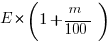
| FROM Magoosh Blog: GMAT Word Problems: Introduction and Strategies. |
![]() You may love GMAT word problems or you may hate them, but you can’t get around them if you want to ace the GMAT Quant section. However, no matter what your feelings are about this problem type, Magoosh’s experts have put together everything you need to know (and practice!) in order to master GMAT word problems before you encounter them on test day. Table of Contents
Here’s a quick summary of how to quick the best numbers for a particular problem:
error log of word problems you’ve answered wrong in your practice, then review it. As you go through, think about the following:
A Final Word on Word Problems So, what is the trick to GMAT word problems? As you’ve seen in this post, there’s no one-size-fits-all trick—but there are plenty of strategies! The strategies you’ve read about here can be used to take the given information and identify key words in a question. With them, you’ll be able to find everything from average speed to total distance traveled, from total time to total amount. The key now is to put them into practice. Jot down these techniques or bookmark this post so you can come back as you continue your practice with GMAT word problems. You can also check out our posts on compound interest and Venn diagrams for more practice with GMAT word problems. Good luck! The post GMAT Word Problems: Introduction and Strategies. appeared first on Magoosh Blog — GMAT® Exam. |
| FROM Magoosh Blog: GMAT Practice Questions with Fractions and Decimals |
Here are ten problems on fractions and decimals, some of which are quite challenging. Remember, no calculator!![]() ![]()
(B) 1 (C) 10 (D) 100 (E) 1000 ![]() ![]() ![]() 6) Suppose you have access to a large vat of distilled water, several gallons large. You have two precise measuring pipettes, one to measure exactly 1/3 of an ounce and one to measure exactly 1/4 of an ounce. You can pour precisely measured amounts into a beaker, which initially is empty. You can use either pipette to remove distilled water from the vat or from the beaker and use either pipette to dispense water into either of those receptacles, but you cannot use either pipette to take any quantity of distilled water other than the amount for which it is designed. Which of the following represents, in ounces, a precise amount of distilled water you can transfer from the vat to the beaker? ![]()
(B) III only (C) I and III only (D) II and III only (E) I, II, and III ![]() ![]()
(B) 6,600 (C) 13,200 (D) 44,000 (C) 132,000 ![]() ![]()
(B) 4 (C) 6 (D) 8 (E) 12 Fractions and Decimals I have already written a few blogs that would be germane to these topics. 1) Fractions: some of the basic ideas of fractions 2) Terminating and Repeating Decimals: an assortment of decimal ideas 3) Advanced Factoring: some sophisticated techniques for factoring ungainly looking decimals More advanced ideas will be discussed the explanations to these problems, below. ![]() Solutions to Practice Problems 1) First, let’s separate out the denominators and simplify them. ![]() and ![]() We are adding the reciprocals of these two fractions: ![]() Answer = (E). 2) Let’s handle the numerator and denominator separately to begin. The number is the cube root of a decimal. The first thing we have to recognize is that 4 cubed is 64, so the cube root of 64 is 4. There are six total decimal places, so when we take a cube root, that will get divided by 3, down to only two decimal places. Thus, ![]() The denominator is a little easier. ![]() Those are the two numbers we have to divide. When divide decimals, we move both decimals an equal number of places to the right until the denominator is a whole number. Here, after we set up the fraction, we will have to move both decimals four places to the right, because the denominator starts with four decimal point. ![]() Answer = (D). 3) There are a few different ways to think about this. First, I will multiply the entire inequality by positive 6. This will leave the direction of the inequality unchanged, and I can multiply right through the absolute value signs. This will eliminate any fractions. |3y – 1| < 4 Well, the only way a thing can have an absolute value less than 4 is if it’s true value is between –4 and +4. Thus –4 < 3y – 1 < 4 Add one to each term. –3 < 3y < 5 Now, divide by +3. Because we are dividing by a positive, the direction of the inequalities stay the same. ![]() So, y could be any positive or negative fraction between –1 and +1, so (B) & (C) & (D) are all allowed, and choice (E) is less than 5/3, so that’s also allowed. The only one that is not allowed is (A), and that’s the answer. 4) Notice that all the denominators are multiples of 30, so factor out a factor of 1/30: ![]() Answer = (B). 5) It’s actually better to change the decimals into fractions: ![]() Answer = (B). 6) If you fill the 1/3 oz pipette and put this into the beaker. Then use the other pipette to remove 1/4 oz from the beaker. This 1/4 oz can be put back in the vat. ![]() Thus, there would be 1/12 oz left in the beaker: that’s the amount that would have been transferred from the vat to the beaker. If we repeat this same procedure, we will transfer another 1/12 oz from the vat to the beaker, and 2/12 = 1/6. Therefore, we could transfer either 1/12 or 1/6 from the vat to the beaker. There is no way to transfer 1/7 to the beaker. No combination of arithmetic involving 1/3 and 1/4 will produce 1/7. Answer = (C). 7) Let’s think about this is in stages. First, call the entire denominator D; then (0.2)/D = 4. From this, we must recognize that D must be 1/4 of 0.2, or D = 0.05. Now, set that denominator equal to 0.05. 0.3 – x = 0.05 x = 0.3 – 0.05 = 0.25 = 1/4 Answer = (A). 8) Let’s make things easier by breaking this into two fraction. First, let’s work with 3.3 divided by 0.015. We will begin by sliding the decimals to the right a couple spaces: ![]() Now, notice that the denominator is 3/2, so we will replace that decimal with the fraction: ![]() That’s the first piece of the fraction. Now, consider the rest: ![]() Multiply the pieces (220)*(200) = 44,000 Answer = (D). 9) For this one, we need to use some advanced factoring. Notice that 0.9996 = 1 – 0.0004 Thus, we can express this as a difference of two squares, and use that to factor it ![]() Now, consider that 0.98 = 1 – 0.02; then ![]() When we subtract 1, we get 0.02, which equals 1/50. Answer = (A). 10) Think of this in stages. Call the denominator D. If 3/D = 12, then D must equal 1/4. Now, look at the denominator. One minus thing equals 1/4, so that thing must equal 3/4. Well, 6/c = 3/4, so c = 8. Answer = (D). If you’re looking to strengthen your Quant skills, Magoosh is here to help! Magoosh GMAT offers high-quality, affordable test prep to help you reach your score goals. Get access for a year with premium, or try us for free with a 1-week trial! The post GMAT Practice Questions with Fractions and Decimals appeared first on Magoosh Blog — GMAT® Exam. |
| FROM Magoosh Blog: Essential GMAT Algebra Formulas and Practice Questions |
![]() What are the most essential topics of algebra that you need to know to succeed in GMAT math? How many formulas and equations do you have to memorize? Why must we be tortured by all this math??? The good news is that it doesn’t take a huge amount of time or energy to master the basics. Most likely, you already have the fundamentals down. ![]() Of course, it never hurts to review, so you might want to check out these first: Introduction to Algebra and FOIL on the GMAT: Simplifying and Expanding.[/*] [/list] This post is intended to help you gain the edge if you already have a solid foundation. By recognizing and taking advantage of some common algebraic expressions or patterns, and by remembering rather than memorizing. Table of Contents
Using the Patterns The first two items in the list pertain to factoring—you can check out this post for more on that topic: Algebra on the GMAT: How to Factor. The idea is that you can replace the expression on the left of the equals sign by the one on the right, and vice versa. This technique is often used in simplifying algebraic expressions. The practice problems below will also help you to understand when to use this strategy. The third item, the discriminant, is a powerful tool to help analyze the roots of quadratic equations without ever having to find the roots explicitly. ![]() To see these concepts in action, check out our lesson videos on Factoring – Rational Expressions and Quadratic Equations. Essential GMAT Algebra Formulas and Practice Questions appeared first on Magoosh Blog — GMAT® Exam. |
| FROM Magoosh Blog: Variables in GMAT Answer Choices: Algebraic Approach vs. Numerical Approach |
|
Fact: On GMAT Problem Solving, some of the prompts will state quantities in terms of variables, and then expect you to answer in terms of those variables. Such questions are known as “variable in the answer choice” questions (or VICs in some circles). Fact: There are two basic strategies you can use to solve these: (a) a full-on algebraic approach; or (b) plugging in numbers for the variables. Which of these two approaches is better? Well, we all know your Algebra Two teacher back in high school would have wanted you to pick the algebraic approach — perhaps that teacher even would have considered plugging in numbers a form of “cheating.” BUT — this ain’t high school no more! This is about GMAT, and as in the business world, the guiding principle for getting through the GMAT is: whatever works. Which of the two approaches is better? It depends entirely on you. This is where you need to practice, trying each approach on questions like this, getting a feel for both approaches, so you develop a sense of which one works better with your style. An Example Question As an example, I’ll solve a new question from the OG 13 in both ways. The question is Problem Solving #177 in the 13th edition: 177) Last year the price per share of Stock X increased by k percent and the earning per share increased by m percent, where k is greater than m. By what percent did the ratio of price per share to earnings per share increase, in terms of k and m? (A) ![]() (B) ![]() (C) ![]() (D) ![]() (E) ![]() This is a doozy of a question, because there are two variables in the question, and both play a role in the answer. This question is only #177 of 230 PS questions, but it’s one of the hardest questions in that whole section. Algebraic Approach First, the approach that would have made your Algebra II teacher happy. This will be hairy. Let price per share be P, and earnings per share be E. Then original ratio = ![]() new price per share = ![]() new earnings per share = ![]() new ratio = (new P)/(new E) = ![]() Some comments. Notice that to create the percent increases, I used multipliers. If that’s unfamiliar, it’s a hugely important idea with which you need to acquaint yourself: see this post [https://magoosh.com/gmat/math/understanding-percents-on-the-gmat/]. Now, we need a percent increase from the original ratio to the new ratio. This will be Percent increase = ![]() = ![]() Cancel the factor of P/E everywhere in the fraction = ![]() Find a common denominator inside the parentheses. = ![]() = ![]() = ![]() This matches exactly answer D, the correct answer. Numerical Approach We need several numbers, which we will pick for ease of calculation rather than for realism. First, say price per share P = 100 (many common stocks are in the ballpark of $100/share) and say that earnings per share is also E = 100 (that’s the part that is unrealistic, but it makes for an easy calculation). The original ratio, P/E = 100/100 = 1. We need k > m, so let’s say k = 50 and m = 20. Then the new P is 150, the new E is 120, and the new ratio is 150/120 = 15/12 = 5/4. The change from 1 to 5/4 involves adding a quarter, and a quarter is 25%, so it’s a 25% increase in the ratio. Now, the question is: with values of k = 50 and m = 20, which answer choice gives the correct answer of 25? Before we plug in, we don’t know — it’s possible the values we pick work for two answers: in that case, we would eliminate the cases which didn’t work, then pick new values, and repeat, but only checking the cases that worked the first time. So, the answers: (A) k/m % = 50/20% does not equal 25%! Out. (B) (k – m)% = (50 – 20)% = 30% Out. (C) 100*(k – m)/(100 + k) % = (100*30)/150 = 3000/150 = 20% Out. (D) 100*(k – m)/(100 + m) % = (100*30)/120 = 3000/120 = 25% Works. (E) 100*(k – m)/(100 + k + m) % = (100*30)/170 = 3000/170 = 300/17 = not a whole number, so it certainly doesn’t equal 25. Out. We got lucky! One choice for the variables was enough to eliminate four of the five, leaving only the correct answer D. In general, if you don’t pick the most obvious choices (k = 200 & m = 100, or k = 100 & m = 50), then you are likely to eliminate four answer choices on your first pick of numbers. That’s one of many reasons it’s an excellent idea to pick less-than-perfectly-obvious numbers when you are taking a numerical approach to a problem like this. Here’s another question with variables in the answer choices on which you can practice: http://gmat.magoosh.com/questions/325 If you sign up for the Magoosh product, you will get access to this important lesson on problems with variables in the answer choices: http://gmat.magoosh.com/lessons/283-variables-in-answer-choices The post Variables in GMAT Answer Choices: Algebraic Approach vs. Numerical Approach appeared first on Magoosh Blog — GMAT® Exam. |
| FROM Magoosh Blog: GMAT Probability: Difficult Dice Questions |
|
Dice problems aren’t too common on GMAT quant. As for the exact probability of getting a dice problem is something only privy to those over at GMAC. While it is a good idea to know your dice basics, doing so will only help you in the case of an easy dice problem. And one thing is for sure – if you are looking to break a 705 on the GMAT the probability of an easy dice problem (if you end up getting a dice problem) is very, very low. Below are three excruciatingly difficult dice problems. They will pop up only if you are heading towards a high score. For those still brushing up on their math fundamental don’t waste time on such challenge questions. GMAT Dice Probability Practice Questions 1. What is the probability of rolling the same number exactly three times with five six-sided dice?
2. What is the probability of rolling three six-sided dice, and getting a different number on each die?
3. A magician holds one six-sided die in his left hand and two in his right. What is the probability the number on the dice in his left hand is greater than the sum of the dice in his right?
Answer Explanations: Question 1 Rolling any number on a dice three times in a row is equal to the number of throws ![]() , where 3 represents the number of throws and 6 is the number of different ways to get three of the same number (e.g. 1, 1, 1 2, 2, 2 3, 3, 3…). Next we have to use the combinations formula to determine how many ways three out of five can be the same. ![]() . We want to multiply this number to ![]() We are not finished yet – there is one little twist to the problem. The question says “exactly three times.” Meaning we have to discount all the instances in which we roll the same number four times and those instance in which we roll the same number five times. One way to do so is by multiplying by the probability that the fourth and fifth dice will NOT land on the same number as the three dice. Because there are five other possibilities on dice that will not compromise “exactly three numbers” we can multiply by ![]() Finally this gives us ![]() Question 2 For the first die, we can roll any one of six numbers. For the second die, we can roll any number save for the number we rolled on the first die, giving us 5 possibilities. For the third die, we can roll four different numbers (we can’t roll the number we rolled on the first or second die. 6 x 5 x 4 = 120 possibilities out of 216 total possibilities. (For total possibilities we get 6 x 6 x 6 = 216). 120/216 = 5/9 Question 3 Perhaps the hardest of the bunch, this question requires that we find a solution that doesn’t take much longer than 2 minutes. A quick way – or at least relatively quick way – is to determine the number of instances in which our roll of one die will yield more than two die. Intuitively, this is a good place to start because the number of instances in which rolling a great number with one die than with two is much smaller than vice versa. The only way to roll higher on one die is if the magicians rolls between 2 and 5, inclusive, with two dice. Were he to roll a six with two dice than there is no way he could eclipse that number by rolling one die. Below is the probability of rolling a certain number with two dice. ‘2’ – 1/36 ‘3’ – 2/36 ‘4’ – 3/36 ‘5’- 4/36 Now the only numbers a magician can roll with the one die and win is between 3 and 6, inclusive. The chances of rolling any are always 1/6. Next, we have to combine the probability distribution relating to two dice with that relating to the one. The chances of a magician rolling any given number with one die are 1/6. So let’s start with the lowest number he can roll: a ‘3.’ To win with this roll, he will have to roll a ‘2’ with two dice, the odds of which are 1/36. So ![]() . So the chances of him rolling a ‘3’ with one die and winning are 1/216. Let’s repeat this logic for the next roll, ‘4.’ Chances of rolling are 1/6. Only way a ‘4’ wins is if he rolls a ‘2’ or a ‘3’ with two dice. Odds of rolling a ‘2’ with two dice + odds of rolling a ‘3’ with two dice = ![]() . Combine this with the odds of rolling a ‘4’ ( which is 1/6): ![]() . If he rolls a ‘5’ with one die, he can win if he rolls a ‘4’ with two dice, the probability is 3/36. He can also win if he rolls a ‘2’ or a ‘3’ with two dice, the number outcomes we just found: 3/36. So we add ![]() Next, if he rolls a ‘6’ on one die, he can beat ‘2’ through ‘5’ with the two dice. Number of ways to roll a ‘5’ = 4/36. Combining this with the odds of rolling a ‘6’ on one die with the odds or rolling ‘2’, ‘3’, ‘4’, or ‘5’ with the two dice we get: 10/216. You may be wondering why I left the denominator as 216. Well, this allows us to add up all the instances he can possibly win: ![]() (Answer B) The post GMAT Probability: Difficult Dice Questions appeared first on Magoosh Blog — GMAT® Exam. |
| FROM Magoosh Blog: GMAT Probability Rules |
|
[img]https://magoosh.com/gmat/files/2019/09/GMAT-Probability-Post.png[/img] For those of you who are ready to take on GMAT probability, here is the absolute bare minimum you need to know to successfully attack probability calculations on the GMAT: The Simplistic Probability Rules [b]“AND” means MULTIPLY[/b] [b]“OR” means ADD[/b] Is that the entire story? Well, no. But! If you can’t remember, or don’t understand anything else about probability, at least hang on to those two bare-bones rules. Just knowing how to translate “and” vs. “or” will put you ahead of the game. As you’ll see with the practice problems later on in this post, knowing these rules is enough to solve some GMAT problems. Of course, the more complex the problem, the more you’ll need to understand the limitations of the most simplistic rules. Therefore, we need to discuss a few distinctions: Mutually Exclusive One important idea in probability is mutually exclusive (a.k.a. “disjoint”). Two events are mutually exclusive if they both can’t happen at the same time. For example, on a single die roll, the six numbers on the die are mutually exclusive. That is, it is absolutely impossible to have them both happen at the same time. If you roll one die, you can’t simultaneously get, say, both a 3 and a 5. Suppose we are picking random people and classifying them by their current age. In this process, being in the category “teenager” and being in the category “senior citizen” are mutually exclusive: There is no one we could pick who is simultaneously in both categories. When the events [b]A[/b] and [b]B[/b] are [b]mutually exclusive[/b], then we can use the [b]simplified OR rule[/b]: [b]P(A or B) = P(A) + P(B)[/b] However, if events A and B are [b]not mutually exclusive[/b], then we have to use the [b]generalized OR rule[/b]: [b]P(A or B) = P(A) + P(B) – P(A and B)[/b] For events that are [b]not[/b] mutually exclusive, we need to subtract the overlap. The events of region “A and B” are included in both region A and region B, so if we simply added those two regions, the overlap would be counted twice. To avoid that, we need to subtract, ensuring that all events are only counted once. Independent Events Two events are independent if the occurrence of one event has absolutely no influence on whether the other event occurs. In other words, knowing about the outcome of one event gives absolutely no information about how the other event will turn out. For example, if I roll two ordinary dice, the outcome of each die is independent of the other die. If I tell you I rolled two dice, and the first die was a 4, then knowing that gives you no clue about what the number on the other die might be. Word to the wise! We have to pay attention to the details of the scenario. For instance, if I shuffle a deck of cards, draw one, replace it, re-shuffle, and draw another, then the two cards are independent. BUT, if I shuffle the deck, draw one card, and then without replacement draw a second card, then they are not independent. If the first card is the 7 of Hearts, then it is less likely that the second card would be either a 7 or a Heart, because there are fewer of those options among the remaining 51 cards. If events [b]A[/b] and [b]B[/b] are [b]independent[/b], then we can use the [b]simplified AND rule[/b]: [b]P(A and B) = P(A)*P(B)[/b] However, if events A and B are [b]not[/b] [b]independent[/b], then things get complicated. Technically, the “generalized AND rule” formula would involve a concept known as “conditional probability,” which would lead into realms of probability theory that are tested far less frequently on the GMAT. We will get to more advanced concepts later on in this post. At this point, let’s practice the basics. Simplistic Probability Practice Questions The scenario below is relevant to questions #1-#3. There are two sets of letters, and you are going to pick exactly one letter from each set. Set #1 = {A, B, C, D, E} Set #2 = {K, L, M, N, O, P} 1) What is the probability of picking a C and an M? [list] (A) 1/30 (B) 1/15 (C) 1/6 (D) 1/5 (E) 1/3 [/list] 2) What is the probability of picking a C or an M? [list] (A) 1/30 (B) 1/15 (C) 1/6 (D) 1/5 (E) 1/3 [/list] 3) What is the probability of picking two vowels? [list] (A) 1/30 (B) 1/15 (C) 1/6 (D) 1/5 (E) 1/3 [/list] _____________________________________________________________________ 4) In a certain corporation, there are 300 part-time employees and 100 full-time employees. It is known that 20% of the part-time employees have advanced degrees and 40% of the full-time have advanced degrees. If one of the 400 employees is chosen at random, what is the probability this employee has an advanced degree and is a full-time employee? [list] (A) 1/20 (B) 1/10 (C) 1/5 (D) 2/5 (E) 3/4 [/list] 5) In a certain corporation, there are 300 part-time employees and 100 full-time employees. It is known that 20% of the part-time employees have advanced degrees and 40% of the full-time have advanced degrees. If one of the 400 employees is chosen at random, what is the probability this employee has an advanced degree or is a full-time employee? [list] (A) 1/20 (B) 1/10 (C) 1/5 (D) 2/5 (E) 3/4 [/list] [b]Looking for solutions?[/b] Scroll to the end of the post, where you’ll find the solutions to both the simplistic and advanced question sets. Advanced Probability Rules Conditional Probability Because conditional probability does pop up from time to time on the GMAT, here’s a quick overview. For conditional probability, the notation we use is P(A|B). Event A is the main focus: we are interested whether or not A occurs. Event B is some kind of condition we impose: the idea is, we will pretend that we live in a world in which Event B is always true — under those conditions, what is the probability of A? P(A|B) is a “conditional probability”, a probability when we impose the condition of B. The notation P(A|B) is read “the probability of A, given B.” Here are a few examples. Suppose that A = on a given day in Berkeley, CA, it rains B = on a given day in Berkeley, CA, there are no clouds in the sky. Here P(A) would be the probability that in Berkeley, CA we get rain on a randomly selected day; that would be approximately 0.10 or 0.15. By contrast, if we impose the condition “no clouds”, then the conditional probability, P(A|B), would have to be zero: how could it possibly rain when there are no clouds? This is an example of a condition lowering a probability. Of course, there are other conditions that could raise the probability of it raining in Berkeley. The Generalized AND Rule Now that we have discussed conditional probability, we can discuss the generalized AND rule. Again, not feeling ready for these advanced topics? No worries, skip on down to the basic probability practice questions. If you’re ready to level-up, here we go: If events A and B are two general events, not mutually exclusive, not independent, then, as a general rule: [b]P(A and B) = P(A)*P(B|A)[/b] P(A and B) = P(B)*P(A|B)[/b] Either one of these is the generalized AND rule. Notice that AND still means multiply, though what we multiply here is a little different from what was multiplied in the case with independent events. For example, suppose we are going to pick two cards from a full 52-card deck, without replacement, and we want to know the probability of picking two heart-cards. The phrase “without replacement” means when we pick the first card, we put it aside and do not return it to the deck, so that the second card is picked from a deck of only 51 cards. That changes the probability. The words “without replacement” always means the choices are NOT independent, because the outcome of the first choice has a big influence on the outcome of subsequent choices. For this example, let A = first choice is a heart-card B = second choice is a heart-card There are four suits in a full deck, and each suit is equally represented, so P(A) = 1/4. Let’s think about P(B|A). If the first card was a heart-card and it was not replaced, that means the second choice is made from a deck of 51 cards that has 13 of the other three suits but only 12 heart-cards. Thus, P(B|A) = 12/51 = 4/17, and P(A and B) = (1/4)*(4/17) = 1/17 The generalized AND rule is often used in sequential tasks such as this, in which there are earlier choices or trials, and the outcomes of these have various effects on later choices or trials. The generalized AND rule is most often not applicable in a more side-by-side choice, in which all the choices are available at the outset. If you are hankering for more advanced concepts, here are a couple other posts to check out: 1) [url=https://magoosh.com/gmat/gmat-math-the-probability-at-least-question/]The Probability “At Least” Question[/url] 2) [url=https://magoosh.com/gmat/gmat-probability-and-counting-techniques/]Probability and Counting Techniques[/url] Advanced Probability Questions In the following probability problems, problems #1-3 function as a set, problems #4-5 are another set, and problems #6-7 are yet another set. The scenarios are all similar in a set, and the answer choices for those problems in the same set are the same. What is going on there? Do all questions in the same set have the same answer? Do all have different answers? What is happening? 1) In a certain game, you perform three tasks. You flip a quarter, and success would be heads. You roll a single die, and success would be a six. You pick a card from a full playing-card deck, and success would be picking a spades card. If any of these task are successful, then you win the game. What is the probability of winning? [url=https://magoosh.com/gmat/files/2013/12/gp_img1.png][img]https://magoosh.com/gmat/files/2013/12/gp_img1.png[/img][/url] 2) In a certain game, you perform three tasks sequentially. First, you flip quarter, and if you get heads you win the game. If you get tails, then you move to the second task. The second task is rolling a single die. If you roll a six, you win the game. If you roll anything other than a six on the second task, you move to the third task: drawing a card from a full playing-card deck. If you pick a spades card you win the game, and otherwise you lose the game. What is the probability of winning? [url=https://magoosh.com/gmat/files/2013/12/gp_img2.png][img]https://magoosh.com/gmat/files/2013/12/gp_img2.png[/img][/url] 3) In a certain game, you perform three tasks. You flip a quarter, and success would be heads. You roll a single die, and success would be a six. You pick a card from a full playing-card deck, and success would be picking a spades card. If exactly one of these three tasks is successful, then you win the game. What is the probability of winning? [url=https://magoosh.com/gmat/files/2013/12/gp_img3.png][img]https://magoosh.com/gmat/files/2013/12/gp_img3.png[/img][/url][url=https://magoosh.com/gmat/files/2013/12/line.png][img]https://magoosh.com/gmat/files/2013/12/line.png[/img][/url] The following information accompanies questions 4-5 Johnson has a corporate proposal. The probability that vice-president Adams will approve the proposal is 0.7. The probability that vice-president Baker will approve the proposal is 0.5. The probability that vice-president Corfu will approve the proposal is 0.4. The approvals of the three VPs are entirely independent of one another. 4) Suppose the Johnson must get VP Adam’s approval, as well as the approval of at least one of the other VPs, Baker or Corfu, to win funding. What is the probability that Johnson’s proposal is funded? (A) 0.14 (B) 0.26 (C) 0.49 (D) 0.55 (E) 0.86 5) Suppose Johnson must get the approval of at least two of the three VPs to win funding. What is the probability that Johnson’s proposal is funded? (A) 0.14 (B) 0.26 (C) 0.49 (D) 0.55 (E) 0.86 [url=https://magoosh.com/gmat/files/2013/12/line.png][img]https://magoosh.com/gmat/files/2013/12/line.png[/img][/url] The following information accompanies questions 6-7 Johnson has a corporate proposal. The probability that vice-president Adams will approve the proposal is 0.6. If VP Adams approves the proposal, then the probability that vice-president Baker will approve the proposal is 0.8. If VP Adams doesn’t approve the proposal, then the probability that vice-president Baker will approve the proposal is 0.3. 6) What is the probability that one of the two VPs, but not the other, approves Johnson’s proposal? (A) 0.12 (B) 0.24 (C) 0.28 (D) 0.48 (E) 0.72 7) What is the probability that at least one of the two VPs, approves Johnson’s proposal? (A) 0.12 (B) 0.24 (C) 0.28 (D) 0.48 (E) 0.72 Practice Question Solutions Simplistic Probability Solutions 1) Whatever we pick from the first set is independent with whatever we pick from the second set, so we can use the simplified AND rule. P(first pick = C) = 1/5 P(second pick = M) = 1/6 P(C and M) = P(C)*P(M) = (1/5)*(1/6) = 1/30 Answer = [b]A[/b] 2) Picking an M is not disjoint with picking a C — they both could happen on the same round of the game. We have to use the generalized OR rule for this: P(C or M) = P(C) + P(M) – P(C and M) Fortunately, we know the first two, and we calculated the value of the third term already in #1. P(C or M) = P(C) + P(M) – P(C and M) [url=https://magoosh.com/gmat/files/2012/12/pp_img11.png][img]https://magoosh.com/gmat/files/2012/12/pp_img11.png[/img][/url] Answer = [b]E[/b] 3) On the first pick, two of the five letters are vowels — A & E — so the probability of picking a vowel on the first pick is 2/5. On the second pick, only one letter out of the six is a vowel — O — so the probability of picking a vowel on the second pick is 1/6. The two picks are independent: what one selects from one set has absolutely no bearing on what one picks from the other set. Therefore, we can use the generalized AND rule. P(two vowels) = P(vowel on first pick)*P(vowel on second pick) =(2/5)*(1/6) = 2/30 = 1/15 Answer = [b]B[/b] 4) Here we have an AND question, and the parameters — full-time and advanced degree — are not independent. If I tell you the status of a certain employee, then that gives me information about how likely it is that this employee has an advanced degree. One parameter gives information about the other, which means they are not independent. Therefore, we cannot use the simplified AND rule. Fortunately, it is relatively easy here to calculate everything directly. There are 100 full-time employees, and we know 40% of them have advanced degrees, so there are 40 employees who both are full-time and have an advanced degree. That’s the number of employees in the AND region. Well, there are 400 employees altogether. Of these 400 total employees, the probability of picking someone in this AND region is P = 40/400 = 1/10 Answer = [b]B[/b] 5) In this corporation, there are 400 total employees. There are 100 full-time. Of the 300 part-time, 20% have advanced degrees —-10% of 300 must be 30, so 20% of 300 must be 60. Add the full-time employees and the part-time employees with advanced degrees: 100 + 60 = 160. This is the OR region, full set of individuals that satisfy the condition “has an advanced degree or is full-time.” Of the 400 employees, what’s the probability of picking one of the 160 in this particular group? P = 160/400 = 16/40 = 4/10 = 2/5 Answer = [b]D[/b] Advanced Probability Solutions 1) In this scenario, winning combinations would include success on any one task as well as any combination of two or three successes. In other words, there are several cases that constitute the winning combinations. By contrast, the only way to lose the game would be unsuccessful at all three tasks. Let’s use the [b]complement rule[/b]. P(lose game) = P(quarter = T AND dice ≠ 6 AND card ≠ spades) = (1/2)*(5/6)*(3/4) = 5/16 P(win game) = 1 – P(lose game) = 1 – (5/16) = 11/16 Answer = [b](D)[/b] 2) In this scenario, there are several routes that would lead to winning the game. The only route that leads to losing the game is the route in which all three tasks are unsuccessful. We can do this precisely as we did the previous problem. P(lose game) = P(quarter = T AND dice ≠ 6 AND card ≠ spades) = (1/2)*(5/6)*(3/4) = 5/16 P(win game) = 1 – P(lose game) = 1 – (5/16) = 11/16 Answer = [b](D)[/b] 3) This is very tricky. We have to think of three cases. Case One: success with coin, no success with die or card P(coin = H AND die ≠ 6 AND card ≠ spade) = (1/2)*(5/6)*(3/4) = 15/48 Case Two: success with die, no success with coin or card P(coin = T AND die = 6 AND card ≠ spade) = (1/2)*(1/6)*(3/4) = 3/48 Case Three: success with card, no success with die or coin P(coin = T AND die ≠ 6 AND card = spade) = (1/2)*(5/6)*(1/4) = 5/48 The winning scenario could be Case One OR Case Two OR Case Three. Since these are joined by OR statements and are mutually exclusive, we simply add the probabilities. [url=https://magoosh.com/gmat/files/2013/12/gp_img5.png][img]https://magoosh.com/gmat/files/2013/12/gp_img5.png[/img][/url] Answer = [b](E)[/b] 4) We will use the abbreviation A = VP Adams approves, B = VP Baker approves, and C = VP Corfu approves. P(funding) = P(A and (B or C)) = P(A)*P(B or C) We can multiply because everything is independent of everything else. First look at P(B or C). These are not mutually exclusive, so we need to use the generalized OR rule: P(B or C) = P(B) + P(C) – P(B and C) Because B & C are independent, we can multiply to find P(A and B) P(B or C) = (0.5) + (0.4) – (0.5)*(0.4) = 0.9 – 0.2 = 0.7 Now, multiply by P(A) P(funding) = P(A)*P(B or C) = (0.7)*(0.7) = 0.49 Answer = [b](C)[/b] 5) For this one, we have to consider four different cases P(A and B and (not C)) = (0.7)*(0.5)*(0.6) = 0.21 P(A and (not B) and C) = (0.7)*(0.5)*(0.4) = 0.14 P((not A) and B and C) = (0.3)*(0.5)*(0.4) = 0.06 P(A and B and C) = (0.7)*(0.5)*(0.4) = 0.14 These four are mutually exclusive and are joined by OR, so we add them. P(funding) = 0.21 + 0.14 + 0.06 + 0.14 = 0.55 Answer = [b](D)[/b] 6) We will use the abbreviation A = VP Adams approves and B = VP Baker approves. We will consider two cases: Case #1: Adams approves and not Baker P(A and not B) = P(A)*P(not B|A) = (0.6)*(0.2) = 0.12 Case #2: Baker approves and not Adams P(not A and B) = P(not A)*P(B|not A) = (0.4)*(0.3) = 0.12 These two cases are mutually exclusive and joined by OR, we add them. P(only one VP approves) = 0.12 + 0.12 = 0.24 Answer = [b](B)[/b] 7) Here, the combinations (A and not B), (not A and B), and (A and B) all lead to approval of the proposal. The only one that doesn’t is the complement (not A and not B). P(not A and not B) = P(not A)*P(not B|not A) = (0.4)*(0.7) = 0.28 P(at least one) = 1 – P(not A and not B) = 1 – 0.28 = 0.72 Answer = [b](E)[/b] Summary If you understand everything in this post, you are a GMAT Probability pro. If some of the concepts feel a bit challenging, you are not alone. Probability questions are a type that a lot GMAT test-takers struggle with. But! Keep practicing, and you will find that these, too, will become easier. The post [url=https://magoosh.com/gmat/gmat-probability-rules/]GMAT Probability Rules[/url] appeared first on [url=https://magoosh.com/gmat]Magoosh Blog — GMAT® Exam[/url]. |

| FROM Magoosh Blog: How Much Does the GMAT Cost? A Guide to GMAT Exam Fees |
![]() Getting into and going to graduate school is pricey, and there’s no denying that the GMAT cost of $275 is an added expense. GMAT exam fees are hefty, and more expensive than many similar standardized exams (except the MCAT…). Furthermore, the actual GMAT cost is not the only fee you have to consider. Most test-takers purchase some sort of practice materials, and many students even take the exam more than once. No doubt about it, paying GMAT exam fees will impact your wallet. In this post, we’ll go over what fees you can expect to pay and how to minimize the cost of taking the GMAT. An Overview of GMAT Exam Fees Before we get into any more detail, let’s look at how much the GMAT might cost you. (NOTE: This table applies to most of the world, but not to Europe. In Europe, GMAT scheduling and other GMAT fees can vary a little bit from the costs in the table below.) We split the fees in this table by in-person (taken at a testing center) and online, the latter which costs more. In-Person (Test Center) Online Scheduling fee (U.S. and Canada) $275 $300 Scheduling fee (US Overseas Territories, some other countries) $250 $275 Additional score report $35 $35 Rescheduling fee (more than 60 days out) $55 $60 Rescheduling fee (15-60 days out) $110 $120 Rescheduling fee (within 14 days of the exam) $165 $180 Cancellation refund (15-60 days out) $110 refund $120 refund Cancellation refund (15-60 days out) $80 refund $90 refund Cancellation refund (within 14 days of the exam) $55 refund $60 refund With that in mind, let’s take a look at some of these GMAT costs in more detail. Skip ahead to a section by selecting a GMAT cost or GMAT score report section from the navigation table below, or keep scrolling down to review all information. For the remainder of this post, we will show the test center price first, then the online price (as in-person/online).
Note, however, that if you choose to pay by phone you will be charged an additional $10 or so (again, fees can vary in Europe, especially when a currency other than USD is in play). So, if you have easy access to the internet, register online! GMAT prep book or online test prep could cost you less than $150. To maximize your prep with video lessons, practice questions, tests, and more to help you boost your score, we recommend checking out Magoosh GMAT. Try us for free with a 1-week trial! For high-quality free practice, you can also check out: [list] [*]GMATPrep Software from GMAC[/*] [*]Advice from Online Forums[/*] [*]You can also check out the get into business school, after all. And that’s very expensive! Since B-school itself will be pricey, you might want to consider this when budgeting in your GMAT cost. If you’re concerned about expenses, you might consider planning to avoid a rescheduling fee or a retake. In addition, be aware that GMAT fee waivers may be available. The post How Much Does the GMAT Cost? A Guide to GMAT Exam Fees appeared first on Magoosh Blog — GMAT® Exam. |
| FROM Magoosh Blog: GMAT for Non-Native English Speakers |
![]() Preparing for the GMAT exam can be a daunting task, especially if English is not your first language. The verbal section, in particular, poses unique challenges that require a strategic approach and diligent practice. If you are looking for advice on how to modify or supplement your Magoosh Study Schedule, you’ve come to the right place. If you’re just looking for advice on how to approach the GMAT as a Non-native English speaker, you’ve also come to the right place. Read on for tips and strategies that will help you excel in preparing for verbal part of the exam. The Most Important GMAT Tip for Non-Native English Speakers: The number one thing you can do to improve your verbal performance on the GMAT is to read English as much as possible. There is simply no better way to improve than through A LOT of practice. The upside to all this reading is that you will not only boost your vocabulary, but also your comprehension skills — your ability to digest meaning and decipher the author’s intent. This is a crucial skill for the GMAT verbal section. Recommended Practice for Non-Native English Speakers: You should read for at least 30 minutes per day. If you are really struggling with GMAT Verbal and can afford the time, make it at least one hour per day. We understand that reading for 30 minutes to one hour each day is not a small task. You might be wondering how to find the time, especially if you’re trying to diligently follow each and every item in your Magoosh Study Schedule–we know each day is already packed. But! You don’t have to follow the study schedule to a T. The schedules were designed to be modified based on an individual’s strengths and weaknesses. If, as a non-native English speaker or someone weaker in verbal, it’s in your best interest to read for an hour (or more) each day as well as have time to record and review any unfamiliar vocabulary, you should feel free to modify the demands of the schedule in whatever way best suits your GMAT success. Modifying Your GMAT Study Schedule: Let’s say that you are already really strong in Quantitative Reasoning (QR) concepts. Well, if that’s the case, at the beginning of each week, look through the QR content to see whether you already know the content of a lesson or just need to lightly review it. If you’re confident you know the concepts, you could either skip those lessons completely or maybe just skim through any for which you only need a brief refresher. All the time that you don’t need to devote to QR can then be applied to reading and more GMAT verbal practice. Please Note: We recommend that you don’t completely skip any given lesson’s associated practice questions because your performance on those questions will reveal any unexpected weaknesses and lessons that you should, in fact, review more fully. You Cannot Skip or Skim any GMAT Topics: If you find that it’s not in your best interest to skip any of the lessons in your schedule, you still need to do your best to practice reading as much as possible, especially if you are a non-native English speaker who finds the vocabulary and sentence complexity of GMAT verbal difficult to navigate. Unfortunately, the best way to see a significant improvement in your verbal score is to become as comfortable as possible with reading higher-level English texts, and that takes time. Be honest with yourself. If you cannot add time to practice reading each day as well as knock out all the lessons and practice in the schedule, at the bare minimum, can you fit a longer reading session into a sixth or seventh day? If there’s simply no way you can incorporate the reading you need to do to help you improve your verbal score into your current study schedule, you might need to consider increasing the total amount of time you’ve allocated to studying for the GMAT. Many non-native English speakers give themselves up to a year or more to prepare, specifically because of the need to be as comfortable as possible with the English complexity they’ll encounter on the GMAT. What to Read to Prepare for the GMAT: It’s important to read materials that are similar to what you’ll see come test day. Consider such venerated publications as The New York Times, The New Yorker, The Economist, and Arts & Letters Daily. Take a look at our full list of recommended periodicals. Or, if you prefer books, check out our recommended fiction & non-fiction (this list is written for the GRE, but all the picks would suit the GMAT as well). How to Read to Prepare for the GMAT:
Final Thoughts: It will not be easy to catch up with native speakers on an exam like the GMAT. Preparing for the verbal section of the GMAT exam as a non-native English speaker requires dedication, practice, and strategic planning. Magoosh is here to help! Hopefully, you now feel empowered to modify your study schedule in a way that will help you significantly enhance your performance. And, remember, be kind to yourself. Improving in verbal can feel like an uphill battle but maintaining a consistent effort and a positive mindset are key to achieving your desired score. Good luck! The post GMAT for Non-Native English Speakers appeared first on Magoosh Blog — GMAT® Exam. |
| FROM Magoosh Blog: GMAT Math: The Probability “At Least” Question |
|
[b]This post was updated in 2024 for the new GMAT.[/b] In the first post in this series, I spoke about the AND and the OR [url=https://magoosh.com/gmat/gmat-probability/]probability rules[/url]. Now, we will focus on probability questions involving the “at least” probability. [img]https://magoosh.com/gmat/files/2012/12/GMAT-Probability.jpg[/img] The complement rule There is a very simple and very important rule relating P(A) and P(not A), linking the probability of any event happening with the probability of that same event not happening. For any well-defined event, it’s 100% true that either the event happens or it doesn’t happen. The GMAT will not ask you probability question about bizarre events in which, for example, you can’t tell whether or not the event happened, or complex events which could, in some sense, both happen and not happen. For any event A in a probability question on the GMAT, the two scenarios “A happens” and “A doesn’t happen” exhaust the possibilities that could take place. With certainty, we can say: one of those two will occur. In other words: P(A [b]OR[/b] not A) = 1 Having a probability of 1 means guaranteed certainty. Obviously, for a variety of deep logical reasons, the events “A” and “not A” are disjoint and have no overlap. The OR rule, discussed in the last post, implies: P(A) + P(not A) = 1 Subtract the first term to isolate P(not A). [b]P(not A) = 1 – P(A)[/b] [list] [*]That is known in probability as the [b]complement rule[/b], because the probabilistic region in which an event doesn’t occur complements the region in which it does occur.[/*] [/list] This is a crucial idea in general, for all GMAT probability questions, and one that will be very important in solving “at least” questions in particular. The complement of “at least” statements Suppose event A is a statement involving words “at least”—how would we state what constituted “not A“? In other words, how do we negate an “at least” statement? Let’s be concrete. Suppose there is some event that involves just two outcomes: success and failure. The event could be, for example, making a basketball free throw, or flipping a coin and getting heads. Now, suppose we have a “contest” involving ten of these events in a row, and we are counting the number of successes in these ten trials. Let A be the event defined as: A = “there are at least 4 successes in these ten trials.” What outcomes would constitute “not A“? Well, let’s think about it. In ten trials, one could get zero successes, exactly one success, exactly two successes, all the way up to ten successes. There are eleven possible outcomes, the numbers from 0 – 10, for the number of successes one could get in 10 trials. Consider the following: number of possible successes in ten trials: [b] 0 1 2 3 4 5 6 7 8 9 10 [/b] The purple numbers are the members of A, the members of “at least 4 successes” in ten trials. Therefore, the green numbers are the complement space, the region of “not A.” In words, how would we describe the conditions that land you in the green region? We would say: “not A” = “three or fewer success” in ten trials. The negation, the opposite, of “at least four” is “three or fewer.” Abstracting from this, the negation or opposite of “at least n” is the condition “(n – 1) or fewer.” [list] [*]One particularly interesting case of this is n = 1:[b] the negation or opposite of “at least one” is “none.”[/b][/*] [/list] That last statement is a hugely important idea, arguably the key to solving most of the “at least” questions you will see on the GMAT. Solving an “at least” question The big idea for any “at least” question on the GMAT is: [list] [*][b]It is always easier to figure out the complement probability[/b].[/*] [/list] For example, in the above scenario of ten trials of some sort, calculating “at least 4” directly would involve seven different calculations (for the cases from 4 to 10), whereas the calculation of “three or fewer” would involve only four separate calculations (for the cases from 0 to 3). In the extreme—and extremely common—case of “the probability of at least one”, the direct approach would involve a calculation for almost case, but the complement calculation simply involves calculating the probability for the “none” case, and then subtracting from one. P(not A) = 1 – P(A) P(at least one success) = 1 – P(no successes) This is one of the most powerful time-saving shortcuts on the entire GMAT. An example calculation Consider the following simple question. Two dice are rolled. What is the probability of at least one of the dice rolling a 6? It turns out, calculating that directly would involve a relatively long calculation — the probability of exactly one 6, on either die, and the rare probability of both coming up 6’s. That calculation easily could take several minutes. Instead, we will use the shortcut defined above: P(not A) = 1 – P(A) P(at least one 6) = 1 – P(no 6’s) What’s the probability of both dice coming up no 6’s? Well, first, let’s consider one die. The probability of rolling a 6 is 1/6, so the probability of rolling something other than 6 (“not 6”) is 5/6. P(two rolls, no 6’s) = P(“not 6” on dice #1 AND “not 6” on dice #2) As we found in the previous post, the word AND means multiply. (Clearly, the outcome of each die is independent of the other). Thus: P(two rolls, no 6’s) =(5/6)*(5/6) = 25/36 P(at least one 6) = 1 – P(no 6’s) = 1 – 25/36 = [b]11/36[/b] What could have been a long calculation becomes remarkably straightforward by means of this shortcut. This can be an enormous time-saver on the GMAT! Practice Now that you’ve read this post, take shot at these three practice questions before reading the answers and explanations below. Set #1 = {A, B, C, D, E} Set #2 = {K, L, M, N, O, P} [*]There are these two sets of letters, and you are going to pick exactly one letter from each set. What is the probability of at least one vowel being picked? [*]1/6[/*] [*]1/3[/*] [*]1/2[/*] [*]2/3[/*] [*]5/6[/*] [/list] [/*] [/list] Show answer and explanation P(at least one vowel) = 1 – P(no vowels) The probability of picking no vowel from the first set is 3/5. The probability of picking no vowel from the second set is 5/6. In order to get no vowels at all, we need no vowels from the first set AND no vowels from the second set. According to the AND rule, we multiply those probabilities. P(no vowels) = (3/5)*(5/6) = 1/2 P(at least one vowel) = 1 – P(no vowels) = 1 – 1/2 = [b]1/2[/b] Answer = [b]C[/b] [*]Suppose you flip a fair coin six times. What is the probability of at least one head in six flips? [*]5/8[/*] [*]13/16[/*] [*]15/16[/*] [*]31/32[/*] [*]63/64[/*] [/list] [/*] [/list] Show answer and explanation P(at least one H) = 1 – P(no H’s) In one flip, P(“not H”) = P(T) = 1/2. We would need to have this happen six times—that is to say, six independent events joined by AND, which means they are multiplied together. [url=https://magoosh.com/gmat/files/2012/12/tpatq_img2.png][img]https://magoosh.com/gmat/files/2012/12/tpatq_img2.png[/img][/url]Answer = [b]E[/b] [*]In a certain game, you pick a card from a standard deck of 52 cards. If the card is a heart, you win. If the card is not a heart, the person replaces the card to the deck, reshuffles, and draws again. The person keeps repeating that process until he picks a heart, and the point is to measure: how many draws did it take before the person picked a heart and won? What is the probability that one will have at least two “heartless” draws on the first two draws, not picking the first heart until at least the third draw? [*]1/2[/*] [*]9/16[/*] [*]11/16[/*] [*]13/16[/*] [*]15/16[/*] [/list] [/*] [/list] Show answer and explanation A full deck of 52 cards contains 13 cards from each of the four suits. The probability of drawing a heart from a full deck is 1/4. Therefore, the probability of “not heart” is 3/4. P(at least three draws to win) = 1 – P(win in two or fewer draws) Furthermore, P(win in two or fewer draws) = P(win in one draw OR win in two draws) = P(win in one draw) + P(win in two draws) Winning in one draw means: I select one card from a full deck, and it turns out to be a heart. Above, we already said: the probability of this is 1/4. P(win in one draw) = 1/4 Winning in two draws means: my first draw is “not heart”, P = 3/4, AND the second draw is a heart, P = 1/4. Because we replace and re-shuffle, the draws are independent, so the AND means multiply. P(win in two draws) =(3/4)*(1/4) = 3/16 P(win in two or fewer draws) = P(win in one draw) + P(win in two draws) = 1/4 + 3/16 = 7/16 P(at least three draws to win) = 1 – P(win in two or fewer draws) = 1 – 7/16 =[b] 9/16[/b] Answer = [b]B[/b] [b]Bonus Question[/b] The probability is 0.6 that an “unfair” coin will turn up tails on any given toss. If the coin is tossed 3 times, what is the probability that at least one of the tosses will turn up tails? 0.064 0.36 0.64 0.784 0.936 [url=https://gmat.magoosh.com/questions/839?utm_source=gmatblog&utm_medium=blog&utm_campaign=gmatquestions&utm_term=inline&utm_content=gmat-math-the-probability-at-least-question]Click here for the answer and video explanation![/url] The next article in this series will explore [url=https://magoosh.com/gmat/gmat-probability-and-counting-techniques/]probability questions that involve counting techniques[/url]. The post [url=https://magoosh.com/gmat/gmat-math-the-probability-at-least-question/]GMAT Math: The Probability “At Least” Question[/url] appeared first on [url=https://magoosh.com/gmat]Magoosh Blog — GMAT® Exam[/url]. |
| FROM Magoosh Blog: GMAT Math: Calculating Combinations |
|
This post was updated in 2024 for the new GMAT. First, a few practice questions. Remember — no calculator! 1) A radio station has to choose three days of the seven in a week to broadcast a certain program, and that set will repeat each week. The program can be broadcast equally on any of the seven weekdays —- weekdays vs. weekends don’t matter at all —- nor does it matter whether the days the program airs are adjacent or not. Absolutely any three of the seven weekdays can be chosen. How many different three-day combinations of the seven weekdays can be constructed?
(B) 15 (C) 21 (D) 35 (E) 56
(B) 72 (C) 96 (D) 144 (E) 432
(B) 4,200 (C) 5,040 (D) 20,520 (E) 84,000 Combinations Mathematically, a combination is a group of things, irrespective of order. For example, {A, B, D} and {D, A, B} and {B, A, D} are all the same combination — order doesn’t matter at all. The expression nCr (read “n choose r”) is the expression for the number of combinations of r things, r choices, you can make from a pool of n unique items. For example, 6C3 = the number of combinations of three one can choose from a pool of six unique items. In a previous post about combinations, I give the following formula for nCr ![]() where the exclamation point (“!”) is the factorial symbol — n! means the product of all the positive integers from n down to 1. Using this formula, we could compute the value of 6C3 ![]() So, it turns out, there are twenty ways to pick a set of three items from a pool of six unique items. That’s one way to calculate nCr, but it’s not the only way. Pascal’s Triangle The mathematician and philosopher Blaise Pascal (1623 – 1662) created a magical triangular array of numbers known now as Pascal’s Triangle: ![]() How does this pattern work? Well, of course, the edges are diagonals of 1’s. Every inside number is the sum of the two numbers above it in the previous row, diagonally to the left and diagonally to the right. For example, the 2 is the sum 1+1; both 3’s are the sum 1+2; both 4’s are the sums 1+3; the 6 is the sum 3+3, etc. They often show Pascal’s Triangle to grade school students to give them practice with addition. Despite its relatively easy origins, Pascal’s Triangle is a treasure trove of miraculous mathematical properties. Most relevant for us right now is: Pascal’s Triangle is, among other things, an array of all possible nCr’s. nCr = the rth entry of the nth row of Pascal’s Triangle In that definition, we have to be careful — we have to start counting at zero instead of one. The top 1 on Pascal’s Triangle is the zeroth row, zeroth entry, 0C0 = 1 (a relatively meaningless number in terms of combinations!) The next row (1, 1) is the first row, and the next row is the second row (1, 2, 1), etc. Notice that the second number in any row (as well as the penultimate number in any row) equals the row number. The first number (always 1) is actually the zeroth entry, so that second number would actually be the first entry — the first entry of the nth row always equals n. In other words nC1 = n That makes sense: if we have n different items, we have exactly n ways of selecting any one item. Those entries, the first entries of each row, line along a diagonal down the left side of the triangle. Because of the complete symmetry of the triangle, this always equals the numbers on the corresponding diagonals on the right side, which would be the (n-1) entries of each row. Thus: nC1 = nC(n-1) = n When you have to figure out nCr when n & r are both relatively small numbers, it may be easier simply to jot down the first few rows of Pascal’s Triangle. For example, with what we have showing, we can see that 6C3, the 3rd entry of the 6th row, is 20 — the same as the answer we found via the factorials formula. Things get even more interesting when we move to the next diagonal in, shown in green here: ![]() These numbers, the set of the second entries in each row, are the triangular numbers. Among other things, the second entry in the n row is the sum of the first n-1 positive integers. For example 3 = 2 + 1 6 = 3 + 2 + 1 10 = 4 + 3 + 2 + 1 etc. The formula for this is: ![]() Because we have a formula, we can calculate this for much higher numbers. For 21C2, we would have to write out everything to the twenty-first row of Pascal’s Triangle, an arduous undertaking. Rather, we could simply use the formula ![]() Notice that the symmetry of Pascal’s Triangle also provides tremendous insight into the nature of the nCr numbers. First of all, in any row, the second entry, the triangular number in that row, must be equal to the third-to-last entry of the row, that is, the (n-2) entry of the row. Thus ![]() Thus, via the triangular numbers, we have a formula, not only for the second entry of each row, but also for the third-to-last entry of every row. Thus, it’s very easy to figure out the first three or last three numbers in any row. More generally, symmetry guarantees that: nCr = nC(n-r) If you think about combinations this makes sense: if we have a pool of n unique items, then every time we choose a unique set of r items, we necessarily exclude a corresponding unique set of (n-r) items. In other words, there is necessarily a 1-to-1 correspondence between unique sets of r elements and unique sets of the other (n-r) elements —- because there’s a 1-to-1 correspondence, the number of each must always be the same. This is precisely what that equation says. Practice That discussion was liberally peppered with hints about how to do the above three questions. If you had trouble with them on the first pass, you may want to give them a second look before proceeding to the explanations below. Here’s an additional question from inside Magoosh: 4) http://gmat.magoosh.com/questions/847 Practice question explanations 1) Behind the story, we are really being asked to evaluate 7C3. We could use the factorial formula, but above we conveniently happen to have Pascal’s Triangle written out to the seventh row. We see that 7C3, the third entry of the seventh row, is 35. Answer = D. 2) For this one, we have to use the Fundamental Counting Principle (FCP) as well as information about combinations. For the flowers, we want 9C8, which by the symmetry of Pascal’s Triangle, has to equal 9C1, the first entry in the row, which of course equals the row number. 9C8 = 9C1 = 9 That’s the number of flower combinations. For the candles, 4C2, we read the second entry of the fourth row of Pascal’s Triangle. 4C2 = 6 Now, by the FCP, we multiply these for the total number of centerpiece arrangements: 6*9 = 54. Answer = A 3) For the large photos, we need 6C3, which we calculated in the article: 6C3 = 20 For the smaller photos, we need 21C19, which by symmetry must equal 21C2, and we have a formula for that. In fact, in the article above, we already calculated that 21C2 = 210. Now, by the FCP, we just multiply these: total number of possible albums = 20*210 = 4200. Answer = B The post GMAT Math: Calculating Combinations appeared first on Magoosh Blog — GMAT® Exam. |
| FROM Magoosh Blog: GMAT Quant: Roots |
|
This post was updated in 2024 for the new GMAT. Master these seemingly intimidating mathematical symbols! Practice Questions First, try these practice questions. 1) The numbers a, b, and c are all non-zero integers. Is a > 0? Statement #1: ![]() Statement #2: ![]() 2) The numbers a, b, and c are all non-zero integers. Is a > 0? Statement #1: ![]() Statement #2: ![]() Square Roots When you square a number, you are multiplying it by itself, e.g. 6*6 = 36. When you take the square-root of a number, you are undoing the square, going backwards from the result of squaring to the input that was originally squared: ![]() . Similarly, 8*8 = 64, so ![]() . As long as all the numbers are positive, everything is straightforward. It’s easy to find the square root of a perfect square. All other square roots are ugly decimals. For estimation purposes on the very hardest GMAT questions, it might be useful to memorize that ![]() and ![]() , but without a calculator, no one is going to ask you to calculate the values of any decimal square roots bigger than that. If something like ![]() shows up, all you have to recognize is between what integers you would find that decimal. For example, ![]() therefore ![]() therefore ![]() It’s also good to know how to simplify square roots. The Symbol: Positive or Negative? ![]() What is the name of this symbol? The benighted unwashed masses will call this simply the “square root symbol”, but that’s not the full story. The technical name is the “principal square root symbol.” Here, “principal” (in the sense of “main” or “most important”) means: take the positive root only. This thickens the plot. The equation ![]() has two solutions, x = +4 and x = -4, because ![]() and ![]() , and the GMAT will impale you for only remembering one of those two. At the same time, ![]() has only one output: ![]() only. When you yourself undo a square by taking a square root, that’s a process that results in two possibilities, but when you see this symbol as such, printed as part of the problem, it means find the positive square root only. Notice that we can take the square root of zero: ![]() , so ![]() , perfectly legal. Notice, also, we cannot take the square root of a negative — for example, ![]() — because that involves leaving the real number line. There are branches of math that do this, but it’s well beyond the scope of the GMAT. Cubes and Cube Roots When we raise a number to the third power, ![]() , that is called “cubing” it (because if we had a cube of side = 2, then the “cube” of that number would equal the volume of the cube). Here, ![]() . A cube root simply undoes this process: ![]() . As with a square roots, it’s easy to find the cube roots of perfect cubes, and on the GMAT you would never be expected to find an ugly decimal cube root without a calculator. Cubes and cube roots with negatives get interesting. While ![]() , it turns out that ![]() . When you multiply two negatives you get a positive, but when you multiply three negatives, you get a negative. More generally, when you multiply any even number of negatives you get a positive, but when you multiply any odd number of negatives, you get a negative. Therefore, when you cube a positive, you get a positive, but if you cube a negative, you get a negative. This means: while you can’t take the square root of a negative, you certainly can take the cube root of a negative. Undoing the equation ![]() , we get ![]() . In general, the cube root of a positive will be positive, and the cube root of a negative will be negative. It can also be a time-saver to remember the first five cubes: ![]() ![]() ![]() ![]() ![]() You generally will not be expected to recognize cubes of larger numbers. Knowing just these will translate handily into all sorts of related facts: for example, ![]() and ![]() . If you remember just this, you will be well-prepare for whatever the GMAT asks you about roots. Additional Practice Question 3) http://gmat.magoosh.com/questions/91 Explanations of the Practice Questions 1) All that is given in the prompt is that a, b, and c are non-zero integers. Statement #1: the result of square anything is always positive, so whether b is negative or positive, a must be positive. This statement, by itself, is sufficient. Statement #2: since the square root symbol is printed as part of the problem, the output of the sqrt{c} must be positive. We know for a fact that a must be positive. Again, this statement, by itself, is sufficient. Both statements are sufficient. Answer = D. 2) Again, all that is given in the prompt is that a, b, and c are non-zero integers. Statement #1: now, if we cube a positive, we get a positive, but if we cube a negative, we get a negative. The numbers a & b are either both positive or both negative, but since we don’t know the sign of b, we cannot determine the sign of a. This statement, by itself, is insufficient. Statement #2: if we take the cube root of a positive, we will get a positive, but if we take the cube-root of a negative, we get a negative. The numbers a & c are either both positive or both negative, but since we don’t know the sign of c, we cannot determine the sign of a. This statement, by itself, is insufficient. Combined Statements: If we put both statements together, we get that all three numbers, a, b, and c, have to have the same sign: either all three are positive, or all three are negative. We have no further information that would allow us to determine which of those two is the case. Thus, even with combined statements, we still do not have enough information to give a definitive answer to the prompt question. Combined, the statements are still insufficient. Answer = E The post GMAT Quant: Roots appeared first on Magoosh Blog — GMAT® Exam. |
| FROM Magoosh Blog: GMAT Math: Terminating and Repeating Decimals |
|
[img]https://magoosh.com/gmat/files/2020/03/terminating-and-repeating-decimals.png[/img] [b]This post was updated in 2024 for the new GMAT.[/b] You might not feel decimals are the most exciting thing in the world, but just look at our friend [b][img]https://magoosh.com/gmat/wp-content/plugins/wpmathpub/phpmathpublisher/img/math_993.5_8edb2cf68079344a2edd739531259f6c.png[/img] [/b], a decimal with its own [url=https://www.piday.org/]holiday[/url]! In this edition of GMAT Math, we’re going over two specific types of decimals: terminating and repeating decimals. Learn about how to identify and solve questions with these decimals. Don’t forget to test your understanding with the practice questions at the end! Rational Numbers Integers are positive and negative whole numbers, including zero. Here are the integers: { … -3, -2, -1, 0, 1, 2, 3, …} When we take a ratio of two integers, we get a rational number. [list] [*]A rational number is any number of the form a/b, where a & b are integers, and b ≠ 0.[/*] [*]Rational numbers are the set of all [url=https://magoosh.com/gmat/fractions-on-the-gmat/]fractions[/url] made with integer ingredients. Notice that all integers are included in the set of rational numbers, because, for example, 3/1 = 3.[/*] [/list] Rational Numbers as Decimals When we make a decimal out of a fraction, one of two things happens. It either terminates (comes to an end) or repeats (goes on forever in a pattern). Terminating rational numbers include: 1/2 = 0.5 1/8 = 0.125 3/20 = 0.15 9/160 = 0.05625 Repeating rational numbers include: 1/3 = 0.333333333333333333333333333333333333… 1/7 = 0.142857142857142857142857142857142857… 1/11 = 0.090909090909090909090909090909090909… 1/15 = 0.066666666666666666666666666666666666… When Do Rational Numbers Terminate? The GMAT won’t give you a complicated fraction like 9/160 and expect you to figure out what its decimal expression is. BUT, the GMAT could give you a fraction like 9/160 and ask whether it terminates or not. How do you know? Well, first of all, [b]any terminating decimal (like 0.0376) is, essentially, a fraction with a power of ten in the dominator[/b]; for example, 0.0376 = 376/10000 = 47/1250. Notice we simplified this fraction, by cancelling a factor of 8 in the numerator. Ten has factors of 2 and 5, so any power of ten will have powers of 2 and powers of 5, and some might be canceled by factors in the numerator , but no other factors will be introduced into the denominator. Thus, if the prime factorization of the denominator of a fraction has only factors of 2 and factors of 5, then it can be written as something over a power of ten, which means its decimal expression will terminate. [list] [*]If the prime factorization of the denominator of a fraction has only factors of 2 and factors of 5, the decimal expression terminates. If there is any prime factor in the denominator other than 2 or 5, then the decimal expression repeats.[/*] [/list] Here’s some examples of this concept at work: [list] [*]1/24 repeats (there’s a factor of 3)[/*] [*]1/25 terminates (just powers of 5)[/*] [*]1/28 repeats (there’s a factor of 7)[/*] [*]1/32 terminates (just powers of 2)[/*] [*]1/40 terminates (just powers of 2 and 5)[/*] [/list] Notice, as long as the fraction is in lowest terms, the numerator doesn’t matter at all. Since 1/40 terminates, then 7/40, 13/40, or any other integer over 40 also terminates. Since 1/28 repeats, then 5/28 and 15/28 and 25/28 all repeat; notice, though that 7/28 doesn’t repeat, because of the cancellation: 7/28 = 1/4 = 0.25. Shortcut Decimals to Know There are certain decimals that are good to know as shortcuts, both for fraction-to-decimal conversions and for fraction-to-percent conversions. These are: [list] [*]1/2 = 0.5[/*] [*]1/3 = 0.33333333333333333333333333…[/*] [*]2/3 = 0.66666666666666666666666666…[/*] [*]1/4 = 0.25[/*] [*]3/4 = 0.75[/*] [*]1/5 = 0.2 (and times 2, 3, and 4 for other easy decimals)[/*] [*]1/6 = 0.166666666666666666666666666….[/*] [*]5/6 = 0.833333333333333333333333333…[/*] [*]1/8 = 0.125[/*] [*]1/9 = 0.111111111111111111111111111… (and times other digits for other easy decimals)[/*] [*]1/11 = 0.09090909090909090909090909… (and times other digits for other easy decimals)[/*] [/list] Irrational Numbers There’s another category of decimals that don’t terminate (they go on forever) and they have no repeating pattern. These numbers, the non-terminating non-repeating decimals, are called the [b]irrational numbers[/b]. [list] [*] It is impossible to write any irrational number as a ratio of two integers.[/*] [/list] Mr. Pythagoras (c. 570 – c. 495 bce) was the first to prove a number irrational: he proved that the square-root of [img]https://magoosh.com/gmat/wp-content/plugins/wpmathpub/phpmathpublisher/img/math_990.5_1b3047e87641ecfdcdbfc48989c0da9a.png[/img] is irrational. We now know: all square-roots of integers that don’t come out evenly are irrational. Another famous irrational number is [img]https://magoosh.com/gmat/wp-content/plugins/wpmathpub/phpmathpublisher/img/math_993.5_8edb2cf68079344a2edd739531259f6c.png[/img] , or pi, the ratio of a circle’s circumference to its diameter. For example, That’s the first 70 digits of pi, and the digits never repeat—they go on forever with no repeating pattern. There are infinitely many irrational numbers: in fact, the infinity of irrational numbers is infinitely bigger than the infinity of the rational numbers, but that gets into some math that is much more advanced than what you need to know for the GMAT. Terminating and Repeating Decimals: Practice Questions Now here’s your chance to test your understanding! Try to answer these practice questions and then check the answer and explanation. [list] [*][img]https://magoosh.com/gmat/wp-content/plugins/wpmathpub/phpmathpublisher/img/math_979_62e27c937c445d71f3f3e68df3578098.png[/img] [*]2/27[/*] [*]3/2 [/*] [*]3/4[/*] [*]3/8[/*] [*]9/16[/*] [/list] [/*] [/list] Show answer and explanation From our shortcuts, we know 0.166666666666… = 1/6, and 0.444444444444… = 4/9. Therefore (1/6)*(9/4) = 3/8. Answer = [b]D[/b] And now for a sample question from our [url=https://gmat.magoosh.com?utm_source=gmatblog&utm_medium=blog&utm_campaign=gmatquestions&utm_term=inline&utm_content=gmat-math-terminating-and-repeating-decimals]GMAT product[/url]: 2. Given that [img]https://magoosh.com/gmat/wp-content/plugins/wpmathpub/phpmathpublisher/img/math_993.5_163649480838189dca87be31c32bce7b.png[/img] represents a decimal in which the digit k repeats without end, then what is the value of [img]https://magoosh.com/gmat/wp-content/plugins/wpmathpub/phpmathpublisher/img/math_969_31e0bdd42f6fc6d56d0a7fc6a9ba5661.png[/img] ? [/list] 0.1 1 4.5 6 18 [url=https://gmat.magoosh.com/questions/12628?utm_source=gmatblog&utm_medium=blog&utm_campaign=gmatquestions&utm_term=inline&utm_content=gmat-math-terminating-and-repeating-decimals]Click here for the answer and video explanation![/url] If you’d like to practice more with decimals, check out our [url=https://magoosh.com/gmat/gmat-practice-questions-with-fractions-and-decimals/]GMAT practice questions with fractions and decimals[/url]. The post [url=https://magoosh.com/gmat/gmat-math-terminating-and-repeating-decimals/]GMAT Math: Terminating and Repeating Decimals[/url] appeared first on [url=https://magoosh.com/gmat]Magoosh Blog — GMAT® Exam[/url]. |
| FROM Magoosh Blog: Modifying a GMAT Study Schedule for Advanced Students |
![]() As an advanced GMAT exam taker, you’re already familiar with the basics of the test and have likely gone through numerous practice sessions. Now, it’s about fine-tuning your approach to ensure peak performance on test day. Here’s a comprehensive guide to help you optimize your study schedule by making the most of your preparation time. Key GMAT Modifications for Advanced Students
Curious about the concepts and topics that are generally associated with the most challenging GMAT questions? We’ve listed them below for all three sections of the GMAT: Quantitative Reasoning
As an example, here’s a week-by-week outline of how one could modify the three-month GMAT study plan: Week 1-2: Diagnostic and Advanced Concept Review
Advanced GMAT students should focus on refining their skills and mastering high-difficulty questions. By modifying a Magoosh study schedule and concentrating on advanced practice and strategic review, you can significantly improve your chances of achieving a top score. Good luck with your preparation! The post Modifying a GMAT Study Schedule for Advanced Students appeared first on Magoosh Blog — GMAT® Exam. |
| FROM Magoosh Blog: How to Get a Top Score on the New GMAT |
![]() Aiming for a top score on the GMAT is a goal shared by many aspiring MBA applicants. With the introduction of the updated GMAT back in November 2023, understanding how close your current score is to your ultimate goal and just how to achieve a score that places you in the highest percentiles requires a fresh approach. This guide will walk you through the essentials, from understanding the new scoring system to strategic study tips that will help you achieve an impressive GMAT score. Understand How the Test is Scored The new GMAT has redefined what constitutes a top score. Previously, a score of 700+ was considered the gold standard, placing test-takers in the upper echelon. Now, the scoring system has been revamped, and it’s crucial to grasp these changes to set realistic goals. New GMAT Scoring:
One of the most important steps in your GMAT prep is to know your starting point–a.k.a your baseline score. If you hope to land in one of the highest GMAT percentiles, you need to know the gap between your starting score and your dream score. Take a full-length practice test as soon as possible to determine the progress you need to make. Know Where to Focus[/b] Achieving a high score requires a strategic approach. Check out the top tips from a Magoosh student who scored in the 99th percentile! Now, let’s take a high-level look at where and how to focus your efforts in each part of the exam to achieve a top GMAT score. Quantitative Reasoning Key Topics: Algebra, Coordinate Geometry, Arithmetic, and Word Problems. Hardest Question Types:
Strategy: Master fundamental concepts and practice with advanced problem sets to increase speed and accuracy. Focus on breaking down complex problems into manageable steps and become adept at quickly identifying the most efficient solution path. Verbal Reasoning Key Topics: Reading Comprehension and Critical Reasoning. Hardest Question Types:
Strategy: Improve your reading speed and comprehension by regularly reading complex materials. Focus on identifying argument structures and common logical fallacies. Practice breaking down passages and questions to their core components and systematically eliminating incorrect answer choices. Data Insights Key Topics: Data Interpretation, Multi-Source Reasoning, Graphics Interpretation, and Data Sufficiency. Hardest Question Types:
Strategy: Get comfortable with different data formats and practice synthesizing information quickly. Familiarize yourself with interpreting complex data sets and practice using logical and analytical skills to draw conclusions. Use a systematic approach to determine the sufficiency of information and become proficient in handling multi-step problems efficiently. Never Make a Mistake More Than Once The path to a high GMAT score is paved with learning from your errors. Here’s how to ensure you don’t repeat mistakes:
Consistency is key to mastering the GMAT. Here are some tips to help you maintain a steady study routine:
Scoring in the 90th (or above) percentile on the new GMAT requires a deep understanding of the test’s format, strategic focus on key areas, diligent error management, and consistent study habits. By following the guidelines outlined in this post, you’ll be well on your way to achieving a top score and opening the doors to the business school of your dreams. Happy studying, and best of luck on your GMAT journey! The post How to Get a Top Score on the New GMAT appeared first on Magoosh Blog — GMAT® Exam. |
| FROM Magoosh Blog: Average GMAT Scores: Top 50 MBA Programs |
![]() Wondering what the relationship between GMAT scores and the top MBA programs in America are? We’re here to show you what the average GMAT scores are for the entire test taking pool, along with scores for the top 50 U.S. based programs. You can use this blog to help set your score goals and smartly jumpstart your GMAT prep. Table of Contents
We can also break the mean scores down by section: Section Mean Score Verbal 78.99 Quantitative 77.71 Data Insights 74.41 Total Score 546.01 Sample Size: 866,640 Data Period: 2017-2022 top business school[/b]. At the top 20 business schools in America, you generally need a score of at least 665 to be competitive. Still, even in these top programs, some applicants are accepted with scores lower than 645. And a school’s own stated GMAT score preferences can change from year to year. At schools ranked from 30-50 scores tend to range from the high 500s to the low 600s, albeit with outliers on both sides. USNWR Ranking School Average New GMAT Score Average GMAT Classic Score GMAT Classic Middle 80% or Accepted Student Range 1 Stanford GSB 685 738 Range: 630-790 1 UPenn (Wharton) 685 728 Does not disclose 3 Northwestern (Kellogg) 685 731 Range: 620-780 3 University of Chicago (Booth) 685 728 Range: 600-780 5 MIT (Sloan) 685 730 Middle 80%: 700-760 6 Harvard 685 740 Range: 500-790 7 NYU (Stern) 685 732 Middle 80%: 700-760 7 UC Berkeley (Haas) 685 733 Middle 80%: 680-770 7 Yale 675 720 Middle 80%: 680-760 10 Dartmouth (Tuck) 675 726 Range: 630-800 10 University of Virginia (Darden) 665 716 Middle 80%: 680-750 12 Columbia University 685 730 Middle 80%: 700-760 12 Duke (Fuqua) 665 715 Middle 80%: 670-760 12 University of Michigan – Ann Arbor (Ross) 675 719 Middle 80%: 670-760 15 Cornell (Johnson) 665 710 Middle 80%: 660-750 16 Carnegie Mellon (Tepper) 655 705 Middle 80%: 650-750 16 UT-Texas – Austin (McCombs) 655 704 Middle 80%: 670-740 18 Emory (Goizueta) 665 709 Middle 80%: 640-740 18 University of Southern California (Marshall) 675 722 Middle 80%: 681-760 20 Indiana University (Kelley) 635 685 Does not disclose 20 UCLA (Anderson) 665 709 Middle 80%: 640-760 20 UNC (Kenan-Flager) 655 696 Does not disclose 20 Vanderbilt (Owen) 645 687 Middle 80%: 640-730 24 Georgetown (McDonough) 655 695 Middle 80%: 630-743 25 Georgia Institute of Technology (Scheller) 645 694 Middle 80%: 640-722 26 Washington University (Olin) 655 696 Does not disclose 27 University of Georgia (Terry) 615 668 Middle 80%: 610-710 27 University of Washington (Foster) 665 710 Middle 80%: 660-740 29 Rice University (Jones) 655 702 Middle 80%: 680-730 30 Ohio State University (Fisher) 655 698 Middle 80%: 640-740 30 University of Notre Dame (Mendoza) 665 710 Does not disclose 32 Arizona State (W.P. Carey) 655 702 Does not disclose 32 University of Rochester (Simon) Does not disclose Does not disclose Middle 80%: 600-700 34 Southern Methodist University (Cox) 645 694 Middle 80%: 650-730 35 University of Minnesota (Carlson) 635 680 Does not disclose 36 University of Florida (Warrington) 615 650 Does not disclose 37 BYU (Marriott) 615 668 Does not disclose 38 University of Texas at Dallas (Jindal) 645 689 Middle 80%: 650-700 38 University of Utah (Eccles) 595 639 Does not disclose 40 William and Mary (Mason) 585 620 Does not disclose 41 Michigan State (Broad) 615 665 Middle 80%: 600-720 41 University of Maryland (Smith) 615 656 Does not disclose 43 University of Wisconsin 615 651 Middle 80%: 590-710 44 TCU (Neely) 575 612 Does not disclose 44 UC Irvine (Merage) 635 675 Does not disclose 46 Boston College (Carroll) 595 643 Middle 80%: 581-680 47 Texas A&M (Mays) 615 649 Does not disclose 47 University of Tennessee (Haslam) 615 673 Does not disclose 50 Boston University (Questrom) 635 680 Middle 80%: 640-720 50 Iowa State (Ivy) 555 577 Does not disclose 50 University of Arizona (Eller) 635 684 Does not disclose GMAC, the folks who create the GMAT, the GMAT score percentiles reveal the link between GMAT score and percentile rank of everyone who takes the GMAT. Percentile rankings help you see how your test performance fares against all other test takers in a certain window. Schools will sometimes publish percentiles, rather than scores, as their benchmarks for acceptance. Looking at percentiles as well as section and overall score can help you set smarter goals. Score Mean Score Percentile Ranking 805 100% 755 100% 705 99% 655 93% 605 75% 555 546.01 53% 505 31% 455 17% 405 8% 355 3% 305 1% 255 0% 205 0% GMAT percentiles work. If you’re not sure about your score, check out Magoosh’s GMAT score calculator first, then check out what this means for percentiles! Consider a Magoosh Premium Plan to help you meet your score goals to get into a top MBA program. The post Average GMAT Scores: Top 50 MBA Programs appeared first on Magoosh Blog — GMAT® Exam. |
Success stories and strategies from high-scoring candidates.