Events & Promotions
|
|

GMAT Club Daily Prep
Thank you for using the timer - this advanced tool can estimate your performance and suggest more practice questions. We have subscribed you to Daily Prep Questions via email.
Customized
for You
Track
Your Progress
Practice
Pays
Not interested in getting valuable practice questions and articles delivered to your email? No problem, unsubscribe here.
 Sep 28
07:00 PM EDT
-10:00 PM EDT
Boost your GMAT score in less than one month in a live online class + 6 months access to TTP OnDemand video courses included! Class starts Mon, Tues, Wed, Thur, Fri Sept. 28, 2026 - Oct. 16, 2027, 7:00pm-10:00pm EST Sep 29
11:00 AM EDT
-01:00 PM EDT
" Description: Top scores are possible when you enroll in a powerful GMAT course, taught live online + 6 months access to TTP OnDemand video courses included! Class starts Tues/Thur Sept. 29, 2026 - Dec. 3, 2026, 11:00am-1:00pm EST Oct 01
07:00 AM BST
-08:00 AM GMT
Welcome to the GMAT Club's Free Interview Prep Event for Top MBA Programs! Buy tickets - Virtual series that’s all set to equip you to -excel in your MBA interviews. Oct 03
01:00 PM EDT
-04:00 PM EDT
Top scores are possible when you enroll in a powerful GMAT course, taught live online + 6 months access to TTP OnDemand video courses included! Class starts Saturdays Oct. 3, 2026 - Dec. 26, 2026, 1:00pm-4:00pm EST


Dropdown 1: 30 cents
Dropdown 2: triple
Be sure to select an answer first to save it in the Error Log before revealing the correct answer (OA)!
Difficulty:
 95%
(hard)
95%
(hard)
Question Stats:
49% (02:48) correct 51%
(02:54)
wrong
based on 247
sessions
51%
(02:54)
wrong
based on 247
sessions
History
Date
Time
Result
Not Attempted Yet
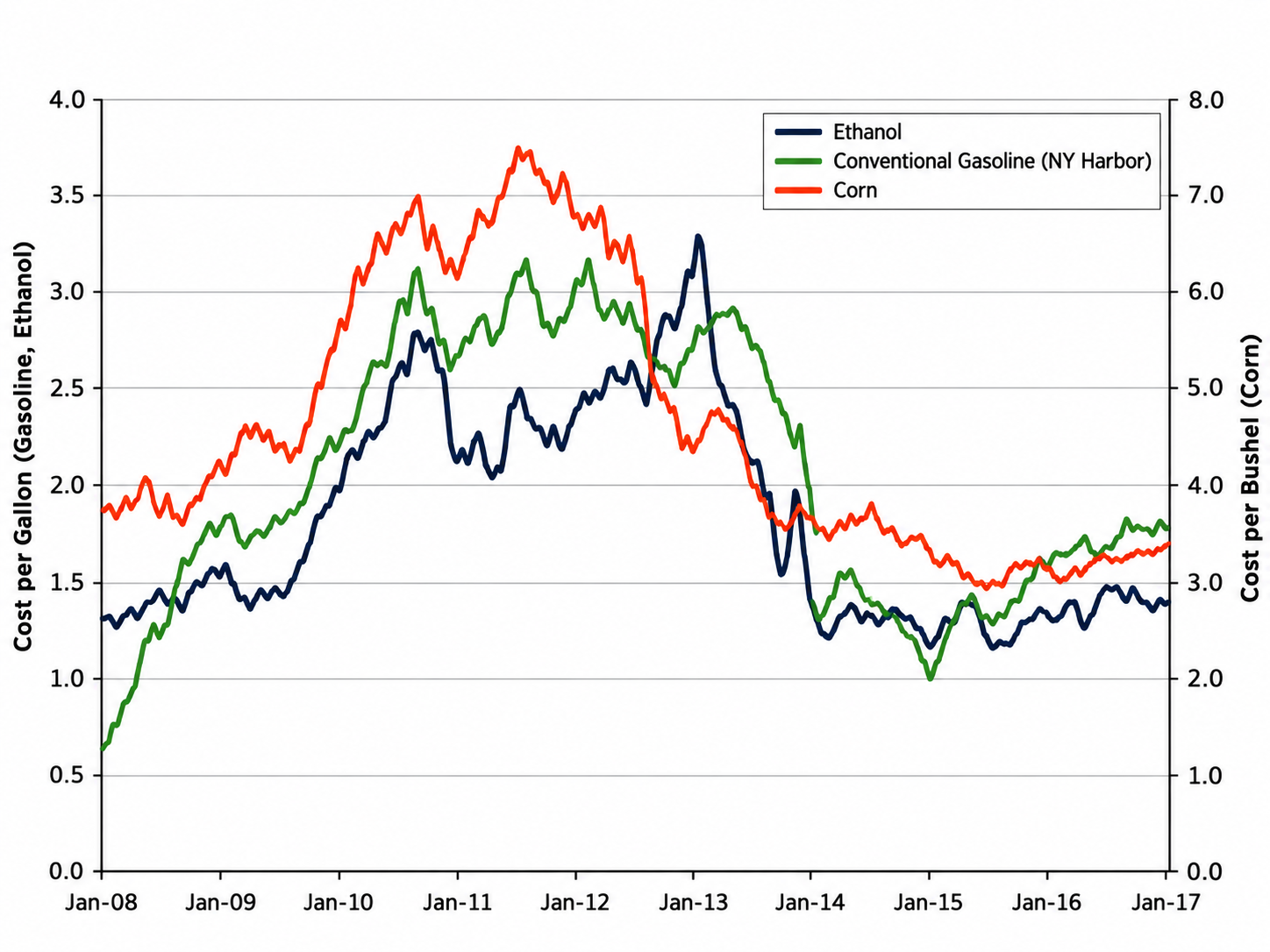
The graph shows the costs of ethanol, conventional gasoline (NY Harbor), and corn from January 2008 through January 2017. Ethanol and gasoline costs, in dollars per gallon, are shown on the left vertical axis, and corn costs, in dollars per bushel, are shown on the right vertical axis.
Select from each drop-down menu the option that creates the most accurate statement based on the information provided.
The highest cost of ethanol per gallon was approximately greater than the lowest cost of corn per bushel.
At the end of the period shown, the cost per gallon of gasoline was approximately what it was at the beginning of the period.
Attachment:
BHBH.jpg [ 81.79 KiB | Viewed 6645 times ]
Attachment:
GMAT-Club-Forum-zzadixzr.png [ 1.17 MiB | Viewed 1764 times ]
Attachment:
GMAT-Club-Forum-zzadixzr.png [ 1.17 MiB | Viewed 1764 times ]
Attachment:
GMAT-Club-Forum-zzadixzr.png [ 1.17 MiB | Viewed 1764 times ]
ShowHide Answer
Official Answer
Dropdown 1: 30 cents
Dropdown 2: triple
Official Solution:
Drop-down 1:
The black line, representing ethanol, reaches its highest point at about the beginning of 2013, at approximately $3.30 per gallon. The red line, representing corn, reaches its lowest point near the end of 2015, at approximately $3.00 per bushel. Therefore, the highest cost of ethanol was approximately 30 cents greater than the lowest cost of corn.
Drop-down 2:
At the beginning of the period shown, the cost of gasoline was approximately $0.60 per gallon, while at the end of the period it was approximately $1.80 per gallon.
Since $1.80 is 3 times $0.60, the cost per gallon of gasoline at the end of the period was approximately triple what it was at the beginning.
Correct answer:
Dropdown 1: "30 cents"
Dropdown 2: "triple "
Bunuel
Drop-down 1:
The black line, representing ethanol, reaches its highest point at about the beginning of 2013, at approximately $3.30 per gallon. The red line, representing corn, reaches its lowest point near the end of 2015, at approximately $3.00 per bushel. Therefore, the highest cost of ethanol was approximately 30 cents greater than the lowest cost of corn.
Drop-down 2:
At the beginning of the period shown, the cost of gasoline was approximately $0.60 per gallon, while at the end of the period it was approximately $1.80 per gallon.
Since $1.80 is 3 times $0.60, the cost per gallon of gasoline at the end of the period was approximately triple what it was at the beginning.
Correct answer:
Dropdown 1: "30 cents"
Dropdown 2: "triple "
 23 Sep 2026, 04:37
Kudos
Bookmarks
I have revised the question, solution, and formatting by adding more details to enhance clarity.



