Events & Promotions
|
|

GMAT Club Daily Prep
Thank you for using the timer - this advanced tool can estimate your performance and suggest more practice questions. We have subscribed you to Daily Prep Questions via email.
Customized
for You
Track
Your Progress
Practice
Pays
Not interested in getting valuable practice questions and articles delivered to your email? No problem, unsubscribe here.
 Sep 26
06:00 PM PDT
-07:00 PM PDT
Free- full-length test + 15 concept videos + 150+ short videos + study plan! Sep 27
01:30 AM EDT
-02:30 AM EDT
At one point, she believed GMAT wasn’t for her. After scoring 595, self-doubt crept in and she questioned her potential. But instead of quitting, she made the right strategic changes. The result? A remarkable comeback to 695. Check out how Saakshi did it. Sep 26
12:30 AM EDT
-01:30 AM EDT
Struggling to find the right strategies to score a 99 %ile on GMAT Focus? Riya (GMAT 715) boosted her score by 100-points in just 15 days! Discover how the right mentorship, tailored strategies, and an unwavering mindset can transform your GMAT prep. Sep 28
07:00 PM EDT
-10:00 PM EDT
Boost your GMAT score in less than one month in a live online class + 6 months access to TTP OnDemand video courses included! Class starts Mon, Tues, Wed, Thur, Fri Sept. 28, 2026 - Oct. 16, 2027, 7:00pm-10:00pm EST Sep 29
11:00 AM EDT
-01:00 PM EDT
" Description: Top scores are possible when you enroll in a powerful GMAT course, taught live online + 6 months access to TTP OnDemand video courses included! Class starts Tues/Thur Sept. 29, 2026 - Dec. 3, 2026, 11:00am-1:00pm EST Oct 01
07:00 AM BST
-08:00 AM GMT
Welcome to the GMAT Club's Free Interview Prep Event for Top MBA Programs! Buy tickets - Virtual series that’s all set to equip you to -excel in your MBA interviews. Oct 03
01:00 PM EDT
-04:00 PM EDT
Top scores are possible when you enroll in a powerful GMAT course, taught live online + 6 months access to TTP OnDemand video courses included! Class starts Saturdays Oct. 3, 2026 - Dec. 26, 2026, 1:00pm-4:00pm EST

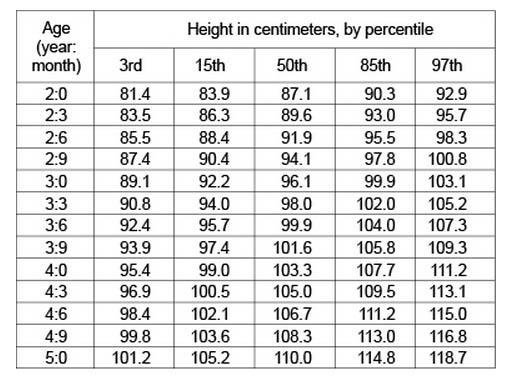
The World Health Organization (WHO) has produced a comprehensive set of growth standards for children. These standards are based on studies of children living in 6 nations on 5 continents under optimal conditions with respect to health and nutrition. The table displays the percentile distribution of height, in centimeters, at 3-month intervals, for boys ages 2 through 5 according to the WHO model. In a model population -- a large population of boys ages 2 through 5 that conforms to the WHO growth standards -- for n = 3, 15, 50, 85, and 97, nth percentile in height for a given age is the unique height among boys of that age that is greater than or equal to n percent, and less than or equal to (100- n) percent, of heights of boys of that age.


If his age is greater than 3 years 3 months, the probability that his height is at least 98.0 cm is greater than 50%.: Yes
If he is at least 105 cm tall, the probability that his weight is 14.0 kg is no greater than 3%: Yes
If he is 114 cm tall, he is taller than at least 85% of boys his age.: No
Be sure to select an answer first to save it in the Error Log before revealing the correct answer (OA)!
Difficulty:
 95%
(hard)
95%
(hard)
Question Stats:
37% (03:15) correct 63%
(03:32)
wrong
based on 2890
sessions
63%
(03:32)
wrong
based on 2890
sessions
History
Date
Time
Result
Not Attempted Yet
ID: 100413
For each of the following statements, select Yes if the statement must be true of a boy selected at random from a model population. Otherwise, select No.
For each of the following statements, select Yes if the statement must be true of a boy selected at random from a model population. Otherwise, select No.
| Yes | No | |
| If his age is greater than 3 years 3 months, the probability that his height is at least 98.0 cm is greater than 50%. | ||
| If he is at least 105 cm tall, the probability that his weight is 14.0 kg is no greater than 3% | ||
| If he is 114 cm tall, he is taller than at least 85% of boys his age. |
ShowHide Answer
Official Answer
If his age is greater than 3 years 3 months, the probability that his height is at least 98.0 cm is greater than 50%.: Yes
If he is at least 105 cm tall, the probability that his weight is 14.0 kg is no greater than 3%: Yes
If he is 114 cm tall, he is taller than at least 85% of boys his age.: No
His weight is approximately 166% of his weight at age 2 years 0 months.
Be sure to select an answer first to save it in the Error Log before revealing the correct answer (OA)!
Difficulty:
75%
(hard)
Question Stats:
61% (02:41) correct
39%
(02:30)
wrong
based on 2387
sessions
History
Date
Time
Result
Not Attempted Yet
Consider an individual boy from a model population. Suppose that from age 2 through age 5, this boy's weight is at the 97th percentile for his height and his height is at the 97th percentile for his age. Which one of the following statements must be true of the boy at age 5 years 0 months?
ID: 100412
| His age is at the 97th percentile for his height. | |
| His weight is at the 97th percentile for his age. | |
| His height is at the 97th percentile for his weight. | |
| His weight is approximately 166% of his weight at age 2 years 0 months. | |
| His weight is approximately 197% of his weight at age 2 years 0 months. |
ShowHide Answer
Official Answer
His weight is approximately 166% of his weight at age 2 years 0 months.
Approximately 50% of boys at the same weight are shorter than B.: No
No more than 15% of boys at this age are taller than B.: Yes
B's height is greater than or equal to that of 50% of boys aged 5 years 0 months.: Yes
Be sure to select an answer first to save it in the Error Log before revealing the correct answer (OA)!
Difficulty:
75%
(hard)
Question Stats:
52% (02:09) correct
48%
(02:15)
wrong
based on 2490
sessions
History
Date
Time
Result
Not Attempted Yet
ID: 100411
B is a boy aged 4 years 3 months whose height is 110 cm and whose weight is 19 kg. For each of the following statements, select Yes if, based on the given information, it must be true of B relative to a model population. Otherwise, select No.
B is a boy aged 4 years 3 months whose height is 110 cm and whose weight is 19 kg. For each of the following statements, select Yes if, based on the given information, it must be true of B relative to a model population. Otherwise, select No.
ID: 100411
| Yes | No | |
| Approximately 50% of boys at the same weight are shorter than B. | ||
| No more than 15% of boys at this age are taller than B. | ||
| B's height is greater than or equal to that of 50% of boys aged 5 years 0 months. |
ShowHide Answer
Official Answer
Approximately 50% of boys at the same weight are shorter than B.: No
No more than 15% of boys at this age are taller than B.: Yes
B's height is greater than or equal to that of 50% of boys aged 5 years 0 months.: Yes
At least 15% of boys at the same height have a weight that is less than or equal to that of B: Yes
At least 80% of boys at this age have heights within 10% of B's height.: Yes
B's height is less than that of at most 3% of boys at age 4 years 0 months.: No
Be sure to select an answer first to save it in the Error Log before revealing the correct answer (OA)!
Difficulty:
95%
(hard)
Question Stats:
37% (02:23) correct
63%
(02:22)
wrong
based on 2281
sessions
History
Date
Time
Result
Not Attempted Yet
B is a boy aged 4 years 3 months whose height is 110 cm and whose weight is 19 kg. For each of the following statements, select Yes if, based on the given information, it must be true of B relative to a model population. Otherwise, select [/i]No[/i].
| Yes | No | |
| At least 15% of boys at the same height have a weight that is less than or equal to that of B | ||
| At least 80% of boys at this age have heights within 10% of B's height. | ||
| B's height is less than that of at most 3% of boys at age 4 years 0 months. |
ShowHide Answer
Official Answer
At least 15% of boys at the same height have a weight that is less than or equal to that of B: Yes
At least 80% of boys at this age have heights within 10% of B's height.: Yes
B's height is less than that of at most 3% of boys at age 4 years 0 months.: No
If his age is exactly 4 years 0 months, the probability that his height is at exactly 99.0 cm is 15%: No
If he is 81 cm tall, he is shorter than at least 95% of boys his age.: Yes
If he is 120 cm tall, he weighs more than 97% of boys age 2 years 6 months.: No
Be sure to select an answer first to save it in the Error Log before revealing the correct answer (OA)!
Difficulty:
95%
(hard)
Question Stats:
38% (02:03) correct
62%
(02:08)
wrong
based on 2049
sessions
History
Date
Time
Result
Not Attempted Yet
For each of the following statements, select Yes if the statement must be true of a boy selected at random from a model population. Otherwise, select No.
ID: 100413
| Yes | No | |
| If his age is exactly 4 years 0 months, the probability that his height is at exactly 99.0 cm is 15% | ||
| If he is 81 cm tall, he is shorter than at least 95% of boys his age. | ||
| If he is 120 cm tall, he weighs more than 97% of boys age 2 years 6 months. |
ShowHide Answer
Official Answer
If his age is exactly 4 years 0 months, the probability that his height is at exactly 99.0 cm is 15%: No
If he is 81 cm tall, he is shorter than at least 95% of boys his age.: Yes
If he is 120 cm tall, he weighs more than 97% of boys age 2 years 6 months.: No
His weight is approximately 150% of his weight at age 2 years 0 months.
Be sure to select an answer first to save it in the Error Log before revealing the correct answer (OA)!
Difficulty:
 15%
(low)
15%
(low)
Question Stats:
79% (01:43) correct
21%
(01:40)
wrong
based on 1451
sessions
History
Date
Time
Result
Not Attempted Yet
ID: 100412
Consider an individual boy from a model population. Suppose that from age 2 through age 5, this boy’s weight is at the 50th percentile for his height and his height is at the 50th percentile for his age. Which one of the following statements must be true of the boy at age 5 years 0 months?[/b]
Consider an individual boy from a model population. Suppose that from age 2 through age 5, this boy’s weight is at the 50th percentile for his height and his height is at the 50th percentile for his age. Which one of the following statements must be true of the boy at age 5 years 0 months?[/b]
| His age is at the 50th percentile for his height. | |
| His weight is at the 50th percentile for his age. | |
| His height is at the 50th percentile for his weight. | |
| His weight is approximately 150% of his weight at age 2 years 0 months. | |
| His weight is approximately 200% of his weight at age 2 years 0 months. |
ShowHide Answer
Official Answer
His weight is approximately 150% of his weight at age 2 years 0 months.
Attachment:
fig2.JPG [ 49.89 KiB | Viewed 54081 times ]
Attachment:
fig1.JPG [ 71.5 KiB | Viewed 59538 times ]


 10 Sep 2021, 13:02
Kudos
Bookmarks
Official Explanation
1. For each of the following statements, select Yes if the statement must be true of a boy selected at random from a model population. Otherwise, select No.
Using the table in Height-for-age standards, the 50th percentile height for boys aged 3 years 3 months is 98.0 cm, so 50% of boys this age are taller than this. For boys aged 3 years 6 months and older, the 50th percentile height is greater than 98.0 cm, so at least 50% of boys this age are taller than this. Moreover, for boys 4 years 0 months and older, the 15th percentile height exceeds 98.0 cm, so at these ages, at least 85% of boys are taller than 98.0 cm. Thus, for a boy selected at random from a model population whose age is greater than 3 years 3 months, the probability that his height is at least 98.0 cm is greater than 50%.
The correct answer is Yes.
Using Weight-for-height standards, the 3rd percentile weight for height 105 cm is just over 14 kg, and for heights greater than 105 cm, the 3rd percentile weight is greater than 14 kg. Thus, at most, 3% of the population of boys at least 105 cm tall has a weight of 14.0 kg or less. In particular, at most 3% of the population of boys at least 105 cm tall has a weight of exactly 14.0 kg.
The correct answer is Yes.
Using Height-for-age standards, the 85th percentile in height for boys 5 years 0 months is 114.8 cm. This means that a boy 114.8 cm tall is as tall or taller than 85% of boys aged 5 years 0 months. It does not follow that a boy 114.8 cm tall is necessarily taller than 85% of boys aged 5 years 0 months, so it is not necessarily true of a boy 114 cm tall, either.
The correct answer is No.
Using the table in Height-for-age standards, the 50th percentile height for boys aged 3 years 3 months is 98.0 cm, so 50% of boys this age are taller than this. For boys aged 3 years 6 months and older, the 50th percentile height is greater than 98.0 cm, so at least 50% of boys this age are taller than this. Moreover, for boys 4 years 0 months and older, the 15th percentile height exceeds 98.0 cm, so at these ages, at least 85% of boys are taller than 98.0 cm. Thus, for a boy selected at random from a model population whose age is greater than 3 years 3 months, the probability that his height is at least 98.0 cm is greater than 50%.
The correct answer is Yes.
Using Weight-for-height standards, the 3rd percentile weight for height 105 cm is just over 14 kg, and for heights greater than 105 cm, the 3rd percentile weight is greater than 14 kg. Thus, at most, 3% of the population of boys at least 105 cm tall has a weight of 14.0 kg or less. In particular, at most 3% of the population of boys at least 105 cm tall has a weight of exactly 14.0 kg.
The correct answer is Yes.
Using Height-for-age standards, the 85th percentile in height for boys 5 years 0 months is 114.8 cm. This means that a boy 114.8 cm tall is as tall or taller than 85% of boys aged 5 years 0 months. It does not follow that a boy 114.8 cm tall is necessarily taller than 85% of boys aged 5 years 0 months, so it is not necessarily true of a boy 114 cm tall, either.
The correct answer is No.
2. Consider an individual boy from a model population. Suppose that from age 2 through age 5, this boy's weight is at the 97th percentile for his height and his height is at the 97th percentile for his age. Which one of the following statements must be true of the boy at age 5 years 0 months?
Neither Height-for-age standards nor Weight-for-height standards provide a distribution of age on the basis of weight, height, or any other variable, so it is impossible to determine where the boy's age falls in the distribution of age for height (choice A).
The boy's weight is less than that of 97% of boys his height, and his height is less than that of 97% of boys his age, but it is impossible to tell where his weight falls among the weights of boys his age (choice B).
Likewise, knowing height-for-weight percentiles does not provide information about weight-for-height percentiles (choice C).
However, it is possible to approximate his height at each age and his weight at each height; thus it is possible to determine his weight at each age. Height-for-age standards indicates that at age 2 years 0 months, the boy was 92.9 cm tall, and at age 5 years 0 months, he was 118.7 cm tall. Weight-for-height standards indicates that the 97th percentile weight for boys 92.9 cm tall is approximately 16 kg, while the 97th percentile weight for boys 118.7 cm tall is between 26 kg and 27 kg. Thus his weight at age 5 years 0 months is roughly between 26/16 = 162 .5% and 27/16 = 168 .75%, or approximately 166%, of his weight at age 2 years 0 months.
The correct answer is D.
Neither Height-for-age standards nor Weight-for-height standards provide a distribution of age on the basis of weight, height, or any other variable, so it is impossible to determine where the boy's age falls in the distribution of age for height (choice A).
The boy's weight is less than that of 97% of boys his height, and his height is less than that of 97% of boys his age, but it is impossible to tell where his weight falls among the weights of boys his age (choice B).
Likewise, knowing height-for-weight percentiles does not provide information about weight-for-height percentiles (choice C).
However, it is possible to approximate his height at each age and his weight at each height; thus it is possible to determine his weight at each age. Height-for-age standards indicates that at age 2 years 0 months, the boy was 92.9 cm tall, and at age 5 years 0 months, he was 118.7 cm tall. Weight-for-height standards indicates that the 97th percentile weight for boys 92.9 cm tall is approximately 16 kg, while the 97th percentile weight for boys 118.7 cm tall is between 26 kg and 27 kg. Thus his weight at age 5 years 0 months is roughly between 26/16 = 162 .5% and 27/16 = 168 .75%, or approximately 166%, of his weight at age 2 years 0 months.
The correct answer is D.
3. B is a boy aged 4 years 3 months whose height is 110 cm and whose weight is 19 kg. For each of the following statements, select Yes if, based on the given information, it must be true of B relative to a model population. Otherwise, select No.
Neither Height-for-age standards nor Weight-for-height standards provide a distribution of height on the basis of weight, so it is impossible to determine the proportion of boys weighing 19 kg whose height is less than 110 cm.
The correct answer is No.
Using the table in Height-for-age standards, the 85th percentile in height for boys aged 4 years 3 months is 109.5 cm, so (100 − 85)%, or 15%, of boys aged 4 years 3 months are taller than 109.5 cm. Thus, at most 15% of boys of this age are taller than B's height of 110 cm.
The correct answer is Yes.
Using the table in Height-for-age standards, the 50th percentile in height for boys aged 5 years 0 months is 110.0 cm, which is the same height as B. Therefore, B's height is greater than or equal to that of (100 − 50)%, or 50%, of boys aged 5 years 0 months.
The correct answer is Yes.
Neither Height-for-age standards nor Weight-for-height standards provide a distribution of height on the basis of weight, so it is impossible to determine the proportion of boys weighing 19 kg whose height is less than 110 cm.
The correct answer is No.
Using the table in Height-for-age standards, the 85th percentile in height for boys aged 4 years 3 months is 109.5 cm, so (100 − 85)%, or 15%, of boys aged 4 years 3 months are taller than 109.5 cm. Thus, at most 15% of boys of this age are taller than B's height of 110 cm.
The correct answer is Yes.
Using the table in Height-for-age standards, the 50th percentile in height for boys aged 5 years 0 months is 110.0 cm, which is the same height as B. Therefore, B's height is greater than or equal to that of (100 − 50)%, or 50%, of boys aged 5 years 0 months.
The correct answer is Yes.
4. B is a boy aged 4 years 3 months whose height is 110 cm and whose weight is 19 kg. For each of the following statements, select Yes if, based on the given information, it must be true of B relative to a model population. Otherwise, select No.
According to the graph in Weight-for-height standards, the 15th percentile in weight for a boy of height 110 cm is approximately 17 kg. Therefore, 17 kg is greater than or equal to the weight of 15% of boys of that height. But 17 kg is less than B's weight of 19 kg, so the percentage of boys whose weight is less than or equal to B's weight may be somewhat larger than 15%. Consequently, at least 15% of boys at B's height have a weight that is less than or equal to that of B.
The correct answer is Yes.
B's height is 110 cm, and 10% of 110 is equal to 11, so a boy is within 10% of B's height provided that he is between 99 cm and 121 cm tall. According to Height-for-age standards, for boys aged 4 years 3 months, 100.5 cm is the 15th percentile in height and 113.1 cm is the 97th percentile in height. Therefore, (97 − 15)%, or 82% of boys B's age have heights between 100.5 cm and 113.1 cm. Since 99 < 100.5 and 113.1 < 121, the heights of all these boys are within 10% of B's height, so at least 82%—and hence at least 80%—of boys B's age have heights within 10% of B's height.
The correct answer is Yes.
According to Height-for-age standards, for boys aged 4 years 0 months, the 97th percentile in height is 111.2 cm, so B's height of 110 cm is less than that of at least 3% of boys this age. If B's height were also less than that of at most 3% of boys this age, then 110 cm would have to be the 97th percentile in height for boys aged 4 years 0 months, which it is not.
The correct answer is No
According to the graph in Weight-for-height standards, the 15th percentile in weight for a boy of height 110 cm is approximately 17 kg. Therefore, 17 kg is greater than or equal to the weight of 15% of boys of that height. But 17 kg is less than B's weight of 19 kg, so the percentage of boys whose weight is less than or equal to B's weight may be somewhat larger than 15%. Consequently, at least 15% of boys at B's height have a weight that is less than or equal to that of B.
The correct answer is Yes.
B's height is 110 cm, and 10% of 110 is equal to 11, so a boy is within 10% of B's height provided that he is between 99 cm and 121 cm tall. According to Height-for-age standards, for boys aged 4 years 3 months, 100.5 cm is the 15th percentile in height and 113.1 cm is the 97th percentile in height. Therefore, (97 − 15)%, or 82% of boys B's age have heights between 100.5 cm and 113.1 cm. Since 99 < 100.5 and 113.1 < 121, the heights of all these boys are within 10% of B's height, so at least 82%—and hence at least 80%—of boys B's age have heights within 10% of B's height.
The correct answer is Yes.
According to Height-for-age standards, for boys aged 4 years 0 months, the 97th percentile in height is 111.2 cm, so B's height of 110 cm is less than that of at least 3% of boys this age. If B's height were also less than that of at most 3% of boys this age, then 110 cm would have to be the 97th percentile in height for boys aged 4 years 0 months, which it is not.
The correct answer is No
5. For each of the following statements, select Yes if the statement must be true of a boy selected at random from a model population. Otherwise, select No.
Using Height-for-age standards for boys aged 4 years 0 months, the 15th percentile in height is 99.0 cm. Thus, 15% of boys of this age are 99.0 cm tall or shorter. Note that the 3rd percentile in height for boys of this age is 95.4 cm, so 3% of boys of this age are at this height or shorter. Therefore, (15 − 3)%, or 12% of boys aged 4 years 0 months have heights greater than 95.4 cm and less than or equal to 99.0 cm. The proportion of boys of this age whose height is exactly 99.0 cm must therefore be less than or equal to 12%, so the indicated probability is also less than or equal to 12%.
The correct answer is No.
Using Height-for-age standards, the 3rd percentile in height for ages from 2 years 0 months through 5 years 0 months is at least 81.4 cm. This means that a boy from a model population whose height is 81.4 cm is shorter than at least 97% of boys his age. Thus, a boy who is 81 cm tall is shorter than at least 97% of boys his age and thus shorter than at least 95% of boys his age.
The correct answer is Yes.
Weight-for-height standards provide a weight distribution for boys 120 cm tall; in particular, 97% of boys at this height weigh more than 18 kg. But a randomly selected boy at this height could conceivably weigh much less than 18 kg. Moreover, even if the boy's weight were known, a percentile distribution of weight for boys age 2 years 6 months is lacking, so it is impossible to answer the question based on the information provided.
The correct answer is No.
Using Height-for-age standards for boys aged 4 years 0 months, the 15th percentile in height is 99.0 cm. Thus, 15% of boys of this age are 99.0 cm tall or shorter. Note that the 3rd percentile in height for boys of this age is 95.4 cm, so 3% of boys of this age are at this height or shorter. Therefore, (15 − 3)%, or 12% of boys aged 4 years 0 months have heights greater than 95.4 cm and less than or equal to 99.0 cm. The proportion of boys of this age whose height is exactly 99.0 cm must therefore be less than or equal to 12%, so the indicated probability is also less than or equal to 12%.
The correct answer is No.
Using Height-for-age standards, the 3rd percentile in height for ages from 2 years 0 months through 5 years 0 months is at least 81.4 cm. This means that a boy from a model population whose height is 81.4 cm is shorter than at least 97% of boys his age. Thus, a boy who is 81 cm tall is shorter than at least 97% of boys his age and thus shorter than at least 95% of boys his age.
The correct answer is Yes.
Weight-for-height standards provide a weight distribution for boys 120 cm tall; in particular, 97% of boys at this height weigh more than 18 kg. But a randomly selected boy at this height could conceivably weigh much less than 18 kg. Moreover, even if the boy's weight were known, a percentile distribution of weight for boys age 2 years 6 months is lacking, so it is impossible to answer the question based on the information provided.
The correct answer is No.
6. Consider an individual boy from a model population. Suppose that from age 2 through age 5, this boy’s weight is at the 50th percentile for his height and his height is at the 50th percentile for his age. Which one of the following statements must be true of the boy at age 5 years 0 months?
Neither Height-for-age standards nor Weight-for-height standards provide a distribution of age on the basis of weight, height, or any other variable, so it is impossible to determine where the boy's age falls in the distribution of age for height (option A). The boy's weight is less than that of 50% of boys his height, and his height is less than that of 50% of boys his age, but it is impossible to tell where his weight falls among the weights of boys his age (option B). Likewise, knowing height-for-weight percentiles does not provide information about weight-for-height percentiles (option C).
What can be approximated, however, is his height at each age and his weight at each height; thus, it is possible to know his weight at each age. Height-for-age standards indicates that at age 2 years 0 months, the boy was 87.1 cm tall, and at age 5 years 0 months, he was 110.0 cm tall. Weight-for-height standards indicates that the 50th percentile weight for boys 87.1 cm tall is approximately 12 kg, while the 50th percentile weight for boys 110.0 cm tall is approximately 18 kg. Thus, his weight at age 5 years 0 months is approximately 18/12 (100)%, or 150%, of his weight at age 2 years 0 months.
The correct answer is D.
Neither Height-for-age standards nor Weight-for-height standards provide a distribution of age on the basis of weight, height, or any other variable, so it is impossible to determine where the boy's age falls in the distribution of age for height (option A). The boy's weight is less than that of 50% of boys his height, and his height is less than that of 50% of boys his age, but it is impossible to tell where his weight falls among the weights of boys his age (option B). Likewise, knowing height-for-weight percentiles does not provide information about weight-for-height percentiles (option C).
What can be approximated, however, is his height at each age and his weight at each height; thus, it is possible to know his weight at each age. Height-for-age standards indicates that at age 2 years 0 months, the boy was 87.1 cm tall, and at age 5 years 0 months, he was 110.0 cm tall. Weight-for-height standards indicates that the 50th percentile weight for boys 87.1 cm tall is approximately 12 kg, while the 50th percentile weight for boys 110.0 cm tall is approximately 18 kg. Thus, his weight at age 5 years 0 months is approximately 18/12 (100)%, or 150%, of his weight at age 2 years 0 months.
The correct answer is D.