Events & Promotions
|
|

GMAT Club Daily Prep
Thank you for using the timer - this advanced tool can estimate your performance and suggest more practice questions. We have subscribed you to Daily Prep Questions via email.
Customized
for You
Track
Your Progress
Practice
Pays
Not interested in getting valuable practice questions and articles delivered to your email? No problem, unsubscribe here.
 Apr 23
01:30 AM EDT
-02:30 AM EDT
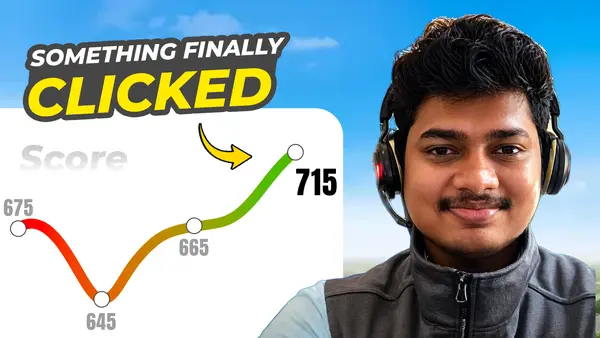
Struggling with GMAT Verbal as a non-native speaker? Harsh improved his score from 595 to 695 in just 45 days—and scored a 99 %ile in Verbal (V88)! Learn how smart strategy, clarity, and guided prep helped him gain 100 points. Apr 22
12:30 AM EDT
-01:30 AM EDT
At one point, she believed GMAT wasn’t for her. After scoring 595, self-doubt crept in and she questioned her potential. But instead of quitting, she made the right strategic changes. The result? A remarkable comeback to 695. Check out how Saakshi did it. Apr 23
08:00 PM PDT
-09:00 PM PDT
Video explanations + diagnosis of 10 weakest areas + 150+ short videos + study plan! Apr 26
10:00 AM EDT
-11:00 AM EDT
The Target Test Prep course represents a quantum leap forward in GMAT preparation, a radical reinterpretation of the way that students should study. Try before you buy with a 5-day, full-access trial of the course for FREE! Apr 27
11:00 AM EDT
-12:00 PM EDT
Prefer video-based learning? The Target Test Prep OnDemand course is a one-of-a-kind video masterclass featuring 400 hours of lecture-style teaching by Scott Woodbury-Stewart, founder of Target Test Prep and one of the most accomplished GMAT instructors Apr 28
08:00 AM PDT
-11:00 AM PDT
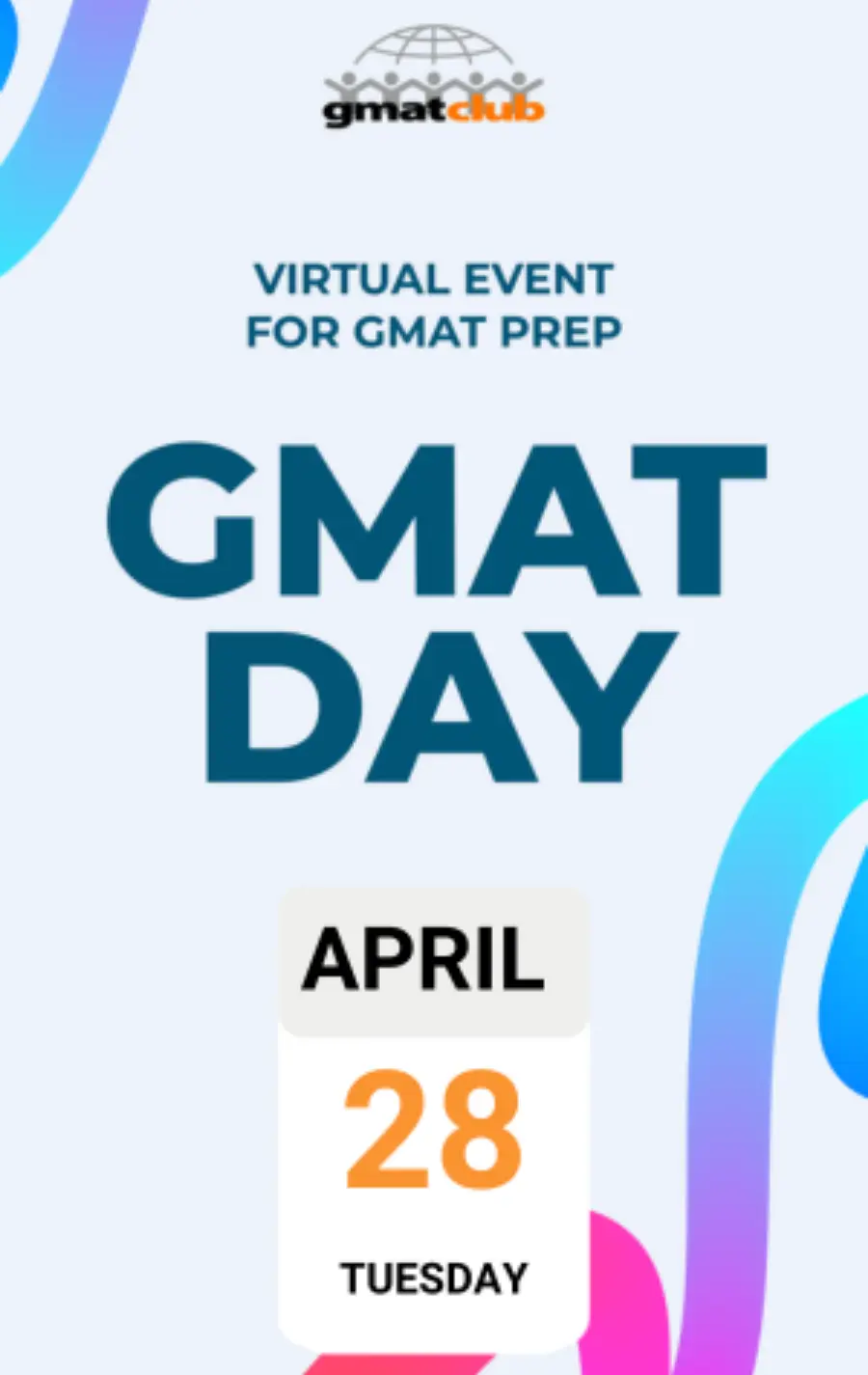
Whether you are just beginning your MBA journey or fine-tuning your path to a 700+ score, GMAT Day is designed to give you a competitive edge.

avohden
Joined: 09 Jul 2013
Last visit: 14 Mar 2015
Posts: 405
Given Kudos: 630
Status:1,750 Q's attempted and counting
Affiliations: University of Florida
Location: United States (FL)
Schools: Warrington (A)
GMAT 1: 570 Q42 V28
GMAT 2: 610 Q44 V30
GMAT 3: 600 Q45 V29
GMAT 4: 590 Q35 V35
GPA: 3.45
WE:Accounting (Accounting)


E
Be sure to select an answer first to save it in the Error Log before revealing the correct answer (OA)!
Difficulty:
 55%
(hard)
55%
(hard)
Question Stats:
65% (01:56) correct 35%
(02:13)
wrong
based on 1394
sessions
35%
(02:13)
wrong
based on 1394
sessions
History
Date
Time
Result
Not Attempted Yet

New project from GMAT Club! Click here
A famous football player recently won a lawsuit against an event-planning firm for its using an actor at a fundraising event to appear as the football player to sign autographs and take pictures with attendees. As a result of the lawsuit, event-planning firms will stop using actors to impersonate famous athletes. Therefore, the costs of fundraising events will rise, since the appearance of an actual famous athlete costs significantly more than that of an impersonating actor.The conclusion above is based on which of the following assumptions?
A. Most fundraising event attendees are unable to distinguish an impersonating actor from the real athlete.
B. Fundraising events that use real athletes typically are more successful than those that use imitating actors.
C. Some famous athletes who would be popular at fundraising events are not available to attend because of their old age and poor health condition.
D. Fundraising events will continue to use actors to impersonate famous athletes, but will now do so with the disclosure that such actors are not actually the athletes whom they impersonate.
E. Fundraising events will continue to attract attendees with the opportunity to receive an autograph by and a picture with a famous athlete.

 07 Nov 2013, 12:26
Kudos
Bookmarks
With assumption questions, it is best to use a technique that Veritas teaches called the negation technique. When you negate the correct answer, the argument should be crumble. Think of it like playing jenga - when you pull out a certain piece, the entire structure crumbles.
Well in this case that certain piece is statement E: Fundraising events will continue to attract attendees with the opportunity to receive an autograph by and a picture with a famous athlete.
If you negate this and state "Fundraising events will NOT continue to attract attendees with the opportunity to receive an autograph...," then it is clear that these fundraisers will not be paying athletes to come, destroying the argument.
Well in this case that certain piece is statement E: Fundraising events will continue to attract attendees with the opportunity to receive an autograph by and a picture with a famous athlete.
If you negate this and state "Fundraising events will NOT continue to attract attendees with the opportunity to receive an autograph...," then it is clear that these fundraisers will not be paying athletes to come, destroying the argument.
General Discussion
avohden
Joined: 09 Jul 2013
Last visit: 14 Mar 2015
Posts: 405
Own Kudos:
Given Kudos: 630
Status:1,750 Q's attempted and counting
Affiliations: University of Florida
Location: United States (FL)
Schools: Warrington (A)
GMAT 1: 570 Q42 V28
GMAT 2: 610 Q44 V30
GMAT 3: 600 Q45 V29
GMAT 4: 590 Q35 V35
GPA: 3.45
WE:Accounting (Accounting)
15 Nov 2013, 10:48
Kudos
Bookmarks
Official Explanation
Answer: E - The correct answer to this question is (E). This is a STRENGTHEN question, requiring the test taker to choose the correct answer that provides new and relevant information to support the conclusion that the cost of fundraising events will rise because of the increased cost of using real athletes rather than acting impersonators.
Choice A is incorrect as whether or not the attendees know the difference between the actor and the real athlete is out of scope with regard to the conclusion that the cost of fundraising events will rise.
Choice B is incorrect as the relationship between the success of events with actors and the success of the events with athletes is also out of scope.
Choice C is incorrect as it too is out of scope with regard to the conclusion.
Choice D is incorrect as it directly contradicts the passage, which states "...event planning firms will stop using actors to impersonate famous athletes."
Choice E is the correct answer, which provides new and relevant information that supports the conclusion. If event organizers were to stop using the lure of famous athletes to draw attendance, the costs would not necessarily rise in light of the need to pay top dollar for actual athletes, as the practice may just discontinue altogether. Only if these events plan to continue to use athletes as a draw would the costs necessarily increase.
Answer: E - The correct answer to this question is (E). This is a STRENGTHEN question, requiring the test taker to choose the correct answer that provides new and relevant information to support the conclusion that the cost of fundraising events will rise because of the increased cost of using real athletes rather than acting impersonators.
Choice A is incorrect as whether or not the attendees know the difference between the actor and the real athlete is out of scope with regard to the conclusion that the cost of fundraising events will rise.
Choice B is incorrect as the relationship between the success of events with actors and the success of the events with athletes is also out of scope.
Choice C is incorrect as it too is out of scope with regard to the conclusion.
Choice D is incorrect as it directly contradicts the passage, which states "...event planning firms will stop using actors to impersonate famous athletes."
Choice E is the correct answer, which provides new and relevant information that supports the conclusion. If event organizers were to stop using the lure of famous athletes to draw attendance, the costs would not necessarily rise in light of the need to pay top dollar for actual athletes, as the practice may just discontinue altogether. Only if these events plan to continue to use athletes as a draw would the costs necessarily increase.