Events & Promotions
|
|

GMAT Club Daily Prep
Thank you for using the timer - this advanced tool can estimate your performance and suggest more practice questions. We have subscribed you to Daily Prep Questions via email.
Customized
for You
Track
Your Progress
Practice
Pays
Not interested in getting valuable practice questions and articles delivered to your email? No problem, unsubscribe here.
 Jun 11
11:00 AM EDT
-01:00 PM EDT
TTP GMAT OnDemand gives serious students 400+ hours of expert video instruction, the full TTP course, AI support, weekly office hours, and a 715+ score guarantee—all built for elite GMAT score improvement. Jun 10
06:00 AM PDT
-06:15 PM PDT
Register for the GMAT Club Virtual MBA Spotlight Fair – the world’s premier event for serious MBA candidates. This is your chance to hear directly from Admissions Directors at nearly every Top 30 MBA program.. Jun 11
01:30 AM EDT
-02:30 AM EDT
At one point, she believed GMAT wasn’t for her. After scoring 595, self-doubt crept in and she questioned her potential. But instead of quitting, she made the right strategic changes. The result? A remarkable comeback to 695. Check out how Saakshi did it. Jun 13
12:30 AM EDT
-01:00 AM EDT
Struggling to find the right strategies to score a 99 %ile on GMAT Focus? Riya (GMAT 715) boosted her score by 100-points in just 15 days! Discover how the right mentorship, tailored strategies, and an unwavering mindset can transform your GMAT prep. Jun 16
03:00 PM PDT
-04:00 PM PDT
Free- full-length test + 15 concept videos + 150+ short videos + study plan! Jun 22
07:30 PM EDT
-09:30 PM EDT
Master the GMAT with expert live instruction, a personalized study plan, and real-time support. Includes 40 hours of online classes plus 6 months of access to the TTP GMAT OnDemand video course. Class date: Mon/Wed June 22, 2026 →August 26, 2026

 02 Jul 2010, 19:58
Kudos
Bookmarks


A
Be sure to select an answer first to save it in the Error Log before revealing the correct answer (OA)!
Difficulty:
 25%
(medium)
25%
(medium)
Question Stats:
76% (01:47) correct 24%
(02:21)
wrong
based on 133
sessions
24%
(02:21)
wrong
based on 133
sessions
History
Date
Time
Result
Not Attempted Yet
How many mg of a metal containing 45% nickel must be combined with 6 mg of pure nickel to form an alloy containing 78% nickel?
A. 4
B. 5
C. 6
D. 7
E. 8
A. 4
B. 5
C. 6
D. 7
E. 8
 02 Nov 2016, 05:49
Kudos
Bookmarks
Hi mikesteven1000bc,
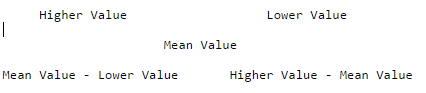
Questions of this kind can be easily solved by making use of the mixture diagram given below.
Capture.png [ 3.96 KiB | Viewed 5988 times ]
Putting in the values in mixture diagram and subtracting along the diagonals gives us a ratio in which two quantities need to be mixed. This ratio can now be used to find out what specific amounts of two quantities need to be mixed to obtain a solution of a specific concentration.
The only thing that you need to keep in mind is that the values you need to use that is the higher value, lower value and mean value have to be values which are associated with the word 'per' (percents, average, per km, per kg etc.).
Now in the question given we are combining 6 mg of pure nickel (100% nickel) with 'x'mg of a metal containing 45% nickel to form an alloy containing 78%
nickel. The question here an be solved using the mixture diagram by taking the percentages of nickel as the higher value (100%), lower value (45%) and mean value (78%) as shown below.

Untitled 2.png [ 6.33 KiB | Viewed 5977 times ]
On solving the mixture diagram we get a ratio 3 : 2. This means that in order to obtain an alloy containing 78% nickel, we need to combine 3 parts of pure nickel with 2 parts of a metal containing 45% nickel. Since we have 6gm of 100% nickel and we need to maintain the ratio 3 : 2, we need to have 4mg of the metal containing 45% nickel.
Answer : 4mg
The mixture diagram proves useful not only when mixing solutions or combining solids but also to explain the weighted average concept (the word average is also associated with the word per i.e. if the average marks of the class is 80, then it can be understood as 80 marks per student). Say if we have a class A where the average marks is 80 and another class B where the average marks is 70 and the combined average of both class A and B is 74, then we can definitely comment upon which class has the greater number of students. If we represent the average values in the mixture diagram, the ratio of students of Class A and Class B will be 2 : 3. This clearly indicates that class B has the greater number of students.
Hope this helps!
CrackVerbal Academics Team
Questions of this kind can be easily solved by making use of the mixture diagram given below.
Attachment:
Capture.png [ 3.96 KiB | Viewed 5988 times ]
Putting in the values in mixture diagram and subtracting along the diagonals gives us a ratio in which two quantities need to be mixed. This ratio can now be used to find out what specific amounts of two quantities need to be mixed to obtain a solution of a specific concentration.
The only thing that you need to keep in mind is that the values you need to use that is the higher value, lower value and mean value have to be values which are associated with the word 'per' (percents, average, per km, per kg etc.).
Now in the question given we are combining 6 mg of pure nickel (100% nickel) with 'x'mg of a metal containing 45% nickel to form an alloy containing 78%
nickel. The question here an be solved using the mixture diagram by taking the percentages of nickel as the higher value (100%), lower value (45%) and mean value (78%) as shown below.
Attachment:
Untitled 2.png [ 6.33 KiB | Viewed 5977 times ]
On solving the mixture diagram we get a ratio 3 : 2. This means that in order to obtain an alloy containing 78% nickel, we need to combine 3 parts of pure nickel with 2 parts of a metal containing 45% nickel. Since we have 6gm of 100% nickel and we need to maintain the ratio 3 : 2, we need to have 4mg of the metal containing 45% nickel.
Answer : 4mg
The mixture diagram proves useful not only when mixing solutions or combining solids but also to explain the weighted average concept (the word average is also associated with the word per i.e. if the average marks of the class is 80, then it can be understood as 80 marks per student). Say if we have a class A where the average marks is 80 and another class B where the average marks is 70 and the combined average of both class A and B is 74, then we can definitely comment upon which class has the greater number of students. If we represent the average values in the mixture diagram, the ratio of students of Class A and Class B will be 2 : 3. This clearly indicates that class B has the greater number of students.
Hope this helps!
CrackVerbal Academics Team
General Discussion




