|
|

GMAT Club Daily Prep
Thank you for using the timer - this advanced tool can estimate your performance and suggest more practice questions. We have subscribed you to Daily Prep Questions via email.
Customized
for You
Track
Your Progress
Practice
Pays
Not interested in getting valuable practice questions and articles delivered to your email? No problem, unsubscribe here.

 02 Oct 2018, 11:59
Kudos
Bookmarks
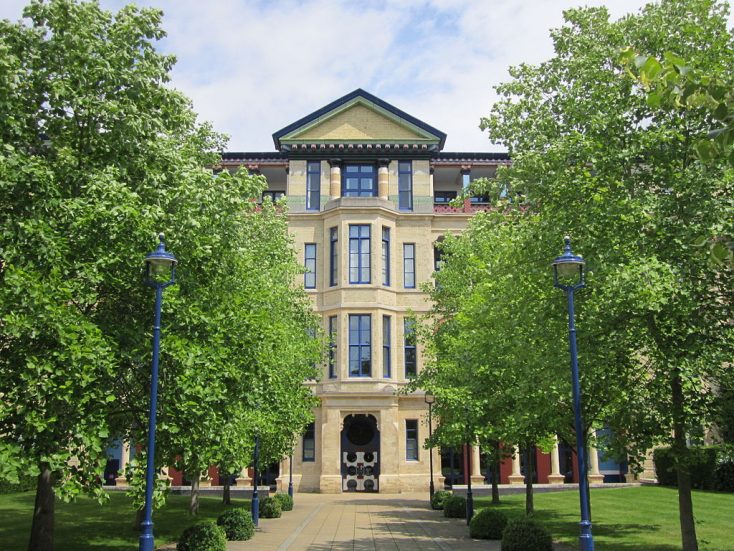
As part of a world class campus and a location that is a center for technology and business, the University of Cambridge Judge School of Business is an excellent program for students interested in studying in the UK. In fact, our post Getting a European MBA: A Unique Experience explains the many benefits of studying across the pond.
To learn more about the school you can research life at Cambridge through visiting campus, reading student blogs, or attending admissions events. Cambridge Judge is seeking ambitious, innovative and confident students with strong interpersonal skills.
Another extremely important attribute is to have international experience through your work and a global outlook. None of the essays specifically ask about international experience, so you can work your global outlook into one or more of the essay responses.
ESSAY 1
Please provide a personal statement. It should not exceed 500 words and must address the following questions:
– What are your short and long term career objectives and what skills/characteristics do you already have that will help you achieve them?
– What actions will you take before and during the MBA to contribute to your career outcome?
– If you are unsure of your post-MBA career path, how will the MBA equip you for the future?
This personal statement essay asks you to explain why you are pursuing an MBA. If you have a specific long- and short-term career objective in mind that is one way to structure the essay. If not, you will want to explain why an MBA is the right next step for you in your life. Either way, you will want to explain what skills and characteristics you have developed in your career thus far.
This essay will give you the space to talk about the career accomplishments that make you most proud, and to show that you are motivated, ambitious and ready for the challenge of an MBA at Cambridge. You will want to use an equal amount of space to talk about how you are going to enhance your career before and during your MBA in order to accomplish your goals.
What can you learn from your current job before you enroll at Judge? And what classes, professors and projects will you pursue to prepare yourself for your next career step?
As you formulate your essay topics, keep in mind that Cambridge Judge is seeking candidates who “are highly motivated and ambitious, thrive under pressure, and have already exhibited clear progression within their career.”
You will want to show that you have performed well and moved up within your jobs since you began working. You will also want to demonstrate what you have learned, and how your developing skills can be further honed through an MBA and a future career.
ESSAY 2
What did you learn from your most spectacular failure? (200 words)
Failures are challenging to work through, but can lead to breakthroughs in development and self-awareness. When you can look past the embarrassment and shame of a failure, what did the experience teach you? Did you take on too much, prepare too little or fail to ask for help when you needed it?
This essay is primarily about what you learned. Take a few sentences to explain the situation and the failure, then dive into what you learned and ideally how you have moderated your approach, improved yourself, or learned to recognize a situation that will lead to a poor outcome. Any topic can work here as long as you can show that you are self-aware and creative.
ESSAY 3
Describe a situation where you had to work jointly with others to achieve a common goal. What did you learn from the experience? (up to 200 words)
Judge is seeking students who are collaborative and innovative with strong interpersonal skills. This essay can show the admissions committee that you know how to work within a team and accomplish a shared goal.
As with the previous essay, take a few sentences to explain the situation, then focus on what you learned. Ideally you can describe your style when you work with a team, how you collaborate, help others bring their best work to the team, and manage challenges.
If you have a particular role or skill within a team, whether building consensus or take a devil’s advocate position, this is an ideal place to explain that approach.
The post Tuesday Tips: Cambridge Judge Fall 2019 MBA Essay Tips appeared first on Stacy Blackman Consulting - MBA Admissions Consulting.
***
If you are looking for guidance on your MBA application, Stacy Blackman Consulting can help with hourly and comprehensive consulting services. Contact us to learn more. Visit the website for Stacy Blackman Reviews, and check out the company’s e-publications for more in depth school-by-school guidance.
Archived Cambridge Judge Discussion
Hi there,
You've stumbled upon an old discussion from our Cambridge Judge Forum
that's now outdated and has been archived. No more replies are possible here.
Interested in current discussions? Feel free to dive into our dedicated Cambridge Judge Forum
for all fresh things related to the Cambridge Judge MBA program.
Thank you for understanding, and happy exploring!
16 Jul 2019, 13:01
Kudos
Bookmarks
The Cambridge Judge Business
School has released essay topics and
deadlines for the 2019-20 application season. Please visit the JudgeBusiness School admissions website
for more details.
Application Deadlines: Interview Days
Round 1 Deadline: September
9, 2019 October 20 & 21, 2019
Round 2 Deadline: October
28, 2019 December 8 & 9, 2019
Round 3 Deadline: January 13,
2020
February 23 & 24,
2020
Round 4 Deadline: March 9, 2020 April 26 & 27, 2020
Round 5 Deadline: May 5, 2020 June 7 & 8, 2020
The application essay prompts for the Judge Admission committee remain unchanged this year. So our analysis of the essay questions also remains the same. The applicants are asked to write three required essays. While one required essay is a personal statement or goals essay about applicants’ expectations for their career and the MBA program’s role in it, the other two questions focus on experiences/ situations that reveal self-awareness, maturity, and growth.
Let’s take a closer look at the essayquestions:
Essay
#1 Please provide a personal statement. It should not exceed 500 words and must
address the following questions:
This
is a straightforward personal statement
or goals essay. Candidates are asked to outline their short-term and long-term career
objectives. In order to explain the characteristics and skills you already have
to achieve these goals, you should start with brief career summary and provide
details about how you have acquired new skills and progressed along your career
path all these years. Specify the skills/knowledge/ experience you have gained
at each level. Then explain what your short term and long- term career
objectives are, specifying the industries that you are interested in, the roles
that you are aiming for, and the skills that you need to gain. Then discuss how
an MBA will fill the gaps in your career and bring you closer to the
fulfillment of your goals?
To
address the second part of the prompt, you must discuss what efforts you will
make before and after your MBA to effectively meet your career goals. For
example, you may mention the additional projects you will undertake at work
before starting MBA and the specific activities you plan to get involved in
during your MBA at Judge that you believe will help support your goals.
Though
the last part of questions asks you if you are unsure of your career path, I
would advise you to be as specific and confident of your career goals as
you can and reflect on how the skills acquired during your one year at the
Judge Business School would help to get closer to your goals. All schools
expect you to have a clear sense of your goals and their connection to the
schools’ specific offerings. Demonstrating an understanding of the unique
offerings of Judge’s program is crucial to an effective response to this
question. Take time to learn about the
school’s curriculum, special programs, and extracurricular activities. Reach
out to alumni or currents students to gain their insights, attend info
sessions, and meet the members of the admission committee, and if possible,
visit the campus, talk to students, and attend a class.
If
the space permits, wrap up your essay by reflecting on the value you will bring
to the program.
Essay #2 What did you learn from
your most spectacular failure? (200 words)
The
failure question seems to be a favorite of Judge Business School which means
the school is genuinely interested in the candidates’ learning and growth. MBA
applicants often hesitate to show flaws. Please note that the admissions
officials understand that no one is mistake free. They want to know you as a person
and understand that your failures are part of your growth. So be candid about
how a particular failure affected your life and how it impacted others. Since
the essay prompt doesn’t specify whether you should discuss professional or
personal story, you have the option to choose either a professional or a
personal story.
The
word limit is too stringent (only 200 words) and the essay question
specifically asks about the lessons learned from your failure, so you will need
to summarize the details about failure and focus more on the learnings you
gleaned from your failure/ mistake. The school wants to know how your ‘spectacular’
mistake has made you a better person and a professional, and how you are applying
those learnings in your personal and professional relationships. The end
of this short essay should paint you as mature person who will carry his
maturity to the Judge Business School.
For organizing ideas for this essay,
I would recommend the 4-part structure:
To
meet the strict word count specifications, make sure to give approximately
100-120 words to the last part of your story- lessons learnt.
Essay
#3 Describe a situation where you had to work jointly with others to achieve a
common goal. What did you learn from the experience? (up to 200 words)
Through
this essay, the Admission Committee wants to evaluate you for your team working
skills that make you a valuable team member. Working with others can be in many
forms. You may choose a story when you coordinated with teams overseas or
collaborated directly with a colleague for a challenging project. Pick example
from your projects where you faced challenges within the team and yielded good
results. The key is how you worked with your team to overcome challenges and
succeeded in achieving a common objective. Make sure your story showcases
distinct team working attributes such as ability to resolve conflict,
individual responsibility and accountability, communication skills,
flexibility, adaptability etc.
Again,
with such a tight word limit, you will need to summarize the context focus on
the challenges you faced and lessons you learned.
Since
you have already discussed your failure in the essay #2, it is advisable to
discuss your success here, which was possibly based on the lessons learnt from
the failure. This essay may also highlight your skills that you have discussed
in your personal statement to showcase your readiness for Judge MBA.
For organizing ideas for this essay,
I would again recommend the 4-part structure:
To meet the stringent word limits, you need to be extremely
precise in presenting your case and make every word count.
For
further assistance in developing your application essays, you may review the
general Essay Tips.
For
essay analysis of other schools by MER,
click
here
Since 2011, MER (myEssayReview) has helped applicants get accepted into top 20 MBA
programs including Cambridge. ( Poonam is
one of the top 5 most reviewed consultants on the GMAT Club.)
Want to discuss?Sign up
for free consultation or email us at [email protected]
This blog
was first published in my myEssayReview blog.
Blog/ Samples//LinkedIn/ Facebook
School has released essay topics and
deadlines for the 2019-20 application season. Please visit the JudgeBusiness School admissions website
for more details.
Application Deadlines: Interview Days
Round 1 Deadline: September
9, 2019 October 20 & 21, 2019
Round 2 Deadline: October
28, 2019 December 8 & 9, 2019
Round 3 Deadline: January 13,
2020
February 23 & 24,
2020
Round 4 Deadline: March 9, 2020 April 26 & 27, 2020
Round 5 Deadline: May 5, 2020 June 7 & 8, 2020
The application essay prompts for the Judge Admission committee remain unchanged this year. So our analysis of the essay questions also remains the same. The applicants are asked to write three required essays. While one required essay is a personal statement or goals essay about applicants’ expectations for their career and the MBA program’s role in it, the other two questions focus on experiences/ situations that reveal self-awareness, maturity, and growth.
Let’s take a closer look at the essayquestions:
Essay
#1 Please provide a personal statement. It should not exceed 500 words and must
address the following questions:
- What are
your short and long-term career objectives and what skills/characteristics do
you already have that will help you achieve them? - What actions
will you take before and during the MBA to contribute to your career outcome? - If you are
unsure of your post-MBA career path, how will the MBA equip you for the future?
This
is a straightforward personal statement
or goals essay. Candidates are asked to outline their short-term and long-term career
objectives. In order to explain the characteristics and skills you already have
to achieve these goals, you should start with brief career summary and provide
details about how you have acquired new skills and progressed along your career
path all these years. Specify the skills/knowledge/ experience you have gained
at each level. Then explain what your short term and long- term career
objectives are, specifying the industries that you are interested in, the roles
that you are aiming for, and the skills that you need to gain. Then discuss how
an MBA will fill the gaps in your career and bring you closer to the
fulfillment of your goals?
To
address the second part of the prompt, you must discuss what efforts you will
make before and after your MBA to effectively meet your career goals. For
example, you may mention the additional projects you will undertake at work
before starting MBA and the specific activities you plan to get involved in
during your MBA at Judge that you believe will help support your goals.
Though
the last part of questions asks you if you are unsure of your career path, I
would advise you to be as specific and confident of your career goals as
you can and reflect on how the skills acquired during your one year at the
Judge Business School would help to get closer to your goals. All schools
expect you to have a clear sense of your goals and their connection to the
schools’ specific offerings. Demonstrating an understanding of the unique
offerings of Judge’s program is crucial to an effective response to this
question. Take time to learn about the
school’s curriculum, special programs, and extracurricular activities. Reach
out to alumni or currents students to gain their insights, attend info
sessions, and meet the members of the admission committee, and if possible,
visit the campus, talk to students, and attend a class.
If
the space permits, wrap up your essay by reflecting on the value you will bring
to the program.
Essay #2 What did you learn from
your most spectacular failure? (200 words)
The
failure question seems to be a favorite of Judge Business School which means
the school is genuinely interested in the candidates’ learning and growth. MBA
applicants often hesitate to show flaws. Please note that the admissions
officials understand that no one is mistake free. They want to know you as a person
and understand that your failures are part of your growth. So be candid about
how a particular failure affected your life and how it impacted others. Since
the essay prompt doesn’t specify whether you should discuss professional or
personal story, you have the option to choose either a professional or a
personal story.
The
word limit is too stringent (only 200 words) and the essay question
specifically asks about the lessons learned from your failure, so you will need
to summarize the details about failure and focus more on the learnings you
gleaned from your failure/ mistake. The school wants to know how your ‘spectacular’
mistake has made you a better person and a professional, and how you are applying
those learnings in your personal and professional relationships. The end
of this short essay should paint you as mature person who will carry his
maturity to the Judge Business School.
For organizing ideas for this essay,
I would recommend the 4-part structure:
- Situation: What was the situation/ the challenge?
- Action: How did you deal with the situation? What mistake you
made? - Outcome: What was the result?
- Significance: What lessons you learned? How did you incorporate those
lessons in your professional (or personal) life?
To
meet the strict word count specifications, make sure to give approximately
100-120 words to the last part of your story- lessons learnt.
Essay
#3 Describe a situation where you had to work jointly with others to achieve a
common goal. What did you learn from the experience? (up to 200 words)
Through
this essay, the Admission Committee wants to evaluate you for your team working
skills that make you a valuable team member. Working with others can be in many
forms. You may choose a story when you coordinated with teams overseas or
collaborated directly with a colleague for a challenging project. Pick example
from your projects where you faced challenges within the team and yielded good
results. The key is how you worked with your team to overcome challenges and
succeeded in achieving a common objective. Make sure your story showcases
distinct team working attributes such as ability to resolve conflict,
individual responsibility and accountability, communication skills,
flexibility, adaptability etc.
Again,
with such a tight word limit, you will need to summarize the context focus on
the challenges you faced and lessons you learned.
Since
you have already discussed your failure in the essay #2, it is advisable to
discuss your success here, which was possibly based on the lessons learnt from
the failure. This essay may also highlight your skills that you have discussed
in your personal statement to showcase your readiness for Judge MBA.
For organizing ideas for this essay,
I would again recommend the 4-part structure:
- Situation- What was the situation? What was the project you worked on?
(40-50 words) - Action- What was your role in that situation? How many team members
were there? How did you collaborate with them? How did you deal with the
challenges? (50-60 words) - Outcome/result- What happened in the end? What common goal you achieved (20-25
words) - Significance-
What lessons you learned? How did
you apply those lessons in similar situation( 80-100 words)
To meet the stringent word limits, you need to be extremely
precise in presenting your case and make every word count.
For
further assistance in developing your application essays, you may review the
general Essay Tips.
For
essay analysis of other schools by MER,
click
here
Since 2011, MER (myEssayReview) has helped applicants get accepted into top 20 MBA
programs including Cambridge. ( Poonam is
one of the top 5 most reviewed consultants on the GMAT Club.)
Want to discuss?Sign up
for free consultation or email us at [email protected]
This blog
was first published in my myEssayReview blog.
Blog/ Samples//LinkedIn/ Facebook
10 Sep 2020, 02:09
Kudos
Bookmarks

We interviewed people on admission boards at the top schools, do you don't have to! We found out everything you need to know and combined it into one article for each school.
Located in picturesque Cambridge, England, Judge Business Schools holds one of the top MBA programs in Europe and in the world.
We spoke to Charlotte Russell-Green, Head of MBA Recruitment and Admissions, to learn more about the school its MBA program. She tells us about what makes Judge so unique, how Covid-19 has affected the program and what not to do during the admissions process.
If you're interested in the program, click here to get all the information that will help you with your application.
Click here to read our previous Insider Information.
If you still need some more help with your application, click here to contact us for a FREE consultation personalized to you.