Last visit was: 05 Sep 2026, 07:56 It is currently 05 Sep 2026, 07:56
Close
GMAT Club Daily Prep
Thank you for using the timer - this advanced tool can estimate your performance and suggest more practice questions. We have subscribed you to Daily Prep Questions via email.

Customized
for You

we will pick new questions that match your level based on your Timer History

Track
Your Progress

every week, we’ll send you an estimated GMAT score based on your performance

Practice
Pays

we will pick new questions that match your level based on your Timer History
Not interested in getting valuable practice questions and articles delivered to your email? No problem, unsubscribe here.
Close
Request Expert Reply
Confirm Cancel
User avatar
Bunuel
User avatar
Math Expert
Joined: 02 Sep 2009
Last visit: 05 Sep 2026
Posts: 113,150
Own Kudos:
839,293
 [9]
Given Kudos: 111,330
Products:
Expert
Expert reply
Active GMAT Club Expert! Tag them with @ followed by their username for a faster response.
Posts: 113,150
Kudos: 839,293
 [9]
3
Kudos
Add Kudos
6
Bookmarks
Bookmark this Post
Most Helpful Reply
User avatar
Bunuel
User avatar
Math Expert
Joined: 02 Sep 2009
Last visit: 05 Sep 2026
Posts: 113,150
Own Kudos:
Given Kudos: 111,330
Products:
Expert
Expert reply
Active GMAT Club Expert! Tag them with @ followed by their username for a faster response.
Posts: 113,150
Kudos: 839,293
Kudos
Add Kudos
Bookmarks
Bookmark this Post
General Discussion
User avatar
Kabiranand
Joined: 18 Oct 2024
Last visit: 08 Jul 2025
Posts: 1
Own Kudos:
1
 [1]
Given Kudos: 3
Posts: 1
Kudos: 1
 [1]
1
Kudos
Add Kudos
Bookmarks
Bookmark this Post
User avatar
Prajeesh
Joined: 29 Jul 2024
Last visit: 09 Sep 2025
Posts: 51
Own Kudos:
Given Kudos: 38
Posts: 51
Kudos: 17
Kudos
Add Kudos
Bookmarks
Bookmark this Post
2-3 mins
Kabiranand
How much time should one be taking to answer this question? It took me close to 3.5 mins.
User avatar
YESHESSWI
Joined: 05 Aug 2024
Last visit: 01 Feb 2025
Posts: 1
Given Kudos: 28
Posts: 1
Kudos: 0
Kudos
Add Kudos
Bookmarks
Bookmark this Post
can you explain the answer
Bunuel


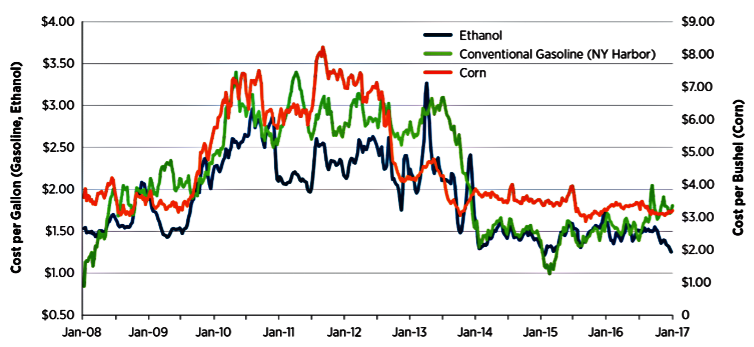
The graph compares the cost of ethanol and gasoline in the United States with the cost of corn over a period of time. Ethanol and gasoline costs are shown on the left vertical axis, and corn costs are shown on the right vertical axis.

Select from each drop-down menu the option that creates the most accurate statement, given the information provided.


When the cost of corn was at its highest, the cost per gallon of ethanol was approximately of the cost per bushel of corn.

The range of costs for corn was approximately times greater than the range of costs for gasoline.
User avatar
bazzlighter
Joined: 13 Nov 2024
Last visit: 01 Sep 2025
Posts: 1
Given Kudos: 11
Posts: 1
Kudos: 0
Kudos
Add Kudos
Bookmarks
Bookmark this Post
YESHESSWI
can you explain the answer
Bunuel


The graph compares the cost of ethanol and gasoline in the United States with the cost of corn over a period of time. Ethanol and gasoline costs are shown on the left vertical axis, and corn costs are shown on the right vertical axis.

Select from each drop-down menu the option that creates the most accurate statement, given the information provided.


When the cost of corn was at its highest, the cost per gallon of ethanol was approximately of the cost per bushel of corn.

The range of costs for corn was approximately times greater than the range of costs for gasoline.
Q1: We need to find the highest corn price and the ethanol price at the time where the corn price was the highest => look at the red line to identify the highest price (remember the corn price is on the right vertical axis and the ethanol price is on the left vertical axis). The highest corn price is found between Jan 2011 and Jan 2012 at approx. 8.30$. At that date the ethanol price gallon is around 2.50$, then just find the ratio 2.50$/8.30$ = 0.3030.... which is around 30%.
Q2: To find the range for both ethanol and corn we again look for the highest price of corn and the lowest price, since range=highest - lowest, we already know the highest price for corn is around 8.30$ so just need to find the lowest. This seems to occur twice, around Jan 2009 and Jan 2010 but also at a similar price from Jun/Jul 2015 to Jan 2017, the price is around 3.25$ here. So the range for corn = 8.30$-3.25$ = 5.05$. Repeat the process for ethanol and find that the range for ethanol is approx 3.40$ - 0.70$ = 2.40$. Now just divide and you get approx. 2
User avatar
ADisHere
Joined: 31 Aug 2023
Last visit: 26 Jul 2026
Posts: 137
Own Kudos:
Given Kudos: 451
Location: India
Schools: ISB '27 ISB
GMAT Focus 1: 625 Q84 V82 DI77
Schools: ISB '27 ISB
GMAT Focus 1: 625 Q84 V82 DI77
Posts: 137
Kudos: 90
Kudos
Add Kudos
Bookmarks
Bookmark this Post
bazzlighter
YESHESSWI
can you explain the answer
Bunuel


The graph compares the cost of ethanol and gasoline in the United States with the cost of corn over a period of time. Ethanol and gasoline costs are shown on the left vertical axis, and corn costs are shown on the right vertical axis.

Select from each drop-down menu the option that creates the most accurate statement, given the information provided.


When the cost of corn was at its highest, the cost per gallon of ethanol was approximately of the cost per bushel of corn.

The range of costs for corn was approximately times greater than the range of costs for gasoline.
Q1: We need to find the highest corn price and the ethanol price at the time where the corn price was the highest => look at the red line to identify the highest price (remember the corn price is on the right vertical axis and the ethanol price is on the left vertical axis). The highest corn price is found between Jan 2011 and Jan 2012 at approx. 8.30$. At that date the ethanol price gallon is around 2.50$, then just find the ratio 2.50$/8.30$ = 0.3030.... which is around 30%.
Q2: To find the range for both ethanol and corn we again look for the highest price of corn and the lowest price, since range=highest - lowest, we already know the highest price for corn is around 8.30$ so just need to find the lowest. This seems to occur twice, around Jan 2009 and Jan 2010 but also at a similar price from Jun/Jul 2015 to Jan 2017, the price is around 3.25$ here. So the range for corn = 8.30$-3.25$ = 5.05$. Repeat the process for ethanol and find that the range for ethanol is approx 3.40$ - 0.70$ = 2.40$. Now just divide and you get approx. 2


Why have you taken range of ethanol when we are asked to compare the range of gasoline?
Ig there is a typo as you have calculated correctly
User avatar
vasu1104
Joined: 10 Feb 2023
Last visit: 04 Sep 2026
Posts: 732
Own Kudos:
Given Kudos: 672
Location: Canada
Products:
Posts: 732
Kudos: 422
Kudos
Add Kudos
Bookmarks
Bookmark this Post
q-1

highest corn price= 8.25
at that point price of ethanol = 2.50
2.50/ 8.25 = approx 30.30 = 30%

q-2
highest corn= 8.25
lowest corn= 3
range= 5.25

highest gasoline = 3.40
lowest gasoline= 0.8
range= 2.60


5.25/2.60 = approx 2.01 = 2
Bunuel


The graph compares the cost of ethanol and gasoline in the United States with the cost of corn over a period of time. Ethanol and gasoline costs are shown on the left vertical axis, and corn costs are shown on the right vertical axis.

Select from each drop-down menu the option that creates the most accurate statement, given the information provided.


When the cost of corn was at its highest, the cost per gallon of ethanol was approximately of the cost per bushel of corn.

The range of costs for corn was approximately times greater than the range of costs for gasoline.
User avatar
Vivek1707
Joined: 22 May 2020
Last visit: 04 Sep 2026
Posts: 353
Own Kudos:
Given Kudos: 150
Products:
Posts: 353
Kudos: 185
Kudos
Add Kudos
Bookmarks
Bookmark this Post
Hi Bunuel

Wanted to clarify a langauge point. In the second part of the question "The range of costs for corn was approximately _____ times greater than the range of costs for gasoline."

Is the use of the term 'greater' correct here ?

For instance range of corn is 2 times range of gasoline which is 200% but it is only 1 time greater than gasoline which is 100%

Please guide.

Bunuel


Official Solution:

Drop-down 1:

The cost of corn, represented by the red line, was at its highest at the end of 2011, reaching approximately $8.30 per bushel (use right axis for the cost of corn). At the same time, the cost of ethanol, black line, was about $2.50 per gallon, which is \(\frac{2.5}{8.3}*100 \approx 30\%\) of the cost per bushel of corn.

Drop-down 2:

The highest cost for corn was at the end of 2011, reaching approximately $8.30 per bushel, while the lowest cost for corn was at the end of 2015, dropping to approximately $2.90 per bushel, resulting in a range of $5.40. The highest cost for gasoline was at the beginning of 2010, reaching approximately $3.40 per gallon, while the lowest cost for gasoline was at the beginning of 2008, at $0.60 per gallon, resulting in a range of $2.80. Therefore, the range of corn was approximately \(\frac{5.4}{2.8} \approx 2\) times the range of gasoline.


Correct answer:

Dropdown 1: "30%"

Dropdown 2: "2"
User avatar
Bunuel
User avatar
Math Expert
Joined: 02 Sep 2009
Last visit: 05 Sep 2026
Posts: 113,150
Own Kudos:
Given Kudos: 111,330
Products:
Expert
Expert reply
Active GMAT Club Expert! Tag them with @ followed by their username for a faster response.
Posts: 113,150
Kudos: 839,293
Kudos
Add Kudos
Bookmarks
Bookmark this Post
Vivek1707
Hi Bunuel

Wanted to clarify a langauge point. In the second part of the question "The range of costs for corn was approximately _____ times greater than the range of costs for gasoline."

Is the use of the term 'greater' correct here ?

For instance range of corn is 2 times range of gasoline which is 200% but it is only 1 time greater than gasoline which is 100%

Please guide.


Here is my post from another topic addressing this issue:

Agree that it's confusing but check below:

Merriam Webster's Dictionary of English Usage:


The argument in this case is that times more (or times larger, times stronger, times brighter, etc.) is ambiguous, so that "He has five times more money than you" can be misunderstood as meaning "He has six times as much money as you." It is, in fact, possible to misunderstand times more in this way, but it takes a good deal of effort. If you have $100, five times that is $500, which means that "five times more than $100" can mean (the commentators claim) "$500 more than $100," which equals "$600," which equals "six times as much as $100." The commentators regard this as a serious ambiguity, and they advise you to avoid it by always saying "times as much" instead of "times more." Here again, it seems that they are paying homage to mathematics at the expense of language. The fact is that "five times more" and "five times as much" are idiomatic phrases which have - and are understood to have - exactly the same meaning.

The "ambiguity" of times more is imaginary: in the world of actual speech and writing, the meaning of times more is clear and unequivocal. It is an idiom that has existed in our language for more than four centuries, and there is no real reason to avoid its use.


More on this here.

Also, check the following posts by Ianstewart:

Quote:
IanStewart


There seems to be some confusion about this earlier in this thread. The phrase "X is 2 times greater than Y" simply means that X = 2Y. It's understandable that this might seem confusing, because if instead we say "X is 200% greater than Y" we definitely mean that X = 3Y, but this all boils down to idiomatic usage in English. If you think of smaller numbers, it might be clear this is how the phrase is used in the language (there's a reason you've never heard anyone say "X is 1 times greater than Y" to mean that X is twice as big as Y), and it's also what the dictionary says, as quoted at this link:

https://mathforum.org/library/drmath/view/61774.html
User avatar
Vivek1707
Joined: 22 May 2020
Last visit: 04 Sep 2026
Posts: 353
Own Kudos:
Given Kudos: 150
Products:
Posts: 353
Kudos: 185
Kudos
Add Kudos
Bookmarks
Bookmark this Post
Hi thank you for your response. This was helpful.

I read through the resources shared. (Only the link by Ianstewart is not working. If you could share that again please)

What I understand is that we need to be a bit flexible in our approach. In every day parlance times more and times as much mean the same so unless a question is specifically testing times more vs times (as much as it happens in some quant questions). We can consider both phrases to mean the same.

i.e

x is 2 times y ----> x is 2y

x is 2 times as much as y ----> x is 2y

x is 2 times greater than y ----> this means x = 2y

If x is 200% greater than y ----> x is 3y

Bunuel


Here is my post from another topic addressing this issue:

Agree that it's confusing but check below:

Merriam Webster's Dictionary of English Usage:


The argument in this case is that times more (or times larger, times stronger, times brighter, etc.) is ambiguous, so that "He has five times more money than you" can be misunderstood as meaning "He has six times as much money as you." It is, in fact, possible to misunderstand times more in this way, but it takes a good deal of effort. If you have $100, five times that is $500, which means that "five times more than $100" can mean (the commentators claim) "$500 more than $100," which equals "$600," which equals "six times as much as $100." The commentators regard this as a serious ambiguity, and they advise you to avoid it by always saying "times as much" instead of "times more." Here again, it seems that they are paying homage to mathematics at the expense of language. The fact is that "five times more" and "five times as much" are idiomatic phrases which have - and are understood to have - exactly the same meaning.

The "ambiguity" of times more is imaginary: in the world of actual speech and writing, the meaning of times more is clear and unequivocal. It is an idiom that has existed in our language for more than four centuries, and there is no real reason to avoid its use.


More on this here.

Also, check the following posts by Ianstewart:


Moderators:
Math Expert
113150 posts
DI Forum Moderator
409 posts