Events & Promotions
|
|

GMAT Club Daily Prep
Thank you for using the timer - this advanced tool can estimate your performance and suggest more practice questions. We have subscribed you to Daily Prep Questions via email.
Customized
for You
Track
Your Progress
Practice
Pays
Not interested in getting valuable practice questions and articles delivered to your email? No problem, unsubscribe here.
 Oct 01
07:00 AM BST
-08:00 AM GMT
Welcome to the GMAT Club's Free Interview Prep Event for Top MBA Programs! Buy tickets - Virtual series that’s all set to equip you to -excel in your MBA interviews.


 07 Jun 2015, 17:28
Kudos
Bookmarks
GMAT Motion Picture Debrief
“Keep It Strategic and Simple” - The Kiss of GMAT
With the Official Score Report in my inbox, it is a pleasure to read some Answers to FAQs -
What do GMAT scores predict?
GMAT scores are a valid predictor of academic performance in the first year of a graduate management program...
What doesn’t the GMAT exam measure?
It does not measure your knowledge of business, your job skills, or subjective qualities such as motivation, creativity, and interpersonal skills...
How reliable are GMAT scores?
You will most likely earn a Total score within about 30 points of a score reflecting your true ability...
I wish I'd read these answers at the start of my journey. The GMAT isn’t about how we can ace logical reasoning & comprehension but rather how we can produce the best possible result by managing time well & learning from mistakes - hence the valid prediction of academic performance at business school. There are numerous parameters that a standardized test cannot measure, for which we have the rest of the MBA application.
Cravings for superior scores can be limitless. We crave 700+/750+ on scoring 690/740. On scoring 800, we can only hope that the rest of our application does not come under great scrutiny. There is no “perfect” score. The GMAT is designed for MBA aspirants ranging from teenagers to parents; a learning experience different from the tests we took as an undergraduate. For more clarity, download the crisp compilation of GMAT takeaways by 20 test-takers - The one thing on the GMAT. It's best to read it till the time every detail is imbibed.
At the beginning, my perception of the GMAT was different. I landed on GMAT Club to read a friend’s debrief (760+ in 40 days makes you curious). The emphasis was on GMAT resources for self study prep - the Official Guide, Verbal OG, Quant OG and some amazing PDFs on GMAT 700-800 level questions. I compiled the GMAT Club Math Book into a dirty doc and kept the PDF handy (you can also get it printed). With these resources at hand, I planned to study for 3 months at 15-20 hours/week. As is the case with many engineers and actuaries, my fascination for the Q51 score was growing into an obsession.
We may be unaware of the computer-adaptive nature of the GMAT even after having taken the Diagnostic Test and completed all sections (PS/DS/RC/CR/SC) on the OG. As mentioned on EdGlossary: “Computer-adaptive tests adjust their level of difficulty—based on the responses provided—to match the knowledge and ability of a test taker. If a student gives a wrong answer, the computer follows up with an easier question; if the student answers correctly, the next question will be more difficult.” There was one week in which I wrote two GMAT Prep tests and scored 700 and 730 despite having the same number of incorrect answers in both Quant and Verbal. I'd missed more number of “easier” questions in the first test and hence did not qualify for the “harder” ones - another reason why we need to do away with "silly mistakes". Find more about the GMAT Prep algorithm for scenarios such as running out of time on the GMAT in GMAT Prep Software Analysis and What If Scenarios.
Every incorrect answer needs thorough analysis if we intend to put an end to silly mistakes. According to Brian Galvin from Veritas Prep, you should ask yourself 3 questions whenever you miss a problem:
GMAT Prep full-length practice tests are the closest you can get to the GMAT. The simulations offered by Kaplan and Veritas are almost equally impressive. The practice test analysis by Veritas Prep simply rocks! Knewton offers section-wise practice tests instead along with other Practice Tests on GMAT Club. Two months into my prep, time management was still a struggle. I referred to Everything about Time Management post by Manhattan Prep. It listed bonus tips such as developing our “1-minute sense” and recovering from bad timing. I started following the benchmarks (7 Quant questions/15 minutes and 8 Verbal questions/15 minutes) that helped me keep a better track of time. I could’ve worked on test-taking techniques earlier in my prep had I read more GMAT Club testimonials - one post/day for 3 months adds up to 90+ testimonials. Curiosity is the most powerful thing you own.
I booked the afternoon slot for my GMAT as I intended to revise my error log in the morning. I referred to the What to do 30-14-7-3-1 days before GMAT post by bb for topics such as GMAT snacks, G-Day warm-up and more importantly, GMAT rescheduling. I did not choose the last day for my final Practice Test as I wanted it to be about recharging myself for the real thing. It’s better to pay a visit to your test centre a week in advance lest you get nervous finding it on G-Day. The level of preparation doesn’t matter if we give in to exam pressure. Keeping our cool when the mouse/keyboard/marker stops working will always help in getting the Last 50 Points on the GMAT. The data in some IR questions can be overwhelming and the answer may be based on, for example, just the last line. Do not let any last minute blunder set a mood for the next section of the test - inner peace is key. The GMAT is an adaptive test that tests your adaptability too.
GMAT 650 (Q 49, V 29, IR 7, AWA 4.5)
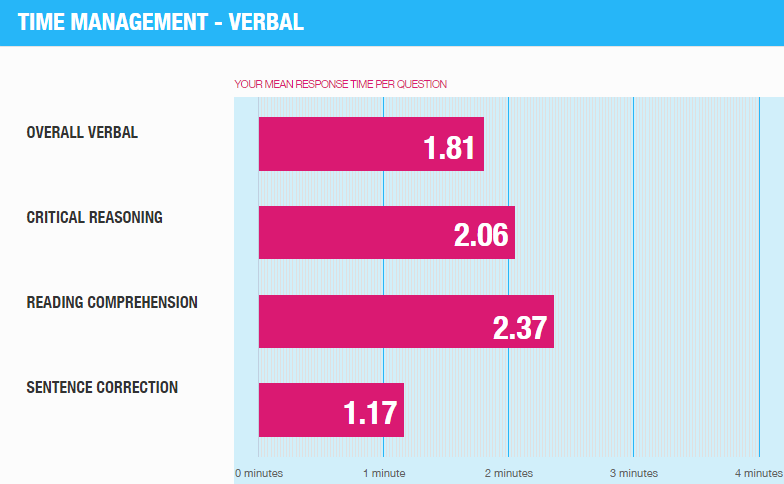
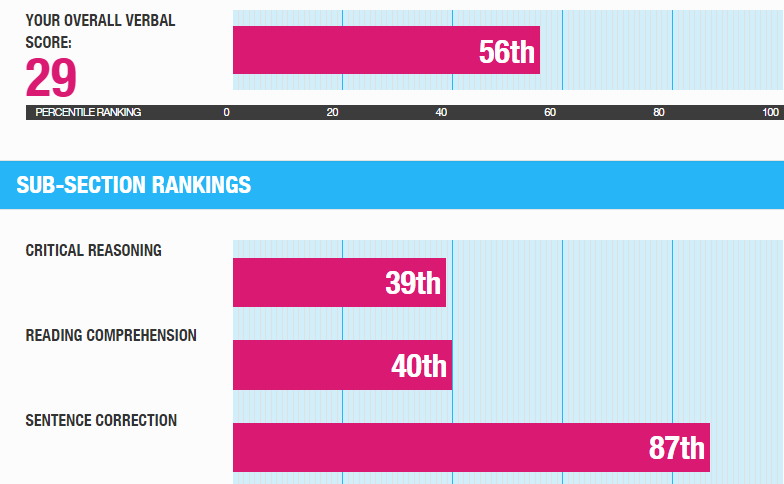
The feeling took it’s own sweet time to sink in. Once it did, I noted down every reason I could think of for the unexpected score. As the list grew, I realized I didn’t just have to become a Better Test Taker but also improve on other aspects. I took a break for a week or two. Someone who had never read a GMAT retake debrief was gearing up for his own retake journey. I needed a starting point and went ahead with Navendu512's advice - I ordered the GMAT Enhanced Score Report. The ESR was mostly about section-wise percentiles and time allotments. My percentiles in Quant, PS and DS were 79, 78 and 76 respectively - nothing unusual. What caught my attention was Sentence Correction. I always felt a bit comfortable with SC and managed an 87 percentile without studying Idioms or practising SC from the Verbal OG. The percentile was more than double and the average time taken/question almost half when compared to RC and CR. I decided to start with the GMAT Idiom Ebook by Magoosh so as to make the best use of my greatest strength.
GMAT ESR Verbal_Timing.png [ 23.74 KiB | Viewed 2684 times ]
GMAT ESR VerbalSubsection.png [ 26.67 KiB | Viewed 2677 times ]
The GMAT Club offers help right from day 1 when you receive bb’s message in your inbox. I stumbled upon a detailed debrief on Great Strategies and Tips (GMAT 770) by 2x2Matrix which includes almost everything you need to know about the test. I personally loved the idea of mini-breaks and the CR strategy used. Some strategies may not work for everyone though; I had a different one for RC. It is imperative to identify & follow study patterns that suit our personality. Every MBA aspirant is unique and so should be the study plan. Reading a great number of GMAT retake testimonials also helps. I used to consider them worthy for retakers only. We can't afford to make all mistakes ourselves. Nonetheless, taking the GMAT again is similar to watching a Chris Nolan movie again - more dots can be connected which leads to more clarity.
I used to save 8-10 minutes on Quant in almost every practice test I wrote. On G-Day, I gave some extra minutes to a PS question that looked easy and it ultimately made me rush towards the end - all because of my Q51 obsession. There's no harm in losing a battle to win the war. Sometimes, we just need to guess an answer - the question might also be an experimental one being pretested for possible use in future tests. Answers to these questions does not count towards your GMAT score. Plus, some DS questions are very well written and seem simple - as mentioned by ChrisLele in GMAT Experience (Investigation) 2015. The GMAT rarely completely throws away a DS statement. I realized I needed more time later into the test as the questions became difficult, so I tweaked my benchmarks. Instead of 75-55-35-15 minutes left in Quant for 10-10-10-7 questions, I finalized on 75-60-42-21 minutes left. For Verbal it was 11-11-11-8 questions with 75-62-45-21 minutes left. I wanted to avoid rushing towards the end. Posts like What NOT to read on Reading Comprehension always make us feel how much simple the GMAT can be.
I wish I had done justice to the role of backtracking in my GMAT plan. Ideas are bulletproof but, as Guy Kawasaki puts it, ideas are easy; implementation is hard. Things that take the focus away from the GMAT, such as a new job, should be delayed or dealt with well. I could've avoided my retake if I was pragmatic enough to reschedule my test. Reality sometimes trumps optimism. I found this inspiring post a few days before my retake: Tri Your Best - GMAT vs Triathlon. It is all about tuning ourselves with the GMAT. After having taken 10+ GMAT Practice Tests, recognising patterns on the test became easier. We can relate to questions such as If y is odd, is z odd? [700+ level] which is based on the Quant section’s instruction - "Unless stated otherwise, any number on the GMAT is a real number." I always searched for better explanations on GMAT Club whenever I wasn't satisfied with the original, especially in SC. The primary purpose of the RC passage may not always be related to the conclusion. Some questions may not have any answer choice which is perfect - we will then need to select the one which isn’t incorrect.
I realised our GMAT journey may not end even after a great score when I read about mass cancellation of GMAT scores in India in 2015. My journey was about self awareness, pattern recognition and wiring my brain. All we need is structured and effective preparation. You're the best judge on the time you'll need. At the end of the day the GMAT score is just a number you need to submit. My retake strengthened my belief in Branding and ISB. What do you believe in?
GMAT 740 (Q 51, V 38, IR 6, AWA 5)
“Keep It Strategic and Simple” - The Kiss of GMAT
All characters and events in this work are real. Any resemblance to any person is purely intentional.
Present Day
With the Official Score Report in my inbox, it is a pleasure to read some Answers to FAQs -
What do GMAT scores predict?
GMAT scores are a valid predictor of academic performance in the first year of a graduate management program...
What doesn’t the GMAT exam measure?
It does not measure your knowledge of business, your job skills, or subjective qualities such as motivation, creativity, and interpersonal skills...
How reliable are GMAT scores?
You will most likely earn a Total score within about 30 points of a score reflecting your true ability...
I wish I'd read these answers at the start of my journey. The GMAT isn’t about how we can ace logical reasoning & comprehension but rather how we can produce the best possible result by managing time well & learning from mistakes - hence the valid prediction of academic performance at business school. There are numerous parameters that a standardized test cannot measure, for which we have the rest of the MBA application.
Cravings for superior scores can be limitless. We crave 700+/750+ on scoring 690/740. On scoring 800, we can only hope that the rest of our application does not come under great scrutiny. There is no “perfect” score. The GMAT is designed for MBA aspirants ranging from teenagers to parents; a learning experience different from the tests we took as an undergraduate. For more clarity, download the crisp compilation of GMAT takeaways by 20 test-takers - The one thing on the GMAT. It's best to read it till the time every detail is imbibed.
Flashback
At the beginning, my perception of the GMAT was different. I landed on GMAT Club to read a friend’s debrief (760+ in 40 days makes you curious). The emphasis was on GMAT resources for self study prep - the Official Guide, Verbal OG, Quant OG and some amazing PDFs on GMAT 700-800 level questions. I compiled the GMAT Club Math Book into a dirty doc and kept the PDF handy (you can also get it printed). With these resources at hand, I planned to study for 3 months at 15-20 hours/week. As is the case with many engineers and actuaries, my fascination for the Q51 score was growing into an obsession.
We may be unaware of the computer-adaptive nature of the GMAT even after having taken the Diagnostic Test and completed all sections (PS/DS/RC/CR/SC) on the OG. As mentioned on EdGlossary: “Computer-adaptive tests adjust their level of difficulty—based on the responses provided—to match the knowledge and ability of a test taker. If a student gives a wrong answer, the computer follows up with an easier question; if the student answers correctly, the next question will be more difficult.” There was one week in which I wrote two GMAT Prep tests and scored 700 and 730 despite having the same number of incorrect answers in both Quant and Verbal. I'd missed more number of “easier” questions in the first test and hence did not qualify for the “harder” ones - another reason why we need to do away with "silly mistakes". Find more about the GMAT Prep algorithm for scenarios such as running out of time on the GMAT in GMAT Prep Software Analysis and What If Scenarios.
Every incorrect answer needs thorough analysis if we intend to put an end to silly mistakes. According to Brian Galvin from Veritas Prep, you should ask yourself 3 questions whenever you miss a problem:
- Why was the right answer right?
Why was the wrong answer wrong?
Why was the wrong answer tempting?
GMAT Prep full-length practice tests are the closest you can get to the GMAT. The simulations offered by Kaplan and Veritas are almost equally impressive. The practice test analysis by Veritas Prep simply rocks! Knewton offers section-wise practice tests instead along with other Practice Tests on GMAT Club. Two months into my prep, time management was still a struggle. I referred to Everything about Time Management post by Manhattan Prep. It listed bonus tips such as developing our “1-minute sense” and recovering from bad timing. I started following the benchmarks (7 Quant questions/15 minutes and 8 Verbal questions/15 minutes) that helped me keep a better track of time. I could’ve worked on test-taking techniques earlier in my prep had I read more GMAT Club testimonials - one post/day for 3 months adds up to 90+ testimonials. Curiosity is the most powerful thing you own.
I booked the afternoon slot for my GMAT as I intended to revise my error log in the morning. I referred to the What to do 30-14-7-3-1 days before GMAT post by bb for topics such as GMAT snacks, G-Day warm-up and more importantly, GMAT rescheduling. I did not choose the last day for my final Practice Test as I wanted it to be about recharging myself for the real thing. It’s better to pay a visit to your test centre a week in advance lest you get nervous finding it on G-Day. The level of preparation doesn’t matter if we give in to exam pressure. Keeping our cool when the mouse/keyboard/marker stops working will always help in getting the Last 50 Points on the GMAT. The data in some IR questions can be overwhelming and the answer may be based on, for example, just the last line. Do not let any last minute blunder set a mood for the next section of the test - inner peace is key. The GMAT is an adaptive test that tests your adaptability too.
Intermission
GMAT 650 (Q 49, V 29, IR 7, AWA 4.5)
Back to Reality
The feeling took it’s own sweet time to sink in. Once it did, I noted down every reason I could think of for the unexpected score. As the list grew, I realized I didn’t just have to become a Better Test Taker but also improve on other aspects. I took a break for a week or two. Someone who had never read a GMAT retake debrief was gearing up for his own retake journey. I needed a starting point and went ahead with Navendu512's advice - I ordered the GMAT Enhanced Score Report. The ESR was mostly about section-wise percentiles and time allotments. My percentiles in Quant, PS and DS were 79, 78 and 76 respectively - nothing unusual. What caught my attention was Sentence Correction. I always felt a bit comfortable with SC and managed an 87 percentile without studying Idioms or practising SC from the Verbal OG. The percentile was more than double and the average time taken/question almost half when compared to RC and CR. I decided to start with the GMAT Idiom Ebook by Magoosh so as to make the best use of my greatest strength.
Attachment:
GMAT ESR Verbal_Timing.png [ 23.74 KiB | Viewed 2684 times ]
Attachment:
GMAT ESR VerbalSubsection.png [ 26.67 KiB | Viewed 2677 times ]
The GMAT Club offers help right from day 1 when you receive bb’s message in your inbox. I stumbled upon a detailed debrief on Great Strategies and Tips (GMAT 770) by 2x2Matrix which includes almost everything you need to know about the test. I personally loved the idea of mini-breaks and the CR strategy used. Some strategies may not work for everyone though; I had a different one for RC. It is imperative to identify & follow study patterns that suit our personality. Every MBA aspirant is unique and so should be the study plan. Reading a great number of GMAT retake testimonials also helps. I used to consider them worthy for retakers only. We can't afford to make all mistakes ourselves. Nonetheless, taking the GMAT again is similar to watching a Chris Nolan movie again - more dots can be connected which leads to more clarity.
I used to save 8-10 minutes on Quant in almost every practice test I wrote. On G-Day, I gave some extra minutes to a PS question that looked easy and it ultimately made me rush towards the end - all because of my Q51 obsession. There's no harm in losing a battle to win the war. Sometimes, we just need to guess an answer - the question might also be an experimental one being pretested for possible use in future tests. Answers to these questions does not count towards your GMAT score. Plus, some DS questions are very well written and seem simple - as mentioned by ChrisLele in GMAT Experience (Investigation) 2015. The GMAT rarely completely throws away a DS statement. I realized I needed more time later into the test as the questions became difficult, so I tweaked my benchmarks. Instead of 75-55-35-15 minutes left in Quant for 10-10-10-7 questions, I finalized on 75-60-42-21 minutes left. For Verbal it was 11-11-11-8 questions with 75-62-45-21 minutes left. I wanted to avoid rushing towards the end. Posts like What NOT to read on Reading Comprehension always make us feel how much simple the GMAT can be.
I wish I had done justice to the role of backtracking in my GMAT plan. Ideas are bulletproof but, as Guy Kawasaki puts it, ideas are easy; implementation is hard. Things that take the focus away from the GMAT, such as a new job, should be delayed or dealt with well. I could've avoided my retake if I was pragmatic enough to reschedule my test. Reality sometimes trumps optimism. I found this inspiring post a few days before my retake: Tri Your Best - GMAT vs Triathlon. It is all about tuning ourselves with the GMAT. After having taken 10+ GMAT Practice Tests, recognising patterns on the test became easier. We can relate to questions such as If y is odd, is z odd? [700+ level] which is based on the Quant section’s instruction - "Unless stated otherwise, any number on the GMAT is a real number." I always searched for better explanations on GMAT Club whenever I wasn't satisfied with the original, especially in SC. The primary purpose of the RC passage may not always be related to the conclusion. Some questions may not have any answer choice which is perfect - we will then need to select the one which isn’t incorrect.
I realised our GMAT journey may not end even after a great score when I read about mass cancellation of GMAT scores in India in 2015. My journey was about self awareness, pattern recognition and wiring my brain. All we need is structured and effective preparation. You're the best judge on the time you'll need. At the end of the day the GMAT score is just a number you need to submit. My retake strengthened my belief in Branding and ISB. What do you believe in?
The End
GMAT 740 (Q 51, V 38, IR 6, AWA 5)




