Events & Promotions
|
|

GMAT Club Daily Prep
Thank you for using the timer - this advanced tool can estimate your performance and suggest more practice questions. We have subscribed you to Daily Prep Questions via email.
Customized
for You
Track
Your Progress
Practice
Pays
Not interested in getting valuable practice questions and articles delivered to your email? No problem, unsubscribe here.
 Sep 21
07:00 PM EDT
-10:00 PM EDT
Boost your GMAT score in less than one month in a live online class + 6 months access to TTP OnDemand video courses included!


 26 Jan 2026, 09:00
Kudos
Bookmarks
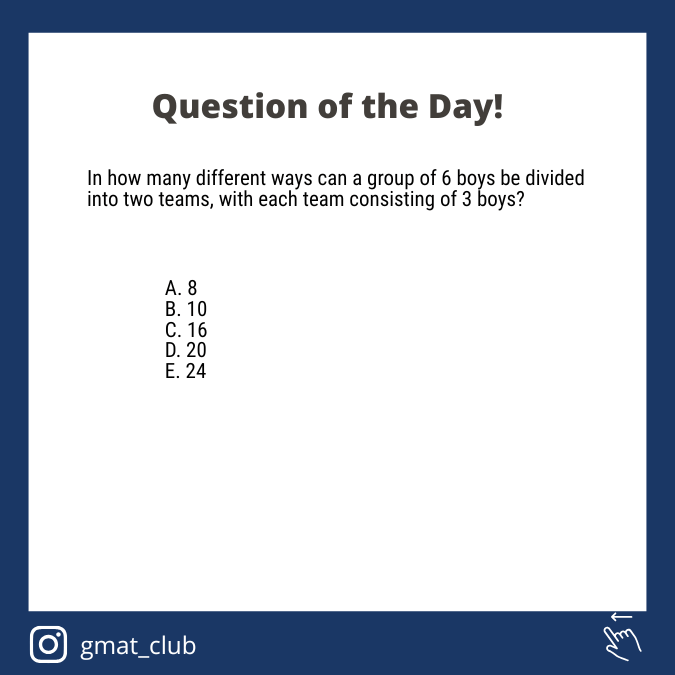
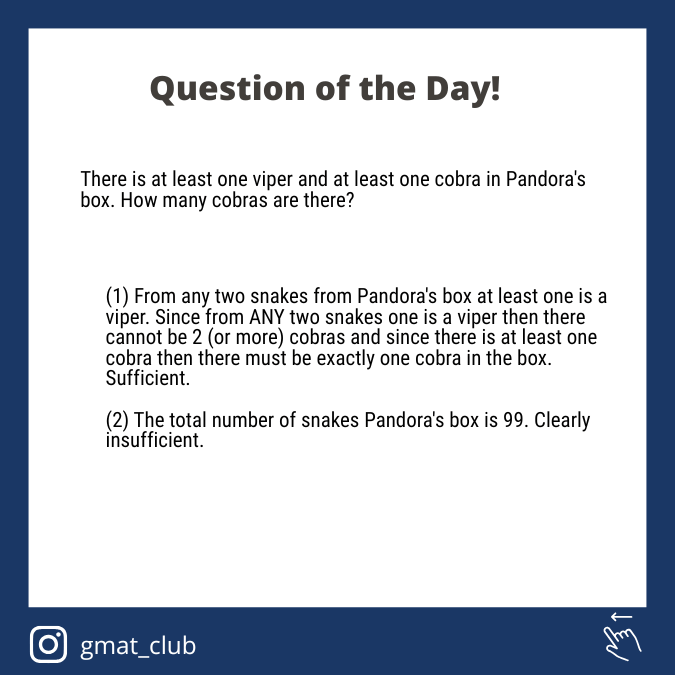
January 26th Quant Question of the Day
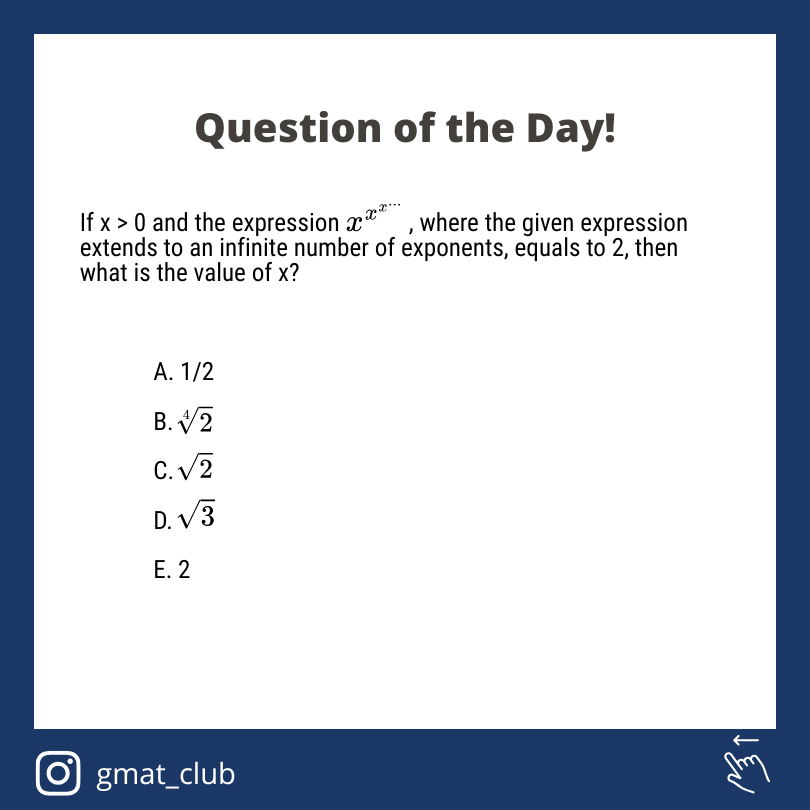
Answer and Explanation | Subscribe via E-mail, Forum, Instagram, or YouTube
Answer and Explanation | Subscribe via E-mail, Forum, Instagram, or YouTube
26 Jan 2026, 09:00
Kudos
Bookmarks
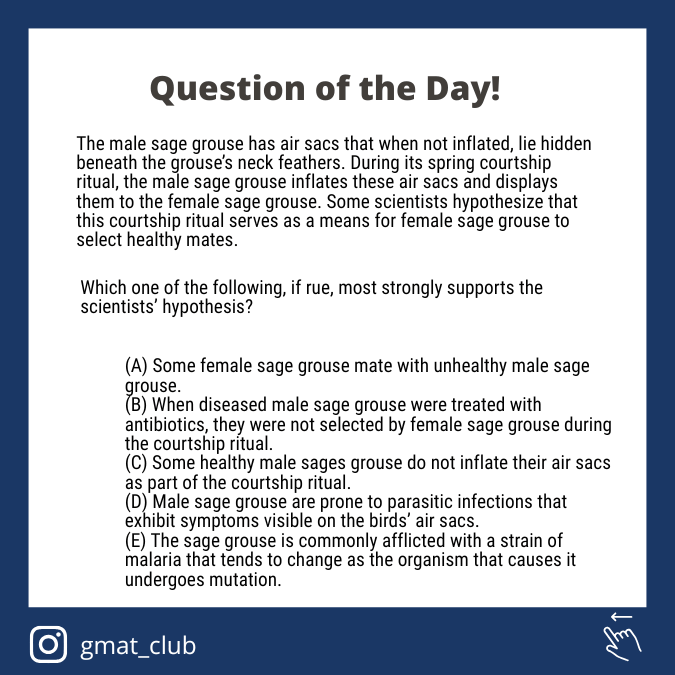
January 26th Verbal Question of the Day
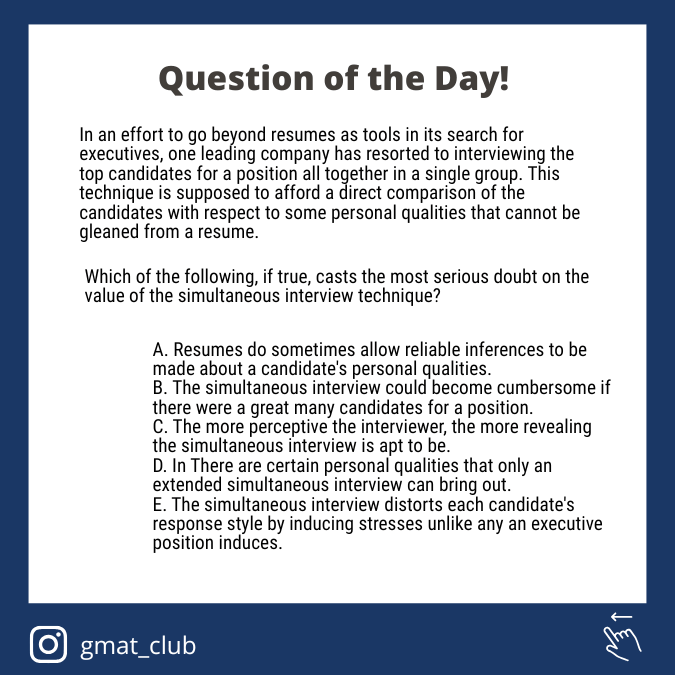
Answer and Explanation | Subscribe via E-mail, Forum, Instagram, or YouTube
Answer and Explanation | Subscribe via E-mail, Forum, Instagram, or YouTube
 26 Jan 2026, 09:38
Kudos
Bookmarks

If you’re about to begin GMAT prep, this session is for you. Stacey Koprince (Manhattan's Curriculum Head) and Chris (Sr. GMAT Tutor) will break down a complete GMAT study plan for beginners:
- Baseline to target score timeline
- Materials order (start → advanced → final stage)
- Mock test plan (how many + when + review)
- Daily routines that actually work
- Retake planning
👉 *Watch Live on YouTube* https://www.youtube.com/watch?v=b6YiczlN2dY