Events & Promotions
|
|

GMAT Club Daily Prep
Thank you for using the timer - this advanced tool can estimate your performance and suggest more practice questions. We have subscribed you to Daily Prep Questions via email.
Customized
for You
Track
Your Progress
Practice
Pays
Not interested in getting valuable practice questions and articles delivered to your email? No problem, unsubscribe here.
 Sep 07
12:01 AM PDT
-11:59 PM PDT
On the 7th, GMAT Club Tests will be Free! Including all the Quizzes, Questions, and Tests. 12 AM - 11:59 PM PDT- Sep 08
11:00 AM PDT
-12:00 PM PDT
Strong applicants do not always write strong MBA essays. In this session, we break down 5 common MBA essay mistakes that can quietly weaken an otherwise competitive application. - Sep 09
07:00 AM PDT
-10:00 AM PDT
Meet AdComs and explore top Master’s programs - MiM, MiF, MSc, MSBA and more. - Application Fee Waivers - Free 1-Week of GMAT Club Tests: - Master's Application Toolkit - Grand Prize Giveaway  Sep 09
09:00 AM PDT
-10:00 AM PDT
Join the chat on Wednesday - What’s in it for you? - Live Profile Evaluation Chat Session with Jenifer Turtschanow, CEO, ARINGO.- Sep 09
10:00 AM PDT
-11:00 AM PDT
Three MBA applications. Three rejections. No interview invites. A year later, Aman was admitted to Cambridge Judge, SMU, and IMD. In this episode of MBA Admit Stories, Aman shares how he rebuilt his MBA application...  Sep 09
12:00 PM PDT
-01:00 PM PDT
The old MBA recruiting playbook is dead. Here’s how top admits are getting ahead this summer.- Sep 10
11:00 AM PDT
-12:00 PM PDT
What does a truly strong MBA application resume actually look like? In this session, we break down 3 real MBA resumes from successful applicants who got into top business schools. Using redacted before-and-after versions...  Sep 10
12:00 PM IST
-01:00 PM IST
Before you hit “Submit,” get an expert perspective on your MBA application. Our Test Drive Service (Comprehensive Application Review) provides an in-depth evaluation of your application, helping you identify gaps, strengthen your story, and more. Sep 10
03:00 PM PDT
-04:00 PM PDT
Inquire for a free profile evaluation and guarantee statement for possible admits and scholarships! Sep 11
08:30 AM EDT
-09:15 AM EDT
Get the inside scoop on what makes Emory’s Goizueta Business School great, learn how you can present a strong MBA application, and connect with an Admissions Director to get your questions answered.- Sep 16
12:00 PM PDT
-01:00 PM PDT
Grab your favorite beverage and spend time chatting with Melissa Rapp, Associate Dean of Graduate Admissions, and Brian Mitchell, Associate Dean of the Full-Time MBA Program. The topic for this Coffee Chat is Entrepreneurship and Innovation.

 22 Jun 2026, 08:37
Kudos
Bookmarks
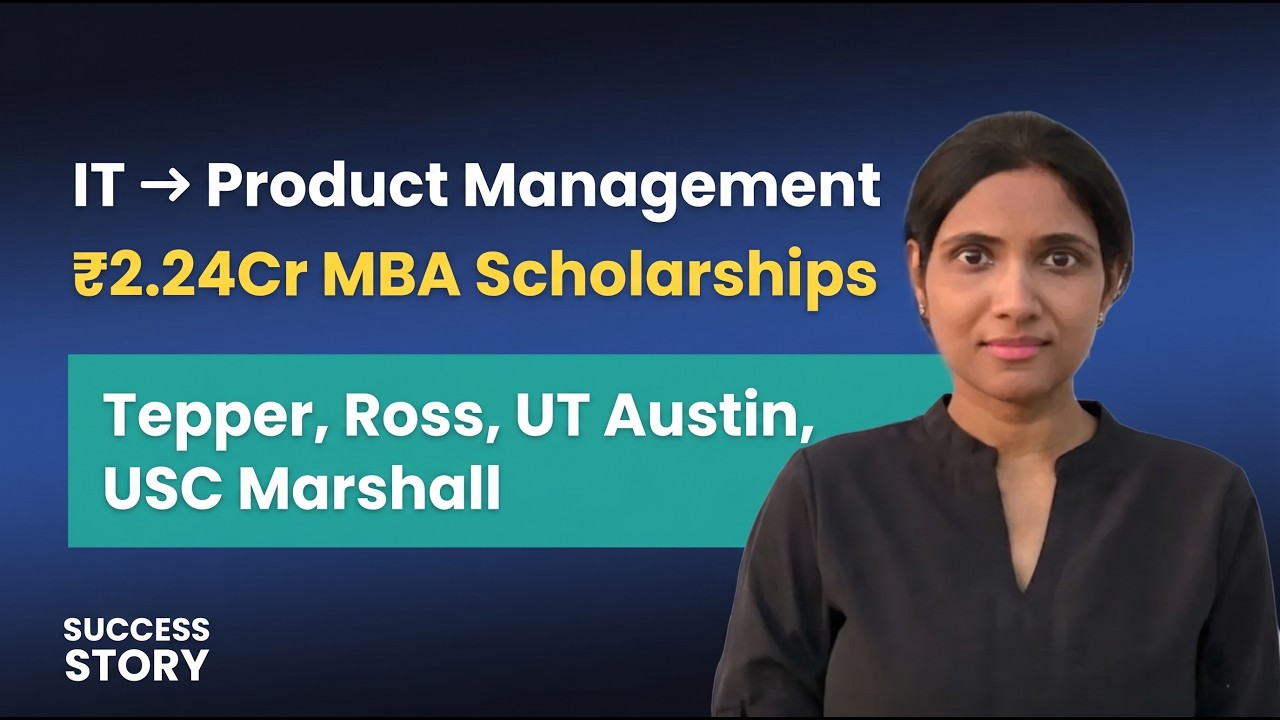
Ross, Tepper, McCombs, and Marshall: How Bindu Secured ₹2.24 Crores in MBA Scholarships While Nine Months Pregnant
Scholarships and Admits: Four Programs, ₹2.24 Crores
In over two decades of doing this, Bindu’s is one of the stories I come back to the most. Four admits, ₹2.24 Crores in scholarships, and she did it all while carrying a baby. No days off work. No excuses. Just discipline and clarity.
• Ross School of Business (University of Michigan)
– MBA Admit with Scholarship
– ₹24 Lakhs
• Tepper School of Business (Carnegie Mellon)
– MBA Admit with Scholarship
– ₹72 Lakhs
• UT Austin McCombs
– MBA Admit with Scholarship
– ₹64 Lakhs
• USC Marshall
– MBA Admit with Scholarship
– ₹64 Lakhs
Total Scholarships: ₹2.24 Crores
Before we dive into the casestudy, here's a video by Bindu
The Discipline That Made This Possible
I need to start with what made Bindu’s application cycle unlike any other I’ve worked on. She went through the entire process, essays, networking, mock interviews, everything, while pregnant. By her eighth month, she was doing interview prep with me. By her ninth month, she was sitting in actual MBA interviews. She didn’t take a single day off work during any of it.
I’m not sharing this to be dramatic. I’m sharing it because every applicant I work with has reasons why the timing isn’t perfect. Work is busy. Life is complicated. Something always comes up. Bindu had one of the most legitimate reasons in the world to slow down, and she didn’t. She told me early on that she’d decided this was happening, and she was prepared to do whatever it took. That mindset set the tone for everything that followed.
From IT Consulting to Product Management: The Goal Shift That Changed Everything
When Bindu first came to me, she was a software engineer with a strong technical track record. Her initial goal was IT consulting, which made surface-level sense given her background. But when I looked at the full picture, I could see the IT consulting narrative wasn’t going to differentiate her. It’s one of the most common goals Indian tech professionals write, and at schools like Ross and Tepper, it would have placed her in a very crowded pool.
Through our discussions, something more specific emerged. Bindu had a genuine interest in building products that solved real problems. She’d always been drawn to the product side of the companies she’d worked at, and her technical skills gave her a foundation that most aspiring product managers don’t have. The pivot from IT consulting to product management wasn’t a stretch. It was actually a better fit for who she is.
We rebuilt her goals around PM. Short-term: product manager at a leading tech company like Microsoft or Google, focused on building user-centric products. Long-term: moving into a senior leadership role at a tech startup, driving company-wide innovation. This narrative was sharper, more specific, and grounded in skills she already had. It also mapped directly to the PM recruiting pipelines at Ross, Tepper, and McCombs, which meant career development offices could see a clear placement path.
Working With Bindu: The Effort Behind the Result
I want to be honest about the effort this took. Every piece of feedback I gave Bindu, she came back with a version that was genuinely better. Not just tweaked. Transformed. She didn’t just implement changes. She internalised them. I could see her thinking evolving with every draft, every networking conversation, every mock interview.
The networking was particularly important for Bindu, given how tight her schedule was. She couldn’t afford to waste a single call on surface-level questions. We made sure every conversation was targeted: specific questions about PM recruiting at each school, how alumni from tech backgrounds had positioned themselves, and what the programme culture was actually like beyond what the website said. Those insights shaped her “Why this school” essays in ways that generic research never could.
And then came the interviews. In her ninth month of pregnancy, she was doing mock sessions with me with the same intensity as any other applicant. I remember thinking, if the admissions committee could see the discipline behind this application, the admit would be a given. They couldn’t see it directly. But it showed in the quality of every answer she gave. Read more similar Success Stories.
Lessons from Bindu’s Success
1. There Is No Perfect Time to Apply. Bindu applied while pregnant, working full-time, and managing everything else in her life. If you’re waiting for the perfect window to start your MBA applications, you’ll wait forever. The right time is when your goals are clear and you’re willing to commit to the process.
2. IT Consulting Is Crowded. Product Management Might Be Your Real Story. If you’re a software engineer defaulting to IT consulting as your post-MBA goal, stop and think. Do you actually want to consult, or are you drawn to building products? If it’s the latter, PM is a more differentiated and authentic goal, and every top program has a strong PM recruiting pipeline.
3. Discipline Compounds Across the Application Process. Bindu’s discipline wasn’t just about showing up. It was about improving with every iteration. Each essay draft was better than the last. Each networking call was more targeted. Each mock interview was sharper. That compounding effect is what turns a good application into one that earns ₹2.24 Crores in scholarships.
4. Make Every Networking Call Count When Time Is Tight. If you’re balancing work and life alongside applications, you can’t afford unfocused networking. Go in with specific questions tied to your goals and your target schools. One sharp 30-minute call is worth more than five generic ones.
Bindu’s four admits at Ross, Tepper, McCombs, and USC Marshall, with ₹2.24 Crores in combined scholarships, came from a combination of the right goal shift (IT consulting to product management), targeted networking that made every conversation count, and a level of discipline that I’ve rarely seen in over two decades of doing this. She did the entire application process while pregnant, without taking a single day off work, and she delivered results that would be impressive under any circumstances. Bindu didn’t wait for the perfect time. She made the time she had count.
Watch more PythaGURUS reviews and Jatin Bhandari reviews from candidates who’ve been through this process.
Happy to answer questions about similar profiles.
Jatin
[email protected]
https://pythagurus.in
Scholarships and Admits: Four Programs, ₹2.24 Crores
In over two decades of doing this, Bindu’s is one of the stories I come back to the most. Four admits, ₹2.24 Crores in scholarships, and she did it all while carrying a baby. No days off work. No excuses. Just discipline and clarity.
• Ross School of Business (University of Michigan)
– MBA Admit with Scholarship
– ₹24 Lakhs
• Tepper School of Business (Carnegie Mellon)
– MBA Admit with Scholarship
– ₹72 Lakhs
• UT Austin McCombs
– MBA Admit with Scholarship
– ₹64 Lakhs
• USC Marshall
– MBA Admit with Scholarship
– ₹64 Lakhs
Total Scholarships: ₹2.24 Crores
Before we dive into the casestudy, here's a video by Bindu
The Discipline That Made This Possible
I need to start with what made Bindu’s application cycle unlike any other I’ve worked on. She went through the entire process, essays, networking, mock interviews, everything, while pregnant. By her eighth month, she was doing interview prep with me. By her ninth month, she was sitting in actual MBA interviews. She didn’t take a single day off work during any of it.
I’m not sharing this to be dramatic. I’m sharing it because every applicant I work with has reasons why the timing isn’t perfect. Work is busy. Life is complicated. Something always comes up. Bindu had one of the most legitimate reasons in the world to slow down, and she didn’t. She told me early on that she’d decided this was happening, and she was prepared to do whatever it took. That mindset set the tone for everything that followed.
From IT Consulting to Product Management: The Goal Shift That Changed Everything
When Bindu first came to me, she was a software engineer with a strong technical track record. Her initial goal was IT consulting, which made surface-level sense given her background. But when I looked at the full picture, I could see the IT consulting narrative wasn’t going to differentiate her. It’s one of the most common goals Indian tech professionals write, and at schools like Ross and Tepper, it would have placed her in a very crowded pool.
Through our discussions, something more specific emerged. Bindu had a genuine interest in building products that solved real problems. She’d always been drawn to the product side of the companies she’d worked at, and her technical skills gave her a foundation that most aspiring product managers don’t have. The pivot from IT consulting to product management wasn’t a stretch. It was actually a better fit for who she is.
We rebuilt her goals around PM. Short-term: product manager at a leading tech company like Microsoft or Google, focused on building user-centric products. Long-term: moving into a senior leadership role at a tech startup, driving company-wide innovation. This narrative was sharper, more specific, and grounded in skills she already had. It also mapped directly to the PM recruiting pipelines at Ross, Tepper, and McCombs, which meant career development offices could see a clear placement path.
Working With Bindu: The Effort Behind the Result
I want to be honest about the effort this took. Every piece of feedback I gave Bindu, she came back with a version that was genuinely better. Not just tweaked. Transformed. She didn’t just implement changes. She internalised them. I could see her thinking evolving with every draft, every networking conversation, every mock interview.
The networking was particularly important for Bindu, given how tight her schedule was. She couldn’t afford to waste a single call on surface-level questions. We made sure every conversation was targeted: specific questions about PM recruiting at each school, how alumni from tech backgrounds had positioned themselves, and what the programme culture was actually like beyond what the website said. Those insights shaped her “Why this school” essays in ways that generic research never could.
And then came the interviews. In her ninth month of pregnancy, she was doing mock sessions with me with the same intensity as any other applicant. I remember thinking, if the admissions committee could see the discipline behind this application, the admit would be a given. They couldn’t see it directly. But it showed in the quality of every answer she gave. Read more similar Success Stories.
Lessons from Bindu’s Success
1. There Is No Perfect Time to Apply. Bindu applied while pregnant, working full-time, and managing everything else in her life. If you’re waiting for the perfect window to start your MBA applications, you’ll wait forever. The right time is when your goals are clear and you’re willing to commit to the process.
2. IT Consulting Is Crowded. Product Management Might Be Your Real Story. If you’re a software engineer defaulting to IT consulting as your post-MBA goal, stop and think. Do you actually want to consult, or are you drawn to building products? If it’s the latter, PM is a more differentiated and authentic goal, and every top program has a strong PM recruiting pipeline.
3. Discipline Compounds Across the Application Process. Bindu’s discipline wasn’t just about showing up. It was about improving with every iteration. Each essay draft was better than the last. Each networking call was more targeted. Each mock interview was sharper. That compounding effect is what turns a good application into one that earns ₹2.24 Crores in scholarships.
4. Make Every Networking Call Count When Time Is Tight. If you’re balancing work and life alongside applications, you can’t afford unfocused networking. Go in with specific questions tied to your goals and your target schools. One sharp 30-minute call is worth more than five generic ones.
Bindu’s four admits at Ross, Tepper, McCombs, and USC Marshall, with ₹2.24 Crores in combined scholarships, came from a combination of the right goal shift (IT consulting to product management), targeted networking that made every conversation count, and a level of discipline that I’ve rarely seen in over two decades of doing this. She did the entire application process while pregnant, without taking a single day off work, and she delivered results that would be impressive under any circumstances. Bindu didn’t wait for the perfect time. She made the time she had count.
Watch more PythaGURUS reviews and Jatin Bhandari reviews from candidates who’ve been through this process.
Happy to answer questions about similar profiles.
Jatin
[email protected]
https://pythagurus.in
26 Jun 2026, 07:44
Kudos
Bookmarks
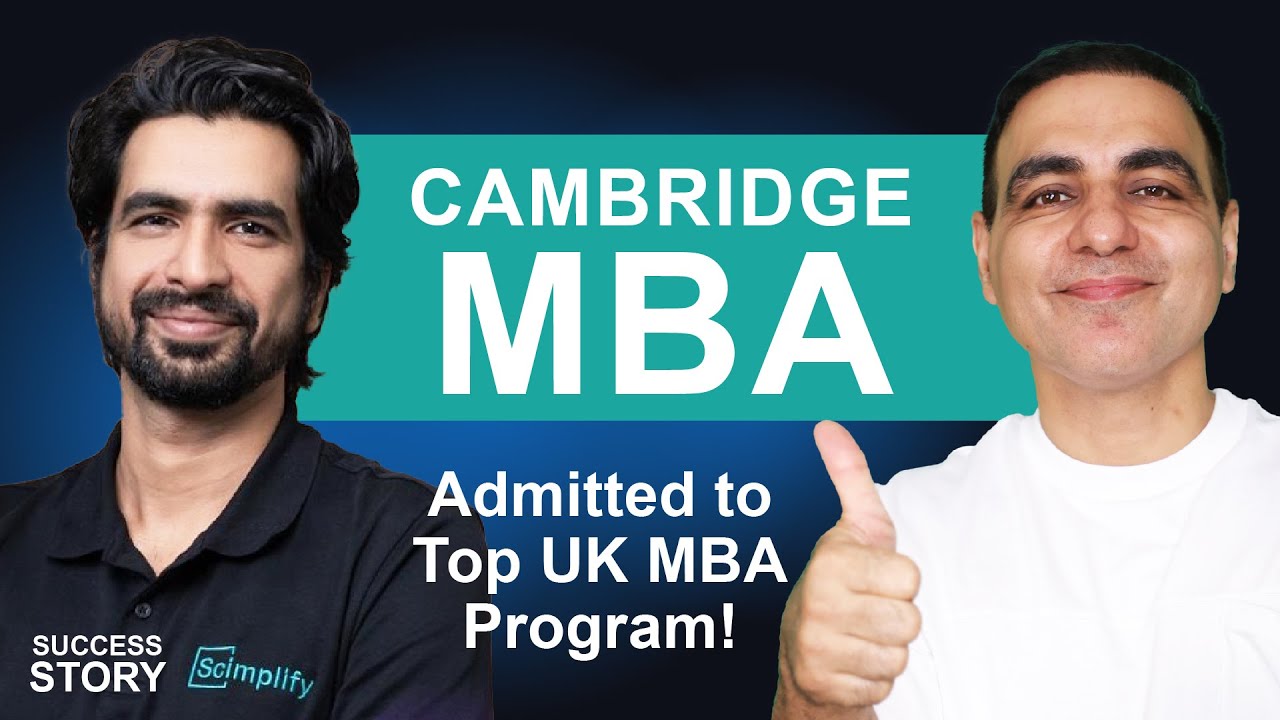
Forget Perfect, Focus on Winning: How Harsh Cracked Cambridge Judge MBA
Admits: Dream School, First Choice
Harsh targeted Cambridge Judge from the start, and that’s where he landed. One school, one goal, one admit.
• Cambridge Judge Business School (University of Cambridge)
– MBA Admit
Before we dive into the casestudy, here's a video by Harsh
“Stop Being Perfect and Start Moving”
One of the first things I told Harsh was: “You’re being too perfect, and because of this, you’re not moving. Stop this and take one step at a time.”
Harsh is someone with a strong drive for excellence. In his professional life, that’s an asset. In the MBA application process, it was slowing him down. He wouldn’t move to the next essay draft until the current one felt flawless. He wouldn’t start networking until he felt fully prepared. He wanted every piece to be right before taking the next step.
I see this pattern in high-performing applicants more often than you’d expect. The same discipline that makes them successful at work becomes a bottleneck in a process where deadlines are fixed and iteration is more valuable than perfection. The first draft doesn’t need to be perfect. It needs to exist. We can improve it through 5, 6, 7 rounds of feedback. But we can’t improve something that hasn’t been written yet because you’re still thinking about the perfect opening sentence.
Once Harsh made that shift, from perfection to progress, everything started moving.
From Broad Tech Goals to a Healthcare Consulting Story
Harsh’s initial goals were at the intersection of tech and social impact. Directionally interesting, but too broad for a Cambridge Judge application. He didn’t have a clear roadmap connecting his background to a specific post-MBA career.
Through our discussions, we uncovered something more specific and more personal. Harsh cared deeply about healthcare access in India. And his professional background in technology and operations, where he’d worked on optimizing supply chains across manufacturing plants globally, gave him a credible foundation for working on healthcare systems.
We built his goals around this intersection. Short-term: joining a consulting firm like McKinsey, PwC, or EY in their digital strategies practice, specifically working on healthcare. Long-term: leading efforts to democratize healthcare access in underserved communities in India through digital technologies. The consulting short-term goal was grounded in his tech and operations background. The healthcare long-term goal was grounded in personal conviction. Cambridge Judge’s one-year MBA, with its emphasis on innovation and social impact, connected the two.
Networking Training and the Cambridge Application
Harsh wasn’t naturally comfortable with networking. Most Indian applicants aren’t, because we’re trained to compete on marks, not to reach out to strangers and have meaningful conversations. So we spent serious time on this. I trained him on how to frame questions around his specific handicaps (the skill gaps his MBA would fill), how to structure a networking call so it’s productive and respectful of the alumni’s time, and how to ask the kind of questions that produce real insights rather than surface-level answers about culture and campus life.
Once he got going, the growth was visible. Within a couple of months, Harsh had connected with alumni and current students from Cambridge Judge, gathering specific perspectives on the program’s healthcare and tech resources, the consulting recruiting pipeline, and how the school supports career switchers. That depth of understanding showed in every part of his application.
And Cambridge Judge’s application needed that depth. Judge has one of the more comprehensive MBA applications out there, with multiple essays that require you to go deep into both personal and professional stories. You can’t get through it with surface-level answers or generic positioning. Every essay demanded specificity, whether it was about his leadership experiences, his motivation for healthcare consulting, or his understanding of what Cambridge would give him that he couldn’t get elsewhere. We spent a lot of time working through each of these, making sure every response was grounded in real experiences and real conviction.
By the time his Cambridge interview came around, Harsh wasn’t the person who needed everything perfect before moving. He was confident, articulate, and ready. The networking and the essay work had given him genuine conviction about why Judge was the right school. Read more similar Success Stories.
Lessons from Harsh’s Success
Watch more PythaGURUS reviews and Jatin Bhandari reviews from candidates who’ve been through this process.
Happy to answer questions about similar profiles.
Jatin
[email protected]
https://pythagurus.in
Admits: Dream School, First Choice
Harsh targeted Cambridge Judge from the start, and that’s where he landed. One school, one goal, one admit.
• Cambridge Judge Business School (University of Cambridge)
– MBA Admit
Before we dive into the casestudy, here's a video by Harsh
“Stop Being Perfect and Start Moving”
One of the first things I told Harsh was: “You’re being too perfect, and because of this, you’re not moving. Stop this and take one step at a time.”
Harsh is someone with a strong drive for excellence. In his professional life, that’s an asset. In the MBA application process, it was slowing him down. He wouldn’t move to the next essay draft until the current one felt flawless. He wouldn’t start networking until he felt fully prepared. He wanted every piece to be right before taking the next step.
I see this pattern in high-performing applicants more often than you’d expect. The same discipline that makes them successful at work becomes a bottleneck in a process where deadlines are fixed and iteration is more valuable than perfection. The first draft doesn’t need to be perfect. It needs to exist. We can improve it through 5, 6, 7 rounds of feedback. But we can’t improve something that hasn’t been written yet because you’re still thinking about the perfect opening sentence.
Once Harsh made that shift, from perfection to progress, everything started moving.
From Broad Tech Goals to a Healthcare Consulting Story
Harsh’s initial goals were at the intersection of tech and social impact. Directionally interesting, but too broad for a Cambridge Judge application. He didn’t have a clear roadmap connecting his background to a specific post-MBA career.
Through our discussions, we uncovered something more specific and more personal. Harsh cared deeply about healthcare access in India. And his professional background in technology and operations, where he’d worked on optimizing supply chains across manufacturing plants globally, gave him a credible foundation for working on healthcare systems.
We built his goals around this intersection. Short-term: joining a consulting firm like McKinsey, PwC, or EY in their digital strategies practice, specifically working on healthcare. Long-term: leading efforts to democratize healthcare access in underserved communities in India through digital technologies. The consulting short-term goal was grounded in his tech and operations background. The healthcare long-term goal was grounded in personal conviction. Cambridge Judge’s one-year MBA, with its emphasis on innovation and social impact, connected the two.
Networking Training and the Cambridge Application
Harsh wasn’t naturally comfortable with networking. Most Indian applicants aren’t, because we’re trained to compete on marks, not to reach out to strangers and have meaningful conversations. So we spent serious time on this. I trained him on how to frame questions around his specific handicaps (the skill gaps his MBA would fill), how to structure a networking call so it’s productive and respectful of the alumni’s time, and how to ask the kind of questions that produce real insights rather than surface-level answers about culture and campus life.
Once he got going, the growth was visible. Within a couple of months, Harsh had connected with alumni and current students from Cambridge Judge, gathering specific perspectives on the program’s healthcare and tech resources, the consulting recruiting pipeline, and how the school supports career switchers. That depth of understanding showed in every part of his application.
And Cambridge Judge’s application needed that depth. Judge has one of the more comprehensive MBA applications out there, with multiple essays that require you to go deep into both personal and professional stories. You can’t get through it with surface-level answers or generic positioning. Every essay demanded specificity, whether it was about his leadership experiences, his motivation for healthcare consulting, or his understanding of what Cambridge would give him that he couldn’t get elsewhere. We spent a lot of time working through each of these, making sure every response was grounded in real experiences and real conviction.
By the time his Cambridge interview came around, Harsh wasn’t the person who needed everything perfect before moving. He was confident, articulate, and ready. The networking and the essay work had given him genuine conviction about why Judge was the right school. Read more similar Success Stories.
Lessons from Harsh’s Success
- Progress Beats Perfection in MBA Applications. The application process has fixed deadlines. If you’re waiting for your essay to be perfect before submitting a first draft, you’re losing time that could be spent on iteration. Write the imperfect draft. Send it. Get feedback. Improve. That cycle is what produces strong applications, not waiting for inspiration to strike.
- Invest in Networking Training Early. Most Indian applicants skip networking because it feels uncomfortable. That’s exactly why you need to train for it. Learn how to introduce yourself concisely, how to ask questions tied to your specific goals and handicaps, and how to have conversations that produce genuine insights. The depth it adds to your application is impossible to replicate from website research alone.
- Broad Goals Need a Personal Anchor. “Tech and social impact” is a direction, not a goal. Harsh’s application became compelling when we connected his tech background to a specific cause he cared about, healthcare access in India, and built a consulting career path that led there logically.
- Cambridge Judge’s One-Year MBA Rewards Clarity. In a one-year program, there’s no time to “figure it out.” Admissions committees expect you to arrive with a clear plan. If your goals are sharp and your networking shows genuine understanding of the program, Judge will see you as someone who’s ready to make the most of 12 months.
Watch more PythaGURUS reviews and Jatin Bhandari reviews from candidates who’ve been through this process.
Happy to answer questions about similar profiles.
Jatin
[email protected]
https://pythagurus.in
29 Jun 2026, 07:13
Kudos
Bookmarks
₹83 Lakhs ($110,000) Scholarship at Emory Goizueta with Just 2 Years of Experience: How Anisha Made It Work
Admits
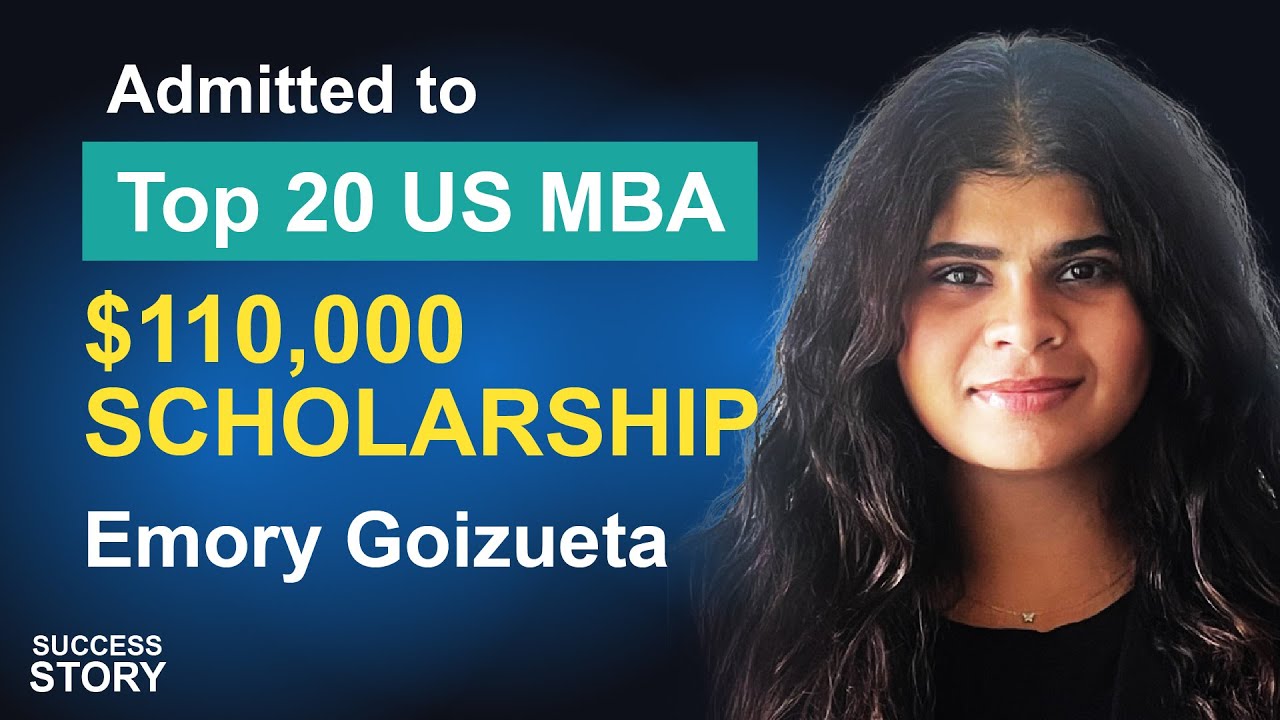
This is the story of Anisha, who applied with just two years of work experience and walked away with an admit and ₹83 Lakhs ($110,000) in scholarship from Emory Goizueta, a US Top 20 MBA programme.
• Emory University, Goizueta Business School
– MBA Admit with Scholarship
– ₹83 Lakhs (USD $110,000)
Before we dive into the casestudy, here's a video from Anisha
Two Years of Experience: Can It Work?
The question every applicant with limited experience asks is: will schools take me seriously? Anisha had two years of work experience when she started with me. By the time she’d join the programme, she’d have three. That’s on the lighter side for most top MBA programmes, and there’s no point pretending otherwise.
But here’s what I’ve learned. The number of years matters less than what you’ve done with them and how you position it. Anisha had worked in risk transformation. She’d led audits for Fortune 500 clients, built risk management solutions across multiple countries, and driven measurable results. The experience was there. It just needed to be framed in a way that showed the admissions committee she was ready, despite the timeline.
I want to be clear about something, though. Not everyone with two years of experience should apply to a top MBA programme. Anisha’s profile had the substance to support it. If you’re thinking about applying early, be honest about whether your experience has enough depth. Sometimes waiting a year or two gives you a stronger application and better outcomes.
Building the Goals: From Risk to Consulting
Anisha came in with a broad interest in transformation services but without a clear post-MBA direction. We helped her build her goals around consulting: short-term at a firm like PwC, EY, or BCG as an Associate, working on digital transformation and performance efficiency engagements. Long-term, leading transformation projects for global organisations, using her strategy and risk expertise.
The consulting direction connected naturally to her risk transformation background. She’d already been doing problem-solving work for large clients. Consulting was the platform to do it at a broader scale, across more industries, with more strategic impact. That connection made the goal credible even with limited years of experience.
The Essay Strategy: Going Beyond Work Experience
With only two years of professional experience to draw from, the essays couldn’t rely on work alone. This is the reality for anyone applying early in their career. You don’t have a decade of leadership stories to choose from. So we went wider.
While working through her essays, I pushed Anisha to bring in everything beyond her job. Her community work organising training sessions for underprivileged kids. Her leadership in college initiatives. Moments where she’d brought people together to solve problems outside of a professional context. These weren’t filler stories. They were evidence of leadership that existed before her career even started.
As we helped her redraft, the essays started showing a candidate who led regardless of context. Not just at work, but in every setting she’d been part of. For an applicant with limited work experience, that’s the argument you need to make: leadership is a pattern in your life, not something that only started when you got your first job.
Why Emory Said Yes with ₹83 Lakhs
₹83 Lakhs is a significant scholarship. Emory didn’t offer that because Anisha had more experience than other candidates. They offered it because her application showed genuine readiness.
The goals were specific and connected to her background. The essays showed leadership across multiple contexts. The interview preparation made sure she could deliver all of this with clarity and confidence. We did multiple mock sessions, and by the time she sat in her Emory interview, she could handle any question because the preparation had gone deep enough that she wasn’t relying on scripted answers.
Anisha has said that she couldn’t believe she’d received that much in scholarships. It felt surreal to her. But from where I sat, it made sense. When every part of the application is doing its job, scholarship committees can see that this person will succeed in their programme. That’s what they’re investing in. Read more similar Success Stories.
Lessons from Anisha’s Success
Watch more PythaGURUS reviews and Jatin Bhandari reviews from candidates who’ve been through this process.
Happy to answer questions about similar profiles.
Jatin
[email protected]
https://pythagurus.in
Admits
This is the story of Anisha, who applied with just two years of work experience and walked away with an admit and ₹83 Lakhs ($110,000) in scholarship from Emory Goizueta, a US Top 20 MBA programme.
• Emory University, Goizueta Business School
– MBA Admit with Scholarship
– ₹83 Lakhs (USD $110,000)
Before we dive into the casestudy, here's a video from Anisha
Two Years of Experience: Can It Work?
The question every applicant with limited experience asks is: will schools take me seriously? Anisha had two years of work experience when she started with me. By the time she’d join the programme, she’d have three. That’s on the lighter side for most top MBA programmes, and there’s no point pretending otherwise.
But here’s what I’ve learned. The number of years matters less than what you’ve done with them and how you position it. Anisha had worked in risk transformation. She’d led audits for Fortune 500 clients, built risk management solutions across multiple countries, and driven measurable results. The experience was there. It just needed to be framed in a way that showed the admissions committee she was ready, despite the timeline.
I want to be clear about something, though. Not everyone with two years of experience should apply to a top MBA programme. Anisha’s profile had the substance to support it. If you’re thinking about applying early, be honest about whether your experience has enough depth. Sometimes waiting a year or two gives you a stronger application and better outcomes.
Building the Goals: From Risk to Consulting
Anisha came in with a broad interest in transformation services but without a clear post-MBA direction. We helped her build her goals around consulting: short-term at a firm like PwC, EY, or BCG as an Associate, working on digital transformation and performance efficiency engagements. Long-term, leading transformation projects for global organisations, using her strategy and risk expertise.
The consulting direction connected naturally to her risk transformation background. She’d already been doing problem-solving work for large clients. Consulting was the platform to do it at a broader scale, across more industries, with more strategic impact. That connection made the goal credible even with limited years of experience.
The Essay Strategy: Going Beyond Work Experience
With only two years of professional experience to draw from, the essays couldn’t rely on work alone. This is the reality for anyone applying early in their career. You don’t have a decade of leadership stories to choose from. So we went wider.
While working through her essays, I pushed Anisha to bring in everything beyond her job. Her community work organising training sessions for underprivileged kids. Her leadership in college initiatives. Moments where she’d brought people together to solve problems outside of a professional context. These weren’t filler stories. They were evidence of leadership that existed before her career even started.
As we helped her redraft, the essays started showing a candidate who led regardless of context. Not just at work, but in every setting she’d been part of. For an applicant with limited work experience, that’s the argument you need to make: leadership is a pattern in your life, not something that only started when you got your first job.
Why Emory Said Yes with ₹83 Lakhs
₹83 Lakhs is a significant scholarship. Emory didn’t offer that because Anisha had more experience than other candidates. They offered it because her application showed genuine readiness.
The goals were specific and connected to her background. The essays showed leadership across multiple contexts. The interview preparation made sure she could deliver all of this with clarity and confidence. We did multiple mock sessions, and by the time she sat in her Emory interview, she could handle any question because the preparation had gone deep enough that she wasn’t relying on scripted answers.
Anisha has said that she couldn’t believe she’d received that much in scholarships. It felt surreal to her. But from where I sat, it made sense. When every part of the application is doing its job, scholarship committees can see that this person will succeed in their programme. That’s what they’re investing in. Read more similar Success Stories.
Lessons from Anisha’s Success
- Limited Experience Doesn’t Mean Limited Potential. Anisha applied with two years. She got ₹83 Lakhs in scholarships. The number of years isn’t the deciding factor. What matters is the depth of your experience and how you position it. But be honest with yourself about whether your profile has enough substance to apply early.
- If You’re Applying Early, Your Essays Need to Go Beyond Work. Two years of work experience doesn’t give you enough material for a full application. Pull in leadership from college, community involvement, extracurriculars, anything that shows the admissions committee you’ve been leading long before your career started.
- Scholarships Go to Readiness, Not Just Years. Emory offered ₹83 Lakhs because the application showed a candidate who was ready. Specific goals, leadership evidence across contexts, and strong interview delivery. Schools invest in people they’re confident about, regardless of how many years they’ve worked.
Watch more PythaGURUS reviews and Jatin Bhandari reviews from candidates who’ve been through this process.
Happy to answer questions about similar profiles.
Jatin
[email protected]
https://pythagurus.in