Last visit was: 23 Apr 2026, 23:14 It is currently 23 Apr 2026, 23:14
Close
GMAT Club Daily Prep
Thank you for using the timer - this advanced tool can estimate your performance and suggest more practice questions. We have subscribed you to Daily Prep Questions via email.

Customized
for You

we will pick new questions that match your level based on your Timer History

Track
Your Progress

every week, we’ll send you an estimated GMAT score based on your performance

Practice
Pays

we will pick new questions that match your level based on your Timer History
Not interested in getting valuable practice questions and articles delivered to your email? No problem, unsubscribe here.
Close
Request Expert Reply
Confirm Cancel
User avatar
saswata4s
User avatar
Current Student
Joined: 28 May 2014
Last visit: 11 Apr 2023
Posts: 412
Own Kudos:
1,272
 [62]
Given Kudos: 103
GMAT 1: 730 Q49 V41
GMAT 1: 730 Q49 V41
Posts: 412
Kudos: 1,272
 [62]
2
Kudos
Add Kudos
60
Bookmarks
Bookmark this Post
Most Helpful Reply
User avatar
chetan2u
User avatar
GMAT Expert
Joined: 02 Aug 2009
Last visit: 22 Apr 2026
Posts: 11,229
Own Kudos:
45,005
 [21]
Given Kudos: 335
Status:Math and DI Expert
Location: India
Concentration: Human Resources, General Management
GMAT Focus 1: 735 Q90 V89 DI81
Products:
Expert
Expert reply
GMAT Focus 1: 735 Q90 V89 DI81
Posts: 11,229
Kudos: 45,005
 [21]
9
Kudos
Add Kudos
12
Bookmarks
Bookmark this Post
User avatar
Kurtosis
User avatar
Current Student
Joined: 13 Apr 2015
Last visit: 10 Nov 2021
Posts: 1,384
Own Kudos:
5,236
 [6]
Given Kudos: 1,228
Location: India
Products:
Posts: 1,384
Kudos: 5,236
 [6]
4
Kudos
Add Kudos
1
Bookmarks
Bookmark this Post
General Discussion
User avatar
AR15J
Joined: 21 Aug 2016
Last visit: 15 May 2024
Posts: 210
Own Kudos:
Given Kudos: 145
Location: India
GPA: 3.9
WE:Information Technology (Computer Software)
Products:
Posts: 210
Kudos: 163
Kudos
Add Kudos
Bookmarks
Bookmark this Post
It is not mentioned in the ques that one cell can have only one ball. Both the solution mentioned above are based on this assumption. How did we assume it? Please help.. This assumptions are killing me :(
User avatar
niks18
User avatar
Retired Moderator
Joined: 25 Feb 2013
Last visit: 30 Jun 2021
Posts: 862
Own Kudos:
Given Kudos: 54
Location: India
GPA: 3.82
Products:
Posts: 862
Kudos: 1,805
Kudos
Add Kudos
Bookmarks
Bookmark this Post
AR15J
It is not mentioned in the ques that one cell can have only one ball. Both the solution mentioned above are based on this assumption. How did we assume it? Please help.. This assumptions are killing me :(

hi AR15J

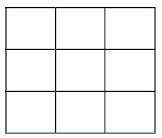
it is clear from the image that there are 3 rows. It is mentioned in the question that each row has at least 1 ball. So you have 5 balls to play with and 3 rows how are you going to distribute them?
User avatar
AR15J
Joined: 21 Aug 2016
Last visit: 15 May 2024
Posts: 210
Own Kudos:
Given Kudos: 145
Location: India
GPA: 3.9
WE:Information Technology (Computer Software)
Products:
Posts: 210
Kudos: 163
Kudos
Add Kudos
Bookmarks
Bookmark this Post
niks18
AR15J
It is not mentioned in the ques that one cell can have only one ball. Both the solution mentioned above are based on this assumption. How did we assume it? Please help.. This assumptions are killing me :(

hi AR15J

it is clear from the image that there are 3 rows. It is mentioned in the question that each row has at least 1 ball. So you have 5 balls to play with and 3 rows how are you going to distribute them?


Thanks Niks for your reply.. I understand this.. But why can't we place more than one ball in a cell. For example , to calculate -in how many ways 2 balls can be place in a row.. why the no of ways are -- 3c1*3c2? (selecting a row and then selecting two columns from that row to place two balls)

Why are we not considering the case when both the ball are in the same cell of a row? If we consider this, total cases will be 3c1*3c2+3c1
User avatar
niks18
User avatar
Retired Moderator
Joined: 25 Feb 2013
Last visit: 30 Jun 2021
Posts: 862
Own Kudos:
Given Kudos: 54
Location: India
GPA: 3.82
Products:
Posts: 862
Kudos: 1,805
Kudos
Add Kudos
Bookmarks
Bookmark this Post
AR15J
niks18
AR15J
It is not mentioned in the ques that one cell can have only one ball. Both the solution mentioned above are based on this assumption. How did we assume it? Please help.. This assumptions are killing me :(

hi AR15J

it is clear from the image that there are 3 rows. It is mentioned in the question that each row has at least 1 ball. So you have 5 balls to play with and 3 rows how are you going to distribute them?


Thanks Niks for your reply.. I understand this.. But why can't we place more than one ball in a cell. For example , to calculate -in how many ways 2 balls can be place in a row.. why the no of ways are -- 3c1*3c2? (selecting a row and then selecting two columns from that row to place two balls)

Why are we not considering the case when both the ball are in the same cell of a row? If we consider this, total cases will be 3c1*3c2+3c1

Hi AR15J

ohhhk now I got your point. So ideally a standard GMAT official question would have stated clearly that 1 cell contains 1 ball only. The solutions above have also assumed that 1 cell contains 1 ball only. As this is a question from an unknown source, i would suggest let's not think too much into that ;)

Hi Bunuel
what are your thoughts about the language of the question?
User avatar
testcracker
Joined: 24 Mar 2015
Last visit: 02 Dec 2024
Posts: 199
Own Kudos:
Given Kudos: 541
Status:love the club...
Posts: 199
Kudos: 135
Kudos
Add Kudos
Bookmarks
Bookmark this Post
AR15J
niks18
AR15J
It is not mentioned in the ques that one cell can have only one ball. Both the solution mentioned above are based on this assumption. How did we assume it? Please help.. This assumptions are killing me :(

hi AR15J

it is clear from the image that there are 3 rows. It is mentioned in the question that each row has at least 1 ball. So you have 5 balls to play with and 3 rows how are you going to distribute them?


Thanks Niks for your reply.. I understand this.. But why can't we place more than one ball in a cell. For example , to calculate -in how many ways 2 balls can be place in a row.. why the no of ways are -- 3c1*3c2? (selecting a row and then selecting two columns from that row to place two balls)

Why are we not considering the case when both the ball are in the same cell of a row? If we consider this, total cases will be 3c1*3c2+3c1

what is more, it is stated that EACH ROW NOT EACH CELL must contain at least 1 ball

so we can first place 1 ball in each row, as there are 3 rows, we are left with (5 - 3) = 2 balls

now, as the rows and balls are identical, we can place the 2 balls in 3 rows as under

4!
____
2!2!

= 6

????
:(
avatar
jim441
Joined: 29 Apr 2022
Last visit: 14 Dec 2023
Posts: 179
Own Kudos:
56
 [3]
Given Kudos: 276
Location: India
Concentration: Finance, Marketing
GMAT 1: 690 Q48 V35 (Online)
WE:Engineering (Manufacturing)
GMAT 1: 690 Q48 V35 (Online)
Posts: 179
Kudos: 56
 [3]
2
Kudos
Add Kudos
1
Bookmarks
Bookmark this Post
There are three throws and each row must have atleast one ball.
So, there are two cases:

1. One row has 3 balls, other two rows have one ball each.
2. Two rows have 2 balls each and one of the row has one ball.

so for case 1:
Row with three balls: 1 possible way
Row with one ball: 3C1 (selecting one of three cells of the row)
and now arrangement of the rows: 3!/2!

case 1 = 1*3C1*3C1*3!/2! = 27

case 2:
Row with one balls: 3C1
Row with two ball: 3C2 (selecting two of three cells of the row)
and now arrangement of the rows: 3!/2!

case 2 = 3C1*3C2*3C2*3!/2! = 81

so total cases = 27+81 = 108
avatar
DhanyaAbhirami
Joined: 09 Mar 2024
Last visit: 16 Mar 2026
Posts: 55
Own Kudos:
Given Kudos: 14
Posts: 55
Kudos: 43
Kudos
Add Kudos
Bookmarks
Bookmark this Post
Is there a way to assign 1 ball to each row and then assign remaining 2 balls ?
User avatar
aneebunnee
Joined: 30 Jul 2024
Last visit: 23 Mar 2025
Posts: 2
Given Kudos: 9
Posts: 2
Kudos: 0
Kudos
Add Kudos
Bookmarks
Bookmark this Post
I used the following approach and got a completely wrong answer. Could someone help me understand where I'm going wrong?

As there must be one ball in each row, I assumed we can first place one ball in each in three different ways:
so 3 x 3 x 3 = 27

Then, as there are 6 spots remaining with 2 balls, can we not do 6C2? But that gives an answer of 15, and multiplying that with 27 obviously gives a far too big answer.

Where did I go wrong in my thought process?
User avatar
Bunuel
User avatar
Math Expert
Joined: 02 Sep 2009
Last visit: 23 Apr 2026
Posts: 109,802
Own Kudos:
Given Kudos: 105,868
Products:
Expert
Expert reply
Active GMAT Club Expert! Tag them with @ followed by their username for a faster response.
Posts: 109,802
Kudos: 810,895
Kudos
Add Kudos
Bookmarks
Bookmark this Post
aneebunnee

In how many different ways can all of 5 identical balls be placed in the cells shown in the figure such that each row contains at least 1 ball?

(A) 64
(B) 81
(C) 84
(D) 96
(E) 108

I used the following approach and got a completely wrong answer. Could someone help me understand where I'm going wrong?

As there must be one ball in each row, I assumed we can first place one ball in each in three different ways:
so 3 x 3 x 3 = 27

Then, as there are 6 spots remaining with 2 balls, can we not do 6C2? But that gives an answer of 15, and multiplying that with 27 obviously gives a far too big answer.

Where did I go wrong in my thought process?

For example, if with 3 * 3 * 3 you place a ball in the first cell of each row and then use 6C2 to place the remaining two balls in the last two cells of the first two rows, we get the following case:

Attachment:
GMAT-Club-Forum-3zpynmsd.png
GMAT-Club-Forum-3zpynmsd.png [ 3.5 KiB | Viewed 2168 times ]

However, if with 3 * 3 * 3 you place a ball in the last two cells of the first two rows and the first cell of the third row, and then use 6C2 to place the remaining two balls in the first cells of the first two rows, we get the following case:

Attachment:
GMAT-Club-Forum-864xfmtp.png
GMAT-Club-Forum-864xfmtp.png [ 3.46 KiB | Viewed 2166 times ]

As we can see, these two cases are identical, leading to overcounting.
User avatar
bumpbot
User avatar
Non-Human User
Joined: 09 Sep 2013
Last visit: 04 Jan 2021
Posts: 38,963
Own Kudos:
Posts: 38,963
Kudos: 1,117
Kudos
Add Kudos
Bookmarks
Bookmark this Post
Automated notice from GMAT Club BumpBot:

A member just gave Kudos to this thread, showing it’s still useful. I’ve bumped it to the top so more people can benefit. Feel free to add your own questions or solutions.

This post was generated automatically.
Moderators:
Math Expert
109802 posts
Tuck School Moderator
853 posts