Last visit was: 24 Apr 2026, 05:35 It is currently 24 Apr 2026, 05:35
Close
GMAT Club Daily Prep
Thank you for using the timer - this advanced tool can estimate your performance and suggest more practice questions. We have subscribed you to Daily Prep Questions via email.

Customized
for You

we will pick new questions that match your level based on your Timer History

Track
Your Progress

every week, we’ll send you an estimated GMAT score based on your performance

Practice
Pays

we will pick new questions that match your level based on your Timer History
Not interested in getting valuable practice questions and articles delivered to your email? No problem, unsubscribe here.
Close
Request Expert Reply
Confirm Cancel
User avatar
tt11234
Joined: 21 Feb 2010
Last visit: 30 Oct 2011
Posts: 146
Own Kudos:
102
 [27]
Given Kudos: 1
GPA: 3.8
Posts: 146
Kudos: 102
 [27]
1
Kudos
Add Kudos
26
Bookmarks
Bookmark this Post
Most Helpful Reply
User avatar
Bunuel
User avatar
Math Expert
Joined: 02 Sep 2009
Last visit: 24 Apr 2026
Posts: 109,811
Own Kudos:
810,965
 [6]
Given Kudos: 105,870
Products:
Expert
Expert reply
Active GMAT Club Expert! Tag them with @ followed by their username for a faster response.
Posts: 109,811
Kudos: 810,965
 [6]
1
Kudos
Add Kudos
5
Bookmarks
Bookmark this Post
General Discussion
User avatar
metallicafan
User avatar
Retired Moderator
Joined: 04 Oct 2009
Last visit: 26 Aug 2020
Posts: 755
Own Kudos:
Given Kudos: 109
Status:2000 posts! I don't know whether I should feel great or sad about it! LOL
Location: Peru
Concentration: Finance, SMEs, Developing countries, Public sector and non profit organizations
Schools:Harvard, Stanford, Wharton, MIT & HKS (Government)
GPA: 4.0
WE 1: Economic research
WE 2: Banking
WE 3: Government: Foreign Trade and SMEs
Posts: 755
Kudos: 4,502
Kudos
Add Kudos
Bookmarks
Bookmark this Post
User avatar
jlgdr
Joined: 06 Sep 2013
Last visit: 24 Jul 2015
Posts: 1,302
Own Kudos:
Given Kudos: 355
Concentration: Finance
Posts: 1,302
Kudos: 2,977
Kudos
Add Kudos
Bookmarks
Bookmark this Post
Nice. Can figure also be an isosceles trapezoid?

For statement 1 we have that diagonals are perpendicular

For statement 2 we have that the sum of the bases equal to sum of the legs

Therefore E

Please advice
Cheers!
J :)
avatar
neha22yadav
Joined: 15 May 2015
Last visit: 26 May 2016
Posts: 4
Given Kudos: 6
Posts: 4
Kudos: 0
Kudos
Add Kudos
Bookmarks
Bookmark this Post
Bunuel
tt11234
If ABCD is a quadrilateral, is AB=BC=CD=DA ?

1.AC is perpendicular to BD
2.AB+CD=BC+DA

please explain!! thanks~

If ABCD is a quadrilateral, is AB=BC=CD=DA ?

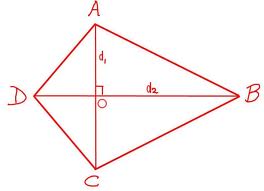
(1) AC is perpendicular to BD. The diagonals are perpendicular to each other: ABCD could be a kite (answer NO), a rhombus (answer YES) or a square, which is just a special type of rhombus (answer YES). Not sufficient.

(2) AB+CD=BC+DA. The sum of opposite sides are equal. Clearly insufficient.

(1)+(2) ABCD could be a kite (see the diagram below) - answer NO or a square/rhombus - answer YES. Not sufficient.

Answer: E.

Hi Bunuel,

Could you please help me understand why can't ABCD be a kite?
Thanks.
User avatar
Bunuel
User avatar
Math Expert
Joined: 02 Sep 2009
Last visit: 24 Apr 2026
Posts: 109,811
Own Kudos:
Given Kudos: 105,870
Products:
Expert
Expert reply
Active GMAT Club Expert! Tag them with @ followed by their username for a faster response.
Posts: 109,811
Kudos: 810,965
Kudos
Add Kudos
Bookmarks
Bookmark this Post
neha22yadav
Bunuel
tt11234
If ABCD is a quadrilateral, is AB=BC=CD=DA ?

1.AC is perpendicular to BD
2.AB+CD=BC+DA

please explain!! thanks~

If ABCD is a quadrilateral, is AB=BC=CD=DA ?

(1) AC is perpendicular to BD. The diagonals are perpendicular to each other: ABCD could be a kite (answer NO), a rhombus (answer YES) or a square, which is just a special type of rhombus (answer YES). Not sufficient.

(2) AB+CD=BC+DA. The sum of opposite sides are equal. Clearly insufficient.

(1)+(2) ABCD could be a kite (see the diagram below) - answer NO or a square/rhombus - answer YES. Not sufficient.

Answer: E.

Hi Bunuel,

Could you please help me understand why can't ABCD be a kite?
Thanks.

The solution says that ABCD can be a kite.
User avatar
mvictor
User avatar
Board of Directors
Joined: 17 Jul 2014
Last visit: 14 Jul 2021
Posts: 2,118
Own Kudos:
Given Kudos: 236
Location: United States (IL)
Concentration: Finance, Economics
GMAT 1: 650 Q49 V30
GPA: 3.92
WE:General Management (Transportation)
Products:
GMAT 1: 650 Q49 V30
Posts: 2,118
Kudos: 1,277
Kudos
Add Kudos
Bookmarks
Bookmark this Post
damn, please mention that the diagonals are perpendicular. I was thinking, how the hell can 2 different sides be perpendicular to each other? :D
1 - well, clearly insufficient.
2 - AB+CD=BC+DA - it might be a rectangle or a square, in which all sides are equal. not sufficient.

1+2 - it might be a square, or a quadrilateral consisting of 2 triangles, 2 small and 2 big right triangles 30-60-90, with hypotheses equal to each other. so insufficient.
User avatar
ENGRTOMBA2018
Joined: 20 Mar 2014
Last visit: 01 Dec 2021
Posts: 2,319
Own Kudos:
Given Kudos: 816
Concentration: Finance, Strategy
GMAT 1: 750 Q49 V44
GPA: 3.7
WE:Engineering (Aerospace and Defense)
Products:
GMAT 1: 750 Q49 V44
Posts: 2,319
Kudos: 3,890
Kudos
Add Kudos
Bookmarks
Bookmark this Post
mvictor
damn, please mention that the diagonals are perpendicular. I was thinking, how the hell can 2 different sides be perpendicular to each other? :D
1 - well, clearly insufficient.
2 - AB+CD=BC+DA - it might be a rectangle or a square, in which all sides are equal. not sufficient.

1+2 - it might be a square, or a quadrilateral consisting of 2 triangles, 2 small and 2 big right triangles 30-60-90, with hypotheses equal to each other. so insufficient.

It is given that ABCD is a quadrilateral and as AC is perpendicular to BD, it is implied that diagonals are perpendiculars. This is the usual interpretation. Why do you need it to be mentioned explicitly that "diagonals are perpendicular"?
User avatar
mvictor
User avatar
Board of Directors
Joined: 17 Jul 2014
Last visit: 14 Jul 2021
Posts: 2,118
Own Kudos:
Given Kudos: 236
Location: United States (IL)
Concentration: Finance, Economics
GMAT 1: 650 Q49 V30
GPA: 3.92
WE:General Management (Transportation)
Products:
GMAT 1: 650 Q49 V30
Posts: 2,118
Kudos: 1,277
Kudos
Add Kudos
Bookmarks
Bookmark this Post
Engr2012
mvictor
damn, please mention that the diagonals are perpendicular. I was thinking, how the hell can 2 different sides be perpendicular to each other? :D
1 - well, clearly insufficient.
2 - AB+CD=BC+DA - it might be a rectangle or a square, in which all sides are equal. not sufficient.

1+2 - it might be a square, or a quadrilateral consisting of 2 triangles, 2 small and 2 big right triangles 30-60-90, with hypotheses equal to each other. so insufficient.

It is given that ABCD is a quadrilateral and as AC is perpendicular to BD, it is implied that diagonals are perpendiculars. This is the usual interpretation. Why do you need it to be mentioned explicitly that "diagonals are perpendicular"?

IDK, I just spent additional seconds trying to figure out wtf is actually meant :)
User avatar
MathRevolution
User avatar
Math Revolution GMAT Instructor
Joined: 16 Aug 2015
Last visit: 27 Sep 2022
Posts: 10,063
Own Kudos:
Given Kudos: 4
GMAT 1: 760 Q51 V42
GPA: 3.82
Expert
Expert reply
GMAT 1: 760 Q51 V42
Posts: 10,063
Kudos: 20,000
Kudos
Add Kudos
Bookmarks
Bookmark this Post
Forget conventional ways of solving math questions. In DS, Variable approach is the easiest and quickest way to find the answer without actually solving the problem. Remember equal number of variables and independent equations ensures a solution.

If ABCD is a quadrilateral, is AB=BC=CD=DA ?

(1) AC is perpendicular to BD
(2) AB+CD=BC+DA

There are 5 variables (4 sides, 1 diagonal) in a quadrilateral, so we need 5 equations in order to solve the question, but only 2 equations are given from the 2 conditions, so there is high chance (E) will be our answer.
Even if we combine the 2 conditions together, they are insufficient, so (E) becomes the answer.

For cases where we need 3 more equation, such as original conditions with “3 variables”, or “4 variables and 1 equation”, or “5 variables and 2 equations”, we have 1 equation each in both 1) and 2). Therefore, there is 80% chance that E is the answer (especially about 90% of 2 by 2 questions where there are more than 3 variables), while C has 15% chance. These two are the majority. In case of common mistake type 3,4, the answer may be from A, B or D but there is only 5% chance. Since E is most likely to be the answer using 1) and 2) separately according to DS definition (It saves us time). Obviously there may be cases where the answer is A, B, C or D.
avatar
neha22yadav
Joined: 15 May 2015
Last visit: 26 May 2016
Posts: 4
Given Kudos: 6
Posts: 4
Kudos: 0
Kudos
Add Kudos
Bookmarks
Bookmark this Post
The solution says that ABCD can be a kite.[/quote]


Sorry my bad.. and thanks
User avatar
Nunuboy1994
Joined: 12 Nov 2016
Last visit: 24 Apr 2019
Posts: 554
Own Kudos:
Given Kudos: 167
Location: United States
Schools: Yale '18
GMAT 1: 650 Q43 V37
GRE 1: Q157 V158
GPA: 2.66
Schools: Yale '18
GMAT 1: 650 Q43 V37
GRE 1: Q157 V158
Posts: 554
Kudos: 126
Kudos
Add Kudos
Bookmarks
Bookmark this Post
tt11234
If ABCD is a quadrilateral, is AB=BC=CD=DA ?

(1) AC is perpendicular to BD
(2) AB+CD=BC+DA

There's simply not enough because two diagonals being perpendicular does not mean the same thing as those diagonals being perpendicular bisectors. Bunuel am I right? Because if all we know is that two diagonals are perpendicular then the quadrilateral could be a kite, which graphically makes a lot of sense. However, if we know that the two diagonals bisect eachother, or more precisely are perpendicular bisectors, then we know for sure that that quadrilateral is a rhombus because the definition of a perpendicular bisector simply means cutting a quadrilateral into two equal pieces at 90 degrees. And that furthermore every square is a rhombus but not all rhombuses are squares?
User avatar
Bunuel
User avatar
Math Expert
Joined: 02 Sep 2009
Last visit: 24 Apr 2026
Posts: 109,811
Own Kudos:
Given Kudos: 105,870
Products:
Expert
Expert reply
Active GMAT Club Expert! Tag them with @ followed by their username for a faster response.
Posts: 109,811
Kudos: 810,965
Kudos
Add Kudos
Bookmarks
Bookmark this Post
Nunuboy1994
tt11234
If ABCD is a quadrilateral, is AB=BC=CD=DA ?

(1) AC is perpendicular to BD
(2) AB+CD=BC+DA

There's simply not enough because two diagonals being perpendicular does not mean the same thing as those diagonals being perpendicular bisectors. Bunuel am I right? Because if all we know is that two diagonals are perpendicular then the quadrilateral could be a kite, which graphically makes a lot of sense. However, if we know that the two diagonals bisect eachother, or more precisely are perpendicular bisectors, then we know for sure that that quadrilateral is a rhombus because the definition of a perpendicular bisector simply means cutting a quadrilateral into two equal pieces at 90 degrees. And that furthermore every square is a rhombus but not all rhombuses are squares?

A rhombus is a quadrilateral with all sides equal in length.
A square is a quadrilateral with all sides equal in length and all interior angles right angles.

Thus a rhombus is not a square unless the angles are all right angles.
A square however is a rhombus since all four of its sides are of the same length.
User avatar
bumpbot
User avatar
Non-Human User
Joined: 09 Sep 2013
Last visit: 04 Jan 2021
Posts: 38,973
Own Kudos:
Posts: 38,973
Kudos: 1,117
Kudos
Add Kudos
Bookmarks
Bookmark this Post
Automated notice from GMAT Club BumpBot:

A member just gave Kudos to this thread, showing it’s still useful. I’ve bumped it to the top so more people can benefit. Feel free to add your own questions or solutions.

This post was generated automatically.
Moderators:
Math Expert
109811 posts
498 posts
212 posts