Events & Promotions
| Last visit was: 14 Sep 2026, 09:03 |
It is currently 14 Sep 2026, 09:03 |
|
|

GMAT Club Daily Prep
Thank you for using the timer - this advanced tool can estimate your performance and suggest more practice questions. We have subscribed you to Daily Prep Questions via email.
Customized
for You
Track
Your Progress
Practice
Pays
Not interested in getting valuable practice questions and articles delivered to your email? No problem, unsubscribe here.
 Sep 15
07:00 PM EDT
-09:00 PM EST
Elite scores are possible when you enroll in a powerful GMAT course, taught live online + 6 months access to TTP OnDemand video courses included! Class starts Tues/Thurs Sept. 15, 2026 - Nov. 15, 2027, 7:00pm-9:00pm EST Sep 21
07:00 PM EDT
-10:00 PM EDT
Boost your GMAT score in less than one month in a live online class + 6 months access to TTP OnDemand video courses included! Class starts Mon, Tues, Wed, Thur, Fri Sept. 21, 2026 - Oct. 9, 2027, 7:00pm-10:00pm EST

 Updated on: 25 Jul 2018, 06:34
Added final Version (4.0) at the end of this post- Payal
5 STRATEGIES THAT GMAT USES TO DISTORT MEANING
A lot of you are re-taking the GMAT in December and have somewhat limited experience on how to deal with the “recent” meaning based SC questions in which the answer choices may contain more than one grammatically correct answer choice. In this case, the student is often confused as to how to select the correct answer choice. This post is designed to address the same. Read through the post to understand
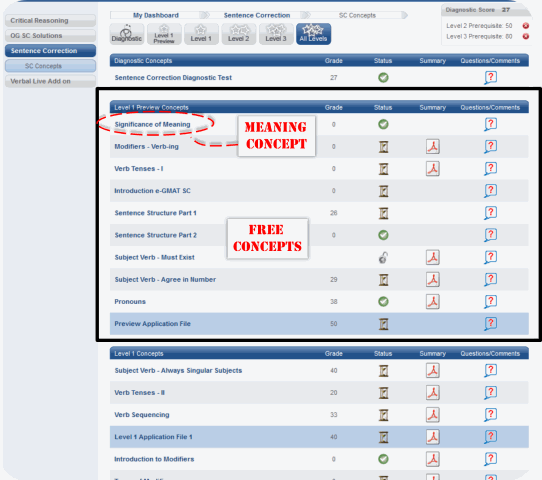
Note, in addition to this article, we also have a full (audio-visual) concept available free of charge to all registered users. I recommend you also review that.
HOW IS THIS ARTICLE ORGANIZED
My initial forum post today will summarize the 5 strategies and describe the first strategy – placement of modifiers - in detail. The second strategy will be discussed on 9th December and so on. Those who want to be notified as soon as some exercise problem is posted can follow me on the forum.

THE 5 STRATEGIES GMAC USES TO DISTORT MEANING
GMAT Sentence Correction questions test the test taker on how effectively he/she can express the idea or relationship using correct expression conforming to the rules of standard written English. Many times an answer choice may be grammatically correct but may not be the correct choice because it distorts the intended logical meaning of the original sentence. The table below provides a quick summary on strategies that GMAC deploys to achieve the same.
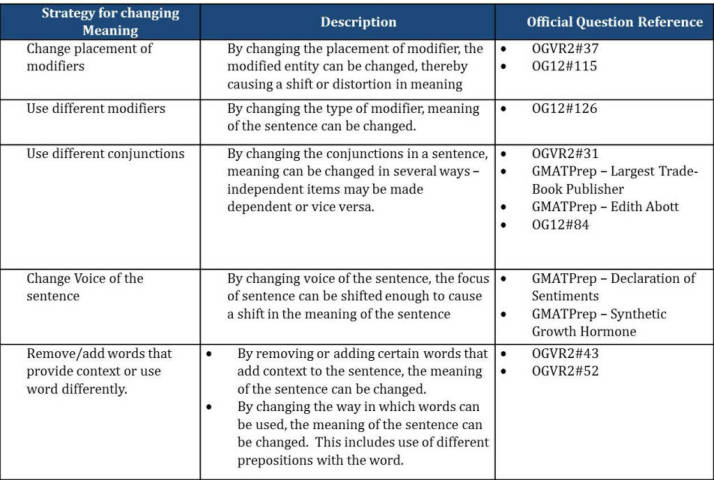
STRATEGY 1 - CHANGE PLACEMENT OF MODIFIERS
How does GMAC use this strategy: Modifiers provide additional or descriptive information about another entity in the sentence. So if these modifiers are placed at different locations in the sentence, the meaning of the sentence changes. This is how GMAC may introduce such meaning based errors. In these cases, both the placements result in logical meaning but only one is correct and that is determined by what the intended meaning of the sentence is.
Lets take a simple example below:

So here is the scene that I picture. Cat is running after the rat. Cat has black stripes. Now lets check this sentence below.

Now the scene that I picture is – cat is running after the rat. The rat has black stripes. So per this sentence, I no longer have any information about the stripes on the cat. But I have information about the stripes on the rat.
So simply by placing “with black stripes” differently, the meaning communicated by the sentence changes.
This is exactly how GMAT may introduce a difference in meaning

OFFICIAL QUESTION 1 – VERBAL REVIEW 2 – Q#37
Now lets take an official question:
Some buildings that were destroyed and heavily damaged in the earthquake last year were constructed in violation of the city's building code.
Intended meaning from Choice A: The intended meaning of the sentence from choice A can be inferred as follows:
1. Some buildings had been destroyed in the earthquake last year.
2. (Prior to the destruction) These buildings were constructed in violation of the city's building code

Note that this sentence has two verbs and based on where “last year” is placed, it can modify either of the two verbs.
Notice that choice A is incorrect since it uses the simple past – were constructed. The correct verb should be “had been constructed” to illustrate correct sequencing with respect to “were destroyed” to show that the buildings were constructed prior to the destruction.
Correct: Choice B corrects this error and is the correct choice.
Grammatically Correct but Incorrect choice (E)– Notice how in choice E the test takers have cleverly moved “last year” in the clause that with SV pair - “some of buildings had been constructed” such that it now describes when some of these buildings were constructed. It no longer describes the timing of the earthquakes.

The intended meaning communicated by Choice E is the following:
1. Some of the buildings had been constructed in violation of city’s building code last year.
2. These buildings were destroyed in the earthquake.
Note that in choice E we now know that the buildings were constructed last year. This is the information that we did not have in choice A. Thus, the meaning communicated by this choice is certainly different from the meaning communicated by choice A. Hence, while choice E is grammatically correct, it changes the logical intended meaning and is not the correct choice.
PS: Access our free concepts on sentence structure if you want to know how to break a compound sentence into simple sentences. Just register at e-gmat.com
OFFICIAL QUESTION 2 – OG 12 – Q#112
Now let’s take another official question. This time from OG 12.
Gall's hypothesis of there being different mental functions localized in different parts of the brain is widely accepted today.
Intended meaning from Choice A: The sentence is written in an awkward manner but we can certainly infer the intended meaning.
- A specific hypothesis of Gall is widely accepted today.
- What is the hypothesis? Per this hypothesis - different mental functions are localized in different parts of the brain.
Notice that choice A communicates precisely what the hypothesis is.
Error in the original choice: Choice A is not the correct choice since it is not written in concise manner. The expression “of there being” is very wordy.
Choice C corrects this error and is the correct choice.

Grammatically Correct but Incorrect choice B: Notice how the test makers have moved the descriptive “that” modifier here. Also, the information presented by “that modifier” has also been changed to make logical sense in the changed context. The change in meaning in choice B happens because of placement and wording of “that” modifier. Instead of now stating the hypothesis, now “that” modifier talks about the mental functions. The meaning communicated by choice B is as follows:


HOW TO EVALUATE CHOICES THAT CHANGE THE MEANING?
1. Understand the logical meaning of the original choice. (note placement of modifiers)
2. Look for the answer choice that best communicates the same meaning in un-ambiguous and grammatically correct manner.
3. Ignore choices that may be grammatically correct but change the meaning.
PRACTICE PROBLEMS
e-GMAT course has 33 practice problems. e-GMAT customers can see the list by clicking the link below.
https://e-gmat.com/blogs/?p=745
We have also posted 2 new problems at the links below. Try them out.
5 STRATEGIES THAT GMAT USES TO DISTORT MEANING
A lot of you are re-taking the GMAT in December and have somewhat limited experience on how to deal with the “recent” meaning based SC questions in which the answer choices may contain more than one grammatically correct answer choice. In this case, the student is often confused as to how to select the correct answer choice. This post is designed to address the same. Read through the post to understand
- 1. 5 Strategies that GMAC uses to distort the intended logical meaning of the sentence in a “grammatically correct” answer choice.
2. A process to approach SC questions to answer such questions successfully
3. Official examples and exercise questions for practice
Note, in addition to this article, we also have a full (audio-visual) concept available free of charge to all registered users. I recommend you also review that.
HOW IS THIS ARTICLE ORGANIZED
My initial forum post today will summarize the 5 strategies and describe the first strategy – placement of modifiers - in detail. The second strategy will be discussed on 9th December and so on. Those who want to be notified as soon as some exercise problem is posted can follow me on the forum.
THE 5 STRATEGIES GMAC USES TO DISTORT MEANING
GMAT Sentence Correction questions test the test taker on how effectively he/she can express the idea or relationship using correct expression conforming to the rules of standard written English. Many times an answer choice may be grammatically correct but may not be the correct choice because it distorts the intended logical meaning of the original sentence. The table below provides a quick summary on strategies that GMAC deploys to achieve the same.
STRATEGY 1 - CHANGE PLACEMENT OF MODIFIERS
How does GMAC use this strategy: Modifiers provide additional or descriptive information about another entity in the sentence. So if these modifiers are placed at different locations in the sentence, the meaning of the sentence changes. This is how GMAC may introduce such meaning based errors. In these cases, both the placements result in logical meaning but only one is correct and that is determined by what the intended meaning of the sentence is.
Lets take a simple example below:
So here is the scene that I picture. Cat is running after the rat. Cat has black stripes. Now lets check this sentence below.
Now the scene that I picture is – cat is running after the rat. The rat has black stripes. So per this sentence, I no longer have any information about the stripes on the cat. But I have information about the stripes on the rat.
So simply by placing “with black stripes” differently, the meaning communicated by the sentence changes.
This is exactly how GMAT may introduce a difference in meaning
OFFICIAL QUESTION 1 – VERBAL REVIEW 2 – Q#37
Now lets take an official question:
Some buildings that were destroyed and heavily damaged in the earthquake last year were constructed in violation of the city's building code.
- A. Some buildings that were destroyed and heavily damaged in the earthquake last year were
B. Some buildings that were destroyed or heavily damaged in the earthquake last year had been
C. Some buildings that the earthquake destroyed and heavily damaged last year have been
D. Last year the earthquake destroyed or heavily damaged some buildings that have been
E. Last year some of the buildings that were destroyed or heavily damaged in the earthquake had been
Intended meaning from Choice A: The intended meaning of the sentence from choice A can be inferred as follows:
1. Some buildings had been destroyed in the earthquake last year.
2. (Prior to the destruction) These buildings were constructed in violation of the city's building code
Note that this sentence has two verbs and based on where “last year” is placed, it can modify either of the two verbs.
Notice that choice A is incorrect since it uses the simple past – were constructed. The correct verb should be “had been constructed” to illustrate correct sequencing with respect to “were destroyed” to show that the buildings were constructed prior to the destruction.
Correct: Choice B corrects this error and is the correct choice.
Grammatically Correct but Incorrect choice (E)– Notice how in choice E the test takers have cleverly moved “last year” in the clause that with SV pair - “some of buildings had been constructed” such that it now describes when some of these buildings were constructed. It no longer describes the timing of the earthquakes.
The intended meaning communicated by Choice E is the following:
1. Some of the buildings had been constructed in violation of city’s building code last year.
2. These buildings were destroyed in the earthquake.
Note that in choice E we now know that the buildings were constructed last year. This is the information that we did not have in choice A. Thus, the meaning communicated by this choice is certainly different from the meaning communicated by choice A. Hence, while choice E is grammatically correct, it changes the logical intended meaning and is not the correct choice.
PS: Access our free concepts on sentence structure if you want to know how to break a compound sentence into simple sentences. Just register at e-gmat.com
OFFICIAL QUESTION 2 – OG 12 – Q#112
Now let’s take another official question. This time from OG 12.
Gall's hypothesis of there being different mental functions localized in different parts of the brain is widely accepted today.
- A. of there being different mental functions localized in different parts of the brain is widely accepted today
B. of different mental functions that are localized in different parts of the brain is widely accepted today
C. that different mental functions are localized in different parts of the brain is widely accepted today
D. which is that there are different mental functions localized in different parts of the brain is widely accepted today
E. which is widely accepted today is that there are different mental functions localized in different parts of the brain
Intended meaning from Choice A: The sentence is written in an awkward manner but we can certainly infer the intended meaning.
- A specific hypothesis of Gall is widely accepted today.
- What is the hypothesis? Per this hypothesis - different mental functions are localized in different parts of the brain.
Notice that choice A communicates precisely what the hypothesis is.
Error in the original choice: Choice A is not the correct choice since it is not written in concise manner. The expression “of there being” is very wordy.
Choice C corrects this error and is the correct choice.
Grammatically Correct but Incorrect choice B: Notice how the test makers have moved the descriptive “that” modifier here. Also, the information presented by “that modifier” has also been changed to make logical sense in the changed context. The change in meaning in choice B happens because of placement and wording of “that” modifier. Instead of now stating the hypothesis, now “that” modifier talks about the mental functions. The meaning communicated by choice B is as follows:
- • Gall has certain hypothesis about different mental functions.
• This hypothesis is widely accepted today.
• These different mental functions are localized in different parts of the brain
• Notice carefully that per this choice we do not know precisely what the hypothesis is. All we know is that some hypothesis of different mental functions is widely accepted and we know where the different mental functions are located.
HOW TO EVALUATE CHOICES THAT CHANGE THE MEANING?
1. Understand the logical meaning of the original choice. (note placement of modifiers)
2. Look for the answer choice that best communicates the same meaning in un-ambiguous and grammatically correct manner.
3. Ignore choices that may be grammatically correct but change the meaning.
PRACTICE PROBLEMS
e-GMAT course has 33 practice problems. e-GMAT customers can see the list by clicking the link below.
https://e-gmat.com/blogs/?p=745
We have also posted 2 new problems at the links below. Try them out.
- https://gmatclub.com/forum/meaning-based ... 24298.html
https://gmatclub.com/forum/meaning-based ... 24297.html
Attachments
File comment: Final document summarizing all strategies and exercises.
 5 Strategies that GMAT uses to distort Meaning - V4.0.pdf [1.1 MiB]
Downloaded 5638 times
5 Strategies that GMAT uses to distort Meaning - V3.0.pdf [1.01 MiB]
Downloaded 2748 times
STRATEGY 2 - USE OF MODIFIERS
How does GMAC use this strategy: There are a finite number of commonly used modifiers. These modifiers typically play well-defined role. You may find below the list of modifiers and what they typically modify. e-GMAT customers may view the concept file “Types of Modifiers” to find more details on this topic.
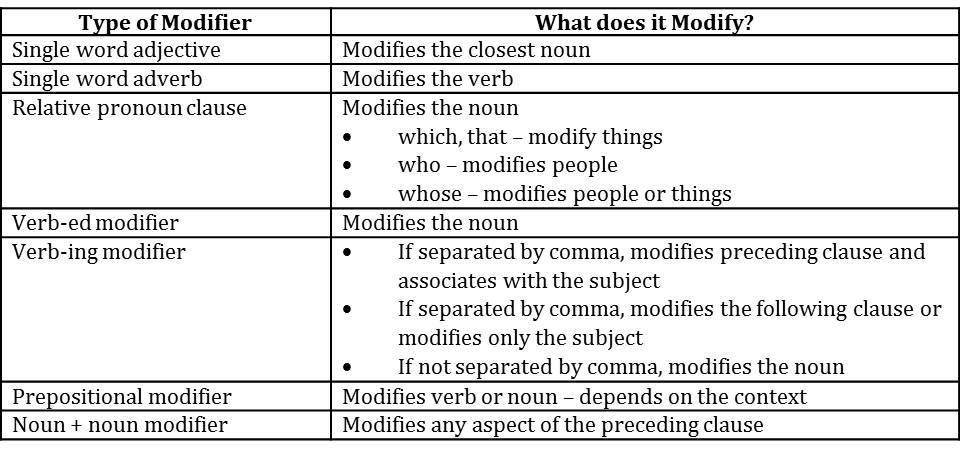
Lets take a simple example below:

So here is the scene that I picture. Cat is swift. It caught the rat. Now lets check this sentence below.

Now the scene that I picture is – cat swiftly grabbed the rat. So per this sentence, I no longer know whether the cat is generally swift or not. But I do know that the cat acted swiftly and caught the rat.
So changing the modifier from “adjective” to “adverb” leads to change in the meaning communicated by the sentence. This is exactly how GMAT may introduce a difference in meaning.
OFFICIAL QUESTION 1 – OG12 – Q#126
Now lets take an official question:
The use of lie detectors is based on the assumption that lying produces emotional reactions in an individual that, in turn, create unconscious physiological responses.
Intended meaning from Choice A: The intended meaning of the sentence from choice A can be inferred as follows:
1. Use of lie detectors is based on a certain assumption. Here is the assumption
2. Lying produces emotional reactions in an individual
3. These emotional reactions then create unconscious physiological responses.

Note that “that clause” in this sentence clearly modifies – emotional reactions. Yes, typically relative pronoun modifiers modify the closest noun. However, they can also modify slightly far away noun when this noun is the head of the noun phrase and when such modification makes sense. E-GMAT customers can find detailed description of this concept in the concept file – Modifiers – Relative Pronouns. Also, I cover this topic in excruciating detail in one of the live sessions in the Verbal Live Complete.
This choice is absolutely correct. There are no grammatical and meaning based errors in this sentence.
Grammatically Correct but Incorrect choice (E)– – Notice how in choice E the test makers have changed the modifier from “that clause” to “who clause”. See, “who” modifiers cannot modify things. They can only modify people. So by changing ‘thing’ modifying modifier to ‘person’ modifying modifier, now automatically the entity being modified changes to “individual”. Now the modifier no longer modifies “emotional reactions”. This changes the meaning. This results in different yet still logical meaning.

The intended meaning communicated by Choice E is the following:
1. Use of lie detectors is based on a certain assumption. Here is the assumption:
2. Lying produces emotional reactions in an individual
3. The individual then creates unconscious physiological responses.
Note that without subject matter knowledge, the above cause and effect sequence appears to be logical. Lying produces certain reactions in the individual and then the individual unknowingly creates certain type of responses.
Thus, the meaning communicated by this choice is certainly different from the meaning communicated by choice A. Hence, while choice E is grammatically correct, it changes the logical intended meaning and is not the correct choice.
OFFICIAL QUESTION 2 – OG Verbal Review 2 - Q#108
Now let’s take another official question.
Sound can travel through water for enormous distances, prevented from dissipating its acoustic energy as a result of boundaries in the ocean created by water layers of different temperatures and densities.
Intended meaning from Choice A: The sentence is written in an awkward manner but we can certainly infer the intended meaning.
1. Sound can travel through water for long distances.
2. The acoustic energy of sound is prevented from dissipating because of the boundaries in the ocean. These boundaries are created by water layers of different temperatures and densities.
Now it is logical to say that because of statement 2, statement 1 happens. That is because the acoustic energy of sound is not dissipated easily, sound can travel through water for long distances. At this point you can picture in your mind that these two facts can be connected in multiple ways:
1. Use connectors that state reason such as because, since.
2. Use modifier that extends the thought of preceding clause.
Error in the original choice: Choice A is not the correct choice since it is not written properly.
Choice C corrects this error and is the correct choice. It uses noun + noun modifier construction to explain how sound can travel through water for long distances. Notice that a noun + noun modifier construction is very versatile. It can modify any aspect of the preceding clause. It need not be necessarily connected to the subject of the clause. This is what sets it apart from a verb-ing modifier which has been used in choice E.

Grammatically Correct but Incorrect choice E: Notice how the test makers have changed this modifier to verb-ing modifier. As we discussed earlier, a verb-ing modifier when separated by a comma modifies the preceding clause but is connected with the subject of that clause. It may also present the result of the action in the preceding clause. Neither of these modifications in this sentence creates an illogical meaning. Two possible interpretations are:
• Illogical meaning 1
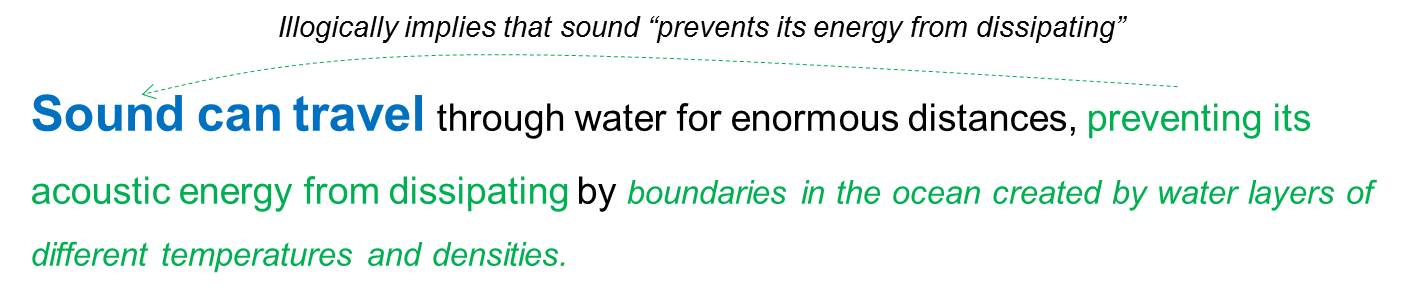
So as you can see, by changing the modifier, the context of the sentence changes, resulting in this case in an illogical meaning. Now at first look this choice may appear to be correct since grammatically there are no errors. However, since the correct choice must communicated intended logical meaning, this choice is not the correct answer.
HOW TO EVALUATE CHOICES THAT CHANGE THE MEANING?
1. Understand the logical meaning of the original choice.
a. Note how the modifiers have been used.
b. If the meaning is not clear in the original choice, then apply your knowledge of modifiers and determine the suitable modifier for the sentence. Such pre-thinking helps when you review the answer choices.
2. Look for the answer choice that best communicates the same meaning in un-ambiguous and grammatically correct manner.
3. Ignore choices that may be grammatically correct but change the meaning. A seemingly correct grammatical choice may also communicate an illogical meaning.
PRACTICE PROBLEMS
e-GMAT course has 33 practice problems. e-GMAT customers can see the list by clicking the link below.
https://e-gmat.com/blogs/?p=745
We have also posted 2 new problems at the links below. Try them out.
How does GMAC use this strategy: There are a finite number of commonly used modifiers. These modifiers typically play well-defined role. You may find below the list of modifiers and what they typically modify. e-GMAT customers may view the concept file “Types of Modifiers” to find more details on this topic.
Lets take a simple example below:
So here is the scene that I picture. Cat is swift. It caught the rat. Now lets check this sentence below.
Now the scene that I picture is – cat swiftly grabbed the rat. So per this sentence, I no longer know whether the cat is generally swift or not. But I do know that the cat acted swiftly and caught the rat.
So changing the modifier from “adjective” to “adverb” leads to change in the meaning communicated by the sentence. This is exactly how GMAT may introduce a difference in meaning.
OFFICIAL QUESTION 1 – OG12 – Q#126
Now lets take an official question:
The use of lie detectors is based on the assumption that lying produces emotional reactions in an individual that, in turn, create unconscious physiological responses.
- A. that, in turn, create unconscious physiological responses
B. that create unconscious physiological responses in turn
C. creating, in turn, unconscious physiological responses
D. to create, in turn, physiological responses that are unconscious
E. who creates unconscious physiological responses in turn
Intended meaning from Choice A: The intended meaning of the sentence from choice A can be inferred as follows:
1. Use of lie detectors is based on a certain assumption. Here is the assumption
2. Lying produces emotional reactions in an individual
3. These emotional reactions then create unconscious physiological responses.
Note that “that clause” in this sentence clearly modifies – emotional reactions. Yes, typically relative pronoun modifiers modify the closest noun. However, they can also modify slightly far away noun when this noun is the head of the noun phrase and when such modification makes sense. E-GMAT customers can find detailed description of this concept in the concept file – Modifiers – Relative Pronouns. Also, I cover this topic in excruciating detail in one of the live sessions in the Verbal Live Complete.
This choice is absolutely correct. There are no grammatical and meaning based errors in this sentence.
Grammatically Correct but Incorrect choice (E)– – Notice how in choice E the test makers have changed the modifier from “that clause” to “who clause”. See, “who” modifiers cannot modify things. They can only modify people. So by changing ‘thing’ modifying modifier to ‘person’ modifying modifier, now automatically the entity being modified changes to “individual”. Now the modifier no longer modifies “emotional reactions”. This changes the meaning. This results in different yet still logical meaning.
The intended meaning communicated by Choice E is the following:
1. Use of lie detectors is based on a certain assumption. Here is the assumption:
2. Lying produces emotional reactions in an individual
3. The individual then creates unconscious physiological responses.
Note that without subject matter knowledge, the above cause and effect sequence appears to be logical. Lying produces certain reactions in the individual and then the individual unknowingly creates certain type of responses.
Thus, the meaning communicated by this choice is certainly different from the meaning communicated by choice A. Hence, while choice E is grammatically correct, it changes the logical intended meaning and is not the correct choice.
OFFICIAL QUESTION 2 – OG Verbal Review 2 - Q#108
Now let’s take another official question.
Sound can travel through water for enormous distances, prevented from dissipating its acoustic energy as a result of boundaries in the ocean created by water layers of different temperatures and densities.
- A. prevented from dissipating its acoustic energy as a result of
B. prevented from having its acoustic energy dissipated by
C. its acoustic energy prevented from dissipating by
D. its acoustic energy prevented from being dissipated as a result of
E. preventing its acoustic energy from dissipating by
Intended meaning from Choice A: The sentence is written in an awkward manner but we can certainly infer the intended meaning.
1. Sound can travel through water for long distances.
2. The acoustic energy of sound is prevented from dissipating because of the boundaries in the ocean. These boundaries are created by water layers of different temperatures and densities.
Now it is logical to say that because of statement 2, statement 1 happens. That is because the acoustic energy of sound is not dissipated easily, sound can travel through water for long distances. At this point you can picture in your mind that these two facts can be connected in multiple ways:
1. Use connectors that state reason such as because, since.
2. Use modifier that extends the thought of preceding clause.
Error in the original choice: Choice A is not the correct choice since it is not written properly.
Choice C corrects this error and is the correct choice. It uses noun + noun modifier construction to explain how sound can travel through water for long distances. Notice that a noun + noun modifier construction is very versatile. It can modify any aspect of the preceding clause. It need not be necessarily connected to the subject of the clause. This is what sets it apart from a verb-ing modifier which has been used in choice E.
Grammatically Correct but Incorrect choice E: Notice how the test makers have changed this modifier to verb-ing modifier. As we discussed earlier, a verb-ing modifier when separated by a comma modifies the preceding clause but is connected with the subject of that clause. It may also present the result of the action in the preceding clause. Neither of these modifications in this sentence creates an illogical meaning. Two possible interpretations are:
• Illogical meaning 1
- Sound can travel through water for long distances.
Sound prevents its energy from dissipating because of the boundaries in the ocean. These boundaries are created by water layers of different temperatures and densities.
This is illogical since sound itself does not prevent its energy from being dissipated. The boundaries in the ocean prevent the energy of sound from being dissipated.
- Sound can travel through water for enormous distances
This leads to its energy being prevented from dissipation
So as you can see, by changing the modifier, the context of the sentence changes, resulting in this case in an illogical meaning. Now at first look this choice may appear to be correct since grammatically there are no errors. However, since the correct choice must communicated intended logical meaning, this choice is not the correct answer.
HOW TO EVALUATE CHOICES THAT CHANGE THE MEANING?
1. Understand the logical meaning of the original choice.
a. Note how the modifiers have been used.
b. If the meaning is not clear in the original choice, then apply your knowledge of modifiers and determine the suitable modifier for the sentence. Such pre-thinking helps when you review the answer choices.
2. Look for the answer choice that best communicates the same meaning in un-ambiguous and grammatically correct manner.
3. Ignore choices that may be grammatically correct but change the meaning. A seemingly correct grammatical choice may also communicate an illogical meaning.
PRACTICE PROBLEMS
e-GMAT course has 33 practice problems. e-GMAT customers can see the list by clicking the link below.
https://e-gmat.com/blogs/?p=745
We have also posted 2 new problems at the links below. Try them out.
- usage-of-modifiers-exercise-sentence-1-european-leaders-124386.html
usage-of-modifiers-exercise-sentence-2-darpa-124387.html
Attachments
5 Strategies that GMAT uses to distort Meaning - V2.0.pdf [834.07 KiB]
Downloaded 1056 times
STRATEGY 3 – CHANGE OF CONJUNCTIONS[/u]
How does GMAC use this strategy: Conjunctions connect two or more parts of the sentence and establish certain relationship between/among these parts. Thus, conjunctions are connectors. Each conjunction/connector establishes a certain relationship. Thus, if we change the conjunction/connector, the relationship expressed may change, thereby changing the meaning of the sentence.
In the table below some of the commonly used connectors are presented. This is not an exhaustive list, but just an representative one.
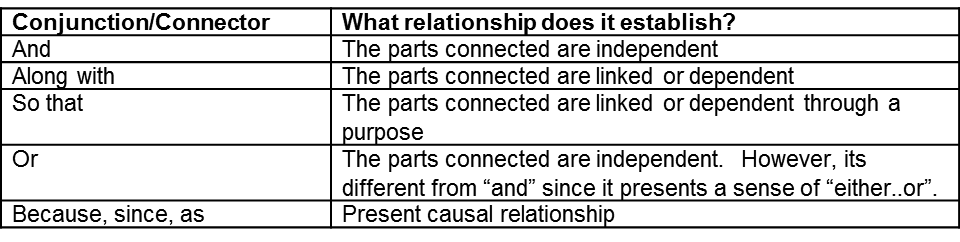
Lets take a simple example below:

Per this sentence, Tom loves to eat two things – sandwich and cheese. Now lets check this sentence below.
Now per this sentence, Tom loves to eat sandwich along with cheese.
Thus, if we compare the two sentences we get the difference in the implied meaning. In sentence 1, when the two entities “sandwich and cheese” were combined using “and”, we got the sense of two independent entities that Tom loves to eat. However, in sentence 2, by using “along with”, now we do not consider sandwich and cheese as two separated entities. They are somehow connected with each other – in this case obviously, cheese is used in the sandwich.
But notice how both meanings are absolutely logical. This is exactly how GMAT may introduce a difference in meaning.
Lets take another set of example sentences below:

Per this sentence, Amy does two things. She eats balanced diet and she does regular workouts. Pretty logical meaning!!

Now per this sentence, Amy only does one of the two things. She either eats balanced diet. Or she does regular workouts. This is also logical. (From personal experience I can tell that there are times when I only do one or the other. But yes, I know doing both is what makes the difference!!)

Now per this sentence, Amy does one action – eats balanced diet – so that she can do the other action effectively – workout. This is also logical. (From personal experience, I can vouch for this as well. When I eat in balanced proportions, I feel energized and I can do better workouts!!)
So as you can see, all three sentences above are logical but all three communicate different meanings and this happened because of change in the connectors/conjunctions. This is exactly how GMAT may introduce a difference in meaning.
OFFICIAL QUESTION 1 – OG VR2 – Q#31
Now lets take an official question:
Nearly two tons of nuclear-reactor fuel have already been put into orbit around the Earth, and the chances of a collision involving such material increase greatly as the amount of both space debris and satellites continue to rise.
Intended meaning from Choice A (and Correct Choice C) : The intended meaning of the sentence from choice A can be inferred as follows:
• Nearly two tons of nuclear-reactor fuel have been put into orbit around the Earth.
• The chances of collision involving such material increase greatly as two things continue to increase
o the amount of space debris
AND
o the number of satellites
Grammatically Correct but Incorrect choice (E)– Notice how in choice E the test makers have changed the connector of the two things. Now the connection is made with “along with”. This now implies that there is a relationship between the “increase in number of satellites” and “rise in amount of space debris”. It implies that amount of space debris increases as the number of satellites increase. Although perfectly logical, this is not what choice A implied. And hence this choice is incorrect.
OFFICIAL QUESTION 2 – GMATPREP – LARGEST TRADE-BOOK PUBLISHER
Now let’s take another official question.
The largest trade-book publisher in the US has announced the creation of a new digital imprint division, under which it will publish about 20 purely digital works to be sold online as either electronic books or downloadable copies that can be printed upon purchase.
Intended meaning from Choice A: Per choice A, the publisher will publish these works with a purpose of having them sold online. Note clearly that this choice does not indicate who will sell the works. It only indicates that online selling is the purpose of taking on this project.
Grammatically Correct but Incorrect choice E: This choice communicates the sense that publisher will publish these works and will sell them online. Notice how that the purpose of embarking on that project is no longer communicated. By using “and”, the sentence simply presents the two as independent facts rather than as purpose relationship. Furthermore, this choice adds the information that publisher will be selling the books online. This information is not presented in the original sentence.
So notice how by simply changing the way the two entities are connected, meaning can be drastically changed. This is why it is of utmost importance that one reads and understands the meaning of the original sentence.
HOW TO EVALUATE CHOICES THAT CHANGE THE MEANING?
1. Understand the logical meaning of the original choice.
a. Note what ideas have been communicated
b. Note how the ideas have been connected.
2. Look for the answer choice that best communicates the same meaning in un-ambiguous and grammatically correct manner.
3. Ignore choices that may be grammatically correct but change the meaning. A seemingly correct grammatical choice may also communicate an illogical meaning.
PRACTICE PROBLEMS
e-GMAT course has 33 practice problems in which there are more than 1 grammatically correct choices but only one is the correct answer. e-GMAT customers can see the list by clicking the link below.
https://e-gmat.com/blogs/?p=745
We have also posted 2 new problems at the links below. Try them out.
How does GMAC use this strategy: Conjunctions connect two or more parts of the sentence and establish certain relationship between/among these parts. Thus, conjunctions are connectors. Each conjunction/connector establishes a certain relationship. Thus, if we change the conjunction/connector, the relationship expressed may change, thereby changing the meaning of the sentence.
In the table below some of the commonly used connectors are presented. This is not an exhaustive list, but just an representative one.
Lets take a simple example below:
Per this sentence, Tom loves to eat two things – sandwich and cheese. Now lets check this sentence below.
Now per this sentence, Tom loves to eat sandwich along with cheese.
Thus, if we compare the two sentences we get the difference in the implied meaning. In sentence 1, when the two entities “sandwich and cheese” were combined using “and”, we got the sense of two independent entities that Tom loves to eat. However, in sentence 2, by using “along with”, now we do not consider sandwich and cheese as two separated entities. They are somehow connected with each other – in this case obviously, cheese is used in the sandwich.
But notice how both meanings are absolutely logical. This is exactly how GMAT may introduce a difference in meaning.
Lets take another set of example sentences below:
Per this sentence, Amy does two things. She eats balanced diet and she does regular workouts. Pretty logical meaning!!
Now per this sentence, Amy only does one of the two things. She either eats balanced diet. Or she does regular workouts. This is also logical. (From personal experience I can tell that there are times when I only do one or the other. But yes, I know doing both is what makes the difference!!)
Now per this sentence, Amy does one action – eats balanced diet – so that she can do the other action effectively – workout. This is also logical. (From personal experience, I can vouch for this as well. When I eat in balanced proportions, I feel energized and I can do better workouts!!)
So as you can see, all three sentences above are logical but all three communicate different meanings and this happened because of change in the connectors/conjunctions. This is exactly how GMAT may introduce a difference in meaning.
OFFICIAL QUESTION 1 – OG VR2 – Q#31
Now lets take an official question:
Nearly two tons of nuclear-reactor fuel have already been put into orbit around the Earth, and the chances of a collision involving such material increase greatly as the amount of both space debris and satellites continue to rise.
- A. as the amount of both space debris and satellites continue to rise
B. as the rise continues in both the amount of satellites and space debris
C. as the amount of space debris and the number of satellites continue to rise
D. with the continually increasing amount of space debris and the number of satellites
E. with the amount of space debris continuing to increase along with the number of satellites
Intended meaning from Choice A (and Correct Choice C) : The intended meaning of the sentence from choice A can be inferred as follows:
• Nearly two tons of nuclear-reactor fuel have been put into orbit around the Earth.
• The chances of collision involving such material increase greatly as two things continue to increase
o the amount of space debris
AND
o the number of satellites
Grammatically Correct but Incorrect choice (E)– Notice how in choice E the test makers have changed the connector of the two things. Now the connection is made with “along with”. This now implies that there is a relationship between the “increase in number of satellites” and “rise in amount of space debris”. It implies that amount of space debris increases as the number of satellites increase. Although perfectly logical, this is not what choice A implied. And hence this choice is incorrect.
OFFICIAL QUESTION 2 – GMATPREP – LARGEST TRADE-BOOK PUBLISHER
Now let’s take another official question.
The largest trade-book publisher in the US has announced the creation of a new digital imprint division, under which it will publish about 20 purely digital works to be sold online as either electronic books or downloadable copies that can be printed upon purchase.
- A. works to be sold online as either electronic books or
B. works to sell them online, either as electronic books or
C. works and it will sell them online as either electronic books or as
D. works, and selling them online as either electronic books or as
E. works, and it will sell them online as either electronic books or
Intended meaning from Choice A: Per choice A, the publisher will publish these works with a purpose of having them sold online. Note clearly that this choice does not indicate who will sell the works. It only indicates that online selling is the purpose of taking on this project.
Grammatically Correct but Incorrect choice E: This choice communicates the sense that publisher will publish these works and will sell them online. Notice how that the purpose of embarking on that project is no longer communicated. By using “and”, the sentence simply presents the two as independent facts rather than as purpose relationship. Furthermore, this choice adds the information that publisher will be selling the books online. This information is not presented in the original sentence.
So notice how by simply changing the way the two entities are connected, meaning can be drastically changed. This is why it is of utmost importance that one reads and understands the meaning of the original sentence.
HOW TO EVALUATE CHOICES THAT CHANGE THE MEANING?
1. Understand the logical meaning of the original choice.
a. Note what ideas have been communicated
b. Note how the ideas have been connected.
2. Look for the answer choice that best communicates the same meaning in un-ambiguous and grammatically correct manner.
3. Ignore choices that may be grammatically correct but change the meaning. A seemingly correct grammatical choice may also communicate an illogical meaning.
PRACTICE PROBLEMS
e-GMAT course has 33 practice problems in which there are more than 1 grammatically correct choices but only one is the correct answer. e-GMAT customers can see the list by clicking the link below.
https://e-gmat.com/blogs/?p=745
We have also posted 2 new problems at the links below. Try them out.
- https://gmatclub.com/forum/3-exercise-se ... 24643.html
https://gmatclub.com/forum/3-exercise-se ... 24642.html
STRATEGY 4 - CHANGE OF VOICE
How does GMAC use this strategy: TWe know that when a sentence is written in active voice, more emphasis is put on the subject performing the action. Likewise, when a sentence is written in passive voice, more emphasis is put on the entity (object) on which the action is performed. This shift in emphasis may lead to sufficient change in the meaning of the sentence.
Lets take a simple example below:

Following information is presented in the sentence above:
• Who cooked the dinner – Mary
• Any other information – The dinner was cooked with Thai spices

Following information is presented in the sentence above:
• What was cooked – Dinner
• Any other information – The dinner was cooked with Thai spices
o Note that we no longer know who cooked the dinner.
This is exactly how GMAT may introduce a difference in meaning. An answer choice may either introduce the person who does the action (use active voice) or may remove the information about the doer of the action (use passive voice).
Lets take another simple example:
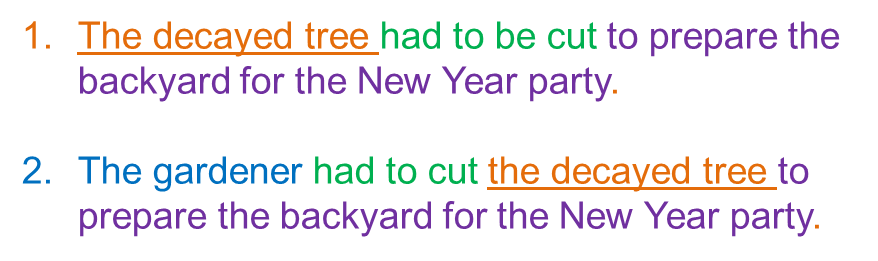
a. Notice how in sentence 1 – the emphasis is on the action that is required for the preparation of the party.
b. However in sentence 2 – the emphasis is now on the doer of the action as well. The gardener had to cut the decayed tree. So sentence 2 provides this additional piece of information.
Thus, you need to understand clearly as to what all information does the original sentence provide. And then you should select the choice that communicates all that information in grammatically correct manner.
OFFICIAL QUESTION 1 – GMATPREP – DECLARATION OF SENTIMENTS
Now lets take an official question:
Before scientists learned how to make a synthetic growth hormone, removing it painstakingly in small amounts from the pituitary glands of human cadavers.
Intended meaning from Choice A: This choice does not communicate a clear meaning. The intended meaning of the sentence from choice A can be inferred as follows:
• Some kind of sequencing is shown using the word “before”.
• Scientists learned how to make a synthetic growth hormone
• However, due to the construction of the sentence, the event that happened prior to this event is not clearly specified. However, we can infer that the prior event may be - removing the growth hormone painstakingly from the pituitary glands of human cadavers.
Thus this choice is incorrect because it does not communicate the meaning of the sentence clearly. Grammatically, this choice does not have an independent clause and hence is a fragment.
Intended meaning from Correct Choice C: Choice C corrects these errors and communicates the inferred meaning clearly. It effectively uses passive voice “it had to be painstakingly removed” to present the prior event. Note that the original sentence (choice A) does not say anything about who actually painstakingly removed the hormone from the human cadavers.
Grammatically Correct but Incorrect choice (D)– Notice how in choice D the test makers have changed the voice of one of the verbs. Now the sentence uses active voice “scientists had to painstakingly remove…”. This changes the meaning of the original sentence since it now adds new information that “scientists” actually had to remove the hormone. This information is not present in the original choice. And hence this choice by “adding” to the meaning of the sentence, changes the meaning and hence is incorrect. Carefully notice that this sentence does not have any grammatical errors.
OFFICIAL QUESTION 2 – GMATPREP – LARGEST TRADE-BOOK PUBLISHER
Now let’s take another official question.
The largest trade-book publisher in the US has announced the creation of a new digital imprint division, under which it will publish about 20 purely digital works to be sold online as either electronic books or downloadable copies that can be printed upon purchase.
Intended meaning from Choice A (Correct Choice): Per choice A, the publisher will publish these works with a purpose of having them sold online. Note clearly that this choice does not indicate who will sell the works. It only indicates that online selling is the purpose of taking on this project.
Grammatically Correct but Incorrect choice E: This choice communicates the sense that publisher will publish these works and will sell them online. Thus this choice adds the information that publisher will be selling the books online. This information is not presented in the original sentence. Furthermore, as discussed earlier per strategy 3, this choice also changes the meaning by now simply presenting the two events as independent facts rather than as purpose relationship.
So notice how choice E even though is grammatically correct, is not the correct choice because it communicates different meaning from the intended meaning. Notice how the test makers have introduced meaning change by using two different strategies.
HOW TO EVALUATE CHOICES THAT CHANGE THE MEANING?
1. Understand the logical meaning of the original choice.
a. Carefully note all the information that is presented.
2. Look for the answer choice that best communicates the same meaning in un-ambiguous and grammatically correct manner.
3. Ignore choices that may be grammatically correct but change the meaning or the emphasis in the sentence. Pay close attention to choices that add information (by changing to active voice) or remove information (by changing to passive voice).
We have also posted 2 new problems at the links below. Try them out.
4-exercise-sentence-1-advertisement-design-125437.html
4-exercise-sentence-2-rise-in-american-exports-125438.html
How does GMAC use this strategy: TWe know that when a sentence is written in active voice, more emphasis is put on the subject performing the action. Likewise, when a sentence is written in passive voice, more emphasis is put on the entity (object) on which the action is performed. This shift in emphasis may lead to sufficient change in the meaning of the sentence.
Lets take a simple example below:
Following information is presented in the sentence above:
• Who cooked the dinner – Mary
• Any other information – The dinner was cooked with Thai spices
Following information is presented in the sentence above:
• What was cooked – Dinner
• Any other information – The dinner was cooked with Thai spices
o Note that we no longer know who cooked the dinner.
This is exactly how GMAT may introduce a difference in meaning. An answer choice may either introduce the person who does the action (use active voice) or may remove the information about the doer of the action (use passive voice).
Lets take another simple example:
a. Notice how in sentence 1 – the emphasis is on the action that is required for the preparation of the party.
b. However in sentence 2 – the emphasis is now on the doer of the action as well. The gardener had to cut the decayed tree. So sentence 2 provides this additional piece of information.
Thus, you need to understand clearly as to what all information does the original sentence provide. And then you should select the choice that communicates all that information in grammatically correct manner.
OFFICIAL QUESTION 1 – GMATPREP – DECLARATION OF SENTIMENTS
Now lets take an official question:
Before scientists learned how to make a synthetic growth hormone, removing it painstakingly in small amounts from the pituitary glands of human cadavers.
- A. scientists learned how to make a synthetic growth hormone, removing it painstakingly
B. scientists had learned about making a synthetic growth hormone, they had to remove it painstakingly
C. scientists learned how to synthesize the growth hormone, it had to be painstakingly removed
D. learning how to make a synthetic growth hormone, scientists had to remove it painstakingly
E. learning how to synthesize the growth hormone, it have to be painstakingly removed by scientists
Intended meaning from Choice A: This choice does not communicate a clear meaning. The intended meaning of the sentence from choice A can be inferred as follows:
• Some kind of sequencing is shown using the word “before”.
• Scientists learned how to make a synthetic growth hormone
• However, due to the construction of the sentence, the event that happened prior to this event is not clearly specified. However, we can infer that the prior event may be - removing the growth hormone painstakingly from the pituitary glands of human cadavers.
Thus this choice is incorrect because it does not communicate the meaning of the sentence clearly. Grammatically, this choice does not have an independent clause and hence is a fragment.
Intended meaning from Correct Choice C: Choice C corrects these errors and communicates the inferred meaning clearly. It effectively uses passive voice “it had to be painstakingly removed” to present the prior event. Note that the original sentence (choice A) does not say anything about who actually painstakingly removed the hormone from the human cadavers.
Grammatically Correct but Incorrect choice (D)– Notice how in choice D the test makers have changed the voice of one of the verbs. Now the sentence uses active voice “scientists had to painstakingly remove…”. This changes the meaning of the original sentence since it now adds new information that “scientists” actually had to remove the hormone. This information is not present in the original choice. And hence this choice by “adding” to the meaning of the sentence, changes the meaning and hence is incorrect. Carefully notice that this sentence does not have any grammatical errors.
OFFICIAL QUESTION 2 – GMATPREP – LARGEST TRADE-BOOK PUBLISHER
Now let’s take another official question.
The largest trade-book publisher in the US has announced the creation of a new digital imprint division, under which it will publish about 20 purely digital works to be sold online as either electronic books or downloadable copies that can be printed upon purchase.
- A. works to be sold online as either electronic books or
B. works to sell them online, either as electronic books or
C. works and it will sell them online as either electronic books or as
D. works, and selling them online as either electronic books or as
E. works, and it will sell them online as either electronic books or
Intended meaning from Choice A (Correct Choice): Per choice A, the publisher will publish these works with a purpose of having them sold online. Note clearly that this choice does not indicate who will sell the works. It only indicates that online selling is the purpose of taking on this project.
Grammatically Correct but Incorrect choice E: This choice communicates the sense that publisher will publish these works and will sell them online. Thus this choice adds the information that publisher will be selling the books online. This information is not presented in the original sentence. Furthermore, as discussed earlier per strategy 3, this choice also changes the meaning by now simply presenting the two events as independent facts rather than as purpose relationship.
So notice how choice E even though is grammatically correct, is not the correct choice because it communicates different meaning from the intended meaning. Notice how the test makers have introduced meaning change by using two different strategies.
HOW TO EVALUATE CHOICES THAT CHANGE THE MEANING?
1. Understand the logical meaning of the original choice.
a. Carefully note all the information that is presented.
2. Look for the answer choice that best communicates the same meaning in un-ambiguous and grammatically correct manner.
3. Ignore choices that may be grammatically correct but change the meaning or the emphasis in the sentence. Pay close attention to choices that add information (by changing to active voice) or remove information (by changing to passive voice).
We have also posted 2 new problems at the links below. Try them out.
4-exercise-sentence-1-advertisement-design-125437.html
4-exercise-sentence-2-rise-in-american-exports-125438.html











 ). This question is more of an inference question.