Events & Promotions
|
|

GMAT Club Daily Prep
Thank you for using the timer - this advanced tool can estimate your performance and suggest more practice questions. We have subscribed you to Daily Prep Questions via email.
Customized
for You
Track
Your Progress
Practice
Pays
Not interested in getting valuable practice questions and articles delivered to your email? No problem, unsubscribe here.
 Sep 21
07:00 PM EDT
-10:00 PM EDT
Boost your GMAT score in less than one month in a live online class + 6 months access to TTP OnDemand video courses included! Sep 23
12:30 AM EDT
-01:30 AM EDT
Learn how Keshav, a Chartered Accountant, scored an impressive 705 on GMAT in just 30 days with GMATWhiz's expert guidance. In this video, he shares preparation tips and strategies that worked for him, including the mock, time management, and more Sep 24
01:30 AM EDT
-01:30 AM EDT
Tejas studied hard but kept repeating the same mistakes. After 3 attempts at 645, a focused 4-week strategy helped him identify and fix what was holding him back—leading to a 695 with just 12–15 hours of study per week. Sep 26
06:00 PM PDT
-07:00 PM PDT
Free- full-length test + 15 concept videos + 150+ short videos + study plan!


 10 Sep 2025, 08:36
Kudos
Bookmarks
Hi everyone,
I'm Gaurav, a corporate banker with 4 years of experience across business and risk roles, currently managing my family business. I just scored a 725 on the GMAT (Q89, V84, DI85), and I wanted to share my journey because it's been quite a roller coaster - from a devastating 545 start to finally hitting my target score after three attempts.
When I started this journey back in December, I had dreams of M7 schools - Columbia, Wharton - but with a 545 on my diagnostic, those dreams felt impossibly distant. The most crushing part? My DI score was a 63. I literally didn't even know what the different subsections contained. By the time I realized how fast time was moving in that first mock, I had 6-7 questions left with no time. DI became my biggest fear that day.
But here's the thing about hitting rock bottom - the only way is up. And with the right approach, structured preparation through e-GMAT, and sheer determination, I managed a 180-point improvement. Let me walk you through how each section transformed.
Data Insights: From My Nightmare to My Strength (DI63 → DI85)
I'll be honest - after that initial DI63, I was terrified of this section. I remember panicking hard during my first mock, thinking I was going to bomb completely.
The game-changer was e-GMAT’s "Owning the Dataset" approach. Initially, this felt counterintuitive - why spend MORE time upfront when I'm already struggling with time? But here's what I learned: when you start a DI question, you literally start from the first word given. You read that first sentence, understand the graph, visualize it before going into any specifics.
I know it sounds like it would take forever, but here's the crazy part - by test day, I finished DI with 5 extra minutes to review questions! Yes, you read that right. The guy who couldn't finish DI in his first mock had 5 minutes left over.
My strategy for DS questions was crucial here. I committed to solving each DS question in 1 to 1.5 minutes maximum. This wasn't just a random target - I practiced this religiously. These saved minutes gave me breathing room for the more complex graph analysis and MSR questions.
The MSR questions initially terrified me. I kept going back and forth between sources, wasting precious time. Then I learned to take structured notes upfront. Yes, it was time-consuming initially, but having clear notes meant I could answer questions without constantly re-reading sources. It's like investing time to save time.
GI was my weakest area within DI. I kept misreading values, thinking "this should be the value," marking it, and getting it wrong. What really stung was seeing that 65-70% of people got these questions right! That's when I realized I wasn't concentrating enough. The solution? Intense focus on every data point, mapping each value precisely. No more "this looks about right."
By the time I was done, I was pretty confident about DI.
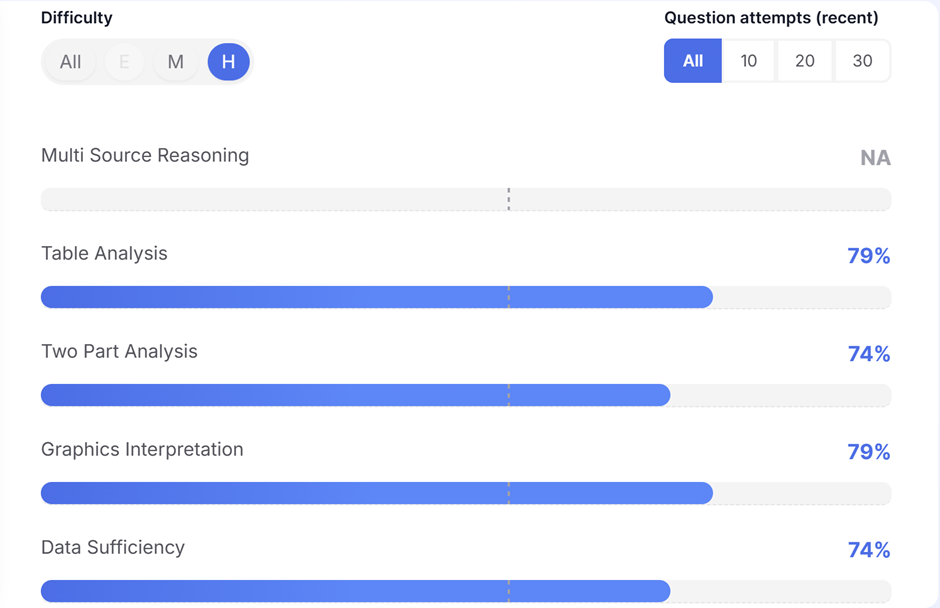
What also helped with DI was that I moved to DI only after fixing my verbal challenges.
Verbal: From Hunches to Systematic Success (V79 → V84)
When I started, I had no approach to verbal questions. None. Zero. Zilch. It was just basic logic and sometimes hunches. I'd read a question, go through all five options, and pick whatever made the most logical sense. With this "strategy," I managed a V79 initially, which sounds okay, but I knew it wasn't sustainable or reliable.
The problem with having no approach is that you can never be confident. How can you be confident when you're essentially gambling on every question? Even when you get it right, you don't know WHY you got it right.
Learning the pre-thinking approach for CR was transformative. At first, consciously going through each step felt awkward and time-consuming. "Understand the argument, identify the conclusion, pre-think the answer, then look at the choices." But after solving multiple questions with this approach, something magical happened - it became automatic. I wasn't consciously thinking about the steps anymore; my brain just did it.
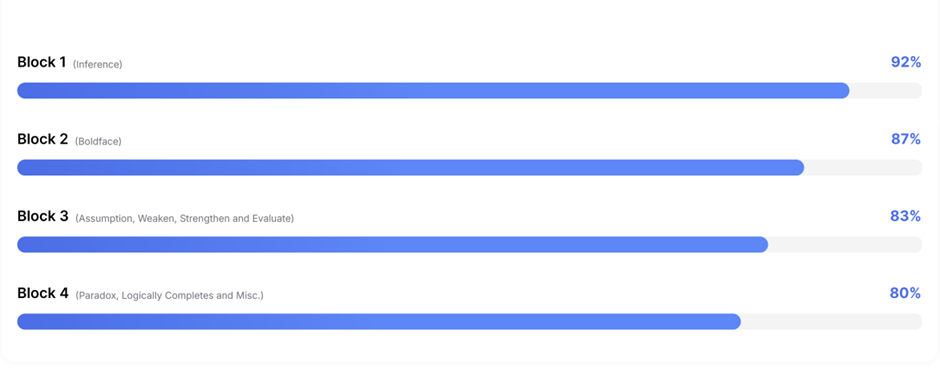
For RC, I learned to actually READ the passage. I know that sounds obvious, but I used to just skim, thinking I was saving time. Big mistake. I learned to understand not just WHAT the author was saying, but WHY they were saying it. What was their agenda? What point were they trying to prove? This shift from passive reading to active comprehension meant I could answer most questions in under a minute because I truly understood the passage.
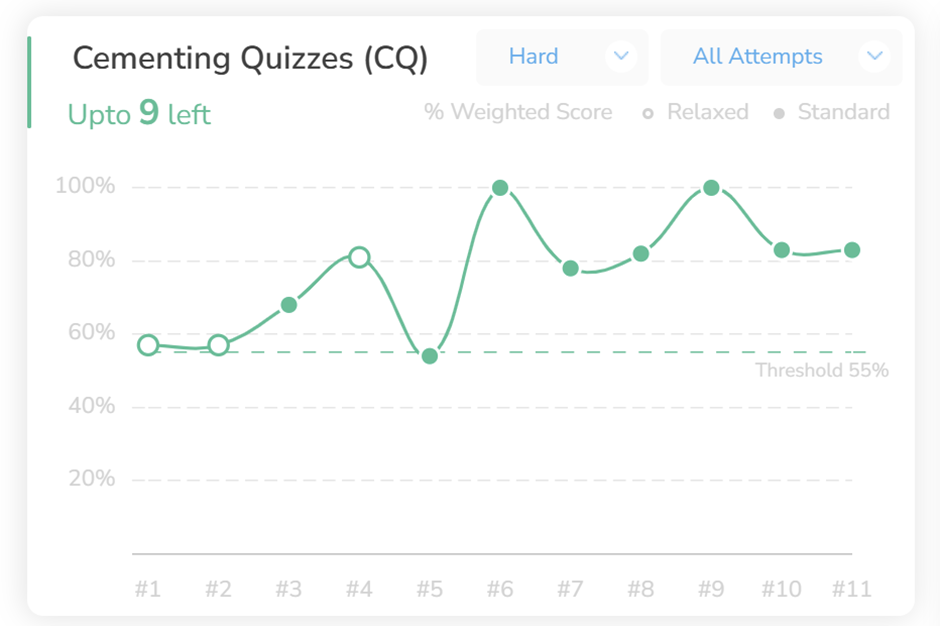
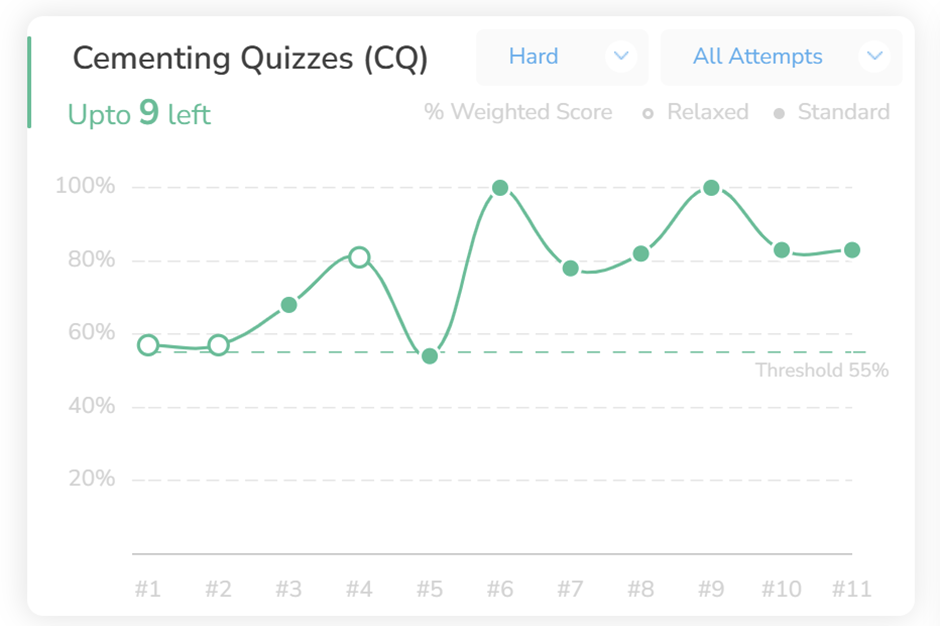
By the end, verbal went from being something I was nervous about to something I was genuinely confident in. The process gave me that confidence. As I kept telling my mentor Rashmi, "The process and the evidence of the process" - when you apply the process and 9 out of 10 times you select the right answer, that's where real confidence comes from.
Quant: Why I Didn't Coast on My Strength (Q89)
As an engineer, I started with a Q89. Many people asked me why I bothered doing the entire Quant course when I was already strong. Here's my philosophy: "When you're targeting a 735, why would you leave your strength and not target a 90?"
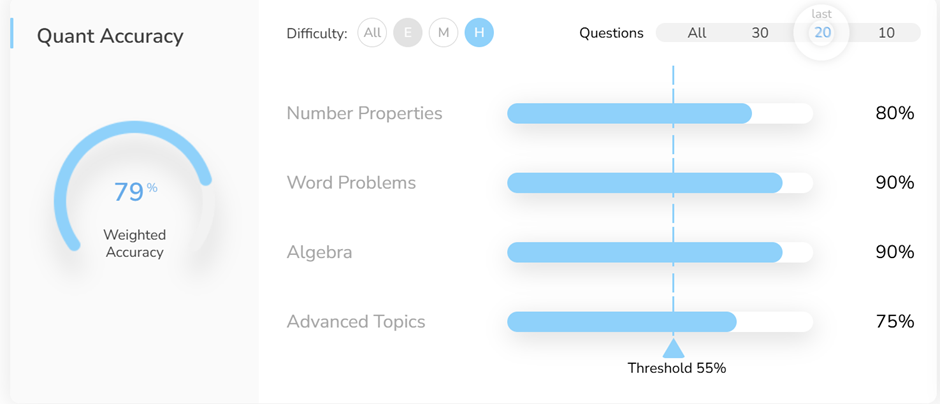
I could have just solved practice questions, but I went through every module. Bite-sized modules of 30-40 minutes that I'd do 2-3 times a week. The e-GMAT’s PACE engine was brilliant here - it identified that I didn't need conceptual learning but needed work on GMAT-specific applications. It saved me 64 hours of prep time while ensuring I covered everything.
Just in Algebra, it helped me save 16 hours:
Going through the entire course gave me confidence that I had covered all bases. No gaps, no weak spots. When you're aiming for an elite score, you can't afford to let your strengths become weaknesses through neglect. You have to actively maintain and maximize them.
The Three Attempts: A Test of Mental Resilience
Here's something not many people talk about - the mental game of multiple attempts. I took three attempts within 1.5 months:
The Role of Mentorship:
I was part of e-GMAT's Last Mile Push program with Rashmi as my mentor, and honestly, this was as important as any strategy or technique. You need somebody to listen to your self-doubts, your problems, to give you confidence when you're falling apart.
I remember texting Rashmi on WhatsApp: "I'm not feeling I can do it." We'd connect, identify exactly where I was feeling underconfident, and build from there. During the roller coaster of three attempts in 1.5 months, having that support system kept me sane.
It's not just about study plans or strategies. It's about having someone who's been through this journey understand your struggles and keep you focused when everything feels overwhelming.
Looking back, this 180-point improvement from 545 to 725 seems surreal. But it happened through structured preparation, consistent effort, and refusing to give up when things got tough. There were low days when mocks didn't go as planned, and high days when everything clicked. The key was showing up every day regardless.
To everyone still on this journey - remember, I went from not even knowing what DI sections contained to scoring DI85 from having no verbal approach to achieving V84. It's possible. Trust the process, be consistent, and most importantly, enjoy the ride. Yes, there's pressure and nervousness, but at the end of the day, you've worked for it, you've built the foundation.
Don't double-guess yourself. You've got this!
Happy to answer any questions about my experience. And to those applying to schools - see you at Columbia or Wharton! 😊
Best,
Gaurav

GMAT-Club-Forum-yfg25brh.png [ 85.16 KiB | Viewed 1420 times ]

GMAT-Club-Forum-1h1jn4jx.png [ 31.4 KiB | Viewed 1393 times ]

GMAT-Club-Forum-6jeyq3ok.png [ 70.87 KiB | Viewed 1383 times ]

GMAT-Club-Forum-wzsywjtd.png [ 70.87 KiB | Viewed 1371 times ]

GMAT-Club-Forum-l0t20igj.png [ 65.32 KiB | Viewed 1349 times ]
I'm Gaurav, a corporate banker with 4 years of experience across business and risk roles, currently managing my family business. I just scored a 725 on the GMAT (Q89, V84, DI85), and I wanted to share my journey because it's been quite a roller coaster - from a devastating 545 start to finally hitting my target score after three attempts.
When I started this journey back in December, I had dreams of M7 schools - Columbia, Wharton - but with a 545 on my diagnostic, those dreams felt impossibly distant. The most crushing part? My DI score was a 63. I literally didn't even know what the different subsections contained. By the time I realized how fast time was moving in that first mock, I had 6-7 questions left with no time. DI became my biggest fear that day.
But here's the thing about hitting rock bottom - the only way is up. And with the right approach, structured preparation through e-GMAT, and sheer determination, I managed a 180-point improvement. Let me walk you through how each section transformed.
Data Insights: From My Nightmare to My Strength (DI63 → DI85)
I'll be honest - after that initial DI63, I was terrified of this section. I remember panicking hard during my first mock, thinking I was going to bomb completely.
The game-changer was e-GMAT’s "Owning the Dataset" approach. Initially, this felt counterintuitive - why spend MORE time upfront when I'm already struggling with time? But here's what I learned: when you start a DI question, you literally start from the first word given. You read that first sentence, understand the graph, visualize it before going into any specifics.
I know it sounds like it would take forever, but here's the crazy part - by test day, I finished DI with 5 extra minutes to review questions! Yes, you read that right. The guy who couldn't finish DI in his first mock had 5 minutes left over.
My strategy for DS questions was crucial here. I committed to solving each DS question in 1 to 1.5 minutes maximum. This wasn't just a random target - I practiced this religiously. These saved minutes gave me breathing room for the more complex graph analysis and MSR questions.
The MSR questions initially terrified me. I kept going back and forth between sources, wasting precious time. Then I learned to take structured notes upfront. Yes, it was time-consuming initially, but having clear notes meant I could answer questions without constantly re-reading sources. It's like investing time to save time.
GI was my weakest area within DI. I kept misreading values, thinking "this should be the value," marking it, and getting it wrong. What really stung was seeing that 65-70% of people got these questions right! That's when I realized I wasn't concentrating enough. The solution? Intense focus on every data point, mapping each value precisely. No more "this looks about right."
By the time I was done, I was pretty confident about DI.
What also helped with DI was that I moved to DI only after fixing my verbal challenges.
Verbal: From Hunches to Systematic Success (V79 → V84)
When I started, I had no approach to verbal questions. None. Zero. Zilch. It was just basic logic and sometimes hunches. I'd read a question, go through all five options, and pick whatever made the most logical sense. With this "strategy," I managed a V79 initially, which sounds okay, but I knew it wasn't sustainable or reliable.
The problem with having no approach is that you can never be confident. How can you be confident when you're essentially gambling on every question? Even when you get it right, you don't know WHY you got it right.
Learning the pre-thinking approach for CR was transformative. At first, consciously going through each step felt awkward and time-consuming. "Understand the argument, identify the conclusion, pre-think the answer, then look at the choices." But after solving multiple questions with this approach, something magical happened - it became automatic. I wasn't consciously thinking about the steps anymore; my brain just did it.
For RC, I learned to actually READ the passage. I know that sounds obvious, but I used to just skim, thinking I was saving time. Big mistake. I learned to understand not just WHAT the author was saying, but WHY they were saying it. What was their agenda? What point were they trying to prove? This shift from passive reading to active comprehension meant I could answer most questions in under a minute because I truly understood the passage.
By the end, verbal went from being something I was nervous about to something I was genuinely confident in. The process gave me that confidence. As I kept telling my mentor Rashmi, "The process and the evidence of the process" - when you apply the process and 9 out of 10 times you select the right answer, that's where real confidence comes from.
Quant: Why I Didn't Coast on My Strength (Q89)
As an engineer, I started with a Q89. Many people asked me why I bothered doing the entire Quant course when I was already strong. Here's my philosophy: "When you're targeting a 735, why would you leave your strength and not target a 90?"
I could have just solved practice questions, but I went through every module. Bite-sized modules of 30-40 minutes that I'd do 2-3 times a week. The e-GMAT’s PACE engine was brilliant here - it identified that I didn't need conceptual learning but needed work on GMAT-specific applications. It saved me 64 hours of prep time while ensuring I covered everything.
Just in Algebra, it helped me save 16 hours:
Going through the entire course gave me confidence that I had covered all bases. No gaps, no weak spots. When you're aiming for an elite score, you can't afford to let your strengths become weaknesses through neglect. You have to actively maintain and maximize them.
The Three Attempts: A Test of Mental Resilience
Here's something not many people talk about - the mental game of multiple attempts. I took three attempts within 1.5 months:
- First attempt: 695 (Q88, V88, DI79) - I finished Quant with 18 minutes to spare and reviewed all 21 questions! But I had a horrendous day in DI. I didn't take my break at the right time, and by the time I got to DI, I wasn't in the right mental space.
- Second attempt: 695 again - Similar story, different section struggles.
The 15 days between attempts were brutal. Imagine getting a 695 (which is a good score!) but knowing you can do better. You're literally burning yourself out, trying to maintain momentum without starting from scratch. There were days I questioned everything, doubted my abilities, wondered if 695 was my ceiling. - Third attempt: 725 - Finally, everything clicked.
The Role of Mentorship:
I was part of e-GMAT's Last Mile Push program with Rashmi as my mentor, and honestly, this was as important as any strategy or technique. You need somebody to listen to your self-doubts, your problems, to give you confidence when you're falling apart.
I remember texting Rashmi on WhatsApp: "I'm not feeling I can do it." We'd connect, identify exactly where I was feeling underconfident, and build from there. During the roller coaster of three attempts in 1.5 months, having that support system kept me sane.
It's not just about study plans or strategies. It's about having someone who's been through this journey understand your struggles and keep you focused when everything feels overwhelming.
Looking back, this 180-point improvement from 545 to 725 seems surreal. But it happened through structured preparation, consistent effort, and refusing to give up when things got tough. There were low days when mocks didn't go as planned, and high days when everything clicked. The key was showing up every day regardless.
To everyone still on this journey - remember, I went from not even knowing what DI sections contained to scoring DI85 from having no verbal approach to achieving V84. It's possible. Trust the process, be consistent, and most importantly, enjoy the ride. Yes, there's pressure and nervousness, but at the end of the day, you've worked for it, you've built the foundation.
Don't double-guess yourself. You've got this!
Happy to answer any questions about my experience. And to those applying to schools - see you at Columbia or Wharton! 😊
Best,
Gaurav
Attachment:
GMAT-Club-Forum-yfg25brh.png [ 85.16 KiB | Viewed 1420 times ]
Attachment:
GMAT-Club-Forum-1h1jn4jx.png [ 31.4 KiB | Viewed 1393 times ]
Attachment:
GMAT-Club-Forum-6jeyq3ok.png [ 70.87 KiB | Viewed 1383 times ]
Attachment:
GMAT-Club-Forum-wzsywjtd.png [ 70.87 KiB | Viewed 1371 times ]
Attachment:
GMAT-Club-Forum-l0t20igj.png [ 65.32 KiB | Viewed 1349 times ]



Paattaa
Joined: 24 Jul 2025
Last visit: 04 Jan 2026
Posts: 29
Given Kudos: 4
Location: India
Schools: ISB '26 INSEAD Aug '26 HEC Sept '26
GMAT Focus 1: 645 Q85 V81 DI80 
10 Sep 2025, 21:36
Kudos
Bookmarks
Congratulations! Great Insights.








