Last visit was: 24 Apr 2026, 08:30 It is currently 24 Apr 2026, 08:30
Close
GMAT Club Daily Prep
Thank you for using the timer - this advanced tool can estimate your performance and suggest more practice questions. We have subscribed you to Daily Prep Questions via email.

Customized
for You

we will pick new questions that match your level based on your Timer History

Track
Your Progress

every week, we’ll send you an estimated GMAT score based on your performance

Practice
Pays

we will pick new questions that match your level based on your Timer History
Not interested in getting valuable practice questions and articles delivered to your email? No problem, unsubscribe here.
Close
Request Expert Reply
Confirm Cancel
User avatar
newsHaas
Joined: 13 Nov 2013
Last visit: -
Posts: 709
Own Kudos:
Posts: 709
Kudos: 28
Kudos
Add Kudos
Bookmarks
Bookmark this Post
User avatar
newsHaas
Joined: 13 Nov 2013
Last visit: -
Posts: 709
Own Kudos:
Posts: 709
Kudos: 28
Kudos
Add Kudos
Bookmarks
Bookmark this Post
User avatar
newsHaas
Joined: 13 Nov 2013
Last visit: -
Posts: 709
Own Kudos:
Posts: 709
Kudos: 28
Kudos
Add Kudos
Bookmarks
Bookmark this Post
User avatar
newsHaas
Joined: 13 Nov 2013
Last visit: -
Posts: 709
Own Kudos:
Posts: 709
Kudos: 28
Kudos
Add Kudos
Bookmarks
Bookmark this Post
FROM Haas Admissions Blog: Haas MBA student encourages others to take action
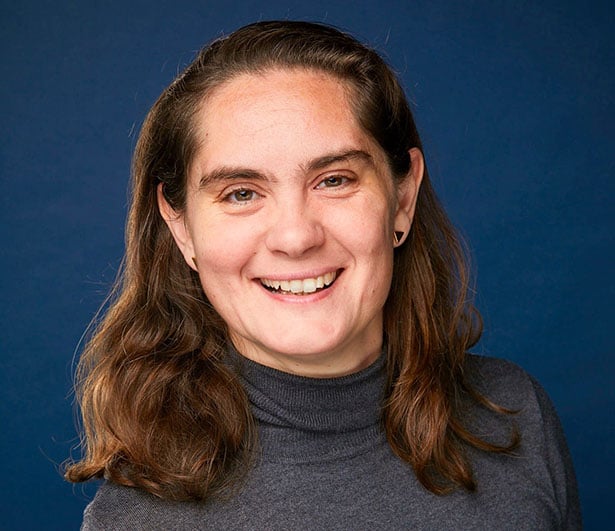
Ana Simoes, MBA 20, chief of staff, AI Inference Products Group, says Haas has changed her in ways she never expected. Now she’s passionate about using technology to make an impact on society and empowering others to see the value in an MBA.


Why did you decide to get your MBA?
I have been working in artificial intelligence strategy for one of Intel’s major AI accelerator products. I joined Intel six years ago as a software engineer and later joined a strategic effort to drive AI for Intel as a technical consultant. Soon I realized I needed to expand my business acumen. I came to Haas ready to grow my understanding of corporate strategy. It's an area that fascinates me.

Haas has expanded my horizons though. As much as I love AI, I’m really excited about the impact technology can have—and already has had—on society. Technology democratizes transformation by making change accessible.

I came to Haas thinking that big companies make big change in the world. Instead, I was surprised to learn that entrepreneurship is a good vehicle for that. In my entrepreneurship class I realized the transformational power of this new way of thinking.

How have your views of what’s possible—for yourself, for society—changed while at Haas?
I went to Seminars in International Business (SIB) in Brazil this year. I have family and a lot of friends there, so I knew even before we arrived that the people there are going through a very demoralized phase right now partly because of the political situation. 

Historically, Brazilians have been culturally passive. We look at what’s happening as a series of constraints. We feel victimized. We don’t react. That’s when I had my big aha moment about entrepreneurship.

Entrepreneurship is the process of taking things into your own hands. You start out by looking at problems as opportunities. You’re not just complaining about the problem; you are asking yourself, ‘How can I solve this in a way that is sustainable for me and for the environment that I’m in, for the whole ecosystem?’ You think about it in a systematic way. The moment you see a problem, you actually have the tools to start thinking of a solution. This is a very empowering process.

I would like to inspire people in Brazil to adopt that mindset for themselves and start looking at problems as things they can solve.

I didn’t have anyone reach out to me and tell me to [get my MBA]. Now I’m raising my hands in the air to say you do belong here."

Tell us more about your involvement as VP, Diversity and planning the Diversity Summit.
The Evening & Weekend MBA program has been transformational to me in a way I never anticipated. Berkeley Haas opened up my mind on a level I had never experienced before. It was very empowering. That’s why I’m excited about the Diversity Summit

I could’ve come to Haas—I should’ve come to Haas—earlier. I didn’t for many reasons: finances, family, and time. More importantly, an MBA just wasn’t part of my view of the world. That’s where the Diversity Summit plays a huge role, specifically for Latinx communities. I believe that a lot of Latinos think like I used to from a heritage point of view. They don’t see themselves as a part of an MBA program. That’s why reaching out to these communities and changing that perception, making them understand the value this can have, is crucial.

I’m most excited about the student-led sessions where people can speak with us about their experience and we can share how to be successful at Haas. I want to make them see themselves in this position. All the arguments I had against it back then were workable. But at that time, I didn’t have anyone reach out to me and tell me to go for it. Now I’m raising my hands in the air to say you do belong here. 

How would you describe your fellow classmates and the student community at Haas?
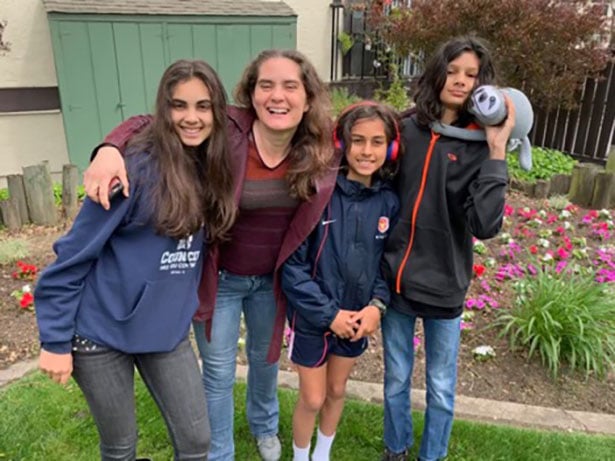
I came to Haas in a very different place in my life than most of my colleagues. At age 44, I am older than my classmates. I am the mother of three teenagers. Of course, I am Latina. 

I was pleased to see that I’m surrounded by very talented people who have been able to help me, talk me through things. It’s been a great opportunity in the sense that first you build a community.

You get to know people you can access on a day-to-day basis, people who are relevant for your career and your field of work. They are high-caliber, smart , open-minded people. I’ve been part of a lot of very open, direct, high-quality conversations. That has helped me become better at putting my own arguments out there and standing up for my own values. 

As a whole, the community has embraced me. At first I had the sense that ‘I’m too old. It’s going to be weird. I’m never going to fit in.’ None of that happened.


At Haas, what are our strengths and weaknesses around the issue of diversity? Areas for improvement?
Generally, the people are open-minded. There’s an awareness about diversity and a strong desire to get involved and understand it. There is a genuine understanding that diversity is important from a business perspective, from a career perspective, from a world perspective—that diversity is something we need to embrace and improve and increase.

That said, that’s still not happening de facto in the program. If you look around in the classrooms, they’re not very diverse demographically. Part of that is because of who works and lives here in the Bay Area. Right now, diversity is more of an aspirational goal. We need to move it into a more substantive goal, one that people would get involved in a more hands-on way.

What would your advice be to help make that transition—to start being less aspirational and more actionable in diversifying our community?
We could make diversity, equity and inclusion a stronger part of the orientation process itself. Putting ourselves out there to say we are diverse. We want to be diverse. We want the world to be more diverse. We also could make diversity play a stronger part in the core curriculum. We touched on it, but it wasn’t fully developed.

When we think of diversity, it should go beyond racial aspects. Making the program more equitable, for instance for mothers, will help us elevate the number of women who apply. A lot of women don’t apply because they already have kids or they’re thinking about having kids, and they don’t see themselves doing that and getting an MBA at the same time. Breaking that thought process will help us bring more women to the program. Bringing more women into the program will help change the income gap. As a mother myself who went through the program, I want to see more mothers and parents see that an MBA can be part of their life.

If we embrace diversity as a school, and we see ourselves as agents of diversity, we will start making a bigger change as opposed to just talking about it.

Want to learn more? Explore UC Berkeley's Evening & Weekend MBA program.

This Blog post was imported into the forum automatically. We hope you found it helpful. Please use the Kudos button if you did, or please PM/DM me if you found it disruptive and I will take care of it. -BB
User avatar
newsHaas
Joined: 13 Nov 2013
Last visit: -
Posts: 709
Own Kudos:
Posts: 709
Kudos: 28
Kudos
Add Kudos
Bookmarks
Bookmark this Post
FROM Haas Admissions Blog: Six ways to make your MBA application stand out


Applying for your MBA is more than test scores and transcripts. Admissions offices, especially at top business schools, want to see more than the data that defines a student—they also look for the character of an applicant.

When you’re preparing your MBA application, it’s important to take a step back. Look at ways to present your story that go beyond collecting the right documentation and data.

Consider these six unique tips that can help prepare you for the unexpected aspects of the MBA program.

1. Organize finances for experiences
Paying for your MBA is undoubtedly top of mind for all MBA candidates. When considering the cost of an MBA, many prospective students think only about the cost of tuition. However, your financial organization should also include a budget for experiences that deepen your MBA experience.

To get the full MBA experience, students should also factor in:

Each of these co-curriculars will deepen your immersion in the program and make for a genuinely comprehensive MBA experience. Admissions officers will encourage you to participate in these events as well.

Contact a current studentwho is involved in the types of activities you’re interested in and ask what they spend to participate in the events. By getting real-time cost information, you can get an informed estimate of the amount of money necessary to complete your MBA program while still making the most of the experience.

With that said, don’t let finances overwhelm you. Take time to develop a relationship with your admissions officers. Talk to them about which co-curriculars you’re considering during your MBA program, and work with them to apply for and obtain scholarships to help defray the costs. They can also advise you on other outlets for funding your MBA if money is an issue.

2. Get up-to-date with current events
When we are settled into the routine of a job, focusing on academia isn’t always a part of our day-to-day life. For example, maybe you don’t read much beyond your social media feed or workplace emails currently.

When it comes time to write an MBA essay or have an interview, neglecting to brush up on global events could hinder you.

  • Do you feel confident discussing current events?
  • Have you stayed on top of current trends in business?
Casual conversation starters could wind up catching you off-guard if you haven’t taken time to update your business acumen.

Take time to deep dive into current events, so that you can refresh and reset your perspective. As a bonus, deep diving into business news can help you succeed once you’ve gotten into an MBA program where you’ll immediately dive into reading, writing, and digesting information quickly each day.

3. Keep a journal
When applying for an MBA, essays and interview prep seem to top the list of stress factors for prospective students. To make the creative juices flow more easily, keep a journal of your day-to-day life.

This technique is especially useful if you’re currently in the workforce.

A journal can help you keep track of—and flesh out—instances in the workplace that may stand out as character highlights during your interview. For example, let’s say your interviewer asks, “What type of team member are you?” Every day you’re in the workplace, you’re demonstrating your character as a team member, regardless of how mundane the actions are. By logging your daily interactions, you can assess them, and create specific examples that form a thoughtful answer.

Rereading your journals can also help you draw inspiration for essay questions. Each time you reflect on your experiences, you’re improving your narrative. This period of reflection is critical for responding well to both interview and essay questions.

4. Grab a mirror
Another way to prepare for your interview questions is to hold mock interviews with yourself or a trusted friend or family member.

It can be uncomfortable and even awkward to answer questions about yourself, especially if you’re not a particularly reflective person. Without proper preparation, you run the risk of tripping up during your responses or being caught completely off-guard.

Pluck sample interview questions from the internet and quiz yourself. Respond to the questions that make you feel most uncomfortable looking at yourself in a mirror. Practice as though you are sitting in front of the interviewer or a camera (some interviews are done remotely online). As you respond, watch your body language, and listen to your answers. Are there ways you can improve your responses?

5. Update your social media
Your social media is an extension of your personal brand. As you begin to increase your network through an MBA program, new eyes will be scanning your social media. What do your social platforms say about you?

Take time to curate platforms like LinkedIn to reflect your current interests. Use social media to showcase your existing skillset, and clearly articulate your previous work and education experience so new contacts can get to know you better.

It’s also worth taking a look at your existing content. Are the articles and photos you’ve shared in the past still relevant to your persona today?

6. Reframe your thinking
As humans, we naturally fall into patterns including our ways of thinking.

One of the biggest takeaways from your MBA program will be the ability to open your perspectiveand consider business decisions from multiple perspectives not bound by borders, gender, ethnicity, religion, or otherwise.

To prepare yourself for development, start making it a point to welcome change. As cliche as it sounds, do something every day that scares you while you’re preparing your MBA application.

Be open and welcoming to new experiences, and above all, embrace risk-taking. By practicing the skills of openness and taking the time to focus on character-building, you’ll be able to stand out while applying for your MBA program.

Gearing up for your MBA program is an exciting time. For more tips on how to prepare for your MBA application, or what to do when you’re ready to apply, contact our admissions office today.

Contact UC Berkeley’s admissions office today


This Blog post was imported into the forum automatically. We hope you found it helpful. Please use the Kudos button if you did, or please PM/DM me if you found it disruptive and I will take care of it. -BB
User avatar
newsHaas
Joined: 13 Nov 2013
Last visit: -
Posts: 709
Own Kudos:
Posts: 709
Kudos: 28
Kudos
Add Kudos
Bookmarks
Bookmark this Post
FROM Haas Admissions Blog: Seven business leaders who (you might not realize) got their MBA at Berkeley Haas


People are always interested in the stories behind successful people. Their childhood, their interests, their education. These days—more often than not—entrepreneurs and tech leaders have honed their skills at the best business schools. Without a doubt, an MBA from one of the top business schools has helped people succeed in some impressive endeavors.

Find out what grads from our own top MBA program at Berkeley Haas have accomplished since graduating.

Kristin Richmond and Kirsten Tobey, Revolution Foods
This business was founded by not one, but two Berkeley Haas grads. Revolution Foods co-founders Kristin Richmond and Kirsten Tobey are transforming school lunches in America by serving healthy meals and offering nutrition education to low-income students.

Richmond met her business partner on her first day of her UC Berkeley MBA program. The two worked on their business plan throughout the program and in 2006, Revolution Foods was born. Kirsten Tobey, who serves as chief impact officer, is also a member of the faculty at the Food Business School.

John Hanke, creator of Google Earth, Pokemon Go
Remember when everyone was going crazy trying to capture Pikachu and Eevee in their local grocery stores, parks, or neighborhoods? You can thank Haas MBA grad John Hanke for that. Augmented reality games like Pokemon Go, Ingress, and Harry Potter: Wizards Unite were all designed by his company, Niantic, Inc.

But Hanke has given life to much more than a wildly successful game full of cute cartoon characters. He founded data visualization firm Keyhole which, after being acquired by Google, has led to products we know and love like Google Earth, Google Maps, StreetView, and Sketchup.

Word has it, Hanke moved across the country just to go to UC Berkeley - and while getting his degree he worked at and founded other companies in the online gaming industry. For many successful entrepreneurs, the Berkeley MBA environmentis a perfect incubator for ideas and a chance to practice skills in a hands-on environment.

Marc Badain, President of the Oakland Raiders
You don’t have to work for a tech company to make the most of your Berkeley Haas MBA--just look at Marc Badain, MBA 01, and current president of the Oakland Raiders. Before becoming the leading executive for the National Football League (NFL) team, Badain served as the team's chief financial officer and as the assistant to previous CEO Amy Trask.

After much “trial by fire” experience in the business world, Badain looked to Haas to provide a solid foundation to take his business acumen to the next level. Looking back, he credits the well-rounded program and excellent professors.

The UC Berkeley alum continues to work with the Haas network. Badain has hired a number of Haas students as interns and one recent grad to work in business development.

Chris Giles, Oakland A's
As chief operating officer for the Oakland Athletics, Chris Giles “oversees organization-wide strategy and the daily operations for the Club's revenue-generating functions, including sales, marketing, partnerships, PR and community engagement.

He earned his spot on this team, big time, bringing a diverse resume of experience in sporting organizations, and a list of skills and abilities just as long. He has helped propel the business success of the San Francisco 49ers, Levis Stadium, and the Pac-12 Network and Conference. Chris is a master at sales and marketing, strategic planning, and business intelligence.You can be sure the skills he learned at UC Berkeley have empowered him to excel in such a fantastic career.

In addition to being a member of the MBA class of 2010, Giles is currently a lecturer in sports management at the University of California at Berkeley's Haas School of Business.

Greg Greeley, President of Homes, Airbnb
Chances are if you’ve traveled in the last decade, you’ve experienced the new wave of travel lodging that is Airbnb. Airbnb has changed the entire travel industry, with its online marketplace that makes private accommodations available to the world.

Before taking over as president of Homes at Airbnb, Greg Greeley spent years helping grow Amazon to the global giant it is today, first as VP of European Consumer Business, then as VP of International Expansion (1 year), and VP of Amazon Prime & Delivery Experience (4.5 years). Before that, he was a proud student working on an MBA at Berkeley Haas (MBA 1998).

Rebecca Lynn, Canvas Ventures
In the tech investing scene, Rebecca Lynn and her Silicon Valley-based venture-capital firm Canvas are ones to watch. Lynn, who is a Haas MBA graduate (JD/MBA 2008) as well as a general partner and co-founder at Canvas, ranked #31 out of 100 top tech investorson Forbes’s 2018 Midas List.

As partner at Canvas, Lynn has led many of the company’s most successful investments, focusing primarily on early-stage ventures in fintech, AI, digital health, SaaS, and mobile. She also holds many issued patents.

Like many proud Berkeley Haas grads, Lynn maintains her connection with her alma mater through innovative programs. She serves on the advisory board of UC Berkeley’s SkyDeck, a startup accelerator and fund for late-stage investments. Lynn also serves on the advisory committee of the Signatures Innovation Fellows Program, a Berkeley Research initiative.

As you can see, UC Berkeley gives people the freedom to think outside the box and develop new ideas. Who knows, your ideas just may disrupt an entire industry. Whether you’re already in the process of applying, or still weighing your options for top business schools, rest assured you’ll be in good company at Berkeley Haas.

Apply now.


This Blog post was imported into the forum automatically. We hope you found it helpful. Please use the Kudos button if you did, or please PM/DM me if you found it disruptive and I will take care of it. -BB
User avatar
newsHaas
Joined: 13 Nov 2013
Last visit: -
Posts: 709
Own Kudos:
Posts: 709
Kudos: 28
Kudos
Add Kudos
Bookmarks
Bookmark this Post
FROM Haas Admissions Blog: Take 5 with Bill Pearce
Bill Pearce brings a career’s worth of insight and experiences to his work at Berkeley Haas, both inside the classroom and in his administrative roles. Known for his success in consumer goods companies, he is skilled in both marketing and sales. As chief marketing officer, he managed through a public health crisis at Taco Bell and led a turnaround of Del Monte’s portfolio of more than 30 brands. Bill also is the lead Board director at Ooma (NYSE) and chairman of VC-backed RichRelevance.

The ability to build strong teams and support cross-functional teamwork comes to the fore in Bill’s roles as assistant dean and chief marketing officer at Berkeley Haas, one of the nation’s top business schools.


You are the assistant dean and CMO at Haas, why is it important to you to teach as well?
Because I love being in the classroom. I love talking about marketing and innovation. And I love working with smart, young people. It’s a blast. Our students not only want to do well in their careers, they also want to do well by society. That’s a rare combination. When I was in B-school, I was worrying about getting a job. These folks are worrying about much bigger issues. It’s an awesome dynamic.

I treat students the way I’d treat new hires or young professionals at any of the companies where I worked. I set my expectations to be equivalent to what you’d do on the job. I give my feedback from the standpoint of how to develop the individual.

When I teach concepts, it’s about what you’re going to face on the job. Here’s how you break it down to get at the root cause. When I give feedback, I often use examples from history. This is how I had to convince the CEO or the board to do X instead of Y.

This semester, I’m teaching Corporate Innovation and Marketing Strategy. In both classes, I talk about the skills you need to succeed at work, the ability to persuade, to lead teams, to bring the reluctant along.

Teaching is the start of a relationship I can invest in for years.

What is your teaching style?
This is my eighth year teaching at Haas, and I’ve noticed a difference in students. They want to be hands-on, they want to practice, they want to talk with their classmates and debate and challenge each other. I give them that space. I’ll do that for three or four questions, all the while trying to move them toward the concept I’m trying to teach. I’m still using the case method objectives, and I’m still teaching Socratically, but I’m acknowledging that this generation has a different learning style than previous generations.

These are really smart people with interesting backgrounds. They should be sharing with each other. The other thing I do is make sure to mix them up, so groups can’t just cluster. I make them get up, move around the classroom, get to know people. Because part of B-school is building a network. I’ve seen friendships form between people who didn’t really know each other before they came to this class. So that’s kind of cool.

How would you describe Haas students?
Can I tell you a story? When I was the chief marketing officer at Del Monte, we were based in San Francisco. We recruited MBA grads from Haas, Stanford, Northwestern, and Cornell. When we would have a discussion with my team about where we’re going to put the new hires, I saw something really unusual. Everybody wanted Haas students. It wasn’t that the other students weren’t smart or good. My team said, "Oh, we love the Haas students. They come in with humility; they ask questions, they don’t try to tell you ‘This is all wrong.’" It was incredible. I had people fighting over the Haas students.

It’s interesting you mention humility. Is that quality something Haas looks for in the selection process? Or does the program itself cultivate and reward humility?
I think it’s a symbiotic relationship. The admissions team does a great job of selecting and admitting people who have a natural affinity for fundamental leadership principles. When they get to Haas, the culture here sharpens those behaviors and those expectations. We bring in people with that propensity, then we sharpen it and hone it through the learning process.

As a marketer, I think the number one trait that makes people good at their jobs is empathy. Without empathy, there’s no way you can identify insights that determine business-building ideas. And I don’t think you can be empathetic unless you have a healthy dose of humility in there. To me, that’s one of the things I look for when I recruit. You want to go where you find that trait in bountiful supply.

What do you hope your students will take away from your class?
I want them to come out of class with a sense of, 'I am prepared to begin my career. I’m fluent in the constructs and approaches that I’m likely to see at my employer. I’ve got the learning agility that if things are different, that’s okay. I’ve learned concepts and can apply them to real-world problems.'

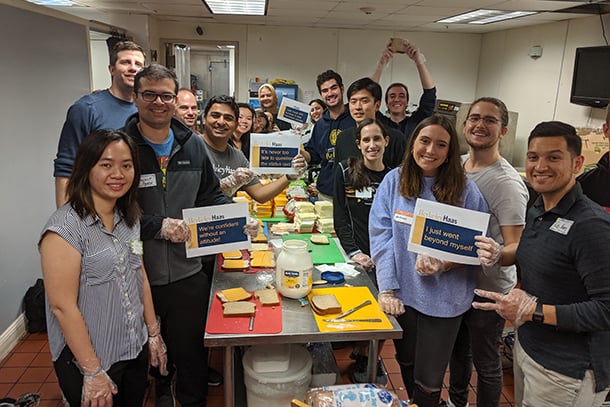
I want them to come out with a sense of Confidence Without Attitude. To me, that’s success. The biggest kick I get out of teaching is not when I'm in the classroom but when I get a phone call or email from a former student who says, ‘Hey, can I pick your brain?’ Teaching is the start of a relationship I can invest in for years. A lot of people invested in me early in my career; this is my chance to pay it back.

The expertise and insight your professors bring helps deepen and enhance your MBA journey. By selecting a top school with top-notch professors, you maximize your experience.

This Blog post was imported into the forum automatically. We hope you found it helpful. Please use the Kudos button if you did, or please PM/DM me if you found it disruptive and I will take care of it. -BB

User avatar
newsHaas
Joined: 13 Nov 2013
Last visit: -
Posts: 709
Own Kudos:
Posts: 709
Kudos: 28
Kudos
Add Kudos
Bookmarks
Bookmark this Post
FROM Haas Admissions Blog: Proud Marine uses EMBA education to create positive change in his community
Alex Lopez is proud of his association with two strong organizations: the US Marine Corps and the University of California, Berkeley. A member of the Berkeley Haas MBA for Executivesclass of 2020, he served five years as a Marine, during which he earned the rank of sergeant E5/team leader and was honored after serving in Benghazi, Libya. Today, he is a vice president and relationship manager with U.S. Bank in Las Vegas, Nevada.


One thing that links the two organizations, according to Alex, is a commitment to principles. Indeed, the Defining Leadership Principles are part of what drew him to Haas. “There have been times when Questioning the Status Quo got me in trouble,” he admits. “Here at Haas, I’m enjoying it and learning how to do it with intention.”

His studies have Alex questioning his own leadership style. “The Leadership Communications immersion week was transformative. My coach Ingrid Gavshon helped me open up so I could share my story of how immigrating to the U.S. from Mexico as a child shaped my character and how it continues to influence my choices,” he explained.

And after just a few months of classes, he is pleased that his colleagues and managers at U.S. Bank notice changes in both style and substance in his approach to work. There is, he says, more polish in his presentations, more focus to his conversations, and “a deeper focus on creating relationships based on trust, which means making more of an effort to understand the other person’s challenges and rewards.”

Alex has high expectations for his career growth and appreciates that his EMBA classmates are equally demanding of themselves. “The skill level and diversity in our cohort is amazing, from physicians to engineers to nonprofit executives,” he said. “Everyone contributes something unique to the conversation. At the same time, there is genuine curiosity and humility.”

He credits the Haas faculty for capitalizing on the experience represented among the members of the EMBA student body. “They are uniformly inclusive and relatable. They strike a good balance between theory and practical, real-world lessons." He cites the example of Professor Homa Bahrami, who brings years of experience with major companies to the classroom when she teaches Creating Effective Organizations. He adds, “As an immigrant, I appreciate that many of the faculty are immigrants as well, who have built strong careers here.”

Alex also has ambitions to share his knowledge of finance with the Latinx community in Las Vegas. He and a few college friends have developed a financial literacy workshop. They go into community schools to teach about topics like compound interest, retirement plans, home mortgages, personal and business loans, and credit cards. “My years in banking mean I’m familiar with all of the topics we need to teach, but the skills and connections I’m building at Haas will allow us to take the workshop to the next level and make an even broader impact in a community that needs this kind of education.”

Learn about veterans funding for the Berkeley Haas MBA for Executives program.

This Blog post was imported into the forum automatically. We hope you found it helpful. Please use the Kudos button if you did, or please PM/DM me if you found it disruptive and I will take care of it. -BB
User avatar
newsHaas
Joined: 13 Nov 2013
Last visit: -
Posts: 709
Own Kudos:
Posts: 709
Kudos: 28
Kudos
Add Kudos
Bookmarks
Bookmark this Post
FROM Haas Admissions Blog: Former Coast Guard skipper and sales exec explores the academic side of business
The Crab Fisherman’s Ball in the tiny town of Trinidad on California’s north coast was a critical turning point for Joe Odell, EMBA 20, who’s faced several major junctions in his career.


Born and raised in Redding, Joe had been a white-water rafting instructor, a deckhand on a Columbia River stern-wheeler cruise ship, and had just finished a physically demanding season as a crab fisherman.

At the ball, he says, “I saw all these old weather-beaten sailors. But they were actually in their late 40s, with bad backs and practically needing walkers. I asked them if they had it to do over again would they. They all said ‘Nope.’”

So Joe joined the Coast Guard, where he rose to Boatswains Mate 2nd Class and was stationed in Alameda, California, and Cleveland, Ohio. He even spent three months at the helm of a drug interdiction cutter off the coast of  Columbia, South America. He loved the Coast Guard, but after four years he was married with two children and felt he needed a less peripatetic life.

Joe moved his family back to his hometown and joined 511 Enterprises, a growth consultant firm. Named after the Biblical parable of the talents in which a servant turns five talents into 11, the firm offers a full-service business/talent incubator and growth center for B2B technology companies. Over six years he moved from unpaid intern to director of business development.

After a while, he says, “I knew a lot about sales and tried to learn more about business and management through books, blogs, and video, but I knew I was plateauing.” 

That’s when he applied to the Berkeley MBA for Executives program. The reasons were simple: He wanted an outstanding school that offered an executive program at a public university where he could maximize his Post 9/11 GI Bill benefits.

But there was some trepidation.

“I was a little concerned about how accepting everyone would be in Berkeley,” says Joe. “I’m Redding moderate, which is not the same as a Berkeley moderate. Plus, I have a military background, and I hunt and fish.”

This is a place that wants people to achieve the full expression of themselves."

 Joe’s roots in the Redding area go deep. He’s a member of the Nor Rel Muk band of the Wintu Nation. His great-great-grandmother was one of only five people, all children, to survive the 1852 Natural Bridge Massacre of 150 Wintu near the town of Hayfork, west of Redding. 

His hometown is conservative, he says, “but while I’m not politically aligned with Berkeley, I am emotionally aligned. This is a place that wants people to achieve the full expression of themselves. It turns out I didn’t need to be guarded,” he adds. “My classmates and I have had great conversations, even great political conversations.” 

Now in his second semester, Joe is enjoying the diversity he finds in the EMBA program.

“Over half of our class wasn’t born in the US,” he says. “I can learn something from everyone, about anything.”


Joe says the core coursework has been challenging. But he says he’s already used what he’s learned in the finance and accounting courses to better analyze his clients.

“The marketing class also has been very good,” he says. “I’ve known the theory, but I didn’t know the underlying science of marketing, with calculations and data.”

Joe claims that the executive program gets the best professors.

“The top professors are doing research,” he says. “So they want to interact with executives from all kinds of industries. They tell us they learn something from teaching the class, and there is a ton of value in that.”

Joe says he’s looking forward to courses on management and leadership. His varied life has taught him a lot about both, which he’s written about in LinkedIn blog posts. Like why sometimes doing the right thing means breaking the rules, even in the military. It’s a description of taking an unauthorized risk during a sea rescue when he commanded a Coast Guard vessel. Or the lesson in humility and the need to seek help he learned after a painful encounter with a Portuguese Man of War. Even a doomed squirrel in the middle of the road offers a poignant lesson about decisiveness.

But when it comes to leadership, he wants to know more.

“In the military,” he says, “a leader has an advantage in that obedience is required; while in civilian life, you can have dissension and whether people follow you is something that has to be fostered. I think I do a lot of things well intuitively because I have experience and a high amount of empathy. But I don’t know the science of leadership, and a big part of that is understanding what outstanding people in business have done to achieve greatness. It’s that exposure to other ways of leading that I’ll get at Berkeley Haas.”

Learn about veterans funding for the Berkeley Haas MBA for Executives program.

This Blog post was imported into the forum automatically. We hope you found it helpful. Please use the Kudos button if you did, or please PM/DM me if you found it disruptive and I will take care of it. -BB

User avatar
newsHaas
Joined: 13 Nov 2013
Last visit: -
Posts: 709
Own Kudos:
Posts: 709
Kudos: 28
Kudos
Add Kudos
Bookmarks
Bookmark this Post
FROM Haas Admissions Blog: How two MBA grads are helping people from underrepresented communities to financially flourish
Pedro Moura, MBA 18, and Jessica Eting, MBA 18, share similar backgrounds, passions, and vision. Both come from immigrant families and witnessed firsthand their parents’ financial struggles. From those experiences, they each developed a drive to improve the lives of people in underserved communities.


During their time in the Berkeley Evening & Weekend MBA program, that shared drive evolved into their startup, Flourish Savings. An online and mobile platform, Flourish uses games and rewards to encourage people to save money, pay off debt, and build financial security.

Here the two cofounders share how their Haas experience helped them on their entrepreneurial journey.

What role did Haas play in your decision to partner and launch Flourish?
P: We were in Applied Innovation, a class where you pitch a problem you want to spend the course tackling. I pitched how to make personal finance more fun, and Jessica pitched a project around financial literacy for underserved consumers. We formed a team to explore how we could tackle both problems. After about four months, we decided to invest an additional 10-15 hours a week to test whether we could continue to collaborate, and we haven’t looked back since.

J: We had a real connection because of our backgrounds. What solidified it was our involvement with the Net Impact club. We served as co-vice presidents and spread the knowledge around social impact within our cohort. That allowed us to dive deeper into our shared goals. Even though entrepreneurship wasn’t originally the direction I wanted to go in, we had such aligned values and worked so well together, it made entrepreneurship seem like a feasible direction for me. 

Which courses and faculty members helped you the most and how?
P: The Leadership Communication class was really critical for me. I reflected on my personal journey and learned to own my story. That included being undocumented in the US, my mom having to clean houses to make ends meet, and coming from a family that shared a one-bedroom house with three other families. Those were things I was embarrassed to share. But I was able to share at Haas and then create products and services to make life better for the community I came from. That was really empowering.  

For faculty, I’d say Clark Kellogg—the way he approached understanding a problem, creating prototypes, tests, validation, and building the knowledge needed to get to the next step. Also, Jorge Calderon, who was one of my mentors in the LAUNCH accelerator. He opened up a lot of his contacts to us and challenged us regarding the value we wanted to create with Flourish. 

J: Certainly Jorge Calderon. There’s something about having somebody who is willing to push and challenge you, but in a way that shows he really cares. Ben Mangan was another big influence. He founded a nonprofit that worked with the population we’re trying to reach. He opened up his network to us and brought challenges from his real-life experience that helped us shape what we are doing.

How did your Trione Student Venture Fund grant and time in the LAUNCH and SkyDeck accelerators support your journey?
P: The Trione funds helped us build our prototype. We used LAUNCH to refine it and enter our next phase of testing. Out of SkyDeck we started to incorporate our business and built the foundational pieces of our company. 

J: The connection to free mentors, the workshops provided, and the free knowledge resources were so beneficial—also the conversations we had with other entrepreneurs. Often they had faced the same challenges we were experiencing and could provide advice and point us to helpful resources.

Your first investor was a classmate. What can you tell us about that?
J: Edgar Vigil was someone who truly believed in us and what we’re doing, and he continues to provide support. Whenever we have a challenge where his expertise can help, he’s there for us. When he wrote the check, we were at his graduation party, yet he gave us the present of that first investment. 

P:  He said something like ‘I’ve seen what you guys are starting to build; I believe in what you’re doing, and here’s my vote of confidence.’ 

Jessica, how did you blend starting a family with starting a business?
J: It’s been the joke that Flourish and my daughter Sienna Kaya (now nine months old) are my twins! Both are my babies that I’m bringing into the world. There were lots of sleepless nights, because I didn’t know if we were making the right decisions for the business. I was also up nights wondering if I was eating the right things for my developing baby. So it was nurturing the business, nurturing the baby, and learning to roll with the challenges. Being an entrepreneur is a 24/7 job. So is being a mother. So you need to build support systems around you. 


I was able to take some time beyond maternity leave, especially during critical moments of Flourish, knowing that I had full support from my cofounder. That’s a big part of what we want to ensure we do as a company—to value people and their needs. 

What advice do you have for aspiring entrepreneurs?
P: Entrepreneurship can be really daunting, but if you want to change and evolve and create your own reality, don’t wait to put yourself out there. The sooner you can start to articulate to others what’s important to you, the sooner you’ll find like-minded individuals.

J: Believe in yourself and believe in what you are capable of building. You may question whether or not you can step outside of your comfort zone or absorb the risk of entrepreneurship. It’s difficult, but if you truly believe in what you want to create, then it’s worth the effort.

This Blog post was imported into the forum automatically. We hope you found it helpful. Please use the Kudos button if you did, or please PM/DM me if you found it disruptive and I will take care of it. -BB
User avatar
newsHaas
Joined: 13 Nov 2013
Last visit: -
Posts: 709
Own Kudos:
Posts: 709
Kudos: 28
Kudos
Add Kudos
Bookmarks
Bookmark this Post
FROM Haas Admissions Blog: Two MBA grads help communities financially flourish
Pedro Moura, MBA 18, and Jessica Eting, MBA 18, share similar backgrounds, passions, and vision. Both come from immigrant families and witnessed firsthand their parents’ financial struggles. From those experiences, they each developed a drive to improve the lives of people in underserved communities.


During their time in the Berkeley Evening & Weekend MBA program, that shared drive evolved into their startup, Flourish Savings. An online and mobile platform, Flourish uses games and rewards to encourage people to save money, pay off debt, and build financial security.

Here the two cofounders share how their Haas experience helped them on their entrepreneurial journey.

What role did Haas play in your decision to partner and launch Flourish?
P: We were in Applied Innovation, a class where you pitch a problem you want to spend the course tackling. I pitched how to make personal finance more fun, and Jessica pitched a project around financial literacy for underserved consumers. We formed a team to explore how we could tackle both problems. After about four months, we decided to invest an additional 10-15 hours a week to test whether we could continue to collaborate, and we haven’t looked back since.

J: We had a real connection because of our backgrounds. What solidified it was our involvement with the Net Impact club. We served as co-vice presidents and spread the knowledge around social impact within our cohort. That allowed us to dive deeper into our shared goals. Even though entrepreneurship wasn’t originally the direction I wanted to go in, we had such aligned values and worked so well together, it made entrepreneurship seem like a feasible direction for me. 

Which courses and faculty members helped you the most and how?
P: The Leadership Communication class was really critical for me. I reflected on my personal journey and learned to own my story. That included being undocumented in the US, my mom having to clean houses to make ends meet, and coming from a family that shared a one-bedroom house with three other families. Those were things I was embarrassed to share. But I was able to share at Haas and then create products and services to make life better for the community I came from. That was really empowering.  

For faculty, I’d say Clark Kellogg—the way he approached understanding a problem, creating prototypes, tests, validation, and building the knowledge needed to get to the next step. Also, Jorge Calderon, who was one of my mentors in the LAUNCH accelerator. He opened up a lot of his contacts to us and challenged us regarding the value we wanted to create with Flourish. 

J: Certainly Jorge Calderon. There’s something about having somebody who is willing to push and challenge you, but in a way that shows he really cares. Ben Mangan was another big influence. He founded a nonprofit that worked with the population we’re trying to reach. He opened up his network to us and brought challenges from his real-life experience that helped us shape what we are doing.

How did your Trione Student Venture Fund grant and time in the LAUNCH and SkyDeck accelerators support your journey?
P: The Trione funds helped us build our prototype. We used LAUNCH to refine it and enter our next phase of testing. Out of SkyDeck we started to incorporate our business and built the foundational pieces of our company. 

J: The connection to free mentors, the workshops provided, and the free knowledge resources were so beneficial—also the conversations we had with other entrepreneurs. Often they had faced the same challenges we were experiencing and could provide advice and point us to helpful resources.

Your first investor was a classmate. What can you tell us about that?
J: Edgar Vigil was someone who truly believed in us and what we’re doing, and he continues to provide support. Whenever we have a challenge where his expertise can help, he’s there for us. When he wrote the check, we were at his graduation party, yet he gave us the present of that first investment. 

P:  He said something like ‘I’ve seen what you guys are starting to build; I believe in what you’re doing, and here’s my vote of confidence.’ 

Jessica, how did you blend starting a family with starting a business?
J: It’s been the joke that Flourish and my daughter Sienna Kaya (now nine months old) are my twins! Both are my babies that I’m bringing into the world. There were lots of sleepless nights, because I didn’t know if we were making the right decisions for the business. I was also up nights wondering if I was eating the right things for my developing baby. So it was nurturing the business, nurturing the baby, and learning to roll with the challenges. Being an entrepreneur is a 24/7 job. So is being a mother. So you need to build support systems around you. 


I was able to take some time beyond maternity leave, especially during critical moments of Flourish, knowing that I had full support from my cofounder. That’s a big part of what we want to ensure we do as a company—to value people and their needs. 

What advice do you have for aspiring entrepreneurs?
P: Entrepreneurship can be really daunting, but if you want to change and evolve and create your own reality, don’t wait to put yourself out there. The sooner you can start to articulate to others what’s important to you, the sooner you’ll find like-minded individuals.

J: Believe in yourself and believe in what you are capable of building. You may question whether or not you can step outside of your comfort zone or absorb the risk of entrepreneurship. It’s difficult, but if you truly believe in what you want to create, then it’s worth the effort.

This Blog post was imported into the forum automatically. We hope you found it helpful. Please use the Kudos button if you did, or please PM/DM me if you found it disruptive and I will take care of it. -BB
User avatar
newsHaas
Joined: 13 Nov 2013
Last visit: -
Posts: 709
Own Kudos:
Posts: 709
Kudos: 28
Kudos
Add Kudos
Bookmarks
Bookmark this Post
FROM Haas Admissions Blog: Former Marine translates MBA to new career in finance and consulting
Ben Vickery, MBA 19, knows a thing or two about transition and translation.


During his military career, he worked in the Marine Corps as a cryptologic linguist. Fluent in Pashto, he was sent to Afghanistan to do signals intelligence for the National Security Agency. The job taught him about teamwork and leadership. 

After five years of service, Ben transitioned to civilian life, studying finance and economics at Columbia University. Upon graduating, he joined Google as a general financial associate, building and refining internal processes for compliance. That job cultivated analytical skills—managing risk, increasing efficiency, and reducing outsourcing needs. 

He loved working for Google. But he found himself craving a role with more input into strategy. He wanted to translate his hands-on skills to big-picture thinking. To help make that transition, he applied to the Evening & Weekend MBA Program at Berkeley Haas. 

“It was an opportunity to further bolster some of the leadership qualities I had gained in the military and combine them with analytical abilities I had honed working for Google,” he says. 

As an evening & weekend student, Ben found himself able to take what he was experiencing on a day-to-day basis at Google and bring it into the classroom. From case studies that paralleled work initiatives to rethinking forecasting models, the curriculum mirrored many of the things he dealt with every day on the job. 

After two semesters at Haas, he transitioned into a new role at Google, focusing on strategy and operations. Again, his classes translated directly to his new job. 

“A big part of the curriculum is making decisions not just for immediate returns but for long-term gains,” he says. 

Ben plugged into campus life by joining student clubs like the Consulting Club, which puts on an annual “firm night” to give students face time with firms like Strategy&, Bain, ECG, McKinsey, Deloitte, Accenture, and smaller boutique firms. “You learn about the culture of each firm, the people who work there, and what they’re looking for in new hires.” 

Through the Finance Club, Ben became a principal for the Haas Socially Responsible Investment Fund, a student-run fund that manages around $3 million. The wholly owned fund helps finance the Center for Responsible Business, part of the Institute for Business & Social Impact at Haas. “The idea is to prove we as students can manage a fund with an eye on companies that are doing well—while doing good.” 

Ben even had time to volunteer for VetNet, a group that helps military veterans transition to civilian careers. He teaches Four Block, “a career transition boot camp where we work on everything from resumes and networking to interviewing skills,” Ben says. “Many people had helped me through the same process—it was important for me to pay it forward.” 

Before graduating, Ben managed yet another career transition for himself, this time from Google to consulting. 

Through an interview facilitated by the Haas Career Management Group, Ben decided to join Strategy&, the consulting arm of PwC. It was an instant match. “I interviewed with them and had an offer the same day,” he says. 

As a senior associate in private equity value creation, he now consults with private equity firms, guiding his clients through the M&A process. The work is fast-paced, and the firms he advises range widely across industries. “I could be working on a CPG company one day, a software company the next, and the following day something in energy or life sciences,” he says. 

You could say his education translates as well as Ben does to an ever-changing world.

This Blog post was imported into the forum automatically. We hope you found it helpful. Please use the Kudos button if you did, or please PM/DM me if you found it disruptive and I will take care of it. -BB
User avatar
newsHaas
Joined: 13 Nov 2013
Last visit: -
Posts: 709
Own Kudos:
Posts: 709
Kudos: 28
Kudos
Add Kudos
Bookmarks
Bookmark this Post
FROM Haas Admissions Blog: Honoring student veterans and how they continue to serve at Berkeley Haas
Today and everyday, Berkeley Haas celebrates veterans everywhere. We've built a strong community of veterans here at Haas. This year, we have 78 US military veterans in our MBA programs. "Every year, our student veteran community grows, enriching our campus with their unique insights, wisdom, leadership, and unyielding dedication to helping others," says Dean Ann Harrison.

We've created a community that offers support and encouragement to military MBA students during their studies and beyond. Their unique perspectives on leadership and commitment are powerful reminders of our defining leadership principle Beyond Yourself.

We celebrate our student veterans—and how they continue to serve here at Haas—in this video.


Want to hear what makes Haas culture unique from the military student perspective? Attend one of our online chats to hear directly from some of our past and present veterans at Haas.

MBA FOR EXECUTIVESCHAT
EVENING & WEEKEND MBACHAT
FULL-TIME MBACHAT


Not sure which MBA program is right for you? Compare MBA programs.

This Blog post was imported into the forum automatically. We hope you found it helpful. Please use the Kudos button if you did, or please PM/DM me if you found it disruptive and I will take care of it. -BB
User avatar
newsHaas
Joined: 13 Nov 2013
Last visit: -
Posts: 709
Own Kudos:
Posts: 709
Kudos: 28
Kudos
Add Kudos
Bookmarks
Bookmark this Post
FROM Haas Admissions Blog: MBA student looks for exploratory intersections of new ideas, people
Matt Dunn, EMBA 19, is always picking up new things to learn and seeking to expand his world with new people and ideas. During his time at Haas, this impulse has crystallized into a dependable modus operandi through immersion experiences, coursework, and service opportunities. In fact, his participation in the Silicon Valley Entrepreneurship Immersion week with Professor Toby Stuart was a key part of his learning.


“That particular immersion week was great," he says. “Toby teaches that new ideas and opportunities arise when you put yourself at the crossroads of flows of interesting ideas and people. It takes some practice to learn to notice these ‘exploratory intersections’ in our lives, but it's worth it.”

Prior to his current job at Cordis, Matt served seven years as an officer in the US Navy, both deployed on a submarine and as a controller for operations in Europe and Africa. He sees parallels between his work there and pursuing the executive MBA, a 19-month program which consists of five field immersions and course “blocks” (three-to-four-day class sessions that convene once a month) over five terms.

“On the submarine, you're in a high-pressure environment for long hours, and you have to pay close attention the whole time,” he says. “It's a similar type of mental stamina needed in the executive program.”

Part of what Matt has learned about himself during his time at Haas is that he wants to focus the energy of his day-to-day work on leadership and strategy rather than product or processes. He seeks to take a big-picture view in business. He was inspired in this by Professor Peter Goodson's Turnarounds: Effective Leadership in Crisis course.

“Peter taught us how to come into a business situation, understand what's causing the chaos, and move in a strategic direction to mitigate that,” Matt says.

His participation in the Berkeley Board Fellows program, a seven-month fellowship that pairs MBA students with nonprofits around the Bay Area to serve as board members, has also shaped Matt's macro perspective. He started last October with Sweetwater Spectrum, an organization that provides housing solutions for autistic adults; the partnership was so successful that he was asked to continue on the board beyond the April end date.

“Working with Sweetwater has been a fantastic practical experience,” he says. “I've gotten the chance to apply what I've learned straight from the classroom to the boardroom, and to think about business problems from different angles.”

Haas itself is an exploratory intersection point, and studying here has allowed him to better define his own career trajectory as well as learn from his peers. It also offered a unique family bonding experience. Matt’s wife and two young children journey with him from their home in Fremont every month to enjoy their own Berkeley block adventure, visiting museums, campus, and local parks while he's in class.


“The whole cohort experience has been special,” he says. “There's this base layer of learning the disciplines of finance, economics, and operations, but there's also the challenge to discover what's important to you and to bring your best self to the table—while also appreciating what others have to offer. Haas has helped me investigate how to incorporate broader themes like social impact and entrepreneurship into my work life, and has encouraged me to pursue what energizes me.”

This Blog post was imported into the forum automatically. We hope you found it helpful. Please use the Kudos button if you did, or please PM/DM me if you found it disruptive and I will take care of it. -BB
User avatar
newsHaas
Joined: 13 Nov 2013
Last visit: -
Posts: 709
Own Kudos:
Posts: 709
Kudos: 28
Kudos
Add Kudos
Bookmarks
Bookmark this Post
FROM Haas Admissions Blog: Haas MBA questions the status quo as a matter of course
Tess Peppers, MBA 19, attended every single admissions event she could when she was applying to Berkeley Haas, including one at which then-Dean Lyons spoke. She'd noticed that the evening and weekend MBA program had a low percentage of women students—about 28%—and after his talk she asked him about it.


“I asked why he thought the percentage of women in the program was low, and he said that it had to do with the pipeline, and with the stages of life women were in regarding family building," she says. "I didn't think that was an acceptable answer. When people refer to ‘pipeline issues’ it begs the question not only of why the pipeline isn't bigger, but also whether the population you want to attract can envision themselves as participants in the community.”

Particularly for students who were also parents, Tess noticed that Haas wasn't highlighting UC Berkeley's childcare options—of which there are many. And sometimes student parents' needs were overlooked. For example, the new Chou Hall, considered to be the nation's greenest academic building, had no nursing room. (It does now.)

Disrupting how things have always been and creating a new way of being takes teamwork."

“During orientation weekend—jam-packed, no free time—one of my classmates kept disappearing for an hour. It turns out she was running back to her hotel to nurse,” Tess recalls.

By fall of 2017, Tess had put together a volunteer effort modeled after a similar initiative the full-time MBA program had established that matched current students with women applying to Haas, offering encouragement and support.

“We got together with professors and the admissions office staff, identified all the women who were applying, and paired them with a female student or alumna to have one-on-one conversations throughout the application process,” Tess says.

By the time she graduated this year, there were 60 volunteers, many of whom had benefited from this one-on-one support themselves. In fact, the initiative boosted the percentage of women students from 28% in the class of 2019 to 33% in the class of 2021. It is now called the Admission Ambassadors Program and is being used with a variety of population groups underrepresented at Haas.

The importance of childcare isn't an abstract idea for Tess. She came to motherhood young, in the middle of the 2008 recession, so staying home with her child wasn't a choice. She had to work. Her own experience with juggling childrearing and career got her passionate about the issue of childcare—so passionate, that when she graduated from Haas she accepted a job with Wonderschool, a network of in-home childcare programs.

“When I talk to fellow parents now, especially women who have taken time off from their careers to raise their children, they describe a real struggle, an identity crisis. It's like they stay home because it feels too complicated to integrate work and raising children. Childcare needs to be a given. Without it, women are often prevented from participating fully in the workforce,” she says.

Disrupting how things have always been and creating a new way of being takes teamwork, Tess says, noting that the success of the applicant support program couldn’t have been accomplished without help from her peers.

“None of this was possible for me to do just on my own,” she says. “So many classmates helped, and I'm grateful for that. It takes all of us to ‘move the needle’ when it comes to diversity, equity, and inclusion.”


This Blog post was imported into the forum automatically. We hope you found it helpful. Please use the Kudos button if you did, or please PM/DM me if you found it disruptive and I will take care of it. -BB
User avatar
newsHaas
Joined: 13 Nov 2013
Last visit: -
Posts: 709
Own Kudos:
Posts: 709
Kudos: 28
Kudos
Add Kudos
Bookmarks
Bookmark this Post
FROM Haas Admissions Blog: Student Always, this Marine also had a lesson or two to teach
When Staff Sergeant Edgar Vigil, MBA 18, left the Marine Corps, he started intensive training right away—but this time it was on how to transform himself into a civilian.


“Leaving the military and transitioning into civilian life is difficult because you have to translate your skills,” he says. “But how do you translate shooting a rifle or launching grenades into the business world?”

Edgar is half joking. With nine years in the Marines, he was indeed a rifleman—every Marine is. But he was also an expert on the F/A-18 fighter jet radar system, a combat marksmanship instructor, and a specialist in process improvement.

But he’s serious about training to be a civilian. 

“I went on to YouTube and Google to teach myself because it’s a different world,” says Edgar. “In the military you say “sir,” but you don’t in the business world and you certainly don’t salute! But what’s the body language? How do you greet people? How hard do you shake hands? And in the business world, people don’t have to obey orders. Instead, you have to use your influence. And you have to learn how to write a resume, do an interview, and follow up. It was a big endeavor.”

Fortunately, Edgar had several things going for him. In the Marines, through extensive course work, he’d become an expert in Lean Six Sigma, a method for improving the quality and efficiency of business operations. 

That training, plus a prospective boss who was also a military vet, got him a job at Kaiser Permanente. Then it was on to Blue Shield, then Walmart and Facebook.

In the Marine Corps, everything was black and white. Taking a class on innovation forces you to think more creatively and abstractly."

After a few years, Edgar thought, “I knew I’d been the best Marine I could be, but I didn’t think I was the best civilian I could be.” For that, he says, in the business world, an MBA was a baseline requirement. 

Berkeley Haas was an obvious choice, as it is for many veterans, in part because it’s a public institution, and under the Post-911 GI bill, Edgar qualified to receive full tuition. Also, Berkeley’s Evening & Weekend program enabled Edgar to continue working at Facebook. 

And then there was Richard Lyons. Edgar says he was influenced by a YouTube presentation by the former Berkeley Haas dean on why veterans related to the school’s four Defining Leadership Principles. A personal call from Dean Lyons sealed the deal.

Edgar had already come a long way before he walked on campus. Born in Salinas, the son of an immigrant farming family from Michoacán, Mexico, he followed his older brother and joined the Marines straight out of high school. During his nine years in the corps he earned a bachelor’s degree in business, taking classes on Marine Corps bases through Columbia College.

Still, Edgar says he felt a bit of “imposter syndrome” as he approached the first semester at Haas. “I’d never been a student in a traditional campus environment with fellow students that were not military,” he says. “And that’s an experience I wanted.” But was he prepared, was he qualified, did he belong?

The way he handled what he calls this “mental barrier” was “to practice my story,” he says. “As cliché as it sounds, I would tell myself that I can do anything I set my mind on. As long as I follow my values and principles, nothing can hold me back.”

The image he drew on was sitting on a stump, listening to that same advice from his grandfather on family visits to the village of La Lobera, Mexico.

He also immersed himself in the Berkeley Haas culture by going to mixers and networking events. 

“People opened up to me,” he says. “They were inquisitive about why I joined the military. They were genuinely interested in my story and said it opened their eyes to a different way of thinking. That gave me the feedback that said I did belong.”

So far, one of Edgar’s favorite courses at Berkeley is Negotiations and Conflict Resolution. He also liked the Power & Politics in Organizations course.

“It’s about the different sources of power people have,” he says, “whether it's being an expert, or the position you hold, or rewards you can give.”

The toughest course for Edgar was the Applied Innovation course. 

“In the Marine Corps, everything was black and white,” Edgar says. “Taking a class on innovation forces you to think more creatively and abstractly.”

Of course, a Marine Corps staff sergeant has a few things to teach as well. Edgar says sometimes when a classmate is worrying over a problem he’ll ask: “Is anyone shooting at you? Anyone lobbed a grenade? Well then, maybe you’re still OK.”

Learn about veterans funding for the Berkeley Haas Evening & Weekend MBA program.

This Blog post was imported into the forum automatically. We hope you found it helpful. Please use the Kudos button if you did, or please PM/DM me if you found it disruptive and I will take care of it. -BB
User avatar
newsHaas
Joined: 13 Nov 2013
Last visit: -
Posts: 709
Own Kudos:
Posts: 709
Kudos: 28
Kudos
Add Kudos
Bookmarks
Bookmark this Post
FROM Haas Admissions Blog: Take 5 with Dave Rochlin
One of the advantages of attending a top business school is the opportunity to learn from faculty like Dave Rochlin. Innovation and hands-on learning are central to him as an entrepreneur and as a professor at Berkeley, where he’s as much a coach as lecturer.


Rochlin leads the Innovation Creativity and Design Practice at Haas, a schoolwide curriculum around design thinking. He co-developed and co-teaches the core course Fundamentals of Design Thinking as well as the applied learning course Haas@Work. In the Evening & Weekend MBA program, he leads We Innovate, a foresight and exponential design sprint that unites the entire cohort. Students have regularly voted Dave a place in Club 6 (professors who score at least six on a seven-point scale on student evaluations).

He brings his experience as a consultant and former executive in both NGOs and technology pioneers to his teaching. A frequent writer and speaker, he is the author of Hunter or Hunted: Technology, Innovation, and Competitive Strategy, an examination of the myths and realities that determine why some firms succeed and other fail in adopting or introducing new technology.

You have had a successful career as a social entrepreneur and continue to consult. Why is it important for you to teach as well?
I think the consistent answer that you’ll get from any dedicated teacher is that it’s fulfilling to help shape students toward whatever their goals and dreams are. As a professor, you get to help people optimize their own path. But at Berkeley, you are also part of an amazing community. Just last week, for example, I had a conversation with an executive team facing challenges in the software field, attended a panel discussion on sustainable innovation, met with teaching colleagues about revising one of our classes, talked with several students about their careers, and chatted with a Business Insider reporter about the metrics of an upcoming IPO. We have a fantastic ecosystem here.

I have a very low tolerance for boring."

How would you describe your teaching style?
There are different styles, including ‘sage on the stage’ or ‘guide on the side.’ I tend toward the latter. Many of my classes have experiential components, where you’re really more of a coach. I enjoy that, and I think MBAs enjoy learning by doing . . . with good counsel. I do have some lecture-style courses, but even then, I often flip the classroom, so that students do some of the presenting, and work through issues. I have a very low tolerance for boring, and I think Berkeley faculty are really great at bringing creativity to the classroom. I know if I see a good idea from another class, I’ll steal it right away.

What is your favorite classroom activity or assignment?
The Haas@Work innovation agency class is super hands-on. The client deliverable at the midpoint of the class is a pitch session. Students work with real clients with real issues—like how to take advantage of new 5G networks, or how to switch people from bottled water to filters. The students will already have taken the core fundamentals of design thinking class, so they have learned an innovation framework of discovery, problem framing, and developing possible solutions. But in this case, students pitch their ideas and offer a variety of possible concepts to the company. The format is very prototype-and-iterate oriented, and students are sometimes out of their comfort zone with this approach. But they trust the process and do great work, and the clients really love it.


How would you describe Haas students?
They’re very diverse and accomplished, and have so many different work and life experiences. They also are incredibly supportive of one another. What I really like is that they are interested in exploring their own paths. Haas is a relatively small business school, so students often end up not just engaged in, but leading a lot of activities. They can shape their own experience, like HaasID [Innovation Design], a student-run community that focuses on how creative thinking in design fits into business.

What do you like about teaching students in the Evening and Weekend and Full-Time MBA programs? 
In some ways, of course, they’re very similar, because Haas is Haas. But there are some differences. The Evening and Weekend students are often motivated by career transformation, and they are looking for a fairly immediate chance to use the tools they learn. It keeps you on your toes making sure what you’re teaching is not just about theory but also about practice. Full time students are taking more classes at once, so in this case you have to be able to relate to the material from their other classes—both talk about the similarities and confront the apparent contradictions. They are looking for relationships among ideas and topics that will be useful in their career decision-making.

The expertise and insight your professors bring helps deepen and enhance your MBA journey. By selecting a top school with top-notch professors, you maximize your experience.

Read more from the Take 5 with a Professor series:
This Blog post was imported into the forum automatically. We hope you found it helpful. Please use the Kudos button if you did, or please PM/DM me if you found it disruptive and I will take care of it. -BB
User avatar
newsHaas
Joined: 13 Nov 2013
Last visit: -
Posts: 709
Own Kudos:
Posts: 709
Kudos: 28
Kudos
Add Kudos
Bookmarks
Bookmark this Post
FROM Haas Admissions Blog: Shifting from finance to a healthcare startup was an offer he couldn't refuse
When the call offering the perfect career opportunity comes, you take it. Then maybe you go get an MBA to ensure your success. 

For much of his early career, Justin Li, MBA 22, wanted to have some social impact. “I often thought I should have been a doctor,” he says.


Instead, he earned a BS in finance at the University of Colorado. Then he dove deeply into hard-core finance, first at Phillips 66, where he forecast fuel derivatives markets, then at FactSet, a major financial data provider for institutional asset managers, where he set up its Los Angeles office and led its consulting business.

Then he got the call. It was from his father, Shu Li. The elder Li had founded and sold a number of high tech companies. And he’d formed another: Laboratory for Advanced Medicine (LAM), a startup early cancer detection company that focuses on advanced DNA methylation techniques.

“I was happy at FactSet, and while I’d been following what he was doing, my father hadn’t asked me to join him at LAM, and I hadn’t asked. But then I was home one weekend and he just said, ‘I’m working on this once-in-a-lifetime effort to save lives,’ ” says Justin.

“Everything else pales in comparison. He asked me to join him and, as they say, it was an offer I couldn’t refuse.”

Justin says he wanted to earn an MBA in part to expand his network of colleagues in the field but also to acquire new leadership skills to address the unique challenges he’s facing in his new role. The company recently received Breakthrough Device designation from the FDA, awarded to novel technologies that address life-threatening or irreversibly debilitating diseases.

“In a small startup, it’s really belt and suspenders, trial by fire,” he says. “There isn’t a formal infrastructure in startup companies that can teach you how to lead with data-driven methods that are proven to work.”

At Haas, everyone is extremely disarming, friendly, and open."

Though he started at Berkeley’s evening & weekend MBA program just this year, Justin points to several key concepts he’s learned from Rebecca Portnoy’s Leading People course that are proving useful at LAM. 

“The first one that struck me was that employees aren’t necessarily motivated by money,” he says. “I’ve always had motivations other than money, but, I know it sounds absurd, I didn’t know others felt that way, too.” 

As general manager at LAM, in addition to finance duties, like securing a series B fundraising, he’s responsible for bridging the strategic goals of the executive team with the rest of the organization. That means knowing what motivates the scientists, marketers, accountants, and others that he works with daily.

He points to another concept that he learned in Rebecca Portnoy’s class: the idea of fixed versus growth mindsets. 

“If you have a fixed mindset and you don’t reach a goal,” says Justin, “then you tend to focus on blame—that you aren’t intelligent or you’re not cut out for the job. And you may give up. But if you have a growth mindset and you get constructive criticism, you can learn from it and get better.”


One key for a leader, he says, is to be able to frame questions to incorporate a growth mindset, which can mean focusing less on the result achieved and more on the effort expended. Many times, there’s a disconnect between an employee’s efforts and the bottom-line results because there are factors outside of their control.

That more humanistic approach was important to Justin.

“A lot of why I chose Berkeley Haas had to do with its culture,” he says. “They have these four Defining Leadership Principles, and one of these is Confidence Without Attitude. When I visited other campuses, people had egos; they wanted to grow, but they didn’t necessarily want you to grow. But at Haas, everyone is extremely disarming, friendly, and open. People aren’t always trying to be CEO of the group. It’s an environment in which you can learn and grow.”

So, what kind of leader does Justin want to become?

“I want to be a leader who empowers people,” he says. “We have a mix of people here at LAM. We have the analytical types, the businesspeople, the marketers, the scientists with PhDs or MDs. To coordinate their efforts, your leadership style has to accommodate people and what drives them, because you want them to be competent in their jobs and confident in improving what they do.”

And as for having that social impact he desired?

“With a finance background and working on ways to detect cancer, I feel I’m in the exact right place because this allows me to leverage what I’m good at to make a positive impact on people’s health and wellness. It’s humbling to work with some of the best doctors and scientists out there…for the greater good.”

This Blog post was imported into the forum automatically. We hope you found it helpful. Please use the Kudos button if you did, or please PM/DM me if you found it disruptive and I will take care of it. -BB
User avatar
newsHaas
Joined: 13 Nov 2013
Last visit: -
Posts: 709
Own Kudos:
Posts: 709
Kudos: 28
Kudos
Add Kudos
Bookmarks
Bookmark this Post
FROM Haas Admissions Blog: Berkeley's Finance and FinTech clubs deepen the MBA experience
The Berkeley Haas MBA program has nearly 70 student-run clubs, ranging from just fun social groups like the Haas Beer Club to career-driven organizations like the two highlighted here. We talk to Mike Doherty, MBA 20, co-president of the 499-member Finance Club and to Anna Soybel, MBA 20, co-president of the 344-member FinTech Club.


What attracts students to your clubs and what’s the focus?
Mike (Finance Club): Relative to a lot of clubs, the Finance Club is very career oriented. Our events, scheduled nearly every day have two purposes: One is to learn more about specific finance issues, like a talk on what search funds are; or a private markets investment workshop, where you talk about what a general partner is and what a term sheet looks like. Then for those who have made a decision on what they want to pursue, it’s all about networking through events and company visits.

Anna (FinTech Club): We have networking mixers and company treks, too. A lot of the FinTech club is focused around the interests people have. The underlying idea across FinTech is that tech can allow us to provide services more efficiently, expand access, and offer a better experience to customers. Within that are various verticals like payments, robo-investing, or personal finance apps that can help you save or manage your finances better. And, of course there’s blockchain and the whole crypto-currency world. The blockchain world at Berkeley expands beyond Haas, so we’re able to partner with groups like Blockchain at Berkeley.

What are some of the issues club members are wrestling with?
Mike: The big talk these days is the reception of IPOs like WeWork and the large consumer-facing companies that haven’t performed as well as people expected, like Uber, Lyft, and Spotify. It’s not like the sky is falling; it’s more like investors are being more selective. It’s also about how a lot of founders or CEOs have put in place share structures that are favorable to their ownership or control. All of this has put more of an emphasis on corporate governance, which is probably a good thing.

Anna: I think one of the issues our members wrestle with is what’s the limit of FinTech? The idea is to provide financial services cheaper and better and to increase access to financial services for people around the world who are unbanked or underbanked. But the thing I come back to is: when is it beneficial and when does FinTech promote things such as predatory lending that could worsen a consumer’s financial health?

Focus areas can evolve depending on what students are interested in."

So, how do the clubs respond to these emerging issues?
Anna: A great thing about clubs is that because they are student-run, focus areas can evolve depending on what students are interested in. For example, there is a ton of enthusiasm at Haas about impact investing—the idea that an investment can have social and financial returns. Clubs and faculty have worked together to develop classes and programming focused on impact investing. 

Mike: Yes, a lot of first years have been asking about it. They want to invest in companies that have a sustainability focus, where the return is both a monetary and a societal good. Where people draw the line is up for debate.

What’s the club culture like?
Anna: I would say that FinTech culture reflects Haas culture. I’ve had such great interactions with people. And what’s special at Haas is that people want to share their expertise and experience. For example, when there is a career opportunity and multiple people are interested in the same job—rather than just compete, they’ll help each other practice their interviews. 

Mike: It’s similar in the Finance Club. But also on the non-career side we get involved in community service events. For example, as part of Professor Omri Even-Tov’s “This is Berkeley Haas” volunteer initiative, Finance Club members made and distributed burritos in Berkeley and Oakland to people who experience food insecurity. The food goes to both UC Berkeley students and to homeless camps where we might also distribute water and dog food for their pets.


How do you see your role in the club?
Anna: One of the fun parts is being able to take what folks in the club are excited about and help make it a reality. A lot of the time I’m fielding questions and requests from students, administrators, and fintech companies, as well as connecting people with similar interests in the full-time and evening & weekend MBA programs.

Mike: Yeah, I agree. When I ran for president, I thought I’d be more in the weeds, setting up events—a figurehead who runs around doing some dirty work. And I do that stuff, but I feel like more of my time is enabling other groups to go on and do what they’re interested in. 

How do you think the clubs reflect the difference between Berkeley and other MBA programs?
Anna: I think one is the emphasis around FinTech and the closeness to Silicon Valley. We’re such a tech-oriented region. We benefit from that.

Mike: Yes, I agree. Also, there is a broader view here. We’re a business school and finance is a key piece. And yet there is a view that has started to change given our class profile. For so many incoming students, it’s less ‘I want to be an investment banker’ and more ‘I want to make transportation better, or improve financial literacy.’

Learn more about co-curricular activities at Berkeley Haas.

This Blog post was imported into the forum automatically. We hope you found it helpful. Please use the Kudos button if you did, or please PM/DM me if you found it disruptive and I will take care of it. -BB
User avatar
newsHaas
Joined: 13 Nov 2013
Last visit: -
Posts: 709
Own Kudos:
Posts: 709
Kudos: 28
Kudos
Add Kudos
Bookmarks
Bookmark this Post
FROM Haas Admissions Blog: Former urgent care doctor finds surprising opportunities in pharmaceutical industry
When Alicea Wu, MD, MBA 16, came to Berkeley Haas, she wanted to expand what she could do with her medical degree.

Her goal was simple: learn the business side of medicine and move into hospital management. Little did she know the array of options that would open for her through the Evening & Weekend Berkeley MBA program.


“Networking with my Haas classmates showed me careers that I never would have considered,” she says. “If you told me five years ago what I would be doing now, I wouldn’t have believed it.”

Today the former urgent care physician serves as director, medical affairs for Gilead Sciences, a global pharmaceuticals company headquartered in Foster City, California. She contributes to Gilead’s medical affairs global messaging and launch strategy for new drugs marketed in North America, Europe, and Asia. Currently, she is working on preparations to launch an investigational rheumatoid arthritis medication to be submitted later this year for FDA approval.

Leap and Learn

Alicea transitioned to Gilead her first year in the Berkeley MBA program. Hired as a director in the drug safety and public health group, she drew from her clinical experience as she explored the safety issues surrounding new medications. At the time, she knew little about the pharmaceutical industry, but proved a fast learner—on the job and in the classroom.

Haas taught me to use my expertise to influence people while still accounting for differences of opinion."

Haas courses such as Commercializing Biotech and Pharma, taught by Kim MacPherson, helped her get up to speed on the commercial side of the pharmaceutical industry. Holly Shroth’s Negotiations course provided tools Alicea uses to this day to gain alignment among diverse team members and, occasionally, to resolve conflicts between her children. 

“I even recently used Holly’s negotiation techniques to win a bid on a house in the Bay Area,” she says.

She also applies lessons gleaned from Operations, led by Pnina Feldman, when outlining processes or drafting strategic documents. 

“Pnina taught me the importance of understanding the details before embarking on a process,” she says. “For example, before I compose a strategic document, I need to understand what the operational process is, who my stakeholders are, and how to communicate the strategic goals to all the different regions in a way that is executable.” 

Influence Without Authority

What she enjoys most about her job is the opportunity to interact with diverse team members and people around the globe. It’s an environment that calls for a different leadership style, one that she learned at Haas.

“Haas taught me how to have influence without authority,” Alicea says. “You don’t necessarily need a certain title or rank to influence others.  You can use your expertise to influence people while still accounting for differences of opinion.”

Faith and Community

Despite a full work and class schedule, Alicea took time to connect with the Haas Christian Fellowship. Her faith, she says, is “at the core of who I am.” 

The group became a supportive haven following her mother’s death from cancer.

“As an urgent care physician, I’m supposed to be able to make people feel better quickly, but I couldn’t make my mom feel better. I was totally unprepared for that,” she says. “People in the fellowship sent me emails, prayed for me, and offered their help.”

Her class cohort also provided a supportive community that encouraged her on her journey. 

“The Haas network is so robust and diverse. It has really broadened my perspective on the type of career paths available to me. Now when I talk with alumni in healthcare, I discover that this person is an entrepreneur, while another is working on new medical devices. I have really enjoyed—and continue to benefit from—that part of the Haas experience.”

Ready for a career change? Explore a multitude of possibilities available through the Berkeley Evening & Weekend MBA program.

This Blog post was imported into the forum automatically. We hope you found it helpful. Please use the Kudos button if you did, or please PM/DM me if you found it disruptive and I will take care of it. -BB
   1  ...  11   12   13   14   15  ...  22