Events & Promotions
| Last visit was: 05 May 2026, 07:26 |
It is currently 05 May 2026, 07:26 |
|
|
Customized
for You
Track
Your Progress
Practice
Pays
07:00 PM EDT
-08:00 PM EDT
06:00 AM PDT
-07:00 AM PDT
10:00 AM EDT
-10:30 AM EDT
11:30 AM PDT
-12:30 PM PDT
08:00 AM PDT
-08:30 AM PDT
03:00 PM PDT
-04:00 PM PDT
| FROM Madison(Wisconsin) Admissions Blog: WSB Alumna Katie Lorenz Recognized with 2022 Forward Award |
|
The Wisconsin Alumni Association (WAA) has awarded Katie Lorenz (BBA ’12) with a 2022 Forward Award for her outstanding exemplification of the Wisconsin Idea. Lorenz is the founder of Campo Alpaca, a fair-trade apparel company featuring handmade products—with an alpaca flair—crafted by local artisans in Peru. Using the marketing, management, and human resources skills she learned at the Wisconsin School of Business, Lorenz works to empower local Peruvian communities through employment and ensure that all Campo Alpaca creators receive fair wages and have access to safe work spaces. “We’re thrilled for Katie,” says Kaylene Christnovich, chief advancement officer at WSB. “She epitomizes the best qualities of our Business Badgers and we’re proud that she’s using her talents to create positive change in a part of the world that’s deeply personal to her.” In addition to Campo Alpaca, Lorenz works as a consultant for Accenture and has also founded a nonprofit in the U.S. to support an NGO in Cusco, Peru called Chaska to support young women experiencing poverty. During her time at WSB, Lorenz served as student director of the Accenture Leadership Center from 2009-2012. As an incoming member of the Wisconsin Business Alumni (WBA) board, she will help build and enhance connections between the alumni community and WSB. According to the WAA, the Forward Award acknowledges rising stars in various fields who exemplify the Wisconsin Idea through an emphasis on service, discovery, and progress. Alumni within 15 years of graduation are eligible for consideration for this award. Read more from the WAA about Lorenz and the Forward Award. The post WSB Alumna Katie Lorenz Recognized with 2022 Forward Award appeared first on Wisconsin School of Business. |
| FROM Madison(Wisconsin) Admissions Blog: Talking to Strangers May Make You Smarter Than You Realize |

![]() Stav Atir, assistant professor of management at the Wisconsin School of Business Between working from home, having goods and groceries delivered, and exclusively banking online, it’s increasingly possible to conduct life without ever engaging face-to-face with another human being. The average person can now avoid casual conversation with strangers more often than not. But is that a good thing? It turns out that NOT talking to strangers could be keeping us from living a more informed life. When we don’t talk to strangers, we’re missing out on a variety of education we couldn’t anticipate, leading to poorer decision-making, less creativity, and overall diminished well-being. What you don’t know will hurt you after all. A new study from two leading business schools suggests that we underestimate the potential for learning from strangers, colleagues, and others that we micro-interact with daily. The study by Stav Atir, assistant professor of management at the Wisconsin School of Business at the University of Wisconsin-Madison, and Kristina Wald and Nicholas Epley of the Booth School of Business, University of Chicago, found that systematically underestimating the informational benefit of conversation creates a barrier to talking with—and hence learning from—others more often in daily life. “Failing to accurately anticipate how much someone could teach you is consequential. It really matters,” says Atir. “Ironically, not knowing what could be learned in conversation may keep people from having the very experiences that would show them how much they can learn in conversation,” the researchers write in their article published in the journal Proceedings of the National Academy of Sciences. “If we fail to use our capacity for learning from others to its full extent, we’re shortchanging ourselves of the full human experience.” Stav Atir, assistant professor of management at the Wisconsin School of Business Atir and her colleagues posit that these open-ended conversations have strategic benefits in the workplace, too. Conversations can improve not only knowledge transfer but also knowledge creation. Through spontaneous conversations, people working in the same organization can share useful information—norms in the organization, information about tasks, and ideas. Much institutional knowledge isn’t learned or taught in a formal, structured way. And past work shows that greater transfer of knowledge between organizational units is associated with better performance. “We know that being able to accurately evaluate and capitalize on learning opportunities is a key skill for managers and employees across all industries,” says Atir. The study randomly paired strangers for a 10-minute conversation and compared how much each participant expected to learn before the conversation with how much they reported learning after the conversation. Though the content varied, participants consistently learned more than they expected from these conversations. The informational worth of a conversation included autobiographical information, understanding another’s perspective, and acquiring advice or instruction on any topic. So why do people underestimate learning?
While organizational performance and creativity can be affected by a lack of conversations, there are wider implications for society. Talking with others communicates norms, creates shared understanding, conveys morality, shares knowledge, provides different perspectives, and more. Other people are a powerful source of information. “If we fail to use our capacity for learning from others to its full extent,” says Atir, “we’re shortchanging ourselves of the full human experience.” Access the recently released working paper, “Talking with Strangers is Surprisingly Informative.” The post Talking to Strangers May Make You Smarter Than You Realize appeared first on Wisconsin School of Business. |
| FROM Madison(Wisconsin) Admissions Blog: Man or Machine? For Now, Online Platform Content Moderation May Require Both |
|
Online platform giants such as Facebook, Reddit, and Wikipedia may attract millions of users each day who generate and share content, but that doesn’t mean these sites can run themselves. Behind the scenes, companies must hire both professional and volunteer content moderators who run interference through monitoring and removing content, issuing warnings, and creating community guidelines and regulations. The Effects of Machine-powered Platform Governance: An Empirical Study of Content Moderation” Qinglai He is an assistant professor in the Department of Operations and Information Management at the Wisconsin School of Business. The post Man or Machine? For Now, Online Platform Content Moderation May Require Both appeared first on Wisconsin School of Business. |
| FROM Madison(Wisconsin) Admissions Blog: You’re Invited: WSB’s Reimagined Marketing Summit |
|
Interested in encountering the cutting edge of marketing this September? The Marketing Summit by the Wisconsin School of Business is back, bigger and better than ever. The biennial conference is taking place for the first time since the launch of WSB’s Marketing Leadership Institute (MLI) earlier this year. The Marketing Summit is expanding to two days, broadening the scope of its topics, and welcoming a wider audience. Alumni, marketing professionals, students, and anyone else looking to unlock new marketing ideas are invited to attend. Over the course of the conference, there will be content specific to the three niche areas of marketing the MLI supports: brand management, consumer insights, and tech marketing. The goal: to bring industry and UW faculty, students, and staff together to talk about the future of marketing in an engaging conference open to all. What is on the horizon in terms of consumer and marketing trends? How can you prepare for future leadership, innovation, and growth? Attendees will explore questions like these, gain insights from experienced speakers, and connect with peers during designated networking breaks. Here’s what you can expect from this year’s Marketing Summit. Future-focused sessions led by seasoned experts The WSB Marketing Summit will be packed with informational sessions led by industry experts, including some WSB alumni. Speakers hail from companies such as Amazon, Microsoft, Procter & Gamble, Discover Financial, Google, Ulta Beauty, Adobe, and PepsiCo. (See the list of speakers.) The Summit also provides a unique opportunity to hear from academic speakers on the forefront of marketing innovation and research. Neil Morgan of Indiana University is slated to discuss his research on the characteristics of “winning” marketing organizations, Christine Moorman of Duke University will share findings from a recent survey of chief marketing officers, and Dave Reibstein of the University of Pennsylvania will examine how countries can leverage branding to boost tourism. Other session topics include:
Attendees will have the opportunity to select sessions that align with their interests. Session types will vary from workshops to case studies to RED Talks—TED Talk-style presentations in which WSB alumni share experiences and insights they have gained over the course of their careers. The Marketing Summit’s speakers are excited to share their expertise and advice with attendees. John Copeland, vice president of marketing and customer insights at Adobe, will give a keynote address on the future of digital marketing. wsbmarketingsummit.com. Marketing Summit details When: September 29–30, 2022 Where: UW–Madison’s Union South (1308 W Dayton St, Madison, WI 53715) Who: Anyone with a passion for marketing Learn more: For more information and to register, visit the Marketing Summit’s website at www.wsbmarketingsummit.com. (Note: UW alumni, faculty, and staff receive a discount on registration.) The post You’re Invited: WSB’s Reimagined Marketing Summit appeared first on Wisconsin School of Business. |
| FROM Madison(Wisconsin) Admissions Blog: The New Minds of Business: Incoming WSB Faculty Address Industry and Society’s Big Questions |
|
Today’s business world is continually evolving, which means new technologies, new disciplines, new roles, and new ways of thinking. Now more than ever, interdisciplinary business expertise is highly valued. New faculty at the Wisconsin School of Business are helping to address some of the major questions that emerge from all of these changes. Whether designing more equitable health insurance, aiding business in making better decisions, or exploring how small businesses can partner with digital platforms, these incoming thought leaders are applying their expertise to respond to the complex challenges facing society today and in the future. This fall, WSB welcomes five new faculty members across four departments. The move reflects the school’s continued investment in research and teaching excellence, as well as the growth of expertise in emerging technologies and cross-disciplinary fields. These faculty members will develop new courses and curricula, advancing business education and shaping trusted business leaders. “Our new faculty are not only standouts in their respective fields, but their record of cross-disciplinary thinking and innovation is at the core of where business is today,” says Vallabh “Samba” Sambamurthy, WSB’s Albert O. Nicholas Dean. “We are delighted to have them on board and look forward to their leadership and contributions.” Joining the school this year are: Michael D. Johnson (BS ’78) Chair, Department of Marketing, Dean and E.M. Statler Professor Emeritus, Cornell University “The common thread across my research is my interest in decision-making,” says Michael D. Johnson (BS ’78). “In all of my projects, the goal is to generate new knowledge that is applicable to real world problems. That’s what excites me, whether it is making better business decisions, increasing corporate social responsibility, or fostering innovation and customer satisfaction.” One easy and early decision for Johnson was becoming a Badger (though he also comes by it naturally, with a Badger father and siblings). After receiving his BS in economics and psychology from the University of Wisconsin–Madison, Johnson went on to earn his PhD in decision sciences and marketing from the University of Chicago, which paved the way for his work as a consumer researcher and marketing professor at the University of Michigan. ![]() “The common thread across my research is my interest in decision-making. In all of my projects, the goal is to generate new knowledge that is applicable to real world problems.” —Michael D. Johnson (BS ’78) Johnson’s research interests include customer satisfaction and loyalty, customer portfolio management (CPM), marketing strategy, innovation, and corporate social responsibility. Along with Professor Fred Selnes of BI Norwegian Business School, Johnson pioneered the notion of CPM as a growth framework that integrates a firm’s management of customer relationships with potentially competing business priorities. “This is important because business executives, managers, and academics tend to oversimplify customer-related decisions by focusing on a subset of customers rather than the value of an entire portfolio of relationships,” says Johnson. WSB undergraduate students will benefit from Johnson’s marketing research as well as decades of experience in the hospitality industry in his upcoming spring capstone marketing strategy course. Students will learn frameworks and strategies to help them become more competitive within the service economy and how to make better business decisions using customer information. Andrea Tillet Assistant professor of accounting and information systems Accounting, like so many fields today, is undergoing significant change. “Investors don’t simply care about traditional financial statement data anymore,” says Andrea Tillet. “They also care about a company’s contributions toward society and the environment. Regulators such as the U.S. Securities Exchange Commission are listening to investors’ needs and are responding by developing new reporting requirements around these issues.” Tillet sees this as an opportunity for accountants to go beyond reporting balance sheet and income statement data. ![]() “Investors don’t simply care about traditional financial statement data anymore. They also care about a company’s contributions toward society and the environment.” —Andrea Tillet “What this is going to result in, I believe, is training accountants to learn how to report non-traditional financial data such as a company’s greenhouse gas emissions, board diversity, employee equity—things that traditionally weren’t the role of an accountant to report. It’s a great opportunity for our students to have a front-row seat to this change, because I think it’s for the better of our economy and our planet. And that’s important.” Tillet earned her PhD in accounting from Florida State University and has held positions with the Financial Accounting Standards Board (FASB) and Deloitte Advisory. She conducts financial archival research with an emphasis on the effects of regulatory changes on financial reporting and disclosure as well as the informativeness of firms’ disclosures. Tillet will be teaching financial reporting, and she plans on incorporating current financial reporting events and her own research into the classroom. “A lot of my research revolves around firm disclosure, and I’ve found that bringing my research into the classroom allows me to expose my students to emerging technologies, such as Python and XBRL, which are tools I often use to convert qualitative firm information into quantitative measures that can be analyzed.” Yi Liu Assistant professor of marketing From his early undergraduate days as an information systems major to earning a PhD in marketing from the Wharton School this past spring, Yi Liu has always been interested in the intersection of technology and marketing. “I build theoretical models to study technology and platforms. I always try to find a novel aspect to illustrate some unexpected and understudied impacts of adopting technology in marketplaces,” he says. “It is interesting to see that sometimes the improvement of technology may not always be beneficial to firms that adopt the technology.” ![]() Liu’s recently published study on content moderation and revenue finds that social media platforms may shy away from implementing more advanced technology for identifying and weeding out extreme content—because the status quo makes them more money. Liu will be teaching a technology product marketing course that gives students an introductory foundation in marketing strategy for tech companies and products. The course will also examine the use of traditional marketing tools as well as new analytical frameworks that are specific for tech products to boost product success in the marketplace, among other fundamentals. Liu is accustomed to capturing the attention of a room: In his free time, he’s a standup comedian of “xiangsheng,” traditional Chinese comedy. Zhuoxin “Allen” Li Michael and Mary Sue Shannon Professor Associate professor of operations and information management Allen Li was inspired to enter the operations and information management field by the emergence of digital technology and its proliferation across multiple sectors. “Consider how we use the iPhone or any smartphone. There are so many applications that serve our daily lives for all kinds of purposes,” Li says. “I’m fascinated by the popularity of these kinds of devices, and how they have changed the landscape of business. They are like the gatekeeper.” ![]() Big tech companies like Apple, Amazon, Facebook, and Google are the digital economy’s gatekeepers, Li says, because we’re constantly using our laptops and phones to search for information and products and to connect with each other. “I’m really interested in how these gatekeepers are improving the efficiency of our economy, while at the same time, they may also pose some threat to the economy because they are in danger of controlling it, of becoming too dominant.” Li’s research focuses on technology in relation to the coordination problem with digital platforms and value chains. He is the recipient of the National Science Foundation’s Faculty Early Career Development Award (NSF CAREER Award), a highly competitive and prestigious five-year grant program that allows him to continue his work on how restaurants can best leverage food delivery platforms, which typically absorb a significant amount of a restaurant’s revenue. Li received his PhD in information, risk, and operations management from the University of Texas at Austin. Prior to WSB, he was a faculty member at Boston College. Ranked among the Poets & Quants Top 50 Undergraduate Business Professors, Li will be teaching digital strategy and data technology courses for full-time MBA and executive MBA students. Dan Sacks Associate professor of risk and insurance For many Americans, the topics of medical care and insurance can be synonymous with stress. “Healthcare is a critical aspect of wellbeing—access to and improvements in health care increase life expectancy and quality of life dramatically,” Dan Sacks says. “But it’s also a major expense for individuals, employers, and the government. One stream of my research looks at how smart health insurance plan design can reduce healthcare spending by steering patients toward high-value, low-cost care, potentially reducing spending without jeopardizing health.” ![]() Sacks earned his PhD in applied economics from the Wharton School and previously served on the faculty at Indiana University in business economics and public policy. “I study social insurance, meaning the explicit and implicit insurance the government offers against the misfortunes of life, such as bad health and old age poverty. Much of my research focuses on Social Security and the Affordable Care Act. These programs are truly massive—social insurance spending represents half the federal government—so it’s important we spend that money well.” Sacks will be teaching a course in experimental methods that examines the role of experiments in the field of business, why they are critical, and how students can extract actionable business insights. He will also pioneer a new course on heath insurance in the U.S. that will cover topics such as why healthcare is a critical yet difficult market, studying insurer failure and success, and the relationship between health insurance plan design and insurance cost and spending. This year’s new faculty members join the 11 who WSB hired in the 2021-2022 academic year. The post The New Minds of Business: Incoming WSB Faculty Address Industry and Society’s Big Questions appeared first on Wisconsin School of Business. |
| FROM Madison(Wisconsin) Admissions Blog: Supply Chain’s Link to Marketing is the Key to Post-COVID Business |
|
Supply chains and marketing campaigns depend on each other. If a marketing organization within a company pushes a demand for a product, that product better be able to reach customers when they want it. If it’s in short supply, backordered, or not on the store shelf where people seek it, the company could be in big trouble overall. Jake Dean (MBA ’09), director for the Grainger Center for Supply Chain Management at the Wisconsin School of Business, has been busy in the classroom and in the media since COVID-19 disrupted the world. His once niche area of expertise is now the topic of wide discussion and the beacon of disappointment for many a frustrated parent, unable to acquire baby formula or diapers—not to mention all the other consumers who find themselves without a desired product. Name a product, and there’s probably a supply chain issue going on right now, says Dean. Yet, supply chain managers are working miracles to make sure issues are kept behind the scenes and products are delivered smoothly. undergraduate major in supply chain management as well as one-year MS and two-year full-time MBA degrees in the discipline. It’s Dean’s and the Wisconsin faculty’s job to educate students so they can counteract the next great challenge in supply chain management and develop a generation of thoughtful and strategic business leaders who understand the interconnected nature of modern companies. Wisconsin’s MS and MBA in supply chain were recently named the #13 supply chain graduate program in North America by Gartner. Hear Dean on the Badger Talks Podcast Listen to Dean expound on the current state of supply chain management in a recent episode of Badger Talks, a UW–Madison podcast that highlights campus experts and explores current issues. Supply Chain’s Link to Marketing is the Key to Post-COVID Business appeared first on Wisconsin School of Business. |
| FROM Madison(Wisconsin) Admissions Blog: May the Codeforces Be With You |
|
For coders, quality control means reviewing the work of others. Whether a beginner or professional programmer, code review is an integral part of the programming process. Codeforces.com as the study’s setting, Yash Babar, an assistant professor of operations and information management, explored whether a contestant’s status was the driver for hacks by other contest participants. He examined contestant-contest data panels from four contests and across the platform’s 89,590 contestants at a time when the site made an unexpected change to its color ranking system. After Codeforces introduced a new color grouping (cyan), which arbitrarily shifted the status of some existing players to lower levels and others to higher, Babar and his coauthors found that individuals that lost status due to no fault of their own, suddenly received more scrutiny by peers by virtue of their status indicators being changed. “If peer evaluation is heavily influenced not just by what is being evaluated but by who is being evaluated, then its purpose might be defeated.” —Yash Babar “This finding is harmful for a platform because if a judgement is made based on who that person is instead of what that content is, those evaluations might be faulty,” says Babar. “It’s essentially ‘because once I know who you are, I’m changing how I’m looking at the code.’” Disclosing identity, however, is embedded in the fabric of such contests, partly because many coders are students intent on gaining some professional experience, but also because the platforms themselves benefit from associations with top performers. “These people are so internationally famous that Google or Microsoft would give them a job without an interview,” Babar says. A possible solution to snap judgements based on player status that could affect code quality may be found in “blinding,” a term used in academic research to describe how author names are hidden from submitted articles during a journal’s review process. Blinding contestants during contests periodically may make sense, or it could be a built-in design decision for the platform, Babar says. “Whenever you’re engaging in this kind of peer evaluation, there are two things at play,” Babar says. “One, you’re just being altruistic, and you want good for the community. You want to make sure that good contributions come in. On the other hand, you’re also competitive because everybody’s playing for a ranking. So you might want to pull people down. We found that once people lose status, they are more susceptible to scrutiny, especially from others who were lower ranked than they were and might have been hesitant to hack before. This could have been good, but we see that most of these new hacks were less successful and people might be focusing their energies on status losers just because they seem easier. This could take away scrutiny from other bad submissions which actually need weeding out.” The Influence of Status on Evaluations: Evidence from Online Coding Contests,” soon to be published in MIS Quarterly Yash Babar is an assistant professor in the Department of Operations and Information Management at the Wisconsin School of Business. The post May the Codeforces Be With You appeared first on Wisconsin School of Business. |
| FROM Madison(Wisconsin) Admissions Blog: Alumni Share Perspectives on Corporate Sustainability |
|
Sustainability is more than a corporate buzzword. In order to be successful in today’s business climate, leaders must make critical decisions that balance economic growth with environmental impact. In Planet, People, and Profit: Careers in Corporate Sustainability, five featured alumni from the Wisconsin School of Business and the Nelson Institute for Environmental Studies share their insights on the state of corporate sustainability while also highlighting current successes and future areas for growth. Mike Forbes (BBA ’99) Chief executive officer, Safely For entrepreneurs looking to start an enterprise that marries sustainability and business, Forbes says there are some important questions to ask: How do you really stand out? What is the benefit to the customer and the planet? How do you prove that benefit? Additionally, while some sustainable and altruistic business enterprises may be reluctant to discuss the ‘P’ word—profit—there’s a good reason to be thinking about it. “As great as your mission might be and as noble as it is, the profit piece matters,” Forbes says. “Because in business, that’s where we can really add value…and really think about giving back then in other ways with that profit.” Christian Truong (BS ’10) Head of process engineering, Hooray Foods, Inc. As a process engineer, Truong sees multiple opportunities for the food industry to incorporate more sustainable practices. That includes developing fully recyclable or compostable packaging for things like the frozen meals that thousands of Americans consume each day. These vacuum-packed goods pose a unique challenge, thanks to that piece of film which is peeled back or punctured before microwaving. While it might look like a simple piece of plastic, Truong says it’s anything but. “You think it’s just one piece of film but it’s actually multiple layers,” Truong says. “You have a water barrier, you have an oxygen barrier, you have a UV barrier. If we could find a compromise that’s both compostable and recyclable, with performance against oxygen and water, it would really help the food industry.” Riley Collins (BBA ’20) Energies markets analyst, Bright Power Collins sees renewable energy—like offshore wind and solar—as being key to a more sustainable future. With the recent passage of the Inflation Reduction Act, Collins says there’s more incentive than ever for business to invest in renewable energy technology and infrastructure. “The technologies and capabilities exist,” Collins says. “I see business’s role in society to help distribute and facilitate those technologies, and to implement them quickly, efficiently, and equitably.” One success story Collins has seen is community solar programs, which allows local residents to support renewable energy without ever having to install their own solar panels. Cindy Bohlen (BBA ’88) Chief mindfulness officer, Riverwater Partners When it comes to setting specific sustainability goals, it can be hard to know where to start. Every company’s needs are different and competing interests are often at play. That’s where conducting a materiality assessment can help. In a materiality assessment, businesses seek the input of employees, customers, and shareholders to assess which environmental, social, and governance (ESG) factors are most impactful to the business itself and its numerous stakeholders. Bohlen says it’s an important tool for Riverwater Partners—which focuses on sustainable and responsible investing—as they consider which companies to add to their portfolio. “This is what we’re asking of businesses, so that they’re really focusing their efforts on the most salient ESG factors,” Bohlen says. Marty Muenzmaier (BA ’88) Senior director of sustainability, Cargill Animal Nutrition and Health/Cargill Protein and Salt As one of the largest privately held companies in the United States, and a major player in the global food business, Cargill plays a key role in shaping agricultural sustainability practices across the industry. According to Muenzmaier, agriculture can and should play a key role in addressing climate change, protecting land and water, and sustainably feeding a growing global population. “These are the areas…we have the greatest impact on and these have the greatest impact on us,” Muenzmaier says. Some sustainability steps Cargill is taking include reducing operational greenhouse gas emissions, transforming agricultural supply chains to be deforestation-free, and providing training on sustainable agricultural practices and improving access to markets for 10 million farmers by 2030. The post Alumni Share Perspectives on Corporate Sustainability appeared first on Wisconsin School of Business. |
| FROM Madison(Wisconsin) Admissions Blog: Photos: WSB Celebrates Grand Opening of Multicultural Center |
|
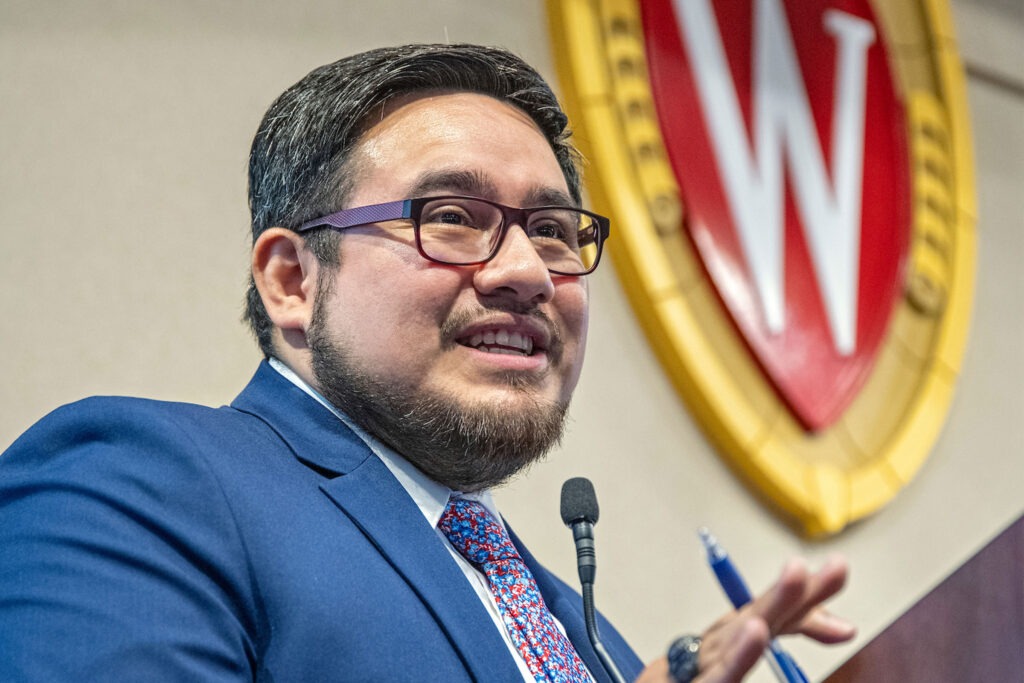
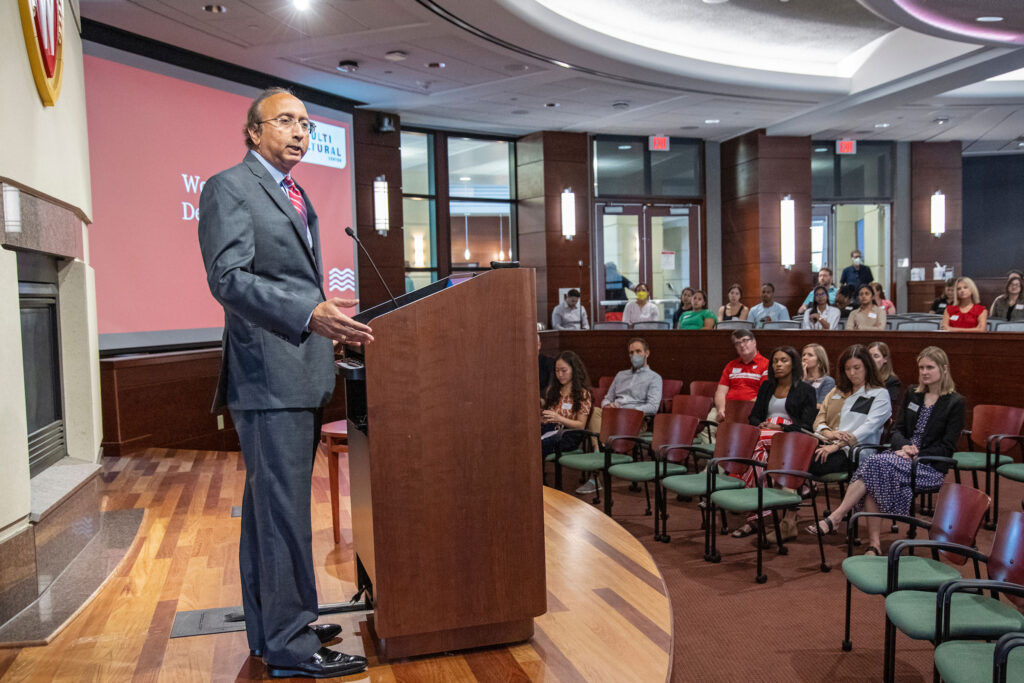
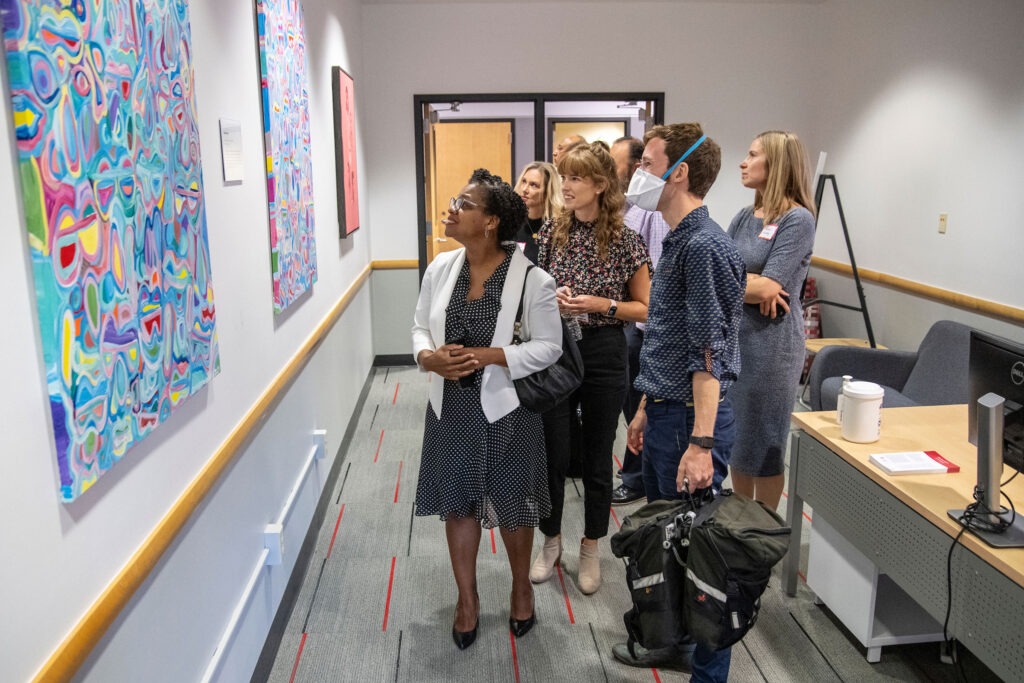
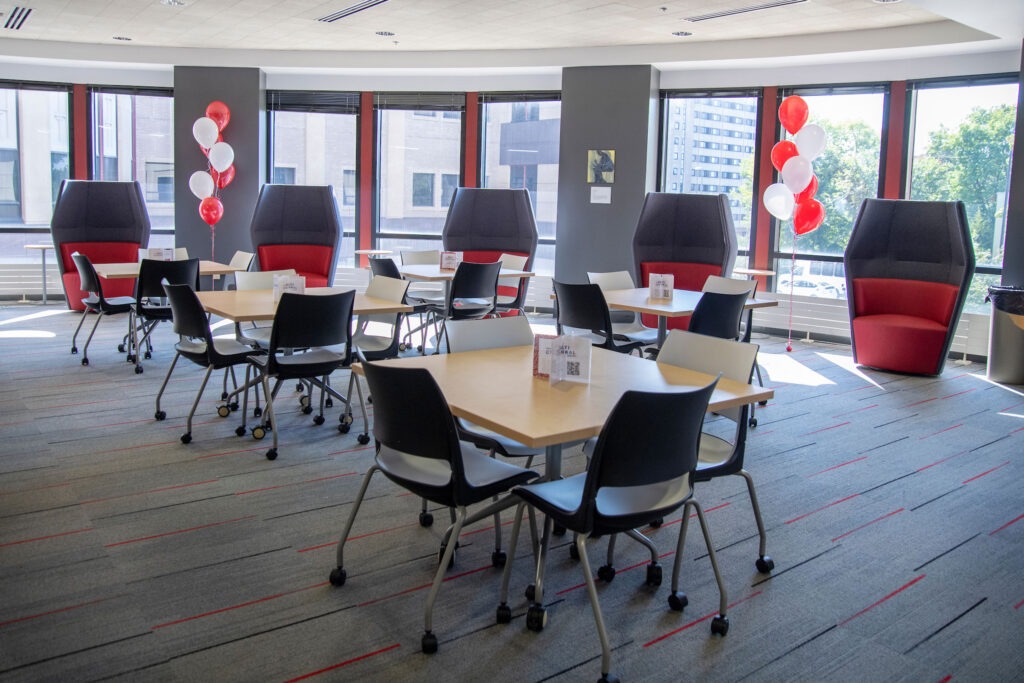
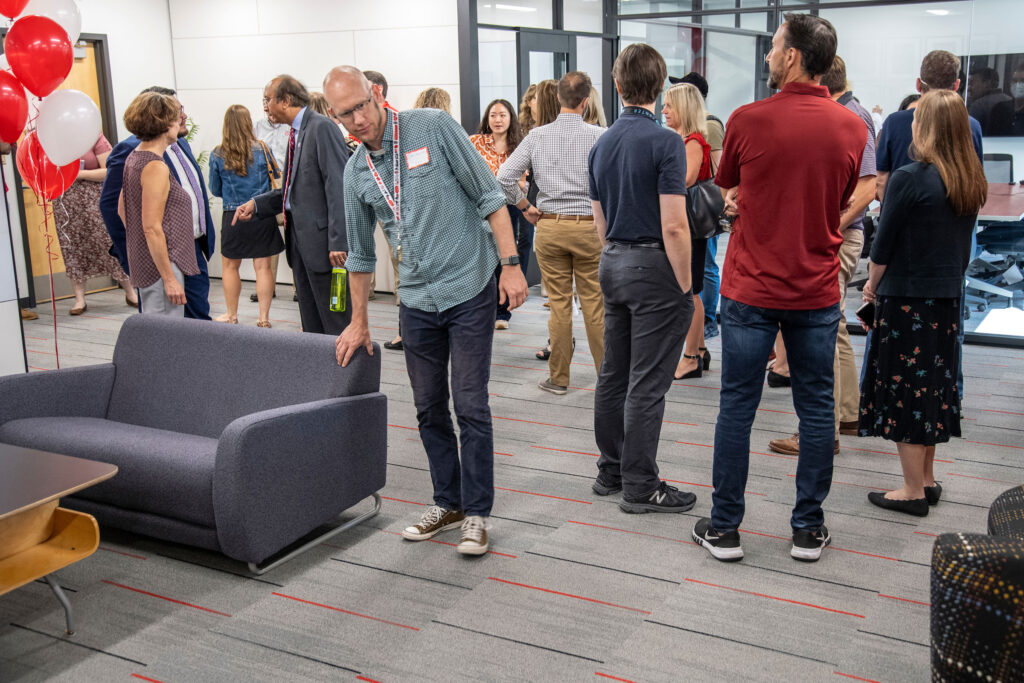
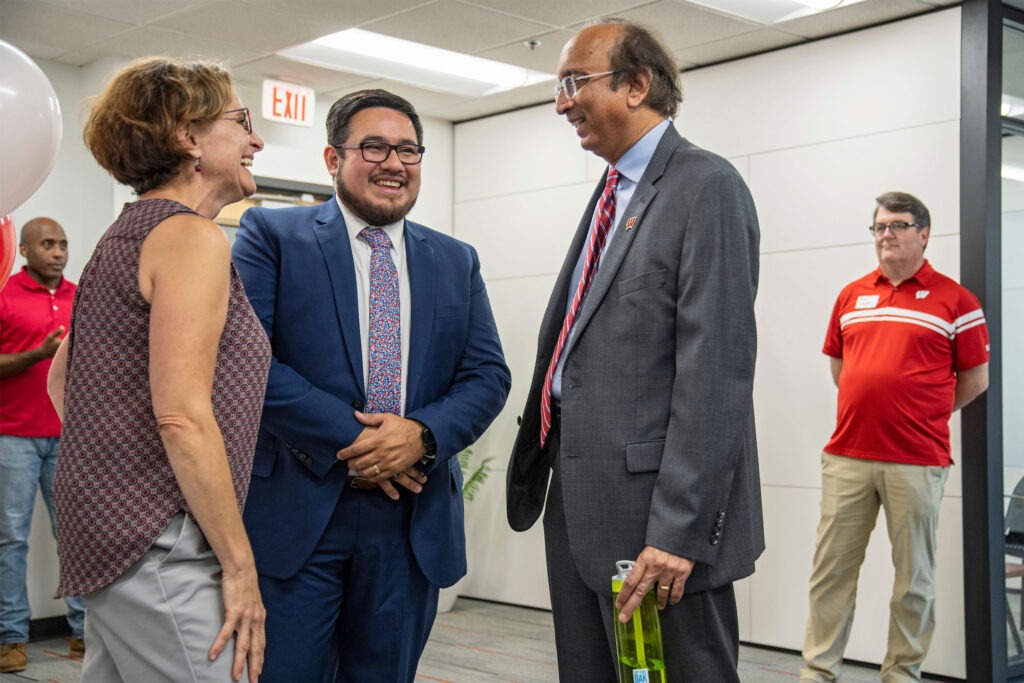
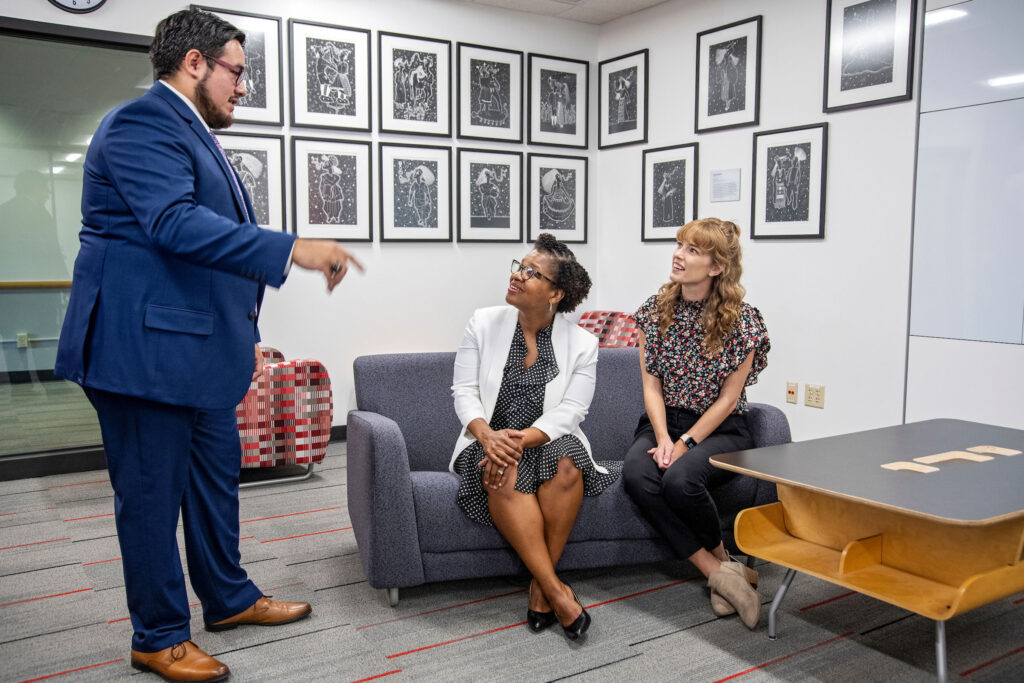
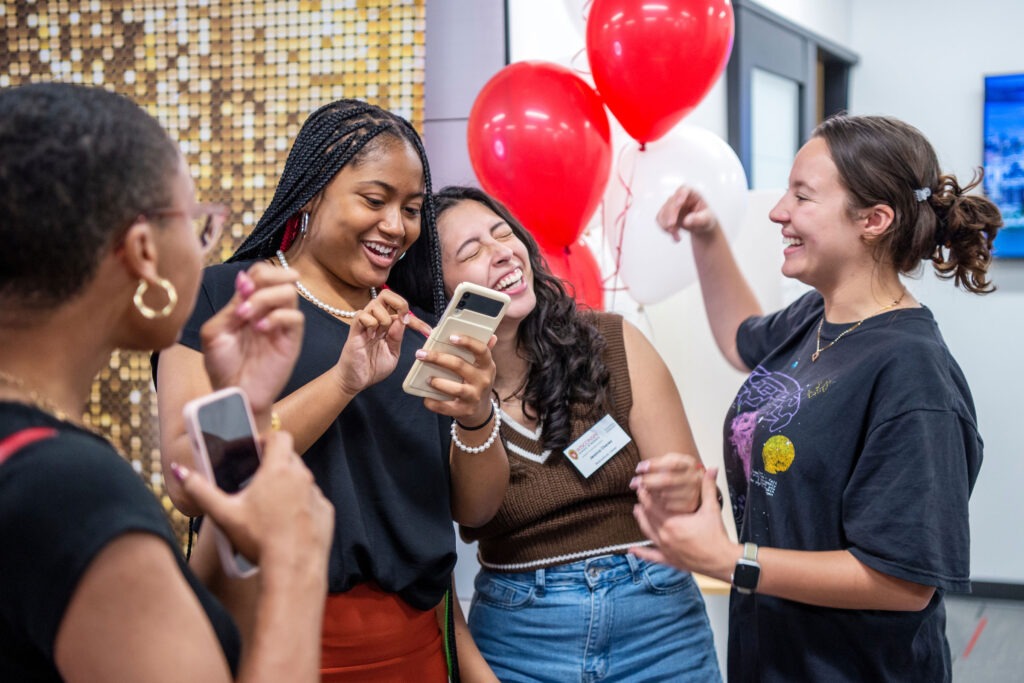
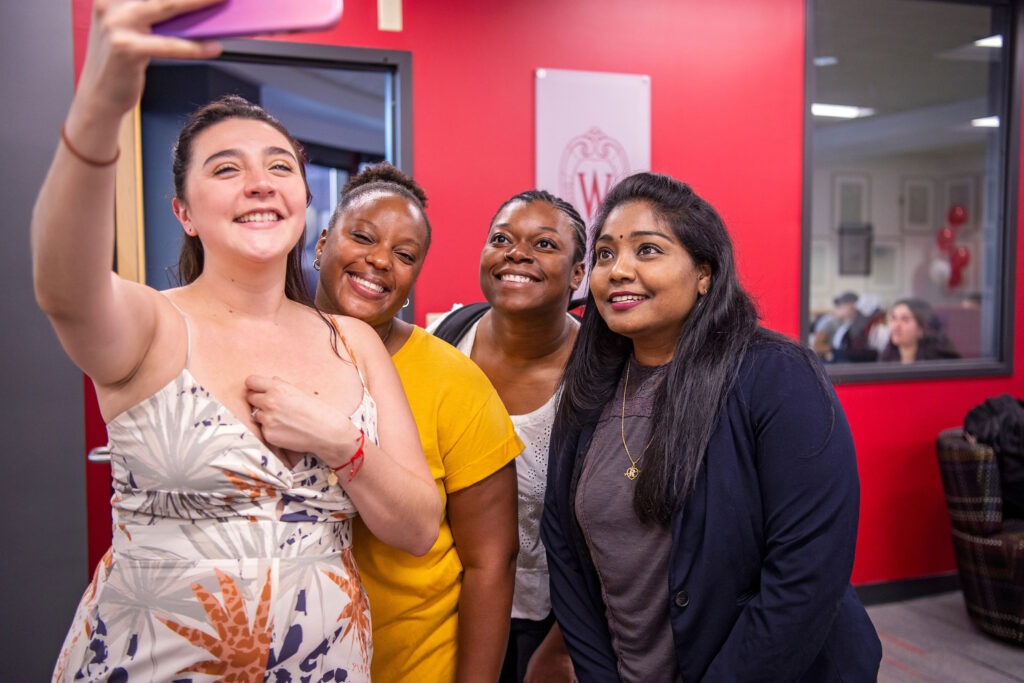
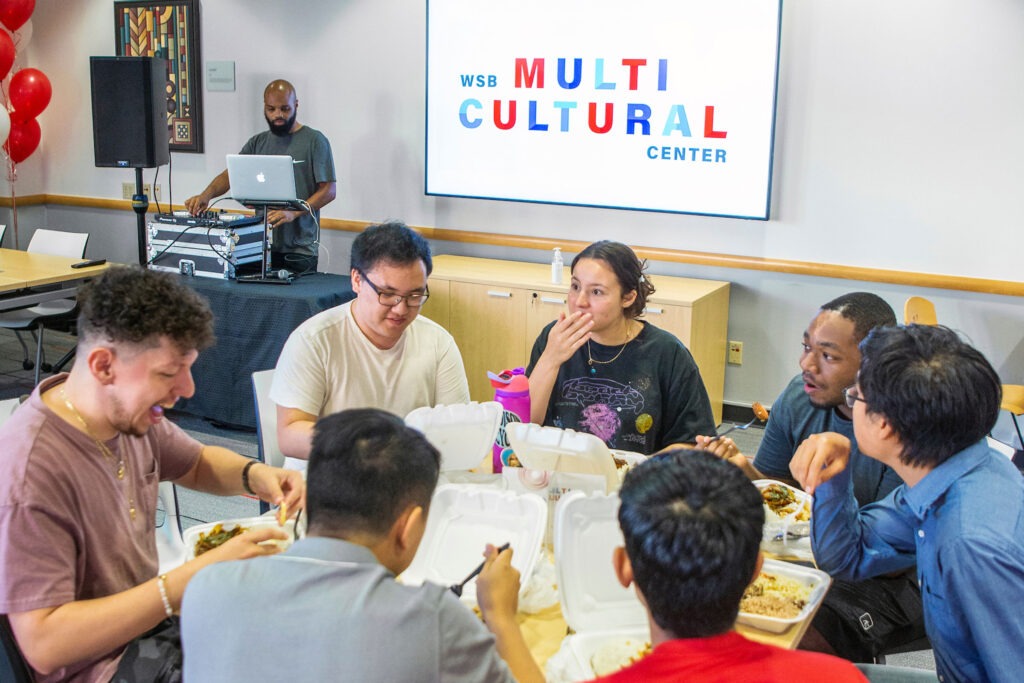
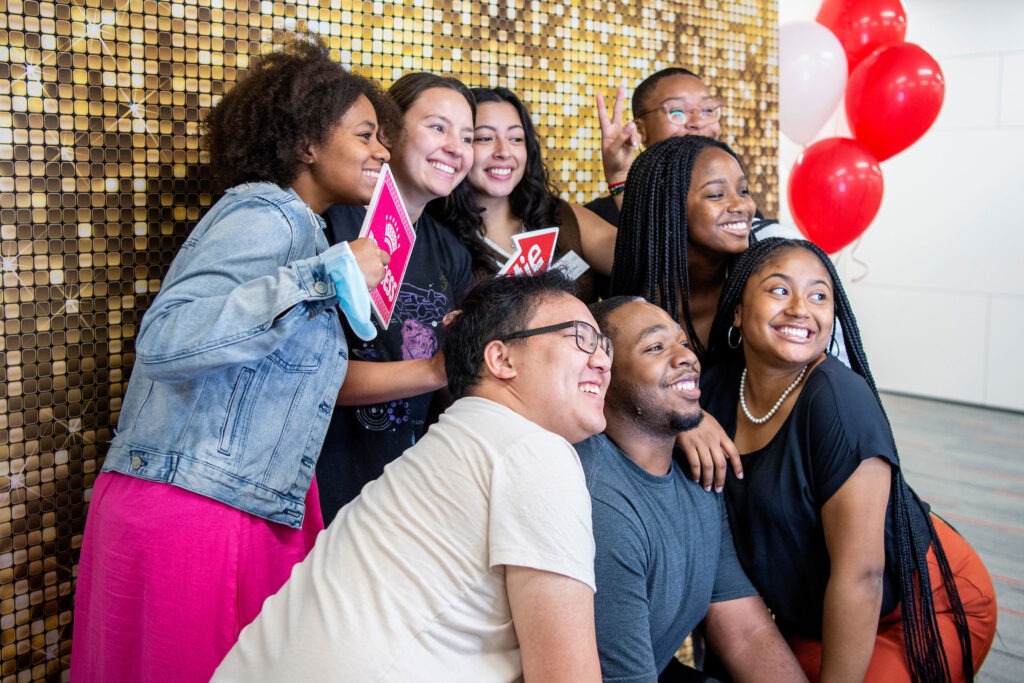
On September 9, 2022, the Wisconsin School of Business celebrated the grand opening of its Multicultural Center, becoming a leader among the country’s business schools in creating a dedicated space for promoting diversity, equity, and inclusion. “This is a momentous occasion,” said Arturo “Tito” Diaz (BS ’15), the Kemper Foundation Director of the Multicultural Center, at the opening celebration. “Our Multicultural Center is among the first in the nation specific to a university business school. And it belongs to all of us.” The grand opening—which included events for both students and faculty, staff, and community members—showcased the new space and its programming, and shone a spotlight on the many people involved in its development. Diaz shared how WSB’s Multicultural Center was founded out of student advocacy, born from an idea that built momentum among students and ultimately became a reality with the support of school leadership, faculty, and staff. “This is the culmination of a dream that began almost three years ago,” reflected Vallabh “Samba” Sambamurthy, WSB’s Albert O. Nicholas Dean. “The Multicultural Center is a space for learning, conversation, and exploration. Over time, it will become a signature element of Grainger Hall and the Wisconsin School of Business.” The Multicultural Center is housed on the second floor of Grainger Hall (rooms 2250 and 2256) and includes a multifunctional commons area, conference room, two offices, quiet study space, and a mediation/prayer/wellness room. It offers a range of events and programming, including mentorship opportunities, alumni panels, workshops, and discussions. “The space is so much more than its physical self,” said Diaz. “It’s all the people, programs, and efforts that have helped it come to be.” Below are photos from the grand opening celebration. ![]() Arturo “Tito” Diaz (BS ’15), the Kemper Foundation Director of the Multicultural Center, welcomes attendees to the grand opening of WSB’s Multicultural Center. ![]() Vallabh “Samba” Sambamurthy, WSB’s Albert O. Nicholas Dean, shares remarks in the Plenary Room at Grainger Hall before attendees were led on tours through the new Multicultural Center. ![]() Artwork lines the walls of the Multicultural Center thanks to the efforts of four Wisconsin MBA students who secured money from the UW–Madison Green Fund to purchase art that reflects the mission of the space. ![]() The Multicultural Commons is a multifunctional space, used for individual study, group meetings, and events. ![]() Attendees from across campus and the broader community tour the Multicultural Center during the grand opening. ![]() Diaz and Sambamurthy welcome Sarah Schutt, chief alumni officer and executive director of the Wisconsin Alumni Association, to WSB’s Multicultural Center. ![]() The Multicultural Center houses a quiet space for meditation, prayer, and wellness. ![]() Diaz speaks with Uchenna Hicks (left) and Becca Allpow of The Kemper Foundation, which has committed funds to support diversity and inclusion efforts at WSB. The donation supports the Kemper Scholars Program and the Multicultural Center directorship position. ![]() Business Badgers celebrate the Multicultural Center’s grand opening. ![]() Laura Rincon (MBA ’23), left, snaps a selfie with fellow students. Rincon serves as a project assistant to develop programming for the Multicultural Center. ![]() WSB students enjoy music and refreshments during the opening events. ![]() The Multicultural Center is designed to build community, celebrate culture, and foster a sense of belonging among Business Badgers. The post Photos: WSB Celebrates Grand Opening of Multicultural Center appeared first on Wisconsin School of Business. |
| FROM Madison(Wisconsin) Admissions Blog: Meet the 2022-23 Wisconsin Business Alumni Board |
|
The Wisconsin Business Alumni (WBA) Board welcomes seven new members to the group for the 2022-2023 academic year. New leadership is also on tap for the board, with chair Executive MBA with program leadership[/*][*]Contributed to advancements in employer relations and applied learning projects for students[/*][*]Worked with Wisconsin Alumni Association to better connect WSB with regional alumni chapters[/*][*]Participated in peer-to-peer fundraising for Day of the Badger and secured nearly 50 gifts through outreach in the past two years[/*][/list] Board members serve four-year terms, requiring two in-person meetings and two conference calls per year. Many board members also take part in both virtual and in-person events to further connect with other Business Badgers. Alumni interested in serving on the board must fill out an application to be considered. Seats on the board are volunteer positions and many alumni say they’re happy to have the opportunity to give back. “Attending the Wisconsin School of Business was one of the most formative experiences of my life,” says new board member Fay Shong (BBA ’84). “I wanted to give back to the school that left an indelible impression on me and do what I can to help inspire other UW business students to pursue their dreams. I look forward to creating new relationships with UW students, faculty, and other alumni in pursuit of supporting the business school’s mission and goals.” The seven new board members include:
View the full roster of the 2022-23 Wisconsin Business Alumni Board. The post Meet the 2022-23 Wisconsin Business Alumni Board appeared first on Wisconsin School of Business. |
| FROM Madison(Wisconsin) Admissions Blog: Dean Sambamurthy Appointed to AACSB International Board of Directors |
|
Vallabh “Samba” Sambamurthy, Albert O. Nicholas Dean of the Wisconsin School of Business, has been appointed to the international board of directors of the Association to Advance Collegiate Schools of Business (AACSB). Founded in 1916, AACSB is a nonprofit organization that provides quality assurance, business education intelligence, and learning and development services to over 1,850 member organizations and more than 950 accredited business schools worldwide. Linking education, business, and society, AACSB drives change in priority areas such as accreditation standards, societal impact, leadership, and advocacy. “It was my honor and pleasure to recommend Dean Vallabh Sambamurthy to the 2022–23 AACSB board of directors,” says McRae C. Banks, AACSB board chair and dean of the Bryan School of Business and Economics at the University of North Carolina at Greensboro. “I have been impressed with his thoughtful approach to problems and solutions, and his grasp of the challenges facing business education. Obviously, the board members agreed with me. We look forward to his valuable contributions and expertise in the upcoming year.” Sambamurthy will serve on four committees as part of his board appointment:
“I am delighted and honored to be invited to serve on the board of directors of AACSB,” Sambamurthy says. “Not only is this an exciting opportunity to work with talented colleagues in shaping change at the most fundamental levels of higher education, but AACSB’s vision in many ways parallels what we are doing here at the Wisconsin School of Business.” Sambamurthy will serve a three-year term through June 30, 2025. The post Dean Sambamurthy Appointed to AACSB International Board of Directors appeared first on Wisconsin School of Business. |
| FROM Madison(Wisconsin) Admissions Blog: WSB’s Allen Li Shares Food Delivery Platform Research |
|
Allen Li, the Michael and Mary Sue Shannon Professor and an associate professor of operations and information management at the Wisconsin School of Business, looks at digital gatekeepers and how their influence has impacted the ever-shifting digital economy. In Spring 2022, Li received the National Science Foundation’s prestigious Faculty Early Career Development Award (NSF CAREER Award), a highly competitive award that includes five years of grant funding for the awardee’s project. Li’s research explores how restaurants can leverage food delivery platforms to increase their revenue. WSB: Congratulations on your NSF CAREER Award. Tell us more about the research this award will support. Li: I am truly honored to have received the NSF CAREER Award. This research is a five-year interdisciplinary project that addresses one of the biggest questions small businesses have to address: how can they survive and grow their business in the digital economy that is increasingly dominated by tech giants. To answer this question, I draw theories and perspectives from multiple disciplines such as economics, computer science, antitrust, and competition law. I am excited that the NSF review panel recognized that this research is important to a broader community. My research examines the partnership between a restaurant and a digital food delivery platform like DoorDash or Uber Eats. Delivery platforms are an interesting business because they serve customers who don’t want to visit a store, whether it’s lack of time or to avoid meeting people or any other reason. I started this study several years ago and the pandemic outbreak provided a great setting to empirically test some of my ideas—as we know, delivery platforms have been a huge business because customers wanted to get food delivered to avoid COVID exposure. WSB: That is an interesting line of research, one that’s highly relevant to today’s restaurant industry. Can you share what specific areas you’re working on right now? Li: There are two main questions I’m looking at right now in relation to this work. The first question is whether a restaurant truly benefits from a partnership with a delivery platform. If you think about a typical restaurant, the profit margins are not that large—often in the single digits, $6-$8 profit on a $100 food order, for example. When a delivery platform enters the scene, a restaurant must pay it at least 30% of its revenue as a commission fee for the delivery service, a huge number. So, this leaves many restaurants questioning what to do. Should we form a partnership among ourselves as well? Or should we just avoid these platforms altogether? The second question I’m looking at is what the government can do from a policy perspective to protect local restaurants. We know that many of these restaurants are small local businesses that are financially vulnerable. Some states have already implemented policies in this area. For example, California, Illinois, Massachusetts, and several other Eastern states have tried to cap the percentage that restaurants can be charged, seeing if a 15% or 20% fee allows them to keep a larger cut of the revenue, increase profitability, and ultimately survive this post-pandemic environment. I’ve actually found that this kind of cap policy might not work very well. Delivery platforms are very strategic. If a city like Chicago moves to cap the fees that platforms place on restaurants, platforms will try to bypass the regulation by adding more restaurants that are located just outside the city border. In this case, it could be a lose-lose scenario, because restaurants in the city of Chicago cannot receive those cell calls and platforms need to compensate drivers for driving a longer distance to pick up and deliver the orders. So, the platforms will adjust strategically to get around the cap, and the customer might end up with a longer wait given the greater distance. WSB: So, what’s next for your project? Li: One of the concerning findings from the research is that chain restaurants benefit more from the partnership with delivery platforms, which suggests that these platforms widen the performance gaps between chain and independent restaurants. The next step of my research is to investigate how to help independent restaurants better leverage the platforms. I have also been discussing the implications of these findings with policy makers to help them figure out the best way to support independent restaurants. Allen Li is WSB’s Allen Li Shares Food Delivery Platform Research appeared first on Wisconsin School of Business. |
| FROM Madison(Wisconsin) Admissions Blog: Watch Dean Sambamurthy’s 2022 State of the School Address |
|
Growth is the story of the Wisconsin School of Business of late. That’s the message that Vallabh “Samba” Sambamurthy, Albert O. Nicholas Dean at WSB, emphasizes during his 2022 State of the School address. “We see continued and growing demand for all our programs, which speaks to their reputation and impact,” says Sambamurthy. In his address, Sambamurthy also discusses school priorities, experiential learning, and progress on WSB’s strategic plan, Roadmap 2025. Sambamurthy is joined by WSB colleagues Erwan Quintin, the Nathan S. Brand Distinguished Chair in Finance, and Mary K. Malone (MBA ’01), experiential learning lead for master’s and MBA programs and director of consulting practicum, to talk about their respective programs. Questions following Dean Samba’s State of the School address can be directed to [email protected]. Alumni and industry professionals interested in exploring how you can get involved can connect with our guest speakers directly via email:
|
| FROM Madison(Wisconsin) Admissions Blog: EdgeUp: The Leader’s Role in Employee Motivation and Engagement |
|
Regardless of job satisfaction, many employees report not being engaged or motivated at work. When employees are feeling burnt out, unappreciated, or just not connected to their company’s mission, they frequently become less productive or seek out other work—two things that can negatively impact a business’ bottom line. Managers, however, can play a key role in countering this lack of connection. During this EdgeUp webinar, Vicki Kampmeier with WSB’s Center for Professional and Executive Development shares strategies for keeping employees engaged, motivated, and performing at their best. Here are five things managers can start doing today: Ask employees for their feedback This signals to the employee that their words and feelings matter. Employee feedback can also unearth insights to streamline processes, help keep work on track, and allow for real-time coaching. “Make the art of giving and receiving feedback your superpower,” Kampmeier says. “You have to get comfortable with that.” Engage employees in setting individual and company goals There’s frequently a trickle-down effect when it comes to goal-setting; the company outlines a strategy, which dictates the goals of managers, which then dictates the goals of employees. To increase engagement and buy-in, Kampmeier suggests allowing employees to help shape both individual and company goals. “When employees feel like they’re part of that conversation, they’re willing to put in the extra effort,” she says. Let employees know you care Caring is much more than just thanking employees for their work (although it’s a great thing to do). It requires going deeper and leading with empathy. “Caring about employees means genuinely listening to their feedback, providing them options and alternatives with choosing how they want to work, and allowing them to make decisions,” Kampmeier says. Be transparent Transparency produces trust, and trust is critical to the success of any manager-employee relationship. Sharing information also provides clarity to employees and an assurance they’re on the right track. Adds Kampmeier: “When employees feel out of the loop, they become uncertain. And the more uncertainty they feel, the less motivated they are.” Learn what makes each employee tick Learning about each employee’s specific personality type can be a great way to increase motivation by playing to an employee’s strengths. Personality tests and assessments, such as DiSC or Myers-Briggs, can help with this effort. “They offer valuable insights that can be leveraged for growth, motivation, and alignment,” says Kampmeier. — Vicki Kampmeier is a results-oriented leader with over 30 years of leadership experience in operational and human resource roles for a Fortune 1000 company. Her career has been guided by her devotion to helping others tap into their full potential. She started her own consulting practice, Katalyst Coaching and Consulting, in 2018 to focus on her passions of coaching and leadership development training. Kampmeier has also served as an instructor at the Wisconsin School of Business Center for Professional and Executive Development since 2019. The post EdgeUp: The Leader’s Role in Employee Motivation and Engagement appeared first on Wisconsin School of Business. |
| FROM Madison(Wisconsin) Admissions Blog: Dean Vallabh Sambamurthy Receives President’s Service Award From Information Systems Society |
|
Vallabh “Samba” Sambamurthy, Albert O. Nicholas Dean of the Wisconsin School of Business, received the 2022 INFORMS Information Systems Society President’s Service Award in recognition of his outstanding service to the information systems community. The award honors distinguished academics who have exhibited extraordinary dedication to the information systems (IS) community over the course of their career. Awardees are deeply involved with Information Systems Society activities, administrative roles, and leadership positions that benefit the growth and impact of the IS field, the engagement of IS professionals, and broader impact to the IS and business community. The award also recognizes academics who support the IS community across the globe and have a positive impact on underrepresented parts of the IS community. “On behalf of the Information Systems Society award selection committee, we congratulate Samba on this exciting achievement,” says Paul A. Pavlou, dean of the C.T. Bauer College of Business at the University of Houston and chair of the award selection committee. “He truly has shown outstanding dedication to service in the IS community, through his editorial leadership roles at some of the most influential journals in our field, including Information Systems Research, advocacy for the Information Systems Society, and building community within the discipline.” A leading expert on how businesses compete in the digital economy, Sambamurthy’s work has been featured in leading academic journals and he has co-authored several books on digital transformation. He served as editor-in-chief of Information Systems Research (ISR) from 2004-2010 and is credited with developing a more cohesive and inclusive approach toward accepting a variety of research traditions. He also stewarded a five-fold increase in high-quality research publications in ISR. In addition to his editorial leadership, Sambamurthy has served on several IS-related committees, including the INFORMS publication committee for three years. Sambamurthy’s leadership and advocacy on behalf of the Information Systems Society have yielded new awards, initiatives, and visibility for IS research and scholars. Sambamurthy has earned many other honors for his contributions to teaching, research, outreach, and mentoring. The Association of Information Systems honored him with the LEO Lifetime Achievement award. He was selected as a distinguished fellow of the Information Systems Society at INFORMS, and he received the William Beal Distinguished Faculty Award—the highest honor accorded by Michigan State University. He also received the Distinguished Alumnus Award from his alma mater, the Indian Institute of Management (IIM) Calcutta. Sambamurthy accepted the award at the 2022 Conference on Information Systems Technology in Indianapolis on October 15, 2022. About the INFORMS Information Systems Society (ISS) The Information Systems Society (ISS) supports the intellectual interests of information systems scholars who are members of the Institute for Operations Research and the Management Sciences (INFORMS). It provides support for academic forums such as the annual Conference on Information Systems and Technology (CIST), the spring Theory in Economics of IS (TEIS) workshop, the summer Statistical Challenges in E-Commerce Research (SCECR) conference, and the annual IT Teaching workshop. The society also provides support for editorial activities and publication of Information Systems Research. In addition, the society sponsors or supports several awards each year. The post Dean Vallabh Sambamurthy Receives President’s Service Award From Information Systems Society appeared first on Wisconsin School of Business. |
| FROM Madison(Wisconsin) Admissions Blog: Fast Fashion Business Model May Speed Up Environmental Decline |
|
Fashion’s ever-changing nature is a big part of its appeal. While e-commerce has all but replaced the elaborate department store window displays of the past, online shoppers can easily spend hours perusing a brand’s new seasonal looks with multiple styles and options to choose from. Sustainability in the Fast Fashion Industry” published in Manufacturing & Service Operations Management. Xiaoyang Long is an assistant professor in the Department of Operations and Information Management at the Wisconsin School of Business. The post Fast Fashion Business Model May Speed Up Environmental Decline appeared first on Wisconsin School of Business. |
| FROM Madison(Wisconsin) Admissions Blog: Photo Gallery: 2022 WSB Homecoming Bash |
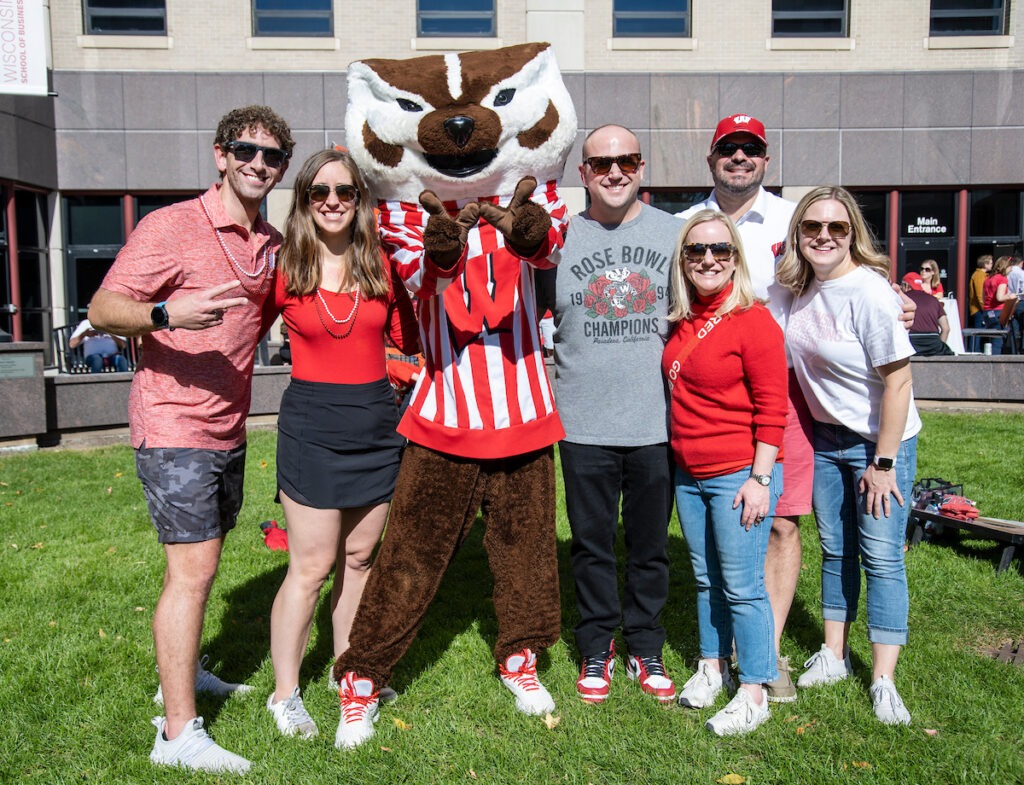
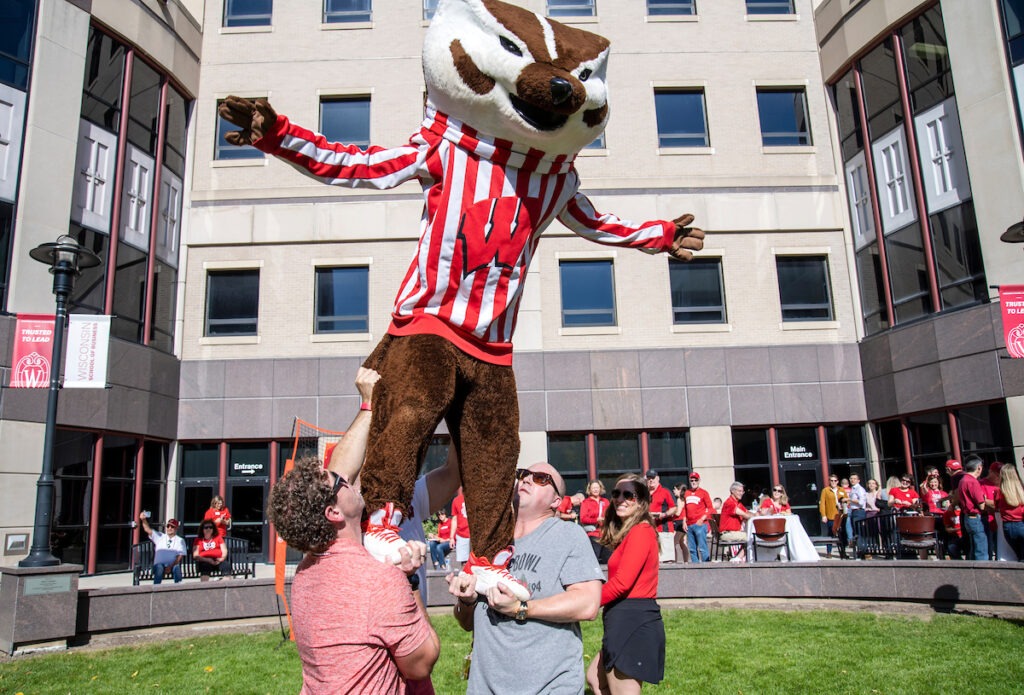
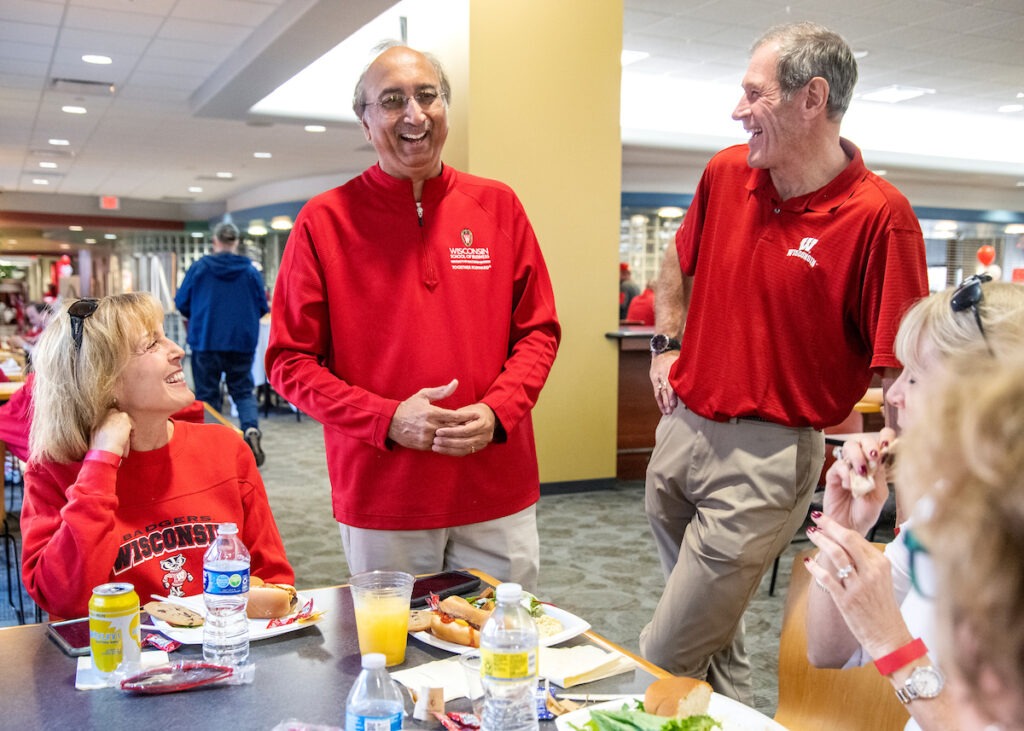
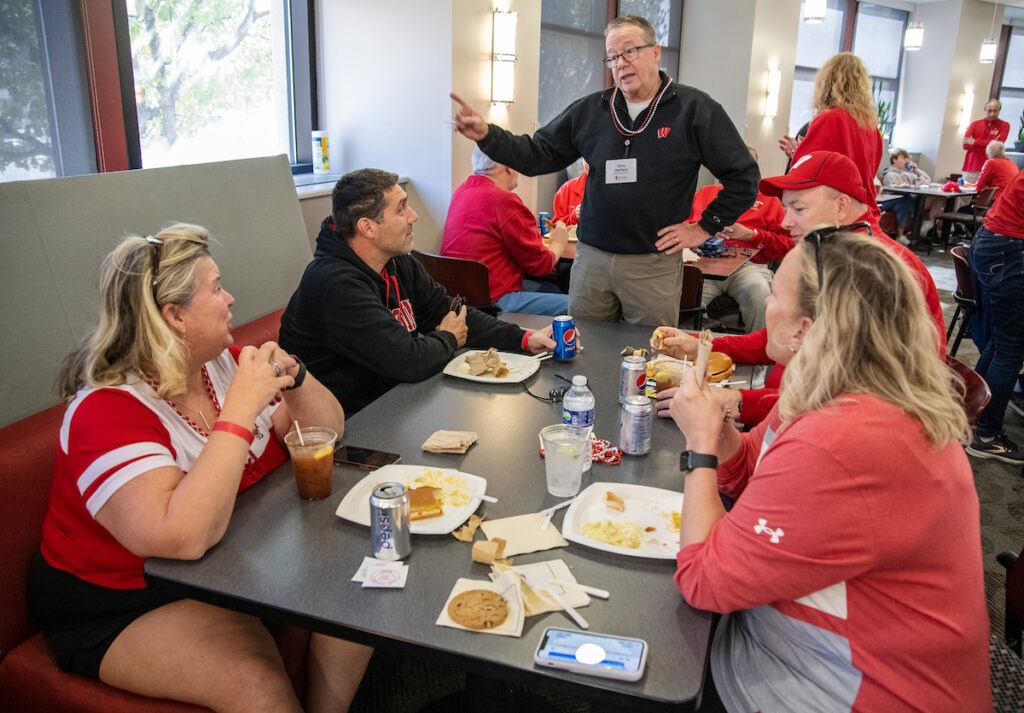
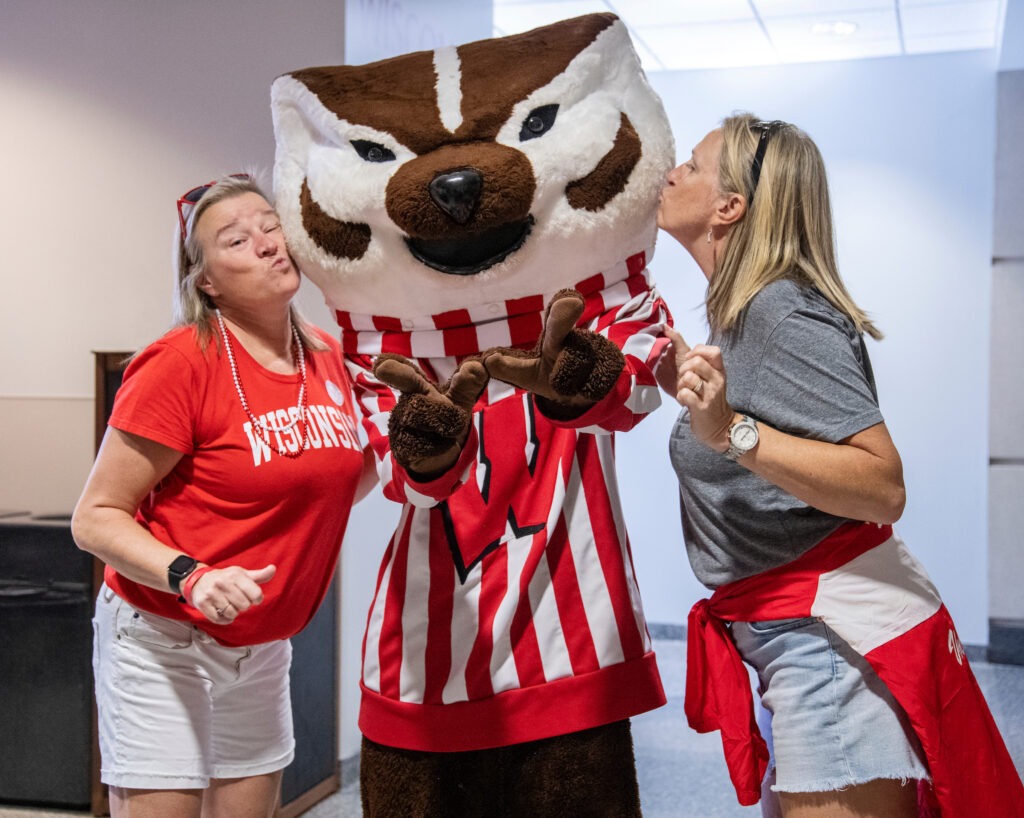
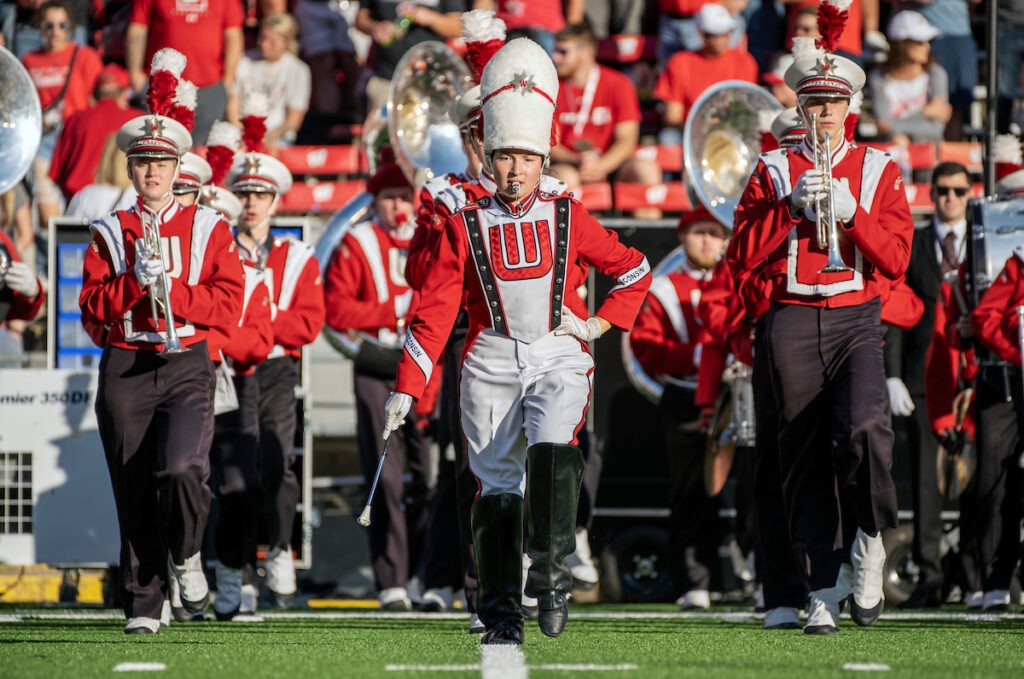
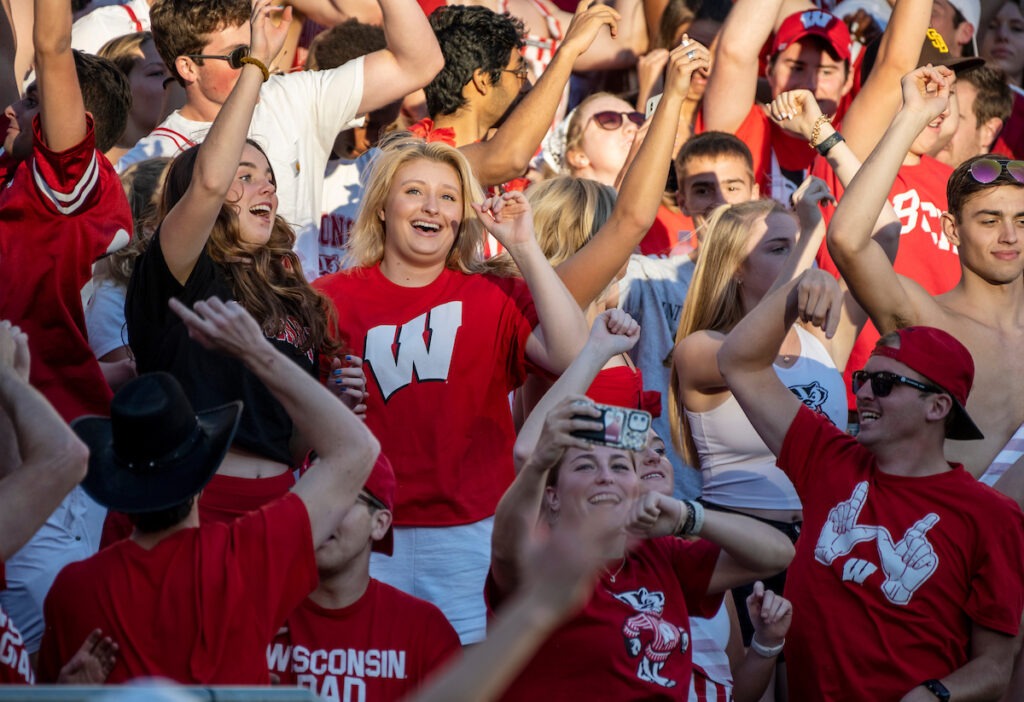
On an absolutely gorgeous autumn afternoon, Business Badger alumni came together at Grainger Hall to celebrate in style at the 2022 WSB Homecoming Bash. With sunny skies and temperatures in the 70s—a real treat for late October—guests took to the courtyard to catch up with old friends while enjoying live music, yard games, face-painting, and a special visit from Bucky Badger himself. At the conclusion of the bash, many fans made the short trek to Camp Randall to watch the Badgers take down the Purdue Boilermakers.![]() A host of WSB alums, family, and friends pose with Bucky during the Homecoming Bash at Grainger Hall on Saturday, Oct. 22, 2022. ![]() Bucky Badger gets a lift from a few helpers in the Grainger Hall courtyard. Don’t try this at home! ![]() Dean Vallabh “Samba” Sambamurthy chats with Jane Besch and Craig Manske (BBA ’79, MS ’81) over a tailgate lunch. ![]() Terry Warfield, PwC Chair in Accounting and senior associate dean, makes the rounds during the Homecoming Bash. ![]() The next generation of Business Badgers throw up the “W” during the Homecoming Bash. From left to right: Harper Boers, 9; Maddie Rowe, 8; Audrey Klink, 7; Ensley Rowe, 3; Ella Klink, 5; and Everly Boers, 6. ![]() Karen Ryan (MS ’92) and friend Alison (Abraham) Walker plant a kiss on Bucky’s cheek during the Homecoming Bash. ![]() A UW–Madison drum major leads the band onto the field at Camp Randall during halftime of the Homecoming football game. ![]() The student section at Camp Randall gets pumped up to the tune of “Jump Around” during the Homecoming game. The post Photo Gallery: 2022 WSB Homecoming Bash appeared first on Wisconsin School of Business. |
| FROM Madison(Wisconsin) Admissions Blog: Donor Support Inspires Experiential Learning Opportunities and Growing Faculty |
|
The Wisconsin School of Business (WSB) Fund ensures that the school is able to invest in top priorities and innovations to further enhance our students experience and our reputation as a world class business school. Gifts to the WSB Fund support both immediate and long-term strategic goals, with a particular emphasis this year on expanding experiential learning opportunities for all WSB students. We are grateful for the gift you made to the WSB Fund within the last 12 months. Your support is critical to our ability to innovate and grow, so we wanted to share with you the following recent milestones that you helped make possible. A Lambeau-Sized Leap into Leadership Experiential learning, outside of the classroom, is key to developing top-notch business leaders—and support to the WSB Fund makes these opportunities possible. This past May, 40 undergraduate students took part in the inaugural Leadership at Lambeau summit—a three-day intensive retreat held at Lambeau Field, designed for students to develop their own personal philosophy of leadership alongside peers, leadership experts, and executives. At the end of the summit, students received a Business Badger Badge: a digital certification to display on their résumés and LinkedIn profiles to showcase specific leadership skills and help them stand out as they enter the workforce. Feedback from the summit has been overwhelmingly positive, and WSB plans to make Leadership at Lambeau an annual signature experience. Upward Trend for Career Outcomes Last year, the Wisconsin School of Business undergraduate program launched Career Forward, a collaborative and innovative initiative designed to give WSB’s more than 3,000 undergraduate students the tools and experiences needed to achieve their individual career goals. Placement results have been extremely encouraging, with 95% of 2022 graduates securing a full-time role within six months of graduation, with an average base salary starting at ~$68,500. To support our students in exploring career paths and achieving their career goals, with philanthropic investment, we offered opportunities for students to join three new career treks to visit leading companies in Minneapolis, Chicago, and Austin. In addition to the progress in the undergraduate space, full-time MBA employment placement is strong and on par with peer schools with 89% of students securing full time roles and a 17% increase in starting salaries. WSB Welcomes Five New Faculty This fall, WSB welcomed five new faculty members to four different departments. This growth demonstrates the school’s continued investment in research, teaching excellence, and commitment to adding expertise in emerging technologies and cross-disciplinary fields. Faculty members continue to develop new courses and curricula, moving business education forward and shaping trusted business leaders. New faculty include:
WSB Multicultural Center Grand Opening On September 9, the Wisconsin School of Business celebrated the grand opening of the new Multicultural Center, becoming one of the first business schools to have a dedicated space for promoting diversity, equity, and inclusion. The grand opening included events for both students and faculty, staff, and community members, and highlighted the individuals who helped bring the center to life. Going forward, the center will offer a range of events and programming, including mentorship opportunities, alumni panels, workshops, and discussions. Did you miss last quarter’s Donor Digest? Read it here. The post Donor Support Inspires Experiential Learning Opportunities and Growing Faculty appeared first on Wisconsin School of Business. |
| FROM Madison(Wisconsin) Admissions Blog: The Wisconsin School of Business Welcomes Chancellor Mnookin |
|
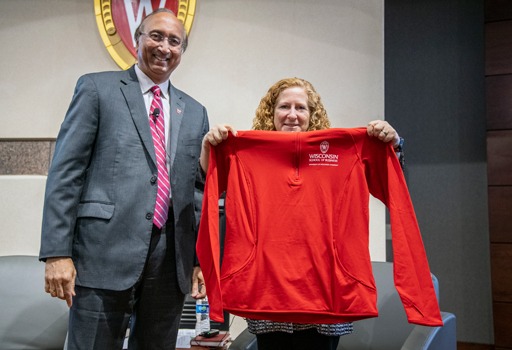
Jennifer L. Mnookin, the University of Wisconsin–Madison’s 30th chancellor, was the featured guest at a recent fireside chat with Wisconsin School of Business faculty and staff hosted by Vallabh “Samba” Sambamurthy, WSB’s Albert O. Nicholas Dean. The discussion touched on a range of topics including leadership, diversity, equity, and inclusion, and student success. But the conversation wasn’t all business: Sambamurthy and the audience found time to put Mnookin’s Wisconsin and UW–Madison knowledge to the test with a rigorous onboarding that she passed with flying colors—including red. Not only was the chancellor wearing noteworthy amounts of red (her hair should count too, she felt), but she also pronounced challenging Wisconsin town names, clarified the pronunciation of her own, and shared which Madison traditions she has already enjoyed. Prior to joining UW–Madison, Mnookin served as dean of the University of California, Los Angeles (UCLA) School of Law, where she had been a faculty member since 2005. Mnookin received her AB from Harvard University, her JD from Yale Law School, and a PhD in history and social study of science and technology from MIT. Here are excerpts from the conversation: On the meaning of leadership “For me, leadership is about bringing your vision and ideas in connection with your situation and institution to try to help make possible what wouldn’t have been possible without you. Sometimes you lead from the front of the room, and sometimes you lead from the back of the room, and you have to be able to do both depending on the circumstances. Leadership is collaborative.” On her vision and plans “Within my first couple days, people began to say to me, ‘What’s your five-month plan? What’s your vision?’ And I would say to them, ‘Not only do I not have one yet, but you shouldn’t want me to. You should want me to invest in understanding this place, its strengths and its needs in a more meaningful way, before I try to bring my values and opportunities and perspectives to what we’re doing here together.’ I’m collaborative and I like engagement. People should own their domains and have the freedom to innovate with guardrails. I believe we do best when we work in a very community-focused way. Those are some of the things I bring to bear on how I think about what’s possible. Our excellence really matters, and we should be aiming to be as strong as we can. We are a world-class institution, and we should embrace that.” On the importance of diversity, equity, and inclusion “This is a really important topic for our communities, and also our country. Part of it is about creating opportunities for communities that have traditionally not had as many opportunities over the course of long periods of time. We have not always had a fair playing field, and recognizing that as something that is all of ours to acknowledge and work to correct is an important starting point. Another thing is that there’s a huge amount of research showing that diversity helps us make better decisions. Diversity is not just the right thing to care about; it’s also an instrumentally valuable thing to care about if you want to do as well as you can for your organization. So, I think it’s both a values proposition and a set of more instrumental goals that we have to embrace. It’s also important to think about belonging, to think about creating spaces that make everybody feel that they can and do belong—and recognizing that belonging is important to flourishing. I know [the Wisconsin School of Business] just created a multicultural center. We need to have locations where people feel like they can let their metaphoric hair down and be their whole selves without having to wear any armor, but we also need to value tremendously the ability to engage across and to engage with difference, and to do that even when it’s sometimes hard and not always comfortable.” On preparing undergraduates for success “What we want is fundamentally to create lifelong learners, where our students have developed a set of talents and skills that they can put to work, but where they also know that when they need to pivot or transition, they have the foundational abilities and belief in themselves to know that it will be possible. I’m a big believer that your major is not your destiny. That’s true for our business school students just as much as it’s true for everybody else. I think that the face-to-face interaction of a residential college experience is a substantial part of what makes superb learning in the classroom. But it’s also about the cocurricular experiences. One of the things I’ve been excited about here is how rich those are for our students, and how we as an institution recognize the value of both curricular and cocurricular learning. Sometimes those can fit together in very explicit ways; other times they can diverge. But they both are part of what shapes what it means to be a Badger, what it means to be a Wisconsin graduate.” ![]() Chancellor Mnookin was presented with a WSB fleece at the end of her visit. The post The Wisconsin School of Business Welcomes Chancellor Mnookin appeared first on Wisconsin School of Business. |
| FROM Madison(Wisconsin) Admissions Blog: Alumnus Nathan Allman Returns to WSB to Host His Company’s First-Ever Conference |
|
Attend a conference at the Wisconsin School of Business and you’re likely to see your fair share of suits, blazers, and other types of business wear. But the scene looked just a bit different when around 70 franchise owners from across the country—many clad in chef’s jackets—descended on Grainger Hall in October for the first-ever Chefs for Seniors conference. For attendees, it was a chance to connect with existing peers and make new connections. For company founder Nathan Allman (BBA ’15), however, the experience was also a homecoming. Allman was a student at WSB when he founded Chefs for Seniors after initially pitching the idea during the school’s annual business plan competition—and winning the category for lifestyle products and services. Described as an alternative to senior meal delivery services, Chefs for Seniors has steadily grown since its 2013 launch. Alongside his father Barrett, who co-owns the business, Allman now focuses on franchising the concept beyond Wisconsin. Since 2017, the number of Chefs for Seniors franchise locations has grown to 80 nationwide and has been named a top new franchise by Entrepreneur magazine for the past two years. WSB recently caught up with Allman after the conclusion of the two-day conference. WSB: What is Chefs for Seniors all about? Allman: Simply put, our service helps older adults age in place and ensures they’re eating well. We offer a service that’s convenient and surprisingly affordable so our clients can spend more time doing the things they love—and less time worrying about cooking. Our highly skilled personal chefs prepare delicious, home-cooked meals right in our client’s home kitchens. We create menus that are 100% customized to not only fit dietary needs but also excite palates. Our chefs are ServSafe certified, undergo thorough background checks, and are fully insured. Plus, clients can enjoy watching them perform their culinary magic. WSB: For you, what was the highlight of this year’s event? Allman: Being able to see our franchise owners—many of whom had never met in-person—network with each other for two days and make connections that will undoubtedly last for years to come. Owning a small business can be a lonely experience at times, and it meant a lot for our owners to connect with others in the same boat, so to speak. Also, the opportunity for my father and I to recognize franchise owners who took a leap of faith and invested in Chefs for Seniors during the early days of franchising was a heartfelt moment for everyone. WSB: What did it mean to you to have this event hosted at WSB? Allman: It was incredible to see Chefs for Seniors come full circle and host our first conference in the room where, in many ways, the company began 10 years ago. Back when I was a 19-year-old student entering my idea into the school’s business plan competition, I never would have imagined that I’d be hosting franchise owners from across the country in that same room at Grainger Hall more than a decade later. It was truly surreal and easily one of my most memorable experiences as an entrepreneur. WSB: Any plans to bring this event back next year? Allman: Our first in-person conference went so well that it’ll no doubt be the first of many. Our only challenge next year will be finding a large enough space for everyone since our goal is to hit 100 franchises by the time next year’s event rolls around! Read more about Allman in the Fall 2016 issue of WSB’s Update magazine. The post Alumnus Nathan Allman Returns to WSB to Host His Company’s First-Ever Conference appeared first on Wisconsin School of Business. |
Success stories and strategies from high-scoring candidates.