Events & Promotions
|
|

GMAT Club Daily Prep
Thank you for using the timer - this advanced tool can estimate your performance and suggest more practice questions. We have subscribed you to Daily Prep Questions via email.
Customized
for You
Track
Your Progress
Practice
Pays
Not interested in getting valuable practice questions and articles delivered to your email? No problem, unsubscribe here.
 Sep 13
12:30 AM EDT
-01:30 AM EDT
Struggling to find the right strategies to score a 99 %ile on GMAT Focus? Riya (GMAT 715) boosted her score by 100-points in just 15 days! Discover how the right mentorship, tailored strategies, and an unwavering mindset can transform your GMAT prep. Sep 13
01:30 AM EDT
-02:30 AM EDT
At one point, she believed GMAT wasn’t for her. After scoring 595, self-doubt crept in and she questioned her potential. But instead of quitting, she made the right strategic changes. The result? A remarkable comeback to 695. Check out how Saakshi did it. Sep 15
07:00 PM EDT
-09:00 PM EST
Elite scores are possible when you enroll in a powerful GMAT course, taught live online + 6 months access to TTP OnDemand video courses included! Class starts Tues/Thurs Sept. 15, 2026 - Nov. 15, 2027, 7:00pm-9:00pm EST Sep 18
08:00 PM PDT
-09:00 PM PDT
Video explanations + diagnosis of 10 weakest areas + 150+ short videos + study plan! Sep 21
07:00 PM EDT
-10:00 PM EDT
Boost your GMAT score in less than one month in a live online class + 6 months access to TTP OnDemand video courses included! Class starts Mon, Tues, Wed, Thur, Fri Sept. 21, 2026 - Oct. 9, 2027, 7:00pm-10:00pm EST


Posts: 16,401
 Updated on: 14 Jul 2026, 08:04
Originally posted by Sajjad1994 on 10 Jul 2026, 07:01.
Last edited by Sajjad1994 on 14 Jul 2026, 08:04, edited 1 time in total.
Last edited by Sajjad1994 on 14 Jul 2026, 08:04, edited 1 time in total.
TOEFL Reading Practice Test
Reading Section
In the Reading section, you will answer 35–48 questions to demonstrate how well you understand academic and non-academic texts in English. There are three types of tasks.
(Q1-10) Fill in the missing letters in the paragraph.
We know from drawings that have been preserved in caves for over 10,000 years that early humans performed dances as a group activity. We mi___ think th__ prehistoric peo___ concentrated on__ on ba___ survival. How____, it i_ clear fr__ the rec___ that dan____ was important to them. They recorded more drawings of dances than any other group activity. Dances served various purposes, including ritualistic communication with the divine, storytelling, and social cohesion.
Read a notice.
11. What type of business issued the notice?
A. An Internet provider
B. A computer company
C. A paper company
D. A bank
12. How can customers enroll in paperless billing?
A. By visiting a Municipal Charter office
B. By accessing the Municipal Charter website
C. By using the Municipal Charter app
D. By calling a Municipal Charter customer service representative
13. What is the main purpose of the post?
A. To explain the benefits of organic farming
B. To describe the variety of products available at the farmer’s market
C. To compare different farmer's markets in the area
D. To offer advice on starting a stall at the farmer's market
14. What reason is given for the popularity of the Thompson family's stall?
A. They offer cooking tips and recipes.
B. They offer the lowest prices at the market.
C. They provide friendly service and excellent products.
D. They have a beautiful and well-decorated stall.
15. Why do customers go to the bakery stall early?
A. To get the free samples given in mornings
B. To get freshly baked bread and pastries before they are gone
C. To meet the famous baker
D. To take advantage of early morning discounts
Very young children cannot recognize themselves in a mirror; they usually achieve this milestone around 18 months of age. The ability to recognize oneself in the mirror is considered to be a key component of self-awareness and consciousness for humans. But what about animals?
For many years, scientists have known that members of the great ape family could recognize themselves in mirrors. They measured this by the “mirror test,” which involved putting a colored mark on an ape’s body, and then showing the ape its reflection in a mirror. If the ape tried to remove the mark on its own body, the scientists knew that the ape was recognizing its reflection.
Apes are close relatives of humans, but in recent years, scientists have discovered that other animals also pass the “mirror test.” Elephants and dolphins have shown signs of self-recognition. These, like apes, are highly intelligent animals. But in a more recent experiment, a type of fish called the cleaner fish tried to scrape a mark off its body when it saw itself in the mirror. This suggests that even less intelligent animals may possess more self-awareness than previously suspected.
16. What is the passage mainly about?
A. Stages of early childhood development
B. Research on animal cognition
C. Differences between apes, elephants, and dolphins
E. Recent experiments on fish
17. The word “milestone” in the first sentence is closest in meaning to
A. accomplishment
B. distance
C. weight
D. discovery
18. Why did scientists put colored marks on animals’ bodies?
A. It made it possible to track the animals’ movements.
B. It helped them determine whether the animals recognized themselves.
C. It made it easier to tell the animals apart.
D. It showed whether some animals can detect color differences.
19. According to the passage, all of the following are true about elephants EXCEPT:
A. They can recognize themselves in mirrors.
B. They are highly intelligent animals.
C. They possess qualities in common with apes.
D. They understand certain signs from other animals.
20. Why does the author mention cleaner fish?
A. To suggest that a wide range of animals may possess self-awareness
B. To imply that ocean animals are highly intelligent
C. To demonstrate a flaw in a recent experiment
D. To provide an example of an animal that does not recognize itself
Module 2
(Q1-10) Fill in the missing letters in the paragraph.
The human brain is a complex organ responsible for controlling all bodily functions and enabling thought, emotion, and memory. It i_ divided in__ several reg____, each wi__ specific ro___. The cerebrum, i__ largest pa__, is invo____ in higher cogn_____ functions su__ as reasoning, planning, and language. The cerebellum coordinates movement and balance, while the brainstem controls vital bodily functions like breathing and heart rate. Together, they enable the brain to perform its various tasks.
Read an Email
11. When is the date of the art workshop?
A. September 10th
B. September 12th
C. September 20th
D. September 30[sup]th[/sup]
12. What should Ms. Edwards bring to the workshop?
A. A payment method
B. Extra paint
C. A protective garment
D. Proof of reservation
Read an email.
13. What is the main purpose of the email?
A. To attract customers to a new fitness center
B. To provide Ms. Nguyen with an opportunity to provide expert personal training
C. To celebrate Ms. Nguyen's achievements in wellness
D. To announce a discount available to fitness-center members
14. What can be inferred about Ms. Nguyen's relationship with the fitness center?
A. She helps the fitness center to organize activities.
B. She has already explored the new facility.
C. She is a member at one of the fitness center's other locations.
D. She is new to using fitness centers and exercise equipment.
15. The new fitness center is intended for use by which of the following groups of people?
A. Expert personal trainers
B. Top-tier athletes
C. Existing fitness-center members
D. Community members of all fitness levels
The paradox of choice, a concept popularized by psychologist Barry Schwartz, suggests that more options can lead to less satisfaction. While the freedom to choose is fundamental to consumer culture, an overabundance of choices—from groceries to electronics—can overwhelm individuals, causing anxiety and decision fatigue. This paradox implies that the vast array of possibilities available today might actually diminish consumer contentment, as the fear of making the wrong choice looms large.
Research supports this notion. In an experiment, psychologist Sheena Iyengar found that shoppers were more likely to purchase jam when offered 6 varieties instead of 24. The limited selection eased the decision process, reducing the pressure to find the 'perfect' option and making the experience more enjoyable. This phenomenon reveals that fewer choices can sometimes make consumers happier, which is a valuable insight for marketers and retailers aiming to boost satisfaction by curating their offerings.
The paradox also has broader implications. In individualistic cultures, where personal choice is highly valued, the burden of decision-making can be significant. Conversely, collectivist
cultures, which often provide fewer choices, report higher levels of contentment. This dynamic suggests that understanding cultural differences in consumer psychology can help businesses optimize their product strategies and enhance overall well-being.
16. Which of the following best states a main idea of the passage?
A. Effective marketing strategies focus on increasing product options.
B. Modern consumer culture is driven by a demand for fewer products.
C. Individualism enhances consumer contentment.
D. Limiting consumer choices can lead to higher satisfaction.
17. What is one effect of decision fatigue as mentioned in the passage?
A. Desire to make the same choices as other consumers
B. Anxiety about making the wrong choice
C. Preference for consumer cultures
D. Enhanced freedom to choose
18. Why does the author mention Sheena Iyengar’s experiment?
A. To highlight the effectiveness of marketing strategies
B. To explain the methodology used in consumer psychology
C. To provide evidence supporting the paradox of choice
D. To criticize the abundance of products in modern markets
19. The word “curating” in the passage is closest in meaning to
A. eliminating
B. organizing
C. increasing
D. changing
20. What can be inferred about consumers in collectivist cultures?
A. They tend to report lower levels of satisfaction.
B. They are more affected by the paradox of choice.
C. They generally have fewer choices available.
D. They prefer individual decision-making.
OA: 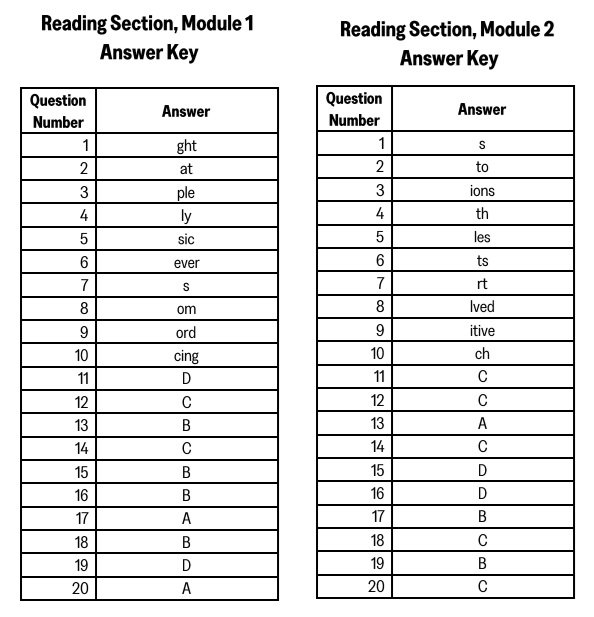
Good Luck!
Attachment:
GMAT-Club-Forum-iwpw0ovu.png [ 32.39 KiB | Viewed 552 times ]
Attachment:
GMAT-Club-Forum-8z7xbue3.png [ 29.52 KiB | Viewed 552 times ]
Attachment:
GMAT-Club-Forum-0gzf5rde.png [ 87.53 KiB | Viewed 550 times ]
Attachment:
GMAT-Club-Forum-q151l6y8.png [ 78.36 KiB | Viewed 517 times ]
Attachment:
GMAT-Club-Forum-cb9xk5hu.png [ 115.62 KiB | Viewed 516 times ]
Attachment:
GMAT-Club-Forum-nx2vgrxb.jpeg [ 84.18 KiB | Viewed 451 times ]
Posts: 16,401
Note!
The answer key is updated under the "Spoiler" button.
The answer key is updated under the "Spoiler" button.

Interesting this. I have the latest OG and it is quite good for the new material.
we should revamp the whole section with maybe a master topic with all the relevant links: OG review, each 4 sections sepèarated with material to practice. The usual pantagruelic topic that after 1 year has half a million views.
I guess that having time we could..........having time
_________________
we should revamp the whole section with maybe a master topic with all the relevant links: OG review, each 4 sections sepèarated with material to practice. The usual pantagruelic topic that after 1 year has half a million views.
I guess that having time we could..........having time
_________________
Free Materials for the GRE General Exam - Where to get it!!
GMAT FE - COLLECTION OF QUESTIONS AND RESOURCES
QUANT: 1. ALL GMATPrep questions Quant/Verbal-2. Bunuel Signature Collection - The Next Generation-3. Bunuel Signature Collection ALL-IN-ONE WITH SOLUTIONS
4. MGMAT Study Hall Thursdays with Ron Quant Videos
VERBAL:1. Verbal question bank and directories by Carcass-2. Critical Reasoning_Oldy but goldy question banks-3. Reading-comprehension_Oldy but goldy question banks
GMAT FE - COLLECTION OF QUESTIONS AND RESOURCES
QUANT: 1. ALL GMATPrep questions Quant/Verbal-2. Bunuel Signature Collection - The Next Generation-3. Bunuel Signature Collection ALL-IN-ONE WITH SOLUTIONS
4. MGMAT Study Hall Thursdays with Ron Quant Videos
VERBAL:1. Verbal question bank and directories by Carcass-2. Critical Reasoning_Oldy but goldy question banks-3. Reading-comprehension_Oldy but goldy question banks
Do not understand how is B
17. What is one effect of decision fatigue as mentioned in the passage?
A. Desire to make the same choices as other consumers
B. Anxiety about making the wrong choice
C. Preference for consumer cultures
D. Enhanced freedom to choose
The passage
an overabundance of choices—from groceries to electronics—can overwhelm individuals, causing anxiety and decision fatigue.
So the process leads to X+Y as result NOT fatigue results into anxiety. It is not recursive
Are these official sources?
_________________
17. What is one effect of decision fatigue as mentioned in the passage?
A. Desire to make the same choices as other consumers
B. Anxiety about making the wrong choice
C. Preference for consumer cultures
D. Enhanced freedom to choose
The passage
an overabundance of choices—from groceries to electronics—can overwhelm individuals, causing anxiety and decision fatigue.
So the process leads to X+Y as result NOT fatigue results into anxiety. It is not recursive
Are these official sources?
_________________
Free Materials for the GRE General Exam - Where to get it!!
GMAT FE - COLLECTION OF QUESTIONS AND RESOURCES
QUANT: 1. ALL GMATPrep questions Quant/Verbal-2. Bunuel Signature Collection - The Next Generation-3. Bunuel Signature Collection ALL-IN-ONE WITH SOLUTIONS
4. MGMAT Study Hall Thursdays with Ron Quant Videos
VERBAL:1. Verbal question bank and directories by Carcass-2. Critical Reasoning_Oldy but goldy question banks-3. Reading-comprehension_Oldy but goldy question banks
GMAT FE - COLLECTION OF QUESTIONS AND RESOURCES
QUANT: 1. ALL GMATPrep questions Quant/Verbal-2. Bunuel Signature Collection - The Next Generation-3. Bunuel Signature Collection ALL-IN-ONE WITH SOLUTIONS
4. MGMAT Study Hall Thursdays with Ron Quant Videos
VERBAL:1. Verbal question bank and directories by Carcass-2. Critical Reasoning_Oldy but goldy question banks-3. Reading-comprehension_Oldy but goldy question banks
Posts: 16,401
Hi Carcass
Yes! the answer is B and this is official material.
Yes! the answer is B and this is official material.
Carcass
Moderator:
Announcements
How to Tell If Your GMAT Prep Resources Are Actually Helping You

Subscribe to GMAT Club for New Podcast Episodes, Debriefs, & Insightful Sessions on GMAT Preparation
Subscribe to GMAT Club for New Podcast Episodes, Debriefs, & Insightful Sessions on GMAT Preparation

Tuck at Dartmouth
AI at Dartmouth Tuck: How the School Is Preparing Leaders for the Age of Artificial Intelligence
Inside the courses, research, and hands-on learning defining wise, decisive leadership in an AI-driven world.
Read More
Inside the courses, research, and hands-on learning defining wise, decisive leadership in an AI-driven world.
Read More


Top 5 GMAT Debrief Videos
Success stories and strategies from high-scoring candidates.