Events & Promotions
| Last visit was: 06 Sep 2026, 16:36 |
It is currently 06 Sep 2026, 16:36 |
|
|

GMAT Club Daily Prep
Thank you for using the timer - this advanced tool can estimate your performance and suggest more practice questions. We have subscribed you to Daily Prep Questions via email.
Customized
for You
Track
Your Progress
Practice
Pays
Not interested in getting valuable practice questions and articles delivered to your email? No problem, unsubscribe here.
 Sep 07
12:01 AM PDT
-11:59 PM PDT
On the 7th, GMAT Club Tests will be Free! Including all the Quizzes, Questions, and Tests. 12 AM - 11:59 PM PDT- Sep 09
07:00 AM PDT
-10:00 AM PDT
Meet AdComs and explore top Master’s programs - MiM, MiF, MSc, MSBA and more. - Application Fee Waivers - Free 1-Week of GMAT Club Tests: - Master's Application Toolkit - Grand Prize Giveaway

 13 Nov 2014, 13:00
Kudos
Bookmarks
| FROM Tuck Admissions Blog: Rugby at Tuck: Where the Focus Is Always On the Team |
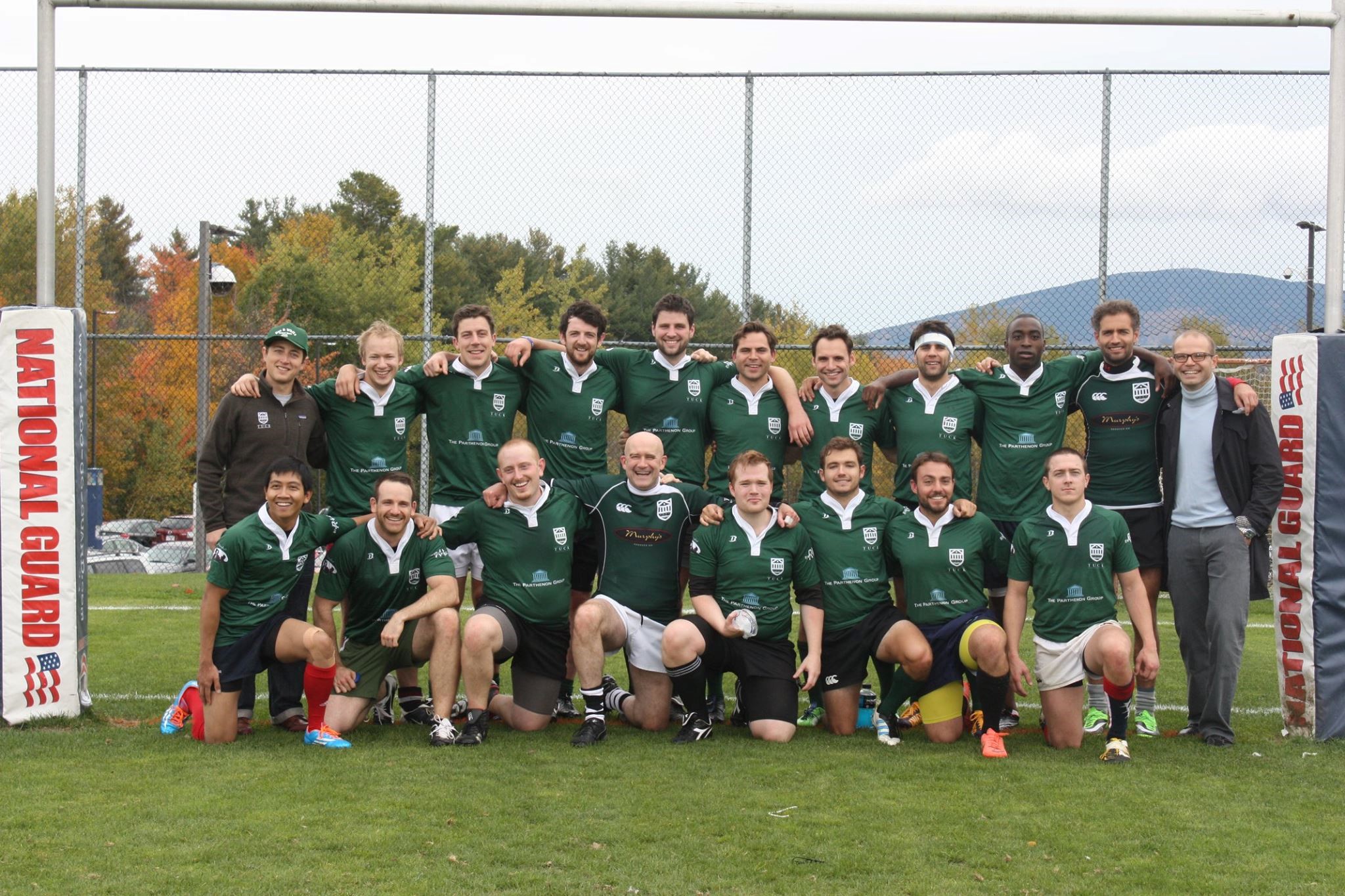  By Dominic Yau T’16 Dominic grew up in Hong Kong and London. After graduating from University of Warwick in 2008 with a bachelor’s in mathematics, he worked as an insurance underwriter for Markel International. Outside of the classroom, Dominic enjoys playing rugby, tripod hockey, and reading. Although most of my fellow classmates and I came to Tuck to round out our business skill set and to think about different career opportunities, we also enjoy taking part in things we do not get a chance to do while working. Being active and playing different sports was definitely something I enjoyed before coming to Tuck. I was a varsity American football player in college and also played in a men’s league in the U.K. I wanted to continue playing team sports once I got to Tuck. Hockey is a common pastime for Tuckies with around 50 percent of the class either playing for the tripod leagues, or for the A and B teams that compete in a local league. While I do play tripod and enjoy it immensely, I also play on the less well-known Tuck rugby team. Playing on the rugby team has been a great way for me to get to know my classmates better and to meet more second-year Tuckies. The team itself is very representative of the diverse nature of Tuck with members coming from South Africa, the U.K., Portugal, the U.S., Canada, Ireland, and Uruguay. There is a wide range of abilities but all that is necessary to learn is enthusiasm. Our members range from those who previously played at a high skill level, to those who have never played and know very little about the rules. The common thread is that we love the camaraderie that comes with playing a team sport. The importance of teamwork in rugby has parallels with the Tuck experience. Whether you are on a rugby pitch with 14 teammates or in a study group meeting with five classmates, the main focus is always the team goal—not the individual goal. Playing rugby for Tuck is also a great way to meet and network with MBAs from other schools as well as others in the local community. We play local colleges such as Colby-Sawyer and the Vermont Law School and take part in the MBA Rugby World Cup, a tournament hosted annually by Duke. The team will travel to Durham next April to compete against a host of other MBA schools and hopefully return with some silverware. Although, like my teammates, I definitely do not recover quite as quickly as I used to, I have enjoyed my time so far on the rugby team and feel extremely proud to pull on my green jersey every time we play. |
This Blog post was imported into the forum automatically. We hope you found it helpful. Please use the Kudos button if you did, or please PM/DM me if you found it disruptive and I will take care of it.
-BB

anupamgupta2112

Joined: 12 Jun 2014
Last visit: 25 Jun 2019
Posts: 289
Own Kudos:
Given Kudos: 79
Location: India
Concentration: General Management, Technology
Schools: Duke '18 (M)
GMAT 1: 740 Q49 V41
WE:Information Technology (Consulting)
Products:
14 Nov 2014, 04:14
Kudos
Bookmarks
anupamgupta2112
Joined: 12 Jun 2014
Last visit: 25 Jun 2019
Posts: 289
Own Kudos:
Given Kudos: 79
Location: India
Concentration: General Management, Technology
Schools: Duke '18 (M)
GMAT 1: 740 Q49 V41
WE:Information Technology (Consulting)
Products:
14 Nov 2014, 04:17
Kudos
Bookmarks
neo656

I feel your pain buddy...Alcohol is a savior right now.. :D

DorkusMaximus
Joined: 16 Jul 2011
Last visit: 03 Aug 2019
Posts: 109
Own Kudos:
Given Kudos: 23
Status:It's Clobberin' Time
Concentration: Marketing, General Management
Schools: Kellogg '17 (D) Tuck '17 (M) Duke '17 (D) Ross '17 (A) Yale '17 (WL) Kenan-Flagler '17 (A$)
GMAT 1: 680 Q49 V34
GMAT 2: 700 Q49 V35
GMAT 3: 750 Q49 V42
Products:
Schools: Kellogg '17 (D) Tuck '17 (M) Duke '17 (D) Ross '17 (A) Yale '17 (WL) Kenan-Flagler '17 (A$)
GMAT 3: 750 Q49 V42
Posts: 109
Kudos:
67
14 Nov 2014, 12:40
Kudos
Bookmarks
Is anybody here who submitted his/her application for November Round and has seen the status change from 'Submitted'?