| Last visit was: 27 Apr 2026, 20:32 |
It is currently 27 Apr 2026, 20:32 |
|
|
Customized
for You
Track
Your Progress
Practice
Pays
| FROM Tuck Admissions Blog: Club Spotlight: Tuck Sustains Brings Environmental Issues to Light at Tuck |
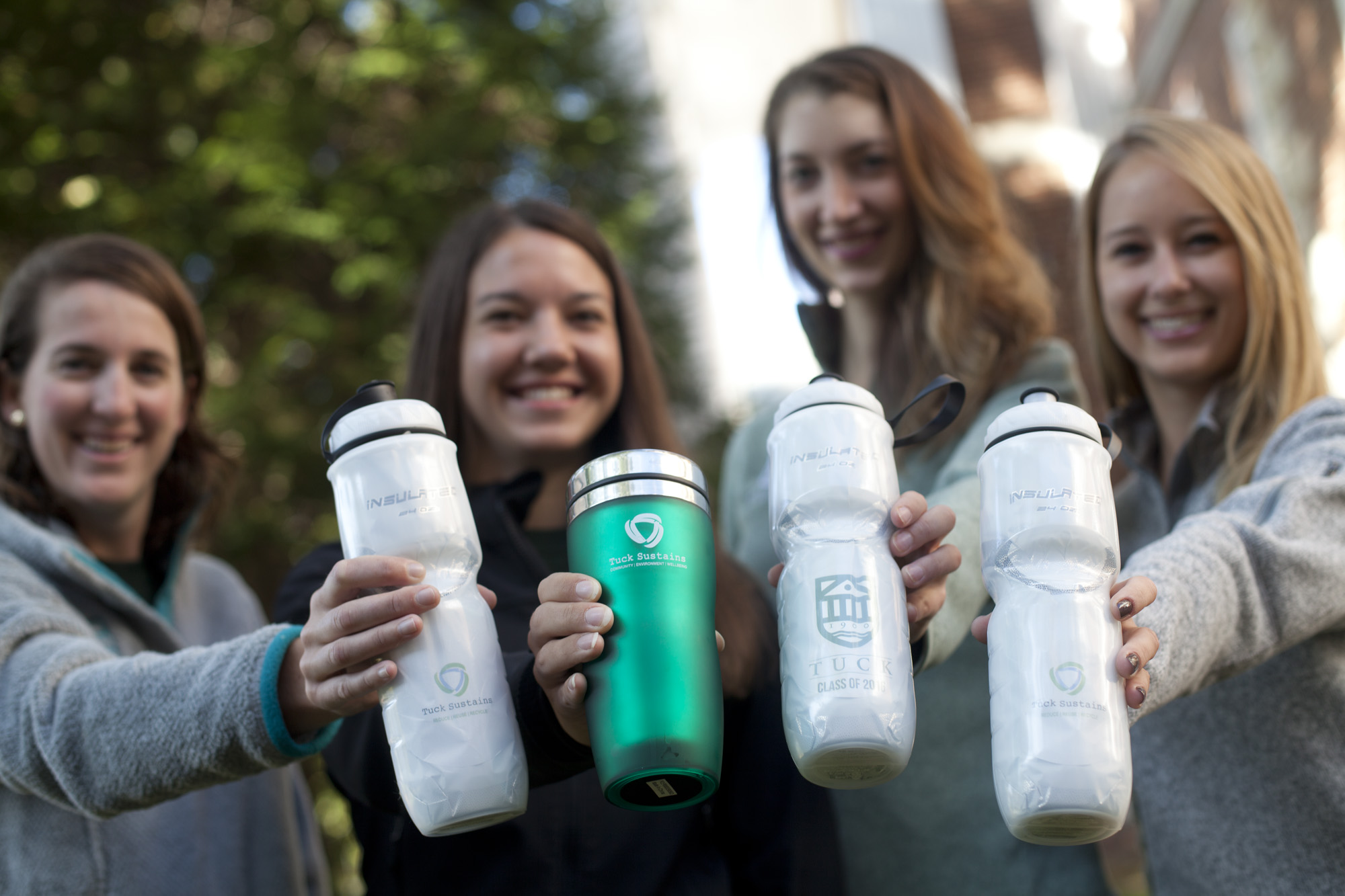
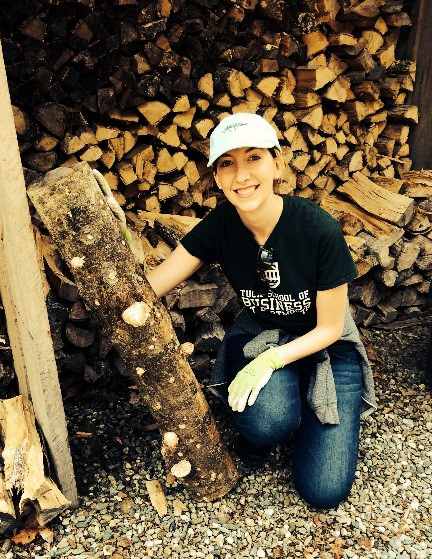
![]() ![]() By Erica Johnston T'15 Erica is a second-year student from Chicago. She studied marketing and international business at Washington University in St. Louis. Prior to Tuck, she worked in operations management in the industrial sector. A career-switcher, Erica has plans to work in brand management within the food industry. Last spring, Chloe Hansen-Toone T'15, Caroline Mann T'15, Jaimie Sarrault T'15, and I took the helm of Tuck Sustains, a student-administration partnership aimed at reducing Tuck’s environmental footprint. Each of us were drawn to Tuck Sustains for different reasons but we came together to work towards a common mission that we’re accomplishing through a mix of small and large projects aimed to raise awareness, change behavior, and impact policies at Tuck. We started out small last spring by installing display cases above the trash, composting, and recycling bins in Tuck’s dining hall to help teach members of the Tuck community how to properly dispose of common waste items. We also worked with facilities to change “trash” vocabulary used on bins to “landfill” which has a more negative connotation and makes people think twice before throwing something away. Tuck Facilities also helped us to create a consistent color scheme for waste containers to help make proper disposal even easier. This school year, we’re tackling some larger projects. We’d like to help Tuck move towards a water bottle free environment. I saw my undergraduate institutions discontinue the sale and distribution of disposable water bottles and as a result, experience a significant reduction in waste, so we’re hopeful we can help Tuck do the same. At the beginning of the year, in partnership with the MBA Program Office, Tuck Sustains provided all first-year students with reusable water bottles to encourage the incoming class to stay hydrated in a less wasteful manner. ![]() Another new initiative this year is our work as consultants for other clubs at Tuck to help them host their events in ways that aren’t as wasteful. From recycling nametags to sourcing supplies, we’re committed to eliminating unnecessary waste at Tuck events. We’re also working to encourage members of the Tuck community to utilize reusable mugs and dishware when dining on campus. We worked with administration to implement a discount on coffee when using a reusable mug to encourage more environmentally friendly behavior. To encourage continued use, we’re in the process of setting up a mug washing station to make it easier to reuse containers while on campus. We’re also strategizing how to alter the layout of items in the dining hall to better emphasize reusable dishware over take out containers that are predominantly used today. We have a long list of other projects on the horizon: utilizing Green Light monitors to track energy usage on campus, working with Dartmouth administration to build business cases for energy efficient features for new construction on campus, and many more. We’re optimistic about the work we’ve set out for the year and the enthusiasm of our fellow students to support Tuck Sustains’ mission! |
| FROM Tuck Admissions Blog: Alums Offer Advice to International Students at Tuck: Part 1 |
![]() ![]() ![]() Francis Barel T’05 is a member of Tuck’s European Advisory Board originally from France. He is PayPal’s business development manager for the Middle East and North Africa. Julian Herman T’06 is a member of Tuck’s Latin American Advisory Board originally from Chile. He is a sloan fellow at the Massachusetts Institute of Technology. They recently spoke at Tuck to offer advice on job searching for international students. Below are highlights of their talk. Francis Barel: When you’re an international MBA student looking to take the next step, you have three career options: 1) go for a multinational, large company that can offer you a visa, 2) go for a company that doesn’t generally offer a visa but might make an exception for you, or 3) go home or to a different country. Going home may seem like the easiest option, but there are a few challenges. Most international companies not based in the US are not necessarily used to hiring MBAs—they may not have the right salaries or job functions. For people who want to return home, I recommend that you consider trying to get a job at one of the best companies in the US and gain 2-3 years of experience here. Companies in your home country might hire you more for your American experience than for your MBA or the Tuck brand name. Julian Herman: My experience was a little different. I went back home immediately after Tuck as I got a very attractive offer to work with a great company in Chile. When selecting a geography, you need to strike the balance between what you bring to the table and what challenges you will face. Example: when you go into consulting, one of the first choices you are faced with is whether to choose your country’s office or the Boston office. FB: They’ll ask you that immediately when you apply. JH: For example, if you go the Boston route, you’re basically competing against everybody who has spent their lives in the USA —they went to school here, they have friends and connections and they understand the cultural references. Being able to speak Spanish or Arabic or Mandarin is not going to be a big help. For example, I worked six months in Abu Dhabi, where all the presentations had to be in Arabic, and since I didn’t speak the language, I had to use a translator. It was awkward. If I had spoken Arabic I would’ve been able to interface more fluidly and bring more to the table. Don’t shy away from returning to your home country if you return with one of the big companies in your industry. FB: Julian has a very valid point. That doesn’t mean you can’t come back to the US after 2-3 years in your home country, because what that means is you bring McKinsey experience, for example, back to the US rather than having to compete as an unknown quantity against people born and raised in New England. You might also want to keep parallel tracks in mind by looking at both US and home companies at the same time. Keep in mind, though, how best you can activate the three levers of country, industry, and position. It might be easier, for example, to stick to the same industry but switch countries and positions rather than trying to switch all three. FB: One of the biggest challenges an international student faces is competing with Americans. If you’ve come to the US for the first time to attend Tuck, think of it this way: Americans have 25 more years of experience living here than you do. The American education system and culture encourages a self-confidence that you might not have. It’s important to remember though, that you are smart and bring something unique: global knowledge and culture. When we were at Tuck, we really tried to learn from what Americans bring to the table, but it can be an uphill battle. Take, for example, networking. Americans do it naturally—they smile, they are confident, they shake your hand and ask for your card. Don’t feel ashamed to pick up those techniques as you build your network. Americans do such a good job of staying in touch with former colleagues and friends, and you should, too. Yes, it’s easier than ever today with Facebook and LinkedIn, but you should also pick up the phone and meet people in person. Brown bags are so important, too, because you can sit down with people and ask them questions. JH: Not to mention alumni. The Tuck network is unparalleled but don’t forget that you are part of the larger Dartmouth community, too. FB: One of the things Americans are great about, too, is when they go into a room they know how to chitchat. That might be something you need to work on. It’s all about establishing contact with the person you are talking to and breaking the ice. It’s so important but so easy to overlook. JH: For me, the biggest cultural shock coming to the States was this concept of the cocktail/networking event. You go and there’s one person standing there with a drink, surrounded by people just waiting for their moment to approach and talk. You have to learn how to navigate it successfully. FB: And, after any contact, Americans are great at following up with an email to say “thank you” or “We met last night.” Don’t send an email too fast—or too slow. JH: If the interviewer walks out the door and immediately receives the email sent from your iPhone, that’s too fast. FB: Don’t be overbearing or insistent. Tailor your emails, too, especially if the recipients know each other. Last thing: we all have accents. You want to make sure yours is understood, especially if it’s a phone interview. Practice with friends, do mock interviews, and keep perfecting your pitch. It will pay off. (Photo above by Laura DeCapua) |
| FROM Tuck Admissions Blog: The Best of “Ask Dawna” |
![]() Tuck’s Director of Admissions Dawna Clarke has been sharing her wisdom in the “Ask Dawna” video blog series since 2011. Always anxious to connect with applicants, tomorrow, December 3, 2014, marks the day Dawna dives into the world of social media for an Ask Me Anything (AMA) event on Tuck’s Facebook wall. In case you haven’t had a chance to check out her videos, we’ve compiled our very own "Best of Ask Dawna" list. 1) The importance of an MBA interview and Tuck's unique policy. [youtube2]p> 4) Dispelling myths about applying to Tuck 5) The advantages of taking the GMAT well in advance of applying to business school. These are some of our favorite videos, but by no means does her expertise end here. Bring your follow-up questions to Facebook! |
| FROM Tuck Admissions Blog: TuckTalks: Many Students, Many Paths to Tuck |
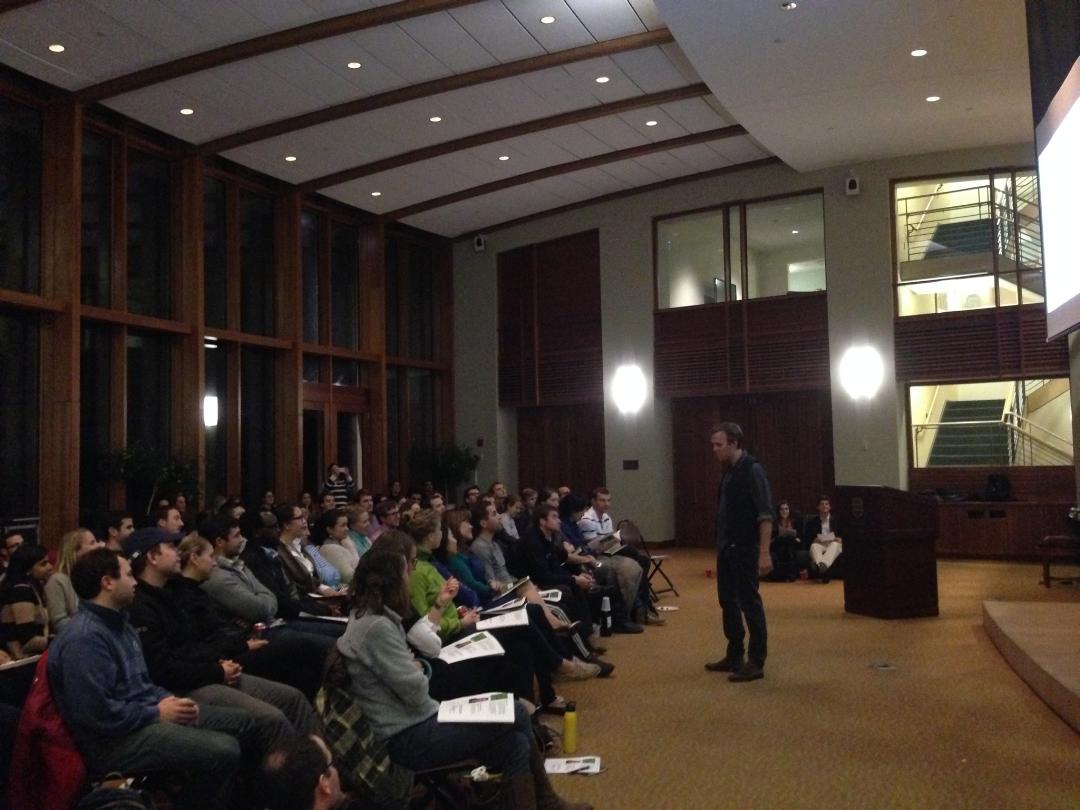
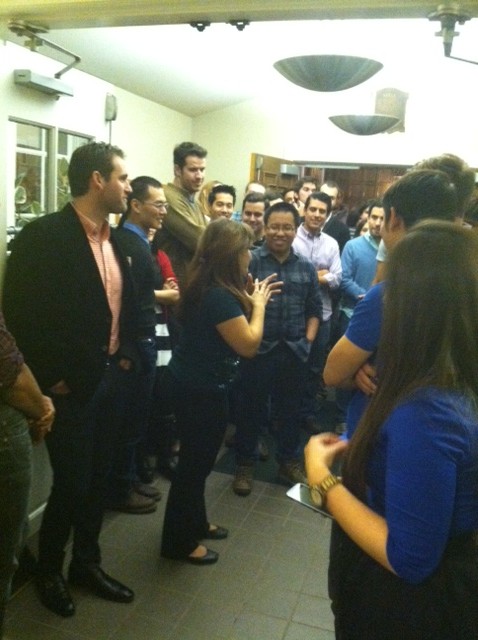
![]() ![]() By Jane Shiverick T’15, Tuck Bridge ’08 Jane grew up in Bronxville, NY. She graduated from Trinity College in 2008 with a double major in psychology and Italian studies. Before Tuck, she worked in New York City in wine import and distribution. We arrive at Tuck with myriad stories to share. As a global community, we arrive at the same place from different paths. One of the special things about living and studying in this tight-knit community is the many opportunities we have to connect with each other and share our stories. A TuckTalks event this month debuted a forum for sharing the many fascinating stories we carry with us at Tuck. The brainchild of three students, this inaugural TuckTalks was a packed Raether Hall fireside gathering on a weeknight to listen to classmates and faculty share their stories. As Matt Slaughter—associate dean for faculty and the Signal Companies’ Professor of Management—reminded us before the talks kicked off, great leaders have the confidence to share tales of their personal journeys and use them to inspire others. The talks that followed were nothing short of inspirational—they taught me something new about each speaker, and the evening helped to further strengthen the bonds that make the Tuck community so rich. ![]() Here are some highlights from the stories shared:
|
| FROM Tuck Admissions Blog: TuckStuff: More Than Just “Stuff” |
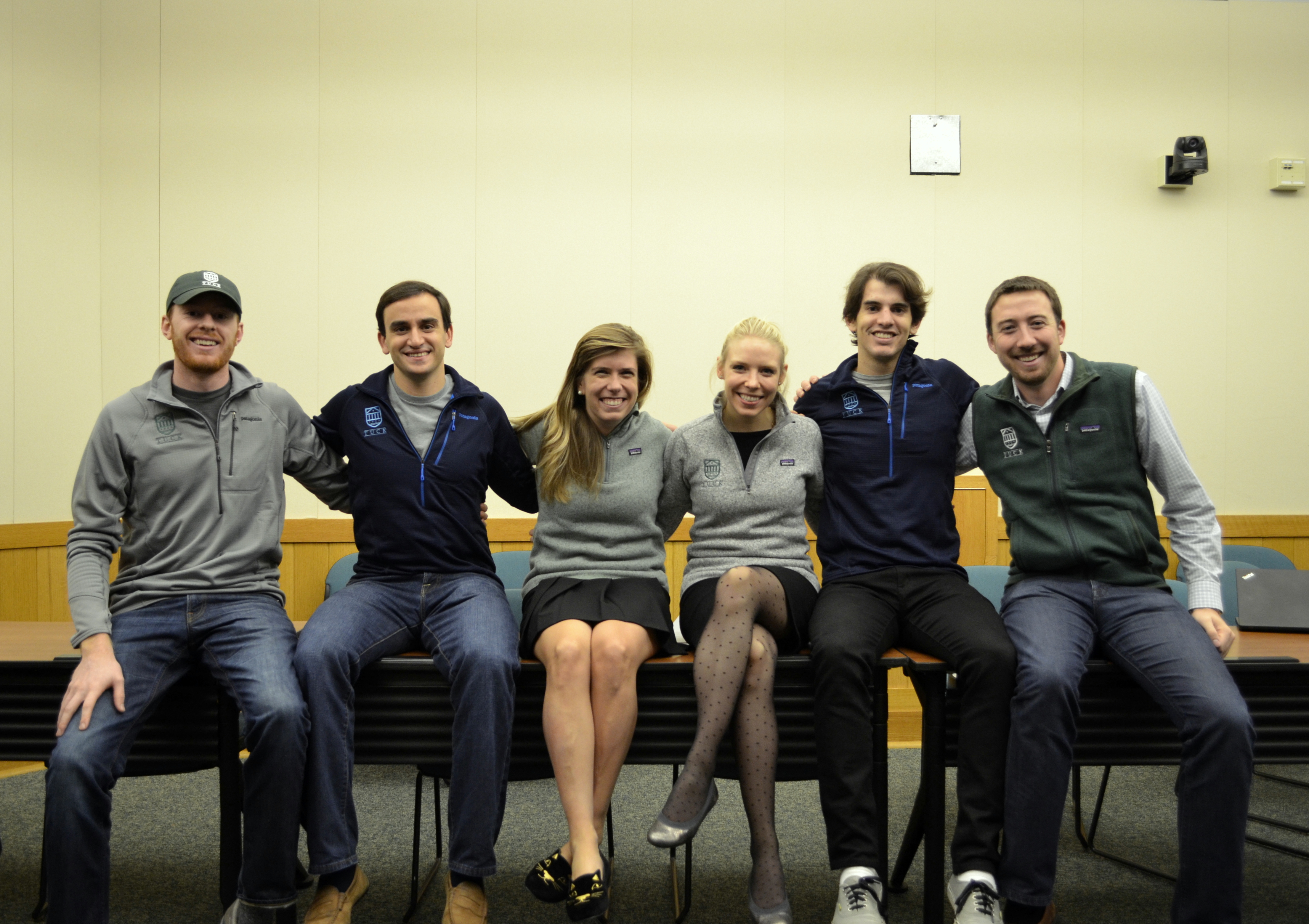
![]() By Nicole Daniele T'16 Nicole Daniele, T’16, grew up in Edison, New Jersey and graduated from the University of Pennsylvania with degrees in International Relations and Italian. Prior to Tuck she worked in wealth management in Philadelphia and New York. She has happily traded in her black suits for Patagonia gear from TuckStuff. Tuckies have a lot of school pride—and we love to show it. On an average day, I can count at least five classmates wearing some type of Tuck-branded apparel in every class, at TuckTails, and at a night out at Murphy’s (and I’m not including myself in these highly scientific estimates). Unlike my undergraduate bookstore, which seems to thrive on selling some of the un-chicest apparel out there (but I still bought it), Tuck has found a way to encourage students to purchase branded items they’d actually want to use—by having its peers conceptualize and manage an entrepreneurial on-campus store that operates as a real-world business. I give you TuckStuff, an organization that five fellow T'16s and I joined as "interns" a few months ago. I vividly remember my first TuckStuff purchase during this spring’s Admitted Students Weekend. I ran into a fellow prospective student who had attended my undergrad and who, like me, was also struggling not to buy everything in the store (she’s probably one of my closest friends today—proof that TuckStuff isn’t just about the stuff’). Those green running shorts I bought were worn in nearly every road race and country I visited this summer. I also candidly recall the day this term when a certain sportswear company’s newest shipment arrived at the store during lunch. If you’ve ever seen the sandwich line in Byrne at noon, you would be shocked to discover how willing to forgo food Tuckies are to get the "latest threads." Because the store is managed and operated by current students, it presents a fantastic opportunity to understand the underpinnings of a thriving retail operation—from merchandizing, e-commerce, finances, operations, social media, and advertising. As someone who interned in sales and marketing for an international fashion house years ago, I found TuckStuff to be a great way for me to hone lessons learned from those intern years, and explore other areas, like merchandising and operations, to help prepare me to advise retail executives as a consultant in the future. Fellow TuckStuff intern and sectionmate Byron Peyster T’16 notes “What has amazed me the most about my brief TuckStuff experience was my first official management meeting. From discussions of Christmas promotions to managing excess inventory, to creative ways to get new customers, I realized these were probably the exact discussions that some of the world’s biggest retailers have on a daily basis. As someone with interest in working in retail one day, but with limited experience, it was exciting to learn that this would not only be a fun experience working with great people, but would also be a great foundation for my career. Although the T'15s are now on winter break, leaving us T'16s in charge of the store, (are we ready to use the credit card machine by ourselves?!), their insight into customer tastes, buying behavior, and growth initiatives has been some of the most valuable experiential learning in my time here thus far. And it’s just plain fun. I’ll never be Coco Chanel (or more appropriately for Tuck, Yvon Chouinard)—but sourcing and choosing the neat apparel my friends will buy next fall is about as close as it gets. And sending the mentor who helped me find my way here a “Tiny Tuckie” onesie for his baby daughter will be one of the most rewarding holiday purchases I make this year. So whether you’re an alum wearing a ragged class jacket, or a current student who needs just one more Tuck t-shirt, TuckStuff probably has what you’re looking for (and a few other things you didn’t even think you needed!) |
| FROM Tuck Admissions Blog: “Tucksgiving” 2014: A Family Dinner for 85 People |
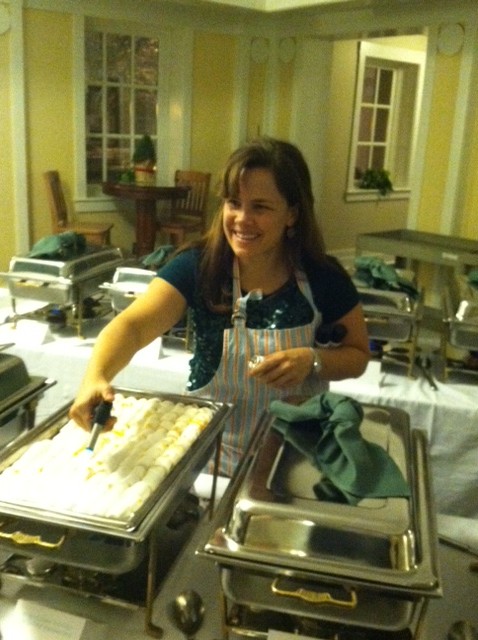
![]() ![]() By Jennifer Tietz T’15 Jennifer Tietz, T’15, grew up in the Midwest before graduating from the US Naval Academy with a BS in Mathematics. She also earned a Master of Engineering Management from Old Dominion University. Prior to Tuck, Jen served as Lieutenant Commander and Nuclear Surface Warfare Officer in the United States Navy. At Tuck, she’s active in the Armed Forces Alumni Association (AFAA) and founded Tuck Tastes, a food/gastronomy club. Eighty pounds of turkey, 35 pounds of Yukon gold potatoes, 18 pounds of sweet potatoes, 16 pounds of Brussels sprouts, 10 pounds of green beans, 35 onions, 16 loaves of homemade bread sliced into cubes for the stuffing, and LOTS of pumpkin puree went into making the food for the 2014 “Tucksgiving” dinner. But a whole lot of love and excitement were the secret ingredients. In October, I reached out to Sally Jaeger in the MBA Program Office to let her know I’d be happy to have a few students to my house for Thanksgiving. In past years faculty members had students who were unable to travel for Thanksgiving over to their house for dinner, but many of those faculty members were travelling or unable to host this year, and Sally was concerned that students might not have a place to go (though I don’t doubt those in the MBAPO would have tried to host everyone themselves, if it came to that). Since I run a club called Tuck Tastes and have showed much enthusiasm in the past for cooking for the Tuck community, Sally thought that it could be a perfect match. I remember the day we decided we’d do the event. It felt like Christmas had come early, as the opportunity to cook my favorite meal of the year for loads of people, many of whom were international and would be celebrating their first Thanksgiving, was a dream come true. Thanksgiving is a family event and to have a proper family dinner, we would need a long table. Stell Hall, with its fireplace, warm décor, and chandeliers was a perfect choice. Decorating this enormous room would have been a gargantuan task, so we let the room do most of the speaking for itself by decorating only the table. We adorned the long table with white linen, LED candles, silk leaves, fall gourds, and Tuck green linen napkins held together with custom-made twine napkin rings. The Byrne Dining Hall staff helped us set the table with real silverware, wine glasses, bread baskets, and glass plates. They also set the serving line up with the warming dishes and large utensils. From beginning to end, this was a huge community effort and gave me the opportunity to work with the wonderful staff members who help make Tuck as amazing as it is. Mother Nature did her part and gave us 10 inches of snow to help us celebrate, and to slow my progress between grocery stores! My mother and I started our preparation the week before Thanksgiving by cutting up the loaves of bread we’d made at a King Arthur Flour baking class into cubes that would dry for the stuffing—about eight pounds total. We also went to the store and bought as many ingredients as we could, concerned that they would sell out of crucial items as the holiday approached. The three days leading up to the event were a frenzy of slicing, dicing, sautéing, running back to the grocery store to get more ingredients as our attendee list soared to 80 people, and searching for any refrigeration space we could find to hold prepared food waiting for its turn in the oven. On Wednesday, I prepared solution to brine our three huge turkeys before five of my classmates came over to help peel and slice potatoes, prepare Brussels sprouts, and dice more onions. On event day, mom and I were up early to begin. We had to get three turkeys in the oven, which involved a lot of driving around town (two of my classmates had left me keys so I could use their ovens). One of the brine bags had sprung a leak, so mom continued her mashed potato preparation while I figured out how to get more than a gallon of brine liquid out of the bottom of my friend’s refrigerator. Once the crisis was averted, I resumed my timeline and we fastidiously prepared, loaded, and transported the food in preparation for a 5 p.m. dinner. The menu was turkey, homemade stuffing, mashed potatoes, sweet potatoes with marshmallow topping, green bean casserole, Brussels sprouts with pistachios and cranberries, cranberry port chutney, rolls, and assorted pies with whip cream. We filled 22 large pans with food by using all five burners on my stove and a total of six ovens around town. The setup crew was there at 4 p.m. and helped the event come to life. By 5:10, around 85 people had arrived and we were ready to pull the lids off the warming dishes. People made it through their first plate quickly and went back for seconds (and some for thirds). We lingered around the table for a few hours, telling stories and sharing what we are thankful for with new friends. Several people told me they will forever remember their first Thanksgiving in Stell Hall. That, and the amazing Tuck community that made it all possible are what I am thankful for this year. I also will forever remember Thanksgiving in Stell Hall as the first (and probably only) time I got to make a family dinner for 85! |
Success stories and strategies from high-scoring candidates.