Events & Promotions
| Last visit was: 10 May 2026, 15:26 |
It is currently 10 May 2026, 15:26 |
|
|
Customized
for You
Track
Your Progress
Practice
Pays
12:00 PM EDT
-12:30 PM EDT
10:00 AM EDT
-11:00 AM EDT
05:00 PM PDT
-06:00 PM PDT
| FROM Stacy Blackman Consulting Blog: B-Schooled Podcast Episode #153: Connecting with MBA Students, Faculty and Alums |
![]() Today on B-Schooled, we offer a deep dive into an aspect of the MBA application process that many forget about: connecting with students, faculty, and alums at your target schools. There are SO MANY REASONS why this is a vital thing to do. Not only does it give you a direct way to thoroughly understand which school might be the best fit for you. There are also many indirect benefits, from behind-the-scenes connections to admissions committees, professional contacts, networking opportunities, and new friendships. The list goes on and on. This episode discusses seven ways to connect with students, faculty, and alumni. Importantly, we’ve tailored our approach especially for those of you who might come from a non-traditional background and/or don’t think that you have any connections in this category. Topics covered in this episode include: 1. Taking advantage of Zoom and other opportunities hosted by the admissions office 2. Reaching out to co-presidents of professional student clubs you might be interested in 3. Connecting with students from affinity groups you identify with 4. Approaching alumni, especially those you have something in common with 5. Considering approaching faculty and staff 6. Taking advantage of your networks (even if you don’t think you have a network) 7. Exploring national MBA affinity groups This B-Schooled episode can be found here, or take a listen on any of the major podcast platforms below. B-Schooled is available on most major podcast apps, including: Apple Podcasts Spotify Stitcher TuneIn Please be sure to subscribe to B-Schooled so that you don’t miss a thing. Also, if there’s something you’d like for us to cover in a future episode, please email podcast@stacyblackman.com. We’d love to hear from you! *** ![]() Now, why not hop on over to our brand-new MBA community on Discord? That’s where you’ll find exclusive insights from the SBC team, explore our resources, and connect with fellow current and prospective MBA applicants. This is a space to share and learn about the MBA admissions process, whether you’re still debating if business school is for you, or you’re already well on your way with your application journey. Come join the party today! The post B-Schooled Podcast Episode #153: Connecting with MBA Students, Faculty and Alums appeared first on Stacy Blackman Consulting - MBA Admissions Consulting. |

| FROM Stacy Blackman Consulting Blog: Admitted MBA Student To-Do List |
|
[img]https://www.stacyblackman.com/wp-content/uploads/StockSnap_TVEUBLIOSK-734x489.jpg[/img] Has the euphoria over your acceptance to the b-school of your dreams subsided slightly? Then it’s time to refocus your energies on all of the big and little details that make up your admitted MBA student To-Do List. Here are some of the specific areas that need your immediate attention. Give notice gracefully If your supervisor already supported your plans to attend business school, sharing the great news of your admission won’t be awkward at all. However, some applicants need to keep their application plans quiet so as not to jeopardize their employment. In that case, now is the time to let your employer know you’re leaving. You should explain your reasons, give plenty of notice, and offer to help train your replacement if applicable. Make every possible effort to leave on good terms to keep this part of your professional network intact. [img]https://www.stacyblackman.com/wp-content/uploads/pexels-sora-shimazaki-5668859-1-734x489.jpg[/img] Set up a budget Step one of your admitted MBA student To-Do List: get your finances in order. Avoid credit card debt, and save, save, save as much as you can before school starts. Forgo unnecessary purchases, and try to live slightly below your means. Remember, your [url=https://www.stacyblackman.com/blog/avoid-3-mistakes-when-building-your-mba-budget/]projected budget[/url] should factor in expenses beyond tuition and living costs. Travel, student clubs, and study abroad trips greatly enrich the b-school experience. [url=https://www.tiktok.com/@stacyblackmanconsulting?refer=embed]@stacyblackmanconsulting[/url] [url=https://www.tiktok.com/tag/sbcyourfuture?refer=embed]#sbcyourfuture[/url] [url=https://www.tiktok.com/tag/bschool?refer=embed]#bschool[/url] [url=https://www.tiktok.com/tag/mba?refer=embed]#mba[/url] [url=https://www.tiktok.com/tag/bschooladmissions?refer=embed]#bschooladmissions[/url] [url=https://www.tiktok.com/tag/budget?refer=embed]#budget[/url] [url=https://www.tiktok.com/tag/savings?refer=embed]#savings[/url] [url=https://www.tiktok.com/tag/money?refer=embed]#money[/url] [url=https://www.tiktok.com/music/original-sound-7194958908082047787?refer=embed]? original sound – Stacy Blackman Consulting[/url] Make Housing Arrangements This aspect varies depending on the school. For example, at Harvard Business School, 80% of MBA students live on campus. Housing in residence halls at HBS is assigned by lottery. Other schools offer limited on-campus housing and refer new students to nearby rental houses or apartment complexes. Prospective students can visit apartments and houses in their new city during Welcome Weekend. But start the process early. Schools have strict deadlines for campus housing. Make sure to find out those important dates early on if you prefer to live on campus. [img]https://www.stacyblackman.com/wp-content/uploads/pexels-picjumbocom-196667-734x489.jpg[/img] Brush Up on Quant Skills Business schools regularly report that many soon-to-be first-year students lack some basic quantitative skills. A quant refresh should be on your admitted MBA student To-Do List if that sounds like you. Review the course syllabus online and purchase textbooks in advance if you can. Many top MBA programs offer so-called math camps for accepted students during the summer. If you have any weak spots in this area, sign up so that you’re ready to hit the ground running once school starts. Consider a Pre-MBA Program Many admits do pre-MBA internships to explore a new field of interest, gain training insights, and begin networking with recruiters months before the formal recruiting process begins. Others participate in short, company-sponsored programs, such as [url=https://www.mckinsey.com/careers/students/mckinsey-early-access/overview]McKinsey Early Access,[/url] [url=https://careers.bcg.com/bcg-unlock]BCG Unlock[/url], and [url=https://www.bain.com/careers/meet-us/experiencebain/]Experience Bain[/url]. Applications are poised to open, and deadlines come quickly, so don’t delay if this option interests you. Still other admits take advantage of pre-term, non-academic travel programs, such as [url=http://www.kellogg.northwestern.edu/programs/full-time-mba/student-culture/clubs-trips.aspx]Kellogg Worldwide Experiences & Service Trips (KWEST)[/url], which unite more than 80% of incoming students through social, site-seeing, and community service activities. [img]https://www.stacyblackman.com/wp-content/uploads/pexels-alexandr-podvalny-1540108-734x489.jpg[/img] Reach Out to Fellow Classmates Schools often host receptions for admits where they can mingle and network with alumni and fellow admits. [url=https://www.stacyblackman.com/blog/mba-admit-weekend/]Welcome Weekend[/url] is another prime opportunity to begin connecting with your future cohort. If you’ve followed the MBA forums, you may already have a head start on building relationships with other admits. Find out if there’s a Facebook or Whatsapp group for your class. If not, offer to help set one up. Business schools make it easy for classmates to get to know each other pre-term. Take advantage of these social opportunities, and you’ll arrive on campus feeling already at home. [img]https://www.stacyblackman.com/wp-content/uploads/pexels-andrea-piacquadio-3768131-734x489.jpg[/img] Finally, enjoying some quiet time before things get crazy should also be on your admitted MBA student To-Do List. Cross a few items off your bucket list. Connect with family and friends you won’t see much of during the next two years. Dive back into those hobbies and extracurriculars that made you a desirable, well-rounded candidate in the first place. The months leading up to the start of business school are an exciting time. But it flies by in a flash. Knowing what to expect and laying the foundation for a smooth transition to student life will make your first year less stressful and even more rewarding. *** If you’ve already been admitted to your dream MBA program and need guidance for financial aid applications as a US or international candidate, we are here to help with SBC’s [url=https://www.stacyblackman.com/mba-financial-aid-costs-tuition/]Financial Aid Advisory[/url] service. Please email [[email protected]]info@stacyblackman.com[/email] to learn more. The post [url=https://www.stacyblackman.com/blog/admitted-mba-student-to-do-list/]Admitted MBA Student To-Do List[/url] appeared first on [url=https://www.stacyblackman.com]Stacy Blackman Consulting - MBA Admissions Consulting[/url]. |
| FROM Stacy Blackman Consulting Blog: Our GMAT Club: Test Talk with Stacy Blackman Consulting’s AdCom |
|
[img]https://www.stacyblackman.com/wp-content/uploads/pexels-deepak-gautam-240163-1500x1000.jpg[/img] Across our client pool, we field questions about admissions exams daily. With former MBA admissions officers on [url=https://www.stacyblackman.com/about/mba-admissions-consulting-team/]our team[/url] for every top US and European program, we have a unique opportunity to share insights that reflect the active dialogue of our own “GMAT Club” community. Here is a sneak peek into the internal conversations we’ve been having. Do I need to take a test for MBA admissions? There are two different camps on this subject. The first includes strong proponents of test-taking. Meanwhile, others genuinely feel that standardized testing isn’t predictive or necessary for higher education admissions. Both camps are accurate. Prospective business school candidates must first identify which caliber and type of MBA program they aspire to. Those criteria influence whether to take a test and how important that score will be in predicting relative admit chances. [img]https://www.stacyblackman.com/wp-content/uploads/HBS-Harvard-Business-School-Baker_library-cropped-734x430.jpg[/img] Countless graduate programs are “test lighter” in their expectations, especially outside of the [url=https://www.stacyblackman.com/mba-application-advice/]top 15 MBA programs[/url]. Still, demand for elite full-time MBA programs remains robust. This is because of the sterling value of their reputation, the education provided, and alum networks. Most of the top executive MBA programs also require a test score. Even during the peak of the pandemic, few waivered on their requirement of an objective test measurement. “The statistics so far show that students applying to test optional schools who submit scores are accepted far more often than students who don’t,” [url=https://www.stacyblackman.com/blog/gmat-test-expert-tips-tricks-and-advice/]SBC’s Director of Test Prep, Anthony Ritz, reveals[/url]. “Not submitting just really tells the schools, you know, if you saw my score, you wouldn’t like it.” [b]Partner with Stacy Blackman’s best-in-class GMAT and GRE experts and increase your score significantly. [/b][b]Request a free game plan chat with SBC’s lead test prep coach by emailing [/b][[email protected]][b]testprep@stacyblackman.com[/b][/email][b].[/b] [b]Bottom line:[/b] Almost all top-brand MBA programs still expect and require a test of some type. Read more about What is a Good GMAT Score [url=https://www.stacyblackman.com/what-is-a-good-gmat-score-mba-programs/]here[/url]. Also, see our advice on the topic in this [url=https://find-mba.com/articles/should-you-take-the-gmat-in-a-test-optional-world]FindMBA article[/url]. What value does a test score have in MBA Admissions? “The scores provide important information to schools about whether you’re prepared to handle both the intellectual rigor and the significant coursework of business school,” Anthony explains. MBA admissions officers evaluate the test score to assess academic aptitude in conjunction with the [url=https://www.stacyblackman.com/3-ways-to-offset-a-low-gpa-when-applying-to-business-school/]college transcript[/url] and work experience. Some admissions officers consider it a moral question and don’t want to admit someone who will struggle in the program. [img]https://www.stacyblackman.com/wp-content/uploads/pexels-tim-gouw-52608-734x490.jpg[/img] The [url=https://www.stacyblackman.com/blog/how-to-structure-your-mba-essays/]MBA essays[/url] and [url=https://www.stacyblackman.com/blog/mba-recommendation-letter/]recommendation letters[/url] help paint the bigger picture of who the applicant is as a person. A strong test score shows the candidate is committed to the academic exercise of test prep through hard work and perseverance. Such attributes are proxies for success within and outside the classroom of a graduate program. For example, a former admissions officer on our team shared the following about quant performance for most MBA applicants to [url=https://www.stacyblackman.com/mba-application-advice/insead/]INSEAD[/url]: “Anyone who scores below the 70th percentile will be a ‘conversation.’ A committee discussion will ensue to review the academic record to see if there are overall concerns about the prospective student to cope with the rigor of the program. There is always some test score flexibility. But there’s definitely an agreement that quant performance predicts academic success within the INSEAD program.” [img]https://www.stacyblackman.com/wp-content/uploads/INSEAD-734x384.jpg[/img] Should I take the GMAT exam? If you’re aiming for top MBA programs, we recommend taking the test and submitting the score. “Even for some programs such as [url=https://www.stacyblackman.com/mba-application-advice/mit-sloan/]MIT Sloan[/url], which temporarily waived the test requirement due to the pandemic, we found that clients who submitted a test score have had more favorable admit outcome results overall,” shared a former MIT admissions officer who is now on the Stacy Blackman Consulting team. Any test is better than no test for applicants focused on the top MBA programs with competitive acceptance rates. There are other tests to consider, such as [url=https://www.stacyblackman.com/blog/gmat-vs-gre-for-mba/]the GRE[/url] or Executive Assessment, if the GMAT isn’t ideal for the applicant. Should I submit a test score even if the program doesn’t require one? We almost always encourage minimizing risk by submitting a test score. “Not submitting a standardized test score is only beneficial if all other measures work well, especially the grades,” shared a former [url=https://www.stacyblackman.com/mba-application-advice/northwestern-kellogg/]Kellogg School of Management[/url] admissions officer on the SBC team. “So, if you had stellar grades undergrad, the AdCom would probably be okay evaluating you without a test, if the program’s application requirements waive the test score.” But if college grades were low in quant classes specifically, a test score to help counteract those grades is essential. A test score is the most reliable measure of academic aptitude. It’s also weighted more heavily than even if a candidate opted to submit any ancillary course transcripts such as [url=https://www.stacyblackman.com/hbs-core-hbx-or-mba-math/]HBx Core or MBAmath[/url]. [url=https://www.stacyblackman.com/contact/]Request a free consultation[/url] from an SBC Principal to see if we recommend an ancillary course for your unique scenario. [b]What has changed in test expectations for top MBA programs?[/b] Top programs have deemphasized the GMAT in recent years, so it’s not quite as rigid as it once was. This pivot has helped to diversify the student class. [img]https://www.stacyblackman.com/wp-content/uploads/pexels-william-fortunato-6140676-734x489.jpg[/img] “When I was at Wharton Adcom, we placed less of an emphasis on stats (i.e., average GMAT score) as we realized Wharton had lost candidates to HBS and Stanford who were taking lower test scores,” noted a former [url=https://www.stacyblackman.com/mba-application-advice/upenn-wharton/]Wharton School[/url] admissions officer now on the SBC team. Programs still evaluate a candidate’s profile holistically based on all aspects. All the test score shows, which is still vital, is that the applicant can do the work and manage everything else that’s part of the MBA experience. *** [b]Please request[url=https://www.stacyblackman.com/contact/] a free MBA advising session[/url] with Stacy Blackman Consulting to learn how we can help with your complete MBA applications. Here’s a snapshot of the caliber of expertise on [url=https://www.stacyblackman.com/about/mba-admissions-consulting-team/]our SBC team[/url].[/b] [img]https://www.stacyblackman.com/wp-content/uploads/Screen-Shot-2023-01-10-at-8.07.06-AM.png[/img] [b]For more on this topic, check out:[/b] [url=https://www.stacyblackman.com/gmat-files/retaking-the-gmat-why-when-and-how/]Test retaking, reporting, cancellations and online test options[/url] [url=https://www.stacyblackman.com/what-is-a-good-gre-score/]What is a good GRE score?[/url] [url=https://www.stacyblackman.com/client-case-study-how-the-gre-general-test-can-complement-an-unconventional-applicant/]New GRE updates here[/url] [url=https://www.stacyblackman.com/gmat-vs-gre-for-mba/]GMAT vs. GRE: What’s the right strategy?[/url] [url=https://www.stacyblackman.com/our-gmat-club-test-talk-sbc-adcom/]Should I take the GMAT or opt for a test waiver?[/url] [url=https://www.stacyblackman.com/gre-practice-test/]What practice test options are there?[/url] [url=https://www.stacyblackman.com/what-is-a-good-gmat-score-mba-programs/]What is a good test score?[/url] [url=https://www.stacyblackman.com/gmat-score-chart/]GMAT Score Chart: How to Use It?[/url] The post [url=https://www.stacyblackman.com/blog/our-gmat-club-test-talk-sbc-adcom/]Our GMAT Club: Test Talk with Stacy Blackman Consulting’s AdCom[/url] appeared first on [url=https://www.stacyblackman.com]Stacy Blackman Consulting - MBA Admissions Consulting[/url]. |
| FROM Stacy Blackman Consulting Blog: B-Schooled Podcast Episode #154: 5 Paths Forward if You’ve Been Dinged Everywhere |
![]() While some MBA hopefuls are still waiting to hear the results of their Round 2 efforts and others who applied in Round 3 or were waitlisted still have their fates up in the air, the application process has unfortunately come to a disappointing end for some people. After working so hard on your MBA materials for months on end, it can be shocking and devastating if you are not accepted anywhere. What should you do now? This episode discusses five paths forward for MBA hopefuls who were dinged. Listen to B-Schooled episode #154 here, or on any of the podcast apps listed below. B-Schooled is available on most major podcast apps, including: Apple Podcasts Spotify Stitcher TuneIn Please be sure to subscribe to B-Schooled so that you don’t miss a thing. Also, if there’s something you’d like for us to cover in a future episode, please email podcast@stacyblackman.com. We’d love to hear from you! *** ![]() Now, why not hop on over to our brand-new MBA community on Discord? That’s where you’ll find exclusive insights from the SBC team, explore our resources, and connect with fellow current and prospective MBA applicants. This is a space to share and learn about the MBA admissions process, whether you’re still debating if business school is for you, or you’re already well on your way with your application journey. Come join the party today! The post B-Schooled Podcast Episode #154: 5 Paths Forward if You’ve Been Dinged Everywhere appeared first on Stacy Blackman Consulting - MBA Admissions Consulting. |
| FROM Stacy Blackman Consulting Blog: Don’t Let ChatGPT Write Your MBA Essays |
|
[img]https://www.stacyblackman.com/wp-content/uploads/pexels-matheus-bertelli-16094054-1500x1000.jpg[/img] AI Won’t Get You Into B-School Unless you spent the last four months on a deserted island, you’ve probably heard a lot about [url=https://openai.com/]OpenAI’s ChatGPT[/url]. This artificial intelligence (AI) chatbot can answer questions, write articles, summarize texts, hold a conversation, and so much more. Within four days of its launch on November 30, 2022, more than a million users had taken it for a spin. The potential for plagiarism became apparent immediately. Within weeks, media outlets such as [url=https://www.bloomberg.com/opinion/articles/2022-12-12/did-a-chatgpt-robot-write-this-we-need-openai-watermarks?sref=C3P1bRLC&leadSource=uverify%20wall]Bloomberg Opinion[/url] and [url=https://www.theatlantic.com/technology/archive/2022/12/chatgpt-ai-writing-college-student-essays/672371/]The Atlantic[/url] predicted AI would kill the college essay. This prospect touched a nerve with everyone connected to higher education—SBC included. The [url=https://www.stacyblackman.com/about/mba-admissions-consulting-team/]Stacy Blackman consulting team[/url] has spent the past few months considering how ChatGPT could impact the MBA application process. Now that the initial commotion over this AI tool has subsided, we wanted to weigh in on how ChatGPT might affect our industry. Our conclusion? The (perceived) threat is vastly overblown. The Limits of ChatGPT Sure, you could have ChatGPT write your MBA essays. Honestly, the resulting text might sound better than what many non-writers could produce on their own. Even so, those essays will not get you into a good business school. Here are two main reasons why. [img]https://www.stacyblackman.com/wp-content/uploads/pexels-armin-rimoldi-5553686-1500x1000.jpg[/img] First, [url=https://www.stacyblackman.com/blog/how-to-structure-your-mba-essays/]the best essays[/url] are a balanced combination of many different things. You’ll see personal stories, specific accomplishments, and unique experiences. They provide insights into what the applicant has learned and how they’ve grown. While your ability to handle the rigors of an MBA program is still a significant consideration, [url=https://theblacklight.co/2022/01/06/you-can-improve-your-eq/]your emotional intelligence[/url] counts for an outsized amount these days. The so-called “soft skills” surrounding communication, the ability to motivate others, and leadership are attractive qualities to the admissions committee. Your MBA essays are the ideal vehicle for conveying those traits. ChatGPT is adept at writing coherently, with some style and perfect grammar. But it will never be able to replicate the introspection found in a stellar MBA essay. The SBC team tested ChatGPT in the weeks after it went live late last year. We soon discovered that every AI-produced essay had the same problem: there was no meaningful and personalized content. The essays were grammatically solid, but all had the same vague and repetitive output. For example, identical points appear three to four times throughout the essay in different ways. They also lacked specific knowledge of the culture or curriculum of the MBA program in question. Plus, they had no insight into the intrinsic motivations of the applicants. From our perspective, AI-produced essays will be high-risk dealbreakers in the MBA admissions process that will land in the reject pile. [b]Stacy Blackman Consulting now offers [url=https://www.stacyblackman.com/mba-precheck-background-verification/]MBAPreCheck,[/url] a background verification service. If you have any questions, review our overview on this topic [url=https://www.stacyblackman.com/mba-admissions-background-checks/]here[/url] or email: [[email protected]]precheck@stacyblackman.com.[/email][/b] Efforts to Combat AI-Assisted Writing Have Skyrocketed The second reason we don’t consider ChatGPT a realistic threat to essay submissions is that efforts to detect and combat the practice are already in play. Princeton student Edward Tian spent his winter break [url=https://www.npr.org/2023/01/09/1147549845/gptzero-ai-chatgpt-edward-tian-plagiarism]creating GPTZero[/url], an app that can tell whether a text was AI-generated. Meanwhile, the widely used plagiarism-detection service [url=https://www.turnitin.com/blog/ai-writing-the-challenge-and-opportunity-in-front-of-education-now]Turnitin[/url] announced it has the technology to detect AI-assisted writing that it has spent the past two and a half years developing. [img]https://www.stacyblackman.com/wp-content/uploads/amy-shamblen-jfhFJirnwcE-unsplash-1500x1000.jpg[/img] So, we predict that top MBA programs may refine their admissions process in response to ChatGPT. But they won’t alter their actual essay prompts. Business schools will ramp up the usage of anti-plagiarism and AI-checking software. They may also remind applicants to resist the temptation to rely on software for templatized writing and adhere to honor code considerations. [b] [/b] There have always been unethical ways to game the college admissions system—including higher education and MBA admissions. For example, applicants who go this route may hire a ghostwriter to write their essays. ChatGPT is a new way for applicants to cheat. But it’s just another “tool” in the kit for those willing to go down that path. *** [b][url=https://www.stacyblackman.com/contact/]Request a free MBA advising session[/url] with Stacy Blackman Consulting to learn how we can help with your complete MBA applications. Here’s a snapshot of the caliber of expertise on [url=https://www.stacyblackman.com/about/mba-admissions-consulting-team/]our SBC team[/url].[/b] [img]https://www.stacyblackman.com/wp-content/uploads/HBS-and-GSB-consultants-.png[/img] The post [url=https://www.stacyblackman.com/blog/dont-let-chatgpt-write-your-mba-essays/]Don’t Let ChatGPT Write Your MBA Essays[/url] appeared first on [url=https://www.stacyblackman.com]Stacy Blackman Consulting - MBA Admissions Consulting[/url]. |
| FROM Stacy Blackman Consulting Blog: 5 Focus Areas for MBA Admissions Success |
|
[img]https://www.stacyblackman.com/wp-content/uploads/MBA-APPLICATION-JOURNEY-734x413.png[/img] The MBA admissions process is rigorous and time-consuming. Therefore, having a strategy to guide you will go a long way toward helping you manage this experience. Admissions committee members evaluate MBA applicants across a host of components, so your goal is to maximize the impact of each one. Turn your focus to these five specific areas for MBA admissions success in the fall. Remember, each touchpoint is an opportunity to tell the admissions office something new about yourself. As we’ve noted on [url=https://find-mba.com/articles/your-guide-to-the-entire-mba-application]Find MBA[/url], it’s a good thing that the AdCom will judge you on your entire package. After all, we’re so much more than just our jobs, our grades, and our volunteer experience. [b] Curious about your chances of getting into a top b-school? Contact us to talk strategy with a [url=https://www.stacyblackman.com/contact/]free 15-minute advising session[/url] with an SBC Principal Consultant. [/b] Focus Areas for MBA Admissions Success [b]GPA[/b] Your GPA is a significant element of your MBA application. Besides your admissions test score, it’s a clear signal of your ability to handle the academic rigor of business school. Unfortunately, it is also one of the only components already set in stone. Keep in mind that a 3.5 or better undergraduate GPA is acceptable for most MBA applications. Check the mean standard for admitted students at your target programs to see whether you have a problem to overcome. If you have a below-average GPA or low grades in quantitative/business classes, consider taking an online course this summer. Earning A’s in college-level quant courses will help convince the admissions committee that you can succeed in a challenging, fast-paced MBA program. Also, taking steps to shore up those weaknesses shows maturity and your ability to balance academics with work. SBC consultant Sherry offers these tips for applicants worried about the impact of their low GPA: [url=https://www.tiktok.com/@stacyblackmanconsulting?refer=embed]@stacyblackmanconsulting[/url]Math for Management: MATH X402 at UC Berkeley Extension Mathematical Solutions for Businesses: MGMT X 110 at UCLA Extension[url=https://www.tiktok.com/music/original-sound-7186386567962889003?refer=embed]? original sound – Stacy Blackman Consulting[/url] [b]Career Progression[/b] When applying to a top-tier business school, show a clear path of professional growth in your application. The admissions team likes to meet potential students who have the drive to advance their skills and leadership abilities continually. If this is a trouble spot for you, it’s time to get creative. Think of ways to add value and continue to develop your career. If an official title change is not in the cards in the coming months, find other ways to take on more senior responsibilities at work. Ask to join a high-level project. Take on a leadership role. If you have a new member on the team, volunteer to mentor that person. [img]https://www.stacyblackman.com/wp-content/uploads/man-in-black-suit-achieved-an-accomplishment-3779409-734x489.jpg[/img] Even within a flat organization with no title change, you can still [url=https://www.stacyblackman.com/blog/focus-on-career-progression-results-for-a-successful-mba-resume/]show career progression[/url] on your resume. Review your accomplishments and see how you can portray them in a way that reveals your professional growth. Each time your responsibilities grew, you can describe it in a bullet point with the date. For example: [list] [*]Directed a staff of three in servicing 45 client relationships of global corporations with more than $25B in assets. (2022) [/*] [*]Contributed to the growth of $34B business through a mix of market research, marketing, and client servicing. (2020-2021)[/*] [/list] The essays also provide ample opportunities to summarize career progress and explain the structure of your organization. [b]Admissions Test[/b] Unlike your GPA, business school aspirants have a great deal of control over [url=https://www.stacyblackman.com/blog/gmat-test-expert-tips-tricks-and-advice/]this aspect of the application[/url]. Try to get the test out of the way as soon as possible. Then you can focus your energy on the essays and recommendation letters during the summer months. Explore your options and take a practice test. Consider taking a free or paid prep course, studying with a friend, or hiring a tutor if possible. These strategies can help you maintain discipline while studying. If English is not your first language, factor this into your plan as well. After all, preparation is essential for most candidates to excel on the test. If you received a below-average score the first time, plan to [url=https://www.stacyblackman.com/blog/retake-gmat/]retake the exam[/url]. Reflect on whether you genuinely gave it 100 percent the first time around. Admissions committees often look favorably upon applicants who try to improve their scores. A score boost can help clear the path for MBA admissions success. Partner with Stacy Blackman’s best-in-class GMAT and GRE experts and increase your score significantly. Request a free game plan chat with SBC’s lead test prep coach by emailing [[email protected]]testprep@stacyblackman.com[/email]. [b]Recommendation Letters[/b] The admissions committee pays close attention to the content of recommendation letters in support of your MBA candidacy. Therefore, you should only choose recommenders who will champion your business school aspirations. A lukewarm letter of recommendation could do more damage to your chances of admission than a lower GPA or test score. Few applicants realize how much they can influence their recommenders to help them draft powerful, persuasive letters of support. While you should never write the letter yourself, you can guide your recommender to focus on key traits—leadership, communication skills, integrity, innovation mindset—that you wish to highlight. [img]https://www.stacyblackman.com/wp-content/uploads/Highly_Recommended-2-734x309.jpg[/img] Remind them of at least three compelling, work-related anecdotes that show how you contributed to a project, led a team, inspired others, communicated effectively, etc. Your recommenders can help you stand out from thousands of other highly qualified applicants by painting a clear picture of both the personal and professional you. Recommenders need to do a lot of work on your behalf. Start identifying who you want to approach now and have a preliminary chat with them about your MBA plans. Once they are on board, begin assembling materials so you can guide them to write the [url=https://www.stacyblackman.com/blog/mba-recommendation-letter/]most effective letter[/url] on your behalf. [b]Essays[/b] While business schools have yet to publish their MBA essays for the 2023-2024 season, you can get a good idea of the types of stories you will need by reading last year’s application. Knowing that you will have to describe a leadership experience may motivate you to take on a new leadership role – in or outside of work. Realizing that you will see questions about your level of community involvement may push you to step up your volunteering efforts. [img]https://www.stacyblackman.com/wp-content/uploads/board-3699939_1920-734x489.jpg[/img] It is also a good idea to [url=https://www.stacyblackman.com/blog/3-unconventional-steps-to-writing-great-mba-essays/]begin brainstorming[/url] your answers to two questions that will crop up in either essay questions or the MBA interview. First, what are your career goals? And second, why do you need an MBA now? Reflect on your background and what stories you could share. If you identify gaps, create a plan to fill them. For more expert advice, check out [url=https://www.stacyblackman.com/blog/b-schooled-podcast-episode-130-6-things-you-think-you-know-about-mba-essay-writing-but-might-not/]B-Schooled podcast episode #130[/url]: 6 Things You Think You Know About MBA Essay Writing (But Might Not) We recommend that candidates allocate two to three hours each time they sit down to work on their essays, especially for the first few drafts. Non-native English speakers may find they need to allow even more time for their applications, particularly writing, revising, editing, proofing, formatting, and inputting essays. That said, applicants should also avoid the “marathon session.” Few people remain sharp or creative during eight hours of writing and editing. Summer is right around the corner. Now is the time to launch into your MBA application journey with an eye toward MBA admissions success. Make 2023 the year you take those vital first steps toward transforming your career. *** [b]Please request[url=https://www.stacyblackman.com/contact/] a free MBA advising session[/url] with Stacy Blackman Consulting to learn how we can help with your complete MBA applications. Here’s a snapshot of the caliber of expertise on [url=https://www.stacyblackman.com/about/mba-admissions-consulting-team/]our SBC team[/url].[/b] [img]https://www.stacyblackman.com/wp-content/uploads/Screen-Shot-2023-01-10-at-8.07.06-AM.png[/img] The post [url=https://www.stacyblackman.com/blog/mba-admissions-success/]5 Focus Areas for MBA Admissions Success[/url] appeared first on [url=https://www.stacyblackman.com]Stacy Blackman Consulting - MBA Admissions Consulting[/url]. |
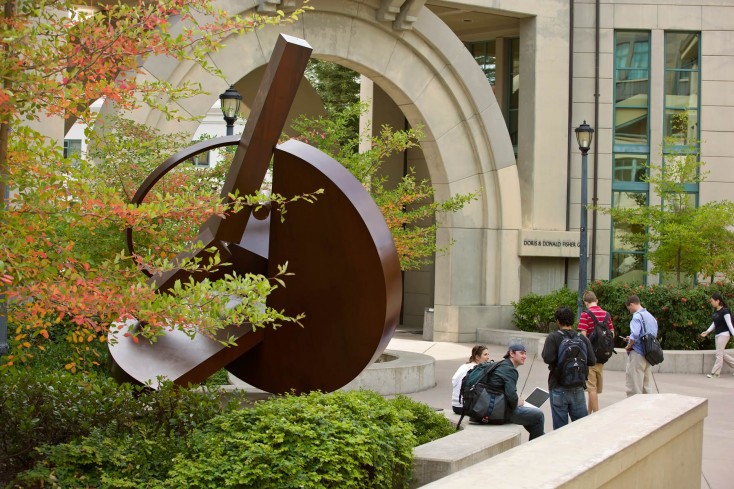
| FROM Stacy Blackman Consulting Blog: What Matters More than MBA Rankings? |
![]() Most people interested in having us as admissions consultants are laser-focused on the top business school brands. They think of the MBA as a long-term investment in themselves and their futures and know that having a degree from an elite B-school carries serious cachet. MBA rankings influence some applicants so much that they won’t consider anything outside the M7 schools. “Magnificent Seven” (M7) Business Schools
In our B-Schooled podcast episodes #90 and #91, host Erika explored whether MBA rankings matter in the school selection process. In some instances, the answer may be yes. For example, applicants looking to break into a top investment bank or “MBB” management consulting should know that those firms are unlikely to recruit outside the M7 or top ten schools. You can see who recruits at each business school through its online employment report. If the companies that interest you aren’t on their list, it will be difficult to get a foot in the door there for a post-graduation job. “Students who weren’t in those top programs would need to rely a lot more heavily on networking to get interviews with those types of firms if that’s where they wanted to end up,” Erika explains. Curious about your chances of getting into a top B-school? Contact us to talk strategy with a free 15-minute advising session with an SBC Principal Consultant. Going Beyond MBA Rankings Are you targeting a large company with clearly defined post-MBA roles or an MBA rotational program? If so, a strong business school brand name will be helpful initially to get those roles after graduation. But MBA applicants often focus too intently on that first job out of the program. With decades of professional experience still to come, who knows what kind of moves you might make? When discussing programs within the M7, focus more on where you think you’d have the best fit overall. Consider where you’ll feel happiest because the post-grad career opportunities within that elite group are strikingly similar. Once you compare the top 15 to the top 25, you’ll see more significant differences in recruiting. ![]() Ultimately, what matters is that you feel good about where you’ll spend two years of your life. Not to mention a lot of money. That’s why location, the program’s culture, and class size should be on your evaluation list. Likewise, consider whether the school has a reputation for a specific area of interest, such as marketing at Kellogg, Wharton for finance, entrepreneurship at Stanford GSB, etc. Finally, research the strength of each school’s alum network, as you’ll be tapping into this resource throughout your career. Only a small fraction of employers exclusively hire candidates who hold an elite MBA degree. In every other case, having an MBA from a solid program will give you the professional edge for your target career path or employer. So, don’t freak yourself out thinking, “It’s M7 or bust.” Remember, you’ve got a long career ahead of you. Consider Geography If you know you want to work in a specific part of the country or for a regional company that hires more local candidates, rankings may not matter as much. For example, say you’re deciding between the University of Michigan Ross School of Business and Michigan State’s Broad MBA program. If you want to work at a top bank or top consulting firm in the state of Michigan, but possibly also elsewhere, and want to have the opportunity to move geographically, then a top 15 program like Ross might be the one that benefits you more. ![]() But if you want to work for General Motors or one of the other automotive companies based in Michigan, and you plan to stay in that industry long term, an MBA from Michigan State could be fine. It’s well-known by those companies, and you’ll have a solid local and regional network. Applicants don’t have to go to a school in the same region where they foresee themselves ultimately ending up. But if you’ve never lived in a metropolis before and you’re going to feel overwhelmed in an urban location, that’s something to think about. Conversely, will you go stir-crazy studying in a remote rural area when you’re used to the bustle and convenience of city life? Business school is stressful enough, and your environment will significantly impact your overall experience. Lastly, consider whether it’s essential to have friends, family, and a support system nearby. Applicants planning to bring a partner to B-school— 30% of HBS students come with partners—should also ensure their smooth transition. Will Your MBA Peers Help You Level Up? As mentioned, getting into an M7 school is no easy feat. There are simply not enough seats for all the über-qualified candidates who apply. Lucky applicants who land a seat can count on having a highly accomplished and impressive cohort of fellow students. To use a sports analogy, playing with those who are more skilled than you will push you to become a stronger player. With a top 15 school, you’ll still be surrounded by impressive and ambitious people. Some might even have gotten dinged by M7 programs. Or maybe they didn’t apply to those schools at all. But at some point, beyond the top 25, you will find a difference in the caliber of students. You might have more people with only a few years of work experience or who don’t have the level of accomplishment of those at some of the higher rank programs. ![]() In any program, your classmates are the ones who will go on to become the tightest and most reliable part of your MBA network. Depending on how much you anticipate calling upon your network in the future, that’s really something to consider. If that’s important to you, get ready to do your research. Find current students or alums to network with and see if you get a feel for the type of person that’s there and if you would feel both comfortable and motivated. Consider the Resources It’s a virtuous circle. Top-ranked MBA programs are more expensive to attend, but they also crank out higher-paid graduates who then give lots of money back to the school. That ultimately results in better facilities, more resources, famous speakers and professors, etc. Those programs attract world leaders, industry titans, and the buzzy CEOs making headlines today. Yet many schools outside the M7 also have notable alums and adjunct professors. Some programs, such as Dartmouth’s Tuck School of Business, pride themselves on having faculty who get to know their students exceptionally well while on campus. In fact, you have a better shot of getting one-on-one time with them and actually getting to know them than you might at an M7, where professors are more consumed with research outside of class. This is especially true if the school has a bigger class size and everybody wants to be with that one rock-star professor. ![]() If going abroad as part of your MBA experience is a must, make sure that the programs you’re considering an offer that. It could be something like a pre-matriculation trip, a class project, an entire course, or even an exchange program for a semester. Next, let’s not overlook the cost of attendance. As you can imagine, M7 schools come with the highest price tags. While those programs offer some financial aid, you’ll likely get a more generous package at a T15 or T25 school, which would also cost less overall across two years. It’s also helpful to compare your current salary to the post-graduation salary averages listed online at your target programs. How much of a bump are you looking for after graduation, and how much student loan debt are you willing to take on overall? Let’s be honest; you’ll need to budget for the fun stuff, too: @stacyblackmanconsulting #sbcyourfuture #bschool #mba #bschooladmissions #budget #savings #money ? original sound – Stacy Blackman Consulting Keep Rankings in Perspective The truth is, there’s been little change to the top 20 business schools since MBA rankings first began way back in the late 1980s. We’d go so far as to say the best way to be ranked in the top 20 now was to have been in that top 20 when the ranking started! Remember, the schools’ reputations are subjective and hard to shake or change for every program. The main thing is to figure out what you want—not what your parents, grandparents, girlfriend, or boyfriend wants. It’s your life. Go with your gut, look beyond the MBA rankings, and focus on what you hope to get from your business school experience. *** Please request a free MBA advising session with Stacy Blackman Consulting to learn how we can help with your complete MBA applications. Here’s a snapshot of the caliber of expertise on our SBC team. ![]() The post What Matters More than MBA Rankings? appeared first on Stacy Blackman Consulting - MBA Admissions Consulting. |
| FROM Stacy Blackman Consulting Blog: B-Schooled Podcast Episode #155: 12 School Selection Considerations *Beyond* Rankings (Part 1) |
![]() Today on B-Schooled, we’re continuing the deep dive into MBA rankings that we launched yesterday. First off, many applicants do consider MBA rankings as a key input into their school selection process. With good reason. We consider MBA rankings too. But—and this is important—we believe these should be ONE factor in your decision-making process. Not the ONLY aspect of your decision-making process. Leading entities ranking MBA programs typically evaluate a range of factors relevant to the MBA experience: from the quality of instruction to student/teacher ratios, alumni resources, prestige, post-graduation employment rates, starting salaries, and a range of other inputs. But the truth is that some of these criteria are probably more important to YOU than others. For this podcast, we encourage you to put down the rankings sheet (at least for the time being) and consider 12 specific questions to help you identify schools that might be the best fit for YOU. Part 1 of this two-part B-Schooled series can be found right here. Or, take a listen on any of the major podcast platforms below. B-Schooled is available on most major podcast apps, including: Apple Podcasts Spotify Stitcher TuneIn Please be sure to subscribe to B-Schooled so that you don’t miss a thing. Also, if there’s something you’d like for us to cover in a future episode, please email podcast@stacyblackman.com. We’d love to hear from you! *** ![]() Now, why not hop on over to our brand-new MBA community on Discord? That’s where you’ll find exclusive insights from the SBC team, explore our resources, and connect with fellow current and prospective MBA applicants. This is a space to share and learn about the MBA admissions process, whether you’re still debating if business school is for you, or you’re already well on your way with your application journey. Come join the party today! The post B-Schooled Podcast Episode #155: 12 School Selection Considerations *Beyond* Rankings (Part 1) appeared first on Stacy Blackman Consulting - MBA Admissions Consulting. |
| FROM Stacy Blackman Consulting Blog: MBA Reapplication Advice |
![]() Every year, even highly qualified applicants get rejected from the top-ranked MBA programs. If you were not successful in gaining admission this year, it’s important to first spend some time on self-reflection. Then seek feedback from multiple sources, and finally, work to improve your profile before beginning your MBA reapplication process in the fall. Above all else, remember that admissions committees want to see substantial improvement from reapplicants. To be successful next season, it’s important to come up with a strategy before reapplying. Request a free MBA advising session with Stacy Blackman Consulting to learn how we can help improve your MBA application strategy for the 2023-24 admissions cycle. ![]() Evaluate your Applications Before seeking feedback from others, it’s important to do your own soul-searching. Ask yourself whether you could have improved any aspect of the process: School Selection: How do you feel about the competitiveness of the schools you applied to? Would you consider expanding the list of schools and including a few less competitive programs? Volunteering: Did your volunteer activities lack depth or breadth? Could you seek out a leadership role in your volunteer activities? Academics: Is there room for improvement in your GMAT score? Would you have taken a business-related class before applying if you had more time? Recommendations: Do you suspect that one of your recommenders gave a lukewarm letter of support? Do you think you could have chosen someone to represent a different side of your personality or profile? Time Spent: Do you think your essays represented your best work? Did you have the time to go through multiple iterations of your essays? Did you rush through the process of filling out the online application? Once you have identified a few areas of improvement for next year on your own, it’s important to seek feedback from a variety of sources. ![]() Seeking Feedback Due to the high application volume at top MBA programs, most schools cannot provide comprehensive feedback to rejected applicants. However, if you do have a chance to speak with a member of the admissions committee, take advantage by asking for details about each area of your application and listen with an open mind. Make sure you walk away from any feedback session with action items for next year. If you don’t receive feedback directly from the schools, seek advice from friends and family who have experience with MBA programs. Stacy Blackman Consulting also offers a Ding Analysisservice to evaluate your materials and provide feedback you can use when you reapply. Improving Your Profile is Vital to the MBA Reapplication Process Once you have done some soul-searching, evaluated your previous attempt, and spoken to others about steps you can take now to improve your application in the fall, it’s time to get started. Before essay questions come out in the summer, you have time to take a GMAT prep course, take a class at a local community college, ask for a leadership opportunity at work or in a volunteer setting, and cultivate a relationship with a potential recommender. Take advantage of the time available now, and approach the process strategically. Good luck! Partner with Stacy Blackman’s best-in-class GMAT and GRE experts and increase your score significantly. Check out our test prep services here. Request a free game plan chat with SBC’s lead test prep coach by emailing testprep@stacyblackman.com. The post MBA Reapplication Advice appeared first on Stacy Blackman Consulting - MBA Admissions Consulting. |
| FROM Stacy Blackman Consulting Blog: Recommendation Letter Sample: Good or Bad? |
![]() Burning Questions Applicants Have About the MBA Recommendation Letter
Curious about your chances of getting into a top B-school? Contact us to talk strategy with a free 15-minute advising session with an SBC Principal Consultant. Here’s a snapshot of the caliber of expertise on our SBC team. ![]() Recommendation Letter Q&A Our clients often ask for sample letters if their recommenders are unfamiliar with the process. Let’s get some of your burning LOR questions answered. Q: Is it wise to show your recommenders sample materials? A: Not really. We have had clients ask for sample recs, but we usually try to steer them away from samples because it could confine the recommender to what someone else said about a different person. Erika on our SBC team says, “We ask our clients to have faith that they picked the right recommenders who will really be their cheerleaders and who think highly of them. Just be sure to tell them to use anecdotes and example stories to prove their points — not solely a bunch of adjectives.” Q: What examples of feedback could I give my recommenders about their materials? A: At SBC, our consultants won’t tell the recommenders what to write. We can and do review recommender drafts for high-level or directional feedback. The recommender’s unique voice and authenticity must be maintained. Here are consistent themes that we often find in our review of recommender letters:
A: It would be unethical for anyone other than the stated author to write the recommendation letters. Dawn on our team recently shared with our group, “Admissions officers are very good at detecting different writing styles. If they think the letters are over-coached or has too many different edits (which bring in different styles) then that is a red flag. The admissions officers want the recommenders to write it.” ![]() Q: Should I get a recommendation letter from a relative, such as through our family business? A: Most schools specifically advise against using a family member. Therefore, applicants in family-run businesses need to get creative about finding a recommender. Ideally, it should be someone who represents the company but is not under the thumb of a relative/parent. A client, supplier, or other professional connected with the family business who would have the context and close working relationship could be ideal. If not, we recommend that our clients look for recommenders to other past employers, if possible. Q: My boss was just let go this week. His recommendation is ready to go but hasn’t been submitted yet. What do I do? A: You have three options, and we favor the first one:
![]() Q: What does the Harvard Business School recommendation form look like? Here is our last record of the HBS recommendation form: HBS asks recommenders to rate the applicant’s traits and skills using the following scale: No Information, Area of Concern, Opportunity for Development, Solid/Meets Expectations, Relative Strength/Exceeds Expectations. Traits and Skills:
Finally, HBS poses two questions to be answered in a separate document and uploaded to the online recommendation: Please respond to both questions below in a single document. 1. How do the applicant’s performance, potential, background, or personal qualities compare to those of other well-qualified individuals in similar roles? Please provide specific examples. (Recommended: 300 words) 2. Please describe the most important piece of constructive feedback you have given the applicant. Please detail the circumstances and the applicant’s response. (Recommended: 250 words) ![]() Q: Can you share a sample recommendation letter? A: Sure! What is your relationship with the candidate, and how long have you known them? How would you compare the candidate to others with similar responsibilities within the organization? Chris has been with Video Laboratory for over three years. He first worked for me six years ago as an intern after his sophomore year in college. As a small organization dedicated to producing original video content for emerging distribution platforms, Chris’s interest in all aspects of video and technology immediately proved an asset. I was pleased when he returned for the following summer. His work over those two seasons was so impressive that I recruited him to join us when he graduated. Since then, Chris has been with Video Laboratory, formally as Development Director and more informally as my right-hand man. Chris’s energy, smarts, and organization have been indispensable as a critical member of a small but rapidly growing company. As far back as his second internship with us, before he was even a full-time employee, I already trusted Chris to run projects effectively. As soon as he came on board full-time, I put him in charge of one of our new initiatives for the year, a program to identify young minority filmmaking talent interested in creating Internet content. I had set a goal to find two to four new talents interested in working with us that summer. Instead, Chris developed half a dozen new artists and devised a revenue system that made the program self-sustaining, allowing us to increase the artists’ budget and pay while already showing a profit for the initiative. Since then, Chris’s role has been to identify new opportunities for Video Laboratory, both financial and artistic. He has complete autonomy to create teams and initiate new projects that serve this goal. While several other director-level employees joined me around the same time as Chris, he has outperformed both in fiscal and leadership aspects and is effectively second-in-charge in my organization. Comment on the candidate’s career progression to date. How would you describe their potential for professional growth and development? Since the day I met Chris as a young undergraduate, his career track has been on a steadily upward path. I have seen him grow from a young man who was occasionally nervous about making a phone call to a vendor into a level-headed leader, tough negotiator, and creative brainstormer. He has gone from a summer intern to second-in-charge of a forty-person organization, and he has the respect and loyalty of everyone in the company. I imagine that with a business degree under his belt, Chris can become a leader within a much larger organization or found a successful business himself. Comment on the candidate’s aptitude for strategic thinking, leadership, and/or management. Even in a creative industry, Chris stands out for his ability to discover and create new opportunities. I have learned over the years to run my ideas I would have once thought impractical or half-baked past Chris first, as he will frequently help me evolve these ideas into something more practical. When that doesn’t suffice, Chris will often keep an idea in the back of his mind, sometimes for weeks or months at a time, and often will come back with a new idea fully ready to execute. For example, we had talked on and off about how to get more young people on college campuses lacking film programs to get involved in creating their own films. Chris and I had a conversation one day, and I shelved the idea until months later. Chris had done the research, made phone calls, contacted student groups for a pilot program on four campuses in our state, and had a verbal agreement from a popular video website to sponsor an equipment budget for the students. Chris’s determination and initiative created the “Campus Stars” program, which has since expanded several times over. Along those lines, I now hardly think about Chris’s leadership skills, as he has developed into a natural leader over the last few years. I never questioned putting our new full-time employee running the “Campus Stars” directly under his charge, and the results have been great. I have no doubt Chris will emerge as a well-liked and respected leader wherever he goes. Describe how the candidate deals with challenges. It’s rare to see Chris with anything but a smile, and he is a consistently supportive and positive employee and coworker. This quality is rare enough, but Chris carries this same attitude in the face of challenging circumstances and others’ doubts. I have seen Chris take time out of a packed day to ensure a coworker struggling with personal circumstances was ready to take on their work for the day and beyond. I’ve also had Chris come to me appropriately when an employee was not living up to the necessary standard and implement my suggestions to help the employee’s performance in a neutral, supportive way that kept the focus on the best outcome for the company. Finally, as an example of Chris’s overall approach, we were coming back from an important meeting just a few months ago. The meeting was with an overseas television network seeking content for a new venture. Over several long sessions, it became clear that Video Laboratory and the network would not agree on the approach or terms, and we went home discouraged. The instinct for most of us was to spend the trip home brooding over what went wrong. But Chris turned the conversation around by getting everyone to analyze what we were looking for that was not offered. That way, we could look for other partnerships and opportunities to fit our needs better. Chris’s perspective brightened the mood considerably, and Video Laboratory returned the next day with a to-do list instead of a list of grievances. Is there anything else that you would like us to know about the candidate? I have nothing but positive things to say about Chris, and I feel he will absorb every bit of information in the Anderson MBA program and emerge as one of the class leaders. However, this leaves out some information about how he got here and what else he does. When we first met Chris as an intern, he also worked nights and weekends, paying his way through college. Today he balances more-than-full-time work with a busy volunteer schedule on the weekends, and he still finds time to captain his Thursday night rec basketball league. He will bring incredible skills, a great attitude, and genuine leadership to any program. Please request a free MBA advising session with Stacy Blackman Consulting to learn how we can help with your complete MBA applications. Meet more of the admissions experts on our SBC team. ![]() Q: Can you share a sample side letter? A: We are very cautious about having our clients submit side letters from a recommender because the applicant mustn’t appear entitled or eager to bend the stated rules. Be sure to carefully evaluate if a side letter is warranted and the tradeoffs of doing so. ![]() What that caveat in place, here is a sample side letter from our archives: I’m extremely pleased to give Terry Marshall my unqualified endorsement for the Wharton School’s MBA program. I’m writing this letter of reference because, as a Wharton alum, I’m committed to ensuring that the Wharton School is well represented by a diverse and talented student body. I’ve known Terry for nearly 12 years since we went to boarding school together at Hudson School. At that time, I remember Terry primarily because of his incredible prowess in various sports. He captained the school Boxing, Track & Field, Soccer, and Hockey teams. Additionally, he was a member of the school’s varsity Squash team and participated in various mountaineering expeditions. What differentiated Terry from other athletes was his phenomenal motivational skills. He had the uncanny ability to lead mediocre teams to outstanding results. Terry did this via his impressive work ethic and deep understanding of his teammates’ individual strengths. Since graduating from Hudson, I’ve remained in touch with Terry and marveled at his personal and professional transformation. He recently participated in a half marathon and triathlon supporting the Make-A-Wish foundation, and these new pursuits indicate his maturity and dedication. Terry has maintained strong ties with Hudson for the past ten years. After graduating, he came back and taught for a semester on campus. He helped coach the school soccer team to the district championship at that time. Terry demonstrates the best qualities of a leader: organizational awareness, grace under fire, empathy, and the ability to get the job done – under the most challenging circumstances. I am confident that Terry Marshall would make a valuable contribution to the Wharton community. Without any hesitation, I offer his candidacy my highest recommendation. And now… ![]() Please hop on over to our brand-new MBA community on Discord! That’s where you’ll find exclusive insights from the SBC team, explore our resources, and connect with fellow current and prospective MBA applicants. This is a space to share and learn about the MBA admissions process, whether you’re still debating if business school is for you or you’re already on your way with your application journey. Join the party today! The post Recommendation Letter Sample: Good or Bad? appeared first on Stacy Blackman Consulting - MBA Admissions Consulting. |
| FROM Stacy Blackman Consulting Blog: How LinkedIn Can Help MBA Applicants |
![]() Many MBA admissions officers believe it’s fair game to scope out applicants’ social media feeds. In fact, one Kaplan survey found that 66% of them see no issue with social media being part of the admissions equation. We’ve talked about the importance of cleaning up your online presence in the past. Today, we’re sharing a few specific tips you can use to enhance your LinkedIn profile to support your MBA candidacy further. Having a LinkedIn profile that shows your unique personality and presents your professional/life experiences compellingly can help sway an on-the-fence AdCom member in your favor. Enhance and manage your online brand with personal recommendations from a dedicated social media expert with SBC’s Social Strategy Review. Tip 1. LinkedIn can help MBA applicants differentiate themselves. Your profile should highlight your leadership and accomplishments, plus present a complete picture of your interests, passions, and career goals. All that will complement what’s already in your application and provide more insight to the reader. Also, an MBA interviewer may look over your profile to get a better sense of your personality before the meeting. So, this is the place to start winning over your audience. ![]() Be specific about your professional role in the headline. Also, think about whether you can provide a broader picture of yourself in this prime piece of real estate. For example, you may work as a staff consultant at Bain & Company or as an analyst at Goldman Sachs. But if you’ve also created a non-profit organization, listing that additional position in your headline will set you apart from the typical analyst in the applicant pool. Tip 2. Quantify your achievements. Admissions committees like to see results. So, try to quantify results within the body of your profile just as you would in your MBA resume. For example, it’s much more powerful to write that you “created a marketing plan that resulted in a 30% increase in leads” instead of noting that you “created a marketing plan.” Managing a staff is interesting. But the fact that you supervised 30 employees and improved profitability by 25% is something anyone can understand. By giving the reader a number, you allow them to see just what kind of leader you were—and will be. Tip 3. Your LinkedIn “Interests” should match and support your candidacy. Suppose your application touches on your keen interest in renewable energy, micro-investing in India, or Silicon Valley startups. In that case, this section should show that you’re following influencers or organizations in those industries. This consistency reinforces the narrative within your application and lends credibility to your stated interests and passions. ![]() Tip 4. Make sure career and education information is consistent with your MBA application. It sounds obvious, but our memories can get fuzzy and minor discrepancies are pretty common. Cross-check your education, employer names, and dates to ensure all are in the proper order. Consistency between your LinkedIn profile and MBA application is vital. If the person reviewing your application spots inconsistencies compared to the data form, you invite additional scrutiny. That could potentially raise a red flag that puts other aspects of your application under the microscope. LinkedIn can help MBA applicants in numerous ways. You can bolster your candidacy while providing a multi-dimensional view of yourself to the admissions committee and future recruiters. Isn’t it time you revisited your profile to make sure it’s MBA-ready? *** Whether you need to professionalize an existing profile or develop a presence on an entirely new platform, Stacy Blackman Consulting can provide informed direction on which steps to take. For a B-school applicant, proper management of social media channels can also help you expand the scope of your application without infringing on limited essay word counts. Learn more about the SBC Social Media Strategy Review, and you can set yourself up for a lifetime of online social success. The post How LinkedIn Can Help MBA Applicants appeared first on Stacy Blackman Consulting - MBA Admissions Consulting. |
| FROM Stacy Blackman Consulting Blog: B-Schooled Podcast Episode #156: Spotlight on Michigan Ross |
![]() SBC consultant Laura, a Michigan Ross MBA alum who was a former admissions committee member during her second year, joins host Erika — a Ross BBA graduate — to share advice for and insight into the Ross application and interview process. And they just might gush a little over how awesome Ann Arbor, Michigan, is as well. Go Blue! Check out B-Schooled episode #156 right here. Or, take a listen on any of the podcast platforms below. B-Schooled is available on most major podcast apps, including: Apple Podcasts Spotify Stitcher TuneIn Please be sure to subscribe to B-Schooled so that you don’t miss a thing. Also, if there’s something you’d like for us to cover in a future episode, please email podcast@stacyblackman.com. We’d love to hear from you! *** ![]() Now, why not hop on over to our brand-new MBA community on Discord? That’s where you’ll find exclusive insights from the SBC team, explore our resources, and connect with fellow current and prospective MBA applicants. This is a space to share and learn about the MBA admissions process, whether you’re still debating if business school is for you, or you’re already well on your way with your application journey. Come join the party today! The post B-Schooled Podcast Episode #156: Spotlight on Michigan Ross appeared first on Stacy Blackman Consulting - MBA Admissions Consulting. |
| FROM Stacy Blackman Consulting Blog: Is Now the Best Time for Your MBA? |
|
[img]https://www.stacyblackman.com/wp-content/uploads/time-and-waiting-734x490.jpg[/img] [b]Time is the wisest counselor of all. – Pericles[/b] Once you decide to go to business school, timing becomes a crucial consideration. How do you know whether now is the best time for your MBA? For some candidates, particularly those on the younger or older side of the applicant pool, addressing the timing question in their materials is especially critical. After all, you’ll need to convince the AdCom that applying during this upcoming application season makes the most sense for your career goals. The following thought experiment will get you pondering about why you want or need to get an MBA right now. First, consider what would happen if you didn’t get an MBA. What would your career path look like? How would you achieve your long-term goals? After this analysis, you might determine that your career would likely look like X, and it would take Y number of years to reach your goals without the degree. [img]https://www.stacyblackman.com/wp-content/uploads/justin-luebke-BkkVcWUgwEk-unsplash-1500x1000.jpg[/img] Next, imagine getting your MBA. What exactly would it do for your career? Would it accelerate your trajectory at your current firm or industry? Or might it allow you to pivot into an entirely different industry or role? Business school could also help you gain the skills and network you need to feel confident [url=https://www.usnews.com/best-graduate-schools/top-business-schools/entrepreneurship-rankings]starting your own company[/url]. Another common reason is that you’ve plateaued in your current field. While that isn’t an exhaustive list of reasons, it can help you project what these two distinct career tracks—the non-MBA path vs. B-school—might look like. Doing this exercise should help you more clearly articulate [url=https://www.stacyblackman.com/blog/why-should-you-get-an-mba/]why you need an MBA[/url] overall and why it makes sense to get one at this point in your life and career. [b] Curious about your chances of getting into a top B-school? Contact us to talk strategy with a [url=https://www.stacyblackman.com/contact/]free 15-minute advising session[/url] with an SBC Principal Consultant. [/b] Avoid Giving This Reason (Even if it’s the Truth) In industries such as banking and consulting, people are often expected to go for their MBA at a specific time. Your current firm may not offer significant growth opportunities should you want to stay. Yet even if that’s true, you can’t tell the AdCom that now is the best time for your MBA because everyone you know in banking got an MBA after two years. Or because it’s the norm in your industry. Don’t follow someone else’s pre-determined career timeline. If you feel some external pressure to apply now, take the time and space to ensure it makes sense for your hopes and dreams. So, Is This the Best Time for Your MBA? There’s no one best time for going back to B-School. In the past, elite programs required five to seven years of work experience before applying. Now, several top schools have [url=https://www.stacyblackman.com/blog/deferred-mba-admissions/]deferred admissions programs[/url] explicitly geared to attract college seniors. Once admitted, these candidates work for two years and then start their MBA studies. The question at hand for everyone else is whether waiting for another year or two before applying will significantly boost your admissions odds. Would that extra time give you more leadership opportunities, career advancement, or an international assignment? [img]https://www.stacyblackman.com/wp-content/uploads/ben-white-gEKMstKfZ6w-unsplash-1500x1000.jpg[/img] For applicants who skew much younger or older than the target program’s average age, it will be crucial to show what you bring to the classroom that no one else can. A considerable part of the MBA experience is sharing your unique anecdotes during classroom discussions. Think of it from the AdCom’s point of view. They want to admit applicants who will come to class with many life stories their peers will benefit from. If you’re on the older side, what else can you bring to the table? More experience timewise doesn’t necessarily mean more value for your MBA classmates. So, think about what’s unique about your long career and its relevance to classroom discussions. For younger applicants, if you’ve never gotten promoted or had an appreciable increase in responsibilities, that’s a red flag telling you it doesn’t make sense to apply just yet. Stacy Blackman Consulting offers multiple services to meet your MBA application needs, from our [url=https://www.stacyblackman.com/comprehensive-services/]All-In Partnership[/url] to test prep to hourly help with targeted tasks. Contact us today for a [url=https://www.stacyblackman.com/contact/]free 15-minute advising session[/url] to talk strategy with a Principal SBC consultant. [b]Explaining Your Reasoning[/b] Once you decide that now is the best time for your MBA, you’ll need to use diplomacy in your reasoning to the AdCom. If you’re returning to school because you’ve hit a wall, that’s a valid and common situation. Explain that you’ve realized your learning has slowed, and you know that you need X, Y, and Z from their MBA program to progress. Then, transition to discussing how specific courses, clubs, conferences, professors, etc., from that program would support your career goals. No matter what, make sure to sound grateful and upbeat about everything you’ve learned so far on the job. You never want to come across as negative about your past employers or career to date. That will give the admissions committee an easy justification to ding you. [img]https://www.stacyblackman.com/wp-content/uploads/lego-heads-nik-zYdYz7JlevE-unsplash-1500x1000.jpg[/img] Because from their perspective, you won’t be excited to share stories and lessons from your past role with your classmates if you aren’t happy about any of it! Think carefully about what you’ve learned that you can still apply to your future career. If you’ve been on autopilot until now, you owe it to yourself to do some serious introspection. Too many people have regrets later in life for merely going through the motions in their careers. Maybe they did what others thought they should or followed a career timeline deemed successful by somebody else. Ensure the reasons for pursuing the MBA now support your goals and dreams—no one else’s. *** [b][url=https://www.stacyblackman.com/contact/]Request a free MBA advising session[/url] with Stacy Blackman Consulting to learn how we can help with your complete MBA applications. Here’s a snapshot of the caliber of expertise on [url=https://www.stacyblackman.com/about/mba-admissions-consulting-team/]our SBC team[/url].[/b] [img]https://www.stacyblackman.com/wp-content/uploads/HBS-and-GSB-consultants-.png[/img] The post [url=https://www.stacyblackman.com/blog/is-now-the-best-time-for-your-mba/]Is Now the Best Time for Your MBA?[/url] appeared first on [url=https://www.stacyblackman.com]Stacy Blackman Consulting - MBA Admissions Consulting[/url]. |
| FROM Stacy Blackman Consulting Blog: Face-Off: Wharton School vs. Chicago Booth |
![]() The school selection process for MBA applicants can seem overwhelming. With so many great business schools, how do you decide which one is right for you? SBC’s blog series Face-Off teases out the strengths and differences between two similarly ranked B-schools. Plus, we’ll highlight noteworthy elements of their admissions processes. The first item of business today is the Wharton MBA application versus the Chicago Booth MBA application. We have former Admissions Officers from every top US and European program—including Booth and Wharton—on our consulting team. We thank them for the thoughtful advice below. How do the admissions requirements and selectivity compare between the Wharton School and Chicago Booth? From an application perspective, Booth gives candidates more freedom to be themselves. It also has a more holistic approach. Meanwhile, the Wharton MBA application reflects a more structured approach. Overall, the Wharton School is more selective than Chicago Booth. According to our data here at Stacy Blackman Consulting, almost every applicant accepted into both chooses Wharton. ![]() Given Wharton’s higher yield, Booth takes a very personal approach to its application process. It wants to ensure candidates genuinely want to attend Booth and don’t treat it as a backup school. “Show up, engage, make yourself known. Showing up means a lot to Booth. They track the frequency in their system. This is true for all applicants, but especially over-subscribed candidates,” shares a former Booth Admissions Officer on the SBC team. (Listen to B-Schooled Podcast Episode #83: Spotlight on Booth) Recent admission trends at Booth have shown more flexibility with admit profiles. This reflects a more diverse class by industry, academic records, and employer history. The program tends to attract more collaborative students. After all, collaboration is a cornerstone of Chicago Booth’s pay-it-forward culture. Meanwhile, the Wharton MBA tends to attract more competitive types, and the MBA experience will reflect this intensity. Still, the team-based discussion component of the Wharton MBA application exists for a reason. That is, to weed out folks who can’t play well with others. The Wharton group interview offers a preview of the energy prospective students will step into on campus from day one. (Listen to B-Schooled Podcast Episode #42: Wharton Team-Based Discussion Interviews) How do the MBA curriculums compare, given that both are known to be quant-oriented? We often hear from applicants that they apply to Booth mainly because of its flexible curriculum and student culture. Students begin their journey with the hands-on experiential course known as LEAD. It’s the only required component in Booth’s curriculum and is designed to help students identify their strengths and opportunities as a leader. ![]() Upon completing the course, students integrate those insights into an active, intentional, and ongoing process of leadership development. Wharton, meanwhile, primarily relies on its brand, alum network, and career opportunities. As for the MBA curriculum, Wharton requires six fixed core classes as well as flexible core classes to match one’s learning style, interests, and goals. The flexible structure of the core course allows students to take more electives in the first year to prepare for an internship, global experience, business venture, or other interests and defer some core requirements to the second year. There is a perception that these are primarily “finance schools.” How do the MBA Class of 2022 career outcomes between Chicago Booth and Wharton stack up? Compare industry placement per the data points below:
Both programs consistently rank in the M7. They offer a comparable education. Principles in accounting, finance, and marketing are basically the same at Wharton and Booth. The difference between the programs is perception. ![]() The Wharton brand holds more cache globally. As a result, Wharton attracts a stronger student class. It also has higher yield rates, applicant volume, and average starting salary. “A few years ago, the elite candidates were only applying to HBS and GSB. Wharton has found its way to the trifecta,” explains Stacy Blackman. Booth isn’t yet at this level by perception. But fit is everything. Student culture and post-MBA career location preferences are integral to fit, which vary between the programs. Both schools have high-caliber cohorts. Wharton tends to attract a more competitive applicant pool so the MBA experience will reflect this intensity. The upside of this relative admit flexibility (compared to Wharton) by Booth is that the program attracts a more collaborative student class. “Wharton is a *hyper*-social environment. From day one, there is constant activity and a never-ending social calendar. Extroverts will love it. Introverts with strong social skills will find a balance that works for them. But introverts without social graces would find it stifling,” shares a former Wharton Admissions Officer who works at Stacy Blackman Consulting. To conclude, the key differences between the programs may be:
*** Request a free MBA advising session with Stacy Blackman Consulting to learn how we can help with your complete MBA applications. Here’s a snapshot of the caliber of expertise on our SBC team. ![]() ![]() The post Face-Off: Wharton School vs. Chicago Booth appeared first on Stacy Blackman Consulting - MBA Admissions Consulting. |
| FROM Stacy Blackman Consulting Blog: Comparing Top EU MBA Programs Vs. Top US Programs |
![]() INSEAD in France, London Business School, Oxford’s Saïd Business School, and Cambridge’s Judge Business School are among the top EU MBA programs. While INSEAD and LBS rank highest, HEC Paris, Italy’s SDA Bocconi, and Spain’s IESE shine in their home markets. There are several factors to consider while weighing whether an MBA in Europe will help you reach your career goals. From cost to duration to brand reputation and more, keep the following in mind as you make your decision. The SBC consulting team includes former Admissions Officers from all of the top MBA programs in the US and Europe. Check out the exceptional talent on our team. ![]() Cost and ROI for Top EU MBA Programs First, these programs boast a high return on investment (ROI), as most last just one year. For example, you can complete an MBA program at INSEAD in as little as ten months. Compared to a two-year or US MBA program, lower tuition and opportunity costs look enticing. But even for the longer EU MBA programs, such as London Business School and IESE Business School in Spain, tuition fees are lower. In a survey of SBC’s EU applicant pool, 48% cited reasons such as shorter duration and lower tuition costs. Global Experience Secondly, EU MBA programs are more global in nature compared to even the most “global” US program. They attract students who want a truly international experience with their education. They also attract professionals planning to work in Europe after their studies. We consider an MBA in Europe an excellent complement to an undergraduate degree earned in the US. It positions students for global careers better than doing both college and an MBA in the same country or continent. ![]() If your professional goal is to live and work in Europe, pursuing an MBA abroad is arguably the best introduction to local business life. Keep this fact in mind: INSEAD, LBS, and HEC Paris place less than 10% of graduates into US-based employment roles. Meanwhile, they place 50-to-66% of grads in Europe. Niche Work Opportunities MBA hopefuls may also favor specialized industry recruiting where the EU has the edge over the US. While the US is the technology industry hub (tech is still a nascent market in the EU), Europe dominates the fintech industry. London is considered the fintech capital of the world because of the banking passport legislation that governs Europe and standardizes products across the 27 member countries. Europe has an advantage over the US in the fintech industry because the US must contend with legislation that varies by state and can be an impediment to digital banking. Less Competitive Admissions For some MBA applicants, the relative competitiveness of the schools is another factor. We have seen better admissions odds for top EU programs relative to the M7 top US programs for a typical applicant. We had a recent inquiry who experienced rejection from every top US program to which she applied but got accepted to LBS. Generally, EU schools are more open to having larger percentages of international students, particularly from Commonwealth countries (e.g., India). Meanwhile, US schools are more competitive for those with overrepresented backgrounds in the applicant pool. Curious about your chances of getting into a top B-school? Contact us to talk strategy with a free 15-minute advising session with an SBC Principal Consultant. ![]() Why Choose a top US MBA program over a top EU program? Reputation matters. Top schools such as Harvard, Stanford, Wharton, and others are in demand because top employers source their talent from these student pools. This is especially critical for students wishing to make an industry and/or functional pivot post-MBA. Career potential is the key advantage that US MBA programs have over European (EU) schools. Applicants highly favor top US MBA programs across the career-related attributes of reputation, recruiting, and networking as compared to EU programs. In a survey of the SBC client pool, applicants reported as follows: 75% said reputation is stronger for US MBA programs than non-US MBA programs 62% said US programs will accelerate their career path 54% said US programs have strong professional networks ![]() Access to US employers is a key advantage of top US MBA programs for international applicants. One client shared, “I would like to change markets and go to the States. But it’s difficult coming from a German undergrad.” Industry switchers also favor the US MBA program. As one respondent commented: “Coming from a non-business background, I am looking for two-year MBA programs versus the European one-year MBA.” Many consider the depth of coursework and intellectual rigor better in a two-year, top US program. As one of our clients echoed, “case-based and experiential pedagogies that are popular across US schools is why I’m applying instead of my local EU programs.” And, for many US-based applicants, it’s merely a matter of logistics. A client said, “Travel costs would be prohibitive for an international program; I wouldn’t like to travel overseas away from family for an extended period.” How to decide: US or EU ![]() Differences between US and EU programs also include the composition of the student class and geographical outplacement profiles. Do you want a student class that is US or international-dominant? If your preference is fewer US students (10%) and a dominant (90%) international student class, programs in the EU such as INSEAD, LBS, and HEC Paris are excellent choices. If you favor a US peer group with around 30% international students, US MBA programs are your best fit. Next, think about where you want to live upon graduation. INSEAD, LBS, and HEC Paris place under 10% into US-based employment roles and many more, at 50-to-66%, in Europe. If you prefer to work in the US, the US MBA programs dominate with 87-to-89% outplacement to the US. So, what will it be, and MBA in Europe or the US? The truth is, no matter where your career path leads, an MBA will help you get there. *** Stacy Blackman Consulting offers multiple services to meet your MBA application needs, from our All-In Partnership to test prep to hourly help with targeted tasks. Contact us today for a free 15-minute advising session to talk strategy with a Principal SBC consultant. Here’s a snapshot of the caliber of expertise on our SBC team. ![]() The post Comparing Top EU MBA Programs Vs. Top US Programs appeared first on Stacy Blackman Consulting - MBA Admissions Consulting. |
| FROM Stacy Blackman Consulting Blog: Prospective MBA Applicants: What’s On Their Minds? |
![]() The Graduate Management Admission Council (GMAC) has taken the pulse of prospective MBA applicants to see what attitudes, if any, have changed since last year. It turns out that people considering business school are more interested in enriching their lives than increasing their incomes. Here are GMAC’s noteworthy takeaways gleaned from the 2023 Prospective Students Survey. “We asked additional questions in our survey this year because meaningful shifts in prospective student demographics are underway,” explained Joy Jones, CEO of GMAC. “Understanding candidates from Gen Z—now the largest generation applying to business schools—is critical as programs plan for expanding the pipeline down the road.” “We want to take a closer look at the trends among women, first-generation, and U.S. underrepresented candidates to equip schools with the knowledge that ensures every talented person can benefit from the best business education for them.” — Joy Jones, CEO of GMAC This year, 79% of respondents say they’re motivated to pursue an MBA to better their lives and develop their potential. The next-best motivator—increasing income—clocked in 15 percentage points lower. Furthermore, women, millennials, underrepresented U.S. candidates, and first-generation prospective students are all statistically more likely to indicate post-GME career preference for the government or nonprofit sector, which tends to be more stable and socially engaged though less lucrative than the private sector. ![]() Gen Z, on the other hand, is most interested in entering the finance and accounting industry. This cohort is also ten percentage points more likely to cite increasing their incomes and expanding their networks as top motivators for pursuing the degree than their older counterparts. Prospective MBA Applicants Want Full-Time, In-Person Learning The full-time MBA of any duration continues to surpass interest in more flexible or executive MBAs and business master’s programs. Gen Z is most interested in the two-year MBA, and millennials are most interested in the one-year MBA. These digital natives have a strong preference for in-person study, with 80% of Gen Z reporting a preference for this modality compared to 69% of millennials. This could be an indication of where each generation is in their careers. Older candidates may have more established networks or more responsibilities at work or at home. Meanwhile, younger candidates are more interested in expanding their networks. They also may have more ease entering and exiting a graduate management program. ![]() It’s true overall global preference remains for in-person learning. But online—and especially hybrid—programs have made some inroads. Groups most likely to benefit from the flexibility they offer include women, first-generation, and millennial candidates. “There is no doubt that these programs play an important role in the overall equity of graduate management education, attracting candidates who rely on flexible program delivery and may not otherwise pursue a business degree,” said Anthony Wilbon, dean of Howard University’s School of Business and a board member of GMAC. Has Tech Lost its Luster? After graduation, consulting remains the top post-MBA industry across generations and regions. That said, change may be on the horizon in the number two slot: the technology industry. According to this survey, Gen Z shows more interest in finance and accounting than technology. Interestingly, GMAC collected data for this survey largely before the recent retraction of the tech industry. Even so, this year’s results demonstrate underlying challenges with the pipeline of MBA candidates interested in tech. It seems that Gen Z, women, and underrepresented U.S. candidates are less interested in the field. ![]() The US Remains the Top Study Destination COVID-19 forced people around the world to stay at home, but prospective MBA applicants are again looking to study abroad. The number of prospective students interested in studying outside of their country of citizenship is up for 2023. This holds true especially in Europe and Asia/Pacific Islands compared to last year. GMAC found that 84% of candidates from Asia want to study outside of their country, compared to 79% last year. Likewise, 81% percent of candidates from Europe are looking to study outside of their home country, vs. 77% in 2022. After losing the top spot for one year in 2020, the U.S. remains the most preferred study destination. Interest is driven by reputation and perceived career preparation, with 42% of respondents indicating interest, followed by Europe (37%) and Canada (9%). While candidates perceive U.S. business school programs as more expensive than others in Europe, Canada, or Australia, candidates also believe there is more financial aid available in the United States. About the Survey GMAC has published the Prospective Students Survey for more than a decade. It provides business schools with critical insights into the decision-making processes of people currently considering applying to a GME program. This year’s summary report considers data collected in 2022 from 2,710 respondents in 131 countries. Among them, 40% are female, 44% are younger than 24 years old, 21% are U.S. underrepresented population, and 55% majored in a non-business field as undergraduates. Source: Graduate Management Admission Council *** Stacy Blackman Consulting offers multiple services to meet your MBA application needs, from our All-In Partnership to test prep to hourly help with targeted tasks. Contact us today for a free 15-minute advising session to talk strategy with a Principal SBC consultant. Here’s a snapshot of the caliber of expertise on our SBC team. ![]() The post Prospective MBA Applicants: What’s On Their Minds? appeared first on Stacy Blackman Consulting - MBA Admissions Consulting. |
| FROM Stacy Blackman Consulting Blog: US News MBA Rankings Best Business Schools |
![]() After an unexpected one-week delay, the 2023-2024 US News MBA rankings of the best business schools have finally arrived. For the second consecutive year, the University of Chicago’s Booth School of Business took the top spot among full-time MBA programs. Northwestern University’s Kellogg School comes in at No. 2 and the University of Pennsylvania’s Wharton School at No. 3. According to Poets & Quants, US News & World Report postponed publication after many deans “screamed foul” after seeing an embargoed copy of the ranking. “Without explanation, U.S. News’ final MBA ranking significantly changed the positions of many schools,” writes P&Q editor-in-chief John A. Byrne. “In fact, 84 business schools saw their rank change by at least one position, up or down.” How the New US News MBA Rankings Stack Up to Last Year’s for the Top 20 Business Schools Business School2023-24 Ranking2022-23 Ranking Chicago Booth11 Kellogg School23 (tie) Wharton School31 (tie) MIT Sloan45 (tie) Dartmouth Tuck6 (tie)11 Stanford GSB6 (tie)3 (tie) UM Ross School8 (tie)10 Yale SOM8 (tie)7 NYU Stern 1012 (tie) Columbia 11 (tie)8 (tie) Duke Fuqua11 (tie)12 (tie) Berkeley Haas11 (tie)8 (tie) UVA Darden1414 Cornell Johnson15 (tie)15 USC Marshall 15 (tie)19 (tie) Emory Goizueta1721 CMU Tepper1816 UCLA Anderson1917 UT McCombs2018 This year’s methodology changed significantly to place more of an emphasis on outcomes. Half the rankings formula evaluated institutions on the successful placement and earnings outcomes of their graduates—up from 35% previously. Here’s how US News explains the shift in focus. “As education costs continue to soar, students and their families are placing more emphasis on the results that education can bring. Therefore, the ranking factor weights for this edition feature an increased emphasis on outcome measures and a reduced emphasis on reputation. U.S. News took this approach based on knowledge that employment and earnings outcomes are the driving force behind why many individuals seek to further their education, especially in business.” A Real Head-Scratcher Even casual observers will be surprised to see Stanford’s Graduate School of Business tied for 6th place in this new ranking. The GSB’s stronghold in the top three MBA programs has long been established across multiple rankings for several years. ![]() This result is a quirk of the US News MBA ranking’s new quirky methodology, says Byrne. There’s no argument that Stanford GSB is the most selective MBA program in the world, with its 8.6% acceptance rate. Stanford also outranks Booth in average GPA, median GMAT, and starting salaries and sign-on bonuses. Yet this time around, “Stanford was especially disadvantaged because U.S. News put greater weight on placement statistics,” Byrne explains. “Three months after graduation, 83.8% of Stanford MBA had jobs vs. a much more impressive 95.6% rate at Booth.” “The stat does not reflect a preference for hiring companies for Booth MBAs,” he notes. “What it does reflect is that fewer Stanford grads go into jobs from mainstream MBA recruiters, preferring positions in venture capital, private equity, hedge funds, and startups, all of which recruit and hire very few newly minted MBAs and do not employ them on a typical MBA recruiting schedule. Stanford MBAs are so confident in their ability to land the jobs they really want that they are willing to hold out for them.” *** Stacy Blackman Consulting offers multiple services to meet your MBA application needs, from our All-In Partnership to test prep to hourly help with targeted tasks. Contact us today for a free 15-minute advising session to talk strategy with a Principal SBC consultant. Here’s a snapshot of the caliber of expertise on our SBC team. ![]() The post US News MBA Rankings Best Business Schools appeared first on Stacy Blackman Consulting - MBA Admissions Consulting. |
| FROM Stacy Blackman Consulting Blog: US News Part-Time MBA Rankings Announced |
![]() For prospective students considering part-time programs that allow them to continue working throughout their MBA studies, check out the latest US News Part-Time MBA Rankings. Although UC Berkeley Haas School of Business and Chicago Booth School of Business swapped places in the updated ranking, the rest of the top five part-time programs have remained unchanged for six years running. US News Part-Time MBA Rankings Business School2023-24 Ranking2022-23 Ranking UC Berkeley Haas12 Chicago Booth21 Kellogg School33 NYU Stern44 UCLA Anderson55 UT McCombs68 UM Ross School77 USC Marshall 89 CMU Tepper9 (tie)6 Georgetown McDonough9 (tie)17 Source: US News Methodology for the US News Part-Time MBA Rankings The following methodology explains the overall positioning of these ranked part-time programs. 1. Peer assessment score (weighted 50% of the school’s overall score) The peer assessment score is based on surveys in fall 2022 and early 2023 that asked business school deans and MBA program directors to rate the overall academic quality of the other part-time programs on a scale from marginal (1) to outstanding (5). A school’s score is the average rating of all the responses. 2. Part-time student ratio (12.5% weight, unchanged) This is the percentage of each business school’s fall 2022 enrollment of part-time students. A higher proportion scores better in the ranking because part-time students may be more likely to receive better services and attention at a school more dedicated to them. 3. Part-time students total (12.5% – new indicator) A higher total part-time enrollment scores higher in the ranking. This was introduced to counterbalance the part-time student ratio indicator; namely that having a high part-time student ratio is more impressive if achieved at a larger scale versus a reliance on few full-time students. Each school’s part-time enrollment was first converted to a 1-100 percentile distribution relative to other programs before normalization to account for the skewed nature of the data in which a handful of programs have much larger enrollments than the others. 4. GMAT/GRE scores (10%, previously 15%) For each part-time MBA program, its fall 2022 new entrants’ median GMAT score and median GRE scores for analytical writing, verbal and quantitative scores were each converted to percentile distributions and weighted by the proportion of test-takers of each exam. For example, a school with three times as many GMAT test-takers as GRE test-takers would have its GMAT scores apply three times as much to the ranking. US News switched to using median – or 50th percentile – test scores from mean average scores to best measure the typical student and decrease the impact of outliers, including otherwise promising applicants with lower-than-average test scores. Programs that reported scores on fewer than 25% of their entering class had their score distributions adjusted downward on a sliding scale. For example, if 20% of a school’s entering class submitted GMAT and GRE test scores, its combined weighted percentile distribution scale was multiplied by 20/25 or 0.8. Several schools that reported scores on fewer than five new entrants – including many that do not use standardized tests in admissions decisions – were assigned values equaling the lowest score received by a school reporting usable data. This was done out of fairness so that schools making use of tests could not score lower on the test indicator than schools not using tests. 5. Undergraduate grade point average (10%, previously 12.5%) Success as an undergraduate is a strong predictor of success as a graduate student. The average undergraduate GPA of all 2022 new entrants was used for this ranking factor. Schools that reported GPAs on fewer than 50% of their fall 2022 new entrants had their scores adjusted downward on a sliding scale, similar to what is done with GMAT/GRE scores. 6. Work experience (5%, previously 10%) This is the average number of months of work experience among fall 2022 new entrants. This admissions factor is included because business schools value enrolling part-time students with backgrounds that can underpin their studies. See the full list of US News’s ranking of part-time MBA programs here, and while you’re at it, catch up on the 2023-24 full-time MBA program rankings, too. Curious about your chances of getting into a top B-school? Contact us to talk strategy with a free 15-minute advising session with an SBC Principal Consultant. Stacy Blackman Consulting offers multiple services to meet your MBA application needs, from our All-In Partnership to test prep to hourly help with targeted tasks. Here’s a snapshot of the caliber of expertise on our SBC team. ![]() The post US News Part-Time MBA Rankings Announced appeared first on Stacy Blackman Consulting - MBA Admissions Consulting. |
| FROM Stacy Blackman Consulting Blog: B-Schooled Podcast Episode #157: 12 School Selection Considerations *Beyond* the Rankings (Pt. 2) |
![]() We recognize that many applicants consider MBA rankings a key input into their school selection process. We think about MBA rankings, too. But—and this is important—we believe these should be only one factor in your decision-making process. The first part of this conversation focused on six questions everyone should ask themselves regarding school selection—including considering traditional full-time MBA programs vs. online, part-time, and executive programs, targeting a mix of “stretch” schools and schools you are more confident about, the pros and cons of international and specialized MBA programs, school culture, and various other topics. For the second and final segment of this conversation, we encourage you to put down the rankings sheet (at least for the time being) as we consider six additional questions to help you identify schools that best fit you. This B-Schooled episode can be found here or on any of the major podcast platforms below. B-Schooled is available on most major podcast apps, including: Apple Podcasts Spotify Stitcher TuneIn Please be sure to subscribe to B-Schooled so that you don’t miss a thing. Also, if there’s something you’d like for us to cover in a future episode, please email podcast@stacyblackman.com. We’d love to hear from you! *** ![]() Now, why not hop over to our brand-new MBA community on Discord? That’s where you’ll find exclusive insights from the SBC team, explore our resources, and connect with fellow current and prospective MBA applicants. This is a space to share and learn about the MBA admissions process, whether you’re still debating if business school is for you or you’re already on your way with your application journey. Join the party today! The post B-Schooled Podcast Episode #157: 12 School Selection Considerations *Beyond* the Rankings (Pt. 2) appeared first on Stacy Blackman Consulting - MBA Admissions Consulting. |
| FROM Stacy Blackman Consulting Blog: SBC Consultant Dawn Shares Her HBS Insights |
![]() Every year, SBC admissions consultants hear many of the same misconceptions, fears, and questions about Harvard Business School. SBC consultant Dawn, a Harvard MBA, stopped by the B-Schooled podcast to share her HBS insights with host and fellow HBS alum Erika. Dawn’s been with SBC since 2011 and has a wealth of advice on what HBS looks for in applicants and what can send an application straight to the reject pile. Here are some key takeaways from their conversation that Harvard MBA hopefuls should consider. Curious about your chances of getting into Harvard Business School? Contact us to talk strategy with a free 15-minute advising session with an SBC Principal Consultant. ![]() Pedigree Is No Guarantee One of Dawn’s former clients had a 730 GMAT and graduated Summa Cum Laude from an Ivy League university. On top of that, he worked at a renowned global firm and had loads of volunteer leadership. She asked him why he wanted to work with an admissions consultant, given his impressive background. His answer encapsulated what we always stress. “He said, and I quote, ‘I know many people from Ivy League universities who have better backgrounds and stats than I do who did not get into HBS. I want to know my strengths, but I also want to know all my gaps and weaknesses. I want to know everything I can do to improve to create the best background and application possible for HBS’,” Dawn shared. Intellectual vitality and emotional IQ make an excellent foundation for a candidate’s approach to the HBS application process. In the past, we have encountered clients who believed they didn’t need to show any volunteer work in their HBS application because their father was an alum or was a big donor to the school. “People like me don’t have to do any volunteer work and we can still get in,” one applicant boasted. ![]() If someone comes into this process assuming they’re a slam dunk for HBS, that’s an instant red flag. Sure enough, that particular applicant eventually felt the sting of the ding from the HBS AdCom. Applicants should understand that HBS wants leaders who deliver high-impact results. Having volunteer leadership in your background is very attractive to the admissions committee. There’s a section of the application that asks about volunteering. So, if HBS mentions it, it’s because they do value these experiences. Why Stats Matter Harvard Business School is famous for its case method of instruction, which originated more than a century ago. For the uninitiated, students are presented with an actual business case and must place themselves in the role of the decision-maker as they study the situation and identify the problem(s). The next step is to perform the necessary analysis—examining the causes and considering alternative courses of action to develop recommendations. “The case method requires students to think very quickly on the spot,” Dawn explains. “It’s important to illustrate through stats, background and experiences that you have the intellectual vitality needed for the case method.” HBS also values analytical skills, both quantitative and qualitative. For quantitative, they look at whether the candidate can analyze numbers, even if a person works in a non-quantitative field. ![]() For example, if a candidate works in marketing, understanding units sold or how a product’s revenue increases or decreases with specific advertising methods allows the professionals to make more informed decisions. Equally as important are qualitative analytical skills, Dawn adds. This relates to the ability to assess a problem and come up with optimal solutions. Harvard Business School admits have a 3.7 GPA average and a 730 GMAT score. This doesn’t mean you won’t get in if your scores are lower. Likewise, higher scores don’t mean you’ll definitely get in. “The GPA and GMAT score are a way for HBS admissions to assess the candidate’s intellectual curiosity,” says Dawn. “It does not mean that it always correlates, but it’s one area that they evaluate.” Know the Program A common mistake we see year after year is applicants targeting Harvard Business School based on brand recognition alone. We can’t overemphasize how crucial it is to make sure the case method learning approach is right for you. (Spoiler alert: it isn’t for everyone.) ![]() It’s HBS’s philosophy that you cannot continuously improve if you don’t understand your strengths versus weaknesses. This MBA program prefers people who are open to improving not only their hard leadership skills but also their EQ—emotional intelligence. Personality types who resist criticism will be uncomfortable in an HBS classroom. “In many classes, there will be people who disagree with you and point out things that you could have done better. This is part of the HBS case method process,” Dawn explains. “If this is something that you may not like as much, then you may want to take a step back about how you feel about the HBS program.” More introverted applicants wonder whether they must take part in case method discussions. Can they get by focusing only on the written tests and spreadsheets? ![]() “Students are evaluated on their verbal participation,” Dawn confirms. It’s common for HBS professors to “cold call” on students who aren’t raising their hands. “The bottom line there is just you’re not going to do well at HBS if you can’t or don’t want to take part in class in the case discussions several times per week if not every day.” As an HBS applicant, you must ensure you’re up for the challenge and find a way to communicate that in your materials, she adds. “Ensuring that in your application you relay that you can communicate effectively and respectfully when challenged is something to keep in mind.” Advice for Years-Away Applicants Are you a couple of years out from applying? Thinking about the HBS application as early as possible helps you optimize your chances, says Dawn. The MBA application process has two phases: candidacy and execution. If you can strengthen your candidacy in advance, you have much better materials to work with once you begin executing the application. ![]() “HBS evaluates both your background and experiences as well as the application,” she notes. If you wait until the year of applying to assess your candidacy, you have no time to meaningfully improve your odds. But “if you start working ahead of the deadlines to improve your background, then you are in a much better position.” Did you know SBC offers a Plan Ahead Package for those who are more than 13 months out from submitting applications? Contact us to learn how to boost your profile today for future admissions success. We’ll leave you today with these final words of wisdom from Dawn, hoping they inspire you to live the life you imagine. “How you view yourself and the world truly influences every decision you make and whether or not you optimize an opportunity. “Challenges will arise…and when this journey seems so tiring and you feel that you may not achieve this goal, I hope this thought keeps you going: There is something that you will do better than anyone else. If you remember that, then authenticity is an infinite source of energy.” *** Stacy Blackman Consulting offers multiple services to meet your MBA application needs, from our All-In Partnership to test prep to hourly help with targeted tasks. Contact us today for a free 15-minute advising session to talk strategy with a Principal SBC consultant. Here’s a snapshot of the caliber of expertise on our SBC team. ![]() The post SBC Consultant Dawn Shares Her HBS Insights appeared first on Stacy Blackman Consulting - MBA Admissions Consulting. |
Success stories and strategies from high-scoring candidates.