Events & Promotions
| Last visit was: 06 May 2026, 05:06 |
It is currently 06 May 2026, 05:06 |
|
|
Customized
for You
Track
Your Progress
Practice
Pays
06:00 AM PDT
-07:00 AM PDT
10:00 AM EDT
-10:30 AM EDT
11:30 AM PDT
-12:30 PM PDT
08:00 AM PDT
-08:30 AM PDT
03:00 PM PDT
-04:00 PM PDT
| FROM Stacy Blackman Consulting Blog: Face-Off: Oxford vs. Cambridge |
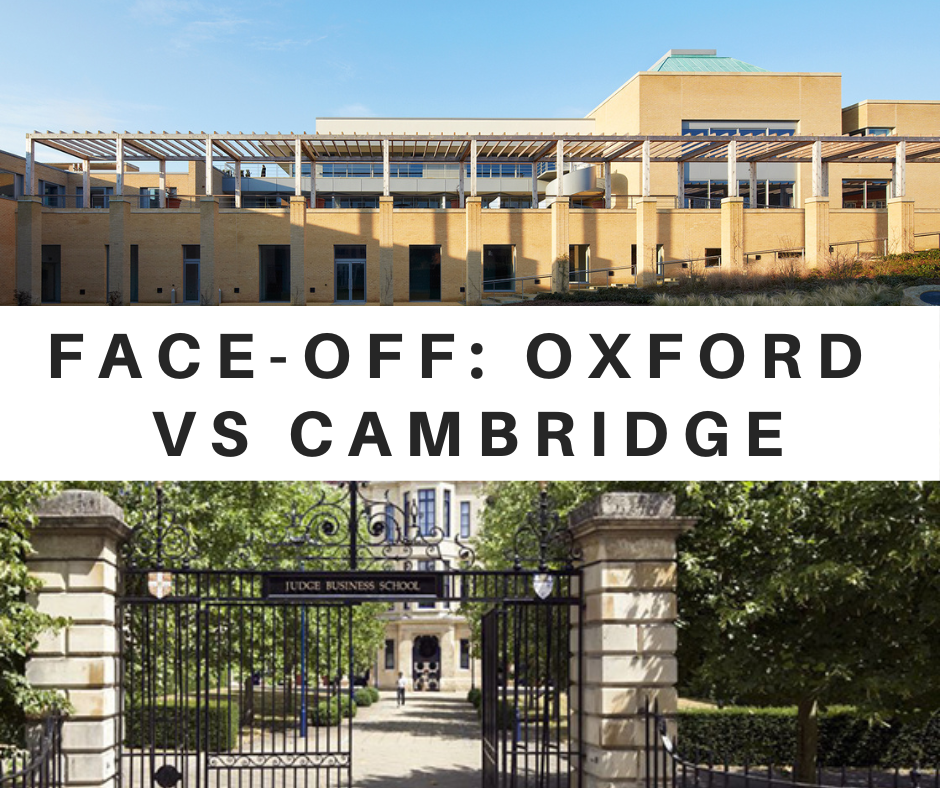
![]() The school selection process for MBA applicants can seem overwhelming. With so many great business schools, how do you decide which one is right for you? In SBC’s blog series Face-Off, we tease out the strengths and differences between two similarly ranked, or located, B-schools. Plus, we’ll highlight noteworthy elements of their admissions processes. Let’s kick things off by looking at the differences between the Oxford MBA application versus that of the University of Cambridge Judge School of Business. The thoughtful advice below comes courtesy of a former Admissions Officer from Oxford’s Saïd Business School, now on the Stacy Blackman Consulting team. Are you thinking about doing an MBA in the UK? We can help! Contact us to talk strategy with a free 15-minute advising session with an SBC Principal Consultant. ![]() How do the admissions requirements and selectivity compare between the Oxford MBA application and Cambridge Judge?


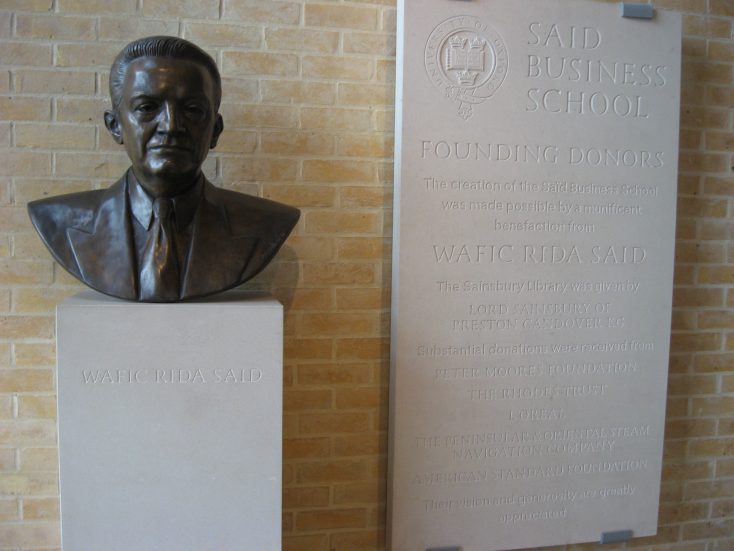
![]() What are some aspects of the Oxford and Cambridge MBA experience that applicants should consider? One of the biggest challenges faced by applicants considering applying for an MBA at Cambridge Judge and Oxford Said is the number of similarities the schools have on paper:

![]() Although there are many similarities between the two schools, the MBA programs and student experience are different. The key differences are:

![]()
![]() How do the two schools’ MBA cohorts compare in terms of quality and culture?

![]() Cambridge, England
![]() Oxford, England
Did you know SBC offers unique services for applicants interested in social impact? Learn more about our MBA Social Impact Accelerator Package. How do the two curricula and teaching methods compare?
![]() How do the career outcomes between the schools stack up?
*** Our consulting team includes former Admissions Officers from all of the top MBA programs in the US and Europe. Check out the exceptional talent at SBC, and contact us to talk strategy with a free 15-minute advising session with an SBC Principal Consultant. ![]() The post Face-Off: Oxford vs. Cambridge appeared first on Stacy Blackman Consulting - MBA Admissions Consulting. |
| FROM Stacy Blackman Consulting Blog: B-Schooled Podcast Episode #158: Candidacy “Question Marks,” Part 1 of 2 |
![]() Nobody likes drawing attention to their past mistakes, academic or otherwise. But when applying for a seat at a competitive business school, not addressing an apparent red flag does more harm than good. Being upfront about your foibles can go a long way toward minimizing the damage. This episode of B-Schooled—a replay of a listener favorite—covers what to do about “question marks,” or possible red flags, in an MBA applicant’s candidacy, including: • A low GPA • A low test score • A few low grades within an overall decent GPA • A lack of extracurriculars • A lack of work experience, and • “Too much” work experience (or when an applicant is older than the rest of the candidate pool) Additional issues will be covered in Part 2 on May 17 (upcoming episode #162). Listen to B-Schooled episode #158 here or on any of the podcast platforms listed below. B-Schooled is available on most major podcast apps, including: Apple Podcasts Spotify Stitcher TuneIn Please be sure to subscribe to B-Schooled so that you don’t miss a thing. Also, if there’s something you’d like for us to cover in a future episode, please email podcast@stacyblackman.com. We’d love to hear from you! *** ![]() Now, why not hop over to our brand-new MBA community on Discord? That’s where you’ll find exclusive insights from the SBC team, explore our resources, and connect with fellow current and prospective MBA applicants. This is a space to share and learn about the MBA admissions process, whether you’re still debating if business school is for you or you’re already on your way with your application journey. Join the party today! The post B-Schooled Podcast Episode #158: Candidacy “Question Marks,” Part 1 of 2 appeared first on Stacy Blackman Consulting - MBA Admissions Consulting. |
| FROM Stacy Blackman Consulting Blog: MBA programs in NYC |
![]() There are few cities in the world that are as alive, exciting and dynamic than New York. “Applicants to MBA programs in NYC are drawn to the location and the opportunity to successfully pursue any career you could imagine (what can’t you do in NYC?),” shared a former Columbia Admissions Officer who is now on the Stacy Blackman Consulting team. NYC is the quintessential big city, the epicenter of business, financial and media for the world. NYC brings MBA students massive benefits: a living laboratory of markets and businesses, an endless supply of well-qualified adjunct teachers, and more visiting executives who gravitate to its classrooms to speak and lecture. In this blog post, we will delve into three prominent business schools in NYC: Columbia Business School (CBS), NYU Stern School of Business, and Cornell University’s Samuel Curtis Johnson Graduate School of Management. We will explore specialized coursework offerings at each institution as well as acceptance rates and academic profiles. Furthermore, we’ll discuss one-year vs two-year MBA programs available at these institutions while highlighting location advantages for networking opportunities. Additionally, you’ll learn about smaller class sizes offered by certain institutions which provide a more personalized learning experience. Lastly, we’ll touch upon affordability factors and research projects conducted by experts in their respective fields.
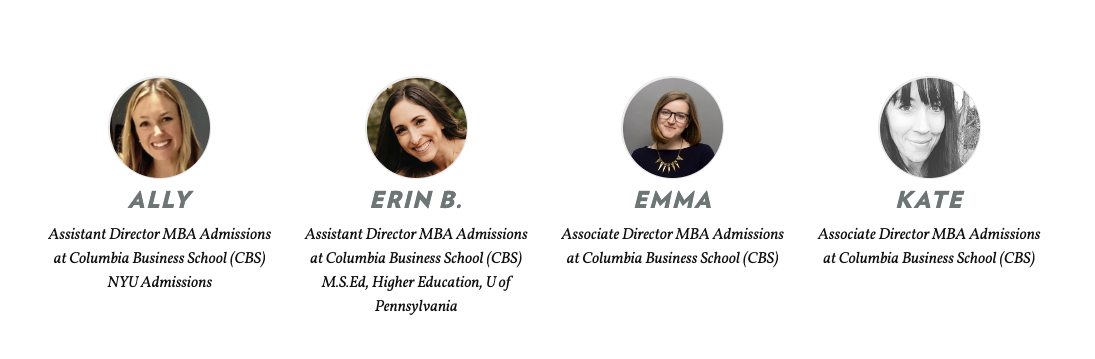
![]() Columbia Business School (CBS) Located in New York City, Columbia Business School offers a prestigious MBA program with an acceptance rate of around 16%. With an average GMAT score of 727 and GPA of 3.5 for incoming students, CBS provides specialized coursework such as the recently introduced “Business and Climate” program. The class size ranges from 500-600 students per year. In addition to its core curriculum, Columbia Business School offers unique courses tailored to specific industries like private equity, real estate, and sustainability. One notable example is their new “Business and Climate” course that prepares students for careers in environmental management or consulting by addressing climate change’s impact on businesses. The competition to get into top business schools like CBS is fierce with an acceptance rate of around 16%; however, applicants who showcase strong academic credentials, application and career path have a better chance at admission. For instance, the average GMAT score for admitted candidates stands at 727 while their median undergraduate GPA hovers around the B+ range (approximately 3.5 out of 4). Though the typical GMAT score and GPA for accepted applicants are 727 and 3.5, respectively, these figures can vary depending on other elements such as work experience or extracurricular activities. In conclusion, aspiring MBA candidates should consider applying to Columbia Business School if they seek a rigorous education from a top-ranked institution while enjoying the networking opportunities provided by its prime location near Wall Street. NYU Stern School of Business Situated in vibrant Greenwich Village, the NYU Stern School of Business is a top-ranked institution offering two one-year specialized programs, providing MBA applicants with unique opportunities to enhance their skills and network within New York City’s business community. With an acceptance rate hovering around 20%, NYU Stern maintains high academic standards, as evidenced by its incoming students’ average GMAT score of 721 and GPA close to 3. The school’s prime location offers unparalleled access to Wall Street firms and Fortune 500 companies headquartered in Manhattan. Students can take advantage of networking events organized by the university or attend industry conferences held throughout NYC. Furthermore, many working professionals choose part-time or online MBA programs offered by NYU Stern while maintaining their full-time jobs, allowing them to apply their newly acquired skills in real-time and build valuable connections within the business world. Cornell University – Samuel Curtis Johnson Graduate School of Management Cornell offers both traditional two-year MBA programs as well as accelerated one-year options through their partnership with Cornell Tech campus located on Roosevelt Island near Manhattan skyline views. Having slightly higher admissions rates compared to other NYC-based business schools (approximately 27%), candidates boast impressive credentials including average GMAT results reaching upwards towards the mid-upper 700s range alongside solid undergraduate records showcasing median GPAs hovering just above B+ territory (3.4). A two-year MBA and an accelerated one-year program offer distinct advantages based on individual needs, aspirations, and time availability. The two-year option provides more opportunities for internships, networking events, and in-depth coursework while the accelerated program allows students to complete their degree faster and re-enter the workforce sooner. In addition to its prestigious reputation, Cornell’s location near New York City provides ample opportunities for students to network with professionals from various industries such as finance, consulting, technology, real estate development, or private equity firms. Furthermore, working professionals would benefit from Cornell Tech’s MBA program, which is specifically designed for those who want to combine their business acumen with a strong foundation in technology and innovation. Insider Intel on being an MBA student in NYC A former Columbia Admissions Officer on the Stacy Blackman Consulting team shared, “Columbia offers C-Suite speakers comparable to an HBS without being as high in the rankings. For instance, the CEO of Anheuser Busch International went every year to speak in a class, same with McKinsey.” The school estimates that it gets more than 500 guest speakers a year on campus. That is a networking opportunity that is unique. “Something that applicants may not know is how well Columbia connects students with the surrounding city (and the world). There are various immersion programs students can take as electives that allow them to spend time in class with their classmates and professors, and also spend time off-site doing corporate visits around the city (and globally),” shared a former Columbia Admissions Officer who is now on the Stacy Blackman Consulting team. Ready to start your MBA journey? Request a free MBA advising session today for expert guidance your candidacy! The post MBA programs in NYC appeared first on Stacy Blackman Consulting - MBA Admissions Consulting. |
| FROM Stacy Blackman Consulting Blog: MBA Programs in NYC |
|
[img]https://www.stacyblackman.com/wp-content/uploads/New-York-City-Pexel-734x489.jpg[/img] There are few cities in the world as alive, exciting, and dynamic as New York. “Applicants to MBA programs in NYC are drawn to the location and the opportunity to successfully pursue any career you could imagine (what can’t you do in NYC?),” shared a former Columbia Admissions Officer who is now on the [url=https://www.stacyblackman.com/about/mba-admissions-consulting-team/]Stacy Blackman Consulting team[/url]. New York is a global epicenter of business, finance, and media. The location itself brings MBA students massive benefits, such as: [list] [*]A living laboratory of markets and companies.[/*] [*]An endless supply of well-qualified adjunct teachers.[/*] [*]An array of visiting executives gravitate to its classrooms as lecturers and guest speakers.[/*] [/list] This blog post will preview the three top-ranked MBA programs in NYC: [url=https://www.stacyblackman.com/mba-application-advice/columbia-business-school/]Columbia Business School (CBS)[/url], [url=https://www.stacyblackman.com/mba-application-advice/nyu-stern/]NYU Stern School of Business[/url], and Cornell University’s [url=https://www.stacyblackman.com/mba-application-advice/cornell-johnson/]Samuel Curtis Johnson Graduate School of Management[/url]. We’ll also touch on specialized coursework offerings at each institution, acceptance rates, and academic profiles. Furthermore, we’ll discuss one-year vs. two-year MBA programs at these institutions while highlighting location advantages for networking opportunities. Additionally, you’ll learn about the class sizes offered by certain institutions, which provide a more personalized learning experience. [list] [*][b]Columbia Business School:[/b] Acceptance rate around 16%[/*] [*][b]NYU Stern School of Business:[/b] Acceptance rate around 20%[/*] [*][b]Cornell University – Samuel Curtis Johnson Graduate School of Management:[/b] Acceptance rate around 27%[/*] [/list] But first, meet some of SBC’s NYC MBA program experts. If we’ve piqued your interest, request a [url=https://www.stacyblackman.com/contact/]free MBA advising session[/url] today for expert guidance on your candidacy! [img]https://www.stacyblackman.com/wp-content/uploads/Screen-Shot-2023-05-03-at-1.53.25-PM.png[/img] Columbia Business School (CBS) Columbia Business School’s prestigious MBA program has an acceptance rate of around 16%. Class size is considered neither big nor small and ranges from 500-600 students. Stats for the current first-year students show an average GMAT score of 727 and a GPA of 3.5. The competition to get into top business schools like CBS is fierce. However, applicants with strong academic credentials, well-executed applications, and viable career paths have a better chance at admission. In addition to its core curriculum, Columbia Business School offers unique courses tailored to specific industries like private equity, real estate, and sustainability. One notable example is their new “Business and Climate” course that prepares students for environmental management or consulting careers by addressing climate change’s impact on businesses. [img]https://www.stacyblackman.com/wp-content/uploads/03-columbia-business-school-iwan-baan-1597-neighbors.jpeg[/img] “Columbia offers C-Suite speakers comparable to an HBS without being as high in the rankings,” shares a former Columbia Admissions Officer on the Stacy Blackman Consulting team. “For instance, the CEO of Anheuser Busch International went every year to speak in a class, same with McKinsey.” The school estimates that it gets more than 500 guest speakers a year on campus. “Something that applicants may not know is how well Columbia connects students with the surrounding city (and the world),” says another SBC consultant and former CBS Admissions Officer. “There are various immersion programs students can take as electives that allow them to spend time in class with their classmates and professors, and also spend time off-site doing corporate visits around the city (and globally).” Aspiring MBA candidates should consider applying to Columbia Business School if they seek a rigorous education from a top-ranked institution while enjoying the networking opportunities provided by its prime location near Wall Street. NYU Stern School of Business Situated in vibrant Greenwich Village, the [url=https://www.stern.nyu.edu]NYU Stern School of Business[/url] is a top-ranked institution offering two one-year specialized programs—the Tech MBA and the Fashion and Luxury MBA—besides its flagship two-year program. NYU Stern provides MBA applicants with unique opportunities to enhance their skills and network within New York City’s business community. NYU Stern maintains high academic standards, as evidenced by its incoming students’ average GMAT score of 733 and GPA of 3.62. Acceptance rates hover around 20%. [img]https://www.stacyblackman.com/wp-content/uploads/301858181_fd0247184c_b-734x490.jpg[/img] The school’s prime location offers easy access to Wall Street firms and Fortune 500 companies headquartered in Manhattan. Students can take advantage of networking events organized by the university or attend industry conferences held throughout NYC. Furthermore, many working professionals choose part-time or online MBA programs offered by NYU Stern while maintaining their full-time jobs, allowing them to apply their newly acquired skills in real time and build valuable connections within the business world. Cornell University – Samuel Curtis Johnson Graduate School of Management Cornell offers both traditional [url=https://www.johnson.cornell.edu/programs/full-time-mba]two-year MBA programs[/url] as well as accelerated one-year options through their partnership with [url=https://tech.cornell.edu]Cornell Tech campus[/url] located on Roosevelt Island. Despite having slightly higher admissions rates compared to other NYC-based business schools (approximately 27%), admitted candidates still boast impressive credentials. GMAT averages clock in at [url=https://www.johnson.cornell.edu/for-recruiters/class-profiles/]710, and undergrad GPA at 3.3[/url]. A two-year MBA and an accelerated one-year program offer distinct advantages based on individual needs, aspirations, and time availability. The two-year option provides more opportunities for internships, networking events, and in-depth coursework while the accelerated program allows students to complete their degree faster and re-enter the workforce sooner. [img]https://www.stacyblackman.com/wp-content/uploads/Cornell_Tech_td_2019-11-03_008_-_Tata_Innovation_Center-1500x1000.jpg[/img] In addition to its prestigious reputation, Cornell’s location near New York City provides ample opportunities for students to network with professionals from various industries such as finance, consulting, technology, real estate development, or private equity firms. Furthermore, professionals working in STEM fields should look at Cornell Tech’s MBA program, which is specifically designed for those who want to combine their business acumen with a strong foundation in technology and innovation. [b]***[/b] [b]Anyone interested in going to business school in the Big Apple has three excellent options to consider. Are you ready to speak to an expert about MBA programs in NYC? Request a [url=https://www.stacyblackman.com/contact/]free MBA advising session[/url] today for expert guidance on your candidacy![/b] The post [url=https://www.stacyblackman.com/blog/mba-programs-in-nyc/]MBA Programs in NYC[/url] appeared first on [url=https://www.stacyblackman.com]Stacy Blackman Consulting - MBA Admissions Consulting[/url]. |
| FROM Stacy Blackman Consulting Blog: Essential MBA Application Tips for Aspiring Professionals |
![]() Navigating the MBA application journey can be an intimidating challenge. As a prospective student, you’ll benefit enormously from taking time at the beginning of the process to contemplate the path you’re about to take. This is a great time to ask yourself some critical questions; self-evaluation and reflection are crucial. These essential MBA application tips will help your candidacy stand out and take your application from ordinary to extraordinary. First, we’ll discuss the value of embracing vulnerability in your MBA essays. There’s no need to try and come across as a “perfect” MBA candidate. That strategy actually might land your application straight into the reject pile. Learn how to choose meaningful examples and show emotional intelligence through storytelling. Next, we’ll explore ways for you to own your unique background. Even if, on paper, you share many similarities with other applicants, dig deep to reveal what makes you distinctive. We’ll also provide guidance on connecting with students and alums. These invaluable resources can help you understand whether the schools you’re considering are truly a good fit for you. Finally, we offer protips for preparing for MBA interviews. Our comprehensive guide emphasizes learning about yourself throughout the MBA application process. By assessing strengths and weaknesses while embracing personal growth, you’ll do more than enhance your chances of admission. You’ll also embark on a transformative journey toward becoming a successful business leader. Curious about your chances of getting into a top B-school? Contact us to talk strategy with a free 15-minute advising session with an SBC Principal Consultant. ![]() Embracing Vulnerability in MBA Essays Applicants can create a genuine connection with the AdCom member reading their application when their essays share personal experiences. Selecting powerful examples is crucial for demonstrating your voyage to self-improvement. Consider moments of adversity or when you made difficult decisions that led to learning opportunities. This approach helps you stand out from other candidates. “It’s less about the thing that happened to you and much more about how you responded to that event, how you approached it, what you learned from it, and how you grew,” explains Chandler Arnold, a host of the SBC’s B-Schooled podcast. “That’s what these schools want to understand.” For instance, discuss how overcoming a professional setback helped you develop resilience. Or how navigating a challenging team dynamic taught you valuable leadership skills. Be specific about the situation and highlight the lessons learned and any positive outcomes achieved. How can you convey emotional intelligence in your essays? Focus on crafting compelling stories that show empathy, adaptability, and strong interpersonal skills. Share instances where you listened to others’ perspectives before making decisions. Or describe times when adjusting your communication style improved relationships with colleagues. Remember, authenticity is everything. Be honest about successes and failures while emphasizing what these experiences have taught you. Tip: When discussing emotionally-charged topics such as failure, be vulnerable but also prudent. Strike a balance between openness and maintaining professionalism throughout your narrative. Listen to B-Schooled Podcast #103: The Power of Authenticity in MBA Applications ![]() Owning Your Unique Background Applicants must learn to lean into their unique backgrounds. Avoid trying to fit a perceived mold for MBA candidates. “When I applied, it was important for me to talk about being a member of the LGBTQ community,” says SBC’s Chandler Arnold. During a B-Schooled podcast episode on things he wishes he’d known when applying, Chandler shares how he used his coming-out story for a greater purpose. He calls it an onramp to a larger discussion about how he grew and changed from that experience. Chandler’s essays described how coming out made him a more empathetic leader. “I had a stronger sense of who I was as a human and better able to connect with others at work and in all kinds of facets of my life,” he says. If you reread your essay and you still ask yourself, so, why is this important? How did I grow from this experience? You probably haven’t pushed yourself far enough. Don’t let a non-traditional background stop you from discussing your successes in the application. Owning your individuality distinguishes you from other applicants. The admissions committee appreciates seeing strengths derived from diverse experiences. “Looking back, the two things that I was most worried about at the time—being gay and coming from a social enterprise background—actually helped me stand out and distinguish myself,” Chandler notes. Rather than hiding potential weaknesses, embrace them as opportunities for growth and learning. Explain any setbacks or failures in your career thus far. The key is to emphasize how they shaped you and developed essential qualities that will contribute to your success in an MBA program. This demonstrates resilience and adaptability—two vital qualities in future business leaders. ![]() Common Weak Points Gaps in employment: Explain what led to the gap. Were you pursuing further education? Did you experience a layoff? If possible, draw attention to any transferable skills gained during this time. Lack of international experience: Highlight domestic achievements with global impact. Can you showcase cross-cultural collaboration within local projects? Average test scores: Focus on other aspects of your profile instead. Areas such as work experience, leadership roles, and extracurricular activities support your strong candidacy despite lower test scores. MBA essays and resumes should reflect your unique experiences and skills; GMAT scores are only one aspect of your profile. Business schools value work experience and leadership potential. So, be sure to highlight these qualities in your application. Partner with Stacy Blackman’s best-in-class GMAT and GRE experts and increase your score significantly. Check out our test prep services here. Request a free game plan chat with SBC’s lead test prep coach by emailing testprep@stacyblackman.com. Connecting with Students and Alums It’s no secret that tapping the wisdom of current students and alums will give you valuable insights about your target B-schools. Such connections provide insider perspectives on school culture, clubs, resources available at the institution, and post-MBA career opportunities. Networking with these folks provides a clear understanding of how the program meets your needs. ![]() Start by reaching out to club presidents or co-presidents of organizations that interest you within the MBA program. Many schools have clubs focused on specific industries, functions, or social causes, allowing students to network and gain hands-on experience in their desired fields. Send a personalized email expressing genuine interest in learning more about their experiences. Then ask if they would be willing to chat over a call or video conference. “I’ve worked with a ton of clients who’ve reached out to a ton of current students,” Chandler says. “And something like 85-95% of them write back and are happy to have a short conversation.” Do you want to have a better idea of potential post-MBA career trajectories? Seek alums who share similar backgrounds or work in roles you aspire towards. You can find them through LinkedIn searches and school-hosted events like webinars, panel discussions, etc., where they may appear as featured speakers. Connecting with these professionals does more than help paint a clearer picture of life after graduation. It also expands your professional network, which could prove invaluable later in the job search process. While you’re at it, don’t hesitate to ask questions about any concerns you may have. Remember, these individuals were once in your shoes. They can provide valuable advice based on their experiences. Preparing for MBA Interviews ![]() The MBA interview is a pivotal component of the application process. It’s where you can show your personality and how well-suited you are to the school’s atmosphere. Brainstorm six to eight stories drawn from your life experiences that highlight relevant skills.
Also, tap into what you learned about yourself as a leader and a person in the process. “With those six or eight stories in your back pocket, you can answer 80 or 90% of the questions that come your way.” Check out the Stacy Blackman Consulting Interview Guides for inspiration on crafting impactful narratives for all the top schools. Remember that practice makes perfect. Rehearse your responses with friends or family. Seek feedback and refine them until you feel confident delivering them effectively. Thorough preparation will help your MBA admissions odds. It also lays the foundation for successful networking and career advancement post-MBA. Learning About Yourself Through the Application Process The MBA application process offers a golden opportunity for introspection and self-discovery. Assess your professional and personal qualities to see which best represents you as an MBA candidate. Consider what makes you unique, from professional accomplishments to formative personal experiences. Also, identify areas where you excel or need improvement. Strengths: Highlight skills or attributes that make you stand out among other applicants. Weaknesses: Acknowledge any challenges faced while demonstrating how they’ve contributed to personal growth. Achievements: Showcase notable accomplishments throughout your career thus far. This could include promotions at work or community involvement outside of the office. ![]() This moment is a time for deep reflection on one’s values, motivations, and passions. In the process, it allows you to gain clarity on how an MBA degree can propel you toward your desired career path. For example, you might find that your passion for sustainability aligns with a specific MBA specialization. Or you discover a newfound interest in entrepreneurship after pondering past experiences. These MBA application tips emphasize the importance of authenticity and self-reflection. By choosing examples that showcase personal growth and owning your unique background, you display emotional intelligence and stand out to admissions committees. Connecting with current students and alums can also provide valuable insights into the program culture and help you prepare for interviews. As you navigate the application process, take time to assess your strengths and weaknesses while embracing opportunities for personal growth. Follow these MBA application tips and stay true to yourself. Doing so can increase your chances of getting accepted into the program of your dreams. *** Request a free MBA advising session with Stacy Blackman Consulting to learn how we can help with your complete MBA applications. Here’s a snapshot of the caliber of expertise on our SBC team. ![]() The post Essential MBA Application Tips for Aspiring Professionals appeared first on Stacy Blackman Consulting - MBA Admissions Consulting. |
| FROM Stacy Blackman Consulting Blog: B-Schooled Podcast Episode #159: Leadership Lessons from a Navy Seal/Stanford GSB Grad |
![]() In this episode of B-Schooled, co-host Chandler Arnold sits down with Jamey Cummings to talk about leadership. Jamey graduated from the United States Naval Academy with a BS in Aeronautical Engineering. While in college, he was the captain of the wrestling team and a two-time qualifier for the NCAA Division I Championships. Jamey started his career as an Officer in the U.S. Navy SEAL Teams, where he served for nine years before earning his MBA at Stanford. After graduation, Jamey worked as a consultant with BCG before moving to the field of executive search with firms including Korn Ferry and Heidrick & Struggles. Jamey is currently a Partner at JM Search, where he co-leads the Firm’s Security Practice and is a member of the IT Executives and Technology Practices. Join us for this wide-ranging discussion on leadership, including such topics as: • Advice for those from military backgrounds applying to business school • Suggestions for describing non-corporate leadership experiences in your MBA application • Guidance for those wanting to transition into—or out of—consulting • An overview of the world of executive search as a possible post-MBA career choice • Suggestions for those interested in entering the world of executive search • Insights into what post-MBA leadership skills top firms are looking for today This podcast is a must for anyone applying to business school from the military or any non-corporate background, Plus, listening to Jamey is a joy! Check out this B-Schooled episode right here or on any of the major podcast platforms below. B-Schooled is available on most major podcast apps, including: Apple Podcasts Spotify Stitcher TuneIn Please be sure to subscribe to B-Schooled so that you don’t miss a thing. Also, if there’s something you’d like for us to cover in a future episode, please email podcast@stacyblackman.com. We’d love to hear from you! *** ![]() Now, why not hop over to our brand-new MBA community on Discord? That’s where you’ll find exclusive insights from the SBC team, explore our resources, and connect with fellow current and prospective MBA applicants. This is a space to share and learn about the MBA admissions process, whether you’re still debating if business school is for you or you’re already on your way with your application journey. Join the party today! The post B-Schooled Podcast Episode #159: Leadership Lessons from a Navy Seal/Stanford GSB Grad appeared first on Stacy Blackman Consulting - MBA Admissions Consulting. |
| FROM Stacy Blackman Consulting Blog: How to Create a Powerful MBA Resume |
![]() What we’re about to say will surprise many MBA aspirants. Namely, your resume is probably the most critical piece of your MBA application materials. If done correctly, it should give the admissions committee a sense of what might be unique about your career path. A powerful MBA resume clearly details the kind of impact you’ve had professionally, either at your company, on a client project, or with end users of a product or service. It also previews the kinds of stories that you’ll share with peers during classroom discussions. Your resume shows the admissions committee what you were involved with outside of class during college and what you’re involved with now outside of work. Ideally, it conveys what your passions are, too. Of course, every aspect of your MBA application materials must build a strong case for your candidacy. Your essays provide the best opportunity to give the AdCom a sense of your personality and what makes you tick. They also supply critical details about your leadership experience and identity relevant to your MBA candidacy. But even the best essays lose their luster next to a poorly executed resume. “A weak resume tells the admissions committee that you don’t know how to make good use of a page to highlight the best of your academic and professional and extracurricular life to date,” says SBC consultant Erika in this episode of the B-Schooled podcast. “It means you don’t have the communication skills that the best executives and industry leaders have where you can make powerful statements briefly. It means you don’t know how to use numbers or details to make your case in a compelling way. And it might also tell them that you don’t have the confidence to sell yourself in a way that doesn’t make you come off like a jerk.” None of us want to come across like that, right? So, let’s explore how to use language to create a great impression and maximize that precious one-page real estate. Check out Stacy Blackman’s Guide to Creating a Resume for MBA Applications ![]() Anatomy of a Powerful MBA Resume A non-negotiable tenet of a powerful MBA resume—or any resume, for that matter—is to use Action Verbs. Start each bullet point in your career section with one of these, in past tense or present, depending on whether they still apply. Here are a few common examples:
But then go further: “developed 50-page report detailing sales by region.” Something even more powerful might look like this: “Developed 50-page report detailing sales by region; presented findings to CEO and 20-person executive committee.” Or, “Developed 50-page report detailing sales by region; distributed quarterly to 2,000 employees.” Once you get into this frame of mind, start finding ways to strengthen your resume bullets with quantifiable details that help the reader better understand the scope of what you did. If you work in the pharmaceutical or healthcare space, you could use some robust numbers about how many patients or users of a particular medicine or recipients of a specific surgery might ultimately benefit from a solution you helped develop. ![]() Everyone Can Use This Strategy You can think along these same lines for any industry: who was or will be impacted by your work? Perhaps you’re streamlining a process that will get implemented in 200 locations of a restaurant chain across six states and save X labor hours per year. You may be helping to automate something that will be used in four 5,000-worker factories across three countries and will save the client’s company or your own company $500,000 annually. Details like these give the AdCom reader a greater understanding of your role and bring to life why what you did matters. Remember, you always want to quantify things when it helps your case. @stacyblackmanconsulting Ten common mistakes applicants make on sn MBA resume #resumetips #applicationadvice #bschooladmissions #mbaapplications #icangetyouin #achieveyourdreamskin ? Hip Hop with impressive piano sound(793766) – Dusty Sky A Common Blunder One thing you won’t find on a powerful MBA resume is industry jargon. Such words or expressions may be commonplace within a particular profession. Nonetheless, they’re difficult for outsiders to understand. Often, applicants are so steeped in their company’s culture they don’t even recognize it. Yet as admissions consultants, we see it all the time. Even when people think they’ve been extra careful about not using company jargon, we inevitably find a sentence, bullet point, or phrase that assumes the reader knows something they likely do not know. You don’t want the AdCom member reading your resume to stumble over any aspect of this document. So, ask someone outside your industry to read your resume and mark it with any comments or questions. An objective pair of eyes looking out for this potential pitfall is indispensable. For more tips, check out B-Schooled Podcast Episode #16: How to ‘MBA’ Your Resume More Must-Include Resume Items International experience. Your resume should always highlight international work or international collaboration. Training a counterpart in another country or working online with coworkers or clients from other countries counts! While you may not have traveled there in person, mention it if that work is significant enough in your daily life. ![]() Exposure to another culture, especially professionally, is always a differentiator. Similarly, always mention study abroad programs. These should always be on your resume if you’re only a few years out of school. Relevant internships might also be worth including if they make sense with your career story overall, particularly if it’s relevant to what you want to do in the future. Varied leadership experience. Make a clear picture emerge of the kind of person you are and the kind of student and campus leader you’d be. We’ve worked with many applicants who devote too much of their resumes to their careers and ignore all leadership positions held in college. Remember that the admissions committee looks to your undergraduate experience to gauge how involved you might be on campus outside of class in their MBA program. They’re looking for evidence of leadership from all phases of your life. And it’s especially great when a particular passion that you have now or might want to focus on in the future was evident in college as well. On the other hand, if you weren’t active in clubs and didn’t have leadership experiences in college, it’s better to keep that section concise. You can expand a personal section at the bottom of the resume to give the AdCom a sense of how you spend your free time. Maximizing the Personal Section These days, nobody’s impressed by an applicant who’s all work all the time. MBA programs seek well-rounded people who can share an array of personal and professional experiences with their classmates. Indeed, there isn’t a lot of space to communicate unique aspects of your life in a one-page resume. Even so, we have clients dedicate a few lines at the end to share memorable tidbits about themselves. This is where you should be very strategic about what you share. ![]() Activities like running marathons, skiing, golfing, and being a fan of a particular sports team are not unique or differentiating. The admissions committee sees these personal interests all.the.time. You’re much better off thinking of something thousands of other candidates aren’t likely to include. For instance:
We hope this advice helps you put together a powerful MBA resume that will make the admissions committee sit up and take notice. Think carefully about how to employ descriptive language and quantifiable results. Be sure to highlight examples of leadership in college and beyond. And remember, international experience, through work or a study abroad program, is always attractive to the admissions committee. If you can successfully incorporate these elements into your resume, your achievements will stand out in a clear and memorable way. *** Stacy Blackman Consulting offers multiple services to meet your MBA application needs, from our All-In Partnership to hourly help reviewing your MBA resume. Contact us today for a free 15-minute advising session to talk strategy with a Principal SBC consultant. Here’s a snapshot of the caliber of expertise on our SBC team. ![]() The post How to Create a Powerful MBA Resume appeared first on Stacy Blackman Consulting - MBA Admissions Consulting. |
| FROM Stacy Blackman Consulting Blog: Plan for Your Future MBA |
![]() Do you think you might want to go to business school one day? If so, it’s a great idea to take some steps now to plan for your future MBA that can set you up for success later. If you’re reading this while still in undergrad or at university, it goes without saying that the best way to position yourself for the future is to earn the highest grades possible. Also, take leadership positions in one or two extracurriculars that are meaningful to you in some way. But if you’re working part-time during school to finance your education and don’t see how you could make room for other activities outside of your job and classes, don’t worry! Admissions committees do respect when an MBA candidate successfully balances their courseload and work during college. Once you’re out of school, start seriously considering taking the GMAT or GRE sooner rather than later. It’s easy to fall out of college studying habits and that “student mindset” once you graduate. Check out B-Schooled Podcast #106: Admissions Test Deep Dive with SBC’s Director of Test Prep, Anthony Ritz. Taking your admissions test while you’re still used to a study routine makes sense. This would also give you time to reassess your strategy if things don’t go as well as you’d hoped. At work, take the initiative and go above and beyond in your role whenever you spot the opportunity. And don’t forget to keep up relationships with bosses and mentors as you progress through roles or switch companies. Not only will doing so help your network remain strong. It will also make it less awkward when it comes time to ask for those crucial recommendation letters! ![]() Finally, one of the most impactful things you can do in the years before you apply to MBA programs is to build up your volunteer experience. This is especially true if you didn’t have a lot to show for yourself on this front in college. You’ll likely compete with candidates with similar profiles when applying to business school. Having significant volunteer experience under your belt can set your candidacy apart. In episode #47 of our B-Schooled podcast, we go into much more detail about other things you can do today to prepare and plan for your future MBA. You can find B-Schooled on Apple Podcasts, Spotify, Stitcher, or TuneIn. When you envision your path over the next several years, consider this advice: ![]() *** Stacy Blackman Consulting offers multiple services to meet your MBA application needs, from our All-In Partnership to hourly help reviewing your MBA resume. Contact us today for a free 15-minute advising session to talk strategy with a Principal SBC consultant. Meanwhile, here’s a snapshot of the caliber of expertise on our SBC team. ![]() The post Plan for Your Future MBA appeared first on Stacy Blackman Consulting - MBA Admissions Consulting. |
| FROM Stacy Blackman Consulting Blog: B-Schooled Podcast Episode #160: Spotlight on Notre Dame-Mendoza |
![]() In this special episode of B-Schooled, Erika talks with Joe Sweeney, the MBA Program Academic Director of Notre Dame’s Mendoza College of Business. Joe’s unique experience as an MBA student, professor, and administrator at Mendoza leads to an in-depth discussion of what makes Mendoza stand out and how the program integrates with its community in South Bend, Indiana, as well as with the wider University of Notre Dame. Listen to B-Schooled episode #160 here or on any of the platforms below. B-Schooled is available on most major podcast apps, including: Apple Podcasts Spotify Stitcher TuneIn Please be sure to subscribe to B-Schooled so that you don’t miss a thing. Also, if there’s something you’d like for us to cover in a future episode, please email podcast@stacyblackman.com. We’d love to hear from you! *** ![]() Now, why not hop over to our brand-new MBA community on Discord? That’s where you’ll find exclusive insights from the SBC team, explore our resources, and connect with fellow current and prospective MBA applicants. This is a space to share and learn about the MBA admissions process, whether you’re still debating if business school is for you or you’re already on your way with your application journey. Join the party today! The post B-Schooled Podcast Episode #160: Spotlight on Notre Dame-Mendoza appeared first on Stacy Blackman Consulting - MBA Admissions Consulting. |
| FROM Stacy Blackman Consulting Blog: Harvard MBA Deadlines for the Class of 2026 |
![]() Are you already planning your application strategy for Harvard Business School? Then get out your calendar because the Harvard MBA deadlines for the 2023-2024 admissions season have been announced! ROUND 1 Application due: September 6, 2023 Decision released: December 6, 2023 ROUND 2 Application due: January 3, 2024 Decision released: March 27, 2024 All applications are due at 12 noon EST on the day of the deadline. Therefore, Class of 2026 applications received after September 6, 2022, will be considered in Round 2. Consequently, applications received after January 3, 2024, will not be considered. The Class of 2026 application will open in June 2023. The post Harvard MBA Deadlines for the Class of 2026 appeared first on Stacy Blackman Consulting - MBA Admissions Consulting. |
| FROM Stacy Blackman Consulting Blog: HBS Loves the Case Study Method |
|
[img]https://www.stacyblackman.com/wp-content/uploads/HBS-Harvard-Ayva-EM-3-1500x1000.jpg[/img] By now, many MBA applicants may have heard of something called the Case Study Method. Even so, you might not know exactly what it is. At [url=https://www.stacyblackman.com/mba-application-advice/harvard-business-school/]Harvard Business School[/url], the case method is a teaching approach where students analyze and solve real-world business problems with incomplete information and many uncertainties. It’s an intense discussion format and one that requires students to communicate with sensitivity about potentially challenging topics. This immersive learning experience provides valuable insights into the thorny issues facing today’s corporate culture. If you hope to attend Harvard Business School one day, read on to learn more about the case method and all its virtues. [b]Curious about your chances of getting into [url=https://www.stacyblackman.com/mba-application-advice/harvard-business-school/]Harvard Business School[/url]? Contact us to talk strategy with a [url=https://www.stacyblackman.com/contact/]free 15-minute advising session[/url] with an SBC Principal Consultant.[/b] [img]https://www.stacyblackman.com/wp-content/uploads/Harvard-Business-School-Spangler-734x432.jpg[/img] Why Does HBS Love the Case Study Method? HBS is not the only elite business school to use this teaching style; [url=https://www.stacyblackman.com/mba-application-advice/virginia-darden/]UVA Darden[/url] and [url=https://www.stacyblackman.com/mba-application-advice/insead/]INSEAD[/url] do, too. But it did pioneer the practice [url=https://www.hbs.edu/case-method-100]more than a century ago[/url]. The reason it remains popular today is that the case method does an excellent job of building several core competencies, such as: [list] [*][b]Critical Thinking:[/b] It encourages students to examine difficult issues from multiple perspectives. Likewise, it helps them identify underlying beliefs and biases that may influence their decision-making process.[/*] [*][b]Decision-Making:[/b] As future business professionals, students must learn to make informed decisions based on limited information under uncertain settings. [/*] [*][b]Problem-Solving:[/b] By working with classmates during group projects or class debates, students practice identifying potential solutions for diverse challenges facing an array of organizations.[/*] [/list] No doubt, the case method creates an environment where learners can build strong communication skills with their peers and professors. By debating pressing issues within today’s rapidly evolving business landscape—such as navigating digital transformation or addressing sustainability concerns—MBA candidates are ready for leadership roles upon graduation from Harvard Business School. [img]https://www.stacyblackman.com/wp-content/uploads/Inside_a_Harvard_Business_School_classroom-734x488.jpeg[/img] [b]Encouraging Student Participation During Class Discussions[/b] Harvard Business School’s case study method emphasizes the importance of student involvement in class. It’s not a setting in which extreme introverts will thrive! Professors create an environment where students feel comfortable sharing their perspectives on complex business scenarios voluntarily or through cold calling. During a case discussion, students are tasked with: [list] [*][b]Analyzing incomplete data:[/b] Students must evaluate available information and identify gaps that may affect their decisions.[/*] [*][b]Weighing pros and cons: [/b]As future managers, students must consider various factors such as financial implications, employee morale, legal issues, and public perception before making a choice.[/*] [*][b]Fostering collaboration: [/b]Group discussions allow students to exchange ideas with peers with different backgrounds and experiences. This helps broaden their understanding of the subject. It also promotes teamwork skills essential for successful leadership roles.[/*] [/list] Including real-life scenarios into the classroom prepares aspiring professionals for tackling challenges they will encounter throughout their careers. As HBS student Lauren Buchanon explains in the video, “Being in the case setting, you realize how valuable everyone else around you is, how valuable their opinions are, and the importance of being a good, active listener.” Yeah, But Are HBS Case Studies Real? HBS case studies are based on real-life business situations. However, they often include fictional elements to protect confidentiality and enhance learning in a structured educational setting. If you’re curious to see a case study for yourself, know that they aren’t easy to access due to copyright restrictions. However, you may find summaries or excerpts of select cases on [url=https://hbswk.hbs.edu/]HBS Working Knowledge[/url]. Alternatively, [url=https://www.stacyblackman.com/college-seniors-mba-application-services/]current college students[/url] might have limited access through their university’s library if they have an agreement with [url=https://hbr.org/]Harvard Business Review[/url]. In the current climate, topics such as the future of AI, gender equality, and corporate culture are more important than ever. By exploring these issues in class discussions, Harvard Business School provides its students with valuable insights into how companies can navigate challenging situations while promoting open communication and inclusivity. *** [b]With [url=https://www.stacyblackman.com/comprehensive-services/]SBC’s All-In Package[/url], we’re turning No’s into Yes’s by teaching you how to build the type of application that competitive MBA programs want to receive. Learn how to remodel shortcomings into strong points, write compelling essays, strategize for admission tests, ace interviews, and be the strongest applicant you can be. [url=https://www.stacyblackman.com/contact/]Reach out today[/url] to learn more about all of our services. [/b] [b]Meanwhile, here’s a snapshot of the expertise on our [url=https://www.stacyblackman.com/about/mba-admissions-consulting-team/]consulting team[/url]:[/b] [img]https://www.stacyblackman.com/wp-content/uploads/Screen-Shot-2023-01-10-at-8.07.06-AM.png[/img] The post [url=https://www.stacyblackman.com/blog/hbs-loves-the-case-study-method/]HBS Loves the Case Study Method[/url] appeared first on [url=https://www.stacyblackman.com]Stacy Blackman Consulting - MBA Admissions Consulting[/url]. |
| FROM Stacy Blackman Consulting Blog: Harvard MBA Essay for the Class of 2026 |
|
[img]https://www.stacyblackman.com/wp-content/uploads/Yard_-_Harvard_Business_School_-_DSC02995-734x551.jpg[/img] In addition to the HBS [url=https://www.stacyblackman.com/harvard-hbs-mba-deadlines/]deadlines[/url], the Harvard MBA essay for the 2023-24 admissions season has been confirmed. The [url=https://www.hbs.edu/mba/admissions/application-process/Pages/default.aspx]essay question remains unchanged[/url] and HBS will continue to [url=https://www.hbs.edu/mba/admissions/Pages/from-the-admissions-director.aspx]impose a word limit[/url] this season. Here is how Harvard Business School admissions explained the word count when they introduced it for the first time last season: We have heard from some applicants that, without a word limit, sometimes questions (and stress) arise about the “right” word length. We hope that including a limit provides applicants with a little more direction and eliminates the stress about how much is too much to write. Do you need to submit 900 words? No, certainly not. Successful applicants may share what they wish to in 500 or 700 words, for example, or go up to 900. Harvard MBA Essay for the 2023-2024 Admissions Cycle: “As we review your application, what more would you like us to know as we consider your candidacy for the Harvard Business School MBA Program?” (900 words max.) We think you know what guidance we’re going to give here. Don’t overthink, overcraft and overwrite. Just answer the question in clear language that those of us who don’t know your world can understand. Joint program applicants for the Harvard Medical School, Harvard School of Dental Medicine, Harvard Law School, and Harvard Kennedy School must provide an additional essay: [b]How do you expect the joint degree experience to benefit you on both a professional and a personal level? (400 words)[/b] “The essay really is make or break for HBS,” shares one of the former [url=https://www.stacyblackman.com/about/mba-admissions-consulting-team/]HBS Admissions Officers[/url] on the SBC team. “So many applications have acceptable credentials up to that point of the application. It really is the essay that sets the overall application apart and earns it the interview.” Check out our [url=https://www.stacyblackman.com/blog/harvard-mba-essay-tips-2020-2021/]targeted tips[/url] for the Harvard MBA essay. And don’t hesitate to [url=https://www.stacyblackman.com/contact/]contact us[/url] to learn how Stacy Blackman Consulting can help with your Harvard MBA application. The post [url=https://www.stacyblackman.com/blog/harvard-hbs-mba-essay/]Harvard MBA Essay for the Class of 2026[/url] appeared first on [url=https://www.stacyblackman.com]Stacy Blackman Consulting - MBA Admissions Consulting[/url]. |
| FROM Stacy Blackman Consulting Blog: Cracking Elite MBA Admissions: Do You Have What it Takes? |
|
[img]https://www.stacyblackman.com/wp-content/uploads/pexels-andrea-piacquadio-3989403-1500x1000.jpg[/img] Elite MBA admissions at top-tier institutions such as [url=https://www.stacyblackman.com/mba-application-advice/harvard-business-school/]Harvard Business School[/url], [url=https://www.stacyblackman.com/mba-application-advice/stanford-graduate-school-of-business/]Stanford Graduate School of Business[/url], and [url=https://www.stacyblackman.com/mba-application-advice/upenn-wharton/]Wharton School[/url] have always been a fiercely competitive process. After all, thousands of hopefuls vie for just a few spots. That’s why it’s imperative to stand out from the crowd. Today we’re diving into aspects that can help you navigate your way through elite MBA applications. First, we’ll cover what makes an ideal candidate profile for these schools. Then we’ll explore strategies for overcoming below-average stats. Next, we’ll examine application timing. And we’ll explain how underrepresented groups or over-represented pools can make their mark during the admissions process. Our focus will be on highlighting the importance of work experience quality while offering tailored strategies for specific applicant profiles. We have targeted tips for recent graduates seeking leadership opportunities and military applicants transitioning into civilian life. Understanding these critical factors in elite MBA admissions will make you a strong contender for your dream business school. [b]Curious about your chances of getting into HBS, Stanford GSB, or the Wharton School? [url=https://www.stacyblackman.com/contact/]Contact us[/url] to talk strategy with a free 15-minute advising session with an SBC Principal Consultant.[/b] [img]https://www.stacyblackman.com/wp-content/uploads/HBS-Harvard-Business-School-Baker_library-cropped-734x430.jpg[/img] Elite MBA Admissions Candidate Profile Do you dream of joining one of the elite H/S/W MBA programs someday? It’s helpful to understand the perfect candidate profile that these top business schools seek. A competitive GMAT score, strong GPA, and exceptional work experience are just the beginning. A high GMAT score (700+) and a solid undergraduate GPA prove your academic prowess. But don’t lose hope if you [url=https://www.stacyblackman.com/blog/our-gmat-club-test-talk-sbc-adcom/]have lower stats[/url]; you can still qualify for elite MBA programs. High-quality work experience can compensate for lower GMAT scores or GPAs. Show your expertise and achievements by highlighting promotions, awards, or successful projects on your MBA resume and application essays. You can also emphasize leadership skills gleaned from work experience or extracurricular activities. Include instances where you’ve led teams, managed projects, or made significant contributions within organizations. Don’t forget about leadership roles outside of work as well—think volunteering or community involvement. “Regardless of how you’ve shown leadership, HBS is really looking for a track record or habit,” says a former HBS Admissions Officer who is now on the Stacy Blackman Consulting team. “For admissions to Harvard Business School, accomplishment, past and future, is paramount. Harvard values getting things done.” Your application should also emphasize any tangible results you achieved through your initiatives. Whether it’s driving revenue growth, improving operational efficiency, or contributing to the community through volunteer efforts – these accomplishments support your potential for success in an MBA program. [img]https://www.stacyblackman.com/wp-content/uploads/Wharton-WOW-Campaign-Locust-Walk-Entrance-2-1-734x476.jpg[/img] According to [url=https://www.stacyblackman.com/consultant/meghan/]SBC consultant Meghan[/url], a former Wharton Admissions Officer, that school looks for people from a broad variety of industries and demographics but who have certain qualities in common. Namely, demonstrated strong career performance, fast promotions, and a prominent profile on their team or organization. “In other words, superstars,” she explains. “At the same time, Wharton seeks multidimensional students who will be active and engaged on campus.” Your ability to create positive change is also attractive to the admissions committee. Provide examples of how you’ve initiated improvements at work, driven results in challenging situations, or contributed to community development efforts Displaying integrity, courage, accountability, respectfulness, and empathy can further set you apart from other applicants vying for admission into these prestigious institutions. Finally, consider signing up for [url=https://www.mbamath.com/]MBA Math[/url] or taking a [url=https://www.stacyblackman.com/hbs-core-hbx-or-mba-math/]high-level math course[/url] at a local community college—and earning an A, of course—to counteract a middling quant profile. [b]Partner with Stacy Blackman’s best-in-class GMAT and GRE experts and increase your score significantly. Check out our [url=https://www.stacyblackman.com/testprep/]test prep services here[/url].[/b] [img]https://www.stacyblackman.com/wp-content/uploads/Upenn_-Wharton.png[/img] Application Timing Strategy Deciding when to apply is crucial for maximizing your chances of success in elite MBA admissions. Most candidates plan to submit applications during round one (39%) or round two (40%), while 29% aim for next year or later. Applying at the right time allows you to present yourself effectively without rushing your submissions. Each application round has its advantages and disadvantages. Round one usually offers higher acceptance rates, more scholarship opportunities, and better chances for international applicants who need visas. But it also requires starting preparations much earlier than round two. That’s why it’s vital to balance timing while ensuring that your application quality is top-notch. [b]Listen to [url=https://www.stacyblackman.com/blog/b-schooled-podcast-episode-71-round-1-vs-round-2/]B-Schooled Episode #71[/url]: Round 1 vs. Round 2[/b] Avoid submitting an incomplete or rushed application because you want to meet a specific deadline. Instead, focus on creating the best possible submission. That may mean applying in a later round or waiting another year before reapplying. Underrepresented Groups & Overrepresented Pools By focusing on specific strategies tailored to their profile, both over and under-represented candidates can improve their chances of admission. Business schools care deeply about diversity and creating a classroom environment where professionals from all walks of life enrich the learning experience for all. [img]https://www.stacyblackman.com/wp-content/uploads/Stanford--734x489.jpg[/img] Applicants from underrepresented backgrounds should emphasize their diverse perspectives and the value they bring to classroom discussions. Participating in diversity recruiting events is a great way to connect with admissions officers and get on their radar. Meanwhile, applicants from [url=https://www.stacyblackman.com/blog/mba-applicants-overrepresented-demographic/]overrepresented industries or regions[/url] must highlight their distinctive achievements or interests outside of work. For example, candidates with high-impact volunteering experience or an unusual hobby can tap into that to differentiate their applications. No matter which bucket you occupy, explain how your background will contribute toward peer learning and create a more dynamic environment for all students. GSB’s smaller size means that it is more conscious of class balance and diversity, says a former Stanford AdCom member who’s now on the SBC consulting team. GSB is more willing to consider candidates that took risks, failed, learned from their experiences, and returned more resilient than ever. [b]Strategies for Specific Applicant Profiles[/b] Candidates from various backgrounds can improve their chances of admission to elite MBA programs by focusing on specific strategies tailored to their profile. Let’s explore two examples: [b]Recent Graduates Seeking Leadership Opportunities:[/b] Younger MBA applicants can highlight their leadership capabilities through professional and extracurricular pursuits. These achievements could include impactful projects, awards, or promotions at work. If you were a student-athlete, emphasize teamwork and discipline, often developed through sports participation, within your application. Listen to [url=https://www.stacyblackman.com/blog/b-schooled-podcast-episode-89-advice-for-younger-mba-applicants/]B-Schooled Episode #89[/url]: Advice for Younger Applicants [b]Military[/b] [b]Applicants[/b] [b]Emphasizing[/b] [b]Human[/b] [b]Aspects[/b] [b]while[/b] [b]Translating[/b] [b]Experience[/b]: If you have [url=https://www.stacyblackman.com/blog/sorry-military-mba-applicants-theres-no-manual-for-b-school-research/]military experience[/url], focus on the human elements of your service. Real-world leadership experience, the ability to strategize and think on their feet, and being able to work well under high-pressure situations are just a few of the advantages a veteran brings to the table when applying for business school. Make sure you translate any military language into relatable terms for admissions committees. How to Get into an Elite MBA Program Overall, the ideal candidate for Elite MBA admissions should have competitive GMAT scores and strong GPAs. It is also important to demonstrate leadership skills through work experience or extracurricular activities, as well as the ability to make an impact on organizations or communities by initiating change or driving results. If you are struggling with below-average stats, do not worry! You can provide alternative evidence of academic ability. [img]https://www.stacyblackman.com/wp-content/uploads/pexels-andrea-piacquadio-3934290-1500x1000.jpg[/img] Focus instead on areas such as high-quality work experience, and demonstrate significant accomplishments outside of academics, such as impactful projects. Timing is also key when applying to elite MBA programs. Consider preparing early for higher chances of success while balancing timing with ensuring a high-quality application. To be successful in elite MBA admissions, showcase your leadership abilities and positive impacts made at work or in the community. Highlight instances where initiative led to tangible results. Don’t forget to differentiate yourself within over-represented pools through unique experiences and leverage diversity to enhance class discussions and learning. By following this guidance, you stand a more than decent chance of landing a seat at the business school of your dreams. *** With [url=https://www.stacyblackman.com/comprehensive-services/]SBC’s All-In Package[/url], we’re turning No’s into Yes’s by teaching you how to build the type of application that competitive MBA programs want to receive. Learn how to remodel shortcomings into strong points, write compelling essays, strategize for admission tests, ace interviews, and be the strongest applicant you can be. [url=https://www.stacyblackman.com/contact/]Reach out today[/url] to learn more about all of our services. Meanwhile, here’s a snapshot of the expertise on our [url=https://www.stacyblackman.com/about/mba-admissions-consulting-team/]consulting team[/url]: [img]https://www.stacyblackman.com/wp-content/uploads/HBS-and-GSB-consultants-.png[/img] The post [url=https://www.stacyblackman.com/blog/elite-mba-admissions/]Cracking Elite MBA Admissions: Do You Have What it Takes?[/url] appeared first on [url=https://www.stacyblackman.com]Stacy Blackman Consulting - MBA Admissions Consulting[/url]. |
| FROM Stacy Blackman Consulting Blog: Columbia MBA Essays for 2023-2024 |
![]() The Columbia MBA essays for the 2023-2024 admissions season are now available. Applicants to Columbia Business School must complete one short answer question and three essays. Short Answer Question What is your immediate post-MBA professional goal? (maximum 50 characters) Examples of possible responses:
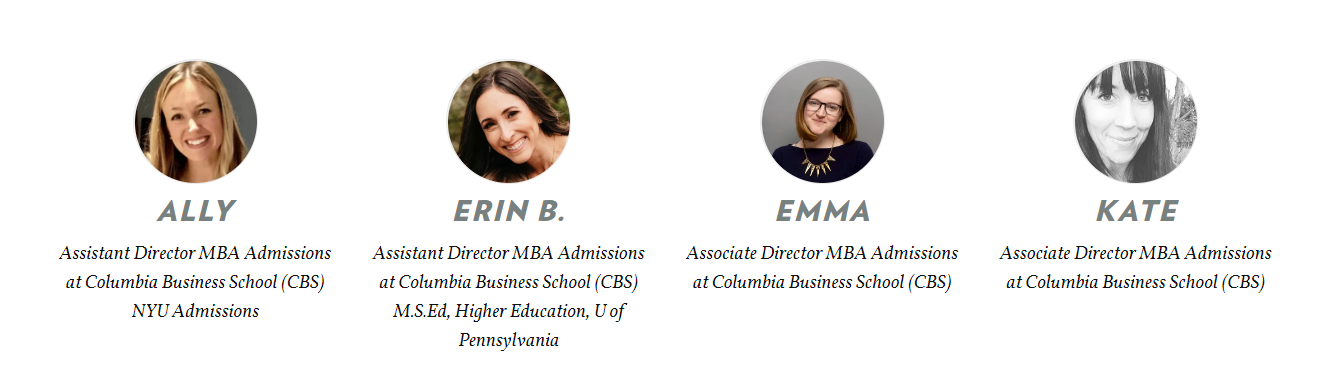
Through your resume and recommendation, we have a clear sense of your professional path to date. What are your career goals over the next three to five years and what is your long-term dream job? (500 words) Essay 2 The Phillips Pathway for Inclusive Leadership (PPIL) is a co-curricular program designed to ensure that every CBS student develops the skills to become an ethical and inclusive leader. Through PPIL, students attend programming focused on five essential diversity, equity, and inclusion skills: Creating an Inclusive Environment, Mitigating Bias and Prejudice, Managing Intercultural Dialogue, Addressing Systemic Inequity, and Understanding Identity and Perspective Taking. Tell us about a time when you were challenged around one of these five skills. Describe the situation, the actions you took, and the outcome. (250 words) Essay 3 We believe Columbia Business School is a special place. CBS proudly fosters a collaborative learning environment through curricular experiences like our clusters and learning teams, an extremely active co-curricular and student life environment, and career mentorship opportunities like our Executives-in-Residence program. Why do you feel Columbia Business School is a good fit for you academically, culturally, and professionally? Please be specific. (250 words) ![]() Optional Essay If you wish to provide further information or additional context around your application to the Admissions Committee, please upload a brief explanation of any areas of concern in your academic record or personal history. This does not need to be a formal essay. You may submit bullet points. (Maximum 500 Words) Deferred Enrollment Program Deferred Enrollment candidates will answer two short essay questions instead of the essays listed above. Question 1 Why are you interested in obtaining a Columbia MBA in the future? (300 words maximum) Question 2 Who is a leader you admire, and why? (300 words maximum) *** CBS will post the 2024 application deadlines in June. For more information on applying, please visit the Columbia Business School admissions website. If you need guidance on your Columbia MBA essays or wish to discuss your MBA plans, reach out for a complimentary analysis of your candidacy. We’re here to help! Meanwhile, here’s a snapshot of the Columbia Business School expertise on the SBC consulting team: ![]() The post Columbia MBA Essays for 2023-2024 appeared first on Stacy Blackman Consulting - MBA Admissions Consulting. |
| FROM Stacy Blackman Consulting Blog: Strengthen Your Quant Profile for MBA Applications |
![]() Many business school applicants worry they need a more substantial quantitative background to get into a top program. If your entire career has been in marketing, for example, how can you convince an admissions committee that you’d be able to handle core classes like finance or accounting? Thankfully, schools have no intention of composing an MBA cohort made up entirely of bankers and accountants. Top programs know that people from industries that aren’t traditionally quant-focused, like healthcare, education, or cybersecurity, can offer firsthand perspectives to their classmates on things that dominate news headlines. They also know that a private equity analyst can learn a lot from a brand manager—and vice versa. Likewise, military applicants always offer unique and compelling perspectives. So, rest assured, AdComs seek qualified candidates from all industries and functions to make up a diverse classroom. ![]() “However, they don’t want to admit someone who gives them reason to believe they might struggle with an intense MBA curriculum,” notes SBC Principal Consultant Caryn. After all, as the future leader of any organization, you have to understand the numbers that drive your business’ success. “Even if your day-to-day responsibilities don’t include building financial models or running the numbers, there are still multiple ways an AdCom member can assess your analytical skills,” she assures. Today we’re recounting the sage advice Caryn shared on this topic during her insightful conversation with host Erika on the B-Schooled podcast. Let’s dive into some of the tactics you can use to strengthen your quant profile and prove to the admissions committees that you won’t have any trouble with those heavy MBA courses. Curious about your chances of getting into a top B-school? Contact us to talk strategy with a free 15-minute advising session with an SBC Principal Consultant. ![]() Your Letters of Recommendation A lot of the time, people underestimate just how vital their recommender letters are. Those letters may carry more weight than other parts of the application. Everyone expects applicants themselves to play up their strengths. “I always tell clients to suggest to their recommenders that they highlight any analytical work whatsoever that they’ve done,” Caryn says. “Your recommenders want to help you. They might even be willing to review your career to date and help you remember quantitative aspects of your own past projects you might have forgotten about.” Your MBA Resume Applicants should retool their MBA resumes to highlight the quantifiable results of their work whenever possible. Don’t write something like, “Ran training sessions that increased quarterly revenue.” Instead, say, “Ran six training sessions for 100+ sales team members that ultimately increased quarterly revenue by 7 percent.” Or, instead of saying, “Grew account portfolio,” you could say, “Grew account portfolio 50% to 10 accounts, increasing monthly spend to $15 million.” You can think along these same lines for any industry: who was or will be impacted by your work? Details like these give the AdCom reader a greater understanding of your role and bring to life why what you did matters. Remember, you always want to quantify things when it helps your case. Your GMAT or GRE Score Candidacy evaluation by the MBA admissions committee is a holistic process. Yet GRE and GMAT test scores play a significant role in assessing academic readiness. Since you can’t time travel to boost any of your grades in your college math classes, you’ll want to go hard at the GMAT or GRE. By that, we mean investing 100+ hours studying and preparing to get the highest score possible if you really want to strengthen your quant profile. ![]() “The scores provide important information to schools about whether you’re prepared to handle both the intellectual rigor and the significant coursework of business school,” explains Anthony Ritz, SBC’s Director of Test Prep. SBC consultant Caryn adds that there’s a massive misperception that taking the GMAT or GRE multiple times looks terrible to the admissions committee. “In fact, only taking it once, not doing that well, and then never trying again really looks much worse.” “You want to show them that you’re persistent and that you recognize this weakness in your candidacy. Self-awareness is a huge trait AdComs are looking for,” she explains. “Trying again, even if you get the same score, is still better than having that lone score on your report.” If the GMAT or GRE is still on your horizon, do not miss this comprehensive post with expert advice for test-taking. We encourage clients to mix up how they study if they aren’t happy with their first or second test scores. So take a class, use a different prep book or app, or hire a tutor. Just tackling the same test over and over in the same way with the same approach isn’t going to get the results you need. Partner with Stacy Blackman’s best-in-class GMAT and GRE experts and increase your score significantly. Check out our test prep services here. Supplemental Quant Courses A supplemental math class may be just the ticket to strengthen your quant profile. This is especially true for applicants with a low GPA, GMAT, or GRE score or who otherwise haven’t been exposed to finance or accounting in their careers. SBC consultants often recommend an online Math for Management class offered through UCLA and UC Berkeley’s online extension programs. “I really like these two specific classes because they not only give you give an overview of your quant skills, but they also help you prepare for the MBA curriculum ahead,” Caryn says. ![]() You might also take a calculus or statistics class at a local college if you took those courses in undergrad and got a B minus or below. “I like these classes better than finance or econ as they are truly straight quant classes, and A’s in them will most directly address any kind of deficiency,” she adds. Senior SBC consultant Dione shares another option popular with time-crunched applicants. “For clients who have either been unwilling or not had enough time to take a class, then MBAmath.com is a fast and affordable option to mitigate concerns about quant (but it’s not a cure-all),” she says. “We tailor our recommendations according to the applicant’s transcript, work experience and test scores.” The Optional Essay The last thing you want is to leave the AdCom guessing whether you can handle MBA coursework. That’s where making good use of the optional essay comes in to address any weakness in your candidacy directly. First, tell the AdCom that you’re aware that they might be concerned about your low GPA, GMAT, or GRE score. Then let them know you don’t believe those data points accurately reflect your current abilities. Explain that you have worked hard to strengthen your quant profile. ![]() You want to point to evidence where you have succeeded quantitatively. For example, a strong showing in your undergraduate quant classes can counterbalance a low-ish GMAT score. Conversely, a stronger GMAT or GRE performance will offset a low GPA. If both are low, point to the recent class(es) you have taken to prepare for the rigors of their program. Also, emphasize all the highly analytical work or quantitative projects you’ve done in your career thus far. Lastly, you should relay that you believe those examples are better indicators of your current abilities and potential. Show you feel confident that you’ll be able to handle X school’s challenging curriculum. Ultimately, the GMAT or GRE is just one component of the application. In truth, a high score doesn’t guarantee success in business school. MBA hopefuls should do all they can to offset a lackluster quant profile by demonstrating they can handle the work. Make it your mission to wow the admissions panel with your compelling essays and extracurricular and leadership activities. Convince your target business school why an MBA is the best next step in your career progression, and prove to them that you have what it takes to succeed. *** Stacy Blackman Consulting offers multiple services to meet your MBA application needs, from our All-In Partnership to hourly help reviewing your MBA resume. Contact us today for a free 15-minute advising session to talk strategy with a Principal SBC consultant. Meanwhile, here’s a snapshot of the caliber of expertise on our SBC team. ![]() The post Strengthen Your Quant Profile for MBA Applications appeared first on Stacy Blackman Consulting - MBA Admissions Consulting. |
| FROM Stacy Blackman Consulting Blog: Tuesday Tips: Harvard MBA Essay Advice for 2023-2024 |
|
[img]https://www.stacyblackman.com/wp-content/uploads/2023-2024-HBS-MBA-Essay-Tips-A41034-1080x1000.png[/img] [url=https://www.stacyblackman.com/business-school-hub/harvard-business-school/]Harvard Business School[/url] has confirmed that the Harvard MBA essay question [url=https://www.hbs.edu/mba/admissions/application-process/Pages/default.aspx]for the class of 2026[/url] remains the same. The Harvard MBA essay is challenging because it is open-ended. Therefore, you must remain disciplined while writing this essay. You will feel tempted to write a laundry list of everything interesting or impressive you have ever done. That urge could backfire. The admissions committee uses the essay to weed out those who aren’t a fit for HBS. Meanwhile, a persuasive essay can move you into the interview round for a closer look. One of the former [url=https://www.stacyblackman.com/about/mba-admissions-consulting-team/]HBS Admissions Officers[/url] on the SBC team shared, “The essay really is make or break for HBS – so many applications have acceptable credentials up to that point of the application and it is the essay that sets the overall application apart and earns it the interview.” Think about who Harvard is looking for. The admissions committee writes that “Habit of Leadership, Analytical Aptitude and Appetite, and Engaged Community Citizenship” are the [url=https://www.hbs.edu/mba/admissions/Pages/who-are-we-looking-for.aspx]common characteristics[/url] of a successful applicant. [img]https://www.stacyblackman.com/wp-content/uploads/Yard_-_Harvard_Business_School_-_DSC02995-734x551.jpg[/img] Harvard MBA Essay for 2023-2024 [b]As we review your application, what more would you like us to know as we consider your candidacy for the Harvard Business School MBA Program? (900-word limit)[/b] Applicants should take note that the school will again [url=https://www.hbs.edu/mba/admissions/Pages/from-the-admissions-director.aspx]impose a word limit[/url] this season. HBS values brevity in essays. Focus on concise and clear writing. If you find yourself on the upper end of the word limit, review and consider cutting any unnecessary words. As the Admissions Director blog explained: We have heard from some applicants that, without a word limit, sometimes questions (and stress) arise about the “right” word length. We hope that including a limit provides applicants with a little more direction and eliminates the stress about how much is too much to write. Do you need to submit 900 words? No, certainly not. Successful applicants may share what they wish to in 500 or 700 words, for example, or go up to 900. The goal of this essay is to know yourself, know HBS, and know how to match the two. Your task is to demonstrate your fit with Harvard Business School. First, evaluate all of the other aspects of your candidacy – what is the story your resume tells? What do you think recommenders will say? How does your transcript communicate your skills, accomplishments, and interests? Then, evaluate how to fill the gaps with the essay. Chad Losee, former Managing Director of MBA Admissions and Financial Aid at Harvard Business School, provides several tips in [url=https://www.hbs.edu/mba/admissions/videos/Pages/details.aspx?item=15]this video[/url]. As Losee advises, a key part of the question is “what more”? The HBS admissions committee wants you to use this essay to communicate information that adds to the rest of your application. Also, give yourself “the time and space to really reflect.” “At the end of the essay, the reader should feel so moved they want to meet you immediately – can’t wait to get to know you better, hear more of the story, ask you specific questions to learn more, be inspired, etc,” shared one of the former [url=https://www.stacyblackman.com/about/mba-admissions-consulting-team/]HBS Admissions Officers[/url] on the SBC team. Learn more about current HBS students Check out the [url=https://www.hbs.edu/mba/admissions/class-profile/Pages/default.aspx]incoming class profile[/url] for some idea of the “typical” HBS student. Keep in mind that both personal and career-oriented topics can work for this essay. In fact, most candidates tell more than one story in the essay. In the past, we have seen successful HBS essays demonstrate a core driving passion. HBS students are ambitious, motivated, and never dull. [img]https://www.stacyblackman.com/wp-content/uploads/1024px-Students_in_a_Harvard_Business_School_classroom-734x489.jpeg[/img] Choose stories that show your management potential. HBS has always focused on leadership and loves candidates with a track record of leadership impact and future potential. Your goal is to demonstrate a success trajectory to indicate upper management potential. And, your path should show a passion for impact in both business and society. In past years, Harvard MBA essay questions focused on accomplishments. Therefore, consider telling an accomplishment story in this essay. If your key achievements are not evident in your resume or transcripts, you can use this essay to explain them. That said, this essay aims to discover who you are. “Be genuine,” advises the HBS admissions blog, and continues: “Yes, we want you to put your best foot forward, but be careful not to be so ‘polished’ that we can’t get to know the real you.” Especially at this time of global hardship, your story doesn’t need to be perfect. [img]https://www.stacyblackman.com/wp-content/uploads/Be-yourself.jpg[/img] Embrace the challenges that you have overcome and tell your story. Remember that focusing on the lessons in your setbacks can be inspiring and revealing. Losee also suggests that you read the essay over and make sure it can’t describe someone else. It should be personal and describe how you are unique. A note on what not to do Many applicants feel compelled to include “why HBS” type information in the Harvard MBA essay. Unlike most MBA programs, HBS has never asked “why HBS” in an application essay question. If you feel strongly that you want to explain why Harvard is the right fit, focus on tangible differences like the [url=https://www.stacyblackman.com/blog/hbs-loves-the-case-study-method/]Case Method learning style[/url]. However, avoid lengthy explanations about how HBS is your top choice. Instead, use the space to provide detailed information about you and your strong candidacy. The SBC team wishes you much luck with your HBS application and interview and would love to support your efforts. See here for [url=https://www.stacyblackman.com/mba-harvard-hbs-interview-prep-format-criteria-sample-questions/]new HBS interview advice[/url], including format, evaluation criteria, and sample questions. Contact one of our SBC Principals to request availability for HBS interview preparation by emailing [[email protected]]hbs@stacyblackman.com[/email] asap. Here’s the [url=https://www.stacyblackman.com/hbs-interview-prep/]overview of SBC’s interview[/url] prep services. [b]Also, here’s a snapshot of the caliber of HBS expertise on our team:[/b] [img]https://www.stacyblackman.com/wp-content/uploads/Screen-Shot-2023-01-10-at-8.07.06-AM.png[/img] The post [url=https://www.stacyblackman.com/blog/harvard-hbs-mba-essay-tips/]Tuesday Tips: Harvard MBA Essay Advice for 2023-2024[/url] appeared first on [url=https://www.stacyblackman.com]Stacy Blackman Consulting - MBA Admissions Consulting[/url]. |
| FROM Stacy Blackman Consulting Blog: B-Schooled Podcast Episode #161: Write the Essay That Scares You |
![]() The things that scare us—especially in the context of MBA essays—are often the things that make us feel vulnerable, uncertain, or insecure. In short, things that force us to take our armor off and be vulnerable. Vulnerability in MBA essays also offers you a powerful opportunity to connect with your reader. It allows you to demonstrate self-awareness and/or EQ, and—most importantly—tell a memorable and compelling story about yourself. In this episode of B-Schooled, we talk about how to choose an essay topic that offers opportunities for candor and vulnerability, including sharing a range of examples and categories of essays that might be a good fit for you. This podcast is a must for anyone interested in writing more boldly and more authentically. You can check out this B-Schooled episode right here or take a listen on any of the podcast platforms below. B-Schooled is available on most major podcast apps, including: Apple Podcasts Spotify Stitcher TuneIn Please be sure to subscribe to B-Schooled so that you don’t miss a thing. Also, if there’s something you’d like for us to cover in a future episode, please email podcast@stacyblackman.com. We’d love to hear from you! *** ![]() Now, why not hop over to our new MBA community on Discord? That’s where you’ll find exclusive insights from the SBC team, explore our resources, and connect with fellow current and prospective MBA applicants. This is a space to share and learn about the MBA admissions process, whether you’re still debating if business school is for you or you’re already on your way with your application journey. Join the party today! The post B-Schooled Podcast Episode #161: Write the Essay That Scares You appeared first on Stacy Blackman Consulting - MBA Admissions Consulting. |
| FROM Stacy Blackman Consulting Blog: INSEAD Inserts Sustainability Into Revised MBA Curriculum |
|
[img]https://www.stacyblackman.com/wp-content/uploads/INSEAD-734x384.jpg[/img] Top-ranked European business school [url=https://www.stacyblackman.com/mba-application-advice/insead/]INSEAD[/url] recently announced revisions to its MBA curriculum that will embed sustainability into its 14 core courses. The renewed curriculum will also include a mandatory capstone that challenges students to integrate sustainability across all management areas. According to a [url=https://www.insead.edu/newsroom/2023-insead-renewed-mba-curriculum-leads-the-way-in-equipping-future-business-leaders-skills-integrate-social-environmental-issues-into-business-decisions]press statement[/url] announcing these changes, the renewed MBA curriculum meets the increasing demand for sustainability-focused leaders in the job market. It equips future professionals with the knowledge and skills needed to manage sustainability risks and opportunities in business, helping them make better decisions and integrate performance and progress. At the same time, it inspires them to champion creative, sustainable solutions addressing global challenges. “Business schools have an important role in cultivating future leaders,” said INSEAD Dean and Professor of Economics Ilian Mihov. “We strive to provide our MBA students with rigorous and relevant business education to develop them into responsible leaders who will not only deliver prosperity, but also embrace sustainable practices to lead businesses that are a force for good.” INSEAD has increasingly incorporated sustainability topics into its core courses in recent years. Students can further tailor the MBA program to suit their interests, choosing from over 75 elective courses across nine academic areas. The most recent additions include Energy Transition Finance, Well Being at Work, and Thoughtful Consumption. INSEAD will add new electives every six months to support learning the latest business practices. Building on Excellence In 2017, [url=https://www.insead.edu/news/2017-insead-enhances-its-mba-programme-curriculum]INSEAD enhanced its MBA curriculum[/url] by introducing a Personal Leadership Development Program (PLDP) with leadership coaching—the most extensive program of its kind offered at any business school. The new curriculum complements it in developing MBA students with a broader understanding of leadership, ensuring a balance between economic growth, environmental care, and social well-being. [img]https://www.stacyblackman.com/wp-content/uploads/paula-prekopova-Mt9DbRm2KmA-unsplash-1500x1000.jpg[/img] “The renewed curriculum aims to equip students with the knowledge and tools so that they can make the right choices and have their own positive impact during their careers,” said Professor Urs Peyer, INSEAD Dean of Degree Programs. “When they make and create solution for a business, they will take into account the social and environmental impact. When they lead a business and appreciate the financial performance, they also keep in mind progress.” The new [b]sustainability-focused capstone[/b] will take place during the last period of the students’ MBA journey and puts theory into practice. Students will play the roles of leaders of a company facing strategic challenges. In their analysis and decision-making, they will practice integrating sustainability into all aspects of management, including operations, strategy, accounting, finance, and marketing. Sustainability is a global challenge that requires global solutions. With locations in Europe, Asia, the Middle East, and North America, and over 80 different nationalities in the classroom, INSEAD offers a high-impact environment to cultivate sustainability-focused leaders and entrepreneurs. The refreshed MBA curriculum will roll out in January 2024. *** Stacy Blackman Consulting offers multiple services to meet your MBA application needs, from our [url=https://www.stacyblackman.com/comprehensive-services/]All-In Partnership[/url] to hourly help reviewing your MBA resume. Contact us today for a [url=https://www.stacyblackman.com/contact/]free 15-minute advising session[/url] to talk strategy with a Principal SBC consultant. Meanwhile, here’s a snapshot of the caliber of expertise on our SBC team. [img]https://www.stacyblackman.com/wp-content/uploads/SBC-consultants-INSEAD-and-Rice-1.png[/img] The post [url=https://www.stacyblackman.com/blog/insead-inserts-sustainability-into-revised-mba-curriculum/]INSEAD Inserts Sustainability Into Revised MBA Curriculum[/url] appeared first on [url=https://www.stacyblackman.com]Stacy Blackman Consulting - MBA Admissions Consulting[/url]. |
| FROM Stacy Blackman Consulting Blog: Tuesday Tips: Columbia MBA Essay Tips for 2023-2024 |
![]() Columbia Business School (CBS) has released the application and essay questions for the MBA Class of 2026. CBS is a fast-paced program in a fast-paced city. The kind of student who is a good fit for the Columbia MBA program and its setting in New York City will be those who plan to take full advantage of the unique opportunities offered by that environment. Another aspect is having the academic background to handle the rigor of Columbia. What is the AdCom looking for in Columbia MBA applicants? One of SBC’s former CBS Admissions Officers shared, “With CBS, it really is a holistic approach, but the fit is VERY important. They want to know why CBS- that is a big part of their culture. They want to know you’re going to fit in.” Therefore, this set of essays must show your strong desire to attend Columbia. Students at Columbia have big plans for their lives, MBA or not. To prepare, brainstorm your career objectives, strengths, and weaknesses. Also, think about your overall life dreams. Admission options at Columbia are flexible. Including full-time MBA programs to a January entry without a summer internship. In addition, Columbia has an excellent executive MBA program. Columbia also offers an early decision option for candidates committed to Columbia. The Columbia admissions cycle is rolling, so the earlier you submit your application, the sooner you will hear back. We recommend you try to submit your application as early as possible while maintaining high quality. Feeling stumped by the Columbia MBA essays? Contact Stacy Blackman Consulting to learn how our expert team of former admissions officers can help. ![]() Short Answer Question: What is your immediate post-MBA professional goal? (50 characters maximum) Examples of possible responses: • “Work in business development for a media company.” • “Join a strategy consulting firm.” • “Launch a data-management start-up.” This is a deceptively simple question. It requires you to condense your career goals into a short career vision statement. As part of the question, Columbia provides a few examples which are concise and to the point. If your goal is to work at an investment bank after graduation, you could always just say: “Work in finance.” To add a bit more detail, consider adding a little more color. Something like: “Work in real estate finance for a private equity firm.” This tells the admissions committee far more about your interests and goals than just “work in finance.” It also sets the tone for the first essay. Columbia MBA Essay 1 Through your resume and recommendation, we have a clear sense of your professional path to date. What are your career goals over the next three to five years and what is your long-term dream job? (500 words) This question asks about your short- and long-term goals. We find that those who seek a top-tier MBA at a school like Columbia have Big Ideas. Also, the program will expose you to people and opportunities that will expand your horizons. Think about your true passions, and feel free to explore your biggest dreams. As you talk about your future, you may need to refer to your past career and experiences. Also, think about the pivotal moments you can describe. In addition, use examples that support your future goals. In conclusion, your goals should have a logical progression, but you should show how you plan to adapt. ![]() For example, perhaps you want to be a general manager of a company or division. But right now, you have been working primarily in marketing. Subsequently, you might take classes in finance and strategy and take part in consulting projects while interning at a start-up. All of these will provide experience for your general management path. Most importantly, Columbia wants to know who you are and how you are different from other applicants. Don’t try to be an ideal applicant. Instead, reveal your genuine personality, motivations, and goals. You might mix personal and professional interests to answer this prompt. In addition, you could focus on either of those angles, depending on the topics of your other essays. Finally, specifics will help you set yourself apart with this essay. Columbia MBA Essay 2 The Phillips Pathway for Inclusive Leadership (PPIL) is a co-curricular program designed to ensure that every CBS student develops the skills to become an ethical and inclusive leader. Through PPIL, students attend programming focused on five essential diversity, equity, and inclusion skills: Creating an Inclusive Environment, Mitigating Bias and Prejudice, Managing Intercultural Dialogue, Addressing Systemic Inequity, and Understanding Identity and Perspective Taking. Tell us about a time when you were challenged around one of these five skills. Describe the situation, the actions you took, and the outcome. (250 words) This behavioral interview question focuses on diversity, equity, and inclusion for the topic. Keep in mind that Columbia is also looking to understand your ability to fit in with the community and contribute. As one of SBC’s Columbia insider consultants explains, “Columbia wants to know what the applicant is going to give back to the CBS community-they want people that will give as much as they will take away.” For this essay, choose an example around one of the skills described. Behavioral essay questions can be approached with the STAR method. First, explain the Situation. Second, the Task that needed to be achieved for success in this situation. Third, the Action you took in this story. And finally, the Result of your actions. Each step should be specific and clear. When choosing a topic in diversity, equity, and inclusion, you can focus on your own experiences or those you were part of. Make sure you are writing with empathy. For example, did you understand multiple perspectives and consider them? Also, can you understand the backgrounds and cultures of those around you? Demonstrated cultural awareness and a community mindset will go far in this essay. Check out Stacy Blackman’s Strategy Guide for Columbia Business School. ![]() Columbia MBA Essay 3 We believe Columbia Business School is a special place. CBS proudly fosters a collaborative learning environment through curricular experiences like our clusters and learning teams, an extremely active co-curricular and student life environment, and career mentorship opportunities like our Executives-in-Residence program. Why do you feel Columbia Business School is a good fit for you academically, culturally, and professionally? Please be specific. (250 words) According to our expert consultants, Columbia wants to see your passion for the school. Otherwise, the admissions committee will wonder why you are applying. First, take the time to learn as much about Columbia’s MBA program and culture as you can. For example, read the website, watch admissions sessions online or visit in person, and try to network with current and former students. As a result of this research, you will know the school well. As this essay prompt instructs, be specific. That means you should demonstrate your research and give examples in the essay. Passion is Essential for Columbia MBA Applicants Second, know yourself and why Columbia is a fit. Make sure to tailor your answer to your individual goals for learning and career. Also, keep in mind Columbia’s academic and professional opportunities. Finally, make sure you will benefit the community. Think about the unique skills and experiences you will share. Columbia wants to meet students who have a strong desire to attend their program. In conclusion, show your passion for the school and make the case for your admission. Optional Essay If you wish to provide further information or additional context around your application to the Admissions Committee, please upload a brief explanation of any areas of concern in your academic record or personal history. This does not need to be a formal essay. You may submit bullet points. (Maximum 500 Words) Note that this question is entirely optional. You do not need to answer if there is nothing more to communicate. Focus only on specific areas of concern. For example, you may need to address a lack of demonstrated quantitative abilities or the lack of a recommendation from a current supervisor. Or, you might have gaps in work experience or low grades. In addition, Columbia has stated submitting bullet points is also fine. For example, if you only need to point out a grade in one class, that may only require a few lines. Remember, it is best to explain the issue briefly. Then, show how you have addressed it. Finally, explain why this issue should not impact your admission to Columbia. *** Stacy Blackman Consulting offers multiple services to meet your MBA application needs, from our All-In Partnership to hourly help reviewing your MBA resume. Contact us today for a free 15-minute advising session to talk strategy with a Principal SBC consultant. Meanwhile, here’s a snapshot of the caliber of Columbia Business School expertise on our SBC team. ![]() The post Tuesday Tips: Columbia MBA Essay Tips for 2023-2024 appeared first on Stacy Blackman Consulting - MBA Admissions Consulting. |
| FROM Stacy Blackman Consulting Blog: B-Schooled Podcast Episode #162: Candidacy “Question Marks” (Part 2) |
![]() Many MBA applicants have a less-than-perfect profile. They may be lacking in extracurriculars, have middling test scores, or have a few blemishes on their academic record. We’re here to tell you that if that’s your situation, don’t fret. You’re in good company! The next step is finding out how to mitigate those weaknesses. In a continuation of B-Schooled episode #158 on “candidacy question marks”—or red flags on an MBA candidate’s record—this week’s episode covers what to do if you: • have employment gaps in your career, • are unemployed when you apply, • get laid off or fired after you submit your materials, or • have something like a DUI or honor code violation from college on your record. Part 1 covered what to do if you have: • A low GPA • A low test score • A few low grades within an overall decent GPA • A lack of extracurriculars • A lack of work experience, and • “Too much” work experience (or when an applicant is older than the rest of the candidate pool) You can check out this B-Schooled episode right here or take a listen on any of the podcast platforms below. B-Schooled is available on most major podcast apps, including: Apple Podcasts Spotify Stitcher TuneIn Please be sure to subscribe to B-Schooled so that you don’t miss a thing. Also, if there’s something you’d like for us to cover in a future episode, please email podcast@stacyblackman.com. We’d love to hear from you! *** ![]() Now, why not hop over to our new MBA community on Discord? That’s where you’ll find exclusive insights from the SBC team, explore our resources, and connect with fellow current and prospective MBA applicants. This is a space to share and learn about the MBA admissions process, whether you’re still debating if business school is for you or you’re already on your way with your application journey. Join the party today! The post B-Schooled Podcast Episode #162: Candidacy “Question Marks” (Part 2) appeared first on Stacy Blackman Consulting - MBA Admissions Consulting. |
Success stories and strategies from high-scoring candidates.