By John Wheelock T’15 and Claire Galiette T’16
John Wheelock spent seven years in consulting in the financial services industry in New York City before coming to Tuck. He spent his summer working with Doblin, the innovation group within Monitor Deloitte, and will be returning to their Washington D.C. office after graduation. At Tuck, he is the president of the Class of 2015, a fellow in the Center for Global Business & Government, and is actively involved in the tripod hockey, basketball, and outdoors clubs.
Claire is president of the Tuck Class of 2016, and she is also an active member of the soccer and tripod hockey teams. Prior to Tuck, she worked in New York City and Los Angeles for a strategic communications agency, and is interested in pursuing brand management and internal strategy. Claire attended Amherst College, where she was a history major and played on the women’s varsity soccer team.
As presidents of the classes of 2015 and 2016, we'd like to share some exciting highlights from the past year as well as current initiatives at Tuck. We strive to create a culture of inclusion and personal empowerment that provides the opportunity for every student to make the most of their two years in Hanover.

Thank you, Dean Danos
In looking back at 2014, we’d like to start by thanking Dean Paul Danos for his tremendous leadership and service at Tuck over the last 20 years. During his tenure, Tuck has augmented its brand, grown its faculty, expanded its global footprint, and given thousands of students the knowledge, tools, and confidence to succeed in the business world.
We would also like to congratulate him on earning Poets & Quants’ Dean of the Year award. In addition to the tremendous change Dean Danos has brought to Tuck, he managed to preserve and grow our special culture: “a smart, open, friendly place known for an esprit de corps that creates deep and enduring bonds among students, faculty, staff and alumni.” We couldn’t have said it better ourselves.
Strengthening the Tuck Community
A major strength and differentiator of Tuck is our sense of community, founded on our common values and interests. While there are no shortage of events and activities at Tuck, we’d like to highlight three that stood out this fall.
- Tuck Tastes—Organized by Centennial Award winner Jennifer Tietz T’15, dozens of Tuck students cooked not one but two communal turkey dinners to celebrate Thanksgiving,

with the second taking place in Stell Hall for nearly a hundred students who stayed in Hanover for the holiday. - Microbrews & the Military—Organized by the Armed Forces Club, a panel of Tuck veterans spoke on topics of leadership, transition from military to civilian life, greatest challenges, and thoughts on the current state of the military, with Matthew Slaughter—the associate dean for faculty, the Signal Companies' Professor of Management, and Tuck's next dean—moderating.
- TuckTalks—Spearheaded by Pasy Govindarajan T’15 and Remi Evans T’16, seven Tuck students and one professor gave short presentations on a wide range of topics, such as life in a band, bucket lists, green energy, painting, education, and one improbable journey to enroll at Tuck.
Bringing Together U.S. and International Students
International students make up approximately one third of the Tuck student body today, bringing with them a wealth of unique perspectives and past experiences. This dynamic helps prepare all Tuck students for life in a globalized economy, along with challenges of bridging cultural gaps. To help build better relationships and lay groundwork for valuable connections, we have developed a few initiatives.
- Buddy System—U.S. and international students are paired up, usually across classes, to go to dinner, watch a sporting event, hike a mountain, and explore the Upper Valley.
- CV/Cover Letter Support—Native English-speaking students have been volunteering their time to assist first-year international students with resume and cover letter drafts.
- Food!—During the Tuck Diversity Conference, students from dozens of countries hosted tables where they provided authentic home-cooked dishes from their respective nations.
- Tripod Hockey—It doesn’t matter how well you skate or even if you’ve never seen an ice rink before … hundreds of Tuck students signed up to skate in a friendly (yet competitive) league, once again proving that team sports can create strong bonds across cultures.
Creating unique and positive cross-cultural experiences is one of the biggest goals of the Student Board, and we continue to discuss with our fellow students new and unique ways to make progress.
Remembering our Duties and Obligations
Being part of Tuck is one of life’s great privileges and a launchpad to exciting new careers and opportunities. We take seriously our good fortune and remember our obligation to the broader society, which is both taught in the classroom and exemplified in the action of Tuck students.
- Haven Volunteering—Through the Center for Business & Society, Tuck continues to support the Upper Valley Haven, a temporary shelter for individuals and families. Chris Blaine T’15 and Kelsey Byrne T’15 serve as Board members, advising the organization and coordinating student-run food drives and home-cooked meals.
- 9/11 Remembrance—On the morning of September 11th, dozens of students, faculty and members of the Tuck community gathered on the steps of Tuck Hall to recite a poem led by Nicholas Nelson T’16, share memories, and honor the victims and heroes of the terrorist attacks on that late summer day.
- Allwin Community Outreach Day—Before the academic year officially started, the incoming Class of 2016 was busy working on consulting projects for organizations in the Upper Valley. Working with their study groups for the first time, all first-year students spent a half day learning about the impact local nonprofits have on the local community and then contributing to these organizations by tackling a challenge each one faces.
Developing Leaders
Lastly, the school remains committed not only to developing strong quantitative and analytical skills in its students, but creating leaders who have the confidence, presence and moral compass to make an impact in their future careers. For the second year in a row, Tuck offered the Advanced Leadership Presence Program, moderated by the Ariel Group, for second-year students. Using actor training techniques from the theater, the program combined personal reflection, peer feedback, and coaching and reinforcement to develop presence, communication, and relationship-building skills.
An Exciting Time to be at Tuck
There’s lots to look forward to in 2015! It's truly a great time to be part of the Tuck community. Our culture of excellence, collaboration and enthusiasm makes Tuck one of the best business schools in the world. We are extremely honored to lead the classes of 2015 and 2016 and look forward to the future with gratitude, optimism, and confidence.
Main photo: Allwin Community Outreach Day, by Laura DeCapua.

Microbrews & Military Event
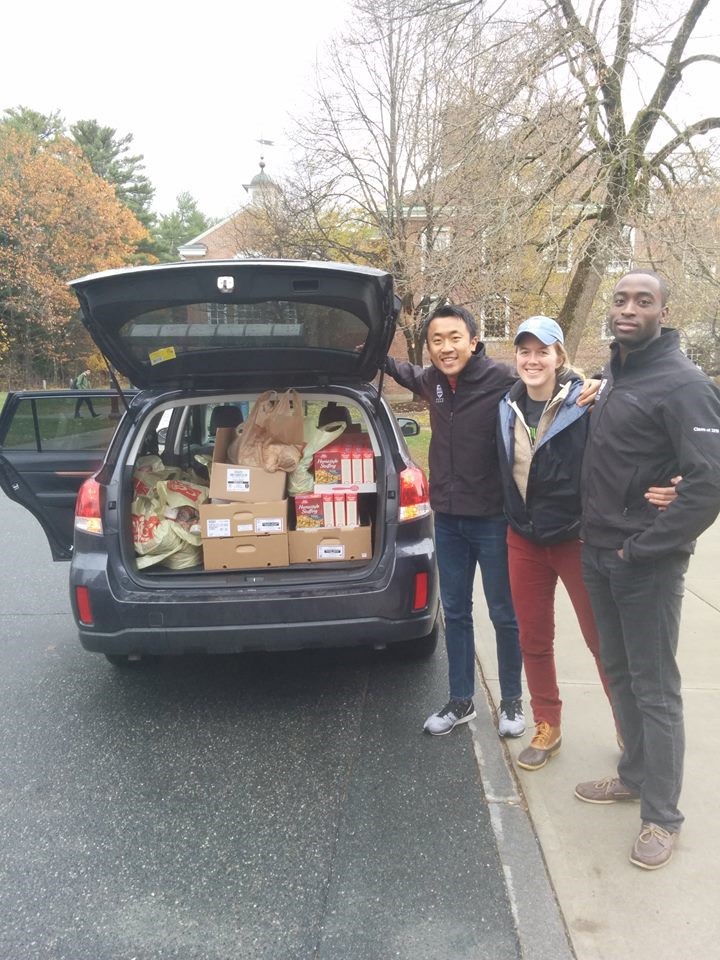
Tuck students making a donation trip to the Upper Valley Haven.

9/11 Remembrance Event

Tripod hockey
|

 Sep 07

 02 Feb 2015, 05:14