Events & Promotions
|
|

GMAT Club Daily Prep
Thank you for using the timer - this advanced tool can estimate your performance and suggest more practice questions. We have subscribed you to Daily Prep Questions via email.
Customized
for You
Track
Your Progress
Practice
Pays
Not interested in getting valuable practice questions and articles delivered to your email? No problem, unsubscribe here.
 Sep 26
01:00 PM EDT
-04:00 PM EDT
Top scores are possible when you enroll in a powerful GMAT course, taught live online + 6 months access to TTP OnDemand video courses included. Class starts Saturdays Sept. 26, 2026 - Dec. 19, 2026, 1:00pm-4:00pm ES Sep 28
07:00 PM EDT
-10:00 PM EDT
Boost your GMAT score in less than one month in a live online class + 6 months access to TTP OnDemand video courses included! Class starts Mon, Tues, Wed, Thur, Fri Sept. 28, 2026 - Oct. 16, 2027, 7:00pm-10:00pm EST Sep 29
11:00 AM EDT
-01:00 PM EDT
" Description: Top scores are possible when you enroll in a powerful GMAT course, taught live online + 6 months access to TTP OnDemand video courses included! Class starts Tues/Thur Sept. 29, 2026 - Dec. 3, 2026, 11:00am-1:00pm EST Oct 01
07:00 AM BST
-08:00 AM GMT
Welcome to the GMAT Club's Free Interview Prep Event for Top MBA Programs! Buy tickets - Virtual series that’s all set to equip you to -excel in your MBA interviews.


 23 Apr 2026, 22:12
Kudos
Bookmarks
| Data Sufficiency Butler: April 2025 | ||
| April 24 | DS 1 | DS 2 |
_____________________
DS 1
At a small architecture firm, the average (arithmetic mean) age of the employees at the end of 2025 was 30 years. At the beginning of 2026, one new employee joined the firm and one existing employee left, so the total number of employees remained the same. What was the new average (arithmetic mean) age of the employees after this change?
(1) The employee who left was 2 years older than the new employee who joined.
(2) The employee who left was 30 years old.
_____________________
DS 2
At a water-treatment facility, a pump was used to fill an empty storage tank. If the pump operated at a constant rate throughout the process, how many minutes did it take the pump to fill the tank?
(1) If the pump’s flow rate had been 25% greater, the tank would have been filled 16 minutes sooner.
(2) If the pump’s flow rate had been 20% lower, the tank would have taken 20 minutes longer to fill.
23 Apr 2026, 22:14
Kudos
Bookmarks
We continue posting New questions from GMAT Club Tests. Give these a try, post your solution, and earn kudos for a correct answer.
Fresh question:
1. https://gmatclub.com/forum/at-a-small-a ... 56776.html
2. https://gmatclub.com/forum/at-a-water-t ... 56775.html
All NEW Data Sufficiency Questions (batch 4):
1. https://gmatclub.com/forum/a-local-arts ... 56327.html
2. https://gmatclub.com/forum/elena-marco- ... 56387.html
3. https://gmatclub.com/forum/cedar-court- ... 56386.html
4. https://gmatclub.com/forum/during-a-two ... 56434.html
5. https://gmatclub.com/forum/for-a-trade- ... 56433.html
6. https://gmatclub.com/forum/before-the-s ... 56467.html
7. https://gmatclub.com/forum/during-two-7 ... 56466.html
8. https://gmatclub.com/forum/at-the-start ... 56512.html
9. https://gmatclub.com/forum/at-a-warehou ... 56513.html
10. https://gmatclub.com/forum/a-reseller-b ... 56549.html
11. https://gmatclub.com/forum/at-a-farmers ... 56548.html
12. https://gmatclub.com/forum/at-a-communi ... 56607.html
13. https://gmatclub.com/forum/at-a-shippin ... 56606.html
14. https://gmatclub.com/forum/in-a-class-t ... 56650.html
15. https://gmatclub.com/forum/a-festival-o ... 56649.html
16. https://gmatclub.com/forum/maya-and-leo ... 56693.html
17. https://gmatclub.com/forum/a-courier-co ... 56692.html
18. https://gmatclub.com/forum/a-community- ... 56752.html
19. https://gmatclub.com/forum/during-a-wed ... 56751.html
20. https://gmatclub.com/forum/at-a-small-a ... 56776.html
21. https://gmatclub.com/forum/at-a-water-t ... 56775.html
Fresh question:
1. https://gmatclub.com/forum/at-a-small-a ... 56776.html
2. https://gmatclub.com/forum/at-a-water-t ... 56775.html
All NEW Data Sufficiency Questions (batch 4):
1. https://gmatclub.com/forum/a-local-arts ... 56327.html
2. https://gmatclub.com/forum/elena-marco- ... 56387.html
3. https://gmatclub.com/forum/cedar-court- ... 56386.html
4. https://gmatclub.com/forum/during-a-two ... 56434.html
5. https://gmatclub.com/forum/for-a-trade- ... 56433.html
6. https://gmatclub.com/forum/before-the-s ... 56467.html
7. https://gmatclub.com/forum/during-two-7 ... 56466.html
8. https://gmatclub.com/forum/at-the-start ... 56512.html
9. https://gmatclub.com/forum/at-a-warehou ... 56513.html
10. https://gmatclub.com/forum/a-reseller-b ... 56549.html
11. https://gmatclub.com/forum/at-a-farmers ... 56548.html
12. https://gmatclub.com/forum/at-a-communi ... 56607.html
13. https://gmatclub.com/forum/at-a-shippin ... 56606.html
14. https://gmatclub.com/forum/in-a-class-t ... 56650.html
15. https://gmatclub.com/forum/a-festival-o ... 56649.html
16. https://gmatclub.com/forum/maya-and-leo ... 56693.html
17. https://gmatclub.com/forum/a-courier-co ... 56692.html
18. https://gmatclub.com/forum/a-community- ... 56752.html
19. https://gmatclub.com/forum/during-a-wed ... 56751.html
20. https://gmatclub.com/forum/at-a-small-a ... 56776.html
21. https://gmatclub.com/forum/at-a-water-t ... 56775.html

 24 Apr 2026, 08:10
Kudos
Bookmarks
April 24th Quant Question of the Day
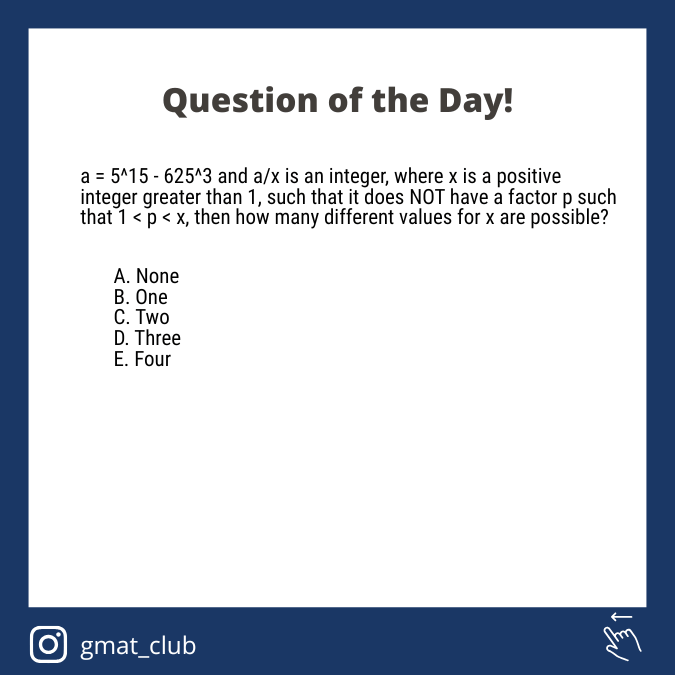
Answer and Explanation | Subscribe via E-mail, Forum, Instagram, or YouTube
Answer and Explanation | Subscribe via E-mail, Forum, Instagram, or YouTube