
Get to Know the Exam
Before you solve a single question, spend fifty minutes learning what the GMAT Focus actually is, what it tests, how it is scored, and which tools you will use to track your practice. Everything in the twelve weeks that follow assumes you already know this.
Read this once, then start Week 1 the same day
Global Resources
Your daily launcherOne tap to any tool the plan uses. Bookmark this page, and Error Log & Analytics next to it, for your daily habits.
Daily practice
Questions
Quiz 5 free/day
Timed sets with analytics. Weeks link exact presets. Unlimited with a subscription or with rewards points.
Question Banks FreeEvery question, tagged by topic and difficulty.
Quiz gives every member 5 free questions a day. Beyond that you need a subscription from $19.99/mo or 49 rewards points, which you earn just by doing timed practice here. Question Banks are free with no daily limit.
Tests & mocks
Weeks 3 · 6 · 9 · 11
GMAT Prep Mocks 2 free + 4 paid
The official exams. Scheduled at weeks 3, 6, 9, 11.
GMAT Club Tests 1 free testHarder-than-real quant & DI. Best in weeks 7-12.
Your first full GMAT Club Test is free. After that they come with a subscription, with rewards points, or free for everyone on public holidays. The GMAT Prep mocks above are separate and come from mba.com.
Earn as you learn
Auto-tracked · redeem anytimeTimed questions you record on GMAT Club count toward these: forum practice and preset quizzes. GMAT Club Tests practice does not count. Reach a milestone and the reward unlocks automatically.
Counted automatically from your GMAT Club timer history. Questions need a submitted answer and a real attempt to count. Prefer the long game? 49 rewards points still buys the full Quiz subscription.
Community
Study together
GMAT Club on YouTube Free
Lessons and live sessions; many are linked inside the weeks. New lectures drop regularly, so subscribe and YouTube notifies you.
Subscribe This week's discussion thread ForumPost your weekly update, ask about questions, and compare notes with everyone on the same week.
Suggestions & feedback Help us improveBroken link, better video, clearer wording? Post it and it ships in a weekly update, with credit.
Live chat rooms · pick one, not all of them
Study Buddy Chat
Find someone on your timeline. A partner two weeks ahead of you is worth more than three rooms you skim.
GMAT Questions ChatStuck on a specific question? Post it here rather than sitting on it for twenty minutes.
General GMAT chat ChatEverything else: timelines, score goals, what to do when a week goes badly.
GMAT Test Takers on WhatsApp FreeThe same conversations on your phone, if you would rather not keep a browser tab open.
Joining chat earns a rewards point every 3 days, so this counts toward unlocking the Quiz.
Study Plan chat group · pick yours by test date
Jan / FebTest window
Mar / AprTest window
May / JunTest window
Jul / AugTest window
Sep / OctTest window
Nov / DecTest window
Set your goal & test date in the sidebar and we highlight your group automatically. Each group lives on GMAT Club Chat and WhatsApp; they mirror each other.
Recommended books
Print or eBook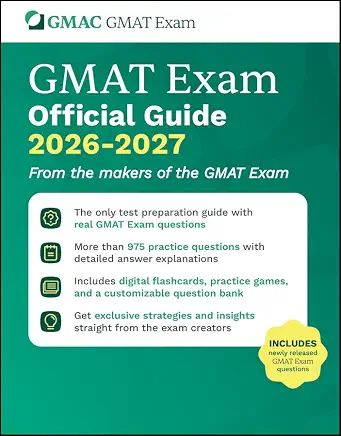 GMAT Official Guide Bundle Official
All 4 guides: main OG plus Quant, Verbal & Data Insights Reviews. Real retired questions with a 12-month online question bank.
Print bundle · Amazon eBook · mba.com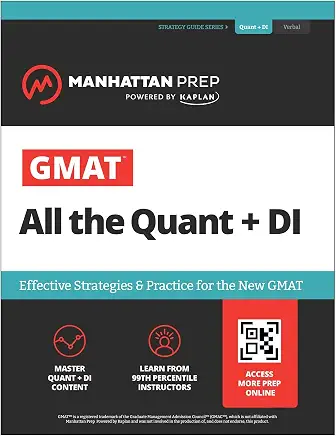 All the Quant + DI Amazon
Manhattan Prep. The quant & DI backbone, weeks 1-8.
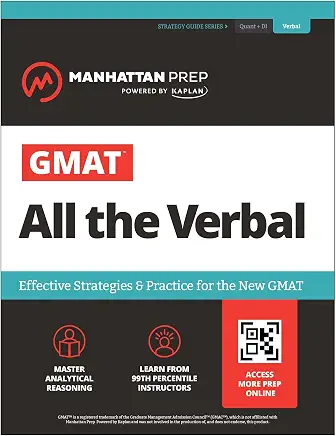 All the Verbal Amazon
Manhattan Prep. CR and RC chapters throughout.
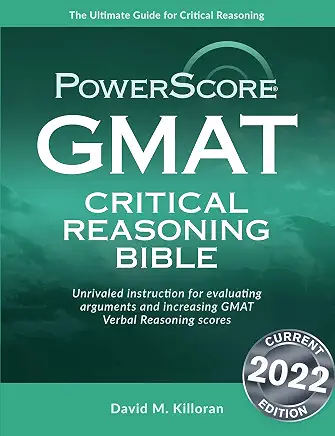 PowerScore CR Bible Amazon
The deep CR alternative. Pick this or All the Verbal.
Buy the Official Guide new, not used. Each copy ships with a single-use code for the online question bank, and used copies usually arrive with that code already redeemed. Manhattan and PowerScore books are fine to buy used.
My notes
All weeks, one place
Private to you, saved on this device with your progress. In the full version this becomes its own page, synced to your account.
Error Log & Analytics
Tracking system · every weekThe same tracking system runs across all 12 weeks: log every miss, review the pattern, redo it. Two tools, one daily habit.
Minimum fields to track
Use the built-in error log tracker above, the Analytics portal, or a customized Excel/Google Sheets spreadsheet, whichever you'll actually keep up with.
- Topic:
fractions, ratios, percent, CR conclusion, etc.
- Error type:
concept gap / setup error / calculation slip / rushed reading.
- Trigger:
what in the prompt pulled you off track.
- Fix:
one-sentence rule you will apply next time.
Redo rule
Redo rule: redo every missed question after a fixed frequency (recommended: after each week) without looking at the solution.
Analytics: what to check before wrap-up
- Accuracy by topic: which sub-skills are still under 80%.
- Timing by topic: where you're consistently over 2 min/question.
- The trend across your last few sessions, not just one bad day.
Start Here: how this plan works
OrientationWelcome.
Most people start GMAT prep by opening a book and solving a question. That is a reasonable instinct and it is also why so many people waste their first month. They practice a section without knowing how many questions it has, they leave answers blank because they ran out of time, and they chase a score without knowing what the number means.
This page fixes that. It is not a study week. There is nothing to solve and nothing to time. Read it once, understand the exam you are signing up for, and then start Week 1 on the same day.
Week 0 is reading only.
About 50 minutes. It does not count toward the twelve weeks, it does not count toward your practice targets, and you never need to come back to it. Skim it now, and use it as a reference later if a term in Week 3 sounds unfamiliar.
About 50 minutes. It does not count toward the twelve weeks, it does not count toward your practice targets, and you never need to come back to it. Skim it now, and use it as a reference later if a term in Week 3 sounds unfamiliar.
What you will know by the end of this page
Six things, and that is enough to start:
- Exactly how many questions and minutes are in each section
- What each section tests, and what was removed from the old GMAT
- How the 205 to 805 score is built, and what counts as a good score today
- How the test adapts, and why the old advice about the first questions is dead
- Why leaving a question unanswered costs you more than answering it wrong
- Which GMAT Club tools to use, and the one click that makes them work
How the twelve weeks are built
- Four tracks a week:
Quant, Verbal, Data Insights, and review. Every week page is organised the same way, so you always know where you are
- 10 to 15 hours a week to start:
it climbs to 25 or more in the later weeks. If you have less time, stretch the plan rather than skipping tracks
- No calculator in Quant, plan-wide:
the real exam does not give you one, so training with one builds a habit you will have to unlearn
- Error log from Day 1:
the single highest-return habit in this plan. Week 1 sets it up for you
- Post your weekly update in the thread: Study Plan Week 0 Support
people who post updates finish. People who study silently mostly do not
If you read only one thing before Week 1
The official source on what is on the examGMAT Classic vs. GMAT Focus
The current exam is the GMAT Focus, the standard version since 2024. It is not a different test, it is a shorter version of the same one. What changed: Sentence Correction and the essay (AWA) were removed, dedicated geometry questions were dropped, and Integrated Reasoning grew into Data Insights, which now counts toward your total score.
What did not change: Problem Solving, Critical Reasoning and Reading Comprehension test the same skills they always have. A good explanation of a PS or CR question from 2020 is just as good today, which is why this plan happily uses lessons and videos made before 2024, and even GRE videos where the math is identical.
The one question type that did change is Data Sufficiency: pure algebra and arithmetic DS questions were removed, and non-math DS questions were added. GMAT Club removed the retired kind from the Quiz and GMAT Club Tests as well, so the DS you practice here matches the DS you will see on test day.
One note on geometry: although geometry knowledge was officially removed from the GMAT Focus, general concepts such as area and volume are still tested and present in both the Official Guide and GMAT Prep questions. See the examples in this thread.
What the GMAT Focus actually looks like
Exam FormatThe GMAT Focus Edition runs 2 hours and 15 minutes and contains 64 questions across three sections. Each section is 45 minutes. There is no essay and no Sentence Correction.
Notice how tight that is. Forty-five minutes for 21 Quant questions is a little over two minutes each, and Data Insights gives you the same 45 minutes for questions that can take four minutes on their own. Timing is not a detail on this exam. It is a section of the exam.
The three sections
| Section | Questions | Time | Question types |
| Quantitative Reasoning | 21 | 45 min | Problem Solving only |
| Verbal Reasoning | 23 | 45 min | Critical Reasoning, Reading Comprehension |
| Data Insights | 20 | 45 min | Data Sufficiency, Graphics Interpretation, Table Analysis, Multi-Source Reasoning, Two-Part Analysis |
| Total | 64 | 2 hr 15 min | Plus one optional 10-minute break |
What the screen lets you do
- Bookmark any question:
flag it as you go, then jump back to your flagged list at the end of the section
- Change up to three answers per section:
the review and edit screen appears when you reach the end. Three per section, not three for the whole exam
- Choose your section order:
you pick the order at the test centre, before the exam starts. Any of the three sections can go first
- One optional 10-minute break:
you take it after your first or your second section. You do not get two
Two decisions you make before the timer starts
Worth thinking about now, and worth testing in your mocks:
- Section order. Most people lead with their strongest section to bank confidence, or with their weakest to spend fresh energy on it. There is no correct answer, but there is a correct method: try both in mocks and keep the one that scores better
- Where the break goes. After the first section is the common choice. After the second works better if your third section is the one you dread
Practice with the same order every time.
Pick your order by Week 6, then run every remaining mock in exactly that sequence. Test day should feel like the tenth time you have done this, not the first.
Pick your order by Week 6, then run every remaining mock in exactly that sequence. Test day should feel like the tenth time you have done this, not the first.
What each section actually tests
SyllabusThe Focus Edition is deliberately narrower than the old GMAT. Fewer topics, tested more deeply. That is good news, because it means a focused twelve weeks can genuinely cover the whole syllabus.
Quant · 21 questions
All Problem Solving. The heavy hitters:
- Algebra, which grew sharply in Focus and is now the largest single category
- Word problems, rates, work, and mixtures
- Percent, interest, ratios, and fractions
- Exponents, roots, and number properties
- Statistics and counting, lighter than they used to be but still present
No calculator. Classic geometry (areas, volumes, circle theorems) is gone; coordinate geometry survives because it is really algebra, which is why it appears in Week 8.
Verbal · 23 questions
Two question types, no Sentence Correction:
- Critical Reasoning: assumption, strengthen, weaken, inference, evaluate, paradox, boldface, and flaw
- Reading Comprehension: main idea, primary purpose, specific detail, inference, and tone across short and long passages
Grammar is no longer tested. If a resource spends chapters on idioms and modifiers, it was written for the old exam.
Data Insights · 20 questions
The newest section and the one most people underestimate:
- Data Sufficiency: moved here from Quant, and still the type that decides most DI scores
- Graphics Interpretation: read a chart, complete a sentence from dropdowns
- Table Analysis: sort a table, answer true or false statements
- Multi-Source Reasoning: two or three tabs of information, questions that need more than one tab
- Two-Part Analysis: pick one answer in each of two columns, and both must be right for credit
DI carries exactly the same weight as Quant and Verbal in your total score. Treat it that way from Week 1.
What was removed from the old GMAT
Sentence Correction, the Analytical Writing Assessment (the essay), and classic geometry. Integrated Reasoning did not disappear; it grew up into Data Insights and now counts toward your total score, which it never did before.
Sentence Correction, the Analytical Writing Assessment (the essay), and classic geometry. Integrated Reasoning did not disappear; it grew up into Data Insights and now counts toward your total score, which it never did before.
Go deeper on the syllabus
Topic-by-topic breakdown with real frequency dataHow the score is built
ScoringEach section is scored from 60 to 90. Your total is 205 to 805, and it always ends in a 5.
Here is the part that changes how you study: all three sections count equally. Quant, Verbal, and Data Insights each contribute the same amount to your total, so one point of DI is worth exactly as much as one point of Quant. On the old GMAT, Integrated Reasoning did not touch your 800 score at all. Plenty of people are still studying as if that were true.
The actual formula
(Q + V + DI − 180) × 20/3 + 205, rounded to the nearest 5.
Every sectional point is worth roughly 6.7 total points, in any section. A real reported score: Q84, V82, DI79 gives 645.
(Q + V + DI − 180) × 20/3 + 205, rounded to the nearest 5.
Every sectional point is worth roughly 6.7 total points, in any section. A real reported score: Q84, V82, DI79 gives 645.
What the numbers mean
| Total score | Where that puts you |
| 695 to 805 | Elite. Roughly the top 2 to 5 percent of test takers |
| 595 to 685 | Strong. Comfortably above average and competitive at most programs |
| 445 to 585 | Average. The range most test takers land in |
| 205 to 435 | Developing. Fundamentals need work before speed does |
The scale looks lower than the old one and that trips people up constantly. A 645 on the Focus is roughly where a 700 sat on the old 200 to 800 scale. If a friend tells you they scored 720 and you scored 665, you may well have done better. Never compare a Focus score to an old GMAT score directly, and never compare either to a GRE score without converting first.
One more nuance. Your score number is fixed for five years, but the percentile attached to it moves every year as new test takers come in. The number does not change. The company you are standing in does.
How to set your target
Do this in Week 1, not in Week 10:
- Look up the median Focus score of the three or four programs you actually want, not the ones you admire from a distance
- Add 20 to 30 points to the median. That is your target, because medians mean half the class scored below
- Work backwards into section scores. There are several ways to reach the same total, and the cheapest one is usually lifting your weakest section
- Write the number down. A target you have not written down is a wish
Work out your own numbers
Enter section scores, get the total and the percentileHow the test adapts, and what that means for you
StrategyThe GMAT is adaptive, which means the questions you see respond to how you are doing. Get things right and the exam pushes harder. Miss a run and it eases off. Your score comes from the difficulty you sustained, not from a simple count of correct answers.
That much has not changed. What has changed is where the adaptation happens, and that changes your strategy.
The old advice about the first questions is dead.
On the classic GMAT, missing early questions was widely believed to be fatal, so people burned five minutes on question 3 and then sprinted through the end. Controlled testing on the Focus found almost no difference between missing the first six questions and missing the middle six. Missing the last six actually hurt slightly more.
On the classic GMAT, missing early questions was widely believed to be fatal, so people burned five minutes on question 3 and then sprinted through the end. Controlled testing on the Focus found almost no difference between missing the first six questions and missing the middle six. Missing the last six actually hurt slightly more.
What that changes for you
Four practical consequences:
- Pace evenly. There is no early stretch worth protecting. A question at the end is worth what a question at the start is worth
- Never rush the back half. The end of a section is where a blown time budget actually costs you points
- Stop reading difficulty as a scoreboard. People try to guess their score mid-exam from how hard questions feel. It is unreliable, and it is expensive to think about while the clock runs
- Use the review screen as a plan, not a rescue. Three changes per section is a real tool, but only if you bookmarked deliberately as you went
Never leave a question unanswered. Ever.
This is the single most expensive mistake on the Focus, and almost nobody is warned about it. Unanswered questions carry a penalty far worse than wrong answers. In testing, leaving two questions blank produced a dramatically lower section score than answering those same questions incorrectly.
With two minutes left, if you have three questions untouched, click an answer on all three before the clock hits zero. A guess is free. A blank is not.
This is the single most expensive mistake on the Focus, and almost nobody is warned about it. Unanswered questions carry a penalty far worse than wrong answers. In testing, leaving two questions blank produced a dramatically lower section score than answering those same questions incorrectly.
With two minutes left, if you have three questions untouched, click an answer on all three before the clock hits zero. A guess is free. A blank is not.
Three habits to build from Week 1
- Watch the clock at fixed checkpoints:
not constantly. Glance at question 5, 10, and 15, and adjust from there
- Cap any single question at three minutes:
beyond that you are not solving it, you are paying for it with the next two questions
- Guess with elimination, not at random:
removing even one bad choice meaningfully improves the odds, and it takes ten seconds
Go deeper (optional, and better after your first mock)
Both are worth a second read around Week 10Do not try to build a timing system today. Week 10 is entirely about pacing and knowing when to guess, and it hands you the checkpoint grid to practice against. For now, just carry the one rule that costs nothing: answer every question.
How to use GMAT Club while you study
ToolsEvery practice link in the twelve weeks points at GMAT Club, and three free tools do the work behind them: the Timer, the Error Log, and the Forum Quiz. Ten minutes here, the video included, saves you from the most common form of wasted prep, which is solving hundreds of questions and keeping no record of which ones you missed or why.
You only need the first two to follow this plan. Both are free.
Watch this first
A tour of the forum, the timer and the error logThe three tools, and what each one is for
- The Timer:
a blue bar attached to every practice question on the forum. Press the green play button, solve, submit your answer, and it records your time and whether you were right. That one click is what makes everything below work. It also earns you a rewards point every day you use it, which is how the paid parts of GMAT Club end up free. Week 1 explains that in full
- The Error Log:
fills itself from the timer. Every timed question lands there automatically with its topic, difficulty, your time, and your result. Free, and it is the tool this plan leans on hardest
- The Forum Quiz:
optional. It builds timed adaptive sets for you and needs a subscription or rewards points. Each week gives you a free Forum route and a Quiz route, so you never need it to finish the plan
- The practice links in this plan:
already carry the topic filters and difficulty tags you need. Click the link in the week page rather than browsing the forum yourself and you land on the right set
Set it up once, in about five minutes
- Create your free account · 2 min
the timer and the error log both need you signed in. Nothing records while you are logged out
- Open any practice question and press play · 1 min
the timer bar sits on the question itself. Press the green button before you read, not after, and not when you are halfway through
- Submit an answer, then press Tag Mistake · 1 min
when you miss one, pick a reason from the list. It takes ten seconds and it is what turns a log into a diagnosis
- Open your Error Log once · 1 min
just to see that your question is in it. Bookmark the page. Week 1 turns it into a daily habit
The timer only counts if you press play.
This is the single thing people get wrong. Reading a question, working it out, then clicking an answer records nothing useful, and the week you sit down to find your weak areas there is nothing there to find. If you keep forgetting, GMAT Club will nudge you with a notice that you are not timing your practice. Treat the green button as part of reading the question.
This is the single thing people get wrong. Reading a question, working it out, then clicking an answer records nothing useful, and the week you sit down to find your weak areas there is nothing there to find. If you keep forgetting, GMAT Club will nudge you with a notice that you are not timing your practice. Treat the green button as part of reading the question.
Difficulty ratings you can trust: Every question on GMAT Club shows a difficulty band, like 605-655, and it is on the current GMAT Focus scale. These bands are not set by whoever posted the question: they are recalculated daily from the timer results of everyone who answers it, correct and incorrect. So whether a question came from an expert or a regular member, its difficulty has been calibrated by real answers and can be trusted either way.
What it looks like on the page
The same bar at three momentsClick any image to open it full size.


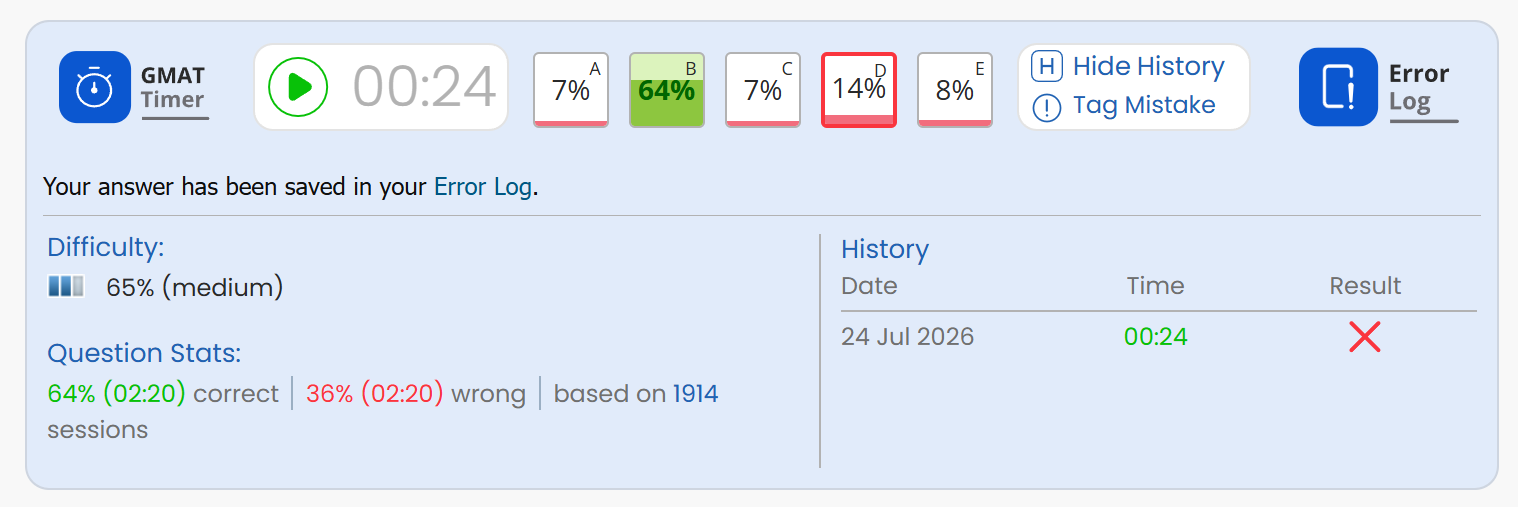
The Error Log button on the right of the bar opens your full log, where every one of these questions is waiting for you. Your screens will differ a little by question type, but the controls stay in the same places.
Tagging a mistake, and what each tag should change
| Tag | What it really means | What you do about it |
| Careless mistake | you knew how to do it and still got it wrong | slow down your setup, not your solving. Usually a reading or transcription problem |
| Conceptual gap | you did not know the rule or the approach | back to the source material for that topic before more practice |
| Time mismanagement | you knew it but ran out of room | a pacing problem, not a content problem. Week 10 is built for this |
| Calculation error | right method, wrong arithmetic | no calculator practice, and write more of your steps down |
What the Error Log gives you back
Once a few weeks of data is in there:
- Your accuracy and your average time, split by topic, so your weak areas name themselves
- Filtering and sorting by tag, difficulty, result and date, plus an export to Excel if you want your own view
- A quiz built straight from the questions you missed, which is the highest-value review set you will ever have
- A record you can paste into your weekly update in the thread, which makes the feedback you get far more useful
Questions you do in Forum Quiz mode are grouped in the error log too, so both routes feed the same picture.
Open these once and bookmark them
You will use the first two every week- Your Error Log GMAT Club
- Error Log: full walkthrough with screenshots GMAT Club
- Forum Quiz: how the adaptive sets work GMAT Club
- Best way to use GMAT Club and its resources GMAT Club
Signed out, the error log link will send you to the login page. That is expected.
One note on this plan page itself. Each week has a handful of tracks in the left sidebar, and marking one complete saves in your browser, so your progress is still there when you come back. It is a checklist for you, not a submission to anyone.
Three things to do before Week 1
ChecklistYou now know more about this exam than most people do in their third week of prep. Do these three things and you are ready to start.
Set up before your first study session
- Pick a target score · 15 minutes
median of your target programs plus 20 to 30, written down somewhere you will see it
- Create a free GMAT Club account · 2 minutes
you need it for the practice threads, the quizzes, and the error log tools used from Week 1
- Block the hours in your calendar · 10 minutes
10 to 15 hours for Week 1, as actual appointments. Prep that lives in your head does not happen
Do not take a diagnostic mock yet.
Week 1 tells you exactly which diagnostics to take and how to read them. Taking one now, cold and without a review method, mostly produces a number that scares you and teaches you nothing.
Week 1 tells you exactly which diagnostics to take and how to read them. Taking one now, cold and without a review method, mostly produces a number that scares you and teaches you nothing.
You are ready for Week 1 if you can answer these
No notes:
- How many sections are there, and how long is each one?
- Which two question types are in Verbal?
- Does Data Insights count toward your total score?
- What happens if you leave a question unanswered?
- What has to happen for a question to land in your Error Log?
- What is your target score?
Anything you missed, scroll back up. It takes two minutes and it saves you a month.
Introduce yourself in the thread
Post your update
- Your target score and target programs
- Your test date, or the month you are aiming for
- How many hours a week you can realistically give this
- Which section scares you most right now
Introduce yourself in the thread
Diagnostics, arithmetic foundations, ratios and percent, and Critical Reasoning setup.
Accuracy first. Speed is a Week 10 problem