
Foundations in Arithmetic, CR & DI
For the next few weeks, we’ll work on strengthening your GMAT fundamentals and building accuracy step by step.
Accuracy first: hit 80%+ before you add speed
Global Resources
Your daily launcherOne tap to any tool the plan uses. Bookmark this page, and Error Log & Analytics next to it, for your daily habits.
Daily practice
Questions
Quiz 5 free/day
Timed sets with analytics. Weeks link exact presets. Unlimited with a subscription or with rewards points.
Question Banks FreeEvery question, tagged by topic and difficulty.
Quiz gives every member 5 free questions a day. Beyond that you need a subscription from $19.99/mo or 49 rewards points, which you earn just by doing timed practice here. Question Banks are free with no daily limit.
Tests & mocks
Weeks 3 · 6 · 9 · 11
GMAT Prep Mocks 2 free + 4 paid
The official exams. Scheduled at weeks 3, 6, 9, 11.
GMAT Club Tests 1 free testHarder-than-real quant & DI. Best in weeks 7-12.
Your first full GMAT Club Test is free. After that they come with a subscription, with rewards points, or free for everyone on public holidays. The GMAT Prep mocks above are separate and come from mba.com.
Earn as you learn
Auto-tracked · redeem anytimeTimed questions you record on GMAT Club count toward these: forum practice and preset quizzes. GMAT Club Tests practice does not count. Reach a milestone and the reward unlocks automatically.
Counted automatically from your GMAT Club timer history. Questions need a submitted answer and a real attempt to count. Prefer the long game? 49 rewards points still buys the full Quiz subscription.
Community
Study together
GMAT Club on YouTube Free
Lessons and live sessions; many are linked inside the weeks. New lectures drop regularly, so subscribe and YouTube notifies you.
Subscribe This week's discussion thread ForumPost your weekly update, ask about questions, and compare notes with everyone on the same week.
Suggestions & feedback Help us improveBroken link, better video, clearer wording? Post it and it ships in a weekly update, with credit.
Live chat rooms · pick one, not all of them
Study Buddy Chat
Find someone on your timeline. A partner two weeks ahead of you is worth more than three rooms you skim.
GMAT Questions ChatStuck on a specific question? Post it here rather than sitting on it for twenty minutes.
General GMAT chat ChatEverything else: timelines, score goals, what to do when a week goes badly.
GMAT Test Takers on WhatsApp FreeThe same conversations on your phone, if you would rather not keep a browser tab open.
Joining chat earns a rewards point every 3 days, so this counts toward unlocking the Quiz.
Study Plan chat group · pick yours by test date
Jan / FebTest window
Mar / AprTest window
May / JunTest window
Jul / AugTest window
Sep / OctTest window
Nov / DecTest window
Set your goal & test date in the sidebar and we highlight your group automatically. Each group lives on GMAT Club Chat and WhatsApp; they mirror each other.
Recommended books
Print or eBook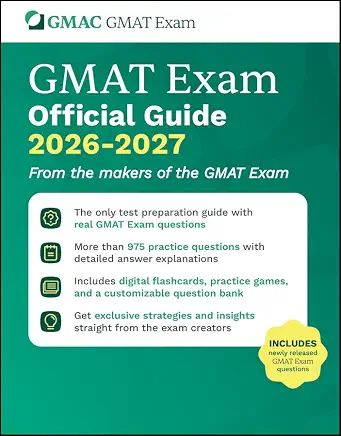 GMAT Official Guide Bundle Official
All 4 guides: main OG plus Quant, Verbal & Data Insights Reviews. Real retired questions with a 12-month online question bank.
Print bundle · Amazon eBook · mba.com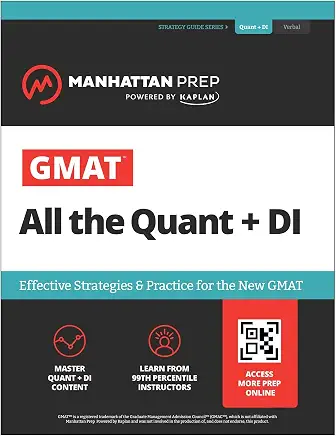 All the Quant + DI Amazon
Manhattan Prep. The quant & DI backbone, weeks 1-8.
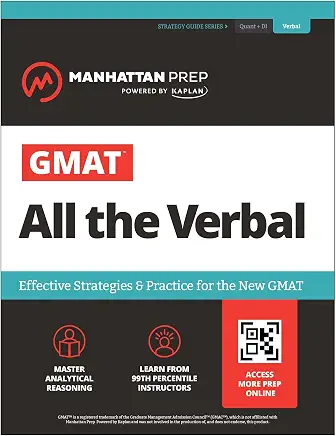 All the Verbal Amazon
Manhattan Prep. CR and RC chapters throughout.
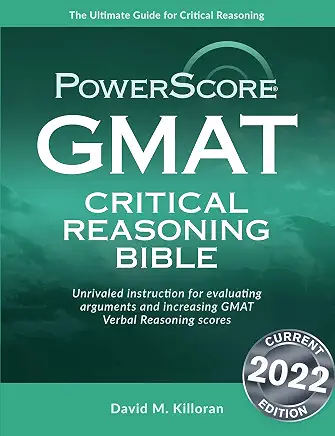 PowerScore CR Bible Amazon
The deep CR alternative. Pick this or All the Verbal.
Buy the Official Guide new, not used. Each copy ships with a single-use code for the online question bank, and used copies usually arrive with that code already redeemed. Manhattan and PowerScore books are fine to buy used.
My notes
All weeks, one place
Private to you, saved on this device with your progress. In the full version this becomes its own page, synced to your account.
Error Log & Analytics
Tracking system · every weekThe same tracking system runs across all 12 weeks: log every miss, review the pattern, redo it. Two tools, one daily habit.
Minimum fields to track
Use the built-in error log tracker above, the Analytics portal, or a customized Excel/Google Sheets spreadsheet, whichever you'll actually keep up with.
- Topic:
fractions, ratios, percent, CR conclusion, etc.
- Error type:
concept gap / setup error / calculation slip / rushed reading.
- Trigger:
what in the prompt pulled you off track.
- Fix:
one-sentence rule you will apply next time.
Redo rule
Redo rule: redo every missed question after a fixed frequency (recommended: after each week) without looking at the solution.
Analytics: what to check before wrap-up
- Accuracy by topic: which sub-skills are still under 80%.
- Timing by topic: where you're consistently over 2 min/question.
- The trend across your last few sessions, not just one bad day.
Week 1 Overview & Rules
Group RulesHi everyone!
For the next few weeks, we’ll work on strengthening your GMAT fundamentals and building accuracy step by step. The idea is to do this together as a group so you can learn from each other’s strengths and support each other where needed.
Before we study, let's first measure where we are.
Weekly time budget: 10 to 15 hours total
Week 1 rules (so the group stays aligned)
- Quant:
no calculator, focus on clean setup and accuracy first
- Timing ramp:
start untimed, then soft-timed, then normal pacing only after accuracy stabilizes
- Review:
keep an error log from Day 1 (details below)
- Group standard:
when you share a question, post your full attempt before reading explanations
Daily workflow (use this in any week)
- Learn · 30 to 60 minutes
reading or video
- Practice · 45 to 90 minutes
small sets
- Review · 20 to 40 minutes
error log + redo
Resources
Referenced throughout the planAlso frequently used: YouTube videos from trusted GMAT experts and popular articles from well-known prep companies. If you prefer physical books, you can easily find them online through Amazon or the publishers' official websites. These are just commonly referenced materials, so please do not feel restricted to them. If you are already using a prep company, a different book, or your own preferred source, continue with that. The goal here is structure and discussion, not forcing everyone onto the same material.
Note: To make things easy, we've included practice links throughout the plan with the topic, source and difficulty already selected. However, everyone learns at their own pace! If you ever feel like the questions are a bit too tough or too easy, go ahead and adjust the difficulty level accordingly.
Rewards points, and why you should care on day one
Most people find this months late- What it is:
a point counter attached to your account that goes up as you use the site. You do not sign up for it and there is nothing to opt into. It is already running
- You earn most of it by doing this plan:
1 point a day for a timer attempt, 1 point a day for a post, 1 point every 3 days for joining chat, 2 points for starting a topic, and 5 points when a post of yours picks up 5 kudos. That is the daily workflow above, unchanged
- A few are one-time and take a minute:
2 points for completing your profile, 3 for adding 3 schools to your Decision Tracker, 5 for writing a review, 5 for posting a debrief when you are done. Do the profile one now while you are thinking about it
- What it buys:
49 points turns the Forum Quiz from 5 questions a day into unlimited, and points also open GMAT Club Tests. At roughly a point a day from the timer alone, that is under two months of ordinary practice for something people pay $19.99 a month for
- Tiers:
Bronze at 10, Silver at 100, Gold at 200, then Platinum, Diamond and Legendary. Cosmetic, but they tell you at a glance how consistent you have been
Check your points
Worth opening once now so you know what it looks like, then forgetting about it until Week 4 or so.
Who to study with
Optional, but the accountability is the point- Study Buddy chat find someone on your timeline
- GMAT Questions chat post a question you are stuck on
- General GMAT chat everything else
- GMAT Test Takers WhatsApp community the same thing on your phone
Pick one, not all four. A study partner who is two weeks ahead of you is worth more than three rooms you skim. Joining chat also earns a rewards point every 3 days, so it pays for itself.
Step 0: Do these diagnostics
DiagnosticsGMAT Mini Quiz
Don’t panic about your score: this is just to identify our baseline.
How to read your score
Per 12-question mini-test: Quant, Verbal or Data Insights.
We’ll take our first official mock in a few days, but not immediately. Let’s first get familiar with the format so we don’t waste that attempt without knowing what to expect.
Week 1: Arithmetic, Fractions, Ratios, Percent
Quant TrackLet’s be clear upfront: If arithmetic, fractions, ratios, and percent aren’t solid, everything later feels harder than it should like Work & Rate, Mixtures, Probability, even DI. So this week is not about speed or tricks. It’s about clean thinking, clean setup, and building confidence early.
What this week is really about
By the end of Week 1, you should be able to:
- Translate ratios and percent into equations without freezing
- Stop making silly arithmetic mistakes (or at least catch them)
- Hit 90% accuracy on easy questions because that’s non-negotiable
- Feel calmer when you see numbers instead of annoyed
Book reference (if you have it)
Manhattan GMAT Quant + DI Ch. 4 & Ch. 6
Read carefully: Chapter 4: Fractions & Ratios; Chapter 6: Percents.
Find it on AmazonVideos
Click to watch inlineRatios
Percent
PS: You can also follow this study plan while covering similar material from your prep company’s schedule.
Practice Sets
Phase 1: Easy-mode practice80% accuracy on 20 questions or a streak of 15 correct
You have two ways to do this. Pick the one that fits how you usually study.
Forum = Click the links below, sort by Kudos and solve questions directly on the forum. Quiz = preset Forum Quiz (subscription or rewards points).
Goal is the same as Option A: 80% on 20 or a streak of 15 · Do small sets (15 questions). Review after each set.
Timing ramp for Phase 1
- Set 1: Untimed
(focus on setup and accuracy)
- Set 2: Soft-timed
(generous time, still process-focused)
- Set 3: Normal pacing
only after accuracy is stable
How to post your Week 1 update in the group
Post your update
- How many questions did you solve?
- Accuracy on ratios and percent?
- One mistake you’ll never repeat again
- One question link you want discussed
How to post your Week 1 update in the group
Number properties, multiples, factors, and remainders.
Not scary but only if this week is done properly
Critical Reasoning Foundations
Verbal TrackThis week is intentionally light on practice. And that’s because most CR mistakes don’t come from not knowing the answer choices but they come from not seeing the argument clearly in the first place.
This week's focus
So before we touch Weaken, Strengthen, or fancy question types, we’re going to slow down and learn:
- How GMAT builds arguments
- How conclusions hide in plain sight
- Why tempting answer choices feel right even when they’re wrong
What you should get out of this week
By the end of the week, you should be able to:
- Clearly identify conclusion, premises, and assumptions
- Tell the difference between what’s stated and what’s implied
- Read CR arguments without feeling rushed or overwhelmed
- Explain why an answer is wrong, not just why one is right
Book Reading (pick one primary source)
pick onePowerScore CR Bible Ch. 2 & Ch. 3 & Ch. 4 & Ch. 5
Read carefully: Chapter 2: The Basics of Critical Reasoning; Chapter 3: Question Stems and Answer Choices; Chapter 4: Must Be True Questions; Chapter 5: Main Point Questions.
Find it on AmazonManhattan Prep – GMAT All the Verbal Ch. 16 & Ch. 17 & Ch. 18
Read carefully: Chapter 16: Argument Structure; Chapter 17: Methodology; Chapter 18: Structure-Based Family.
Find it on AmazonVideos
Click to watch inlineChoose whichever style clicks for you.
We are not doing any heavy CR drills this week.
Light application exercise (optional but recommended)
When reading any CR argument this weekUnderline the conclusion
List the premises
Ask: What must be true for this to work?
End-of-week self-check
Before moving on, ask yourself honestly:
- Can I spot conclusions faster than before?
- Do I understand why some answers are “out of scope”?
- Am I reading CR more calmly?
If yes then you’re ready for CR practice weeks. If not then you should reread one guide and slow down further.
What’s coming next
Next Verbal update, we’ll start applying this foundation:
- Assumption, Strengthen, and Weaken
- Proper pre-thinking
- Why eliminating wrong answers is often safer than hunting for the right one
- RCs are coming up in the upcoming weeks, so sit tight.
Data Insights
DI TrackWe’ll keep Data Insights at a high level, focusing on understanding the section’s structure and question types rather than deep strategy or advanced practice.
Core Reads
Manhattan Prep: GMAT All the Quant + DI Ch. 1
Read carefully: Chapter 1: How Quant and DI Work.
Find it on AmazonVideos
Click to watch inlineMini exposure set (Core track)
If you have a DI question bank (GMAT Club, prep company, or official), do this once2 Data Sufficiency questions (focus only on answer choice logic)
1 Table Analysis
1 Graphics Interpretation
1 Multi-Source Reasoning
1 Two-Part Analysis
Do not worry about speed. Focus on understanding what the question is asking and what the answer format expects.
Error Log & Group Discussion Guidelines
Error LogUse the inbuilt GMAT Club error log tracker or the Analytics tab. If you prefer, use Excel or Google Sheets.
Minimum fields to track (keep it simple but useful)
- Topic
(fractions, ratios, percent, CR conclusion, etc.)
- Error type:
concept gap / setup error / calculation slip / rushed reading
- Trigger:
what in the prompt pulled you off track
- Fix:
one sentence rule you will apply next time
Redo rule
Redo every missed question after a fixed frequency (recommended after each week) without looking at the solution.
Post your stats, get a progress check
Need feedback, not sure whether you're ready to move on, or just stuck? Post these stats in your study group and a Moderator will give you an evaluation of your progress.
Reading sources & Time spent:
Quant questions solved:
Quant accuracy: fractions & ratios __% | percent __%
One question link I want discussed (include your full attempt):
Question discussion standard (so we learn faster)
When you post a question for discussion- Quant:
post your equation setup and why you chose it
- CR:
label conclusion and premises, then state your predicted gap
Do this before reading explanations