
Algebra, Statistics & Mock 1
Week 3 is where GMAT starts behaving a little differently. Less straightforward arithmetic, more thinking.
Mock 1 is a baseline, not a verdict
Global Resources
Your daily launcherOne tap to any tool the plan uses. Bookmark this page, and Error Log & Analytics next to it, for your daily habits.
Daily practice
Questions
Quiz 5 free/day
Timed sets with analytics. Weeks link exact presets. Unlimited with a subscription or with rewards points.
Question Banks FreeEvery question, tagged by topic and difficulty.
Quiz gives every member 5 free questions a day. Beyond that you need a subscription from $19.99/mo or 49 rewards points, which you earn just by doing timed practice here. Question Banks are free with no daily limit.
Tests & mocks
Weeks 3 · 6 · 9 · 11
GMAT Prep Mocks 2 free + 4 paid
The official exams. Scheduled at weeks 3, 6, 9, 11.
GMAT Club Tests 1 free testHarder-than-real quant & DI. Best in weeks 7-12.
Your first full GMAT Club Test is free. After that they come with a subscription, with rewards points, or free for everyone on public holidays. The GMAT Prep mocks above are separate and come from mba.com.
Earn as you learn
Auto-tracked · redeem anytimeTimed questions you record on GMAT Club count toward these: forum practice and preset quizzes. GMAT Club Tests practice does not count. Reach a milestone and the reward unlocks automatically.
Counted automatically from your GMAT Club timer history. Questions need a submitted answer and a real attempt to count. Prefer the long game? 49 rewards points still buys the full Quiz subscription.
Community
Study together
GMAT Club on YouTube Free
Lessons and live sessions; many are linked inside the weeks. New lectures drop regularly, so subscribe and YouTube notifies you.
Subscribe This week's discussion thread ForumPost your weekly update, ask about questions, and compare notes with everyone on the same week.
Suggestions & feedback Help us improveBroken link, better video, clearer wording? Post it and it ships in a weekly update, with credit.
Live chat rooms · pick one, not all of them
Study Buddy Chat
Find someone on your timeline. A partner two weeks ahead of you is worth more than three rooms you skim.
GMAT Questions ChatStuck on a specific question? Post it here rather than sitting on it for twenty minutes.
General GMAT chat ChatEverything else: timelines, score goals, what to do when a week goes badly.
GMAT Test Takers on WhatsApp FreeThe same conversations on your phone, if you would rather not keep a browser tab open.
Joining chat earns a rewards point every 3 days, so this counts toward unlocking the Quiz.
Study Plan chat group · pick yours by test date
Jan / FebTest window
Mar / AprTest window
May / JunTest window
Jul / AugTest window
Sep / OctTest window
Nov / DecTest window
Set your goal & test date in the sidebar and we highlight your group automatically. Each group lives on GMAT Club Chat and WhatsApp; they mirror each other.
Recommended books
Print or eBook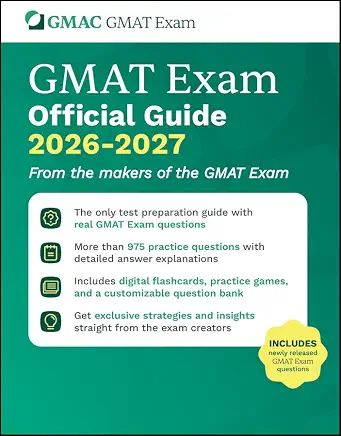 GMAT Official Guide Bundle Official
All 4 guides: main OG plus Quant, Verbal & Data Insights Reviews. Real retired questions with a 12-month online question bank.
Print bundle · Amazon eBook · mba.com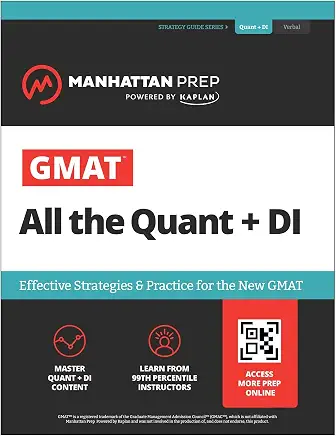 All the Quant + DI Amazon
Manhattan Prep. The quant & DI backbone, weeks 1-8.
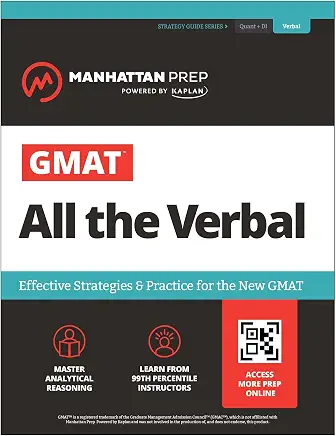 All the Verbal Amazon
Manhattan Prep. CR and RC chapters throughout.
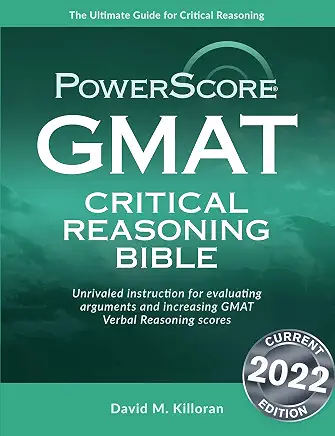 PowerScore CR Bible Amazon
The deep CR alternative. Pick this or All the Verbal.
Buy the Official Guide new, not used. Each copy ships with a single-use code for the online question bank, and used copies usually arrive with that code already redeemed. Manhattan and PowerScore books are fine to buy used.
My notes
All weeks, one place
Private to you, saved on this device with your progress. In the full version this becomes its own page, synced to your account.
Error Log & Analytics
Tracking system · every weekThe same tracking system runs across all 12 weeks: log every miss, review the pattern, redo it. Two tools, one daily habit.
Minimum fields to track
Use the built-in error log tracker above, the Analytics portal, or a customized Excel/Google Sheets spreadsheet, whichever you'll actually keep up with.
- Topic:
fractions, ratios, percent, CR conclusion, etc.
- Error type:
concept gap / setup error / calculation slip / rushed reading.
- Trigger:
what in the prompt pulled you off track.
- Fix:
one-sentence rule you will apply next time.
Redo rule
Redo rule: redo every missed question after a fixed frequency (recommended: after each week) without looking at the solution.
Analytics: what to check before wrap-up
- Accuracy by topic: which sub-skills are still under 80%.
- Timing by topic: where you're consistently over 2 min/question.
- The trend across your last few sessions, not just one bad day.
Week 3 Overview & Rules
Group RulesHope everyone is settling into the rhythm by now.
Week 3 is where GMAT starts behaving a little differently. Less straightforward arithmetic, more thinking.
You’ll see letters instead of numbers. And averages that don’t always play nice.
This is also a good time to attempt your first mock, just to get a feel for the test environment and understand how the exam actually flows.
Weekly time budget: 10 to 15 hours total
Week 3 rules
- Quant:
still no calculator
Timing ramp stays the same. Accuracy earns speed, not the other way around.
Error log is not optional.
- New rule:
If your setup looks ugly, stop. GMAT does not reward bravery through bad structure.
Official Mock 1
MockThings to keep in mind
Allocate 3 hours from your schedule
Attempt it in a single sitting and take only one break
Choose the section order you are most comfortable with. The default many people start with is Q / V / DI
Don't stress if you don't know everything yet. We are still early in the plan and many topics are still to come. The goal here is simply to experience the real test environment and understand how the exam feels.
What you should focus on during this attempt
Pay attention to things like:
- Were you able to attempt all the questions?
- Did you blank out at any point during the test?
- What did you do when you encountered a completely new question?
Think about
After the test, note down a few key takeaways. We’ll discuss them in more detail before the next mock.
- How did you score?
- How far are you from your target score?
- Which sections need the most attention?
- Where can you get the best ROI in the coming weeks?
- How should you structure your prep from here?
Week 3: Linear Algebra + Statistics
Quant TrackThis week is about learning to stay calm when numbers disappear and symbols show up. Algebra is not hard. What’s hard is panicking the moment you see x and y together. Statistics is not about formulas.
What this week is really about
By the end of Week 3, you should be able to:
- Translate word problems into equations without staring at them for 60 seconds
- Stop over-solving when a simple setup would do
- Understand mean and median behavior instead of memorizing tricks
- Not freak out when standard deviation shows up
Core reads
Book reference (if you have it)
Manhattan GMAT Quant + DI Ch. 11 & Ch. 19
Read carefully: Chapter 11: Linear Equations and Combos; Chapter 19: Statistics.
Find it on AmazonVideos
Click to watch inlineAlgebra
Statistics
PS: You can also follow this study plan while covering similar material from your prep company’s schedule.
Practice Sets
Phase 1: Easy-mode practice80% accuracy on 20 questions or a streak of 15 correct
You have two ways to do this. Pick the one that fits how you usually study.
Forum = Click the links below, sort by Kudos and solve questions directly on the forum. Quiz = preset Forum Quiz (subscription or rewards points).
Goal is the same as Option A: 80% on 20 or a streak of 15 · Do small sets (15 questions). Review after each set.
Timing ramp for Phase 1
- Set 1: Untimed
(focus on setup and accuracy)
- Set 2: Soft-timed
(generous time, still process-focused)
- Set 3: Normal pacing
only after accuracy is stable
Common traps to actively watch for
Keep it simple:
- Over-algebraizing something simple
- Forgetting to define variables
- Treating statistics like formula dumping
- Solving aggressively when estimation would work
What’s coming next week
Exponents, Roots, Inequalities, and Absolute values
Critical Reasoning - Strengthen and Weaken
Verbal TrackIf Assumption questions were about finding the missing piece,
Strengthen and Weaken are about asking: “What would actually help this argument?” “What would quietly break it?”
What you should get out of this week
By the end of the week, you should be able to:
- You’ll predict the answer before reading choices more often
- You’ll stop falling for answers that sound smart but do nothing
- You’ll feel more confident eliminating wrong options
- You’ll explain why something strengthens or weakens, not just feel it
Core Reads
Book Reading (pick one primary source)
pick onePowerScore CR Bible Ch. 6 & Ch. 8
Read carefully: Chapter 6: Weaken Questions; Chapter 8: Strengthen and Assumption Questions.
Find it on AmazonManhattan Prep – GMAT All the Verbal Ch. 20
Read carefully: Chapter 20: The Assumption Family: Strengthen and Weaken.
Find it on AmazonVideos
Click to watch inlineChoose whichever style clicks for you.
Practice Sets
Phase 1: Easy-mode practice80% accuracy on 20 questions or a streak of 15 correct
You have two ways to do this. Pick the one that fits how you usually study.
Forum = Click the links below, sort by Kudos and solve questions directly on the forum. Quiz = preset Forum Quiz (subscription or rewards points).
Goal is the same as Option A: 80% on 20 or a streak of 15 · Do small sets (15 questions). Review after each set.
Timing ramp for Phase 1
- Set 1: Untimed
(focus on setup and accuracy)
- Set 2: Soft-timed
(generous time, still process-focused)
- Set 3: Normal pacing
only after accuracy is stable
End-of-week self-check
After every question:
- Predict how to strengthen or weaken
- Classify what the option is doing
- Explain why tempting wrong answers fail
What’s coming next
Data Insights
DI TrackThis week, DI is not about crunching numbers. It’s about realizing that GMAT often isn’t asking you to calculate anything at all. It’s asking whether you understand what the question is actually demanding.
What we’re focusing on this week
- Non-math Data Sufficiency questions
- Yes No logic over numeric manipulation
- Understanding answer choice structure
- Spotting subtle insufficiency even when a statement “feels helpful”
Core Reads
Book Reading
Manhattan Prep: GMAT All the Quant + DI Ch. 3
Read carefully: Chapter 3: Data Sufficiency 101.
Find it on AmazonVideos
Click to watch inlinePractice Sets
Phase 1: Easy-mode practice80% accuracy on 20 questions or a streak of 15 correct
You have two ways to do this. Pick the one that fits how you usually study.
Forum = Click the links below, sort by Kudos and solve questions directly on the forum. Quiz = preset Forum Quiz (subscription or rewards points).
Goal is the same as Option A: 80% on 20 or a streak of 15 · Do small sets (15 questions). Review after each set.
Timing ramp for Phase 1
- Set 1: Untimed
(focus on setup and accuracy)
- Set 2: Soft-timed
(generous time, still process-focused)
- Set 3: Normal pacing
only after accuracy is stable
End-of-week self-check
Focus only on:
- Answering a different question than the one asked
- Combining statements too early
- Treating “more information” as “sufficient information”
- Assuming typical cases instead of testing edge cases
GMAT lives in edge cases. Don’t ignore them.
What’s coming next
Error Log & Group Discussion Guidelines
Error LogContinue the same structure from Week 1.
Post your stats, get a progress check
Need feedback, not sure whether you're ready to move on, or just stuck? Post these stats in your study group and a Moderator will give you an evaluation of your progress.
Reading sources & Time spent:
Quant questions solved:
Quant accuracy: algebra __% | statistics __%
Verbal questions solved:
Verbal accuracy: strengthen __% | weaken __%
DI questions solved:
DI accuracy: non-math data sufficiency __%
One question link I want discussed (include your full attempt):