
 Sign in with Google
 Sign in with Apple

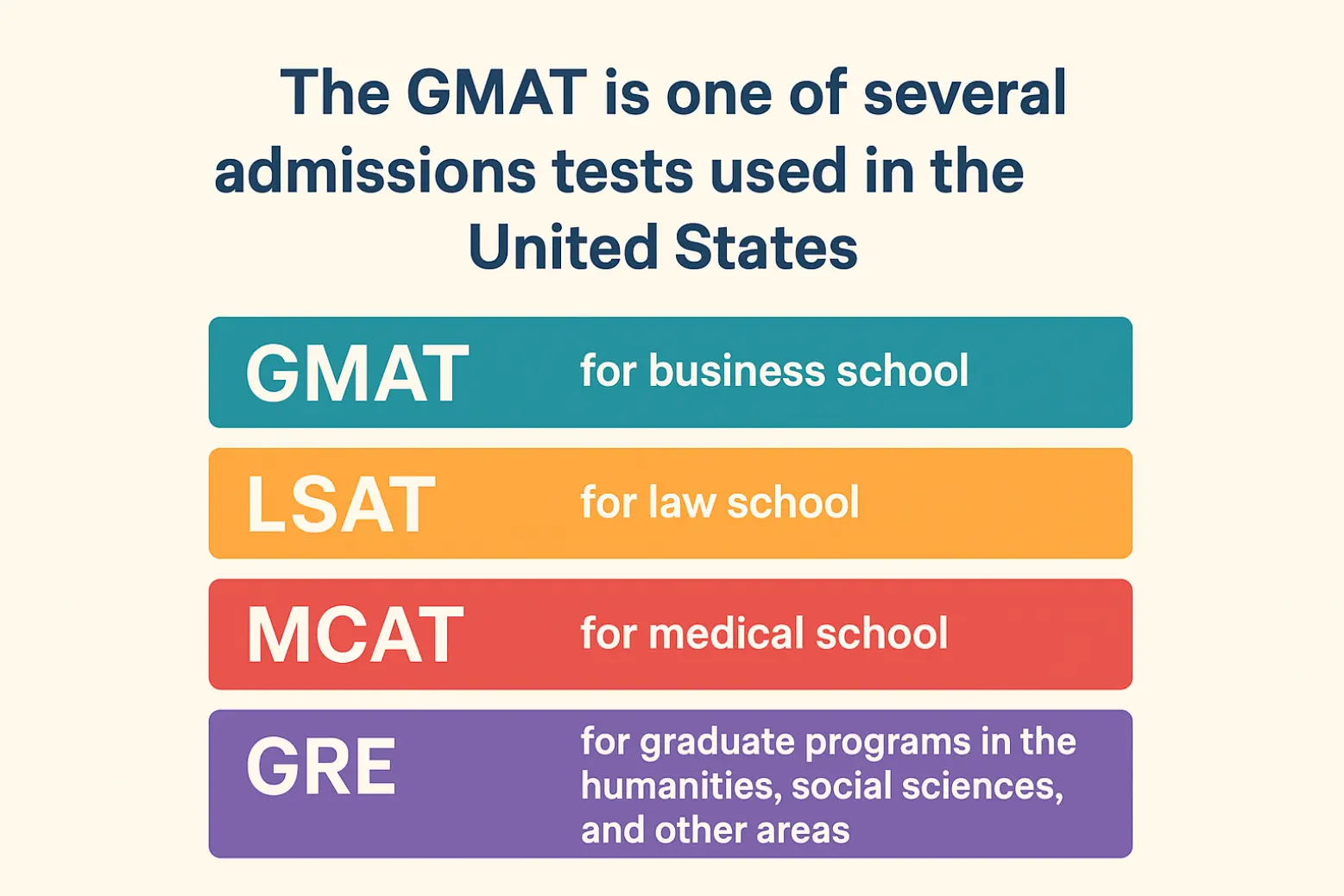
The GMAT is one of several admissions tests used in the United States, including the LSAT (for law school), MCAT (for medical school), and GRE (for graduate programs in the humanities, social sciences, and other areas). Although each test’s content is different, these tests all function the same way by measuring examinees’ mental abilities in order to predict their success in graduate training.
This means that we can treat all of these tests collectively and use research from one test to inform the others. Generalizing research across tests is especially helpful for the GMAT because, compared to other tests, little research has been conducted specifically on it. Most of that research focuses on the GMAT’s ability to predict graduate school grades (which it does pretty well). The best evidence comes from a meta-analysis (which is a study that combines data from many previous studies) of data from over 60,000 students. The results of the meta-analysis were that combined GMAT scores (verbal + quantitative section scores) predicted first-year GPA in graduate school pretty well: r = .47. This means that a typical graduate school can cut its attrition rate (i.e., dropouts, students failing out of the program) by about two-thirds if it uses GMAT scores to select students. In contrast, undergraduate GPA makes less accurate predictions of first-year graduate school grades: r = .35. The best predictions happen when graduate programs use undergraduate grades and GMAT scores together to admit students.
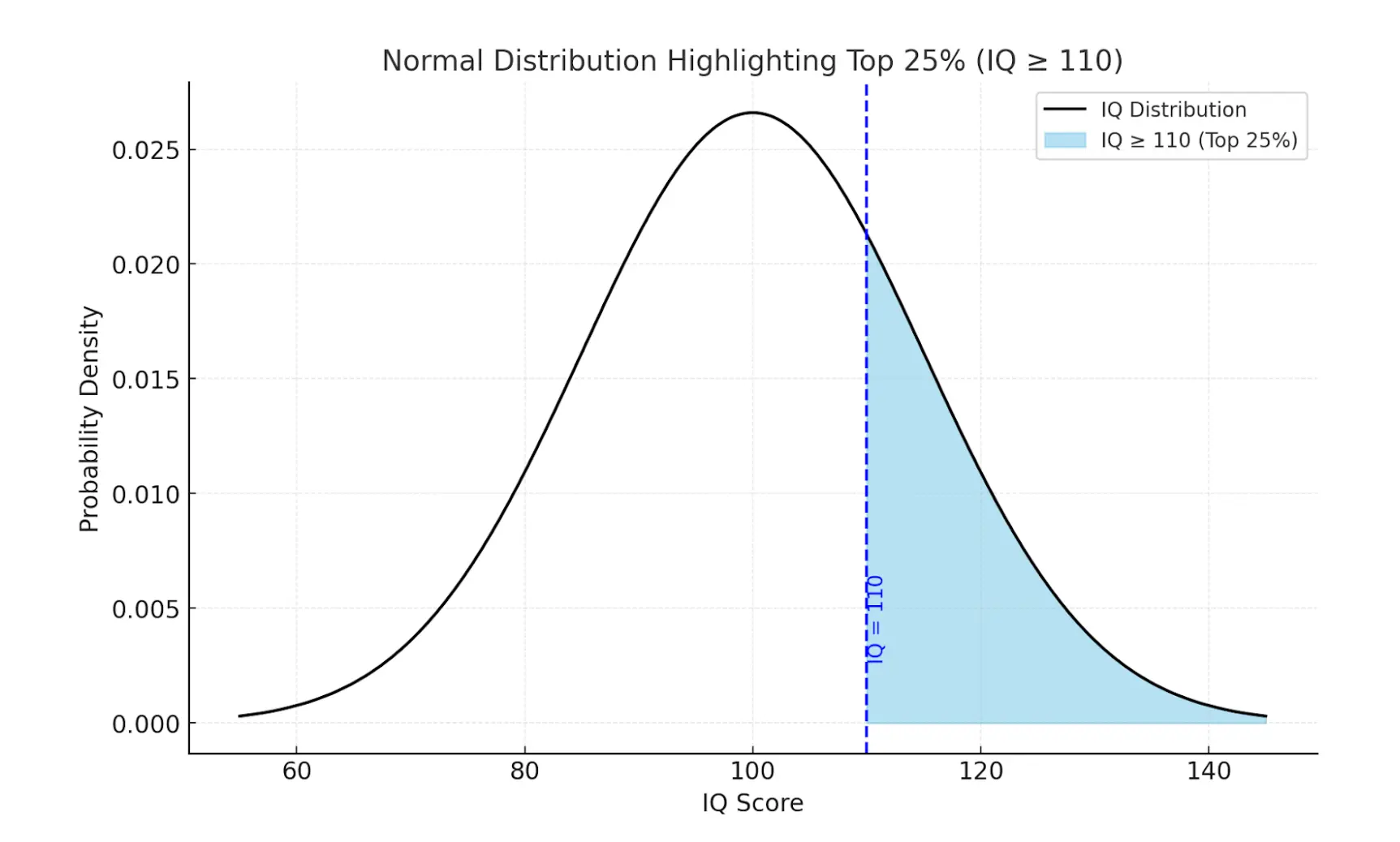
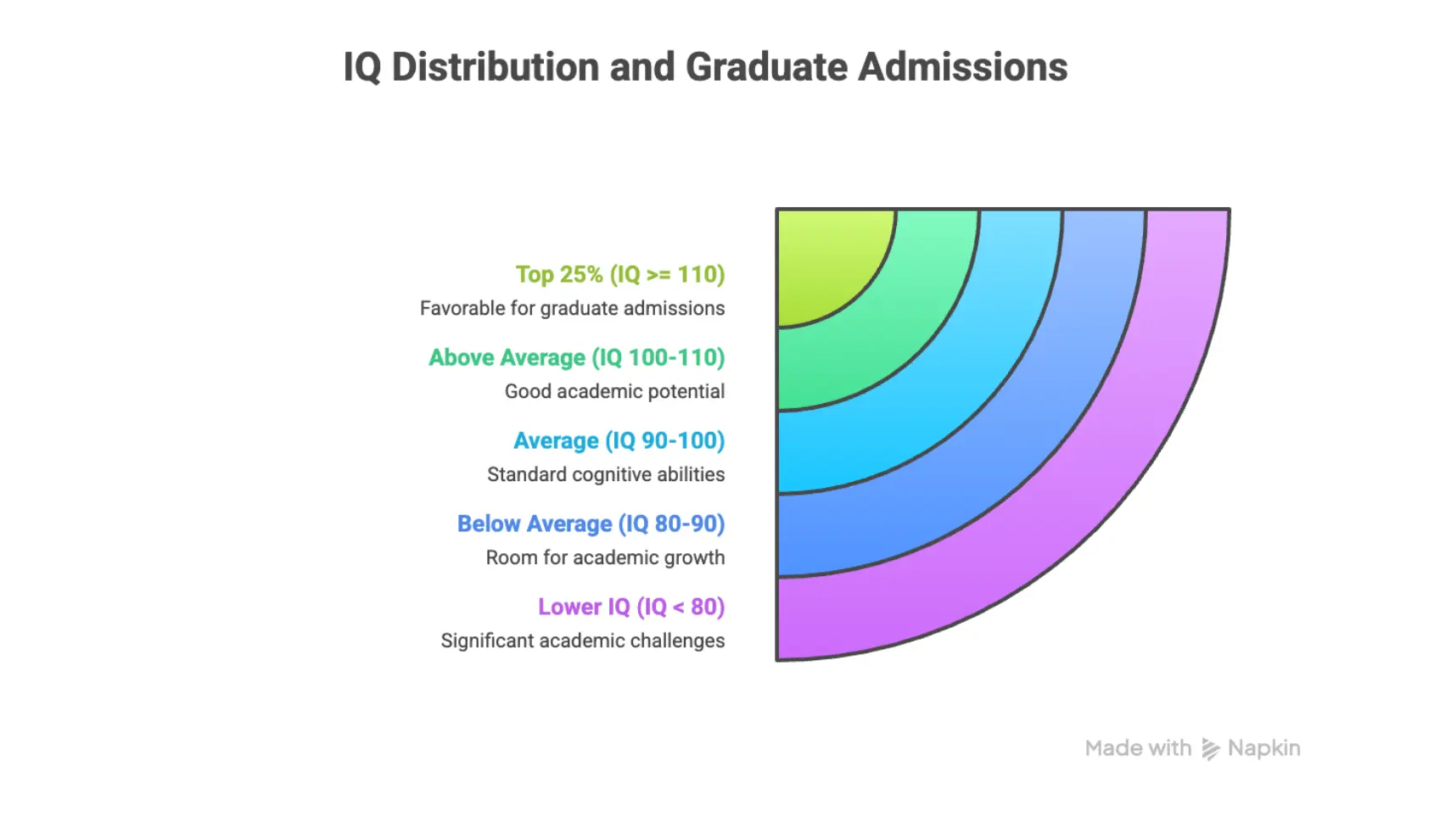
The research is pretty clear that smarter people perform better on graduate school admissions tests. All things being equal, it is better to have a high IQ than a lower IQ when taking the GMAT. Taking a reputable IQ test, such as the Reasoning and Intelligence Online Test (RIOT), can help provide a useful “reality check” of a person’s abilities and help them gauge how competitive they would be for a graduate business program. A score of at least 110 (i.e., the top 25% of the general population) should be encouraging for an applicant aiming for a typical graduate business program.
But IQ is not the entire story. There are ways to partially compensate and earn a higher GMAT score, no matter what someone’s IQ is.
First, all tests are susceptible to “practice effects.” A practice effect is an increase in a person’s score that occurs when they retake a test. Even without studying, the mere act of retaking a test will make most people’s scores increase. This occurs because people get more familiar with the question format, time limits, and other surface characteristics of the test.
Practice effects are modest in magnitude, but for an ambitious applicant who wants to go to graduate school, every little bit helps. The easiest way to get the benefits of a practice effect without paying to take the GMAT twice is to take practice tests that approximate the content, difficulty, time limits, and other conditions of the real GMAT.
Another way to boost scores on the GMAT and other graduate admissions tests is to study, study, study! The testing experts call this test preparation “coaching,” and it does have an impact on scores that goes beyond a mere practice effect. The fact that coaching increases scores should not be surprising; throughout most of people’s schooling, they study for tests in order to raise their scores. The GMAT is no different in this respect. Coaching does produce diminishing returns though. The first few weeks of coaching provide the most benefits, and then the effect starts to level off. This leveling off occurs because improving surface skills is easy, and the score gains from that come rather quickly. But improving the underlying knowledge and ability needed to succeed on the GMAT takes longer.
This fact has a few implications for examinees. First, it is not too late to start preparing for the GMAT; even a day or two of studying is better than none. Second, the best preparation will involve a long-term investment of time and attention in order to improve the deep thinking and reasoning skills that the GMAT measures. Ideally, a person’s “test prep” consists of an academically rigorous undergraduate program that expands the person’s cognitive reasoning skills for four years (and that is maintained with reviews or other stimulation if there is a gap between graduating with a bachelor’s and taking the GMAT).
There is an important caveat to all of this research though:
- First, there are limits to how much practice effects and coaching can raise a person’s score on the GMAT (or any other admissions test). Individual results vary, but an increase of 50 to 70 points (on a scale from 205 to 805) is realistic with a typical coaching program.
- Second, smarter people may receive more benefits from coaching than less intelligent people, if both participate for the same amount of time.
- Lastly, the increase in GMAT scores from practice effects and coaching does not reflect a real boost in intelligence, but it does show improvement in the other cognitive skills that contribute to a GMAT score. Many of these skills are also important for success in graduate school.
But none of this should be disheartening. It is possible to compensate enough for a person to get a higher GMAT score than someone who is smarter (according to an IQ test) by about 5-10 points. It just takes a lot of work and dedication. But MBA candidates aren’t afraid of that!
Author: Dr. Russell T. Warne
Personal website: https://russellwarne.com
Take an IQ test: http://riotiq.com
LinkedIn: https://www.linkedin.com/in/russell-warne
Email: [email protected]